North Dakota Catfish Limit Rules
It’s a truly frustrating experience, isn't it? You head out to your favorite fishing spot, rods rigged, bait ready, and the catfish are biting. The last thing you want to worry about is whether you’re accidentally breaking a rule or misinterpreting some obscure regulation. North Dakota's fishing scene, especially for popular species like channel catfish, comes with its fair share of rules. This guide is here to untangle the specifics of North Dakota's catfish limit rules, ensuring you can enjoy your time on the water without a nagging worry about legality.
Demystifying North Dakota's Catfish Regulations
Before we dive into the nitty-gritty numbers, it’s helpful to understand the philosophy behind these regulations. They aren’t just arbitrary rules designed to make your life difficult; they serve a vital purpose in maintaining the health and abundance of our cherished North Dakota fisheries.
Why Catfish Limits Exist in North Dakota
The primary reason for daily and possession limits on species like channel catfish boils down to conservation and sustainable management. North Dakota boasts some truly incredible catfish populations, especially in legendary waters like the Red River and sections of the Missouri. However, without limits, the potential for overharvest is very real. Imagine if everyone kept every catfish they caught – our populations would dwindle quickly, impacting future generations of anglers.
These regulations are carefully crafted by the North Dakota Game and Fish Department (NDGFD) based on extensive research, population surveys, and environmental factors. They consider everything from spawning success rates to natural mortality, aiming to strike a balance that allows anglers to enjoy a productive day on the water while ensuring that the catfish populations remain robust and healthy for years to come. It’s about being good stewards of our natural resources, ensuring that the thrill of hooking a trophy channel cat continues for everyone. Understanding the reasons behind the rules can make it easier to follow them, turning compliance from a chore into a shared commitment. For a broader overview of the state's angling guidelines, it’s always a good idea to consult the North Dakota Fishing Regulations Explained.
Where to Access Official Rules and Guides
Staying informed is half the battle when it comes to fishing regulations. The official source for all North Dakota fishing rules, including those for catfish, is the North Dakota Game and Fish Department. They publish a comprehensive annual fishing proclamation booklet that outlines all the season dates, limits, and special regulations for different species and bodies of water. This proclamation is your bible for North Dakota fishing.
You can usually pick up a physical copy of this guide at most license vendors, local bait shops, or directly from NDGFD offices. However, in our digital age, the most convenient and often most up-to-date method is to check their official website. The NDGFD website provides the complete proclamation in PDF format, which you can easily download to your phone or tablet. It’s a great idea to have it handy, especially when you're on the water and might need to quickly reference a rule. You might even find printed versions or specialized guides available through online retailers like Amazon, though always double-check they're the most current NDGFD version.
The Foundational Fishing, Hunting, Furbearer Certificate
Before you even think about limits, there’s a foundational requirement for nearly all resident and nonresident anglers in North Dakota: the Fishing, Hunting, Furbearer Certificate. This isn't just another piece of paper; it's a critical component of the state's wildlife management and conservation funding system. Essentially, you cannot purchase a valid North Dakota fishing license without first acquiring this certificate.
The certificate itself is a nominal fee, but the revenue it generates is vital for supporting various conservation programs, habitat improvements, and the enforcement efforts of the NDGFD. It ensures that those who benefit from the state's natural resources are contributing to their upkeep and longevity. Think of it as your entry ticket into the world of North Dakota angling, paving the way for your specific fishing license and, subsequently, your ability to legally harvest catfish within the established limits. If you're new to the state or just getting into fishing here, understanding The Fishing, Hunting, Furbearer Certificate Explained is a crucial first step.
Navigating Daily and Possession Limits for Channel Catfish
This is where the rubber meets the road. Understanding the specific numbers for daily and possession limits is crucial to staying within the law and contributing to the sustainable management of North Dakota's catfish populations.
Understanding the Statewide Daily Limit
The daily limit refers to the maximum number of fish of a particular species that you are allowed to take in a single calendar day. For channel catfish in North Dakota, the statewide daily limit is set to ensure that fishing pressure is distributed and no single angler removes an excessive amount of fish from the population in a short period. As of the current regulations, North Dakota has a very generous statewide daily limit for channel catfish.
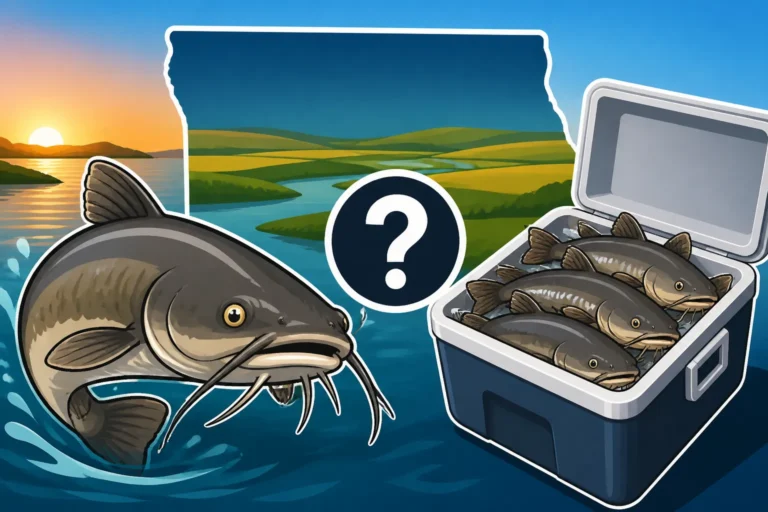
Typically, the daily limit for channel catfish across most of North Dakota's waters is set at 10 fish. This means that from midnight to midnight, you can legally harvest and retain up to 10 channel catfish. Once you hit that number, you must cease fishing for channel catfish for the remainder of that day. Any additional catfish caught must be immediately released unharmed. This limit is designed to provide ample opportunity for a successful fishing trip while preventing rapid depletion of local populations. If you’ve ever wondered How Many Catfish Can You Keep in North Dakota?, this is the number for your daily haul.
Decoding Possession Limits: What You Can Keep at Home
Now, here's where things can get a little tricky and where many anglers inadvertently make mistakes: the possession limit. While the daily limit dictates what you can take in one day, the possession limit refers to the total number of fish you can legally have in your possession at any given time, whether that's in your boat, your vehicle, your cooler, your freezer at home, or anywhere else. It’s an accumulative limit.
For channel catfish in North Dakota, the statewide possession limit is generally double the daily limit, meaning 20 fish. This means that if you've been fishing for a few days and have stored your catch at home, the total number of cleaned or uncleaned catfish from North Dakota waters in your freezer and on your person combined cannot exceed 20. For example, if you caught 10 catfish on Monday and stored them, and then caught another 5 on Tuesday, you would still be within both your daily limit for Tuesday and your overall possession limit. However, if you already had 15 catfish in your freezer and caught 10 more, bringing your total to 25, you would be exceeding the possession limit, even if you only caught 10 that day. This distinction is critical and often misunderstood.
Special Area Restrictions and Exceptions
While the 10 daily/20 possession limit applies to most of North Dakota, there are often specific exceptions or different rules for certain bodies of water, particularly those with unique management challenges or exceptional fishing pressure. The most prominent example for channel catfish is the mighty Red River of the North.
The Red River, which forms a significant portion of North Dakota's eastern border with Minnesota, is renowned for its trophy channel catfish. Due to its status as a border water and the incredible productivity of its catfish fishery, the NDGFD, in cooperation with Minnesota's Department of Natural Resources, often implements specific regulations for this river. These regulations can differ significantly from the statewide limits. For instance, sometimes the Red River may have a more restrictive daily limit, or perhaps a slot limit, which requires fish within a certain size range to be released. Anglers targeting the monsters of the Red River must always consult the most current proclamation for these specific rules. It's not uncommon for anglers to travel specifically for the Red River Catfish Fishing Spots in North Dakota, so being aware of these unique rules is paramount for a successful and legal trip.
Special Considerations for Catfish Fishing in Border Waters
Fishing on border waters adds another layer of complexity to understanding fishing limits. North Dakota shares the Red River with Minnesota and has reciprocal agreements that can sometimes simplify things, but not without careful attention to detail.
Reciprocal Fishing Rules on the Red River
One of the most frequently asked questions about fishing the Red River pertains to reciprocal agreements. Thankfully, North Dakota and Minnesota have a long-standing reciprocal agreement for fishing licenses on this shared waterway. This means that if you possess a valid resident or nonresident fishing license from either North Dakota or Minnesota, you are legally allowed to fish the main stem of the Red River, including its backwaters and oxbows, that are contiguous with the river.
However, it's absolutely crucial to understand that while the license might be reciprocal, the regulations can still vary between the two states. This is especially true for species-specific limits, like those for channel catfish. While the states strive for consistency, there can be subtle differences. Therefore, if you are fishing the Red River with, say, a Minnesota license, you are still generally bound by North Dakota's daily and possession limits if you're fishing on the North Dakota side of the river, or Minnesota's if on their side. The safest bet is always to carry both states' regulation booklets (or digital versions) and understand that you must adhere to the most restrictive rule if there's any ambiguity. For more detailed information on navigating these shared waters, refer to Reciprocal Fishing Rules on the Red River Border Waters.
When State Lines Influence Your Creel
The physical boundary between North Dakota and Minnesota along the Red River is the thread line of the channel. While you might be legally licensed to fish anywhere on the river with one state's license, the specific regulations you must follow, especially concerning catch and possession limits, usually depend on which side of the imaginary state line you are fishing on when you harvest the fish. This can become incredibly confusing when you’re drifting or anchored near the middle of the river.
Consider a scenario: North Dakota's catfish limit is 10 daily, 20 possession, but Minnesota might have a limit of 5 daily, 10 possession (hypothetically, always check current rules). If you're drifting down the river and catch a catfish while your boat is primarily on the Minnesota side, technically that fish would fall under Minnesota's regulations. If you then drift to the North Dakota side and catch another, it's under North Dakota's rules. This often leads to the safest practice of adhering to the most restrictive regulation of either state if you plan to move between sides or are unsure of your exact position. It requires diligent tracking of your catch relative to your position, which can be challenging but necessary. Using a good GPS unit and perhaps even keeping separate stringers or coolers (which you can find on Amazon to ensure your catch stays fresh and organized) for fish caught on different sides can help avoid any legal headaches.
The Role of Local Enforcement in Border Areas
Game wardens and law enforcement officers from both North Dakota and Minnesota have jurisdiction over their respective sides of the Red River. This means you could potentially encounter officers from either state, or even both, during your fishing trip. These officers are well-versed in the reciprocal agreements and the nuances of the border water regulations. They are also highly adept at determining if you've been adhering to the correct state's limits based on where your fishing activity took place.
If approached by an officer, always be polite, cooperative, and have your license and any harvested fish readily available for inspection. They understand that border water rules can be complex, but ignorance of the law is generally not an excuse for violations. Their primary goal is to ensure compliance and protect the resource. Being transparent about your fishing locations and catch can go a long way in demonstrating good intent. They are there to enforce regulations fairly and maintain the integrity of the fishery, so respecting their authority is paramount.
Staying Compliant: Resources and Updates
Regulations aren't static; they can and do change. Knowing where to find the most current information and how to interpret it is key to avoiding accidental violations.
Your Go-To Guide: The Fishing Proclamation
The annual North Dakota Fishing Proclamation is, without a doubt, the single most important document for any angler in the state. This comprehensive booklet or PDF details every regulation you need to know, from license requirements and season dates to specific daily and possession limits for all game fish species, including channel catfish. It also highlights any special rules for specific lakes, rivers, or fishing methods.
The NDGFD updates and publishes a new proclamation each fishing season, usually in the spring. It's critical that you always refer to the current year's proclamation. Older versions can lead you astray, as limits, dates, or even entire rules might have changed. Make it a habit to obtain a new copy at the start of each fishing year, read through the sections relevant to your target species (like catfish) and your planned fishing locations, and keep it accessible while you're fishing. Having the official document on hand not only helps you stay informed but also demonstrates your commitment to lawful angling if you ever have a conversation with a game warden. For example, staying updated with the North Dakota Fishing Regulation Booklet 2026 to 2028 will be crucial for upcoming seasons.
Leveraging Online Resources and Mobile Apps for Anglers
In today's digital world, accessing up-to-date fishing regulations has never been easier. The North Dakota Game and Fish Department maintains a comprehensive website that serves as a central hub for all official information. Their site provides the full fishing proclamation in a searchable, user-friendly format, often broken down by species or water body. This allows you to quickly find specific details about channel catfish limits or special rules for a particular lake.
Beyond the official website, many anglers utilize various fishing forecast apps and mapping tools that can sometimes integrate regulation summaries. While these can be helpful for general guidance, always cross-reference any specific limit information with the official NDGFD proclamation or website. No third-party app should ever be considered the definitive legal source. However, these apps can be incredibly useful for planning your trips, identifying prime catfish spots, or monitoring weather conditions. For those who rely on their phones for everything, having a durable, waterproof phone case (many excellent options are available on Amazon) is a smart investment to protect your device while out on the water.
Checking for In-Season Rule Changes
While the annual fishing proclamation covers the majority of regulations for the year, it's important to understand that in rare circumstances, rules can be modified during the fishing season. These in-season changes are typically a response to unforeseen environmental conditions, such as severe drought affecting water levels, disease outbreaks in fish populations, or unusually high or low harvest rates that require immediate adjustments to protect the resource.
When such changes occur, the NDGFD will issue press releases, post alerts on their website, and often notify license vendors. These changes are usually well-publicized to ensure anglers are aware. However, it's still your responsibility as an angler to stay informed. A quick check of the NDGFD website before heading out on a trip, especially if it's been a while since your last outing, can save you from inadvertently violating a new rule. Subscribing to NDGFD newsletters or following their social media channels can also be an effective way to receive timely notifications about any critical updates.
Avoiding Pitfalls: Common Violations and Penalties
Mistakes happen, but when it comes to fishing regulations, even an honest error can lead to serious consequences. Being aware of common pitfalls related to catfish limits can help you steer clear of trouble.
Misinterpreting Possession: A Common Error
One of the most frequent ways anglers run afoul of the law, particularly with possession limits, is through misinterpretation or a lack of understanding of what "in possession" truly means. Many anglers correctly understand the daily limit – what they can catch and keep from midnight to midnight. However, they sometimes forget that the possession limit isn't just about what's in their boat or cooler at the moment. It encompasses all fish legally harvested and retained from North Dakota waters that are in their control, anywhere.
A classic scenario: An angler has a successful weekend of catfish fishing, catching their daily limit each day. They clean the fish, put them in the freezer at home, and then head out fishing again a few days later. If they then catch another daily limit, but the total sum of fish in their freezer and those freshly caught exceeds the possession limit, they are in violation. The fish in the freezer are still considered "in possession." It's vital to only take what you need and what you can legally possess, understanding that every fish you've kept from North Dakota waters counts towards that cumulative possession total.
The Repercussions of Exceeding Catch Limits
Exceeding catch limits, whether daily or possession, is a serious violation in North Dakota and comes with significant penalties. The specific repercussions can vary depending on the severity of the offense, the number of fish over the limit, and whether it’s a first-time offense or a repeat violation. However, you can generally expect a range of consequences that go beyond a simple slap on the wrist.
Penalties often include substantial fines, which can quickly add up, especially if you're significantly over the limit. In some cases, game wardens have the authority to confiscate the unlawfully taken fish, your fishing gear (rods, reels, even your boat or vehicle if it was instrumental in the violation), and even your fishing license. Furthermore, exceeding limits can lead to the loss of your fishing privileges for a specified period, meaning you won't be able to legally fish in North Dakota at all. These penalties are designed to be a strong deterrent, emphasizing the importance of compliance for the sake of the fishery. Understanding the Penalties for Fishing Without a License in North Dakota provides a glimpse into the seriousness with which the state treats all fishing regulation violations.
The Importance of a Valid North Dakota Fishing License
While this guide focuses on catfish limits, it's impossible to discuss legal fishing without reiterating the absolute necessity of holding a valid North Dakota fishing license. All daily and possession limits, all regulations, and all privileges to fish in North Dakota waters are predicated on the angler having the correct and current license in their possession. Fishing without a license is a primary violation that can lead to immediate fines, confiscation, and the denial of any fishing privileges.
Think of your fishing license as your permit to participate. It's how the state identifies you as a legal angler and how it gathers the necessary funds to manage and improve North Dakota's fisheries. Before you even cast a line, ensure you have your license. You can purchase one online through the NDGFD website, at many sporting goods stores, bait shops, and even some general retailers. Make sure you understand the different types of licenses available, whether you need a resident or nonresident license, and any additional permits required. For a comprehensive overview, checking out the North Dakota Fishing License Guide or the specific North Dakota Fishing License Cost Guide will provide all the details you need to get started legally.
| Catfish Limit Type | Statewide North Dakota (Most Waters) | Red River of the North (North Dakota Portion) |
|---|---|---|
| Daily Limit | 10 Channel Catfish | 10 Channel Catfish |
| Possession Limit | 20 Channel Catfish | 20 Channel Catfish |
| Note | Always check current proclamation for specific exceptions. | Reciprocal agreements on licenses exist with Minnesota, but regulations can still vary. |
Promoting Sustainable Catfish Fishing
Following regulations isn't just about avoiding trouble; it's about being a responsible angler and contributing to the health of our fisheries. Responsible practices ensure that the joy of catching a North Dakota channel cat can be experienced by many.
Best Practices for Catch and Release
Even when within the legal limits, practicing good catch and release techniques for the fish you don't intend to keep is a vital part of sustainable angling. Channel catfish are resilient, but improper handling can still lead to delayed mortality. When you decide to release a catfish, prioritize its well-being.
Minimize the time the fish spends out of the water. Handle the fish gently with wet hands, or ideally, use a net to keep it in the water while you remove the hook. Avoid squeezing the fish's belly or gills, as this can cause internal damage. Use de-hooking tools, especially if the fish has swallowed the hook. Tools like long-nosed pliers or specialized hook removers (readily available on Amazon) can make this process quicker and less stressful for the fish. For larger catfish, consider a lip gripper to control the fish safely without damaging its body. Once the hook is out, hold the fish gently in the water, facing into any current, until it regains its strength and can swim away on its own. This ensures that the released fish has the best chance of survival, contributing to the future of the fishery.
Ethical Harvesting and Waste Reduction
When you decide to harvest channel catfish, doing so ethically and responsibly means more than just staying within the limits; it means minimizing waste and maximizing the use of your catch. Only keep what you realistically intend to eat or process. It's easy to get excited during a hot bite and fill your cooler, but if those fish end up freezer-burned and discarded months later, it defeats the purpose of sustainable harvest.
Proper care of your catch immediately after harvesting is also crucial. Bleeding and icing down your catfish quickly helps preserve their quality and taste, ensuring that your efforts on the water don't go to waste. Consider your processing capabilities as well; if you're not equipped to clean a full limit of large catfish promptly, consider harvesting fewer. Remember, every fish harvested is one less fish contributing to the breeding population. By making mindful decisions about what you keep, you honor the resource and contribute to its longevity.
Being a Steward of North Dakota's Fisheries
Ultimately, responsible angling goes beyond just knowing and following the catfish limit rules. It's about taking on the role of a steward for North Dakota's incredible aquatic resources. This means being an advocate for clean waters, healthy habitats, and sustainable fish populations. You can contribute in many ways: by reporting any suspected poaching or environmental violations to the NDGFD, by picking up litter at your fishing spots, and by participating in local conservation efforts.
Educating fellow anglers, especially newer ones or children, about the importance of regulations and ethical practices is also invaluable. Sharing your knowledge about things like Catfish Bait Techniques for the Red River or the intricacies of North Dakota Channel Catfish Fishing Guide is great, but equally important is imparting the wisdom of conservation. Your actions on and off the water directly impact the future of North Dakota fishing. By embracing these best practices, we ensure that the fantastic channel catfish opportunities in North Dakota will continue to thrive for generations to come.
Disclaimer
Please note that fishing regulations can change. While this guide provides a comprehensive overview of North Dakota's catfish limit rules based on current information, it is your responsibility to consult the most recent North Dakota Game and Fish Department (NDGFD) Fishing Proclamation or their official website before you go fishing. This content is for informational purposes only and should not be considered legal advice.