Lake Sakakawea Smallmouth Bass Fishing
There's nothing quite like the immense challenge and incredible reward of pursuing smallmouth bass on a sprawling body of water like North Dakota's Lake Sakakawea. Many anglers find themselves overwhelmed by the sheer size and complexity of this reservoir, unsure where to even begin their search for these feisty bronze warriors. This comprehensive guide is designed to cut through that confusion, giving you the local insights and detailed strategies you need to confidently target and successfully catch smallmouth bass across Lake Sakakawea's vast and varied waters.
Understanding Lake Sakakawea's Smallmouth Haven
Lake Sakakawea, a massive reservoir on the Missouri River, might be famous for its walleye, but it secretly harbors an absolutely phenomenal smallmouth bass fishery. These aren't your average pond bass; Sakakawea's smallmouth are robust, hard-fighting, and often grow to impressive sizes, offering an exhilarating challenge to any angler. The key to unlocking this fishery lies in understanding the unique environment they thrive in.
The Unique Habitat Smallmouth Love
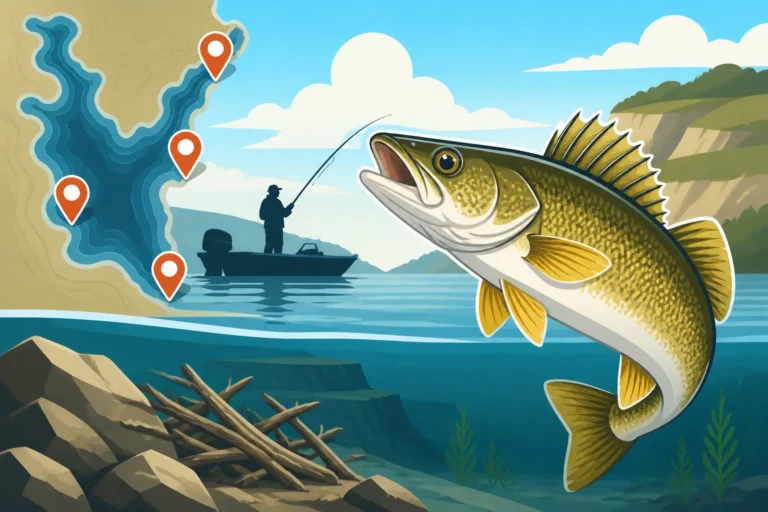
Smallmouth bass are creatures of structure, and Lake Sakakawea delivers it in spades. They gravitate towards areas with rocky bottom, submerged timber, gravel points, and sharp drop-offs. Think about points extending into the main lake, rocky shorelines, and any kind of submerged rock pile or hump. The clearer water found in many sections of Sakakawea, especially further west and in the main lake basin, is also a huge draw for smallmouth. They use this clarity to ambush prey, and it makes finding them easier with electronics. Unlike largemouth bass that prefer thick weeds and calmer, shallower water, smallmouth thrive in the more exposed, wind-swept areas where current and structure combine to create ideal ambush points. They'll often tuck themselves right up against a boulder or a cluster of rocks, waiting for an unsuspecting smelt or crayfish to swim by. This preference for hard structure means you’ll often find them in different areas than their green bass cousins, especially in the vastness of Sakakawea.
Why Sakakawea Holds Big Smallmouth
The reasons behind Sakakawea's capacity to grow trophy-class smallmouth are multifaceted. Firstly, the sheer size of the lake, with its immense forage base, plays a critical role. Lake Sakakawea is home to abundant populations of smelt, yellow perch, and various minnows, all of which constitute a high-protein diet for growing smallmouth. This rich food supply allows them to pack on weight and reach larger sizes than in less productive waters. Secondly, the diverse and extensive rocky habitat provides ample spawning grounds, protective cover, and prime feeding territories, minimizing competition and allowing individual fish to establish strongholds. Combine this with varying water levels over the years, which can expose new structure or flood existing vegetation, and you have an ever-evolving, highly productive ecosystem that consistently produces impressive smallmouth bass. When you're out on the water, don't be surprised to encounter smallmouth in the 3- to 5-pound range, with true giants pushing past that mark not uncommon. The health of this fishery is a testament to the lake's natural bounty and the careful management by the North Dakota Game and Fish Department.
Key Times and Seasons for Smallmouth Success
Just like with any species, timing is everything when it comes to Lake Sakakawea smallmouth. Understanding their seasonal movements and behaviors is crucial for consistent success, helping you to pinpoint where they'll be and what they'll be biting on. The massive swings in temperature and conditions across North Dakota's seasons dictate entirely different strategies.
Spring Spawning and Pre-Spawn Frenzy
As ice begins to recede from Lake Sakakawea, usually around April, the smallmouth begin their slow migration from deeper wintering holes to shallower, rockier areas in anticipation of the spawn. This pre-spawn period, typically late April through May, can be absolutely fantastic for catching large, aggressive smallmouth. They are actively feeding to build energy reserves for spawning, and they're often found near warming shallow bays, rocky points, and sheltered coves that offer a quick path to deeper water if conditions change. Look for water temperatures in the mid-40s to low 50s Fahrenheit; these are prime temperatures for the pre-spawn bite.
During the actual spawn, which generally occurs when water temperatures reach the mid-50s to low 60s Fahrenheit (late May to early June), smallmouth will move onto shallow gravel or rocky flats. Males will aggressively guard nests, making them vulnerable to slow-moving baits like tube jigs, soft plastics, or small jerkbaits. It's crucial to practice catch and release during this sensitive time to protect the future of the fishery. Many experienced anglers understand the importance of minimizing stress on spawning fish, allowing them to successfully reproduce. If you're planning a trip around this time, be sure to check the specific North Dakota Fishing Season Dates and Limits, as regulations can sometimes change.
Summer Patterns and Deep Water Tactics
Once the spawn is over and water temperatures stabilize in the high 60s and 70s Fahrenheit (June through August), Sakakawea's smallmouth will transition to their summer patterns. This means they often move to deeper, cooler water, but they'll still relate heavily to structure. You'll find them holding on main lake points, submerged humps, deep rock piles, and along the edges of channels. Vertical jigging with tubes or drop shots, dragging Carolina rigs, or slow-trolling deep-diving crankbaits become highly effective tactics during this period. The early morning and late evening hours often provide opportunities to catch fish in slightly shallower water as they come up to feed, but during the bright midday sun, they'll retreat to the sanctuary of the depths.
This is where your electronics really shine. A good fish finder is indispensable for locating these deeper structures and identifying schools of baitfish, which will almost certainly have smallmouth lurking nearby. Remember, Sakakawea is a vast lake, and covering water efficiently is key. If you're looking for an expert's take on where to focus your efforts or perhaps even book a trip, resources like FishingBooker can provide insights into local guides who specialize in these deep-water summer patterns. They often have years of experience navigating the complexities of this massive reservoir.
Fall Feeding and Migration
As autumn arrives and water temperatures begin to drop (September through October), Lake Sakakawea's smallmouth enter another aggressive feeding phase. This fall frenzy is driven by their instinct to gorge themselves before the long, lean winter months. They will often move shallower again, similar to spring, but with a different intensity. Look for them on prominent main lake points, rocky reefs, and the mouths of larger bays where baitfish are congregating. They'll actively chase down crankbaits, jerkbaits, and spinnerbaits, often putting on a spectacular fight.
The fall can be one of the best times to catch both numbers and size. The fish are healthy, strong, and eager to eat. Pay close attention to wind-blown points, as the wind can push baitfish into these areas, creating a feeding opportunity for the smallmouth. As the water cools further into late October and November, they will eventually move back to their deeper wintering areas, often large main lake basins or deep structure, and become less active. For more general guidance on fishing during these colder months, you might find our guide on North Dakota Fall Fishing Guide helpful as well.
Top Lake Sakakawea Smallmouth Bass Fishing Spots
Lake Sakakawea is immense, stretching for miles across North Dakota. Knowing where to start looking for smallmouth can be the biggest hurdle. While smallmouth can be found throughout the lake, certain areas consistently produce better results due to their preferred habitat and structure.
Western End Hotspots
The western end of Lake Sakakawea, particularly from the Williston area eastward, is often characterized by clearer water and more defined rocky structure, making it a prime smallmouth zone. Areas around the Little Missouri Arm and Tobacco Gardens Bay are well-known for their excellent smallmouth populations. These locations feature numerous rocky points, steep bluffs, and extensive submerged rock fields that smallmouth absolutely love. Access points near Williston can put you right in the thick of some fantastic smallmouth action.
During the spring, the protected bays and shallower rocky points in this region warm up quickly, drawing pre-spawn and spawning smallmouth. In summer, the main lake points and deeper humps within these larger bay systems become productive. Anglers often find success by targeting structure that transitions from shallow to deep quickly, as this allows smallmouth easy access to different depths depending on light and temperature conditions. It's a vast area, so don't be afraid to use your electronics to scout out potential fishing spots near areas like Van Hook Arm Fishing Spots on Lake Sakakawea.
Central Lake Structure and Points
Moving eastward towards the central part of Lake Sakakawea, near towns like New Town and Garrison, the lake becomes even wider, featuring sprawling main lake points, numerous islands, and extensive submerged humps. This central basin, especially areas around Fort Stevenson State Park and the nearby deepwater structures, consistently holds large numbers of smallmouth. The Snake Creek Embayment Fishing Spot, for example, offers diverse habitat that attracts a variety of species, including smallmouth.
These main lake points and humps act like magnets for baitfish, which in turn attract hungry smallmouth. On windy days, the wave action against these structures can dislodge crayfish and stir up bait, creating a feeding frenzy. Anglers should pay close attention to contour maps and use their fish finders to identify subtle breaks and rocky bottom composition on these structures. Long casts with crankbaits or slow-dragging jigs across these contours can be incredibly effective. Sometimes, just a slight variation in depth, a lone boulder, or a patch of gravel among softer bottom is all it takes to hold a school of fish.
Eastern Bays and Rock Piles
The eastern end of Lake Sakakawea, stretching towards the Garrison Dam, also offers excellent smallmouth opportunities, although the water might be slightly more stained in some bays compared to the western reaches. Areas like Deepwater Bay Fishing Spots on Lake Sakakawea and the numerous rock piles and rip-rap found near the dam itself are prime smallmouth habitat. The current influences near the dam outflow can also concentrate baitfish and smallmouth, creating unique fishing challenges and rewards.
During periods of higher water levels, newly flooded timber and brush in these eastern bays can become fantastic cover for smallmouth, especially during the spring and fall. These areas might require a different approach, perhaps more weedless presentations or careful navigation. Always remember to consult a detailed map or GPS unit when exploring new areas, as submerged hazards can be plentiful. For a general overview of the entire body of water, our comprehensive Lake Sakakawea Fishing Guide for North Dakota Anglers is a great resource.
Proven Techniques and Baits for Sakakawea Smallmouth
Catching smallmouth on Lake Sakakawea isn't just about finding them; it's about presenting the right bait with the right technique. These aggressive predators can be finicky, but with a diverse tackle box and a willingness to adapt, you'll be well on your way to a successful day.
Jigging and Soft Plastics
Jigging with soft plastics is arguably one of the most versatile and effective techniques for smallmouth bass on Sakakawea, especially when they are relating to deeper structure or when fishing pressure is high. Tube jigs, in particular, are smallmouth candy. Mimicking crayfish or small baitfish, they can be cast and retrieved with a series of hops and pauses along rocky bottoms, or vertically jigged directly over submerged humps and points. Colors like green pumpkin, watermelon, and various shades of brown and black are perennial favorites, mimicking the natural crayfish and gobies that smallmouth feed on. Pair a 3-inch or 4-inch tube with a 1/8 to 1/2 ounce internal jig head, adjusting weight based on depth and wind.
Beyond tubes, other soft plastics shine. Grubs on a lead head, Ned rigs, and drop shots are also highly effective, particularly when fish are less aggressive or holding tight to structure. A drop shot rig allows you to present a small plastic worm, minnow imitation, or creature bait at a specific depth, just above the bottom, without the weight interfering with its action. This technique is deadly when smallmouth are suspended or reluctant to chase. Experiment with different retrieve speeds and pauses; sometimes a subtle quiver is all it takes to trigger a bite.
Crankbaits and Jerkbaits for Aggressive Bites
When Sakakawea's smallmouth are active and aggressive, nothing beats the thrill of a hard-hitting bite on a crankbait or jerkbait. These baits excel at covering water quickly and drawing reaction strikes. Crankbaits are perfect for fishing rocky points, flats, and breaks, diving to various depths depending on their lip design. Medium-diving crankbaits in shad, perch, or crawfish patterns are excellent choices for covering depths from 5 to 15 feet. Vary your retrieve, incorporating pauses and erratic twitches to imitate a wounded baitfish.
Jerkbaits, on the other hand, are designed to be fished with a "twitch, pause, twitch, pause" retrieve, suspending in the water column during the pause. This imitation of a dying baitfish is irresistible to smallmouth, especially in cooler water temperatures during spring and fall. Popular jerkbait brands like Rapala or Lucky Craft offer models that suspend perfectly and come in a wide array of colors. Silver and blue, chartreuse, or natural baitfish patterns are typically highly effective. These baits are fantastic for targeting fish over rocky shelves or around prominent points where smallmouth ambush their prey.
Topwater and Spinnerbaits for Active Fish
For sheer excitement, nothing compares to a smallmouth exploding on a topwater lure. While not always the most consistent bite, when conditions are right (low light, calm water, warm temperatures), topwater fishing can be phenomenal. Poppers, walk-the-dog baits, and prop baits can all draw incredible strikes. Cast them near rocky shorelines, shallow points, or submerged timber, and work them with an erratic, splashy retrieve to mimic a struggling insect or baitfish. The sound of a surface lure hitting the water and the ensuing splash can call smallmouth up from surprising depths.
Spinnerbaits and bladed jigs are also excellent choices for covering water and targeting active smallmouth, especially in areas with scattered cover or slightly stained water. The flash and vibration they produce can attract fish from a distance. Single or double Colorado blade spinnerbaits in white, chartreuse, or black-and-blue patterns are versatile options. They can be slow-rolled along breaks, burned over shallow flats, or bumped off rocks and timber to trigger strikes. These baits are particularly effective during windy conditions or when the fish are scattered and you need to cover a lot of ground quickly.
| Lure Type | Best Conditions | Target Depth | Common Colors | Retrieval Style |
|---|---|---|---|---|
| Tube Jigs | All conditions, especially targeting structure, deeper fish | Bottom to 20+ feet | Green Pumpkin, Watermelon, Brown, Black | Hop & Pause, Drag, Vertical Jig |
| Jerkbaits | Cooler water, active fish, clear water | 2-10 feet (suspending) | Silver/Blue, Shad, Perch | Twitch, Twitch, Pause |
| Crankbaits | Active fish, covering water, varying depths | 5-20+ feet (diving) | Shad, Crawfish, Perch | Steady retrieve, Stop & Go, Deflect off structure |
| Drop Shot | Finicky fish, precise depth presentation, deep water | 10-30+ feet | Natural, Goby, Minnow | Subtle shakes, Dead-stick |
| Topwater Lures | Low light, calm water, warm temps, aggressive fish | Surface | Frog, Shad, White | Walk-the-dog, Popping, Erratic splashing |
| Spinnerbaits | Active fish, scattered cover, wind, stained water | 2-15 feet | White, Chartreuse, Black | Slow roll, Burn, Bump & Go |
Essential Gear and Electronics for Big Water Smallmouth
Fishing Lake Sakakawea, especially for smallmouth, demands reliable gear. This isn't a small pond where any old rod and reel will do. The vastness of the lake, the potential for big fish, and varied conditions mean you need equipment that can stand up to the challenge and help you locate those elusive bronze backs.
Rods, Reels, and Line Selection
For smallmouth bass on Lake Sakakawea, versatility is key. You'll want a good selection of medium to medium-heavy spinning and casting rods, typically in the 6'6" to 7'6" range. A medium-light spinning rod (6'6" to 7'0") with a fast action tip is ideal for lighter presentations like tube jigs, Ned rigs, and drop shots, allowing for sensitive feel and precise casting. Pair this with a 2500- or 3000-series spinning reel spooled with 6-10 lb fluorocarbon or braided line with a fluorocarbon leader. Fluorocarbon's low visibility and sensitivity are excellent for subtle bites.
For crankbaits, jerkbaits, and spinnerbaits, a medium-heavy casting rod (6'10" to 7'4") with a moderate-fast action is often preferred. This action provides enough backbone for powerful hooksets and allows the rod to load up well for longer casts, yet has enough give to prevent hooks from tearing out when a smallmouth makes a sudden run. A quality baitcasting reel with a gear ratio around 6.4:1 to 7.1:1 works well for these moving baits, spooled with 10-15 lb fluorocarbon or 30 lb braided line. Having the right line for trolling deep crankbaits can also make a significant difference in bait performance and feel.
Navigational and Fish Finding Tools
On a lake the size of Sakakawea, reliable electronics are not just a luxury; they're a necessity. A high-quality GPS-enabled fish finder with detailed mapping capabilities is paramount for navigating safely and efficiently, marking productive spots, and returning to them. Look for units with side imaging and down imaging sonar, which provide incredibly detailed views of the bottom structure and any fish holding near it. Brands like Humminbird and Lowrance offer excellent options that are popular among serious anglers on Sakakawea. Our guide on Best Fish Finders for North Dakota Lakes might offer some helpful comparisons.
Beyond finding fish, these units help you understand the underwater topography – identifying those rocky points, submerged humps, and subtle depth changes that smallmouth relate to. A good trolling motor with GPS Spot-Lock technology (like those from Minn Kota or Garmin) is also a game-changer. It allows you to hold your boat precisely over a productive structure, even in windy conditions, freeing you up to focus on fishing rather than constantly adjusting your position. This can be particularly important when exploring Lake Sakakawea's vast and often windy expanses. If you're considering what kind of vessel is best for such a large body of water, our article on Best Boats for Lake Sakakawea's Big Water could provide some valuable insights. Many experienced anglers also utilize services like FishingBooker to connect with local fishing charters that come equipped with all the necessary top-tier electronics and local knowledge.
Conservation and Responsible Angling Practices
As passionate anglers, we all share a responsibility to protect the incredible fishing resources that Lake Sakakawea offers. Practicing responsible angling ensures that future generations can enjoy the same opportunities we do today. This means adhering to regulations and being mindful of our impact on the environment.
Catch and Release Best Practices
Smallmouth bass are a prized sport fish, and many anglers choose to release most, if not all, of the smallmouth they catch, especially the larger, older fish that are crucial for spawning. When practicing catch and release, handle fish gently with wet hands to protect their slime coat, which is vital for disease prevention. Use pliers or a dehooking tool to quickly remove hooks, especially if they are deep-set. Minimize the time the fish is out of the water, and if possible, avoid horizontal holds that can damage their jaw or internal organs.
For fish that appear stressed, consider a proper revival technique: hold the fish gently in the water, facing into a mild current, until it regains strength and swims away on its own. Being mindful of fishing during the spawn and releasing fish quickly can significantly contribute to the health and sustainability of Sakakawea's smallmouth population. Always be aware of the North Dakota Fishing Regulations Explained, as adherence to size and creel limits is a fundamental part of responsible angling.
Aquatic Nuisance Species Prevention
North Dakota, like many states, faces the ongoing threat of Aquatic Nuisance Species (ANS) like zebra mussels and other invasive plants and animals. These species can devastate native ecosystems and severely impact fishing. Every angler has a role to play in preventing their spread. The "Clean, Drain, Dry" protocol is crucial:
- Clean: Inspect your boat, trailer, and all fishing gear (nets, waders, buckets) and remove any visible aquatic plants, animals, or mud before leaving any boat ramp.
- Drain: Pull all drain plugs and drain all water from your boat, livewell, bilge, and motor before leaving the access area. This is especially critical for livewells that might contain baitfish or water from one lake that could introduce ANS to another.
- Dry: Allow your boat and equipment to thoroughly dry for at least five days before launching in another water body. If drying for that long isn't possible, a thorough wash with hot, high-pressure water (or a visit to a decontamination station if available) is recommended.
These simple steps are incredibly effective in preventing the spread of ANS. Ignoring them can have long-lasting, detrimental effects on Lake Sakakawea and other precious North Dakota waters. You can find more detailed information and requirements in the Aquatic Nuisance Species Rules for Boaters guide. We all want to keep our waters healthy and fishable for years to come, and our collective efforts make a huge difference.
Disclaimer
The information provided in this guide is for general informational purposes only and is subject to change. Always consult the official North Dakota Game and Fish Department regulations for the most current and accurate rules and laws regarding fishing licenses, seasons, limits, and aquatic nuisance species prevention before heading out on the water. Fishing conditions, fish behavior, and regulations can vary, and it is the angler's responsibility to stay informed.