Best Bait for Northern Pike Through the Ice
Trying to chase Northern Pike through the ice in North Dakota can feel like a game of hide-and-seek, especially when you're staring down a tiny hole, wondering if your bait is even tempting them. It's frustrating to sit out on the frozen lake for hours with no action, questioning if you've got the right offering. This guide is here to cut through the confusion, helping you pick the absolute best baits to entice those toothy predators from beneath North Dakota's frozen waters this winter.
Understanding Northern Pike Behavior Under the Ice
Before we even talk about specific baits, it's crucial to understand how Northern Pike behave when the lakes freeze over in North Dakota. These aren't the same aggressive, high-energy predators you might encounter during the summer months. The cold water slows down their metabolism considerably, meaning they're not expending as much energy and, consequently, don't need to feed as frequently or as ferociously. However, they still need to eat, and they remain opportunistic ambush predators, lurking in wait for an easy meal.
Pike Metabolism and Feeding Habits in Winter
When water temperatures drop below 40 degrees Fahrenheit, a pike's bodily functions slow significantly. They become less active, often holding tight to structure like weed lines, sunken timber, or even subtle changes in bottom contour. This doesn't mean they stop biting; it just means their feeding windows might be shorter, and they're often looking for a larger, more satisfying meal that requires minimal effort to catch. You won't typically see them chasing down fast-moving baits across a wide area. Instead, they prefer to ambush prey that swims directly into their strike zone or lingers just long enough to be an easy target. This is why bait presentation becomes just as important as the bait itself.
Preferred Winter Habitats for Northern Pike
During the ice fishing season, Northern Pike tend to gravitate towards areas where they can find both cover and potential prey. These often include the edges of remaining green weeds in shallower bays, breaks leading from shallow flats to deeper water, and structure like submerged points or rock piles. In massive lakes like Lake Sakakawea or Devils Lake, they might relate to large submerged islands or prominent points. The key is to think like a pike: where can I hide, and where will unsuspecting baitfish swim by? Understanding these preferences allows you to place your chosen bait directly in their living room, increasing your chances of a hook-up. Remember, if you're targeting pike, checking out a comprehensive guide like North Dakota Northern Pike Fishing Guide can give you a lot more insight into their general habits.
Top Live Baits for Ice Fishing Northern Pike
When it comes to enticing Northern Pike through the ice, live bait often reigns supreme. The natural movement and scent of a struggling baitfish are incredibly hard for even a sluggish pike to resist. The trick is selecting the right size and species of baitfish and presenting it in a way that maximizes its appeal.
Large Minnows and Suckers
For Northern Pike, bigger is often better, especially when they're not in an aggressive mood. Large shiners, fatheads, or even small suckers are absolute magnets for pike. These baitfish offer a substantial meal, and their natural swimming action, even when hooked properly, sends out irresistible vibrations that pike can detect from a distance. A 4 to 8-inch baitfish is usually ideal, but don't be afraid to go larger if you're hunting for trophy pike. Many anglers swear by the enticing wiggle of a big golden shiner. You can often find quality baitfish at local bait shops throughout North Dakota, but always ensure they are legal species for use in your specific body of water.
The way you hook your live bait is critical for maximizing its lifespan and natural movement. For tip-ups, which are fantastic for covering a wider area when ice fishing for northern pike with tip-ups, many anglers prefer to hook the baitfish lightly through the back, just in front of the dorsal fin. This allows the minnow to swim naturally, but not so deep that you hit its spine and paralyze it. Another effective method is hooking it through both lips from the bottom up, which can keep the bait alive longer and present a more natural profile. Using a sturdy hook, like a VMC treble hook or a large single octopus hook, that matches the size of your bait is also essential to ensure a solid hookset in a pike's bony mouth.
Smelt and Cisco
While not always as readily available as traditional minnows, smelt and cisco can be incredibly effective live baits for pike, especially in lakes where they are part of the natural forage base. Smelt, with their oily texture and strong scent, are particularly appealing to larger predators. Cisco (also known as lake herring) are another fatty, high-energy food source that pike will readily target. These baits can be harder to keep alive, so it's often more practical to use them dead, but still fresh, on a quick-strike rig under a tip-up. The scent trail alone can be enough to draw in a curious pike. When using dead bait, ensure it's fresh and has been kept cold; a frozen-then-thawed bait won't have the same appeal as a freshly killed one.
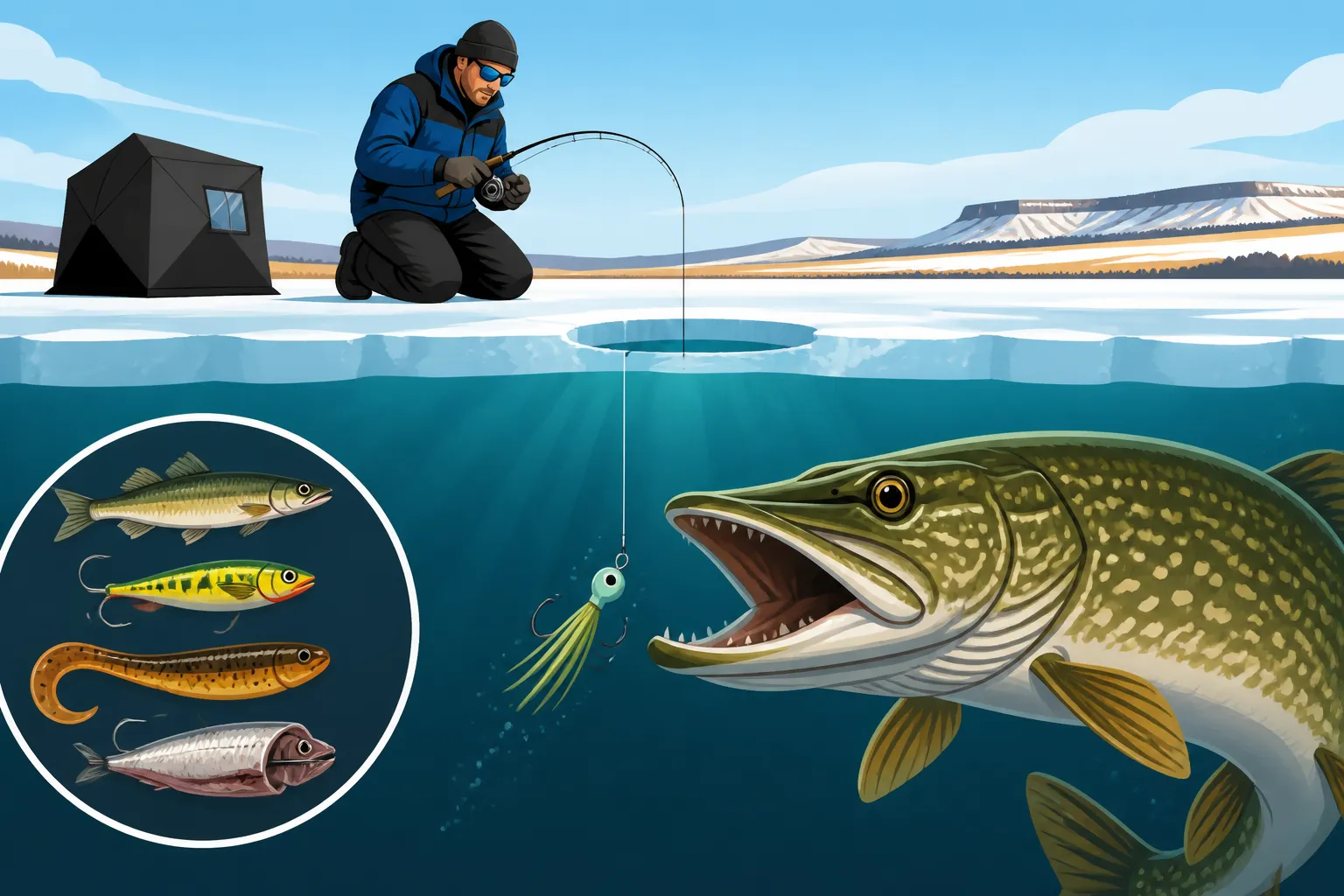
Rigging dead smelt or cisco effectively involves quick-strike rigs designed to ensure a solid hook-up without deep gut-hooking the fish. These rigs typically consist of two treble hooks or a combination of a single hook and a treble, strategically placed along the baitfish's body. The front hook might go through the snout, and the second hook near the tail, allowing for a good presentation and increasing your chances when a pike strikes.
Effective Artificial Lures for Ice Fishing Northern Pike
While live bait holds a special place, artificial lures can be incredibly effective, especially when you want to cover ground quickly or when pike are a bit more active. The advantage of artificials is their versatility in action, color, and size, allowing you to mimic different baitfish and trigger strikes with various jigging motions. Plus, you don't have to worry about keeping them alive!
Jigging Spoons and Lipless Crankbaits
Jigging spoons are a classic choice for pike through the ice, and for good reason. Lures like the legendary Rapala Jigging Rap or a classic Daredevle spoon have a fantastic flutter on the drop, mimicking a wounded baitfish. When jigged aggressively, they flash and dart, drawing attention, but it's often the pause, when the lure flutters or sits still, that triggers the strike. Pike often hit these lures on the fall or just after they settle.
Lipless crankbaits, such as the ubiquitous Rapala Rattlin' Rap or similar models from brands like Berkley, are another powerhouse artificial. Their loud rattles call fish in from a distance, and their tight wobble on the retrieve makes them irresistible. These are particularly effective for active pike that might be cruising an area. A sharp rip and fall motion works wonders, allowing the bait to drop and then kick up silt from the bottom, mimicking a fleeing baitfish. Keep a variety of colors and sizes on hand; sometimes a bright perch pattern works best, other times a more subdued silver or gold. You can find a huge selection of these lures on Amazon, making it easy to stock up before your next trip.
Soft Plastics and Swimbaits
Don't underestimate the power of soft plastics and swimbaits for ice fishing pike. Large paddle-tail swimbaits, anywhere from 4 to 8 inches, rigged on a heavy jig head, can be incredibly realistic. The subtle thump of the paddle tail can entice wary pike, and the soft plastic feels natural in their mouth, leading to longer holds. Colors mimicking local forage like perch, cisco, or whitefish are often great starting points.
Another excellent option is a large tube jig or a curly-tail grub, again rigged on a heavy jig head. These soft plastics offer a slower, more subtle presentation, which can be exactly what a sluggish pike wants. A gentle lift and drop, letting the tentacles or tail undulate, can be very effective. The key with soft plastics is to give them enough time to work their magic; sometimes a long pause is what convinces a pike to commit. Don't forget to check out how to rig a slip bobber for walleye, as some of those techniques can be adapted for pike too, especially with smaller soft plastics.
Bait Presentation and Strategic Ice Fishing for Pike
Having the best bait is only half the battle; knowing how to present it effectively and where to position yourself on the ice truly completes the picture. Northern Pike are often spread out, so covering water and presenting your bait correctly are paramount to success.
Setting Up Tip-Ups and Jigging Holes
When ice fishing for Northern Pike, especially on larger bodies of water, using multiple tip-ups is a common and highly effective strategy. North Dakota fishing regulations allow anglers to use multiple lines, so take advantage of it! Spreading out your tip-ups across different depths and structures allows you to find where the pike are holding. For instance, you might place some along a weed edge, others on a breakline, and one or two in slightly deeper water nearby. Each tip-up should be set with a generous amount of line (often 50-100 feet of braided line with a fluorocarbon or steel leader) and a large live minnow or sucker. Setting your bait a few feet off the bottom is a good starting point, but don't be afraid to experiment with different depths, even suspending a bait halfway up the water column if you suspect pike are cruising.
While tip-ups are passive, jigging is active. Often, anglers will set their tip-ups and then actively jig a nearby hole. This serves two purposes: first, it gives you something to do, and second, the active jigging can actually attract pike to the area, potentially triggering a strike on one of your tip-ups or your jigging rod. Using a heavy jigging rod specifically designed for larger fish, often equipped with Best Ice Fishing Rods for Northern Pike, will give you the power and sensitivity needed.
Importance of Leaders and Line Selection
Given the Northern Pike's razor-sharp teeth, using a strong, bite-proof leader is not an option – it's an absolute necessity. Without one, you'll be donating a lot of expensive lures and hooks to the bottom of the lake. The most common choices are steel leaders or heavy fluorocarbon leaders (60-80 lb test). Steel leaders, either single strand or multi-strand wire, offer ultimate bite protection, though some argue they can be more visible. Fluorocarbon, while still highly abrasion-resistant, is virtually invisible underwater, which can be an advantage in clear water or for wary pike.
For your main line, braided line is an excellent choice for ice fishing for pike. Its lack of stretch provides superior sensitivity, allowing you to feel even the most subtle bites, and its strength is unmatched. A 20-30 lb test braided line is a good all-around choice. Remember to check your line frequently for nicks and abrasions, especially after fighting a fish. For more on proper rigging, you might find guidance in an article like How to Rig a Tip-Up for Northern Pike.
Varying Depths and Retrieve Speeds
Pike don't always stick to one depth, even under the ice. Especially on a new lake or when the bite is slow, experimenting with different depths is crucial. Start by placing your baits at various depths on your tip-ups – some near the bottom, some suspended higher up. With jigging lures, focus on working the entire water column from just under the ice down to the bottom. Sometimes, a pike will be suspended in open water, while other times they'll be belly-to-the-bottom.
Similarly, vary your retrieve and jigging speeds. Some days, a slow, methodical lift-and-drop is what they want. Other days, an aggressive rip-jigging approach, followed by a long pause, will trigger a reaction strike. Pay attention to how the fish react on your fish finder (if you're using one), or simply to what gets bites. Don't be afraid to change things up until you find the pattern that works best on any given day. Remember that knowing how to check ice thickness safely is always your first priority when exploring new spots on the ice.
| Bait Type | Pros | Cons | Ideal Conditions |
|---|---|---|---|
| Large Minnows | Natural movement & scent, highly effective | Requires careful handling, can die easily | Moderate to slow pike activity, tip-up fishing |
| Suckers | Large meal, very enticing | Larger size can be less readily available | Targeting trophy pike, tip-up fishing |
| Smelt/Cisco | Strong scent, oily, excellent for big pike | Hard to keep alive, often used dead, can be regulated | Targeting larger pike, tip-up fishing, deadsticking |
| Jigging Spoons | Flashy, versatile action, covers water | Less natural scent, requires active jigging | Active pike, exploring new areas, jigging holes |
| Lipless Cranks | Loud rattles, covers water quickly | Can spook wary fish with too much noise | Active pike, searching large flats, jigging holes |
| Soft Plastics | Natural feel, subtle movement, scent can be added | Requires more finesse, less flashy | Wary pike, slow bites, sensitive presentations |
Disclaimer
Fishing involves inherent risks. Always prioritize safety on the ice, check local regulations, and be aware of weather conditions. The information provided in this guide is for informational purposes only, and individuals should exercise their own judgment and discretion.