How Big Do Flathead Catfish Get in North Dakota?
If you've spent any time on North Dakota's rivers, especially the Red or Missouri, you've probably heard whispers of truly massive catfish. It's a question many North Dakota anglers ponder: just how big do flathead catfish actually get in our waters? While they might not be as common or widespread as their channel cat cousins, flatheads offer a thrilling challenge with their immense size potential. This guide is going to dive deep into what you can expect when it comes to the sheer heft and length of North Dakota's flathead catfish, offering insights into where they thrive and what makes them grow so large.
Understanding Flathead Catfish in North Dakota
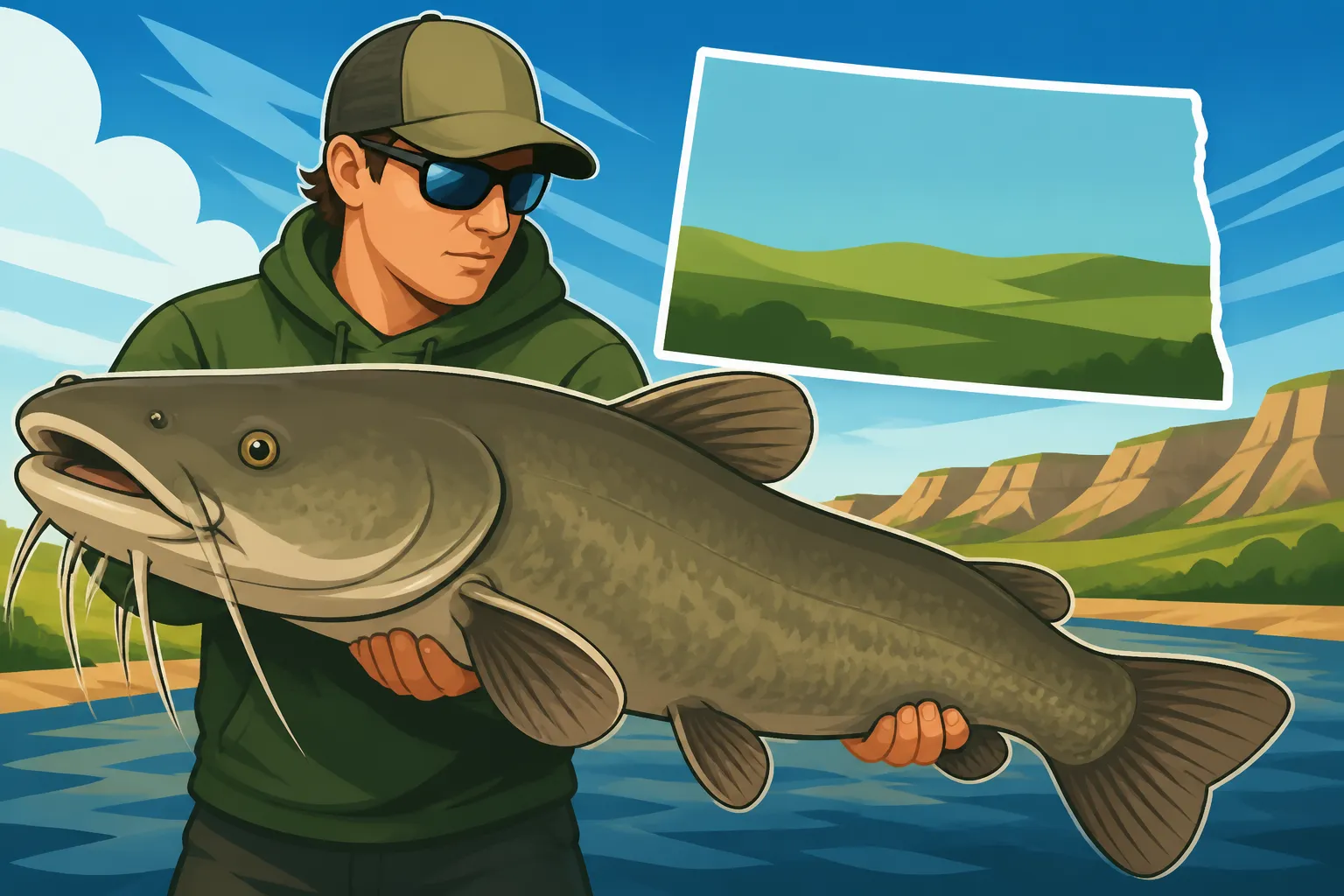
Flathead catfish ( Pylodictis olivaris) are a distinct species from the more commonly encountered channel catfish. They're known for their broad, flattened heads (hence the name!), small eyes, and a lower jaw that protrudes beyond the upper one. Their coloration tends to be mottled brown and yellow, offering excellent camouflage against the river bottom, and they typically have a rounded tail fin, unlike the deeply forked tail of a channel catfish. In North Dakota, these powerful predators are definitely around, and they grow to impressive sizes.
Native vs. Introduced Species in ND Waters
It's an interesting discussion among anglers and biologists: are flathead catfish truly native to all the waters where they're now found in North Dakota? Generally speaking, flathead catfish are considered native to the Missouri River system and its larger tributaries, including sections that flow through our state. They are fish of big rivers, preferring slow-moving, deep pools with plenty of cover like log jams, submerged trees, and undercut banks. Their presence in some other bodies of water might be due to introductions over the years, either accidental or intentional. However, in their core river habitats, they've established themselves as a formidable part of the ecosystem. Understanding their natural history helps us appreciate just how well they adapt to our diverse, sometimes challenging, waterways.
Where Flatheads are Found in North Dakota
While you might stumble upon a channel cat in almost any decent-sized pond or lake across the state, flatheads are far more selective. They are true river fish at heart. Your best bet for encountering these giants in North Dakota is undoubtedly the Missouri River and its connected impoundments like Lake Oahe, particularly the southern stretches where the river behaves more like a true river system. They also inhabit the Yellowstone River before its confluence with the Missouri.
These fish seek out complex underwater structures—think deep holes, current breaks behind large rocks or bridge pilings, and especially fallen timber. They love to ambush their prey from heavy cover, so don't expect to find them cruising open waters like walleye. If you're targeting flatheads, you're looking for prime, undisturbed river real estate. Their preference for these specific habitats makes them a bit more elusive, but when you find them, you know you're in the right spot for a potential monster catch. Missouri River Fishing Guide can give you a lot more insight into this amazing fishery.
The Potential for Size: How Big Can They Get?
This is the burning question, isn't it? When we talk about "big" in North Dakota fishing, flatheads often push the boundaries of what most anglers imagine for freshwater fish here. These are truly trophy-class specimens that can test your tackle and your resolve.
North Dakota State Record and Average Sizes
North Dakota has a state record for flathead catfish that is truly awe-inspiring. We're talking about a fish that tips the scales at well over 50 pounds, stretching to lengths often exceeding 4 feet. Imagine reeling in something that big – it's an experience that stays with you a lifetime! While the state record is certainly a benchmark, it's important to remember that most anglers aren't going to pull in a fish of that caliber every time they go out.
More typically, an angler targeting flatheads in North Dakota might expect to catch fish in the 10 to 30-pound range. These are still incredibly respectable fish that offer a tremendous fight. Anything over 30 pounds is considered a trophy by most standards, and anything approaching or exceeding 40 pounds is truly exceptional. It takes dedication, patience, and often a bit of luck to land one of the real monsters. The average size is certainly impressive, but the potential for truly gargantuan fish is what keeps dedicated flathead anglers coming back for more.
Factors Influencing Growth and Size
Several key factors contribute to how large a flathead catfish can grow in North Dakota's waters. These fish are opportunistic predators, and a steady, abundant diet is paramount.
- Food Availability: Flatheads are primarily piscivorous (fish-eating) as adults, with a strong preference for live prey. Rivers with healthy populations of suckers, carp, goldeye, and other forage fish provide the fuel these giants need to pack on the pounds. The rich ecosystems of the Missouri River and its tributaries certainly offer this bounty.
- Water Temperature and Growing Season: North Dakota has a relatively shorter warm-water growing season compared to states further south. However, the consistent flow and deep holes of our major rivers provide stable environments where flatheads can feed heavily during the warmer months. They'll slow down significantly in winter, but those summer feeding frenzies are critical for growth.
- Genetics: Like all species, individual flatheads have genetic predispositions for growth. Some fish are simply wired to grow larger and faster than others, given the right conditions.
- Age: Flatheads are long-lived fish. A 50-pound flathead isn't a young fish by any stretch. They can live for many decades, steadily growing throughout their lives, especially if they avoid fishing pressure and disease. It's truly a testament to their longevity that they can reach such immense proportions in our northern climate.
Distinguishing Flatheads from Other Catfish Species in North Dakota
When you're out on the water, especially in the low light preferred by many catfish, it can sometimes be tricky to tell one species from another in a hurry. However, knowing the subtle differences between a flathead and, say, a channel cat, is incredibly important for proper identification and adherence to any specific regulations. Plus, if you're specifically targeting a trophy flathead, you want to make sure you're using the right strategies.
Key Identification Features
Let's break down the main ways to spot a flathead catfish and differentiate it from the more common channel cat and even bullheads:
- Head Shape: This is probably the most obvious clue. A flathead catfish, true to its name, has a very broad, flattened head, especially when viewed from above. Their eyes are relatively small. Channel catfish, in contrast, have a more rounded, tapering head with larger eyes. Bullheads have a relatively blunt head, but not as distinctly flattened as a flathead.
- Mouth: Look at the lower jaw. On a flathead, the lower jaw typically protrudes noticeably beyond the upper jaw. For channel catfish, the jaws are usually equal or the upper jaw slightly protrudes.
- Tail Fin: This is a definitive identifier. Flathead catfish have a rounded or slightly emarginate (shallowly notched) tail fin. It's not deeply forked. Channel catfish have a distinctly and deeply forked tail fin, which is a key characteristic. Bullheads also have a rounded tail, but their overall body shape is much more stout and less streamlined than a flathead.
- Coloration: Flatheads usually have a mottled, brownish-yellow or olive-green body, often with dark spots or blotches that create a camouflage pattern. Their belly is typically cream or yellow. Channel catfish tend to be uniformly grayish or olive on their back and sides, often with small dark spots when younger, and a white belly. Larger channel cats often lose their spots. Bullheads range from dark brown to black.
- Anal Fin: While subtle, the anal fin (the fin on the underside near the tail) of a flathead is relatively short with 14-17 rays. Channel catfish have a longer anal fin with 24-29 rays. This is a detail for close inspection if you're unsure.
Why Identification Matters for Anglers
Accurate identification isn't just for impressing your fishing buddies; it's genuinely important.
- Regulations: While North Dakota generally has similar limits for channel and flathead catfish, it's always wise to be certain. Some states do have different regulations for various catfish species, so knowing what you've caught is crucial. Always check the current North Dakota Fishing Regulations Explained before heading out.
- Targeting Strategy: If you're specifically trying to catch a big flathead, your bait, tackle, and location choices will be vastly different than if you're just out for channel cats. Flatheads prefer live bait and heavy cover, while channel cats are more omnivorous and can be found in a wider range of habitats.
- Conservation: Correct identification also plays a role in conservation efforts. Understanding the distribution and health of specific fish populations relies on accurate reporting and data.
Here's a quick comparison to help you keep them straight:
| Feature | Flathead Catfish | Channel Catfish | Bullhead Catfish |
|---|---|---|---|
| Head Shape | Broad, flattened; small eyes | More rounded, tapering; larger eyes | Blunt, stocky |
| Lower Jaw | Protrudes beyond upper jaw | Jaws usually equal or upper slightly protrudes | Jaws usually equal |
| Tail Fin | Rounded or slightly emarginate (not deeply forked) | Deeply forked | Rounded, not forked |
| Coloration | Mottled brown/yellow, dark spots/blotches, yellow belly | Gray/olive (sometimes spotted when young), white belly | Dark brown to black, yellow/white belly |
| Typical Size | Large (10-50+ lbs) | Medium (1-20 lbs) | Small (under 5 lbs) |
| Preferred Bait | Live fish (suckers, bluegill) | Cut bait, stink bait, worms | Worms, corn, hot dogs |
| Habitat | Deep river holes, heavy cover (logs, rocks) | Wide variety, rivers, lakes, ponds, current | Ponds, slow rivers, often muddy bottoms |
Fishing for North Dakota's Big Flatheads
If the thought of battling a freshwater leviathan excites you, then targeting North Dakota's flathead catfish should be on your angling bucket list. These aren't fish you accidentally catch on a worm and bobber setup; they demand specialized gear and techniques. But the reward? Absolutely worth it.
Tackle and Techniques for Trophy Fish
When you're after a flathead that could potentially weigh more than your dog, you need to step up your game. Light tackle is simply not going to cut it.
- Rods: Think heavy-action rods, often 7 to 10 feet long, with a strong backbone to handle powerful runs and the ability to pull fish out of heavy cover. Some anglers even use saltwater-rated conventional rods for the biggest flatheads.
- Reels: A robust baitcasting reel with a reliable drag system and high line capacity is essential. Look for models designed for heavy freshwater or even light saltwater use. The drag will be your best friend when a flathead decides to bolt for a snag.
- Line: Forget your typical 8 or 10-pound test. You'll want to spool up with heavy monofilament or braided line, typically 30 to 80-pound test. Braided line offers superior strength, sensitivity, and resistance to abrasion, which is crucial when fishing around snags. However, a tough monofilament leader can still be useful.
- Hooks: Large, sturdy circle hooks are the standard for flatheads. Sizes like 8/0 to 12/0 are common. Circle hooks are designed to hook fish in the corner of the mouth, which is safer for the fish if you plan to release it and helps prevent gut hooking. You can find a good selection on Amazon for sure.
- Terminal Tackle: Heavy sinkers (2-6 ounces or more, depending on current) are needed to hold your bait on the bottom. A strong swivel to prevent line twist and stout leaders (at least 50-pound test monofilament or fluorocarbon) are also critical.
- Bait: This is where flatheads really differentiate themselves. They are predators and overwhelmingly prefer live bait. Large live suckers, bluegills, perch, or goldeye (check local regulations for baitfish use) are ideal. Rig them to swim naturally near the bottom. Dead cut bait can work, but live bait significantly increases your chances for a true trophy. Best Live Bait for North Dakota Walleye (though not for flatheads directly) can give you ideas on forage.
The technique itself is often about patience. Find a prime piece of cover – a deep log jam, an undercut bank, a rock pile in a strong current – and present your live bait directly to it. Let the bait do the work, and be ready to set the hook hard when that massive pull comes.
Best Times and Locations to Target Large Flatheads
Successfully targeting big flatheads in North Dakota relies heavily on understanding their habits and knowing when and where to find them.
- Season: While flatheads can be caught throughout the warmer months, late spring through early fall is prime time. They become much more active as water temperatures rise, leading to more aggressive feeding. Summer nights, in particular, are legendary for flathead fishing.
- Time of Day: Flatheads are primarily nocturnal feeders. While you might catch one during the day, your chances for a true giant skyrocket after the sun dips below the horizon. They move out of their daytime cover to hunt during the darkest hours. This means night fishing, complete with headlamps and bug spray, is often the most productive strategy. Night Fishing Techniques for Catfish will be invaluable.
- Location, Location, Location: As mentioned, flatheads are structure-oriented river fish.
- Deep River Channels: Focus on the main channels of the Missouri River and its largest tributaries.
- Log Jams and Fallen Trees: These are absolute magnets for flatheads. They provide cover, ambush points, and current breaks. Approach these carefully, as you're bound to get snagged, but that's where the fish live.
- Undercut Banks: Where the river current has eroded the bank, creating a cave-like overhang, flatheads love to hide.
- Bridge Pilings and Rock Piles: Any significant current break or submerged structure can hold fish.
- Confluences: The meeting points of two rivers, like the Yellowstone and Missouri, can create rich feeding grounds.
- Near Dams: While you need to be mindful of regulations and safety, the turbulent waters and deep holes below dams can be productive for flatheads.
Patience is truly a virtue when flathead fishing. You might sit for hours without a bite, but when that rod doubles over, you'll know exactly why these elusive giants are worth the wait. Exploring these prime habitats will significantly increase your odds of encountering one of North Dakota's truly massive flathead catfish.
Disclaimer
This article is for general informational purposes only and does not constitute professional advice. Laws, prices and regulations vary by location and change over time. Consult a qualified professional for guidance on your specific situation.