North Dakota White Bass State Record
For many of us who love casting a line into North Dakota's waters, there's a certain magic in the idea of landing a truly exceptional fish. While walleye and pike often steal the spotlight, the feisty white bass offers an incredible angling experience, often in numbers that will wear out your arm in the best way possible. But beyond the sheer fun of catching them, there's the dream of a lifetime: breaking a state record. This guide is dedicated to that pursuit, specifically diving deep into the North Dakota White Bass State Record, what it means, and how you might one day etch your name in the record books.
The Thrill of White Bass Fishing in North Dakota
North Dakota might be famous for its walleye and pike, but don't sleep on the white bass! These hard-fighting fish provide some of the most exciting and action-packed fishing experiences our state has to offer. They're not just fun; they're also a great entry point for new anglers and a consistent source of excitement for seasoned pros.
Why White Bass are a Favorite Among Anglers
Imagine a day on the water where you're not just getting a bite here and there, but reeling in fish after fish. That's often the reality when you find a school of white bass. They are incredibly aggressive feeders, especially when they're actively chasing baitfish. This makes them a blast to catch on light tackle, offering a surprisingly strong fight for their size. It's a fantastic way to spend an afternoon with friends or family, and you often come home with plenty of fillets for a fresh fish fry.
Their schooling behavior is a huge part of their appeal. When you locate one white bass, you can bet there are dozens, if not hundreds, more nearby. This makes for fast and furious action that can keep everyone engaged, even those with shorter attention spans. Plus, they're generally quite accessible, found in many of our larger reservoirs and rivers. They aren't as finicky as some other species, making them a rewarding target for anglers of all skill levels.
Common Habitats for White Bass in North Dakota
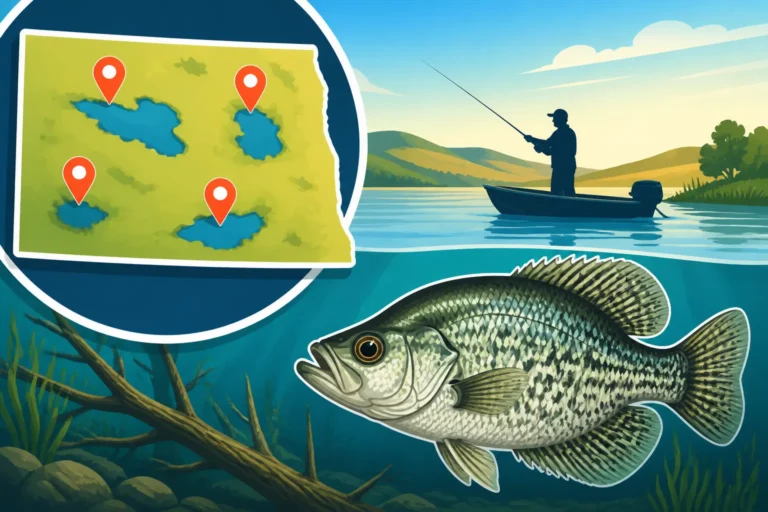
White bass thrive in large, open bodies of water, particularly reservoirs and major river systems where they have ample space to roam and chase baitfish like shad or minnows. Lake Sakakawea, for instance, is a fantastic fishery for white bass, with its vast expanses and abundant forage. You'll often find them congregating in bays, along points, and near submerged structures, especially where current or wind pushes baitfish.
The Missouri River system, including Lake Oahe, also offers prime white bass habitat. These fish love to suspend in the water column or relate to current breaks, waiting to ambush their prey. While they might not be as widespread in smaller, shallower lakes, they are very much a staple in our state's larger, deeper waters. Understanding these habitats is crucial for anyone looking to consistently catch white bass, whether you're just out for fun or hoping to land a potential record breaker. They're often found in the same areas as other popular game fish, making for exciting multi-species days on the water. You can learn more about the diverse aquatic life in our state by reading Fish Species Found in North Dakota Lakes and Rivers.
Unveiling the North Dakota White Bass State Record
Every state has its legends, those fish that push the boundaries of what's possible. For white bass in North Dakota, there's a specific benchmark that all serious anglers dream of surpassing. It’s not just about the size of the fish; it’s about the story, the effort, and the sheer luck involved in landing such a magnificent specimen.
Details of the Record-Breaking Catch
The North Dakota White Bass State Record currently stands at 4 pounds, 2 ounces. This impressive fish was caught by George J. Smith way back in 1986 on Lake Sakakawea. Just imagine the excitement of pulling a fish of that caliber from the water! Over four pounds for a white bass is an absolute giant and a testament to the productivity of Lake Sakakawea and the angler's skill and persistence.
Think about it: most white bass you encounter are in the 1 to 2-pound range, maybe pushing 2.5 pounds on a really good day. To nearly double that typical size is truly remarkable. It tells us that these fish have the potential to grow to incredible dimensions in our waters, given the right conditions and a little time. The fact that this record has held for so many decades speaks volumes about how rare and special a catch it was. While many anglers enjoy the consistent action of catching numerous smaller white bass, the pursuit of that elusive, record-breaking giant adds an entirely different level of challenge and excitement to the sport.
How State Records Are Certified in North Dakota
Catching a potential state record isn't just about reeling in a big fish; it's also about following a strict process to ensure its legitimacy. The North Dakota Game and Fish Department (NDGFD) has clear guidelines to certify a new record. After all, they want to make sure every record stands up to scrutiny and truly represents the largest of its kind.
First and foremost, the fish must be weighed on a certified scale, typically found at a grocery store, bait shop, or other commercial establishment. This isn't your average home kitchen scale; it needs to be an official scale that's regularly calibrated for accuracy. You'll also need witnesses to the weighing process, preferably someone who can attest to the integrity of the catch and the measurement. Secondly, a photo of the fish is usually required, along with a clear measurement of its length. The fish needs to be measured properly, from the tip of the snout to the tip of the tail, to ensure consistency.
Finally, the angler must fill out an official application form provided by the NDGFD, detailing the catch, the location, the gear used, and providing all necessary contact information. A Game and Fish Department biologist or warden will typically verify the species identification and review all the documentation. It's a thorough process, but it's what gives state records their prestige and credibility. If you think you've caught a potential record, the immediate steps you take are critical, so being prepared is key. Always keep yourself informed on current rules and regulations, as detailed in North Dakota Fishing Regulations Explained.
Targeting Trophy White Bass in North Dakota
While catching a lot of white bass is certainly a blast, focusing on those bigger, trophy-sized fish requires a slightly different approach. It's not always about quantity; sometimes it's about targeting those specific patterns or areas where the giants might be lurking.
Techniques and Lures for Big White Bass
When you're after those bigger white bass, you might need to size up your presentation slightly. While they'll hit small jigs and spinners, a slightly larger profile can sometimes entice a more significant bite. Spoons like a Kastmaster or Little Cleo, especially in silver or gold, can be incredibly effective when jigged vertically over deeper schools or cast and retrieved near baitfish concentrations. Their flash and erratic action mimic dying baitfish, which is irresistible to hungry white bass.
Small crankbaits that dive to the depths where white bass are feeding can also be deadly. Look for ones that imitate shad or perch, in colors like chrome/blue, white, or chartreuse. Trolling these crankbaits can cover a lot of water and help you locate schools quickly. Sometimes, a white or chartreuse curly tail grub on a 1/4 or 3/8 ounce jig head is all it takes. Cast it out, let it sink to the desired depth, and retrieve it with a slow, steady motion or a series of short jerks. Many anglers find a good selection of these lures and other gear conveniently on platforms like Amazon before hitting the water. The key is often finding the baitfish – where the bait is, the white bass won't be far behind.
Best Times and Locations to Hunt for Big White Bass
Like many fish, white bass have seasonal patterns that influence where and when you'll find them. Springtime is often fantastic, especially during their spawning run, when they move into shallower river sections or tributary arms of larger reservoirs. This can be a time of incredible action. As summer progresses, they tend to move to deeper, cooler water, often suspending in open water or relating to main lake points and humps. They'll follow large schools of baitfish, so keeping an eye on your electronics for bait balls is crucial.
Early mornings and late evenings are often the prime feeding windows, especially during the warmer months, when light levels are lower and they feel more comfortable ambushing prey. However, white bass can be active throughout the day if conditions are right, particularly if there's a strong chop on the water or if they're in a feeding frenzy. Lake Sakakawea consistently produces excellent white bass fishing, with specific bays and main lake points often holding large schools. Other prime locations can be found by consulting our guide to Best Places to Fish in North Dakota.
Essential Gear for White Bass Anglers
You don't need overly heavy gear to tackle white bass, which is part of their charm. A medium-light spinning rod and reel combo is often perfect. This setup offers enough backbone to handle a fighting fish but is sensitive enough to feel those subtle bites. A good quality 6-foot 6-inch to 7-foot rod with a fast action is ideal. For line, 6-8 pound monofilament or fluorocarbon is a great all-around choice. If you prefer braided line, a 10-pound test with a fluorocarbon leader will give you excellent sensitivity and casting distance.
A reliable landing net is also a smart addition, especially when you're dealing with multiple fish or a potential record breaker. It helps protect the fish and makes landing them much easier. Don't forget a quality cooler to keep your catch fresh if you plan on keeping them for the table. When stocking up on new equipment, many anglers start their search online; you can find a wide range of options for Best Fishing Rods for North Dakota Anglers and Best Fishing Tackle for North Dakota Lakes on platforms like Amazon. Having the right gear not only makes the experience more enjoyable but also increases your chances of success.
Contributing to the Legacy: Reporting a Potential Record
The idea of catching a state record white bass is certainly exciting, but if you're lucky enough to hook into something truly extraordinary, knowing the proper steps to report it is crucial. Your quick actions can make all the difference in having your catch officially recognized and celebrated.
The Process of Documenting Your Catch
The moment you land a white bass that looks like a monster, your immediate actions are vital. First, do not delay in weighing it. The fish can lose weight quickly, especially if it's out of water for an extended period. Head straight to a certified scale. This could be at a local bait shop, a grocery store with a deli, or any business that has a scale regularly inspected and calibrated. Bring a camera! Take clear, well-lit photos of the fish from multiple angles, especially next to a measuring device to show its length. Get a photo with yourself holding it, and another with the fish laid flat.
Next, find witnesses. The more credible witnesses you have, the better. Someone from the establishment where you weigh the fish, or fellow anglers, can attest to the honesty of your catch. Record their names and contact information. Also, measure the fish's length accurately, from the tip of the nose to the very tip of the tail, pinched together if possible, to ensure the longest possible measurement. Keep the fish in as good a condition as possible, perhaps on ice, until it can be officially inspected.
Contacting the North Dakota Game and Fish Department
Once you have your fish weighed, measured, photographed, and witnessed, it's time to contact the North Dakota Game and Fish Department. You'll want to reach out to their main office or a regional fisheries biologist. Don't just show up; call them first to explain your situation and ask about their specific protocol for record fish submissions. They will guide you through the official application process and likely arrange for an in-person inspection of the fish if necessary.
Be prepared to provide all the details: when and where you caught it, what bait or lure you used, the type of rod and reel, and the names of your witnesses. They might ask specific questions to verify the species and ensure all rules were followed. Remember, transparency and accuracy are paramount here. Their job is to maintain the integrity of the state's record book, so be patient and thorough in your responses. Their website is a great resource for general inquiries, and they have specific pages for regulations, which are good to review, especially for rules like How Many Lines Can You Fish With in North Dakota?.
Understanding White Bass Regulations in North Dakota
Fishing regulations are in place for a good reason: to protect our precious fisheries and ensure that future generations can enjoy the same opportunities we do. When targeting any species, including white bass, it’s not just good practice but a legal requirement to be aware of and abide by all current rules.
Daily Limits and Possession Limits for White Bass
While white bass are generally abundant and have generous limits compared to some other species, it’s still important to know what the current regulations are. The North Dakota Game and Fish Department sets specific daily limits (how many you can keep per day) and possession limits (how many you can have in your possession, including at home) for various species. These limits can change, so always check the most recent North Dakota Fishing Proclamation or the NDGFD website before you head out.
For white bass, these limits are often quite liberal, reflecting their robust populations and rapid reproduction rates. However, even with ample numbers, it's crucial not to overharvest. Taking only what you need and leaving the rest for others and for the future health of the fishery is a key component of responsible angling. Make sure your fishing license is always up to date; information on how to obtain one can be found in our comprehensive North Dakota Fishing License Guide.
Importance of Conservation
Beyond just following the rules, conservation is about being a good steward of our natural resources. This means practicing catch and release, especially for larger, older fish that are valuable spawners, if you're not planning to keep them for food. It also means handling fish gently when releasing them, minimizing their time out of water, and using proper unhooking tools.
Conservation also extends to preventing the spread of aquatic nuisance species (ANS) like zebra mussels or Eurasian watermilfoil. Always clean, drain, and dry your boat and gear after every outing. These small actions collectively make a huge difference in maintaining healthy ecosystems for all fish species, including white bass. Understanding the North Dakota Open Water Fishing Season and other seasonal patterns can also help you fish responsibly and in harmony with natural cycles.
When you're out on the water, the focus is often on the catch, but taking a moment to appreciate the environment and doing your part to protect it ensures that the thrill of North Dakota fishing, and the chance to catch that next state record white bass, remains a possibility for years to come. For more on general fishing strategies and ethics, checking out Best Bait for North Dakota Fishing can give you an edge while staying within responsible angling practices.
| Characteristic | Typical White Bass | North Dakota State Record White Bass |
|---|---|---|
| Weight | 1 – 2.5 lbs | 4 lbs, 2 oz |
| Length | 10 – 15 inches | Likely over 18 inches |
| Age | 2 – 5 years | Potentially 6+ years |
| Habitat | Schooling, open water, reservoirs, rivers | Same, but often older, larger individuals seeking specific conditions or ample forage |
| Rarity | Common | Extremely Rare |
Disclaimer
This article is for general informational purposes only and does not constitute professional advice. Laws, prices and regulations vary by location and change over time. Consult a qualified professional for guidance on your specific situation.