Can You Keep a Shovelnose Sturgeon in North Dakota?
There's a lot of confusion swirling around fishing for sturgeon in North Dakota, and it's completely understandable. Many anglers hear "sturgeon" and immediately think "protected," worrying they might accidentally break a rule simply by landing one of these prehistoric fish. The good news is that when it comes to the Shovelnose Sturgeon, there's a specific set of guidelines, and yes, you generally can keep them in North Dakota, provided you follow the current regulations. This guide will walk you through everything you need to know about legally keeping Shovelnose Sturgeon, from identification to regulations and responsible angling practices.
The Unique World of Shovelnose Sturgeon
Before we dive into the nitty-gritty of regulations, let's get acquainted with the Shovelnose Sturgeon. These incredible fish are often overshadowed by their larger, more famous cousins, but they're a vital part of North Dakota's aquatic ecosystem and offer a really unique fishing experience.
What Exactly is a Shovelnose Sturgeon?
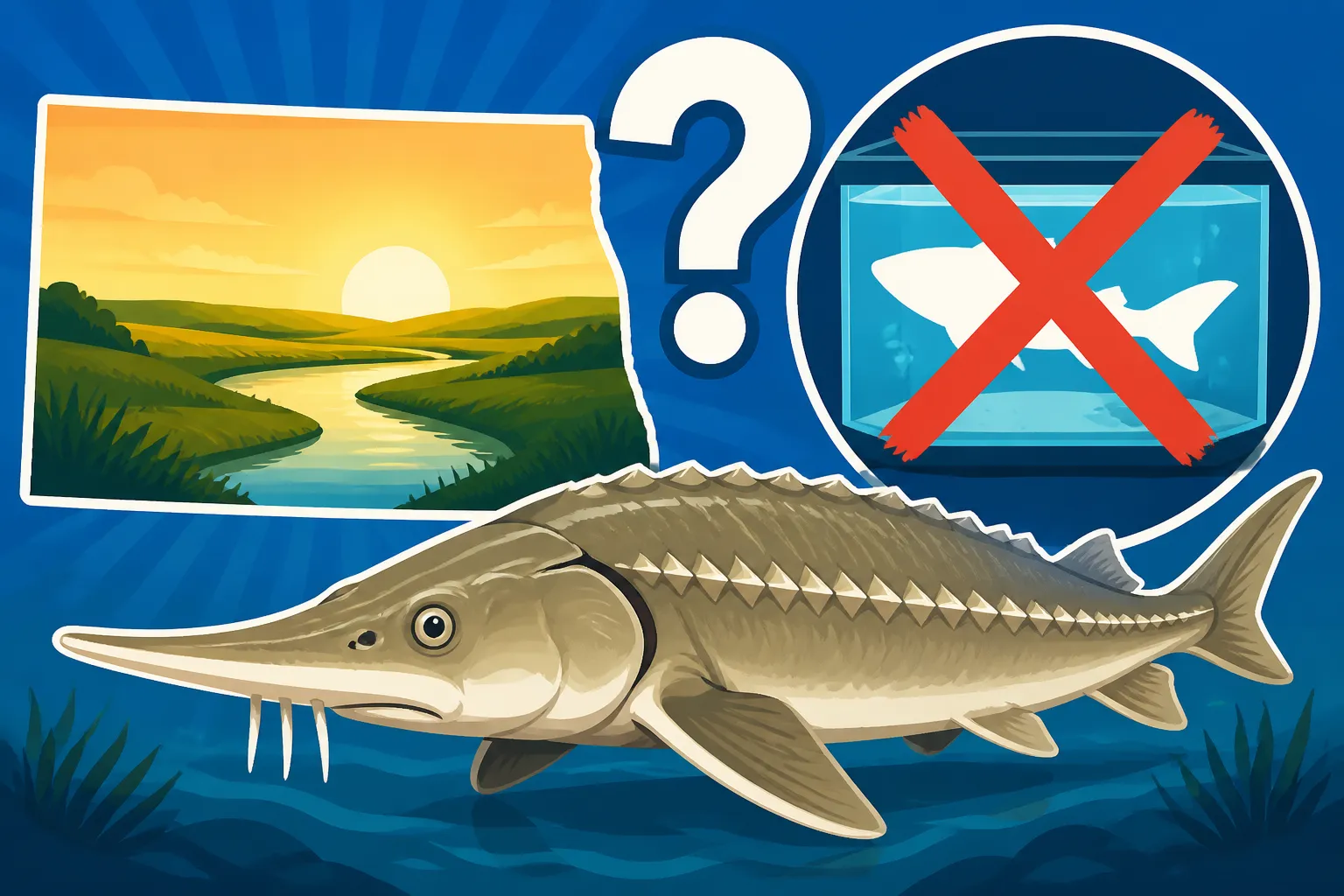
The Shovelnose Sturgeon (Scaphirhynchus platorynchus) is North America's smallest sturgeon species, a true native to the Missouri River basin. Unlike some of the monstrous sturgeon you hear about in other parts of the world, these guys typically top out around 30 inches and might weigh a few pounds. Don't let their relatively smaller size fool you, though; they're resilient, ancient fish that have been navigating these waters for millions of years. They get their name from their distinctively flattened, shovel-like snout, which they use to root around in the river bottom for insects, larvae, and small fish.
They're covered in five rows of bony plates, called scutes, which are a hallmark of the sturgeon family. These scutes act like armor, protecting them as they forage along the riverbed. Their mouth is small and protractible, designed for sucking up food rather than aggressively biting. You'll also notice four barbels – whisker-like sensory organs – located on the underside of their snout, just in front of their mouth. These barbels are crucial for helping them locate food in murky river waters. Understanding these features is key to differentiating them from other species, especially the federally protected Pallid Sturgeon.
Where You'll Find Them in North Dakota
In North Dakota, if you're looking for Shovelnose Sturgeon, your best bet is undoubtedly the Missouri River and its larger tributaries. These fish thrive in the flowing, sometimes turbid, waters of big rivers. They prefer areas with sand or gravel bottoms where they can easily forage for their food. While they might occasionally venture into the lower reaches of major tributaries, the main stem of the Missouri River, including parts of Lake Oahe and particularly the section below Garrison Dam, is prime habitat.
They are bottom dwellers, so you won't typically find them in the upper water column. Instead, they hug the riverbed, often in deeper channels or areas where the current creates natural food traps. Anglers targeting them will often set up in these deeper pockets, especially near sandbars, drop-offs, or bends in the river. It's a different kind of fishing, one that requires patience and an understanding of river dynamics, but the reward of landing one of these living fossils is truly something special. When you think of Missouri River Fishing Guide, Shovelnose Sturgeon are definitely part of that unique experience.
Why the Confusion Around Keeping Them?
The confusion surrounding whether you can keep Shovelnose Sturgeon is entirely valid and comes from a good place: concern for conservation. The primary reason for this widespread uncertainty is the presence of the federally endangered Pallid Sturgeon (Scaphirhynchus albus) in the same waters. Pallid Sturgeon are incredibly rare and critically protected, and they bear a striking resemblance to Shovelnose Sturgeon, especially to the untrained eye. For many years, and still today, mistaken identity has been a major challenge for conservation efforts.
Anglers are often hesitant to even target sturgeon because they fear accidentally catching a Pallid and not knowing how to properly handle it or identify it. This is why the North Dakota Game and Fish Department (NDGFD) has clear guidelines and strongly emphasizes identification. They want anglers to be informed and confident, knowing that responsible angling for Shovelnose Sturgeon is indeed possible, while still protecting the precious Pallid Sturgeon. It’s a delicate balance, and it falls on us as anglers to do our homework and understand the differences. For more on this, check out Is the Pallid Sturgeon Protected in North Dakota?.
Understanding North Dakota's Sturgeon Regulations
Navigating fishing regulations can sometimes feel like trying to untangle a bird's nest of fishing line. But when it comes to Shovelnose Sturgeon in North Dakota, the rules are designed to be clear, protecting the vulnerable while allowing for sustainable angling of the more common species.
The General Rule: Why Most Sturgeon Are Protected
Across North America, many sturgeon species face significant conservation challenges, often due to habitat loss, overfishing historically, and pollution. This is why you'll find that in most places, and for most sturgeon species, they are either entirely protected or have extremely restrictive seasons and limits. The Pallid Sturgeon, which shares waters with the Shovelnose in North Dakota, is a prime example of a highly protected species. It's federally endangered, meaning its survival is at risk, and strict regulations are in place to ensure its protection. Any Pallid Sturgeon caught must be immediately released unharmed. This blanket of protection for "sturgeon" in general is what often leads anglers to assume all sturgeon are off-limits, which isn't quite the case for the Shovelnose here. We want to ensure the Pallid Sturgeon Recovery in the Missouri River continues to be a success.
The Specifics for Shovelnose Sturgeon
Here's the critical information: Yes, you can legally keep Shovelnose Sturgeon in North Dakota, with specific regulations put in place by the North Dakota Game and Fish Department. The state recognizes that Shovelnose Sturgeon populations are more robust than their Pallid cousins, allowing for a limited, responsible harvest. However, it's absolutely crucial that you are 100% certain you have identified a Shovelnose Sturgeon before deciding to keep it. Mistaking a Pallid for a Shovelnose can lead to serious legal consequences and, more importantly, can harm a critically endangered species.
The regulations usually outline a specific daily creel limit and a possession limit. These limits are designed to prevent overharvesting and ensure the population remains healthy for future generations of anglers. It’s always smart to double-check the latest North Dakota Game and Fish Department fishing proclamation or booklet for the most current rules, as they can sometimes change to adapt to population dynamics. You can find detailed information in the North Dakota Fishing Regulations Explained or by looking through the North Dakota Fishing Regulations Booklet 2026 to 2028.
Size Limits and Daily Creel
While specific numbers can fluctuate, generally, North Dakota permits the keeping of Shovelnose Sturgeon with a daily creel limit and a possession limit. For instance, you might be allowed to keep a certain number of Shovelnose Sturgeon per day, and have a maximum number in your possession at any given time (this usually includes fish at home). What's often absent for Shovelnose Sturgeon, and this is a key differentiator, is a minimum or maximum size limit. This is largely because their smaller size and distinct features, when properly identified, help distinguish them from the Pallid Sturgeon, which are typically larger and have different proportions.
However, the absence of a size limit doesn't mean "anything goes." It puts a higher premium on correct identification. If you're unsure, the safest bet is always to release the fish unharmed. This approach not only protects you from potential legal issues but also contributes to the conservation of all sturgeon species in North Dakota's waters. Always refer to the most recent official regulations document for the exact daily and possession limits before heading out.
Practical Angling Tips for Shovelnose Sturgeon
Fishing for Shovelnose Sturgeon is a unique experience, and having the right approach, from identification to gear, can make all the difference. It's not just about catching them, but also about doing so responsibly.
Identifying a Shovelnose Sturgeon
This is perhaps the single most important aspect of fishing for Shovelnose Sturgeon in North Dakota. Being able to correctly identify your catch is paramount to adhering to regulations and protecting the endangered Pallid Sturgeon. While they look similar at a glance, there are distinct features that separate the two.
The Shovelnose Sturgeon has a distinctly shovel-like, broad, and flattened snout. Its four barbels are all roughly the same length and are positioned in a straight line across the underside of the snout, closer to the tip of the snout than to the mouth. Crucially, the barbels on a Shovelnose Sturgeon are fringed, or slightly frayed, at the edges. Another key feature is the presence of a completely scaled belly, meaning there are bony plates or scutes covering the entire underside of the fish between the pectoral fins and the vent.
The Pallid Sturgeon, on the other hand, typically has a longer, more pointed snout, and its barbels are of unequal length, usually with the inner pair being shorter than the outer pair, and they are not fringed. The Pallid Sturgeon also has a largely scaleless belly, appearing smooth or mostly bare. Pallids also tend to be lighter in color and have longer, more slender bodies when compared to a Shovelnose of similar length. When in doubt, always default to releasing the fish.
Here’s a quick comparison table:
| Feature | Shovelnose Sturgeon | Pallid Sturgeon |
|---|---|---|
| Snout Shape | Broad, flattened, shovel-like | Long, pointed, more conical |
| Barbels | All same length, fringed, in a straight line | Unequal length (inner shorter), unfringed, staggered |
| Belly | Fully scaled (bony plates/scutes present) | Largely scaleless (smooth, mostly bare) |
| Coloration | Darker, often mottled brown/gray | Lighter, grayish-white or pale |
| Body Shape | Stockier, somewhat chunky | More slender, elongated |
Recommended Gear and Bait
Shovelnose Sturgeon are bottom feeders, so your gear and bait selection should reflect this. You'll want a sturdy rod and reel setup capable of handling decent weight and strong currents. A medium-heavy to heavy action spinning or baitcasting rod, about 7 to 9 feet long, paired with a reel spooled with 20-30 pound monofilament or braided line, is a good starting point. These fish don't typically make long, screaming runs, but they can put up a surprisingly good fight when hooked, especially in current. You can find durable, reliable setups that will last for years on sites like Amazon.
For tackle, a simple bottom rig is usually most effective. A sliding sinker rig (Carolina rig) or a three-way swivel rig with a bell sinker works well. Use a heavy enough sinker to hold your bait on the bottom in the river current – sometimes several ounces are needed. For hooks, a strong, wide-gap circle hook in sizes 1/0 to 3/0 is ideal. Circle hooks are excellent for sturgeon because they tend to hook in the corner of the fish's mouth, minimizing harm if you need to release a fish.
As for bait, Shovelnose Sturgeon aren't picky. They're scavengers and opportunists. Cut bait (like chunks of oily fish such as smelt or shad), nightcrawlers, and shrimp are all excellent choices. Some anglers even have success with stink baits or prepared baits designed for catfish, as their feeding habits are somewhat similar. Fresh bait is always best, but these hardy fish will often take frozen or slightly aged offerings as well. Consider bringing a variety to see what they prefer on any given day. More tips on Best Bait for North Dakota Fishing might also be helpful.
Best Practices for Catch and Release
Even if you intend to keep a Shovelnose Sturgeon within the legal limits, practicing responsible catch and release techniques is essential, especially given the presence of endangered species. If there's any doubt about the identity of your catch, you must release it immediately.
When handling any sturgeon, minimize its time out of the water. Sturgeon are delicate fish despite their armored appearance, and being out of their aquatic environment can cause significant stress. If you need to take a quick photo, do so quickly and keep the fish low to the ground or over the water. Always handle the fish gently, supporting its body horizontally rather than vertically by the tail or gills. Avoid touching their eyes or gills. Pliers for hook removal are a must. If the fish is deeply hooked, cut the line as close to the hook as possible rather than trying to tear the hook out. This allows the fish a better chance of survival. Being prepared with a pair of long-nose pliers or a hook remover from an online retailer like Amazon can make a big difference in ensuring a swift release. Always be mindful of your actions, remembering that protecting North Dakota's diverse fish populations, including all sturgeon, is a shared responsibility.
The Bigger Picture: Conservation and Responsible Angling
Understanding the specific rules for Shovelnose Sturgeon is important, but it's part of a much larger commitment to responsible angling and conservation that benefits all of North Dakota's aquatic life.
The Importance of Conservation
The fact that we can even discuss keeping Shovelnose Sturgeon in North Dakota is a testament to sound fisheries management and a relatively healthy population. However, the presence of the endangered Pallid Sturgeon in the same waters serves as a constant reminder of how fragile these ecosystems can be and how quickly species can decline without careful management. Conservation isn't just about protecting a single fish; it's about preserving the entire intricate web of life within our rivers and lakes. Shovelnose Sturgeon, like all native species, play a vital role in the health of the Missouri River.
By understanding regulations, practicing proper identification, and employing responsible angling techniques, every angler contributes to these broader conservation goals. It's about ensuring that future generations will also have the opportunity to experience the thrill of catching these remarkable, ancient fish. Supporting the efforts of the North Dakota Game and Fish Department, whether through license purchases or simply by following the rules, directly impacts the long-term health of our fisheries. Looking at the Complete List of Game Fish Species in North Dakota reminds us how diverse and precious these resources are.
Staying Informed
Fishing regulations, while generally stable, can and do change. Environmental conditions, population assessments, and new scientific understandings can all lead to adjustments in limits, seasons, or specific rules. This is why it is absolutely critical to stay informed. Relying on outdated information or hearsay from a buddy can inadvertently lead to violations or, worse, harm to protected species.
The best source for current and accurate information is always the official North Dakota Game and Fish Department website or their annual fishing proclamation. They typically release a new proclamation each spring, outlining all the rules for the upcoming season. Before any fishing trip, especially one targeting a species with specific regulations like sturgeon, take a few minutes to review the latest document. Many tackle shops and sporting goods stores, some of which also sell fishing licenses, will have copies available. Being proactive in checking the regulations ensures you're always fishing legally and ethically.
Reporting and Resources
What happens if you accidentally catch a Pallid Sturgeon, even though you were targeting Shovelnose? First and foremost, do not panic. The key is immediate and careful release. Do not remove it from the water if at all possible. If you can quickly snap a photo while it's in the water, that might be helpful for reporting, but don't prioritize a photo over the fish's safety. Then, consider reporting the catch to the North Dakota Game and Fish Department. While there's no penalty for accidentally catching and immediately releasing a protected species, reporting it provides valuable data to biologists who are working to understand and recover Pallid Sturgeon populations.
Knowing how many Pallids are being encountered, and where, can help inform future management decisions and conservation strategies. You can find contact information for the NDGFD on their official website. They are there to help and appreciate anglers who take the initiative to fish responsibly and contribute to the scientific understanding of these incredible fish. Having a dedicated space to store your fishing license, along with other essential items like a multi-tool from Amazon, can help you keep organized for any situation on the water.
Disclaimer
This article is for general informational purposes only and does not constitute professional advice. Laws, prices and regulations vary by location and change over time. Consult a qualified professional for guidance on your specific situation.