Difference Between Boat Registration and Boat Title in North Dakota
Buying a boat in North Dakota, whether it's a shiny new bass boat for Lake Sakakawea or a trusty old canoe for a quiet paddle on the Sheyenne River, often comes with a bit of a headache when it comes to paperwork. Anglers frequently get tangled up trying to understand the difference between boat registration and boat titling, wondering if they need both, and what each document actually means for their legal ownership and ability to enjoy North Dakota's beautiful waters. This guide will meticulously break down these two crucial aspects of boat ownership, clarify their distinct purposes, and walk you through what you need to know to stay on the right side of the law.
Understanding North Dakota Boat Ownership Basics
Owning a boat in North Dakota involves two primary forms of official documentation: registration and titling. While they both deal with your watercraft, they serve entirely different purposes, and confusing them can lead to unnecessary fines or complications down the road. Let's dive into what each one entails.
What is a Boat Registration in North Dakota?
Think of your boat's registration like your car's license plate and annual sticker. In North Dakota, boat registration is essentially permission from the state to operate your watercraft on public waters. It’s not about proving who legally owns the boat, but rather confirming that your vessel is properly identified and that you’ve paid the necessary fees to use it.
When you register a boat, the North Dakota Game and Fish Department (NDGFD) issues you a registration certificate and unique registration numbers (the "ND" numbers) along with a validation decal. These numbers must be permanently affixed to both sides of the forward half of your boat, and the decal displayed prominently. This instantly identifies your boat to game wardens and other authorities. This registration is typically valid for three years, and you'll need to keep an eye on the North Dakota Boat Registration Renewal Period 2026 to 2028 to ensure you don't let it lapse. For most boat owners, the process involves providing basic information about your watercraft – make, model, length, hull identification number (HIN) – and paying the required fees, which include the base registration fee and an Aquatic Nuisance Species fee that helps protect our precious waterways. Failing to properly display your registration numbers or an expired registration can lead to fines, so it’s something you definitely want to stay on top of.
What is a Boat Title in North Dakota?
Now, the boat title is a completely different animal. This document is the ironclad proof of legal ownership for your watercraft. If registration is like your car's license plate, the title is your car's deed—it says, unequivocally, who the actual owner is. In North Dakota, titles are issued by the North Dakota Department of Transportation (NDDOT) for most motorboats 16 feet or longer, and for any boat with a permanently attached motor, regardless of length.
The title document itself lists the owner's name, the boat's descriptive details (like the HIN), and any lienholders, such as a bank that financed the purchase. This is critically important for financial transactions; if you're taking out a loan to buy a boat, the bank will require a title to record their lien. When you buy a boat, the seller signs over the title to you, and you then apply for a new title in your name. This process solidifies your legal claim to the vessel, making it impossible for someone else to claim ownership without that piece of paper. The title is a one-time issue unless ownership changes or you apply for a duplicate, making it a permanent record of your boat's legal lineage. You can find more detailed information on specific requirements in our North Dakota Watercraft Title Requirements guide.
Key Differences Between Registration and Title
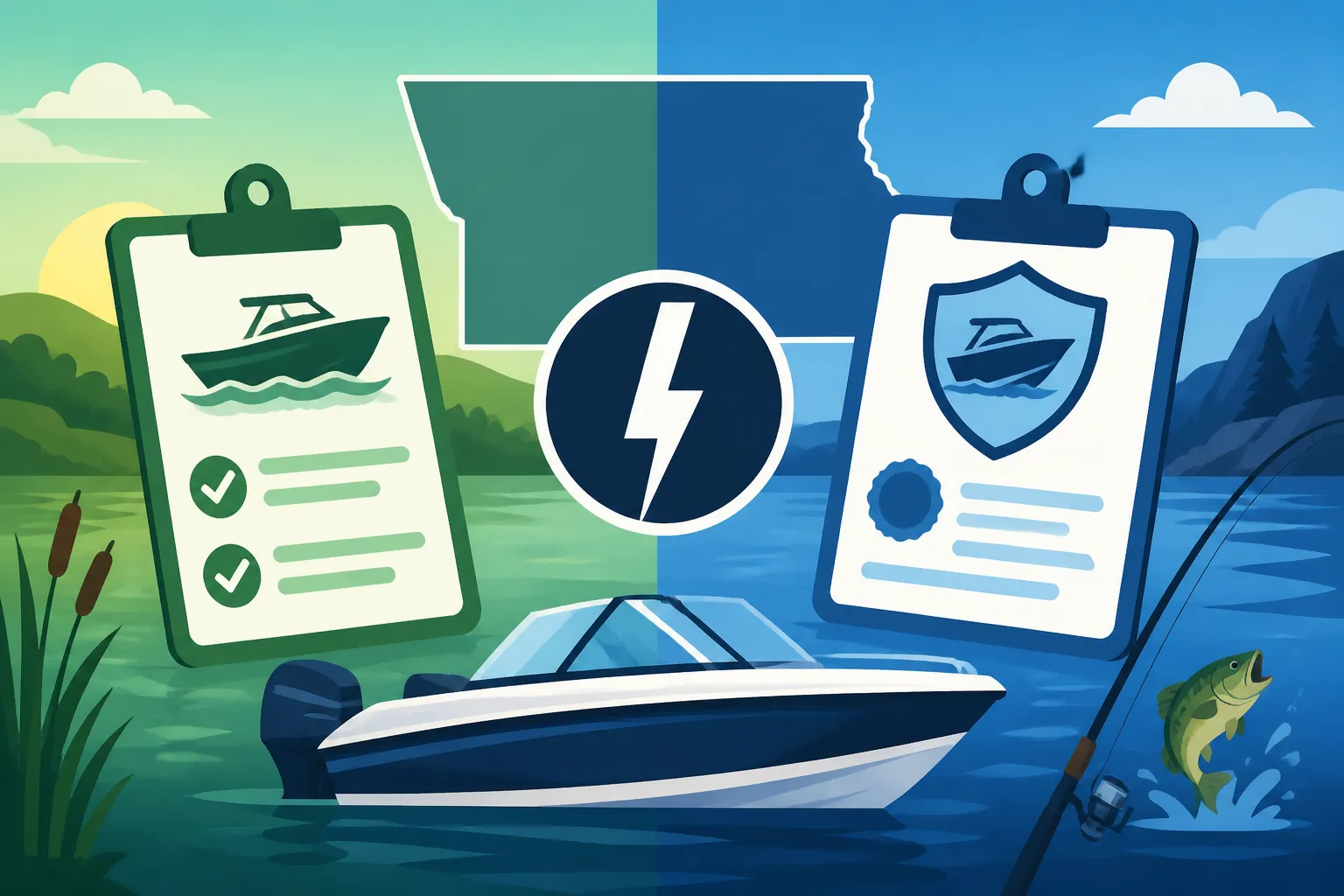
While both registration and titling are vital components of responsible boat ownership in North Dakota, understanding their distinct roles is paramount. They serve different masters, if you will, and conflating them can lead to confusion and potential legal snags.
Purpose and Proof of Ownership
The fundamental difference between registration and title lies in what they prove.
Your boat registration proves your right to operate the vessel on North Dakota's waters. It acts as an operational permit, granting you the privilege of enjoying fishing on Lake Oahe or cruising on the Missouri River, provided you adhere to all other regulations. It’s an administrative record kept by the North Dakota Game and Fish Department that helps them manage watercraft safety, identify vessels, and ensure compliance with environmental and recreational rules. When a game warden pulls you over for a routine check, they're primarily looking for a valid registration and the correctly displayed numbers. It tells them your boat is accounted for, that you’ve paid the necessary fees, and that it meets basic identification standards. It does not, however, definitively state that you are the sole legal owner of that vessel.
On the other hand, your boat title is the definitive proof of legal ownership. It's the document that establishes who has the legal right to claim the boat as their property. This is handled by the North Dakota Department of Transportation. When you finance a boat, the lender will be listed as a lienholder on the title, protecting their investment. If you ever sell your boat, the clear chain of title transfer from seller to buyer is what legally changes hands, not just the registration. Without a clear title, proving ownership can be incredibly difficult, making buying, selling, or even insuring your boat a potential nightmare. Imagine trying to sell a house without a deed—it’s a similar concept for a boat without a title.
When Each Document is Required
The situations in which you'll need one document versus the other also highlight their different functions.
You will always need a current boat registration any time you operate your qualifying watercraft on public waters in North Dakota. This means if you're launching your boat at a public ramp for a day of fishing, or even just puttering around a lake, you must have your registration up to date and readily available, usually onboard the vessel. This includes things like your runabouts, fishing boats, pontoon boats, and even jet skis. The registration ensures that all navigable watercraft are accounted for and traceable, assisting with safety and enforcement.
A boat title, conversely, is primarily required during major ownership events. This means you'll need a title when you:
- Purchase a new or used boat: The seller provides a signed-over title, and you'll apply for a new title in your name.
- Sell your boat: You'll sign over your title to the new owner.
- Finance a boat: Lenders require a title to place a lien on the vessel.
- Insure a boat: While not always strictly required to get a quote, an insurance company will definitely want to see proof of ownership (the title) when processing claims or finalizing a policy.
- Inherit a boat: You'll need to transfer the title into your name to legally own it.
Basically, if money, loans, or a change of ownership is involved, the title is the star of the show. If you're simply using your boat, the registration takes center stage.
Renewal Processes and Fees
The administrative processes and associated costs for registration and titling are also quite different, reflecting their distinct purposes.
Boat registration in North Dakota is a recurring affair. You'll need to renew it every three years. The fees associated with registration are based on the length of your boat. For example, the North Dakota Boat Registration Fees by Size can vary significantly from a small fishing boat to a larger cruiser. Additionally, a crucial part of your registration fee is the Aquatic Nuisance Species fee, which funds programs to prevent the spread of invasive species like zebra mussels in North Dakota's lakes. You can typically renew your registration online, by mail, or in person at the NDGFD office. It's a continuous process that ensures your boat remains legal to operate. Keeping tabs on your expiration date is essential to avoid any lapse. You can even set reminders through apps or services found on platforms like Amazon to ensure you don't miss the deadline for your next renewal.
Boat titling, on the other hand, is generally a one-time event for a particular owner. Once you have a boat titled in your name, that's it until you sell it or need a duplicate. The fees for titling are usually a flat rate, or tied to the specific transaction, such as a title transfer fee or a fee for applying for a duplicate title. There are no recurring "title renewal" fees like there are for registration. If you buy a boat, you pay the title transfer fee once. If you lose your title, you pay a fee for a duplicate. The title is about maintaining the record of ownership, not about periodic permission to use the asset.
Practical Implications for North Dakota Boat Owners
Understanding the technical differences between registration and titling is one thing, but knowing how these distinctions impact your real-world boating experience is where the rubber meets the road. These documents aren't just bureaucratic hurdles; they are cornerstones of responsible and hassle-free boat ownership.
Buying and Selling a Boat
When you’re entering the market to either buy a new watercraft or sell your existing one, both the boat title and registration play pivotal roles, though at different stages.
As a Buyer:
When purchasing a boat, especially a used one, the title is your absolute most important document. It proves that the seller is the legal owner and has the right to transfer that ownership to you. Before handing over any money, always verify that the seller’s name on the title matches their identification, and check for any existing liens. If there’s a lienholder listed (like a bank), ensure that lien is satisfied and properly released before you take possession of the boat. After the sale, the seller will sign over the title, and you'll then take this signed title to the North Dakota Department of Transportation to apply for a new title in your name. This is also the point where you'll need to register the boat with the North Dakota Game and Fish Department, acquiring new registration numbers and decals. Don't forget to get your boat registered by the North Dakota New Boat Registration Deadline after purchase to avoid any issues.
As a Seller:
When you sell your boat, your primary responsibility regarding paperwork is to accurately complete and sign over the boat title to the buyer. Make sure all fields are filled out correctly, including the sale price and odometer/hour meter readings if applicable (though less common for boats). It’s a good idea to make a copy of the signed title for your records. Once the title is signed over, your legal ownership of the boat ceases. While the registration numbers might still be on the boat, they are technically no longer valid for the new owner to operate it under your name. The buyer will need to register the boat in their own name. Providing a smooth title transfer ensures a clean break for both parties and avoids any lingering liabilities.
Financing and Insuring Your Watercraft
The boat title, in particular, becomes incredibly important when you're dealing with financial institutions or insurance providers.
Financing:
If you plan to finance your boat purchase through a bank or credit union, they will absolutely require a boat title. The lender will be listed as a lienholder on the title until the loan is fully paid off. This protects their interest in the vessel, ensuring that if you default on the loan, they have a legal claim to the boat. Without a title, most legitimate lenders won't even consider offering a boat loan. This is standard practice across the board, from small personal loans to large marine financing for big cruisers on Lake Sakakawea.
Insuring:
While you can often get an insurance quote for your boat without having the title or registration in hand, finalizing and activating a policy will almost always require proof of ownership (the title) and proof of registration. Insurance companies want to ensure that they are insuring a legally owned and legally operated vessel. If you ever need to file a claim, they will certainly require these documents to process it. Furthermore, certain types of policies or coverage may only be available for properly titled and registered boats. For instance, if you have an accident and the boat isn't properly registered, your insurance company might deny coverage. It's not just about the law; it's about making sure your investment is protected.
Out-of-State Boats and Transfers
Moving to North Dakota with a boat, or purchasing a boat from a seller in another state, brings unique considerations for both titling and registration.
If you’re bringing a boat into North Dakota from another state, you’ll typically need to apply for a North Dakota title if your boat meets the state’s titling requirements (generally, motorboats 16 feet or longer, or any boat with a permanently attached motor). You’ll present your out-of-state title to the NDDOT to get a new North Dakota title. For registration, you'll definitely need to register your boat with the North Dakota Game and Fish Department once it becomes primarily used in North Dakota. There is often a grace period, such as the North Dakota 90-Day Rule for Out-of-State Boats, which allows non-residents to operate their properly registered out-of-state vessel for a limited time before requiring North Dakota registration. However, if you become a resident, or your boat's primary use shifts to North Dakota, you'll need to complete the full registration process. Our guide on Registering an Out-of-State Boat in North Dakota delves deeper into this process.
Similarly, if you purchase a boat from an out-of-state seller, ensure you receive a properly executed title from their state. Then, you'll follow the same steps to apply for a North Dakota title and registration. While a boat might be registered in one state, its title can often be held by an owner in another state, making the title the crucial document for establishing legal ownership across state lines.
Here's a quick reference table to summarize the key differences:
| Feature | Boat Registration | Boat Title |
|---|---|---|
| Primary Purpose | Permission to operate on public waters | Proof of legal ownership |
| Issuing Authority | ND Game and Fish Department (NDGFD) | ND Department of Transportation (NDDOT) |
| What it Provides | Registration certificate, numbers, validation decal | Legal document showing owner & lienholders (if any) |
| Required For | Operating a qualifying watercraft on public waters | Buying, selling, financing, insuring, inheriting boat |
| Validity | Typically 3 years, requires renewal | One-time issue per owner, permanent record |
| Fees | Recurring (based on length), includes ANS fee | One-time (transfer, duplicate, original issue) |
| Physical Display | Numbers & decal must be displayed on boat | Kept securely by owner or lienholder |
| Consequence of Lacking | Fines, inability to launch or operate legally | Inability to prove ownership, sell, or finance |
Common Misconceptions and FAQs
It's easy to get lost in the details, and several common questions and misunderstandings pop up regularly regarding boat registration and titling in North Dakota. Let's clear some of these up.
Do All Watercraft Need Both?
This is a big one, and the answer is a definitive "not always." The requirement for both a title and registration depends entirely on the type and size of your watercraft, and sometimes even how it's propelled.
For registration, generally, any motorboat (including electric trolling motors) used on North Dakota's public waters needs to be registered. This means if you have a fishing boat with an outboard, a pontoon, or even a kayak with a small electric motor, it needs to be registered. However, non-motorized vessels like canoes, kayaks, rafts, or stand-up paddleboards generally do not need to be registered in North Dakota, unless they are propelled by a motor. So, if you're paddling your canoe, you're usually good to go without registration. If you decide to add a trolling motor, then you'll enter the realm of needing a registration. This nuance is covered more thoroughly in specific guides like Do Kayaks Need to Be Registered in North Dakota? and Do Canoes Need to Be Registered in North Dakota?.
For titling, the rules are a bit more specific. In North Dakota, titles are primarily required for motorboats 16 feet in length or longer, or any motorboat with a permanently attached motor, regardless of length. This means if your boat is under 16 feet but has a motor that is permanently affixed (like an inboard), it likely needs a title. Most unmotorized canoes or kayaks, even if they're long, typically do not require a title because they don't fit the motorboat criteria. This distinction helps to streamline the process, focusing the titling efforts on higher-value and more complex vessels. Always check the current regulations, as these rules can occasionally be updated.
What if I Lose My Documents?
Losing important paperwork is incredibly frustrating, especially when it comes to something as valuable as a boat. Thankfully, there are processes in place to replace both your registration certificate and your boat title in North Dakota.
If you lose your boat registration certificate or your validation decal, you can usually apply for a duplicate through the North Dakota Game and Fish Department. This often involves filling out a simple form and paying a small fee. It’s always a good idea to keep your registration certificate in a secure, dry place on your boat, but also have a digital copy or a photo of it on your phone for emergencies. You can order replacement decals online, sometimes even finding accessories like protective decal covers on Amazon to help them last longer on your hull.
Losing your boat title is a more significant issue because it's the ultimate proof of ownership. If your title is lost, stolen, or damaged, you'll need to apply for a duplicate title through the North Dakota Department of Transportation. This process typically requires you to submit an application, provide your boat’s Hull Identification Number (HIN), and possibly an affidavit stating the original title was lost. There will be a fee for the duplicate title. It's crucial to do this as soon as possible, especially if you plan to sell the boat or conduct any other transactions that require a clear title. Don't wait until the last minute!
Consequences of Not Complying
Ignoring the regulations for boat registration and titling in North Dakota can lead to a host of unpleasant consequences, ranging from minor inconveniences to significant legal and financial headaches.
For Lacking Registration:
If you're caught operating a qualifying boat on North Dakota waters without a valid, current registration or with improperly displayed numbers, you can expect a citation. Penalties for Fishing Without a License in North Dakota are common, and similar fines apply to boat registration violations. You might receive a warning for a first offense, but more often than not, it will result in a fine. In some cases, game wardens may even restrict your ability to continue operating the vessel until the issue is resolved. This could mean having to haul your boat out of the water, effectively ruining your day on the lake, and still having to pay a fine on top of it.
For Lacking a Title or Proper Title Transfer:
The consequences of issues with your boat title are less about being stopped on the water and more about legal and financial complications.
- Inability to sell: You cannot legally transfer ownership of a titled boat without a title. This can significantly reduce your boat's resale value and make it incredibly difficult to find a buyer.
- Financing issues: Banks will not finance a boat without a clear title, meaning you can't get a loan, or if you already have one, the lender's security is compromised.
- Insurance problems: While you might get an initial policy, if there's a serious claim (e.g., total loss, major theft), the insurance company will require proof of ownership via the title. Without it, your claim could be denied, leaving you without compensation for a lost or damaged boat.
- Theft complications: If your boat is stolen and it's not properly titled in your name, proving ownership to law enforcement or your insurance company becomes much harder, hindering recovery efforts and claim processing.
In short, while registration lets you use the boat, titling ensures you own it, and both are non-negotiable for responsible boat ownership in the Peace Garden State.
Disclaimer
This article is for general informational purposes only and does not constitute professional advice. Laws, prices and regulations vary by location and change over time. Consult a qualified professional for guidance on your specific situation.