Lake Ashtabula Walleye Fishing
There’s nothing quite like the thrill of a walleye hitting your line, especially when you’re out on a beautiful North Dakota lake. But let's be honest, figuring out the patterns and effective techniques for a specific body of water can be incredibly frustrating. Lake Ashtabula, with its unique structure and diverse fishery, often leaves anglers scratching their heads. This guide is designed to cut through that confusion, offering proven strategies and local insights to help you consistently catch walleye on this fantastic reservoir.
Understanding Lake Ashtabula's Walleye Habitat
Before you even think about casting a line, understanding where walleye live and why they choose those spots on Lake Ashtabula is crucial. This isn't just about throwing a dart at a map; it's about connecting the dots between water conditions, forage, and their natural instincts. Lake Ashtabula is a sprawling reservoir on the Sheyenne River, and its characteristics directly influence walleye behavior.
Lake Characteristics and Structure
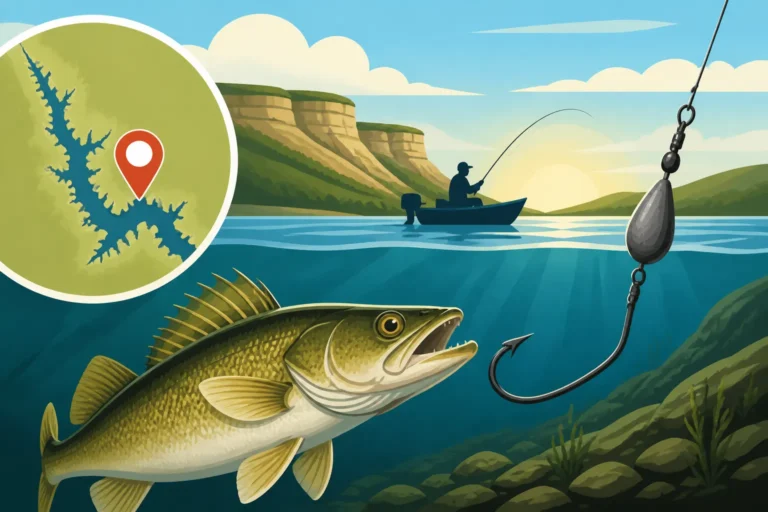
Lake Ashtabula, formed by the Baldhill Dam, stretches over 27 miles, offering a mix of riverine channels, drowned timber, gradual slopes, and abrupt breaks. Unlike some of the state's natural glacial lakes, Ashtabula is a man-made impoundment, which means its underwater landscape can be quite different. You'll find a distinct old river channel winding through the lake, which often acts as a highway for walleye, particularly during migration periods or when they're seeking deeper, cooler water. Submerged points, humps, and islands are also key features. These structural elements create ambush points and current breaks that walleye absolutely love. For example, the areas around the bridges, especially near the north end, often concentrate fish due to the current flow and structural components.
The lake also features numerous bays and coves, some shallower and weedier, others with rockier bottoms. These areas can be excellent for foraging walleye, especially during low-light conditions or when they're chasing baitfish into shallower confines. Understanding the bottom composition – whether it's soft mud, sand, gravel, or rock – can tell you a lot about where different forage species might be, and in turn, where walleye will be feeding. Anglers who consistently use their sonar to map out these transitions and structures often find more success. Knowing the difference between a hard bottom and soft bottom can mean the difference between a productive drift and coming up empty.
Forage Base and Walleye Behavior
Walleye are opportunistic predators, and their diet on Lake Ashtabula is primarily driven by the abundance of baitfish. The main course for Ashtabula walleye often includes various minnows, yellow perch, and sometimes even smaller crappies or white bass. When you're fishing, pay close attention to signs of baitfish schools on your electronics. If you see clouds of bait, you can bet that walleye are likely lurking nearby, either actively feeding or waiting for the right moment to strike. This is why having a good understanding of what their main food source looks like, in terms of size and color, can help you choose the most effective lures.
Their behavior is also heavily influenced by light conditions and water temperature. Walleye have excellent low-light vision, which is why dawn, dusk, and even night fishing can be incredibly productive, especially during the warmer months. During bright daylight, they often retreat to deeper water, shaded areas, or dense weed beds to protect their sensitive eyes. As the seasons change, so too do their patterns. In spring, they'll be shallower, focused on spawning, while in summer, they'll often hold on deeper structures or suspend over the main basin if baitfish are present. Understanding these basic behavioral patterns will guide your approach and help you decide not just where to fish, but also when to fish. For a broader overview of their habits across the state, you might want to check out our comprehensive guide on North Dakota Walleye Fishing Guide.
Effective Walleye Fishing Techniques on Lake Ashtabula
Catching walleye on Lake Ashtabula often comes down to choosing the right presentation for the conditions. There's no single magic bullet, but rather a set of versatile techniques that, when applied correctly, can yield fantastic results. It’s all about putting your bait or lure in front of a hungry walleye and making it look irresistible.
Trolling with Crankbaits and Bottom Bouncers
Trolling is undeniably one of the most popular and effective methods for covering water and finding active walleye on Lake Ashtabula, especially on a larger body of water like this. When the walleye are scattered across flats, along breaklines, or over large areas of submerged structure, trolling allows you to systematically explore different depths and presentations. For this, crankbaits are king. You'll want a variety of diving depths and colors to match the conditions. Shallow-diving crankbaits are excellent for those early morning or late evening pushes into shallower water, while deeper-diving models, or those used with snap weights or lead core line, can get down to fish holding in 15-30 feet. Brands like Berkley Flicker Shad, Rapala Shad Raps, and Salmo Hornets are incredibly popular here. The key is to experiment with speed; sometimes a slow crawl is best, other times a faster pace can trigger reaction strikes. To dive deeper into this technique, our article on Trolling Crankbaits for Walleye offers excellent insights.
Bottom bouncers paired with spinner rigs or a plain snell and live bait are another go-to for many Ashtabula veterans. This setup is particularly effective when walleye are hugging the bottom along contours or on subtle structural changes. The bottom bouncer keeps your bait just off the lakebed, minimizing snags while allowing you to maintain contact with the bottom. You can rig them with a single hook and a minnow, leech, or nightcrawler. Crawler harnesses with flashy blades are also deadly, especially when the fish are actively chasing bait. Varying blade colors and sizes, as well as bead patterns, can make a significant difference. The rule of thumb for bottom bouncers is to use about an ounce of weight for every 10 feet of water, but always adjust based on your trolling speed and current conditions to keep your presentation almost vertical.
Jigging and Live Bait Rigs
While trolling covers a lot of ground, sometimes walleye are concentrated in smaller areas, like a specific hump, rock pile, or a tight river bend. This is where jigging really shines. Vertical jigging directly over these spots, using a good fish finder to pinpoint schools, can be incredibly productive. Jigs tipped with live bait (minnows, leeches, or nightcrawlers) or soft plastics are classic walleye getters. Popular jig colors often include chartreuse, orange, white, and various glow patterns, especially in deeper or stained water. The action of your jig is crucial – a subtle lift and fall can entice finicky walleye, while a more aggressive snap might trigger a strike from active fish. Our guide on Jigging for Walleye on Lake Sakakawea, though specific to another lake, offers transferable techniques.
Beyond jigging, various live bait rigs can be incredibly effective when walleye are less aggressive or holding tight to structure. Slip bobber rigs, for instance, are fantastic for targeting fish suspended over weeds or structure, allowing you to present a minnow or leech at a precise depth. When fishing with slip bobbers, patience is key. Let the bobber tell you the story, and be ready for that subtle dip. Another great option is a Lindy Rig or similar snell rig, which allows a live bait presentation to drift naturally just above the bottom. These rigs are particularly effective when drifting with the wind or using a slow trolling motor speed, allowing your bait to follow contours with a very natural appearance. Remember to use quality swivels and sharp hooks, as walleye can have a light bite. If you're looking for the best options to tip your hooks, check out our article on the Best Live Bait for North Dakota Walleye.
Seasonal Strategies for Lake Ashtabula Walleye
Walleye fishing on Lake Ashtabula isn't a static game; it changes dramatically with the seasons. What works in spring will likely fail miserably in winter, and vice versa. Adapting your approach to the time of year is paramount for consistent success.
Spring and Early Summer Success
Spring on Lake Ashtabula brings the excitement of post-spawn walleye. As the ice melts and water temperatures begin to rise, walleye will move shallower, often congregating in bays, river arms, and along sun-warmed shorelines, especially near areas where the river current enters the main lake. This is a prime time for pitching jigs tipped with minnows or soft plastics into shallow cover or along emerging weed lines. The walleye are recovering from the spawn and actively feeding, making them a bit more predictable. As the water warms further into early summer, typically reaching the 50s and 60s Fahrenheit, they'll spread out more, and trolling with crankbaits becomes increasingly effective. Focus your efforts on main lake points, breaklines from shallow flats to deeper water, and the edges of newly growing weed beds. The fish are often staging in these areas, moving in and out of shallower water to feed. This is also a fantastic time to use bottom bouncers and spinner rigs, especially during midday, as walleye will often hold a bit deeper. Keep an eye on local conditions and water temperature, as they heavily dictate when the bite will turn on. Knowing the North Dakota Fishing Season Calendar can help you plan your trips effectively.
Mid-Summer and Fall Patterns
Mid-summer on Lake Ashtabula can be challenging due to higher water temperatures and increased boat traffic, but it can also offer some of the most consistent bites if you know where to look. Walleye will often move to deeper main lake structures – humps, submerged islands, and the deep river channel – where cooler, more oxygenated water is available. They might also suspend in the water column, chasing schools of baitfish. This is a prime time for deep-diving crankbaits and vertical jigging over precise structure. Trolling lead core line or snap weights to get crankbaits down to 20-30 feet can be very effective. Night fishing can also be incredibly productive in mid-summer, as walleye push into shallower areas under the cover of darkness. As summer transitions into fall, the water temperatures begin to drop, signaling a major feeding frenzy for walleye. They become incredibly aggressive, fattening up for the long winter. Fall walleye fishing is often characterized by large schools concentrating on main lake points, deep breaks, and classic transition areas. Trolling with larger crankbaits, often covering more water at faster speeds, can be the ticket. Jigging spoons and blade baits can also be deadly when fish are schooled up tight. This seasonal shift is a favorite for many anglers, leading to some of the biggest walleye of the year.
Winter Ice Fishing for Walleye
When Lake Ashtabula freezes over, a whole new world of walleye fishing opens up for hardy anglers. Ice fishing for walleye can be incredibly rewarding, though it often requires a different set of tactics and gear. Early ice is often the most productive, as walleye are still relatively shallow and active. Focus on classic weed edges, shallow points, and transition areas. As the ice thickens and winter progresses, walleye tend to move deeper, holding on main lake structure like humps, submerged islands, and the main river channel. Jigging spoons, aggressive rattling baits, and small jigs tipped with minnows are standard fare. Deadsticking a live minnow under a tip-up nearby is also a classic and highly effective method, especially for bigger, more cautious walleye. Always prioritize safety on the ice, checking ice thickness regularly. For detailed safety guidelines and specific regulations, refer to the North Dakota Ice Fishing Rules. When planning your ice fishing adventure or needing to find a local guide who knows the winter patterns, you can often find experienced professionals through platforms like FishingBooker, who are well-versed in Ashtabula's winter nuances.
| Season | Primary Locations | Recommended Techniques | Preferred Baits/Lures |
|---|---|---|---|
| Spring | Shallow bays, river arms, sun-warmed shorelines, creek mouths | Pitching jigs, slow trolling, slip bobbers | Jig & minnow/plastic, shallow crankbaits, leeches |
| Early Summer | Main lake points, weed edges, breaklines | Trolling crankbaits/bottom bouncers, jigging | Medium-diving crankbaits, crawler harnesses, jig & minnow |
| Mid-Summer | Deep humps, submerged islands, main channel, suspended over bait | Deep trolling, vertical jigging, night fishing | Deep-diving crankbaits, heavy jigs, soft plastics, nightcrawlers |
| Fall | Main lake points, deep breaks, structure transitions | Aggressive trolling, jigging spoons, casting | Large crankbaits, blade baits, jigs & minnows |
| Winter (Ice) | Weed edges (early ice), deep humps, channel edges | Vertical jigging, deadsticking with tip-ups | Jigging spoons, rattling baits, live minnows, small jigs |
Essential Gear for Lake Ashtabula Walleye Fishing
Having the right equipment can significantly enhance your walleye fishing experience on Lake Ashtabula. It’s not just about having any rod; it’s about having the right rod for the technique, and the appropriate accessories to make your day more productive and enjoyable. Whether you're a seasoned pro or just getting started, a thoughtful gear selection can make all the difference.
Rods, Reels, and Line Choices
For Lake Ashtabula walleye, versatility in your rod and reel setups is key. A good all-around spinning combo for jigging and casting lighter lures would typically be a 6'6" to 7' medium-light to medium power rod with a fast action tip. This provides enough backbone to fight a decent walleye but enough sensitivity to feel those subtle bites. Pair this with a 2000 or 2500 series spinning reel spooled with 8-10 lb braided line, often with a 6-8 lb fluorocarbon leader for stealth. Braided line offers superior sensitivity and casting distance, while the fluorocarbon leader is nearly invisible underwater. If you plan on doing a lot of trolling, especially with bottom bouncers or heavier crankbaits, a longer, softer rod like an 8-foot medium power rod designed for trolling can be a huge asset. These rods absorb the shock of a big fish better and allow for smoother boat handling while keeping your line out. For more details on choosing the right tackle, our general guide on Best Fishing Rods for North Dakota Anglers can offer more perspective.
When it comes to line, the choice often depends on the specific technique. Monofilament line still has its place, particularly for trolling crankbaits where its stretch can be an advantage, acting as a shock absorber. A 10-12 lb test mono is generally sufficient. For jigging or slip bobber fishing, where sensitivity is paramount, braided line with a fluorocarbon leader is often preferred. The lack of stretch in braid transmits even the lightest bite directly to your hand. Some anglers even use a clear monofilament backing on their reels before spooling braid to prevent slippage. Whatever your choice, always ensure your line is fresh and regularly inspected for nicks or abrasions, especially after fishing around rocky areas or dense cover.
Lures and Live Bait Selection
Your tackle box for Lake Ashtabula should be well-stocked with a variety of lures to match different conditions and walleye moods. As mentioned, crankbaits are essential for trolling. Have a range of colors, including natural baitfish patterns (perch, shiner, smelt) for clear water and brighter, more aggressive colors (firetiger, chartreuse, clown) for stained water or low-light conditions. Varying dive depths is also crucial, from shallow runners that barely break the surface to deep divers that can reach 20 feet or more on their own. Jigs in weights from 1/8 to 1/2 ounce, paired with soft plastics like paddle tails, curly tails, or minnow imitators, are indispensable for vertical jigging or casting.
Live bait is often the ace up your sleeve, especially on tougher days. Minnows, particularly shiners or fatheads, are a walleye staple, excellent on jigs, under slip bobbers, or on a Lindy Rig. Leeches are another fantastic option, especially in warmer water when minnows can be harder to keep alive. They're incredibly hardy and have a natural, enticing action. Nightcrawlers, either whole or half, are superb when fished on a crawler harness with spinner blades, particularly when walleye are spread out and feeding aggressively. Remember that bait availability can vary, so always check with local bait shops like West Fargo Scheels or a smaller shop closer to the lake, and keep your live bait fresh and lively with a good aerated bait bucket.
Boat and Electronics Considerations
For a lake the size of Ashtabula, having a boat equipped with reliable electronics can give you a significant advantage. A good fish finder/chartplotter combo is almost non-negotiable for finding structure, identifying baitfish schools, and marking walleye. Look for units with clear sonar, Down Imaging, and Side Imaging capabilities, which can help you interpret the underwater world more accurately. Brands like Humminbird and Lowrance offer excellent options that are popular among North Dakota anglers. Having detailed mapping, either pre-loaded or on an aftermarket chip, will help you navigate the lake safely and pinpoint those crucial breaks and humps. Knowing the specific contours of Lake Ashtabula can make targeting walleye much more efficient. If you're looking for recommendations, our guide on Best Fish Finders for Boat Fishing might be useful.
Beyond electronics, a reliable trolling motor, preferably with GPS spot-lock capabilities, is incredibly beneficial. It allows you to precisely hold your position on a productive spot, or to execute perfect drifts along contours without constantly fighting the wind or current. This frees you up to focus on fishing, rather than boat control. Consider the battery life and thrust needed for a lake of this size. Lastly, don't forget essential safety gear: life jackets (required by North Dakota Fishing Regulations Explained for certain ages and situations), a first-aid kit, a throw cushion, and plenty of water and snacks. Always check the weather forecast before heading out, as conditions can change rapidly on these larger bodies of water. For those who prefer to leave the navigation to someone else, consider booking a local guide through platforms like FishingBooker, who can provide all the necessary boat and electronics for a hassle-free day.
Disclaimer
Please note that fishing regulations, conditions, and fish populations can change. Always consult the latest North Dakota Game and Fish Department proclamations and local advisories before heading out on Lake Ashtabula. This guide is for informational purposes only and should not replace official sources or sound judgment.