Best Fish Finders for Ice Fishing
There's nothing quite as frustrating as drilling hole after hole on a frozen North Dakota lake, staring down into the black abyss, and wondering if there's even a single fish below. It's a common dilemma, especially when you know the fish are there but just can't seem to pinpoint them. This guide is all about cutting through that guesswork, helping you understand the world of ice fishing fish finders so you can spend less time guessing and more time reeling in those elusive walleye, perch, or pike this winter.
Why a Fish Finder is Essential for Ice Fishing
Ice fishing can sometimes feel like a game of chance. You chop a hole, drop your line, and hope for the best. But for serious anglers, and even those just looking to maximize their enjoyment, a fish finder isn't just a luxury; it's a fundamental tool that transforms your approach. It takes the "hunt" out of fishing, literally allowing you to see what's beneath the ice and how fish are reacting to your bait.
Beyond Guesswork: The Science of Seeing
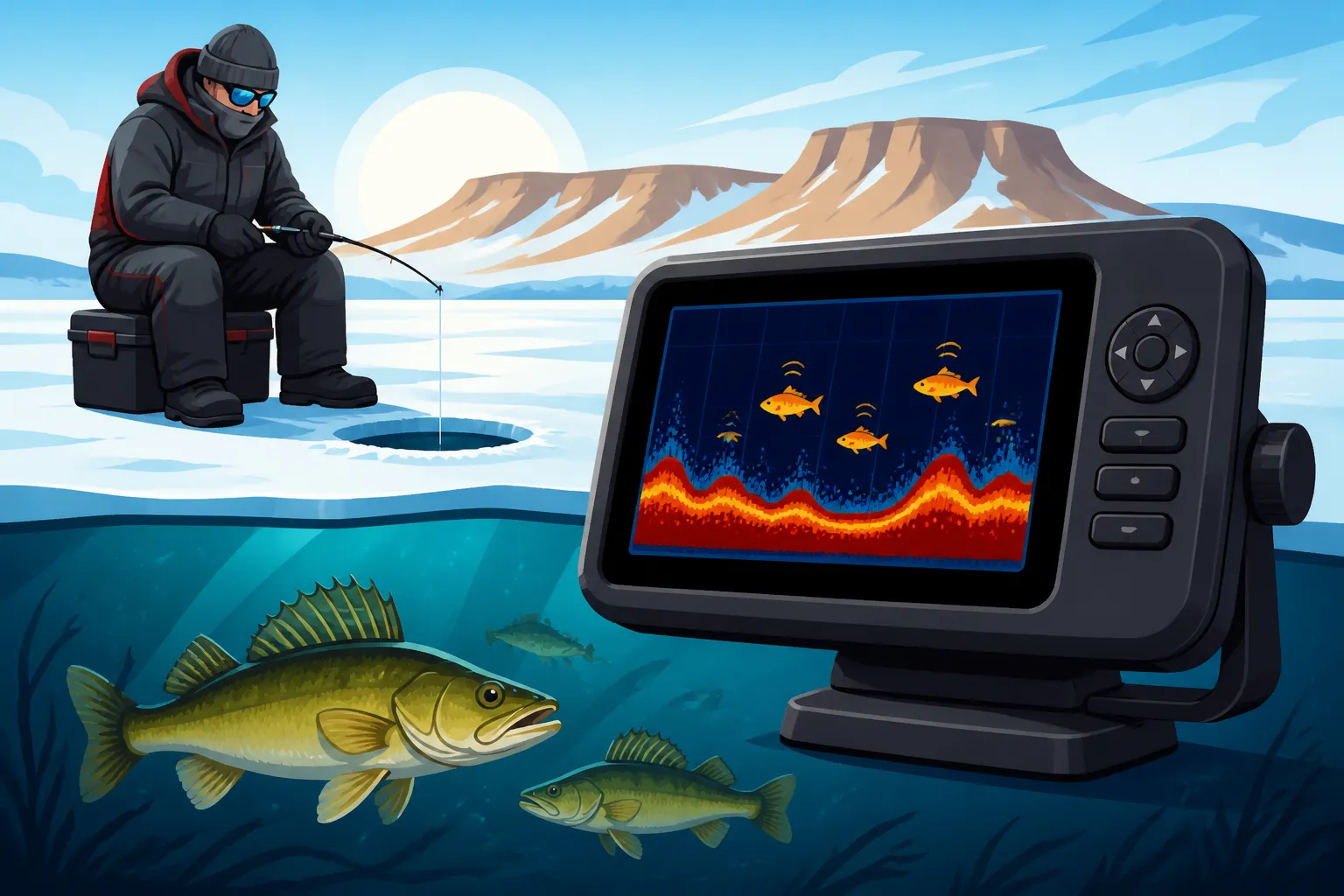
Imagine knowing exactly where the bottom is, identifying transitions in depth, seeing schools of baitfish, and most importantly, spotting game fish before you even drop a line. That's the power of a good ice fishing fish finder. These devices send out sonar waves that bounce off objects – be it the lakebed, weeds, a school of tiny minnows, or a big walleye – and then interpret those echoes back to a visual display. This isn't just about marking fish; it's about understanding the entire water column. You can observe your jig as it falls, see how fish approach it, and even tell if they're ignoring it or actively inspecting it. This real-time feedback loop is crucial for adjusting your presentation, depth, and retrieve to trigger more bites. It really changes the whole dynamic, moving you from passive waiting to active strategizing.
Saving Time and Frustration
Time on the ice, especially in North Dakota's biting cold, is precious. Nobody wants to spend hours drilling holes in barren spots. A fish finder dramatically cuts down on wasted effort. With one of these units, you can quickly scan a hole, see if there's any activity, and if not, move on to the next one with confidence. This "run-and-gun" style of fishing, made possible by portable fish finders, allows you to cover more ground efficiently, increasing your chances of finding active fish. It also eliminates the second-guessing that often plagues anglers. Instead of wondering if you're in the right spot, you know what's below, freeing you up to focus on technique and enjoyment. Think of it as having x-ray vision for the ice, making every minute you spend out there more productive and far less frustrating.
Types of Fish Finders for the Ice
The world of fish finders can seem a bit overwhelming at first glance, with all the different features and technologies available. However, for ice fishing, the choices generally boil down to three main types, each with its own advantages and loyal following. Understanding these differences is key to choosing the right tool for your specific needs and budget when hitting the frozen lakes of North Dakota.
Flasher Units: The Traditional Choice
For many seasoned ice anglers, flasher units are the go-to. These are the classic, rugged workhorses of ice fishing, known for their real-time, instantaneous display. Instead of a traditional graph, a flasher uses a circular display with lights that illuminate to show the depth, the bottom, and any targets in the water column. The intensity and color of the light often indicate the strength of the return signal, giving you a sense of fish size or bottom hardness. What makes flashers so popular for ice fishing is their incredible responsiveness; there's virtually no lag. You see your jig, and you see fish react to it in the blink of an eye, which is absolutely critical for deciphering subtle bites. They're typically robust, often simpler to operate, and tend to be very reliable in extremely cold temperatures, which is a huge plus when the mercury plummets here in North Dakota. Brands like Vexilar and Marcum are legendary in this space.
LCD/Graph Units: Modern Versatility
Stepping into the more modern realm, LCD or graph units are essentially miniaturized versions of the fish finders you might use on your open-water boat. These units offer a traditional scrolling sonar display, showing a history of what has passed beneath the transducer. While they might have a slight lag compared to a flasher's instantaneous display, modern LCD units have become incredibly fast, often with dedicated ice fishing modes to optimize performance. Their big advantage is versatility. Many come with detailed mapping capabilities, allowing you to mark waypoints, follow contours, and even load in custom lake maps, which can be invaluable on sprawling lakes like Lake Sakakawea or Devils Lake. They also typically offer a higher resolution display, presenting clearer, more detailed images of fish arches, structure, and even specific bait presentations. Some units even offer split-screen views, allowing you to see a traditional sonar view alongside a flasher-style display or a map. This versatility makes them a strong contender for anglers who want a single unit that can pull double duty in both open water and ice.
Panoptix/Livescope: The Game Changers
If you've been around fishing electronics lately, you've undoubtedly heard the buzz about forward-facing sonar technologies like Garmin Panoptix LiveScope or Humminbird Mega Live. These are truly game-changing systems that have revolutionized how anglers find and catch fish, even through the ice. Instead of just seeing what's directly below your hole, these systems provide a live, real-time, three-dimensional view of the underwater world around you. You can see fish swimming, structure, and your bait in relation to them, up to 100 feet away in some cases. For ice fishing, this means you can scan an area before drilling a hole, locate active fish, and then drop your line directly on them. It’s like having an underwater camera with a massive field of view. While these systems are significantly more expensive and require more power than traditional flashers or graph units, for those who want the absolute cutting edge in fish-finding technology and are serious about locating specific trophy fish, they offer an unparalleled advantage. They can be a bit more complex to set up and manage, but the visual information they provide is truly astounding.
Key Features to Look for in an Ice Fishing Fish Finder
Choosing the right fish finder for ice fishing involves more than just picking a brand. You need to consider how the unit will perform in the harsh North Dakota winter conditions and how it will integrate with your fishing style. Looking at specific features will help you narrow down the field and find a device that truly enhances your experience on the ice.
Portability and Battery Life
When you're out on the ice, especially if you're like me and often find yourself hiking across a frozen bay or pulling a sled full of gear, portability is paramount. An ice fishing fish finder needs to be relatively compact and lightweight, ideally fitting into a bucket or a specially designed carrying case. Many units come in a "shuttle" style, which is a durable housing that protects the unit, holds the battery, and provides convenient cable management. This is incredibly important when you're moving between holes or packing up at the end of a long day. Equally vital is battery life. You don't want your finder dying on you halfway through a prime bite. Look for units that boast extended battery life, often 8-12 hours or more on a single charge, especially in cold temperatures where battery performance can degrade. Lithium-ion batteries are often preferred for their lighter weight and better cold-weather performance compared to traditional lead-acid batteries. Having a robust and long-lasting power source, perhaps even a portable power station, means you can focus on fishing instead of worrying about your electronics. Best Portable Power Station for Ice Fishing Electronics offers some great options for extending your time on the ice.
Screen Resolution and Readability
A fish finder, no matter how advanced, is only as good as its display. On the ice, you'll be dealing with varying light conditions, from bright, sunny days that cause glare to dim, overcast skies or even the low light inside an ice shack. A high-resolution screen with good contrast and adjustable backlighting is crucial for clear visibility. For flasher units, this means bright, crisp LED lights that are easily distinguishable. For LCD/graph units, look for screens with a high pixel count, which translates to sharper images and better detail. Larger screens can also be a benefit, especially if you're planning to use split-screen views or if multiple people will be watching the display in an ice house. Some modern units also come with anti-glare coatings, which can make a real difference when the sun is reflecting off the snow and ice. Being able to quickly and accurately read your screen at a glance will improve your reaction time and help you make better decisions on the fly.
Transducer and Cone Angle Considerations
The transducer is the "eye" of your fish finder, sending and receiving the sonar signals. For ice fishing, transducers are designed to be deployed directly into the ice hole, hanging vertically in the water. The "cone angle" of the transducer is a critical specification. This refers to the width of the sonar beam as it travels down through the water. A wider cone angle (e.g., 20-40 degrees) covers a larger area under the ice, which can be great for searching for fish in new holes or covering a wider spread in an ice house. However, a wider cone angle also means less detail and precision in deeper water, as the cone spreads out significantly. A narrower cone angle (e.g., 9-12 degrees) provides more detail and separation of targets, especially in deeper water, but covers a smaller footprint. Many ice fishing transducers are dual-beam or multi-beam, allowing you to switch between different cone angles to suit your needs, or even use both simultaneously. Understanding how the cone angle affects what you see is vital for interpreting the display correctly and pinpointing fish. For shallow water perch, a wider cone might work, but for deep walleye, a narrower, more focused beam could be better.
GPS and Mapping Capabilities
While not strictly necessary for simply finding fish under your hole, integrated GPS and mapping can be an incredibly powerful feature for ice anglers, especially when exploring new territory or revisiting productive spots on a large North Dakota lake. A GPS receiver allows you to mark waypoints for hot fishing spots, productive contours, underwater structure, or even hazards like thin ice areas or pressure ridges. This means you can return to those exact spots with precision, even if the ice and snow have covered up all your previous landmarks. Many graph-style fish finders come preloaded with detailed lake maps, showing depth contours, submerged features, and navigation aids. Being able to see these maps on your fish finder's screen, even while ice fishing, gives you a significant advantage in understanding the underwater topography and identifying potential fish-holding structure. Whether you're chasing walleye on Lake Sakakawea Walleye Fishing Spots or targeting perch on Devils Lake Perch Fishing Spots, knowing the exact depth and contour changes can make all the difference. Some units also allow for custom mapping, where you can create your own detailed maps of specific areas as you fish, further refining your knowledge of a lake.
Matching a Fish Finder to Your North Dakota Ice Fishing Style
North Dakota offers a diverse range of ice fishing experiences, from the solitude of a frozen slough to the bustling villages of permanent ice houses on Devils Lake. Your personal style of ice fishing—how you move, what you target, and who you fish with—should heavily influence the type of fish finder you choose. There's no one-size-fits-all solution, but by considering your approach, you can find a unit that perfectly complements your adventures on the hard water.
The Solo Angler on Foot
If your ideal ice fishing day involves strapping on the spikes, grabbing your spud bar, and hiking to find those untouched honey holes, then portability and ease of setup are your top priorities. You're likely moving frequently, drilling a few holes, checking for activity, and then moving again. For this "run-and-gun" style, a lightweight, compact flasher unit is often an excellent choice. Their instantaneous feedback allows for quick scanning of holes. You drop the transducer, get an immediate reading, and if nothing's there, you're on to the next hole in minutes. Look for units that come in a durable shuttle or soft-pack carrying case, designed for quick deployment and retrieval. Battery life is also crucial, as you won't have the luxury of a generator or multiple power sources. Some of the smaller, entry-level graph units can also work here, especially if they have a dedicated ice mode and are known for efficient battery use. You'll want something that won't weigh you down as you cover miles of ice, seeking out those elusive big perch or roaming walleye.
The Group in a Permanent House
For those who enjoy the camaraderie and comfort of a permanent ice house, whether it's a cozy shack on Lake Metigoshe or a more elaborate cabin on Lake Sakakawea, your fish finder needs can be a bit different. While portability is still a plus for initial setup, once the house is set, the unit will likely stay in place for extended periods. Here, larger screens and advanced features become more viable. A multi-functional graph unit with GPS and mapping capabilities can be invaluable for pinpointing specific structure beneath your house and tracking movement over time. If you're fishing with multiple lines or multiple anglers, a unit that can split the screen to show different sonar views or even connect to multiple transducers might be useful. Power consumption might be less of a concern if you have access to larger batteries or a small generator. Some groups even opt for forward-facing sonar systems, mounting the transducer in a rotatable pole system inside or outside the house to scan for fish approaching from a distance, giving everyone in the shack a heads-up on incoming targets.
The Run-and-Gun Mobile Angler
This style is a hybrid, often involving a snowmobile, ATV, or truck to cover vast distances on large bodies of water like Lake Sakakawea. You're still moving frequently, but with the aid of transportation, you can hit many different spots in a day. For these anglers, a feature-rich LCD/graph unit with robust GPS and mapping is often the preferred choice. The ability to mark hot spots, follow contour lines, and navigate efficiently across large, featureless expanses of ice is a huge advantage. You might be targeting walleye along a drop-off, or searching for perch schools in open basins. The mapping helps you find these areas quickly. Look for units with fast processors that can handle quick map redraws and sonar updates as you move. A durable, weatherproof shuttle that can withstand bumpy rides and exposure to the elements is also a must. Battery life is still important, but you might have the option to carry larger batteries or even charge on the go. These anglers often integrate their ice finder with other mobile gear, creating a highly efficient and effective system for locating fish across vast stretches of frozen water.
Setup and Maintenance Tips for Ice Fishing Fish Finders
Getting your fish finder ready for the ice and keeping it in top condition is just as important as choosing the right unit. North Dakota winters are notoriously tough on electronics, and a little bit of care and proper setup can make a huge difference in performance and longevity. Ignoring these crucial steps can lead to frustration and potentially costly repairs.
Proper Transducer Deployment
The transducer is the heart of your fish finder, and how you deploy it into the ice hole directly impacts what you see on your screen. The goal is to get the transducer hanging perfectly level and free from obstructions in the water. Most ice transducers come with a foam floater and a stopper, allowing you to adjust the depth. You want it just below the bottom of the ice, not touching the edges of the hole, and clear of any air bubbles that might cling to the face (a quick swish can often clear these). If the transducer is tilted, your sonar cone will be skewed, giving you inaccurate readings. On windy days, the transducer cable can get pulled, causing it to swing. Many anglers use a small piece of bungee cord or a clip to secure the cable to the side of the hole or their ice house to keep it stable. Some even use a small, weighted transducer holder to ensure it stays perfectly still, especially when trying to pinpoint exact structure or fish locations. Proper deployment ensures you're getting the clearest, most accurate picture of the underwater world.
Battery Care in Cold Weather
Cold weather is notorious for draining batteries faster and reducing their overall performance. Your fish finder's battery needs extra attention during ice fishing season. First, always start with a fully charged battery. Keep spare batteries warm, perhaps in an insulated pocket or inside your ice house, until needed. When not in use, store your main battery in an insulated case or a cooler to protect it from the extreme cold. Avoid letting the battery completely discharge; it's better to charge it after each trip, even if it's not fully depleted. For lead-acid batteries, a trickle charger is ideal for long-term storage. If you're using lithium-ion batteries, follow the manufacturer's specific charging and storage recommendations. North Dakota Ice Fishing Rules also implies long days on the ice, so a robust battery setup is essential. Investing in a quality battery and taking these simple precautions will ensure your fish finder has the power it needs to last through those long, chilly days on the ice.
Software Updates and Storage
Just like your smartphone, many modern LCD/graph fish finders benefit from regular software updates. Manufacturers often release updates that improve performance, add new features, fix bugs, or enhance compatibility with accessories. Before your ice fishing season kicks off, or even periodically during the season, check your unit's manufacturer website (like those for Garmin, Humminbird, or Lowrance) for any available firmware updates. Typically, you'll download the update to an SD card and then insert it into your unit to install. This ensures your fish finder is running at its optimal capability. When the ice fishing season wraps up, proper storage is vital. Always clean your unit thoroughly, wiping away any ice, snow, or water residue. Disconnect the battery and store it according to its specific care instructions (often in a cool, dry place). Store the transducer in a way that protects its face from scratches or damage. Keep the main unit itself in its carrying case, away from extreme temperatures and humidity, ensuring it's ready for action when next winter rolls around. This preventative maintenance and smart storage will keep your investment protected and ready for many more productive North Dakota ice fishing trips.
Popular Brands and Models for North Dakota Ice Anglers
When it comes to outfitting yourself with the best fish finder for ice fishing, certain brands have consistently risen to the top, earning a reputation for reliability and innovation. Whether you're a beginner just dipping your toe into the frozen water or a seasoned veteran looking for the latest tech, there's likely a unit out there to fit your needs and budget. Let's explore some of the more commonly seen and highly regarded options you'll find around North Dakota's lakes.
Entry-Level Options
For those new to ice fishing or working with a tighter budget, there are excellent entry-level fish finders that provide core functionality without breaking the bank. These units typically focus on simplicity and reliability, offering a clear display of fish, bottom, and your lure. Brands like Vexilar with their FL-8SE or Marcum's VX-1i are fantastic starting points for flashers. They are known for their ruggedness, instant feedback, and ease of use, making them perfect for learning the ropes of seeing fish under the ice. You'll often find these units at local sporting goods stores or through online retailers like Amazon. For graph-style options, Humminbird Piranhamax series or some basic Lowrance Hook Reveal models in a portable ice package can offer a good introduction to digital sonar, sometimes even including basic GPS for marking spots. These entry-level options are designed to be user-friendly and provide enough information to significantly improve your catch rates compared to fishing blind. They're a great way to get started and see the benefits of a fish finder on the ice without a huge initial investment.
Mid-Range Performers
Stepping up from entry-level, the mid-range category offers a significant jump in features, screen quality, and power, without pushing into the premium price bracket. This is where you'll find units that often incorporate elements from both flasher and graph technologies or offer more advanced sonar options. For flashers, models like the Vexilar FL-18 or FL-20, or the Marcum LX series (e.g., LX-6s, LX-7) provide multi-color displays, zoom functions, and enhanced target separation, allowing you to distinguish between tightly packed fish or fish close to the bottom. For graph units, you'll often see models like the Garmin Striker series with ClearVü/SideVü (though SideVü isn't ideal for ice), or the Humminbird Ice Helix series. These units typically boast higher resolution screens, integrated GPS with detailed mapping capabilities (some preloaded with North Dakota lake maps), and more powerful processing for faster screen updates. The Ice Helix units, for instance, are popular for their dual-spectrum CHIRP sonar, offering incredible detail. Many of these units are sold in purpose-built ice shuttles, complete with batteries and chargers, making them ready to hit the ice right out of the box. You'll find a broader selection and more competitive pricing for these units at larger retailers like Bass Pro Shops or online through Amazon.
High-End Systems
For the serious ice angler who demands the absolute best technology and performance, high-end fish finders offer features that were once unimaginable. This category is dominated by units that provide real-time, live-scanning sonar, such as the Garmin Panoptix LiveScope or the Humminbird Mega Live Imaging systems. These are essentially portable versions of the powerful open-water units, adapted for ice fishing with specialized transducers and setups. They provide an unprecedented view of the underwater world, allowing you to see fish in real-time, watch them react to your bait, and even scan for fish before drilling a hole up to 100 feet away. The detail, clarity, and range are astounding, offering a true competitive edge. These systems require a substantial investment, often including a larger, more powerful battery (sometimes lithium) to handle the increased power draw, and a more robust carrying system. Anglers targeting specific trophy fish, participating in tournaments, or simply wanting the ultimate ice fishing experience will find these systems invaluable. They come with larger, high-definition screens, advanced GPS, and networking capabilities. While the price tag is higher, the capabilities these systems offer are truly revolutionary for ice fishing.
| Feature / Unit Type | Flasher Units (e.g., Vexilar FL-8SE) | LCD/Graph Units (e.g., Humminbird Ice Helix 7) | Live-Scanning Sonar (e.g., Garmin LiveScope Ice Bundle) |
|---|---|---|---|
| Display Type | Circular LED/LCD segments | Full-color LCD screen | Full-color LCD screen, often larger |
| Real-time Feedback | Virtually instantaneous, no lag | Very fast, near real-time, slight lag possible | Live, real-time, 3D-like views surrounding cone |
| Display History | No, current moment only | Yes, scrolling history of sonar returns | Yes, live history for 3D views |
| Fish Arches | Interpreted by light color/intensity | Clear fish arches or icons | Actual fish shapes, movement, and orientation |
| Mapping/GPS | Typically none | Often integrated GPS with mapping | Advanced GPS with highly detailed mapping |
| Portability | High, often compact shuttle | High, purpose-built ice shuttles | Moderate, often larger shuttle, heavier battery |
| Battery Life | Excellent (8-12+ hours) | Good (6-10 hours, varies with features) | Moderate (4-8 hours, higher power draw) |
| Cost Range | Entry to Mid-range | Mid-range to High-end | Premium/High-end |
| Best For | Quick scans, immediate reactions | Versatile angling, structure finding | Pre-drilling fish location, advanced targeting |
Disclaimer
This article is for general informational purposes only and does not constitute professional advice. Laws, prices and regulations vary by location and change over time. Consult a qualified professional for guidance on your specific situation.