North Dakota Ice Fishing Rules
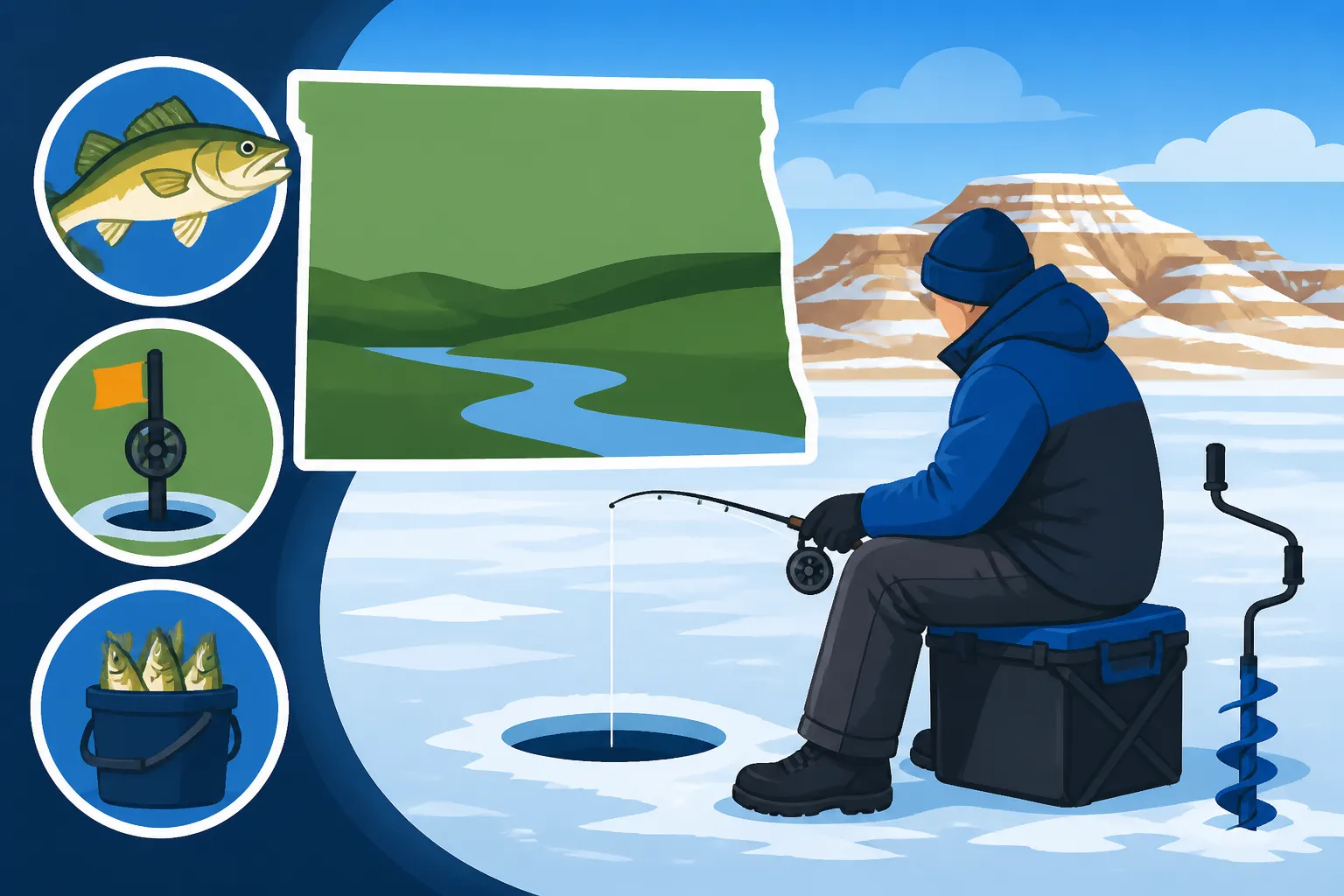
There’s nothing quite like the crisp air, the vast white landscape, and the thrilling anticipation of a bite when you’re ice fishing in North Dakota. But let’s be honest, trying to navigate all the specific rules and regulations can feel like trying to reel in a trophy walleye through a tiny hole – it’s a challenge! This comprehensive guide is here to clear up the confusion, lay out all the essential North Dakota ice fishing rules, and help you enjoy a safe and legal season on the hard water.
Understanding the Basics of North Dakota Ice Fishing Regulations
Venturing out onto a frozen lake in North Dakota isn't just about drilling a hole and dropping a line; it's about understanding and respecting the guidelines set by the state's wildlife authorities. These rules are in place not to make your life harder, but to ensure sustainable fish populations, promote angler safety, and keep our cherished lakes and reservoirs healthy for generations to come. Ignoring them can lead to hefty fines, or worse, put you or others in danger.
The Importance of the North Dakota Game and Fish Department
The North Dakota Game and Fish Department (NDGFD) is the primary authority responsible for managing and conserving the state's fish and wildlife resources. They are the folks who research fish populations, determine daily limits, set season dates, and enforce all the rules you need to follow. Their decisions are based on scientific data and public input, all aimed at maintaining a healthy ecosystem. Think of them as the guardians of North Dakota's natural heritage, ensuring that the magic of a good day on the ice remains available to everyone. It’s always a good idea to check their official website or grab a copy of the current North Dakota Fishing Regulations Explained before you head out, as rules can sometimes change from season to season. This helps ensure you're always up-to-date.
When regulations are updated, it's usually because of changes in fish populations, environmental factors, or to better manage angler pressure. For example, if a certain species is showing signs of decline in a specific lake, the NDGFD might adjust the daily limit or length restrictions to allow that population to recover. Similarly, if a species is thriving, they might increase limits to encourage harvest and maintain ecological balance. Understanding the "why" behind the rules can make them seem less arbitrary and more like a necessary part of responsible angling.
General Ice Fishing License Requirements
Just like open-water fishing, you absolutely need a valid fishing license to participate in ice fishing in North Dakota, unless you fall under a specific exemption (like during free fishing days or for very young children). This is one of the most fundamental rules, and it’s non-negotiable. Your fishing license helps fund the NDGFD's conservation efforts, including fish stocking, habitat improvement, and enforcement. Without these funds, our incredible fisheries wouldn’t be nearly as robust as they are.
For most adult residents and nonresidents, this means purchasing an annual license. If you're new to the state or just visiting, you might want to look into the North Dakota Nonresident Fishing License Guide to understand your options, which can include annual, 10-day, or 3-day licenses. Kids, typically those under 16, usually don't need a license, but it's crucial to confirm the exact age requirements annually, as these can be tweaked. For example, as of my last check, residents under 16 and non-residents under 16 do not need a fishing license. However, always verify this information with the most current NDGFD proclamation. You can easily find out How to Get a North Dakota Fishing License online or at various vendors.
When you purchase your license, you'll also likely encounter the "Fishing, Hunting, Furbearer Certificate." This certificate is essentially a base fee that applies to most licenses in North Dakota, including fishing. It’s not a license itself, but a prerequisite for purchasing one. It helps streamline the licensing process and contributes to overall wildlife management. Make sure you understand this component, as it’s an essential part of the total North Dakota Fishing License Cost Guide. Keep your license on your person when fishing, whether it’s a physical copy or stored digitally on your phone via an official NDGFD app. Game Wardens do conduct checks, and not having your license can result in a significant penalty.
Ice Fishing Shelter Rules and Requirements
Ice fishing shelters, affectionately known as fish houses or shanties, are a staple of the North Dakota winter fishing scene, providing much-needed warmth and protection from the elements. However, their use comes with a specific set of rules designed to prevent environmental issues and ensure public safety. You can't just plop down any old shack and leave it indefinitely; there are strict guidelines to follow.
Registration and Identification for Ice Shanties
If your ice fishing shelter is left unattended on the ice overnight, it must be clearly identified. This isn't just a suggestion; it's a legal requirement. Think about it: if an unoccupied shelter is found after a strong blizzard or during a late-season thaw, authorities need to know who owns it to prevent it from becoming a navigational hazard or environmental debris.
The rule typically states that any structure left on the ice must have the owner's full name and address (or telephone number) prominently displayed on the outside in easily readable characters at least two inches high. This applies to all non-portable shelters and even portable ones left out overnight. For more permanent structures, you might also need to consider Fish House Registration Requirements in North Dakota. Some larger, permanent structures might require an actual registration number issued by the NDGFD, similar to a boat registration. This number must be clearly affixed to the shelter. This helps manage the sheer number of shelters on popular lakes like Devils Lake or Lake Sakakawea, and also aids in ensuring timely removal. Don't overlook this detail; a non-compliant shanty can quickly become a headache for you and the authorities.
Mandatory Removal Dates for Ice Shelters
This is perhaps one of the most critical rules to be aware of: there are strict deadlines for when all ice fishing shelters must be removed from North Dakota waters. These dates are established to prevent shelters from falling through weakening ice in the spring and becoming submerged debris, which can pose serious hazards to boaters, swimmers, and the environment. Missing this deadline is not taken lightly by the NDGFD, and fines can be substantial, along with the cost of recovery if the department has to remove it.
The general rule is that all ice fishing houses, including portable shelters, must be removed from the ice by midnight on March 15th of each year. However, there's a specific exception for waters that lie on the border between North Dakota and Minnesota, like the Red River or Bois de Sioux River. On these border waters, the removal deadline is typically March 5th. It’s absolutely vital to double-check the current year’s proclamation for these dates, as sometimes minor adjustments are made due to unusual weather patterns or ice conditions. For instance, the exact details of When Must Ice Shelters Be Removed From North Dakota Lakes? are published annually by the NDGFD.
Failing to remove your shelter by the deadline can result in it being considered abandoned property, which gives the state the authority to remove and dispose of it at your expense. Imagine the surprise and frustration of getting a bill for several hundred, or even a thousand, dollars because your shack ended up at the bottom of the lake. Plan ahead, monitor ice conditions, and don't push your luck. Even if the ice seems perfectly solid on March 15th, the rule is the rule.
Spacing Regulations for Ice Houses
While North Dakota’s vast landscapes often mean plenty of room, popular ice fishing spots can get crowded. To ensure fair access and prevent conflicts, there are rules regarding how close you can place your ice fishing shelter to another angler's shelter or fishing hole. This helps prevent someone from boxing out others from prime fishing territory and ensures that everyone has a reasonable amount of space.
The regulation states that an ice fishing house cannot be placed closer than 50 feet from another fish house or fishing hole, unless you have explicit permission from the other angler. This is particularly important on those days when a hot bite draws a crowd to a specific hump or submerged structure. It's a matter of courtesy and safety. Setting up too close to someone without asking could lead to tangled lines, disputes, and just generally dampen the community spirit of ice fishing. Always practice good ice etiquette, and if in doubt, ask before you set up shop right next to someone. This rule is part of a broader set of Ice Fishing Shelter Rules on North Dakota Lakes that help manage the winter angling experience.
It's also worth noting that some private landowners might have specific access rules if you're crossing their property to get to the lake. Always be respectful of private land and seek permission if you're unsure. While the spacing rule primarily applies on the ice, respectful access is key to maintaining good relationships with those who own the land surrounding our fishing spots.
Fishing Line and Tip-Up Regulations
One of the beauties of ice fishing is the ability to spread out your efforts across multiple holes. Unlike open-water fishing from a boat or shore where you're typically limited to one or two lines, ice fishing often allows for more. However, this increased opportunity comes with specific regulations to prevent overfishing and ensure responsible angling.
Maximum Number of Lines Allowed
In North Dakota, anglers are generally allowed to fish with up to four lines simultaneously while ice fishing. This means you can have four separate rods, tip-ups, or a combination of both in the water at any given time. This rule gives you a great advantage, allowing you to cover different depths, present various baits, or target multiple species at once.
However, there's a critical caveat: all four lines must be under your immediate control and within sight. You can't set up four lines, walk a quarter-mile away to visit a friend's shanty, and expect to be in compliance. The intent is that you should be able to actively monitor and respond to bites on all your lines. If a game warden observes you too far from your lines to reasonably attend them, you could be cited for fishing with unattended lines. This rule is designed to ensure that fish are not left on the hook for extended periods, potentially leading to unnecessary stress or mortality.
For example, if you're jigging one rod inside your portable shelter, you could set up three tip-ups a reasonable distance around your shelter, as long as you can still see them and quickly get to them if a flag goes up. Many anglers use a combination, perhaps two rods inside for finesse jigging for perch, and two tip-ups outside baited with larger offerings for northern pike or walleye. This flexibility is part of what makes North Dakota ice fishing so appealing.
Attending Your Fishing Lines and Tip-Ups
The "within sight and immediate control" rule for your four lines is incredibly important. What exactly does "immediate control" mean? It implies that you should be close enough to quickly grab a rod or sprint to a flagging tip-up when a fish strikes. This prevents fish from swallowing hooks too deeply, which makes releasing them difficult, and also minimizes the chance of losing gear if a large fish makes a strong run.
Imagine this scenario: you're fishing a popular walleye spot on Lake Sakakawea. You've got two jigging rods inside your Clam ice shelter and two tip-ups set a bit further out. Suddenly, a flag pops up on one of your tip-ups! If you're right there, you can be on that fish in seconds. If you were, say, half a mile away checking on another angler's success, that fish could have been struggling for a long time, potentially causing injury or allowing it to break free. The rule aims to promote ethical angling and reduce waste.
This is where common sense and responsible angling truly come into play. While the exact distance isn't defined in feet, a good rule of thumb is to stay within a range where you can see all your lines clearly and react quickly. Modern technology, like remote tip-up alarms, can help, but they don't replace the requirement of being physically close enough to attend your lines. Consider the weather, too. In a whiteout blizzard, "within sight" might mean a much shorter distance than on a calm, clear day. Always err on the side of caution.
Species-Specific Ice Fishing Regulations
Beyond the general rules for lines and shelters, North Dakota has specific regulations for different fish species, covering daily limits and size restrictions. These are crucial for managing fish populations and ensuring healthy fisheries. What you can keep often depends on the species, the lake, and even the time of year.
Walleye and Northern Pike Limits
Walleye are undoubtedly North Dakota's most prized game fish, and northern pike offer thrilling fights, especially through the ice. Because they are so popular, their regulations are often the most detailed and can vary by specific body of water.
For walleye, the general statewide daily limit is often 5, with a possession limit of 10. However, specific lakes or sections of lakes may have different rules. For instance, North Dakota Walleye Size Limit Rules might stipulate slot limits, where you can only keep fish under or over a certain size range, or specific daily limits that differ from the statewide standard. A common example is Lake Sakakawea, which often has specific regulations due to its massive size and importance as a walleye fishery. Always check the current proclamation for the lake you plan to fish. You don't want to get caught with an over-slot walleye that should have been released.
Northern pike, on the other hand, are typically more abundant, but their regulations are also designed to manage populations, especially the large "trophy" pike. The statewide daily limit for northern pike is usually 5, with a possession limit of 10. However, some areas might have specific rules. For instance, the North Dakota Northern Pike Daily Limit might be adjusted on certain lakes to encourage harvest of smaller pike, or to protect larger ones. The Red River, for example, shares reciprocal rules with Minnesota, which can sometimes impact northern pike limits depending on which side of the river you're fishing. It's always best to be absolutely sure of the rules for your chosen body of water.
Yellow Perch and Panfish Regulations
Yellow perch are a true ice fishing favorite, known for their aggressive bites and delicious fillets. Other panfish, like crappie and bluegill, also draw a crowd to the hard water. Due to their prolific nature, panfish often have more generous limits than walleye or pike, but they are still regulated to prevent localized depletion.
For yellow perch, the statewide daily limit is typically 20, with a possession limit of 40. This allows anglers to take home a good meal, which is often the primary goal when targeting these tasty fish. Similarly, for other panfish like crappie and bluegill, the general North Dakota Yellow Perch Daily Limit and other panfish limits are also quite generous. However, just like with walleye, these limits can vary on specific lakes. A smaller lake with heavy fishing pressure might have a reduced limit to protect its population, whereas a larger, more remote lake might maintain the statewide standard.
When ice fishing for perch on popular lakes like Devils Lake, it's easy to get caught up in the excitement of a hot bite. Anglers often move around, drilling many holes and catching dozens of fish. It's vital to keep an accurate count of what you're keeping to avoid exceeding your daily limit. One common scenario is forgetting how many you've kept and inadvertently going over the limit, which can lead to a fine. A simple method is to use a clicker or tally marks, or even just keep a separate stringer for your daily limit.
Other Notable Species and Their Rules
North Dakota's waters host a variety of other fish species that can be targeted through the ice, and each may have its own specific set of rules. For example, channel catfish are popular in certain rivers and reservoirs, and while less common for ice fishing, they are certainly catchable. Trout, including rainbow and brown trout, are stocked in various smaller lakes and ponds and can provide excellent winter action.
Even non-game species might have specific regulations. For instance, white bass often school up and can be caught in large numbers, typically under a more liberal limit. Knowing the Fish Species Found in North Dakota Lakes and Rivers and their individual regulations is part of being a well-informed angler. Always consult the official NDGFD fishing proclamation for the current season to confirm limits and special regulations for all species you intend to target. It’s better to be safe than sorry, especially if you venture beyond targeting the most common ice fishing species.
| Species | General Daily Limit | General Possession Limit | Common Size Restrictions (Varies by Lake) |
|---|---|---|---|
| Walleye | 5 | 10 | Varies (e.g., slot limits) |
| Northern Pike | 5 | 10 | None or Varies (e.g., minimum size) |
| Yellow Perch | 20 | 40 | None |
| Crappie / Bluegill | 20 | 40 | None |
| Channel Catfish | 5 | 10 | None |
| Rainbow/Brown Trout | 5 | 10 | None |
Note: These are general statewide guidelines. Always check the current North Dakota Game and Fish Department proclamation for specific water body regulations, which can override these general limits.
Ice Safety and Vehicle Regulations on Ice
While chasing fish through the ice is a fantastic winter pastime, it comes with inherent risks. Safety should always be your number one priority. North Dakota doesn't just regulate how you fish, but also how you stay safe on the ice, especially when it comes to vehicles.
Minimum Ice Thickness for Safe Travel
There are no hard and fast rules set by the NDGFD regarding a minimum ice thickness that makes it "legal" to go out, as ice conditions can vary wildly even on the same lake. However, there are universally accepted guidelines for what constitutes safe ice. These guidelines are based on years of experience and countless incidents, and ignoring them can have catastrophic consequences. It's not just about getting wet; it's about life and limb.
Here are generally accepted ice thickness guidelines:
- 2 inches or less: STAY OFF! This ice is not safe for anything.
- 4 inches: Safe for ice fishing on foot. This is the absolute minimum for individual anglers walking and carrying light gear. You might find a good portable ice shelter on Amazon that you can easily carry onto 4 inches of ice.
- 5-7 inches: Safe for a snowmobile or ATV. These lighter vehicles can distribute their weight better.
- 8-12 inches: Safe for a car or small pickup. This is where many anglers feel comfortable driving their personal vehicles onto the ice.
- 12-15 inches: Safe for a medium truck.
- 15 inches or more: Generally safe for larger pickups and multiple vehicles, but always exercise extreme caution.
Keep in mind these are guidelines for clear, solid ice. Slushy ice, ice with cracks, or ice over moving water (like river currents or spring areas) will be significantly weaker. Always check ice thickness frequently with an auger or spud bar, especially if you're venturing onto a new area of the lake. Conditions can change rapidly, and no fish is worth risking your life. For a deeper dive, check out our guide on How Thick Ice Needs to Be for Ice Fishing.
Vehicle Access and Parking on the Ice
Driving your vehicle onto the ice is a common practice in North Dakota, especially on large lakes like Lake Sakakawea or Devils Lake, allowing anglers to transport heavy gear and fish houses with ease. However, this convenience also brings regulations and safety considerations. The NDGFD generally does not prohibit vehicles on the ice, but local ordinances or specific conditions (e.g., thinning ice near public access points) might.
The biggest rule when it comes to vehicles on the ice is related to the aforementioned ice thickness, but also to responsible parking and operation. Drivers are expected to operate their vehicles safely and responsibly, similar to driving on a public road. This means no reckless driving, and you should always be aware of other anglers, pedestrians, and their shelters. Avoid parking too close to other shelters, especially if it blocks access or creates a safety hazard.
Furthermore, any vehicle left unattended on the ice overnight should have its doors unlocked and windows cracked. This is a common-sense measure in case of an emergency, allowing rescuers to quickly access the vehicle if it were to break through the ice. It might seem counterintuitive to leave your vehicle unlocked, but in a life-or-death situation, it's a critical detail. Always remove any valuables if you do this.
Emergency Preparedness and Gear
While not strictly a "rule" enforced by law, being prepared for emergencies is absolutely paramount when ice fishing. The NDGFD strongly advises carrying safety gear, and frankly, it's just plain smart. North Dakota winters are no joke, and conditions can change from pleasant to life-threatening in a matter of hours.
Essential safety gear includes:
- Ice Picks: These are small, sharp handheld spikes that can help you pull yourself out of the water if you fall through. They are inexpensive and can be found on Amazon or at any sporting goods store. Wear them around your neck.
- Rope: A long length of sturdy rope can be thrown to someone who has fallen through.
- Throw Bag: Similar to a rope, but easier to deploy accurately.
- Spud Bar or Auger: Use this to test ice thickness as you go. Never assume the ice is safe.
- Whistle: For signaling for help.
- First-Aid Kit: For minor injuries.
- Warm, Dry Clothes: Stored in a waterproof bag. If you get wet, you'll need them immediately.
- Communication Device: A fully charged cell phone (though service can be spotty in remote areas) or a satellite communication device for true wilderness trips.
- Navigation: A GPS or detailed map and compass, especially on large, featureless lakes, to prevent getting lost in a whiteout.
Never ice fish alone, especially on large bodies of water or in extreme cold. If you do find yourself alone, tell someone exactly where you're going and when you expect to return. The risks are real, but with proper preparation and adherence to safety guidelines, you can significantly reduce them.
Prohibited Activities and Common Violations
To maintain healthy fish populations, prevent environmental damage, and ensure fair sport for everyone, certain activities are strictly prohibited when ice fishing in North Dakota. Understanding these can save you from an unpleasant encounter with a game warden and a hefty fine.
Illegal Fishing Methods
The NDGFD has clear regulations on legal fishing methods, and anything outside these parameters is considered illegal. For ice fishing, this primarily revolves around the number of lines, as discussed, but also specific gear or methods.
- Exceeding the Four-Line Limit: As mentioned, you are limited to four lines. Using five or more lines is a violation.
- Leaving Lines Unattended: Your lines must be within your immediate control and sight. Walking away from your tip-ups or jigging rods for an extended period is a violation.
- Use of Live Prohibited Baits: While live bait is generally allowed, certain species are prohibited to prevent the introduction of aquatic invasive species or diseases. Always check the current proclamation for a list of restricted baitfish. For example, some non-native minnow species are illegal to use.
- Snagging or Spearing (unless permitted for specific species): Snagging (hooking a fish anywhere other than the mouth) is generally illegal for game fish. Spearing may be legal for certain rough fish in specific seasons, but this requires careful verification of the regulations. You can't just spear a walleye through the ice.
- Dynamite or Explosives: This should go without saying, but using any explosive device to harvest fish is highly illegal and incredibly dangerous.
These rules are strictly enforced. Violating fishing method regulations can result in fines, confiscation of gear, and even loss of fishing privileges. It's not worth the risk for a few extra fish.
Littering and Environmental Protection
North Dakota's natural beauty is something to behold, and it's every angler's responsibility to help keep it that way. Littering on the ice is not only unsightly but also harmful to the environment and can pose hazards to wildlife and other users once the ice melts.
- Pack It In, Pack It Out: This is the golden rule. Everything you bring onto the ice – food wrappers, bait containers, broken lines, old lures, even fish guts and leftover bait – must be taken off the ice when you leave. Many anglers leave their fish guts in the hole, assuming they will decompose, but this can attract scavengers, pollute the water, and create a mess once the ice thaws.
- Ice Shelter Debris: This ties back to the mandatory removal of ice shelters. Any debris from your shelter, whether it's broken wood, insulation, or forgotten gear, left on the ice after the removal deadline is considered littering and can lead to significant penalties.
- Aquatic Nuisance Species (ANS) Prevention: While not exclusively an ice fishing rule, preventing the spread of ANS is critical. This means cleaning your gear, draining all water from your portable shelters and buckets, and drying everything thoroughly before moving between different bodies of water. Even ice augers, tip-ups, and sleds can harbor tiny invasive organisms. This is why rules like Aquatic Nuisance Species Rules for Boaters are so important, and the principles apply to ice anglers too.
The NDGFD is very serious about environmental protection. Littering can result in fines and, in severe cases, charges for environmental damage. Let's all do our part to keep North Dakota's lakes pristine.
Penalties for Non-Compliance
Fishing without a license or violating regulations can lead to a range of penalties, from warnings to substantial fines and even imprisonment in serious cases. Ignorance of the law is generally not accepted as an excuse.
- Fishing Without a License: This is one of the most common violations. The North Dakota Fishing Without a License Fine can be several hundred dollars, plus court costs. You'll also likely be required to purchase the appropriate license. It's just not worth the gamble.
- Exceeding Daily/Possession Limits: Getting caught with more fish than allowed, or fish outside of legal size limits, will result in fines per fish over the limit, potentially confiscation of your catch, and even suspension of fishing privileges.
- Violation of Shelter Rules: Failing to label your shelter, not removing it by the deadline, or placing it too close to others can lead to fines, and for unremoved shelters, you'll be responsible for removal costs.
- Littering: Fines for littering can be substantial, depending on the severity and type of litter.
Game Wardens are trained professionals who enforce these laws to protect our natural resources. They have the authority to check licenses, inspect catches, and issue citations. A friendly demeanor and cooperation go a long way if you encounter one. Always carry valid identification and your fishing license.
Border Water and Special Area Rules for Ice Fishing
North Dakota shares borders with neighboring states, and some of its most popular fishing destinations have unique regulations that differ from statewide rules. It's easy to get confused when fishing these areas, so knowing the specifics is essential.
Red River Reciprocal Fishing Rules
The Red River of the North forms a significant portion of the border between North Dakota and Minnesota. Because this river is shared, both states have come together to create reciprocal fishing agreements to make angling more straightforward for residents and nonresidents alike. This means that generally, if you have a valid fishing license from either North Dakota or Minnesota, you can legally fish the waters of the Red River that lie between the two states. This simplifies things immensely, as you don't need two separate licenses to fish both banks or drift down the middle.
However, while the license requirement is reciprocal, other rules can sometimes vary. For instance, species limits or length restrictions might defer to the rules of the state in which you are licensed, or there might be an agreed-upon joint regulation. The ice fishing shelter removal date is a prime example: the Red River (and other border waters with Minnesota) has an earlier ice shelter removal deadline of March 5th, compared to the statewide March 15th date for inland waters. Always double-check the specifics for Reciprocal Fishing Rules on the Red River Border Waters to avoid any misunderstandings. It's usually the most conservative rule that applies when there's a difference.
Anglers should also be aware that these reciprocal agreements typically only apply to the main stem of the Red River itself. If you venture into tributaries or oxbow lakes that are entirely within one state's boundary, then that state's specific inland regulations and licensing requirements will apply. It's a fantastic system that promotes cross-border angling, but it still requires careful attention to the nuances of the rules.
Tribal Water Considerations
North Dakota is home to several Native American reservations, and some of the state's most popular fishing destinations, such as parts of Lake Sakakawea and Devils Lake, include or border tribal lands. Fishing on tribal waters often requires a separate tribal fishing permit in addition to your state license.
For example, the Spirit Lake Nation (formerly Devils Lake Sioux Tribe) has jurisdiction over a significant portion of Devils Lake. To fish these waters, anglers typically need to purchase a Fishing License Rules on Devils Lake Sioux Tribe Waters in addition to their North Dakota state license. These permits are crucial because tribal nations manage their own natural resources and have their own conservation efforts and regulations.
Similarly, Lake Sakakawea, a massive reservoir on the Missouri River, spans across portions of the Fort Berthold Indian Reservation. Anglers wishing to fish in the waters that fall under the jurisdiction of the Three Affiliated Tribes (Mandan, Hidatsa, and Arikara Nation) generally need to purchase a tribal permit. This is an important distinction, as the boundaries can sometimes be subtle on such a large body of water.
It is absolutely critical to research the specific tribal regulations and permit requirements for any water body that borders or falls within a reservation. These permits can usually be purchased from tribal offices, local businesses, or sometimes online. Fishing on tribal waters without the proper tribal permit is a serious offense and can result in significant fines and legal issues. Always respect tribal sovereignty and their resource management efforts.
Purchasing Licenses and Staying Informed
Getting your North Dakota fishing license and staying on top of the latest regulations are crucial steps for any responsible angler. The good news is that the North Dakota Game and Fish Department makes it relatively easy to do both.
Where to Obtain Your North Dakota Fishing License
Gone are the days when you had to drive to a physical office to get your fishing license. While that option still exists, there are now several convenient ways to purchase your North Dakota Fishing License Guide:
- Online: The NDGFD website is the most convenient place to purchase your license. You can do it from the comfort of your home, anytime, day or night. The process is straightforward: create an account, select the licenses you need (resident, nonresident, annual, short-term, etc.), and pay with a credit card. You can then print your license or save a digital copy to your phone. This is often the quickest way to get out on the ice.
- Authorized Vendors: Many bait shops, sporting goods stores (like North Dakota Fishing License Retail Vendors Like Walmart), and even some convenience stores across the state are authorized to sell North Dakota fishing licenses. This is a great option if you prefer an in-person transaction or need to pick up a license on your way to the lake. The staff at these locations are often knowledgeable and can answer basic questions.
- NDGFD Offices: You can also purchase licenses directly from any of the North Dakota Game and Fish Department offices located throughout the state. While not as numerous as vendors, these offices offer full services and can assist with any complex licensing issues.
Remember, your license is typically valid from April 1st of one year through March 31st of the following year. So, if you plan to ice fish in January or February, you'll need the license for the current license year. Check out North Dakota Fishing License Expiration Date to ensure you're always covered.
Staying Up-to-Date with Regulation Changes
Fishing regulations are not static; they can change from season to season or even mid-season if emergency measures are needed. It is your responsibility as an angler to stay informed about the most current rules.
- Official NDGFD Website: The North Dakota Game and Fish Department's website (gf.nd.gov) is your absolute best resource. They publish the official fishing proclamation annually, usually in late winter or early spring, which details all the current rules, limits, and special regulations for every body of water. You can download the full document in PDF format.
- Proclamation Booklets: Physical copies of the fishing proclamation booklet are usually available at license vendors, NDGFD offices, and visitor centers. It's a good idea to keep a copy in your tackle box or vehicle for quick reference.
- Signage at Access Points: Pay attention to any signs posted at boat ramps or popular ice access points. These often highlight specific or temporary rules for that particular body of water.
- News Releases and Social Media: The NDGFD often issues news releases and posts updates on their social media channels (Facebook, X, etc.) regarding important regulation changes, ice conditions, or other relevant information. Following them can provide timely alerts.
Never rely solely on word-of-mouth or outdated information from a friend. Always verify the rules with official sources. A quick check before your trip can save you a lot of trouble and ensure your ice fishing adventures in North Dakota are enjoyable, safe, and legal.
Disclaimer
The information provided in this guide is intended for general informational purposes only and is subject to change. While we strive to offer accurate and up-to-date content, fishing regulations, dates, and safety guidelines can be modified by the North Dakota Game and Fish Department at any time. It is the individual angler's sole responsibility to consult the most current official North Dakota Fishing Proclamation and other relevant state and tribal regulations before engaging in any fishing activities. We are not responsible for any inaccuracies or outdated information.