Best Braided Line for Catfish Fishing
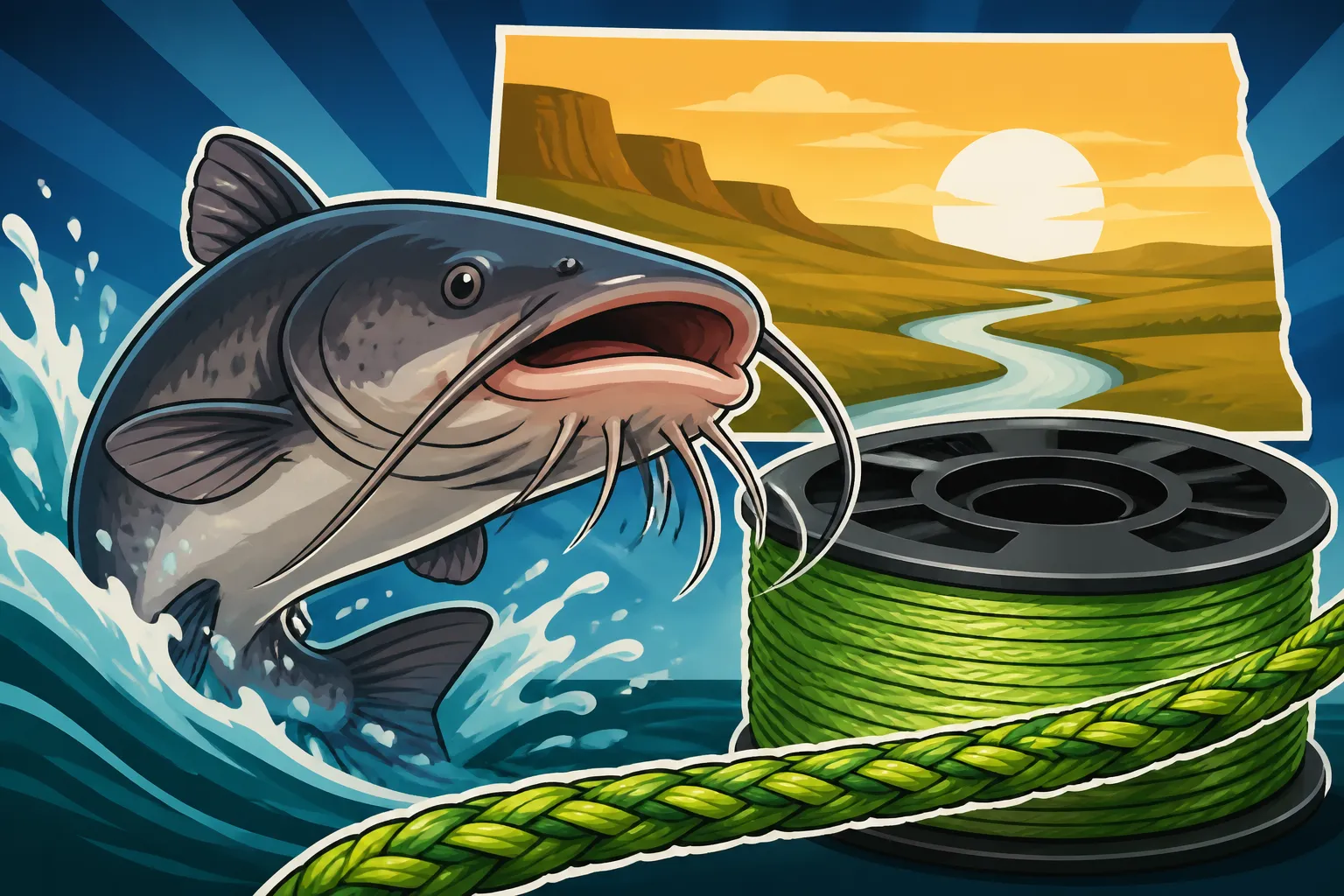
There is nothing quite like the heart-stopping moment when a massive channel catfish hits your bait in heavy river current, only for your fishing line to snap instantly on a submerged log. Traditional monofilament line often suffers from severe stretch and poor abrasion resistance, leaving anglers heartbroken at the riverbank. This comprehensive guide breaks down the best braided line for catfish fishing, detailing strand counts, pound test selection, and rigging strategies so you can confidently land trophy fish across North Dakota waters.
Why Braided Line Is Essential for North Dakota Catfishing
If you have spent any time sitting on the muddy banks of the Red River or drifting deep structure on Lake Oahe, you know that catfishing here is not a gentle sport. Heavy current, submerged timber, sharp riprap, and powerful fish test every single link in your tackle chain. Monofilament has long been a staple in traditional tackle boxes, but modern catfish anglers have largely shifted toward high-performance braided line for several critical reasons.
Zero Stretch and Instant Hook Sets in Heavy Current
When fishing in deep water or against a pounding current, line stretch is your absolute worst enemy. Standard monofilament line can stretch anywhere from fifteen to thirty percent under load. If you have fifty yards of line out in a sweeping river bend, that equates to several feet of rubbery give before your rod tip even transfers force to the hook point.
Braided line, woven tightly from ultra-high-molecular-weight polyethylene fibers, offers virtually zero stretch. The moment a big channel catfish picks up your bait and turns downstream, that bite transfers immediately to your rod tip. When you sweep your rod back to set a heavy circle hook or J-hook, one hundred percent of that kinetic energy travels straight to the fish’s mouth. This instant connectivity drastically improves your hook-up ratio, especially when targeting fish in deep holes or heavy undertows.
Abrasion Resistance Against Timber, Rocks, and Sharp Snags
North Dakota’s prime catfish habitats are filled with brutal line-shredding obstacles. From fallen cottonwoods swept into the river channel to jagged riprap lining reservoir dams, a catfish’s first instinct upon being hooked is to wedge itself into the nearest submerged structure. Monofilament rapidly scuffs, weakens, and breaks under this kind of friction.
Modern braided lines are specifically engineered to withstand harsh environments. The dense, multi-strand weave acts like a tough, flexible rope that slides across smooth underwater logs and resists slicing against sharp rocks. While no fishing line is completely indestructible, heavy-duty braided lines provide the ultimate insurance policy when pulling thick-bodied bottom feeders out of dense brush piles and logjams.
High Strength-to-Diameter Ratio for Deep River Drift
One of the most significant advantages of braided line is its incredibly thin diameter relative to its breaking strength. A fifty-pound test braided line typically possesses the physical thickness of a twelve-pound test monofilament line. This drastic reduction in line profile creates far less water resistance as your rig sits anchored on the riverbed.
In heavy current, thick monofilament acts like a sail, catching the moving water and requiring massive lead sinkers just to keep your bait stationary on the bottom. By switching to a slim braided line, you cut through the water column effortlessly, allowing you to use lighter sinkers while maintaining direct contact with your bait. This thinner profile also allows you to spool significantly more yardage onto your reel, giving you plenty of backing when a fish takes an extended run down river.
Key Features to Look For in Catfish Braided Line
Not all braided lines are manufactured the same way, and picking the right line requires understanding how different weaves, coatings, and colors perform under real-world fishing conditions. Choosing the correct line characteristics ensures your setup matches the specific environment you plan to fish.
| Line Feature | 4-Carrier Braid | 8-Carrier Braid | Monofilament |
|---|---|---|---|
| Abrasion Level | Exceptional | Moderate to High | Poor to Moderate |
| Surface Smoothness | Coarse / Textured | Ultra-Smooth | Very Smooth |
| Casting Distance | Average | Outstanding | Good |
| Current Drag | Moderate | Very Low | High |
| Stretch Profile | Near Zero | Near Zero | High (15%-30%) |
Strand Count: 4-Carrier vs 8-Carrier Braids
When shopping online via platforms like Amazon or looking through the shelves at Bass Pro Shops, you will quickly notice braided lines labeled as 4-carrier or 8-carrier. This designation refers to the number of individual fiber strands woven together to build the line. Each style serves a very distinct purpose on the water.
- 4-Carrier Braids: Woven from four thicker strands, these lines feature a slightly rougher, coarser exterior texture. While they create a subtle whistling sound as they pass through rod guides under load, that rougher profile makes them insanely tough. The individual strands are thicker, making 4-carrier line highly resistant to fraying when constantly dragged across wood, concrete, and abrasive gravel bars.
- 8-Carrier Braids: Braided from eight finer strands, these lines are exceptionally round, silky-smooth, and limp. They shoot through rod guides with minimal friction, delivering maximum casting distance with heavy sinkers and cut bait. However, because the individual micro-fibers are thinner, 8-carrier lines can be slightly more susceptible to outer strand fraying if scraped repeatedly against sharp underwater edges.
Color Selection for Murky Rivers and Clear Lakes
Line color plays a surprisingly strategic role in catfishing. While channel catfish are primarily olfactory feeders relying on scent rather than visual acuity in murky water, line color matters greatly to the angler managing multiple rod spreads along the shore or in a boat.
Hi-vis yellow, fluorescent orange, and bright lime green lines are incredibly popular for bank anglers and night fishermen. When fishing multiple rods at once, these bright colors allow you to keep precise track of line angles, spot subtle bites in low light, and prevent crossed lines when a big fish runs wild. Conversely, dark green, mossy camo, and low-visibility gray lines are ideal for clear water lakes, shallow reservoir flats, or wary fish in heavily pressured waters where line visibility might spook feeding fish.
Line Memory, Suppleness, and Knot Strength
One of the great pleasures of using braided line is its complete lack of spool memory. Unlike heavy monofilament, which retains tight coils after sitting on a reel all winter, braid spills off the spool completely flat and limp. This suppleness eliminates wind knots, coil wrapping around rod tips, and bird’s nests on cast.
However, braid’s slick polyethylene coating makes knot selection paramount. Standard knots like the traditional Clinch Knot will slip right out under heavy strain. When fishing with braided line, you must utilize specialized high-friction knots such as the Palomar Knot, San Diego Jam Knot, or modified Uni-Knot. Ensuring your knots hold tight prevents devastating line slippage when applying maximum drag pressure to a hard-pulling catfish.
Top Braided Line Recommendations for Heavy River Cats
Matching your tackle to your target water body is crucial. Below are the primary line classifications you should consider based on your personal style of catfishing and target environment.
Heavy-Duty 4-Carrier Braids for Extreme Snag Resistance
If your primary catfishing grounds involve severe structure—such as fallen timber bends, bridge pilings, and dense boulder fields—a rugged 4-carrier braid is your absolute best option. The coarse weave of a heavy-duty 4-carrier line shears through soft aquatic vegetation and resists cutting when wrapped around submerged tree limbs.
Anglers targeting monster catfish around thick wood often prefer 4-carrier lines in breaking strengths ranging from 50-pound to 80-pound test. The rough exterior profile provides exceptional structural integrity against constant rubbing. When browsing heavy-duty options on Amazon or checking out local tackle stores, look specifically for lines marketed with enhanced abrasion coatings designed for thick cover and bottom bouncing.
Smooth 8-Carrier Braids for Maximum Casting Distance
For anglers who prefer long-distance casting from shore or floating wide flats where snags are minimal, a smooth 8-carrier braid is hard to beat. The rounded cross-section glides effortlessly off large spinning reels and heavy baitcasting setups, adding significant yards to every throw.
An 8-carrier braid in the 30-pound to 50-pound test class offers the ultimate balance of castability and strength. It slices cleanly through fast river currents without bowing excessively, giving you direct contact with your sinker. If you regularly shop at Bass Pro Shops for premium terminal tackle, picking up a high-end 8-carrier line will immediately improve your casting accuracy and distance on expansive river stretches.
Hi-Vis Lines for Night Fishing and Multi-Rod Spreads
Catfish are notoriously active during the overnight hours, making darkness the prime time to land a true trophy. However, managing three or four rods in total darkness without proper line visibility can quickly devolve into a chaotic mess of tangled lines and missed hook sets.
Hi-vis neon braided lines paired with a headlamp or blacklight make line management completely stress-free. You can instantly see if your line is drifting sideways into a neighbor’s rig or if a catfish is slowly swimming back toward your boat with the bait. For deep dives into nocturnal tactics, reading about Night Fishing Techniques for Catfish will help you optimize your rod layouts and illumination gear for maximum success.
Matching Line Pound Test to North Dakota Waters
Selecting the right pound test is not just about the size of the fish you hope to catch; it is equally about managing current drag, sinker weight, and structure severity. Using line that is too heavy can hamper your casting, while line that is too light leads to frequent break-offs.
Taming Monster Channel Cats on the Red River
The Red River of the North is legendary across the nation for producing world-class channel catfish. These are not small farm-pond bottom feeders; these are thick, muscular fish that utilize heavy river current to fight with unbelievable power. Knowing the local population potential by checking the Red River Channel Catfish Maximum Size highlights why robust gear is non-negotiable here.
| Location / Environment | Recommended Line Type | Ideal Pound Test |
|---|---|---|
| Red River Main Channel | Tough 4-Carrier Braid | 50 lb – 80 lb Test |
| Lake Oahe Open Flats | Smooth 8-Carrier Braid | 30 lb – 50 lb Test |
| Small Streams & Tributaries | All-Purpose Braid | 20 lb – 30 lb Test |
| Heavy Wood & Logjams | Coarse 4-Carrier Braid | 65 lb – 100 lb Test |
For navigating the heavy flows and timber-laden banks of the Red, a braided main line between 50-pound and 80-pound test is standard practice. Pairing this line with appropriate rod backbones—such as those detailed in our guide to the Best Rod Power for Catfish on the Red River—ensures you can turn a fish’s head before it reaches deep logjams. Scout proven locations using Red River Catfish Fishing Spots in North Dakota to match your gear strength to specific current seams and hole depths.
Target Strategies for Lake Oahe and Missouri River Current
Lake Oahe and the connected stretches of the Missouri River offer a vastly different fishing dynamic than narrow red-clay rivers. Here, anglers often contend with massive expanses of open water, deep basin channels, wind-driven waves, and moderate current speeds.
Because open reservoir water generally presents fewer severe wood snags, you can comfortably downsize your line strength to a 30-pound or 50-pound test braided main line. This lower diameter reduces water resistance and allows for far longer casts from boat or bank. Reviewing Lake Oahe Catfish Fishing Spots reveals numerous deep drop-offs and submerged points where a thinner, highly sensitive braid excels at detecting light bites in deep water.
Small Creek and Tributary Catfishing Setup
When exploring smaller tributary streams, minor rivers, or shelterbelt ponds throughout North Dakota, catfish sizes are often smaller, and current speeds are vastly reduced. In these contained environments, ultra-heavy tackle is unneeded and can actually dampen the enjoyment of the fight.
A flexible 20-pound to 30-pound test braided line is more than adequate for tributary exploration. It offers incredible strength against small brush piles while remaining thin enough to throw lightweight sinkers and smaller cut bait offerings. This lighter setup allows for subtle presentations while still providing the zero-stretch benefit of braid when fishing around bridge footings or farm culverts.
Essential Rigging and Line Management Techniques
While spooling your reel with high-quality braid is a massive upgrade, braid alone does not complete a catfishing rig. To build a foolproof system, you must combine your main line with appropriate leader materials, proper knots, and correct spooling procedures.
Monofilament and Fluorocarbon Shock Leaders
Never tie your main-line braid directly to a hook or heavy lead sinker when catfishing. While braid has high tensile strength, its raw fibers can cut into themselves under heavy shock loads, and it lacks the slick outer cushion required to resist constant rubbing against abrasive underwater rocks and catfish teeth.
Always attach a heavy monofilament or fluorocarbon shock leader—typically two to three feet in length—between your braided main line and your hook. A 40-pound to 60-pound monofilament leader provides crucial stretch shock-absorption when a fish violently surges at the net, while offering superior abrasion resistance against a catfish’s coarse, sandpaper-like raspers. Learning How to Rig Cut Bait for Catfish will show you how to properly assemble these leader sections alongside sliding sinkers and heavy barrel swivels.
Must-Know Knots for Tying Heavy Braid
As noted earlier, slick braided lines will cause traditional fishing knots to slip open under load. Master these three essential knots to keep your line rock-solid under maximum pressure:
- The Palomar Knot: The absolute king of braid knots. Simple, incredibly strong, and virtually impossible to slip when tied correctly. Ideal for tying main-line braid to heavy barrel swivels or solid steel rings.
- The Modified Uni-Knot: Excellent for joining braid to terminal tackle or line-to-line connections. Doubling the line back through the loop five to seven times creates massive friction that holds braid securely.
- The Alberto / FG Knot: The gold standard for tying braided main line directly to heavy monofilament or fluorocarbon leader materials without relying on a metal swivel connection.
Spooling Braid Properly to Prevent Dig-In
Spooling braided line onto your reel requires specific steps to avoid performance issues on the water. Because braid is slick, tying it directly to a smooth metal reel spool will cause the entire column of line to slip endlessly under drag pressure, making it impossible to reel in line.
To prevent spool slip:
* Use Monofilament Backing: Wrap ten to fifteen yards of standard monofilament onto the bare spool core first, connect the monofilament to your braid with a Uni-to-Uni knot, and then fill the rest of the reel with braid. The monofilament grips the metal spool arbor securely.
* Pack it Tight Under Tension: Braided line must be spooled under extreme physical tension. If you pack braid loosely onto a reel, heavy drag strain from a big fish will cause the top wraps of line to wedge down into the soft lower layers (“dig-in”). This causes jammed spools and snapped lines on subsequent casts. Hold the line tightly using a rag or glove while cranking it onto the reel.
Matching your line setup with high-capacity reels, such as those recommended in our guide to the Best Baitcasting Reels for Catfish, guarantees smooth drag operation and flawless line laying.
Comparative Overview of Catfish Line Options
To help visualize how braided line stacks up against traditional catfishing line choices, review the key operational differences below.
Braid vs Monofilament vs Fluorocarbon for Catfish
Every line material brings unique physical properties to the riverbank. Understanding these tradeoffs allows you to tailor your gear precisely to water clarity, current speed, and bottom structure.
- Braided Line: Offers maximum breaking strength with minimal diameter, zero stretch for solid hook sets, and ultimate castability. It is the premier choice for main-line material on heavy current rivers and snag-filled waters.
- Monofilament Line: Features significant stretch, excellent knot retention, and high shock absorption. Its supple cushion makes it the ultimate leader material choice to pair with braided main line.
- Fluorocarbon Line: Virtually invisible underwater with high abrasion resistance and minimal stretch compared to monofilament. Excellent for crystal-clear lakes or shy fish, though often too stiff and expensive to use as a primary main line on heavy catfish reels.
For a broader look at daily limits, species regulations, and harvest rules across North Dakota rivers, be sure to review the official North Dakota Catfish Limit Rules before heading out on your trip.
Balancing Cost and Performance for Seasonal Anglers
While high-performance braided line carries a higher initial price tag than standard monofilament spools, it is vastly more economical over time. Monofilament breaks down rapidly under exposure to sunlight, UV radiation, and water saturation, requiring complete re-spooling every single season.
Braided line does not degrade from UV exposure or water absorption. A quality spool of braid can easily last three to five years on a catfish reel with basic maintenance. If the outer end of your braid begins to show wear after a couple of seasons of hard use, simply strip off the top twenty yards or reverse the entire spool onto another reel—putting the unused inner line on top. You can conveniently stock up on bulk braid spools from retailers like Amazon or Bass Pro Shops to keep all your catfish setups ready for action.
Tactical Boat and Shore Line Strategies
How you anchor your boat or position your bank rods directly impacts line performance in heavy river currents. Improper positioning leads to severe line bows, drifting sinkers, and maddening tangles.
Managing Current Drag from Boat and Bank
When fishing from a boat anchored in swift current, casting your lines straight downstream minimizes side-current belly in your braid. If you cast across the current seam, moving water pushes hard against the side of your line, pulling your anchor lead off the bottom and drifting your bait out of the strike zone.
Learning proper boat positioning tactics through our guide on How to Anchor in Current for Catfish will help you align your boat safely in deep channels, keeping your braided lines straight and sensitive. Bank anglers should utilize high-rising bank rod holders, keeping rod tips pointed elevated toward the sky. Elevating your rod tips keeps as much line out of the water surface as possible, dramatically reducing current drag on your main line.
Presenting Cut Bait with Zero Line Resistance
Catfish often inspect cut bait offerings by gently picking up the bait and swimming slowly away before swallowing it fully. If they feel sudden stiff resistance from a thick, heavy monofilament line bowing in the current, they will frequently drop the bait instantly.
The ultra-thin profile and low weight of braided line allow your bait to sit naturally on the bottom without unneeded drag pulls. Pair your braid with sliding sinker rigs (Carolina Rigs) so the main line slides effortlessly through the weight loop when a fish takes off. Exploring effective bait preparations in Catfish Bait Techniques for the Red River paired with low-drag braided line will result in far more completed bites and landed trophies.
Taking the time to match your braided line strength, weave, and color to your specific fishing style eliminates gear failure and turns heartbreaking break-offs into memorable photo opportunities. Gear up properly, tie solid knots, and enjoy the unmatched thrills of North Dakota catfishing!
Disclaimer
This article is for general informational purposes only and does not constitute professional advice. Laws, prices and regulations vary by location and change over time. Consult a qualified professional for guidance on your specific situation.