Best Kayak Anchor for the Red River
Kayak fishing on the Red River is an experience like no other, but anyone who's tried to hold a spot in that current knows the struggle is real. The river's constant flow, combined with its often muddy bottom and wide-open stretches that catch every gust of wind, can make anchoring feel like an impossible task. This guide will dive deep into how to choose the best kayak anchor for the Red River, ensuring you can stay put, fish effectively, and most importantly, stay safe.
The Red River's Anchoring Hurdles: Why a Standard Anchor Won't Always Cut It
Fishing from a kayak on a lake is one thing – often, a lightweight folding anchor or even a simple drag chain will keep you where you want to be. But the Red River? That's a whole different beast. It demands more from your gear and your technique, especially when it comes to staying put. Understanding these unique challenges is the first step to choosing the right anchor setup.
Understanding the Relentless Flow and Current
The Red River of the North is known for its relatively consistent, and often deceptively strong, current. It might not always look like a raging torrent, but that steady flow is enough to constantly tug at your kayak, pulling you downstream and forcing you to continually paddle just to maintain position. A common frustration for kayak anglers is dropping a small, lightweight anchor only to find themselves slowly but surely dragging, or worse, spinning around because the anchor just doesn't have the grip to hold against the sustained pressure.
Think about it: a small 1.5 lb grapple anchor that works perfectly on a calm prairie pond has virtually no chance against the Red River's push. Your kayak, being relatively light and with a good amount of hull surface area, acts almost like a sail or a drag chute in the water. Even a modest current combined with a slight breeze can create enough force to overwhelm an inadequate anchor, sending you drifting away from that prime catfish hole or walleye eddy you just spent ages finding. Red River of the North Fishing Guide will give you a good overview of what fishing this unique river is all about.
Navigating the Murky, Mucky Bottom
Another significant challenge when anchoring on the Red River is its distinct bottom composition. Unlike many lakes with rocky or sandy beds, the Red River is typically characterized by a soft, silty, and often very mucky bottom. This presents a unique problem for anchors. Fluke-style anchors, designed to dig in, might struggle to penetrate the thick, soft mud effectively, or they might dig in too well and get completely buried, making retrieval a nightmare.
Adding to this, the riverbed can be littered with submerged debris like old logs, branches, and even forgotten fishing gear, especially near deeper bends or along eroding banks. An anchor that snags easily on such obstructions can lead to frustrating delays, lost tackle, or even dangerous situations if you can't free it quickly. There's nothing worse than finally getting your anchor to set, only to find it hopelessly stuck and having to cut your line, losing a perfectly good anchor to the river's depths. This is where specialized anchor designs and retrieval systems truly shine.
Wind Exposure Across Open Prairies
While the current is the primary force, the Red River's path through the relatively flat, open prairie landscape of North Dakota means it's often exposed to persistent winds. These winds can be a major factor, sometimes even more impactful than the current, especially for a high-profile kayak. A stiff crosswind can push your kayak sideways, making it difficult to maintain a consistent casting angle or present your bait properly, even if your anchor is holding.
Imagine you're trying to fish a specific seam for channel catfish, but a 15 mph crosswind keeps pushing your kayak broadside to the current, causing your line to bow out dramatically. This makes feeling subtle bites nearly impossible and keeps your bait from staying in the strike zone. You need an anchoring solution that doesn't just stop your forward progress but also minimizes your kayak's swing and pivot, allowing you to effectively fish the structure or current breaks you've identified. You'll find great spots to put these techniques to use in our Red River Catfish Fishing Spots in North Dakota article.
Choosing the Right Anchor Type for Red River Kayak Fishing
When you're facing the Red River's unique combination of current, muck, and wind, you can't just grab any old anchor. You need something specifically designed to handle these conditions. Let's break down the types of anchors and what works best on this distinctive waterway.
The Mighty River Anchor (Claw/Fluke Style)
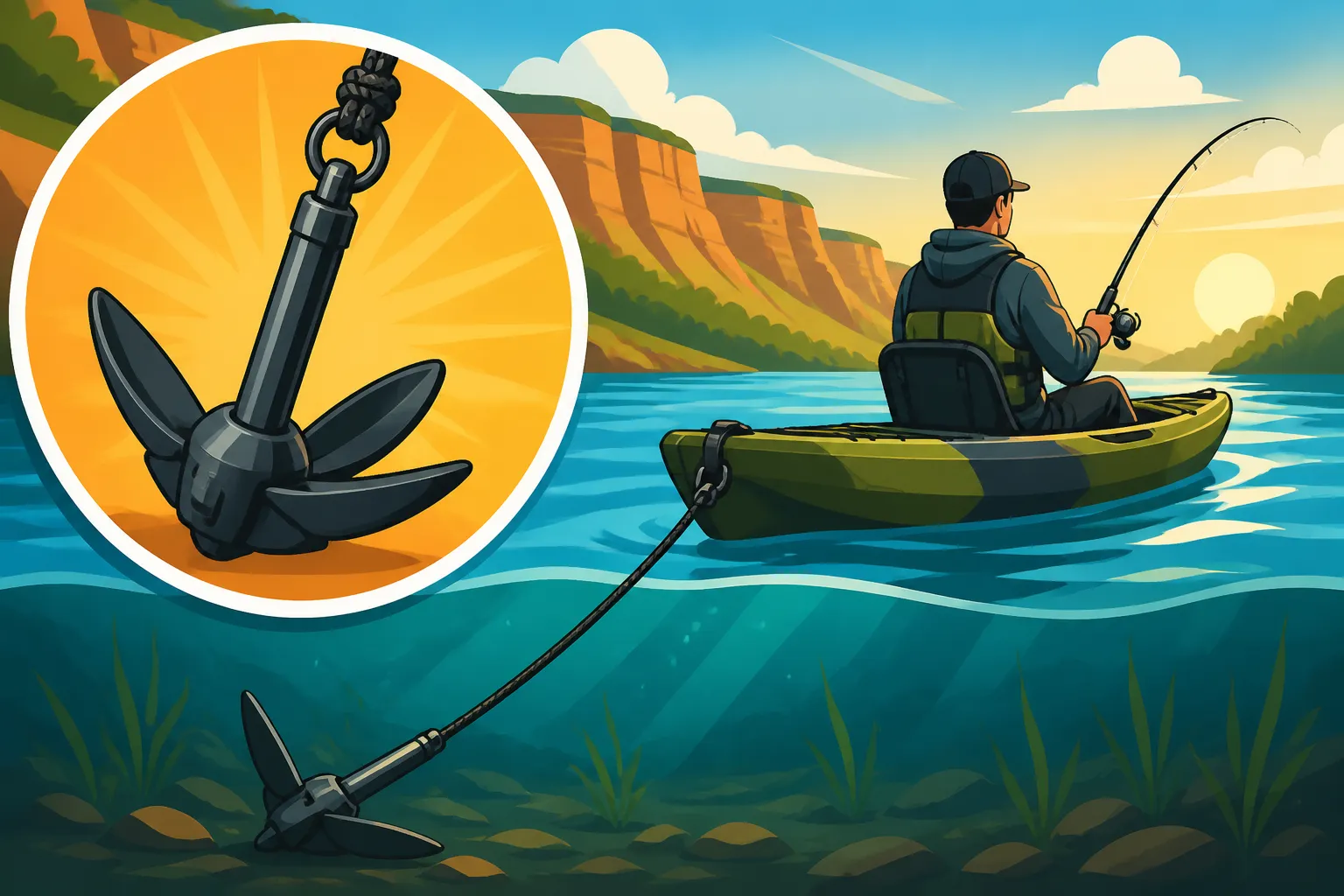
For most kayak anglers on the Red River, a dedicated river anchor, often a claw or fluke style, is going to be your best friend. These anchors are specifically designed with broad, shovel-like flukes that are excellent at digging into soft, muddy, or silty bottoms – exactly what you find in the Red River. Unlike small grapple anchors, their design allows them to penetrate and hold substantial amounts of riverbed material, providing a strong grip against the current.
The key with a river anchor for kayak fishing is weight. While larger boats might use even heavier versions, a kayak on the Red River typically benefits from an anchor in the 8 to 15-pound range. This might sound heavy for a kayak, but that extra weight ensures the anchor drops quickly, hits the bottom with enough force to set its flukes, and stays put once it's dug in. You can often find solid options at outdoor retailers like Bass Pro Shops or even browse different weights and styles on Amazon. This type of anchor, properly weighted and deployed, offers superior holding power and significantly reduces the frustrating "anchor drag" experience.
Grapple Anchors: When and Where They Might Work
Grapple anchors, also known as folding grapnels, are the lightweight, compact anchors most people associate with kayaks and small boats. They feature four foldable tines that are supposed to catch on rocks, roots, or other bottom structure. Their primary advantage is how easily they store away in a small compartment when not in use.
However, on the Red River, their limitations often outweigh their benefits. Most grapple anchors are simply too light to effectively hold a kayak against a strong current, causing them to skip or drag across the muddy bottom rather than digging in. Furthermore, those tines, while sometimes useful for catching submerged logs, are also notorious for getting hopelessly snagged in the same debris. Retrieving a snagged grapple anchor can be a monumental task, often leading to cut lines and lost gear. For the Red River, these are best reserved for very specific, calm scenarios: perhaps a slow-moving backwater slough, a gentle eddy, or used as a very light secondary anchor if you're dual anchoring in minimal current. They are rarely a primary solution for the main channel.
Stake-Out Poles or Shallow Water Anchors
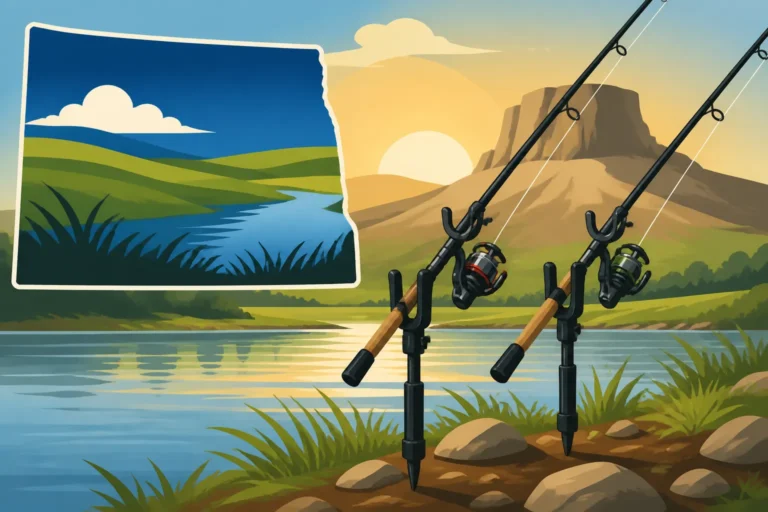
For those moments when you're fishing in relatively shallow water, typically less than 8-10 feet deep, a stake-out pole or a purpose-built shallow water anchor system (like a Power-Pole or a manual stick anchor) can be an absolute game-changer. These aren't "anchors" in the traditional sense, as they don't rely on weight or flukes digging into the bottom. Instead, they are sturdy poles that you manually or electronically push directly into the riverbed, pinning your kayak in place.
The beauty of a stake-out pole is its simplicity and silence. There's no splashing, no anchor line to manage, and no risk of getting snagged in deep water. You simply slide the pole through a scupper hole or a dedicated mount and push it into the soft bottom. They are fantastic for sight fishing in clear, shallow sections, working a specific weed line, or quietly positioning yourself in calmer, shallower areas of the Red River or its tributaries. Their main drawback is their depth limitation; once the water gets too deep, they become impractical. They offer an alternative to traditional anchors when the conditions align, allowing for stealthy and precise positioning. Many anglers pair a stake-out pole for shallow water with a traditional river anchor for deeper sections. Fishing From a Kayak on Devils Lake discusses similar concepts that apply to different waters.
Essential Features and Rigging for Red River Anchoring Success
Having the right anchor type is only half the battle. How you rig and deploy it is just as crucial, especially when dealing with the dynamic conditions of the Red River. Neglecting these details can turn a successful fishing trip into a frustrating or even dangerous experience.
Anchor Weight: The Heavier, The Better (Usually)
When it comes to anchoring on the Red River, don't skimp on weight. While ultralight kayak anglers might prefer minimal gear, the persistent current and potential for wind gusts demand a robust anchoring solution. For a river anchor (claw/fluke style), aiming for at least 8 pounds is a good starting point, with many experienced Red River kayak anglers opting for 10-15 pounds. This might seem excessive for a small craft, but that extra mass provides several key benefits.
Firstly, a heavier anchor drops faster and hits the bottom with more force, increasing the likelihood that its flukes will dig in and set properly on the soft, mucky riverbed. Secondly, once set, the sheer weight contributes to the anchor's holding power, making it much more resistant to dragging, even in a strong current or stiff wind. Finally, a heavier anchor helps to keep your anchor line more taut, which reduces the amount your kayak can swing or pivot, allowing for more stable fishing. You'll thank yourself for the extra effort of hauling a slightly heavier anchor when you're holding perfectly steady in a prime fishing spot, while others drift downstream.
The Indispensable Anchor Trolley System
If there's one piece of kayak anchoring gear that's absolutely non-negotiable for river fishing, it's the anchor trolley system. An anchor trolley is essentially a loop of rope or cord that runs the length of your kayak, typically through a series of pulleys and cleats. Your anchor line clips into this loop, allowing you to position your anchor attachment point anywhere from the bow (front) to the stern (back) of your kayak.
Why is this so critical on the Red River? In moving water, you almost never want to anchor directly off the side of your kayak. Doing so exposes your broadside to the current and wind, making your kayak unstable and highly susceptible to capsizing, especially if the current is strong or the anchor snags. With an anchor trolley, you can deploy your anchor from the bow to hold your nose into the current, or from the stern to hold your tail into the current. This keeps your kayak aligned with the flow, maximizing stability and allowing you to fish comfortably and safely. It also enables you to adjust your angle to the current or wind, which is crucial for precise lure presentation. Check out a variety of options on Amazon or at Bass Pro Shops. For more gear insights, read our Best Kayak Fishing Gear for North Dakota Lakes guide.
Strong, Long Anchor Line and Quick Release
Just as important as the anchor itself is the line you attach it to, and how you can quickly detach it. For Red River conditions, you need a strong, durable anchor line. Nylon rope, typically 3/8" or 1/2" in diameter, is a popular choice because it has some stretch, which helps absorb shock from waves or current surges. More importantly, you need plenty of length. A good rule of thumb for river anchoring is to have at least 3 to 5 times the maximum depth you expect to anchor in. So, if you're regularly fishing in 20 feet of water, you'll want at least 60-100 feet of line. This allows the anchor to lie at a shallow angle on the bottom, maximizing its holding power.
Equally critical is a quick-release mechanism for your anchor line. This could be a simple, securely mounted cleat that allows you to easily unwrap the line, or a specialized anchor lock system. The ability to quickly and easily detach your anchor in an emergency is paramount for safety on a river. If your anchor gets hopelessly snagged, or if a sudden increase in current threatens to pull your kayak under, you need to be able to jettison the anchor instantly without fumbling. Never, ever tie your anchor line directly to a fixed point on your kayak without a quick-release. This single safety measure can prevent a dangerous capsize. Our article on How to Anchor a Boat on the Red River offers more insights on anchor lines and safety.
Practical Anchoring Techniques for the Red River
Now that you've got the right gear, let's talk about how to actually use it effectively on the Red River. It's not just about dropping it in; there's a definite art to proper kayak anchoring in current.
Strategic Deployment and Retrieval
One of the most common mistakes new river anglers make is dropping their anchor directly on top of their desired fishing spot. The current then pulls their kayak downstream, forcing them to either paddle back upstream against the current to loosen the anchor, or simply drift past their target. The trick is to deploy your anchor upstream of where you want to fish.
Here's how it works: paddle a bit upstream from your target area, then drop your anchor. As the anchor hits the bottom and begins to drag, allow the current to slowly pull your kayak downstream. The anchor line will pay out, and the anchor will set itself as your kayak settles into position over your desired spot. Once you're in place, use your anchor trolley to adjust your position slightly if needed. When it's time to retrieve, paddle slowly upstream a short distance. This helps to reduce the tension on the anchor line and often frees the anchor from the bottom. Then, simply pull in your line. If it's snagged, you might need to try pulling from a different angle using your anchor trolley, or resort to a retrieval ring if you have one.
The Art of Dual Anchoring for Ultimate Stability
There are times on the Red River when even a single heavy anchor, properly deployed, isn't enough to provide the rock-solid stability you might need. This is especially true in very strong currents, high winds, or when you need absolute precision in your casting or bait presentation. This is where dual anchoring comes into play.
Dual anchoring involves deploying two anchors: one from the bow and one from the stern of your kayak. This essentially "pins" your kayak in place, eliminating almost all swing or pivot. You'll typically use two separate anchor trolleys, or at least two separate anchor points with quick releases. Deploy the upstream anchor first, let it set, then carefully deploy the downstream anchor. Adjust both lines to create tension that holds your kayak steady. The benefits are immense: you'll be able to hold precise positions, allowing for more accurate casts to specific structure or current seams. This technique is particularly effective for bottom fishing for catfish or walleye, where staying put directly over a specific spot can make all the difference. It takes a bit more coordination and gear, but the control it offers is unmatched. For targeting fish like catfish, this level of precision can significantly increase your catch rate, as described in Best Rod Setup for Red River Catfish.
Adapting to Changing Conditions
The Red River is a dynamic environment, and conditions can change throughout the day. Water levels can fluctuate, current speeds can vary, and the wind, as we've discussed, can shift direction or intensity. A good river angler constantly pays attention to these factors and adapts their anchoring strategy accordingly.
If the wind picks up and starts pushing your kayak sideways despite your anchor holding, use your anchor trolley to adjust the angle of your kayak. Sometimes, just moving the anchor point a few feet forward or backward can dramatically improve your stability. If the current unexpectedly strengthens, be prepared to potentially release your anchor if it starts dragging too much, or even deploy a second anchor if you have one. There will also be times when the current is simply too strong, or the conditions too volatile, for safe and effective anchoring. In these situations, the safest and most effective "anchoring" strategy is often to forgo it altogether and opt for controlled drifts, using your paddle or even a small trolling motor to maintain your position. Staying aware and being flexible is key to a successful and safe day on the Red River. Understanding Fishing Techniques for the Red River's Murky Water also helps in these scenarios.
Safety First: Critical Considerations for Red River Kayak Anchoring
Safety should always be your number one priority, especially when kayak fishing on a moving body of water like the Red River. A simple anchoring mistake can quickly escalate into a dangerous situation.
Never Tie Off Directly to Your Kayak
This point cannot be stressed enough: NEVER tie your anchor line directly to a fixed point on your kayak, such as a grab handle, seat frame, or bow/stern loop. In a river with current, this is an incredibly dangerous practice. If your anchor gets snagged on a submerged log or rock, or if a sudden strong current hits, the force exerted on that fixed point can quickly pull your kayak broadside, filling it with water or even capsizing you. You could be pulled under with your boat, or be unable to free yourself from the snagged anchor.
The only safe way to anchor a kayak in moving water is by using an anchor trolley system combined with a quick-release mechanism. This setup allows the anchor line to run freely along the side of your kayak, and more importantly, enables you to instantly detach from the anchor in an emergency. If you feel your kayak being pulled dangerously, a quick pull on your quick-release knot or system allows you to separate from the anchor and drift away to safety. This single piece of advice could save your life. For more on safety, see Is Kayak Fishing Safe on Lake Sakakawea?.
Be Prepared for Snags and Emergencies
Despite your best efforts, snags are an almost inevitable part of fishing the Red River. The murky bottom and abundance of submerged debris mean your anchor is going to get stuck eventually. Being prepared for this is crucial. Consider using an anchor breakaway system, where a weak link (like a small zip tie) connects the anchor chain to the flukes, allowing the anchor to be pulled free from the bottom if it gets stuck. Another excellent option is an anchor retrieval ring, often called an "anchor buddy" or "anchor ring." This device slides down your anchor line and helps you pull the anchor free from the opposite direction of the snag.
Beyond retrieval tools, always have a sharp knife or a pair of strong cutters easily accessible on your person. If all other attempts to free a snagged anchor fail, and you find yourself in a potentially dangerous situation, you need to be able to cut your anchor line cleanly and quickly. Losing an anchor is a small price to pay compared to being in a capsized kayak in a strong current. While you're at it, review How Many Lines Can You Fish With in North Dakota? to make sure you're compliant with regulations when out on the water.
Dress for the Water, Not the Air
This safety tip might seem tangential to anchoring, but it's intrinsically linked to staying safe when you're out on the river. An anchoring mishap – whether it's a capsize from a snagged anchor or losing balance while struggling to retrieve it – can quickly put you in the water. The Red River can be surprisingly cold, especially in the spring and fall. Dressing for immersion, meaning wearing appropriate layers that can handle getting wet (like synthetics or wool) and having a change of clothes in a dry bag, is essential.
Always wear a properly fitted personal flotation device (PFD) or life jacket. Even strong swimmers can be quickly overwhelmed by cold water shock or the force of a river current, especially if they are disoriented or dealing with tangled gear. Your PFD is your most important piece of safety equipment. While the focus here is on anchoring, remember that any activity on the water carries inherent risks, and being prepared for an unexpected dip is just as important as choosing the right anchor. Knowing about Red River Fishing Access Near Grand Forks or Red River Catfish Spots Near Fargo can help you plan your trips safely.
Comparing Kayak Anchor Types for the Red River
Here's a quick overview of how different anchor types stack up for the specific challenges of Red River kayak fishing:
| Anchor Type | Pros | Cons | Red River Suitability |
|---|---|---|---|
| River Anchor | Excellent holding power in soft, muddy bottoms; designed for current. | Heavier and bulkier than grapple; can still snag on heavy debris. | Best All-Around Choice for main channel and strong currents. |
| Grapple (Folding) | Compact, lightweight, easy to store. | Poor holding power in current/mud; prone to snagging on debris. | Limited Use: Only for very calm backwaters or as a light secondary. |
| Mushroom Anchor | Good for soft, mucky bottoms; less prone to snagging than grapple. | Very heavy for its holding power; struggles in strong current; bulky. | Possible Secondary Choice: For very slow sections, but river anchor is superior. |
| Stake-Out Pole | Silent, no line to manage, easy to deploy/retrieve. | Limited to shallow water (under 8-10 ft); not suitable for deep or fast current. | Excellent for Shallow Water: Ideal for quiet positioning in calm, shallow areas. |
| Drag Chain (no anchor head) | Minimal snagging, good for slowing drift. | Doesn't truly anchor; only slows drift; requires specific technique. | Situational: For slowing drift in areas where stopping isn't critical. |
Disclaimer
This article is for general informational purposes only and does not constitute professional advice. Laws, prices and regulations vary by location and change over time. Consult a qualified professional for guidance on your specific situation.