Best Trolling Motor Battery for All-Day Fishing
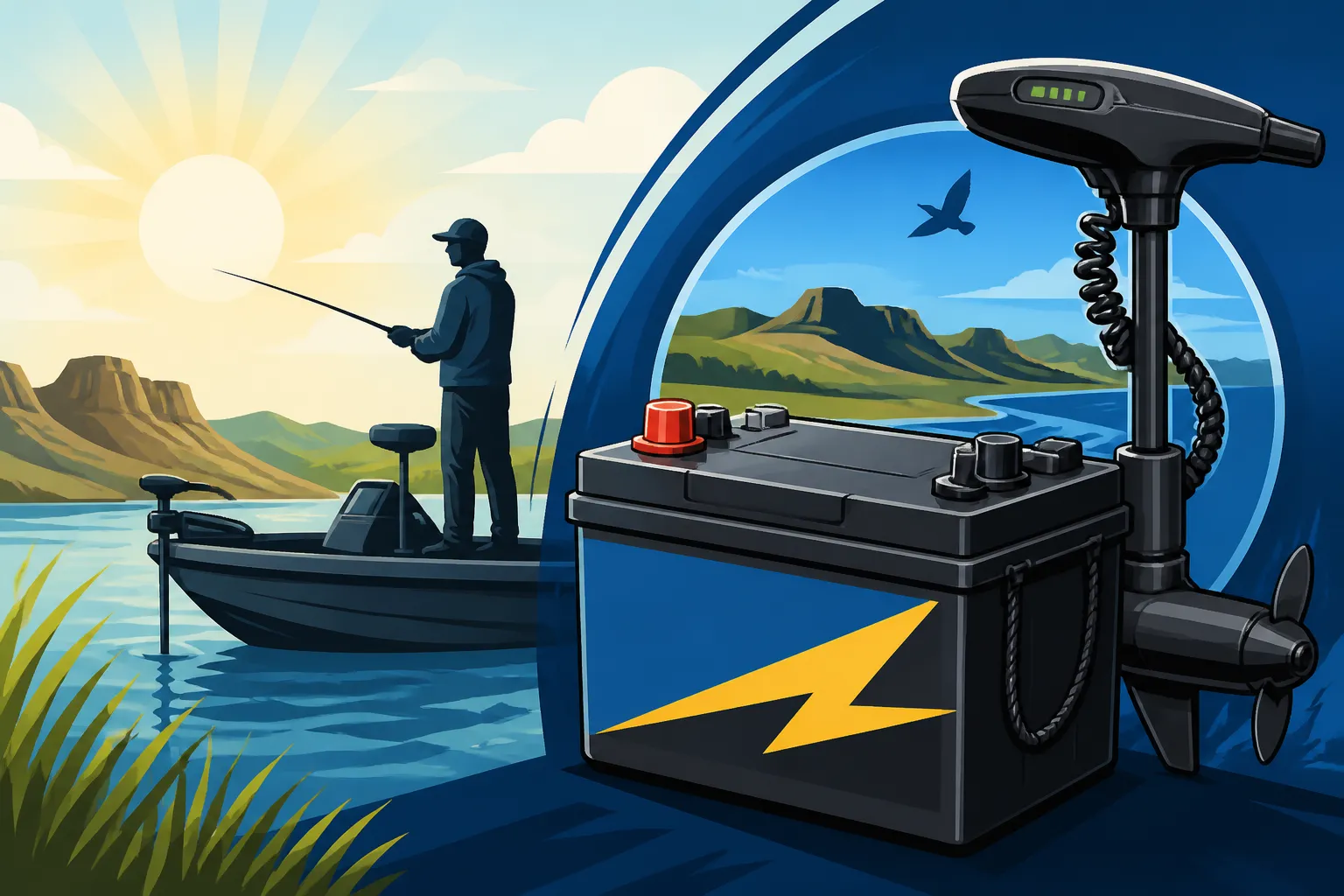
There's nothing quite like the crushing disappointment of your trolling motor sputtering out when you're miles from the boat ramp, smack dab in the middle of a hot bite on a vast North Dakota lake. It’s a common frustration for many anglers who spend long, glorious days on the water, only to be cut short by a failing power source. This guide is here to walk you through everything you need to know about choosing and maintaining the best trolling motor battery for all-day fishing adventures in our beautiful state.
Why Your Trolling Motor Battery Matters for a Full Day on North Dakota Waters
When you're out on the expansive waters of Lake Sakakawea, navigating the complex structure of Devils Lake, or fighting current on the Missouri River, your trolling motor isn't just a convenience; it's often your primary tool for boat positioning, stealth, and, let's be honest, getting home without rowing. A reliable, long-lasting battery is absolutely non-negotiable for a truly successful and stress-free day on the water.
The Impact on Your Fishing Experience
Imagine you're meticulously working a weed line on Lake Ashtabula, slowly creeping along with your electric motor, casting for Northern Pike or Walleye. You've found a rhythm, you're in the zone, and then poof – your battery dies. Suddenly, you're not just out of power, you're out of position, drifting off your spot, and your carefully crafted strategy is ruined. This isn't just an annoyance; it can seriously impact your catch rate and overall enjoyment. For many, a trolling motor is an essential part of their North Dakota Walleye Fishing Techniques, allowing precise boat control to present baits perfectly.
Beyond just the immediate fishing, a dead battery can turn a fun outing into a stressful situation. North Dakota's weather can change quickly, and strong winds can pick up unexpectedly, especially on large bodies of water. Having enough juice to navigate safely back to shore, or to hold your position while you deal with a snag or a lively fish, provides a huge sense of security. It's not just about catching fish; it's about peace of mind.
The Role of Battery Power in Modern Angling
Modern fishing has evolved, and with it, the demands on our boat's electrical system have grown. It’s not just the trolling motor itself anymore. Many anglers rely heavily on advanced electronics, like powerful fish finders and GPS units, which also draw power. While these typically run off a separate starting battery, the distinction blurs with accessories that might be wired into your trolling motor bank or require charging throughout the day. Your Best Fish Finders for North Dakota Lakes can only work as long as they have power.
Beyond the gadgets, features like "spot-lock" or "anchor mode" on GPS-enabled trolling motors are incredibly power-intensive. These features constantly adjust the motor's thrust to hold your boat in place, fighting wind and current, and they can drain a standard battery much faster than simple directional trolling. If you plan to utilize these high-tech advantages for hours on end, you absolutely need a battery system that can keep up.
Understanding Trolling Motor Battery Types: The Pros and Cons
When it comes to powering your trolling motor, you'll generally encounter a few main types of batteries, each with its own set of advantages and disadvantages. Knowing these differences is key to making an informed decision that suits your fishing style and budget.
Lead-Acid Batteries: The Traditional Workhorse
Lead-acid batteries have been the standard in boating for a long time, primarily due to their lower initial cost. Within the lead-acid category, you'll typically find three common variations suitable for deep-cycle applications (which is what a trolling motor needs, as it discharges slowly over a long period).
Flooded Lead-Acid Batteries (Wet Cell)
These are the most common and often the least expensive. They contain a liquid electrolyte solution that needs periodic maintenance, specifically checking and topping off water levels. They are robust and reliable but can be quite heavy and prone to spilling if tipped. In colder North Dakota conditions, their performance can dip, and they are susceptible to freezing if not fully charged. They also have a relatively slow recharge rate compared to other types.
Absorbed Glass Mat (AGM) Batteries
AGM batteries are a step up from flooded lead-acid. The electrolyte is absorbed into fiberglass mats between the plates, making them spill-proof and virtually maintenance-free. They are more resistant to vibration and can handle deeper discharges than flooded batteries without as much damage. This makes them a popular choice for anglers who want better performance and less fuss, especially for applications like a Best Trolling Motors for North Dakota Lakes. They also perform better in colder temperatures than traditional wet cells. However, they are heavier and more expensive than flooded batteries.
Gel Cell Batteries
Gel batteries use a silica gel to suspend the electrolyte. Like AGMs, they are spill-proof and maintenance-free. They are also highly resistant to vibration and extreme temperatures. However, gel batteries generally have a lower power output compared to AGM and flooded batteries, are more sensitive to overcharging, and come at a higher price point. For these reasons, they are less commonly chosen for trolling motors than AGMs.
Lithium-Ion Batteries: The Modern Powerhouse
In recent years, lithium-ion batteries, specifically Lithium Iron Phosphate (LiFePO4 or LFP), have gained significant traction among serious anglers. While their upfront cost is considerably higher, they offer a compelling list of benefits.
Lithium Iron Phosphate (LiFePO4) Batteries
LiFePO4 batteries are lighter, last longer, and provide more consistent power throughout their discharge cycle compared to lead-acid batteries. A single LiFePO4 battery can often replace two lead-acid batteries due to its usable capacity and ability to be deeply discharged without damage. This means less weight in your boat, which can translate to better fuel economy and shallower draft. They also charge much faster and are more efficient. For anglers fishing Lake Sakakawea's Big Water or Devils Lake's Flooded Timber Fishing Spots where weight and sustained power are critical, LiFePO4 batteries are becoming the go-to.
One key consideration for North Dakota fishing is their cold weather performance. While LiFePO4 batteries are generally very efficient, most require specific charging parameters when temperatures drop below freezing. Many modern LiFePO4 batteries include an internal heating element or a Battery Management System (BMS) that prevents charging in extreme cold to protect the cells. This is something you'll want to check when purchasing, especially if you plan to How to Ice Fish in North Dakota or extend your open-water season into late fall. Brands like Dakota Lithium and Battle Born are well-known for their robust LiFePO4 offerings.
Here’s a quick comparison of the main battery types:
| Feature | Flooded Lead-Acid | AGM Lead-Acid | LiFePO4 Lithium-Ion |
|---|---|---|---|
| Initial Cost | Low | Medium | High |
| Weight | Heavy | Heavy | Lightweight |
| Maintenance | High (water levels) | Low (none) | Low (none) |
| Discharge Depth | Moderate (50% recommended) | Good (80% recommended) | Excellent (100% usable) |
| Cycle Life | ~200-500 cycles | ~400-800 cycles | ~2,000-5,000+ cycles |
| Charging Speed | Slow | Medium | Fast |
| Cold Weather Perf | Fair (reduced capacity) | Good (less reduced) | Excellent (some charge limits) |
| Spill-Proof | No | Yes | Yes |
Choosing the Right Capacity and Performance for North Dakota's Demands
Selecting a trolling motor battery isn't just about picking a type; it's about matching its capacity and characteristics to your specific needs on the water. North Dakota's diverse fishing environments, from vast reservoirs to meandering rivers, demand careful consideration.
Understanding Amp-Hours (Ah) and Usable Capacity
The capacity of a battery is typically measured in Amp-hours (Ah). This rating indicates how many amps the battery can deliver for a certain number of hours. For example, a 100 Ah battery could theoretically deliver 10 amps for 10 hours. However, with lead-acid batteries, using the full rated capacity significantly shortens their lifespan. You generally only want to discharge a flooded lead-acid battery to about 50% and an AGM to about 80%.
LiFePO4 batteries, on the other hand, boast a nearly 100% usable capacity. This means a 100 Ah LiFePO4 battery will give you far more actual usable power than a 100 Ah lead-acid battery. When comparing batteries, it’s often more helpful to think about the "effective" or "usable" Ah rather than just the stated Ah. This is a critical factor when considering North Dakota Fishing License Cost Guide and how much you want to invest in your setup versus how much fishing time you get.
Factors Influencing Your Battery Needs
Several variables will dictate the ideal battery setup for your all-day fishing needs in North Dakota:
Trolling Motor Thrust and Voltage
The power of your trolling motor is measured in pounds of thrust. Higher thrust motors (like 80 lbs, 100 lbs, or 112 lbs) naturally draw more amperage, especially at higher speeds. Also, pay close attention to your motor's voltage requirements:
- 12V Trolling Motors: Typically use one 12V deep cycle battery.
- 24V Trolling Motors: Require two 12V deep cycle batteries wired in series.
- 36V Trolling Motors: Demand three 12V deep cycle batteries wired in series.
The more batteries you need, the more weight you'll add to your boat if you stick with lead-acid. This is where the weight savings of LiFePO4 batteries become particularly appealing for larger boats with 24V or 36V systems.
Fishing Style and Duration
Are you a "set it and forget it" angler who uses minimal trolling motor power, or do you rely heavily on spot-lock in windy conditions for hours on end? Constant use of spot-lock or high-speed trolling will drain a battery much faster than occasional short bursts. Think about how long your typical fishing day lasts. If you're out from dawn till dusk on a big lake like Lake Sakakawea, you'll need significantly more capacity than someone fishing a small pond for a couple of hours.
Consider if you primarily engage in techniques like Summer Walleye Trolling Techniques or Ice Fishing for Northern Pike With Tip-Ups. While ice fishing typically uses smaller, more specialized batteries for electronics and augers, if you're using a full boat setup on open water, your trolling motor will be the primary power draw.
Cold Weather Performance and Storage
North Dakota winters are no joke, and even spring and fall fishing can bring surprisingly cold temperatures. Lead-acid batteries lose efficiency in the cold, meaning their usable capacity decreases. They also hold a charge less efficiently in cold storage. LiFePO4 batteries perform better in cold operating conditions but require special attention when charging below freezing. Always ensure your charging setup is appropriate for the ambient temperature, especially if you're storing your boat outside or in an unheated garage during the colder months. This attention to detail can prevent you from needing a North Dakota Fishing License Refund Policy because your battery died before you even launched.
Estimating Your Battery Needs: A Rough Guide
To get a ballpark idea of what you need, consider this simple approach:
- Determine your motor's maximum amp draw: Check your trolling motor's specifications. A 55 lb thrust 12V motor might draw around 50-60 amps at full speed, while a 112 lb thrust 36V motor could draw 50-60 amps per 12V battery in the bank (totaling the same current draw across the series but at higher voltage).
- Estimate average amp draw: You likely won't run your motor at full speed all day. Factor in average speed, spot-lock usage, and how many hours you typically fish. A common estimate for a full day (8-10 hours) might be an average of 10-20 amps per hour for moderate use.
- Calculate total Ah needed: Multiply your estimated average amp draw by your desired fishing hours. For example, 15 amps/hour * 8 hours = 120 Ah.
- Factor in usable capacity:
- For lead-acid: Double your calculated Ah (since you only use ~50%). So, 120 Ah needed * 2 = 240 Ah rated capacity. You might need two 12V 120Ah lead-acid batteries for a 12V system, or a bank of four 120Ah batteries for a 24V system (depending on how many batteries you use in parallel for a 12V system).
- For LiFePO4: You generally don't need to double it, as you can use most of the capacity. So, 120 Ah would likely be sufficient from a single LiFePO4 battery, or perhaps a slightly larger one for a buffer.
This is a simplified calculation, but it gives you a starting point. When in doubt, it’s always better to over-spec your battery capacity slightly to ensure you have enough reserve power. Many anglers find quality batteries from retailers like Bass Pro Shops or a wide selection online via Amazon, and checking customer reviews for real-world performance is always a good idea.
Extending Your Battery Life and Staying Charged on the Water
Even the best trolling motor battery won't perform optimally or last for years if you don't take care of it. Proper charging and maintenance are crucial for maximizing your investment and ensuring you always have power when you need it most.
Proper Charging Practices
Consistent and correct charging is the single most important factor in battery longevity.
Use a Quality On-Board Charger
Investing in a multi-stage, smart on-board charger specifically designed for your battery type (lead-acid or lithium) is paramount. These chargers monitor battery levels and adjust the charging output, preventing overcharging which can damage batteries, especially lead-acid types. They also ensure a full charge without gassing out wet cells excessively. Brands like Minn Kota, Noco, and ProMariner offer excellent marine-grade chargers. If you're running a 24V or 36V system, ensure your charger can handle multiple banks simultaneously.
Charge After Every Use
Even if you only used your trolling motor for an hour, get into the habit of plugging in your charger as soon as you get home. Allowing lead-acid batteries to sit in a discharged state for extended periods leads to sulfation, which permanently reduces their capacity. LiFePO4 batteries are more forgiving, but consistent charging keeps them ready for your next adventure. Never leave your batteries discharged, particularly in cold temperatures.
Avoid Deep Discharges (for Lead-Acid)
As mentioned earlier, try not to drain your lead-acid batteries below 50% capacity. While they can handle occasional deeper discharges, making it a regular practice will drastically shorten their lifespan. Your fish finder might have a voltage display; keep an eye on it. LiFePO4 batteries are designed for deep discharges, so this concern is less critical for them.
Battery Maintenance and Winter Storage
Especially in North Dakota, where the open water season gives way to ice fishing and cold storage, proper battery maintenance is key.
Keeping Terminals Clean and Connections Secure
Corrosion on battery terminals can impede current flow, reducing performance and charging efficiency. Regularly inspect your terminals and clean them with a wire brush and a baking soda/water solution if you see any white or blue buildup. Apply a thin coat of dielectric grease or battery terminal protector to prevent future corrosion. Ensure all connections are tight and secure to prevent power loss and potential safety hazards. Loose connections can also generate heat, which is bad for battery health.
Winterization for Lead-Acid Batteries
When the snow starts to fly and your boat goes into storage, proper winterization of your lead-acid batteries is crucial.
- Fully Charge: Ensure all lead-acid batteries are fully charged before storing them. A discharged battery can freeze and crack in extreme cold, rendering it useless.
- Disconnect: Disconnect all accessory wires from the battery terminals to prevent any parasitic drains that could slowly discharge the battery over months.
- Store in a Cool, Dry Place: Ideally, store lead-acid batteries in a cool, dry place where temperatures remain above freezing but don't get too hot. A heated garage is perfect, but if not, ensure they are in a sheltered location.
- Periodic Topping Off: Lead-acid batteries will slowly self-discharge over time. Check their charge every month or two and top them off with your smart charger to keep them at full capacity.
Winterization for LiFePO4 Batteries
LiFePO4 batteries are much more forgiving for winter storage. They have a very low self-discharge rate and are generally not damaged by freezing temperatures when stored at a partial charge (often around 50%). However, as noted, avoid charging them when they are below freezing. Many modern LiFePO4 batteries have a built-in low-temperature disconnect for charging to protect themselves. If you are storing your boat in an unheated shed, simply disconnect them from the boat and leave them be until spring. No need for monthly trickle charges, unlike lead-acid. For an angler who might be considering North Dakota Ice Fishing Rules, remember that while your boat's trolling motor battery might be put away, your ice fishing electronics and auger batteries also need care.
By following these guidelines, you'll ensure your trolling motor battery is always ready for whatever North Dakota's lakes and rivers throw at you, keeping you on the fish all day long.
Disclaimer
This article is for general informational purposes only and does not constitute professional advice. Laws, prices and regulations vary by location and change over time. Consult a qualified professional for guidance on your specific situation.