Best Jon Boat for the Red River
The Red River of the North, with its meandering current, occasional debris, and often shallow stretches, can be a challenging but incredibly rewarding place to fish, especially for those targeting its famed channel catfish. Many anglers find themselves frustrated trying to navigate larger, deeper-V boats or struggling to manage smaller craft in the strong flow. This guide will help you understand why a Jon boat is often the perfect vessel for conquering the Red River and what to look for when choosing one, ensuring your fishing adventures are successful and stress-free.
Why a Jon Boat is Ideal for the Red River
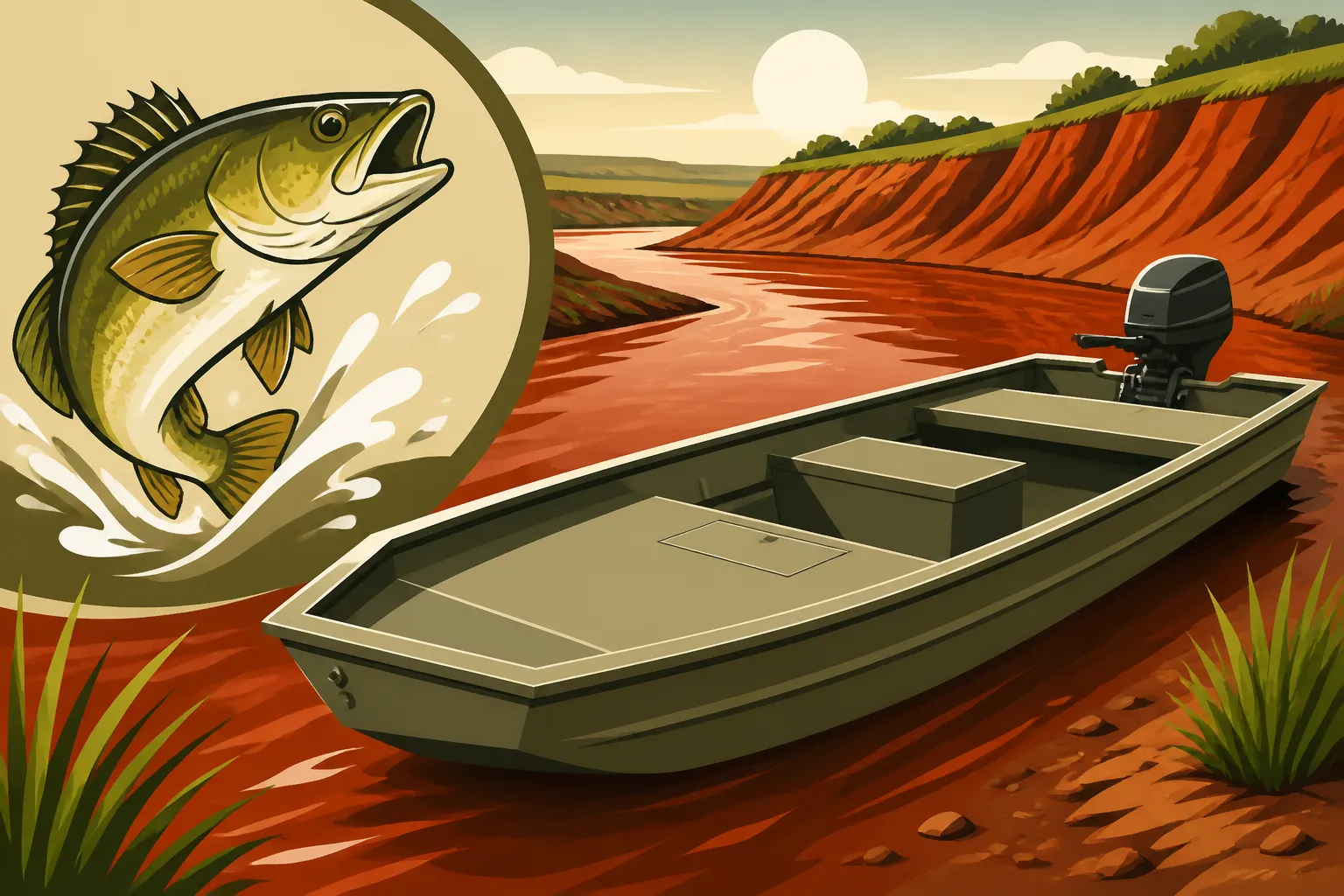
If you've spent any time on the Red River, you know it's not like the wide-open, deep waters of Lake Sakakawea or the more predictable flows of the Missouri River. This river has its own unique personality, and a Jon boat is perfectly suited to handle it. Its flat bottom and robust construction offer advantages that many other boat types simply can't match in this specific environment.
Navigating Shallow and Debris-Filled Waters
One of the biggest headaches on the Red River is dealing with fluctuating water levels and the inevitable debris that comes downstream, especially after a good rain. Traditional V-hull boats, while great for cutting through chop on bigger lakes, often draw too much water for the shallower sections of the Red. This can lead to grounding, prop damage, or simply being unable to access prime fishing spots.
A Jon boat, with its signature flat bottom, really shines here. It has a very shallow draft, meaning it doesn't need much water at all to float. This allows you to motor over sandbars, cruise through skinny backwaters, and navigate areas where a deeper hull would get stuck. Imagine being able to reach that secluded snag pile where the trophy catfish are hiding, an area previously inaccessible. Beyond the shallows, the Red River can carry a lot of timber, branches, and other flotsam. The sturdy, no-frills construction of a Jon boat means it's built to take a bump or two. You're less likely to suffer serious damage from an unexpected log than you might with a more delicate fiberglass hull. It's truly a workhorse, designed for resilience in tough conditions, which is exactly what the Red can throw at you.
Stability for Bank Fishing and Heavy Loads
Fishing on the Red River often involves setting up camp, whether it's for a few hours or an overnight catfishing expedition. This usually means bringing along a fair amount of gear: multiple rods, tackle boxes, bait coolers, perhaps a grill, and certainly some drinks and snacks. You might also want to do some bank fishing from your boat, standing up to cast or tending multiple lines. This is where the stability of a Jon boat becomes a huge asset.
Its wide, flat bottom provides an incredibly stable platform. You can stand up and move around without feeling like you're going to tip over, which is a common concern in narrower, rounder-bottomed boats. This stability is a game-changer when you're wrestling a big channel cat, trying to net it, or simply reorganizing your gear. Furthermore, that flat bottom distributes weight evenly, allowing you to load it up with all your essentials without significantly impacting its performance or safety. Whether it's coolers full of bait and fish, an extra battery for the trolling motors, or a buddy who brought too many snacks, a Jon boat can handle the load. This makes it perfect for longer trips or when you want to bring along extra comfort items for a full day on the water.
Ease of Transport and Launching
Let's be real, not everyone has a monster truck and a heavy-duty trailer. And even if you do, launching on some of the Red River's access points can be tricky. Some ramps are shallow, some are unimproved, and others might have a steep drop-off. A major advantage of Jon boats is their relatively light weight and simple design, which translates directly into easier transport and launching.
Most Jon boats, even larger ones, can be towed by a wider range of vehicles than heavier, more complex boats. This means you might not need to upgrade your truck just to get your fishing boat to the water. The simpler trailer designs also mean less maintenance and easier maneuvering in tight spots. When it comes to getting on the water, that shallow draft we talked about earlier is a blessing. You can back a Jon boat into surprisingly shallow water, making launching from less-than-ideal ramps or even just a dirt bank much more feasible. Recovery is just as easy. This reduces stress at the start and end of your fishing day, allowing you to focus more on the fishing itself. The lightweight nature also makes it easier to push off if you accidentally get stuck in mud or on a sandbar, a situation not uncommon on river systems like the Red. For more on preparing for your fishing trips, check out our Essential Gear Checklist for North Dakota Fishing.
Key Features to Look For in a Red River Jon Boat
Choosing the right Jon boat isn't just about picking the first one you see. There are specific features that will make a big difference in your Red River experience. From the fundamental construction to how you plan to power it, a little foresight goes a long way.
Hull Design and Material
When we talk about hull design for a Jon boat on the Red River, we're primarily focused on two things: the bottom shape and the material. While all Jon boats are generally flat-bottomed, some might have a slight V or modified V towards the bow. For the Red River, a truly flat-bottomed boat is often preferred for maximum shallow water access and stability. However, a slight V up front can help a bit with cutting through any small chop or boat wakes you might encounter, offering a slightly smoother ride without significantly sacrificing shallow draft.
The material is almost always aluminum, and for good reason. Aluminum is incredibly durable, lightweight, and resistant to corrosion – all crucial qualities for river fishing. You'll hear terms like "riveted" or "welded" aluminum. Riveted hulls are often lighter and more flexible, absorbing impacts well, but can occasionally develop leaks over time if rivets loosen. Welded hulls are typically stronger and more rigid, offering superior durability and fewer leak points, but might be a bit heavier. For the Red River, where you're likely to encounter submerged obstacles or scrape along the bottom, a robust welded aluminum hull often provides the best peace of mind and longevity. Brands like Lowe, Tracker, and Alumacraft are well-known for their sturdy aluminum construction and offer excellent options in this category.
Size and Layout Considerations
The "best" size for your Red River Jon boat really depends on your typical fishing party and how much gear you plan to haul. Common sizes range from 12 to 16 feet, with some going up to 18 feet. A 14-foot Jon boat is often a sweet spot for the Red River, offering a good balance of maneuverability, stability, and capacity. It's small enough to navigate tighter bends and shallow spots, yet large enough to comfortably carry two or three anglers and their gear.
The interior layout is also critical. Look for open floor plans with plenty of usable deck space. Some Jon boats come with benches, which are fine, but dedicated casting decks or even a flat floor with optional pedestals can greatly enhance your fishing experience. Consider where you'll place your tackle, coolers, and rod holders. Built-in storage compartments are a bonus, helping to keep your gear organized and secure, especially when the river gets a little choppy. Think about how you'll move around the boat and if there's enough room for landing those big Red River catfish without tripping over equipment. For ideas on maximizing space, you might find tips in our guide on Best Coolers and Storage for North Dakota Anglers.
Transom and Motor Compatibility
The transom of your Jon boat is where your outboard motor will attach, and it's a feature you absolutely cannot overlook. Most Jon boats are designed for short-shaft (15-inch) outboard motors, but some larger models might accommodate a long-shaft (20-inch) motor. It's crucial to match your motor's shaft length to your boat's transom height. An incorrectly matched motor will either ride too high (cavitation, loss of thrust) or too low (dragging in shallows, reduced performance).
Beyond shaft length, consider the maximum horsepower rating for the boat. This rating is set by the manufacturer and is a legal and safety guideline. Never exceed it. For a 14-16 foot Jon boat on the Red River, a 9.9 HP to 25 HP outboard is very common. A 9.9 HP is often enough to push the boat upstream against the current at a decent pace, and it's also a popular size for waters with horsepower restrictions. If you want more speed or often carry heavy loads, stepping up to a 15 HP or 20 HP might be beneficial. Remember that the Red River, while navigable, has a strong current in places, so having enough power to confidently maneuver is important. Additionally, check for transom strength, especially if you plan on running a larger motor. A reinforced transom provides extra durability and peace of mind.
Essential Accessories and Modifications for Red River Jon Boats
A bare-bones Jon boat is a fantastic starting point, but to truly optimize it for the unique demands of Red River fishing, you'll want to add some key accessories and make a few modifications. These additions will enhance everything from navigation and fishability to comfort and safety.
Trolling Motors and Batteries
For precise boat control while drifting or holding position in the Red River's current, a good trolling motor is indispensable. While your main outboard gets you to your spot, a bow-mounted electric trolling motor allows for silent, stealthy approach to fishing holes and precise maneuvering to present your bait exactly where you want it. Look for models with at least 55-80 pounds of thrust, especially if you have a larger Jon boat or frequently fish in strong currents. Spot-Lock or GPS anchoring features are incredibly useful for holding your position automatically, letting you focus on fishing instead of constantly correcting your drift. Brands like Minn Kota and MotorGuide offer robust options that stand up to tough use.
Of course, a trolling motor is only as good as its power source. You'll need deep-cycle marine batteries to provide consistent power over extended periods. For most setups, one or two 12-volt deep-cycle batteries will suffice. If you opt for a 24-volt trolling motor (which often provides more thrust), you'll need two 12-volt batteries wired in series. Consider a good onboard charger for easy recharging after each trip. Many anglers also carry a portable power station or an extra battery for emergencies or extended trips. Keeping your batteries charged and properly maintained is key to a smooth day on the water. Check out our guide on Trolling Motors and Batteries for more detailed information.
Anchoring Systems for Current
The Red River's current can be quite strong, making a reliable anchoring system absolutely essential. Without one, you'll constantly be drifting past prime spots or struggling to stay put while battling a fish. A single anchor deployed from the bow might work in lighter current, but for maximum control and stability, a two-anchor system is often preferred – one from the bow and one from the stern. This allows you to "directional anchor," holding your boat perfectly still or even swinging it slightly to cover a wider area.
For anchor types, a traditional mushroom anchor or a river anchor with flukes can work, but a grapple anchor or even a simple concrete block (with proper rigging) is often favored for its ability to bite into the soft, muddy bottom of the Red. Make sure you have plenty of anchor rope – at least 3-5 times the depth of the water you're fishing, plus extra for drift. Heavy-duty anchor cleats and a robust rope are non-negotiable. Don't skimp on your anchoring setup; it's a safety and convenience item rolled into one. For more tips on this, our Best Kayak Anchors for River Current article might offer some transferable insights even if you're in a Jon boat.
Comfort and Storage Enhancements
While Jon boats are utilitarian, that doesn't mean you have to sacrifice all comfort and convenience. Simple modifications can drastically improve your time on the water. Adding comfortable seating, such as swivel seats mounted on pedestals, can make long hours of fishing much more enjoyable than sitting on a hard bench. Just be sure to choose seats that are securely mounted and appropriate for marine environments.
Storage is another area where a little ingenuity goes a long way. Custom built-in storage boxes or even heavy-duty marine bins can keep your tackle, rain gear, and personal items dry and organized. Rod holders, both for trolling and for storing rods when not in use, are a must. A sturdy cooler is essential not only for drinks and snacks but also for keeping your bait fresh and your catch on ice. Consider a good fish finder, too, to help locate those elusive channel cats and understand the river's bottom contours. Even a basic unit can make a world of difference. You can find many of these items at retailers like Bass Pro Shops or through online platforms like Amazon, making it easy to outfit your boat exactly how you like it.
Popular Jon Boat Brands and Where to Find Them
When you're ready to invest in a Jon boat for your Red River adventures, you'll find there are several reputable manufacturers out there. Each brings something a little different to the table, but they all share the core characteristics that make Jon boats so suitable for river fishing. Knowing what to expect and where to look will help you make an informed decision.
What to Expect from Different Manufacturers
You'll encounter several well-known brands when shopping for Jon boats, and each has its own loyal following. Brands like Lowe, Tracker, Alumacraft, G3 Boats, and Crestliner are prominent in the market.
- Lowe: Known for their durable, all-welded aluminum hulls, Lowe Jon boats are rugged and reliable. They often feature generous beam widths for stability and plenty of open deck space, making them excellent workhorses for serious anglers. They offer a range of sizes and configurations that would be right at home on the Red River.
- Tracker: Tracker is a very popular brand, often lauded for offering good value. Their Jon boats are typically riveted, which contributes to their lighter weight and affordability. They often come in packages with motors and trailers, simplifying the buying process, especially for those new to boating.
- Alumacraft: Another strong contender in the aluminum boat market, Alumacraft is known for its sturdy construction, often incorporating features like a double-plated bow for extra durability. Their craftsmanship is generally well-regarded, making them a solid choice for longevity.
- G3 Boats: A division of Yamaha, G3 offers a range of aluminum boats, including Jon boats, known for their quality construction and performance. They often feature larger transoms and robust designs that can handle more powerful outboards if you decide to go that route.
- Crestliner: Similar to Lowe, Crestliner offers high-quality, all-welded aluminum boats that are built to last. They tend to have well-thought-out layouts and strong reputations for standing up to tough conditions.
When evaluating brands, consider factors like the thickness of the aluminum, the quality of the welds or rivets, the stability provided by the beam (width), and available options for seating and storage. While specific models and features vary, most of these manufacturers produce boats perfectly suited to the demands of river fishing.
Shopping for Your Jon Boat
Once you have an idea of what features and brands appeal to you, it's time to start shopping. You have a few main avenues for purchasing a Jon boat.
- Authorized Dealerships: Visiting local marine dealerships is a great way to see boats in person, ask questions, and get professional advice. Dealerships often carry a selection of new and sometimes used models from the brands they represent. You can discuss financing options, warranties, and get service support. For North Dakota anglers, finding a dealer that understands the specific challenges of local waters like the Red River can be invaluable.
- Large Outdoor Retailers: Stores like Bass Pro Shops often have a wide selection of Jon boats, especially from brands like Tracker (which is part of the Bass Pro Shops family). They can be a convenient one-stop-shop for both the boat and all the accessories you'll need. Their sales staff are often anglers themselves and can offer practical advice.
- Online Marketplaces and Classifieds: For used boats, online platforms like Craigslist, Facebook Marketplace, and other marine-specific classifieds can be a treasure trove. You might find great deals, but be sure to inspect any used boat thoroughly for hidden damage, soft spots, or repairs. A pre-purchase inspection by a marine mechanic is always a good idea for used vessels. Sites like Amazon also sell smaller Jon boats and a vast array of accessories, from trolling motors to fish finders and life jackets, often with competitive pricing and convenient delivery.
- Boat Shows: Attending a local or regional boat show can be an excellent way to see many different brands and models side-by-side, often with special show pricing. It's a fantastic opportunity to compare features and talk directly with manufacturer representatives.
No matter where you choose to shop, take your time, ask questions, and ensure the boat you select truly meets your specific needs for fishing the challenging and rewarding waters of the Red River.
Here's a quick comparison of some common Jon boat features:
| Feature | Ideal for Red River Fishing | Why it matters |
|---|---|---|
| Hull Material | Welded Aluminum | Durable against debris, lightweight, corrosion-resistant, minimal leak points. |
| Hull Bottom | Flat | Maximizes shallow water access, provides excellent stability for standing and heavy loads. |
| Length | 14-16 feet | Good balance of maneuverability in tight spots and capacity for gear/multiple anglers. |
| Beam (Width) | 48 inches or wider | Enhances stability, provides more interior space for comfort and gear. |
| Transom Height | 15 inches (Short Shaft) | Most common for Jon boats, allows for proper motor trim and prop depth in shallow water. |
| Max HP | 9.9 – 25 HP | Sufficient power to fight current, yet often within smaller motor restrictions; matches boat's capacity. |
| Deck Layout | Open floor plan, casting decks | Maximizes usable space, allows for flexible seating/gear placement, easy movement while fishing. |
Disclaimer
This article is for general informational purposes only and does not constitute professional advice. Laws, prices and regulations vary by location and change over time. Consult a qualified professional for guidance on your specific situation.