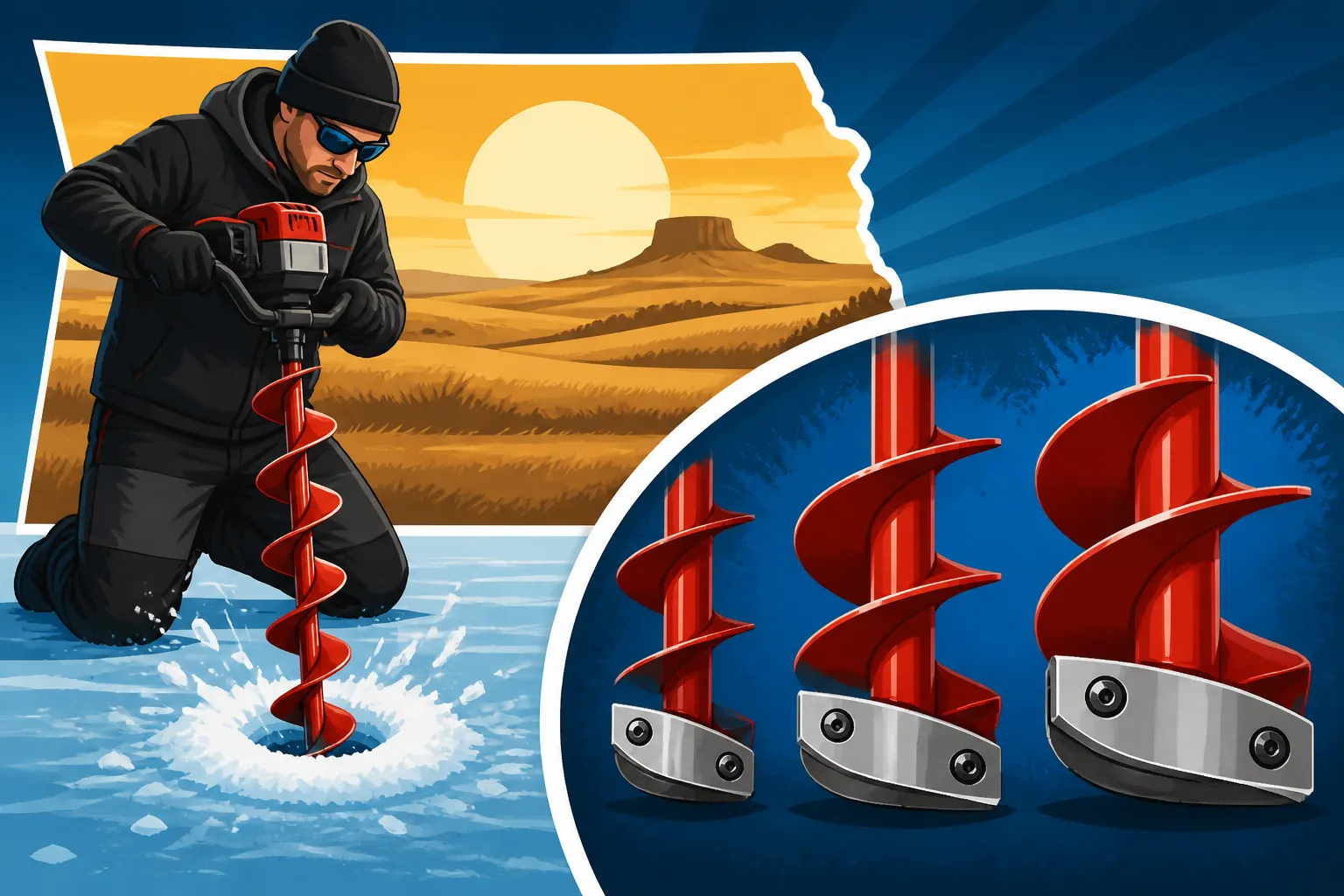
Best Ice Auger Blade Size for Thick Ice
One of the biggest headaches North Dakota ice anglers face, especially as winter truly sets in and those early-season thin ice patches turn into rock-solid, multi-foot layers, is struggling to cut a fishing hole. There's nothing worse than getting out on a beautiful, cold morning, eager to drop a line, only to find your auger chewing away with little progress or, worse, bogging down completely. This guide is all about helping you understand the critical role your ice auger blade size plays when tackling North Dakota's infamous thick ice, ensuring you pick the right tool for an easier, more successful day on the hard water.
Understanding Why Auger Blade Size Matters for Thick North Dakota Ice
When you're out on the vast, frozen expanse of Devils Lake or the reservoirs like Lake Sakakawea, and the ice is a good two or three feet thick—sometimes even more—your auger blade isn't just cutting a hole; it's digging a small well. The diameter of that hole profoundly impacts your effort, your comfort, and even what fish you can realistically pursue. Many new ice anglers, myself included way back when, might grab the first auger they see without really thinking about what they'll be drilling into. But trust me, a little foresight here can save you a lot of sweat and frustration.
The Relationship Between Blade Diameter and Drilling Effort
It's simple physics, really: the larger the diameter of the hole you're trying to cut, the more ice your auger blades have to remove. Think of it like trying to dig a narrow post hole versus a wide trench; the trench takes significantly more work. When you're dealing with thick ice, say, 30 inches or more, that extra surface area for a larger blade means a lot more resistance. A small, six-inch blade will slice through that thick ice with relative ease compared to a ten-inch blade, which will feel like a workout even for a powerful gas or electric auger.
This difference in effort is particularly noticeable if you're using a manual auger. Trying to crank a ten-inch hand auger through two feet of solid ice can quickly drain your energy, leaving you tired before you even get your lines wet. Even with powered augers, a larger blade puts more strain on the motor and battery, potentially reducing the number of holes you can drill before needing a recharge or refill. So, while a bigger hole might sound appealing, always consider the trade-off in drilling effort, especially if you plan on punching a lot of holes or moving frequently across the ice to find those active fish. This is a key consideration, especially if you're someone who likes to stay mobile, constantly searching for those active schools, as detailed in our guide on Ice Fishing Auger Techniques.
How Hole Size Impacts Your Fishing Experience and Target Species
Beyond the effort, the size of your ice hole directly influences your overall fishing experience. A larger hole offers more visibility, makes it easier to land bigger fish, and provides more room to work with multiple lines or to maneuver different baits. However, it also means more exposure to the cold and potentially more danger if you're not careful.
For instance, if you're primarily chasing North Dakota's famous yellow perch on Devils Lake, a six-inch hole is perfectly adequate. These feisty panfish rarely exceed a size that would challenge a smaller opening. It’s quick to drill, and you can easily drop in your smaller jigs and tackle. However, if your sights are set on a trophy northern pike or a monster walleye on Lake Sakakawea, that six-inch hole can quickly become a bottleneck. Trying to wrestle a 40-inch pike through a hole only slightly larger than its head can be an exercise in frustration, often resulting in lost fish or even damaged gear. A larger eight-inch or ten-inch hole provides ample room to land those larger predators, giving you a better chance of bringing that catch topside. For more on what you might be targeting, check out our North Dakota Walleye Fishing Guide or North Dakota Northern Pike Fishing Guide.
Consider also your setup. If you're fishing with larger lures, like big spoons or swimbaits for pike, or perhaps using a camera to spot fish, a bigger hole simply gives you more working space. Some anglers prefer the added room for comfort, especially if they're spending long hours over a single hole or fishing with friends and family, and multiple lines are being tended to in close proximity.
Common Ice Auger Blade Sizes and Their Best Uses
Walking into an outdoor store like Bass Pro Shops or browsing online at Amazon, you'll typically find ice augers with blade sizes ranging from six to ten inches, with eight inches being perhaps the most popular all-around choice. Each size has its strengths and weaknesses, making it ideal for different types of fishing and different ice conditions. Understanding these nuances will help you make an informed decision for your North Dakota adventures.
The Nimble Six-Inch Blade: Ideal for Perch and Portability
The six-inch ice auger blade is often the go-to for anglers who prioritize speed, ease of drilling, and portability. It’s incredibly efficient, especially when the ice gets super thick, because it removes the least amount of ice. For someone like me, who might be hiking a fair distance out onto a smaller lake or just wants to pop a lot of holes quickly to find active fish, this size is a real winner.
-
Pros:
- Minimal Effort: Drills through thick ice with the least resistance, making it perfect for manual augers or maximizing battery life on electric models. You can cut a dozen holes in thick ice with a six-inch auger before you'd cut half that many with a ten-inch using the same effort.
- Speed: Because of the lower resistance, you can punch holes much faster, which is crucial when you're trying to stay mobile and locate fish quickly.
- Lightweight: Augers with six-inch blades tend to be lighter overall, making them easier to carry across snowy or slushy terrain.
- Ideal for Panfish: For target species like yellow perch or crappie, a six-inch hole is more than enough. You won't have any trouble landing even a trophy perch through a hole this size. If you're focusing on North Dakota Yellow Perch Fishing Guide, this size is often all you need.
-
Cons:
- Limited for Larger Fish: As mentioned, trying to land a big walleye or northern pike through a six-inch hole can be a real struggle and potentially lead to lost fish.
- Reduced Visibility: The smaller opening offers less light penetration and a narrower field of view if you're using an underwater camera.
- Less Room for Gear: It can be a tight squeeze if you're trying to drop in multiple lines, transducer cables, or larger jigs without tangling.
The Versatile Eight-Inch Blade: Your Go-To for Walleye and Mixed Bags
If there's a "standard" or "all-around" auger size for North Dakota ice fishing, the eight-inch blade is probably it. It strikes a fantastic balance between drilling efficiency and hole size, making it suitable for a wide variety of situations and target species. Many anglers find this to be their everyday workhorse for its versatility.
-
Pros:
- Good Balance of Effort and Size: While it requires more effort than a six-inch, it's still manageable through thick ice, especially with a good powered auger. It's a noticeable step up in effort from the 6-inch, but usually not prohibitive.
- Accommodates Most Game Fish: An eight-inch hole is large enough for the vast majority of walleye you'll catch in North Dakota, even a substantial trophy. It can also handle smaller northern pike without too much fuss. This is often recommended for those following a North Dakota Walleye Fishing Guide.
- Better Visibility and Maneuverability: You get more light into the water and more room to work with your hands, lures, and electronics.
- Popular Size: Eight-inch blades and augers are widely available from most manufacturers, and replacement blades are easy to find.
-
Cons:
- Still a Challenge for True Giants: While good for most walleye, a truly enormous pike (think 20+ pounds) or a large lake trout might still be a tight squeeze.
- More Effort than Six-Inch: If you're strictly panfishing or prefer minimal drilling effort, you'll notice the difference compared to a six-inch blade, particularly on those days with 3+ feet of ice.
The Mighty Ten-Inch Blade: When Trophy Pike and Comfort are Key
For the dedicated angler chasing large game fish, or for those who simply prefer maximum comfort and space, the ten-inch auger blade is the king. This size really shines when you're targeting big northern pike, especially on lakes known for producing giants, or if you plan to sit in a permanent shack and don't need to drill many holes.
-
Pros:
- Optimal for Large Fish: A ten-inch hole provides ample room to land even the biggest northern pike or large lake trout without stress. You can practically pull a watermelon through a hole this size! For anyone serious about the North Dakota Northern Pike Fishing Guide, this size offers a huge advantage.
- Maximum Comfort and Visibility: Great for using underwater cameras, multiple lines, or just having more space to move around, especially if you're ice fishing with kids.
- Less Chance of Losing Fish: With a wider opening, there's less chance of a big fish catching the edge of the ice and breaking off at the last second.
-
Cons:
- Significant Drilling Effort: This is the biggest drawback. Drilling a ten-inch hole, especially through thick North Dakota ice, requires substantially more effort than an eight-inch or six-inch. A powerful gas or heavy-duty electric auger is almost a necessity; manual ten-inch augers are rare and very strenuous to use.
- Heavier and Bulkier: Augers with ten-inch blades are generally heavier and more cumbersome to transport.
- Slower Drilling: You'll typically drill fewer holes in the same amount of time compared to smaller blades due to the increased resistance.
- More Slush to Clear: A larger hole means more ice shavings and slush to scoop out, which can be annoying in sub-zero temperatures.
Here’s a quick comparison table to help visualize the trade-offs:
| Blade Size | Primary Target Fish | Drilling Effort (Thick Ice) | Portability | Landing Large Fish | Visibility/Space | Common Power Source |
|---|---|---|---|---|---|---|
| 6-inch | Perch, Crappie, Small Walleye | Very Low | Excellent | Limited | Minimal | Manual, Electric |
| 8-inch | Walleye, Medium Pike, Mixed | Moderate | Good | Good | Moderate | Electric, Propane, Gas |
| 10-inch | Large Pike, Trophy Walleye | High | Fair | Excellent | Excellent | Propane, Gas |
Matching Your Auger Blade to Your Power Source and Fishing Style
Choosing the right blade size isn't just about what fish you're after or how much effort you want to expend; it's also crucial to consider what kind of auger you have and how you typically fish. North Dakota winters can be brutal, and having a reliable setup that matches your personal style is key to enjoying your time on the ice. If you want to know more about different auger types, our Gas Auger vs Electric Auger for Ice Fishing guide offers a deeper dive.
Manual, Electric, and Propane Augers: What Size Works Best with Each?
Each type of auger brings its own set of capabilities and limitations to the ice, and matching these with your blade size is essential for optimal performance, especially when facing thick ice conditions.
-
Manual Augers: These are typically found with 6-inch or 8-inch blades, and for good reason. Trying to turn a 10-inch manual auger through anything more than a foot of ice would be an Olympic sport. If you own a manual auger and frequently fish in areas with thick, multi-foot ice, sticking to a 6-inch blade is highly recommended. You'll thank yourself after the first few holes. These are perfect for quick, light trips targeting perch or smaller walleye, especially early in the season when ice isn't as developed.
-
Electric Augers: The rise of electric augers has been a game-changer for many North Dakota anglers. They're quiet, clean, and often very powerful. However, battery life is a consideration, especially in extreme cold or when drilling large holes in thick ice. Most electric augers handle 8-inch blades very well. Some high-end, more powerful models can effectively manage 10-inch blades, but expect a noticeable reduction in the number of holes you can drill before needing a recharge. If you're using a more moderately powered electric auger, an 8-inch blade is probably your sweet spot for a balance of power and battery efficiency through thick ice. For a deep dive into the specifics of electric augers, you might find our article on Best Ice Auger Brands for North Dakota particularly helpful.
-
Propane and Gas Augers: These are the heavy hitters of the ice fishing world, renowned for their power and ability to churn through virtually any thickness of ice. Gas and propane augers are well-suited for 8-inch and 10-inch blades. If you're regularly fishing for trophy pike or just want the biggest hole possible with minimal effort on your part, a 10-inch blade paired with a gas or propane auger is your best bet. The fuel capacity allows for many holes, regardless of ice thickness, making them ideal for all-day trips or setting up multiple fishing locations. The only real downside is the noise and fumes, but for raw drilling power in tough conditions, they can't be beaten.
Considerations for Early Season vs. Late Season Ice Conditions
North Dakota's ice conditions change dramatically throughout the winter. What works well in December might be a nightmare in March.
-
Early Season Ice (November/December): When the ice is just starting to form, often only 6-12 inches thick, nearly any auger blade size will perform well. This is a time when speed and portability might be prioritized for safety and finding fish quickly. A 6-inch or 8-inch blade is excellent for these conditions, making it easy to pop holes and stay mobile. However, remember that How Thick Ice Needs to Be for Ice Fishing is paramount for safety.
-
Mid-Season Ice (January/February): This is when North Dakota ice typically reaches its peak thickness, often hitting 2-3 feet or more, especially on larger bodies of water like Lake Sakakawea. This is where your blade size choice truly matters. A powered auger with an 8-inch or 10-inch blade will be most effective for consistent drilling through these robust ice layers. If you're still using a manual auger, you'll feel the burn, and a 6-inch blade is almost a necessity for any reasonable number of holes.
-
Late Season Ice (March/April): As spring approaches, the ice can become "honeycombed" or slushy on top, but still very thick underneath. This can be tricky. While the overall depth might still be significant, the quality of the ice changes. Sometimes, a larger blade can get bogged down in slushy layers, while other times it's simply a battle against pure thickness. Often, you're looking for Late Ice Fishing Safety Tips at this time. The considerations remain similar to mid-season—power is key for thick ice, but be aware of the changing ice integrity.
Practical Tips for Choosing and Maintaining Your Blades in North Dakota's Winter
Beyond just the size, the quality and condition of your auger blades are paramount, especially when facing the incredibly hard and often abrasive ice found in North Dakota. A dull blade, regardless of its size, will struggle to cut through even thin ice, let alone the thick layers we often encounter. Taking care of your blades is a small investment of time that pays off huge dividends on the ice.
Blade Sharpening, Replacement, and Storage for Longevity
Dull blades are the bane of any ice angler's existence. They make drilling a chore, slow you down, and put unnecessary strain on both you and your auger's motor.
- Sharpening: Many auger blades can be professionally sharpened. It's often more cost-effective than buying new blades, especially for higher-quality models. Look for local sporting goods stores or dedicated blade sharpening services in your area. Some anglers try to sharpen blades themselves, but it requires precision to maintain the correct angle; improper sharpening can actually ruin the blade. Generally, it's best left to the pros.
- Replacement: Even with sharpening, blades eventually wear out or get chipped from hitting rocks, sand, or old rebar in the ice (it happens!). Keep a spare set of sharp blades in your ice fishing kit, especially if you're going on an extended trip or fishing a new lake. There's nothing worse than having a fantastic bite going on, only for your auger to quit cutting. When buying new blades, consider reputable brands. You can find replacement blades at retailers like Bass Pro Shops or various options on Amazon, often from the original auger manufacturer or reliable aftermarket producers.
- Storage: Proper storage is crucial for maintaining blade sharpness and preventing rust. After each trip, especially if you've been drilling through slushy ice, wipe your blades clean and dry them thoroughly. Store them with blade covers on to protect the sharp edges from nicks and to prevent accidental cuts. When storing your auger for the off-season, remove the blades, clean them, dry them, and apply a light coat of oil (like WD-40 or a silicone spray) to prevent rust. Store them in a dry place. This simple routine will extend the life of your blades considerably.
Safety First: Handling and Drilling with Large Diameter Blades
Ice augers, especially those with larger, sharper blades, are powerful tools and demand respect. Safety should always be your top priority on the ice, right up there with knowing Early Ice Fishing Safety Tips and always checking ice thickness.
- Blade Covers: Always, always use the blade cover when transporting or storing your auger. A bare, sharp blade can cause serious injury to you, your passengers, or damage your gear. Even when moving short distances from hole to hole, it's a good habit to keep the cover on if not actively drilling.
- Secure Grip: When drilling, ensure you have a firm, two-handed grip on the auger handles. This is especially important with larger blades, which can torque or grab if they hit a softer spot in the ice or uneven terrain. Maintain a stable stance.
- Clear the Area: Before you start drilling, make sure the area around your hole is clear of anything that could get tangled in the auger or trip you up – lines, tackle, loose clothing, or even curious pets.
- Ventilation for Gas/Propane: If you're using a gas or propane auger, be mindful of fumes, especially if you're drilling near or inside an ice shelter. Always ensure adequate ventilation to prevent carbon monoxide buildup. This is why many anglers prefer electric for within a Best Portable Ice Shelter for Windy Conditions.
- Children and Pets: Keep children and pets a safe distance away from the auger when it's in operation or when the blades are exposed. Their curiosity can quickly lead to accidents.
- Power Down: When moving between holes, or when you're done drilling for a while, always turn off a powered auger. For gas models, consider pulling the choke or removing the spark plug wire for extended periods. For electric models, disengage the trigger or remove the battery if you're taking a long break. This prevents accidental activation.
By taking these precautions and being mindful of your equipment, you can ensure that your ice fishing adventures in North Dakota are not only productive but also safe for everyone involved.
Disclaimer
This article is for general informational purposes only and does not constitute professional advice. Laws, prices and regulations vary by location and change over time. Consult a qualified professional for guidance on your specific situation.