Best Net for Landing Big Pike
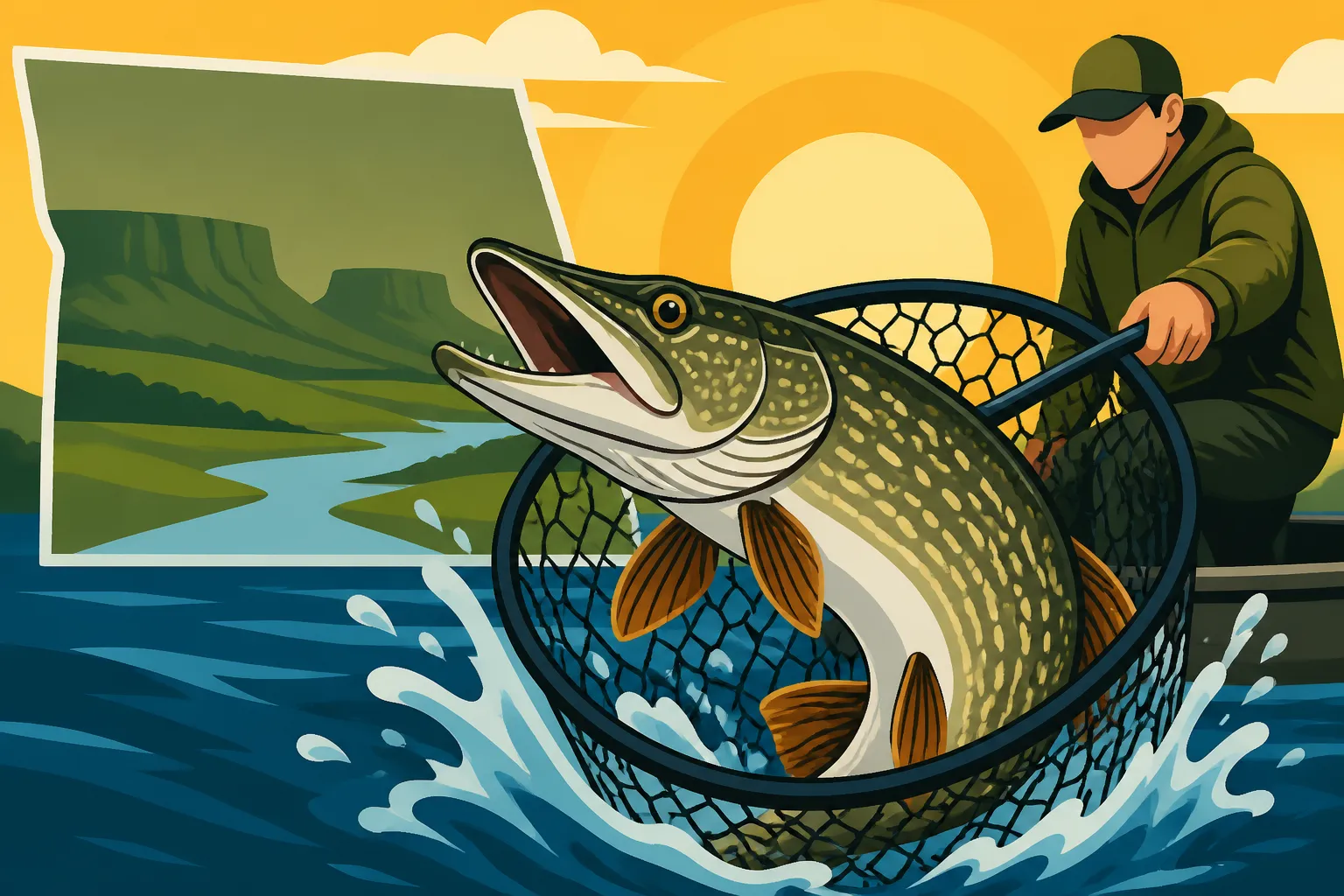
There’s almost nothing more heartbreaking in fishing than battling a massive northern pike, feeling its powerful surges, seeing its broad back break the surface, only to have it throw the hook or thrash free right at the boat or shore. That moment of truth, when you need to safely secure that trophy fish, often comes down to one crucial piece of gear: your landing net. This guide will walk you through everything you need to know about choosing the best net specifically designed for successfully landing those toothy, hard-fighting big pike in North Dakota's incredible waters.
Why a Specialized Pike Net Matters
You might think a net is just a net, right? If you’ve ever tried to land a true North Dakota monster pike – say, a 40-inch brute from Lake Sakakawea or a thick-bodied gator from Devils Lake – with a dinky panfish net, you quickly learn the error of that thinking. Big pike aren't just larger versions of smaller fish; they're an entirely different beast, demanding specific equipment to ensure a safe, successful, and stress-free landing for both you and the fish. Their size, incredible power, and formidable teeth mean that an ordinary net simply won't cut it.
The Pike's Dental Dilemma: Protecting Yourself and Your Gear
Northern pike are equipped with a mouth full of razor-sharp teeth, capable of inflicting serious damage to both human skin and flimsy netting. A standard mesh net, often made of thin nylon, can be shredded in moments by a thrashing pike, leaving you with a gaping hole and a lost fish. More importantly, those teeth can easily reach your hands if you're fumbling with an inadequate net, leading to painful and potentially dangerous cuts. It's not just about losing the fish; it's about angler safety. A specialized pike net incorporates materials and designs that can withstand this dental assault. It means you can focus on maneuvering the fish into the net confidently, rather than worrying about punctures or getting bitten. Plus, a sturdy net ensures the fish doesn't get tangled in delicate mesh, which can injure its gills or fins, especially if you're planning a quick release.
Managing the Fight: Keeping a Trophy Pike Pinned
A big pike doesn't just give up when it sees the boat. In fact, many of the most dramatic fights happen right at the side of the boat or at the water's edge. These fish have an incredible knack for a last-ditch surge, a head shake, or a violent roll that can dislodge hooks. An undersized net makes this moment even more precarious. You’re trying to squeeze a long, powerful fish into a small opening, often only getting half of it in before it decides to make another run. This not only increases the chances of losing the fish but also prolongs the fight, which can be detrimental to the fish's health, particularly if you intend to release it. A proper pike net, with its generous size and robust construction, allows for a swift, decisive scoop, enveloping the entire fish and effectively ending the fight, minimizing stress and handling time. Remember, the goal is a quick, clean landing, not a prolonged wrestling match. This is especially true when you're targeting big fish in Trophy Northern Pike Waters in North Dakota.
Key Features of an Effective Pike Landing Net
When you're serious about landing big pike, you need a net that’s built for the job. It's not just about size, though that's a huge part of it. The materials, construction, and design all play a critical role in ensuring your success and the well-being of the fish. Think of it as an investment in those unforgettable moments when you finally get to hoist that giant out of the water.
Hoop Size and Shape: Go Big or Go Home
This is arguably the most critical feature. A landing net for big pike needs a large, wide hoop. Forget those small, round trout nets. You're looking for a hoop that is at least 24-30 inches wide, and preferably even larger for those truly colossal pike. Many dedicated pike nets feature a wider, more rectangular or D-shaped hoop. This shape provides a larger target area and is better suited to accommodate the long, slender body of a pike. Trying to jam a 40-inch pike into a 20-inch round hoop is a recipe for frustration and lost fish. The depth of the net is also important. You want a net deep enough to fully encompass the fish and prevent it from flopping out once it’s in. A deep, spacious net basket ensures the fish is contained, preventing escape and making hook removal much safer.
Netting Material: Say No to Snags and Scales
The material of the net mesh is crucial for both the fish's health and the net's longevity. Traditional knotted nylon mesh, while cheap, is terrible for pike. Their teeth can easily cut it, and hooks often get hopelessly tangled, making release a nightmare. More importantly, this type of mesh can strip off a fish's protective slime layer, leaving it vulnerable to disease, and can damage fins and gills.
The best material for pike nets is rubber-coated or completely rubber (silicone) mesh. Here’s why:
- Hook-Friendly: Hooks almost never get tangled in rubber mesh. This makes unhooking the fish incredibly fast and easy, minimizing handling time.
- Fish-Friendly: The soft, flexible rubber is gentle on the fish’s scales, fins, and slime coat. This is paramount for catch-and-release, helping to ensure the fish swims away healthy.
- Durable: Rubber-coated mesh is much more resistant to cuts and tears from sharp pike teeth than traditional nylon. It holds up better over time, saving you from needing to replace your net frequently.
- Reduced Odor: Rubber doesn't absorb fish slime or odors like fabric mesh, making it easier to clean and less likely to stink up your boat.
- Weight: While all-rubber nets can be a bit heavier than traditional mesh, the benefits far outweigh this minor drawback. When shopping at places like Bass Pro Shops or even online at Amazon, look specifically for these rubberized options.
Handle Length and Construction: Reach and Durability
The handle of your pike net needs to be robust and offer adequate reach. Big pike are often landed in boats, and you need to be able to extend the net far enough to scoop the fish without leaning dangerously over the gunwale.
- Length: Telescoping handles are incredibly popular for their versatility. They allow you to extend the handle for maximum reach when landing a fish and then retract it for compact storage. A handle that extends to at least 6-8 feet is ideal for most boat fishing scenarios. For shore anglers, a longer fixed handle or a telescoping one that reaches 8-10 feet might be beneficial, especially when dealing with steep banks or heavy cover.
- Strength: Pike are heavy, powerful fish, especially when thrashing in the net. A flimsy handle will bend, break, or flex precariously at the worst possible moment. Look for handles made from heavy-duty aluminum or reinforced fiberglass. The locking mechanism on telescoping handles should also be sturdy and reliable, ensuring the handle doesn't collapse under the weight of a fish.
- Grip: A comfortable, non-slip grip is essential, especially when your hands are wet. Textured rubber or foam grips provide a secure hold, giving you better control when that big fish is making its final stand.
Types of Landing Nets for Pike
Just like there are different rods and reels for various fishing techniques, there are different styles of landing nets, each with its own advantages, particularly when targeting large, toothy predators like pike. Understanding these differences will help you choose the perfect tool for your specific North Dakota fishing adventures.
Fixed-Handle vs. Telescoping Nets
Both fixed-handle and telescoping nets have their place, but one is generally more versatile for pike fishing.
Fixed-Handle Nets:
These nets have a handle of a single, non-adjustable length.
- Pros: Generally more rigid and often lighter for their size since there are fewer moving parts. They can be very sturdy if well-constructed. Some anglers prefer the simplicity and feel of a solid, fixed handle.
- Cons: Less versatile for storage and transport. A long fixed handle can be cumbersome in smaller boats or when hiking to remote spots. You need to choose a length that works for your primary fishing scenario, which might not be ideal for others. For instance, a long net perfect for bank fishing might be a pain in a compact fishing kayak.
- Best Use: Ideal for anglers who consistently fish from a large boat with plenty of deck space, or from specific shore locations where a consistent reach is needed.
Telescoping Nets:
These nets feature a handle that extends and retracts, allowing for adjustable length.
- Pros: Incredibly versatile. You can shorten them for easy storage in a boat locker or vehicle and extend them for maximum reach when landing a fish. This adjustability makes them suitable for various fishing situations – from a boat, off a dock, or even wading. The ability to vary length is a huge advantage when dealing with different boat heights or shorelines.
- Cons: Can sometimes be slightly heavier than fixed-handle nets of similar strength due to the locking mechanisms. The locking mechanisms themselves need to be robust; cheaper models can stick or fail over time.
- Best Use: The go-to choice for most pike anglers, especially those fishing from boats, kayaks, or who frequently switch between shore and boat fishing. Their adaptability makes them a smart investment for diverse North Dakota fishing scenarios, whether you're fishing Lake Sakakawea Fishing Guide for North Dakota Anglers or a smaller prairie lake.
Traditional Hoops vs. Cradle Nets
While most nets feature a hoop design, a less common but highly specialized option for extremely large fish is the cradle net.
Traditional Hoop Nets:
These are the standard, familiar nets with a circular, D-shaped, or rectangular frame and a deep mesh bag.
- Pros: Versatile for a wide range of fish species. Easier to maneuver for a quick scoop. Generally more affordable and readily available. They work well for pike up to and including trophy sizes, provided the hoop is large enough and the mesh is rubberized.
- Cons: For truly massive pike, a single scoop can sometimes be awkward, especially if the fish makes a last-second lunge.
- Best Use: Excellent for most pike fishing situations, particularly for average to large specimens. They are the most common and practical choice for active fishing, allowing for swift, one-person netting.
Cradle Nets:
These are long, soft, shallow mesh slings, often with two handles, designed to slide under a fish and lift it. They don't have a rigid hoop in the same way a traditional net does.
- Pros: Extremely fish-friendly, as the fish is fully supported and doesn’t get folded or cramped. Ideal for catch-and-release of genuinely enormous, state-record-contending fish, where minimizing stress is paramount. They distribute the fish's weight more evenly.
- Cons: Typically requires two people to operate effectively (one to guide the fish, one to slide the cradle). They are less practical for quick, active fishing where a single, decisive scoop is often needed. Can be bulky to store.
- Best Use: Primarily for specialist anglers targeting truly monstrous pike or muskie, where careful handling and photography are key, and a two-person team is available. Not usually the first choice for everyday pike fishing.
| Net Feature | Traditional Hoop Net (Pike Version) | Cradle Net (Specialized) |
|---|---|---|
| Hoop/Frame | Rigid, large (24-30"+) D-shape/Rectangle | Soft, flexible, sling-like |
| Netting Material | Rubber-coated or full rubber | Soft, knotless, often rubberized mesh |
| Handle Type | Fixed or Telescoping | Two handles (or single very long) |
| Ease of Use | Easy for one angler to scoop | Best with two anglers for controlled lift |
| Fish Safety | Very good with rubber mesh | Excellent, full body support |
| Storage | Can be bulky, telescoping helps | Often bulky, less compact |
| Typical Target | Large pike, muskie, walleye | Trophy-class pike, muskie, sturgeon |
| Versatility | High | Low (specialized for very large fish) |
Choosing the Right Net for Your Fishing Style
The "best" net isn't a one-size-fits-all solution; it truly depends on how and where you typically fish for pike in North Dakota. Different environments and methods call for different net characteristics. Considering your specific approach will ensure you select a net that enhances your fishing experience rather than hinders it.
Shore Angling and Wading Considerations
If you spend your time casting from the banks of the Missouri River or wading in a smaller North Dakota lake looking for cruising pike, your net needs will be different from a boat angler.
- Reach is Paramount: When fishing from shore, you often contend with steep banks, muddy edges, or submerged vegetation. A net with a long, telescoping handle (8-10 feet when extended) is crucial to reach that fish that's just out of arm's length. Without that reach, you risk losing a fish right at the edge, especially if it's too big to haul in by hand.
- Portability: If you're hiking to different spots or wading, a heavy, bulky net will become a burden quickly. Look for a net that collapses compactly and is relatively lightweight. Many telescoping nets are designed with this in mind. You want something you can comfortably carry without it getting in the way of your casting or movement. Best Shore Fishing Spots Near Grand Forks would be an ideal place where such a net could prove its worth.
- Netting Material: Even for shore anglers, rubberized mesh is non-negotiable. It protects the fish and prevents your hooks from snagging on the net, which is particularly annoying when you're trying to quickly release a fish while standing on uneven ground. A long-handled net from a reputable brand like Frabill, often found at Bass Pro Shops, might be a great option for shore-bound pike hunters.
Boat Fishing: Space and Maneuverability
Fishing from a boat, whether it's a small jon boat or a large multi-species rig, presents its own set of considerations for net selection.
- Handle Length: While a long handle is still good, it doesn't need to be as extreme as for shore fishing. A telescoping handle that extends 6-8 feet is usually sufficient to reach over the side of most fishing boats. The ability to shorten it for storage is vital to keep the deck clear.
- Hoop Size: Again, go big. You'll have more space to maneuver than a shore angler, so don't skimp on hoop size. A wide D-shaped or rectangular hoop allows for an easier, quicker scoop, especially when a large pike is still full of fight at the boat.
- Storage: Boat space is often at a premium. A net that collapses and stores neatly out of the way is a lifesaver, preventing trips and keeping your deck clutter-free. Many boat anglers attach their nets to the gunwale with bungee cords or specialized clips. When you’re fishing for North Dakota Walleye Fishing Techniques, the same net might even do double duty for larger walleye, but for pike, size is key.
- Robustness: Boat fishing often involves more aggressive netting and heavier fish. Ensure the net's construction, from the handle to the hoop and mesh, can withstand the rigors of heavy use. Brands like Beckman or StowMaster, often reviewed and sold on Amazon, offer very robust folding or telescoping nets that are perfect for boat use.
Ice Fishing for Giants
Yes, you can land big pike through the ice, and in North Dakota, it's a popular pursuit. But landing a massive pike through a relatively small hole in the ice requires a specialized approach and net.
- Hole Size: The reality of ice fishing means your "hoop" is the hole you've cut. A traditional landing net isn't typically used to scoop the fish into the hole. Instead, a specialized gaff or a small, strong landing net designed to guide the fish through the hole is employed.
- Short Handle, Strong Build: For pike, a very short-handled net with a strong, wide hoop is used to pull the fish up and out of the ice hole once its head is through. Alternatively, a long gaff can secure the fish quickly.
- Slush and Ice: The netting material must be able to shed water and ice easily. Rubberized nets are great for this, as they don't freeze up as quickly as fabric mesh.
- Technique: Often, for big pike, anglers will use a long-handled gaff to secure the fish as its head emerges from the hole, then quickly lift it out. A small, strong, short-handled net can be used to control the fish once its head is through, pulling it up onto the ice. Ice Fishing for Northern Pike With Tip-Ups is a common method where you might need this type of net ready.
Maintenance and Care for Your Pike Net
Your pike net is an investment, a tool that will help you land many memorable fish. Proper care and maintenance will ensure it performs reliably for years to come and remains hygienic for both you and the fish. Neglecting your net can lead to premature wear, unpleasant odors, and even a weakened structure when you need it most.
Cleaning and Drying Best Practices
After a successful day on the water, especially one involving a few slimy pike, your net will need a good cleaning.
- Rinse Thoroughly: The first step is always a thorough rinse with fresh water. Use a hose to spray down the entire net, paying special attention to the mesh, handle, and any joints or locking mechanisms. This removes fish slime, scales, mud, and any aquatic debris.
- Mild Soap (Optional): If the net is particularly dirty or has developed an odor, a mild soap solution can be used. Dish soap or even a specialized fishing gear cleaner works well. Gently scrub the mesh and handle, then rinse again thoroughly to remove all soap residue.
- Air Dry Completely: This is critical. Never store a wet net, especially a telescoping one. Moisture can lead to mildew, corrosion of metal parts, and a generally funky smell. Extend telescoping handles fully and hang the net in a well-ventilated area, out of direct sunlight, to air dry completely. Direct sunlight can degrade certain rubber and plastic components over time. Ensure all parts are bone dry before retracting the handle or putting the net away. This helps prevent rust on metal components and keeps the rubber mesh from becoming sticky.
Inspecting for Wear and Tear
Before and after each fishing trip, take a moment to give your net a quick once-over. This habit can prevent a heartbreaking equipment failure when a trophy pike is at the boat.
- Mesh Integrity: Carefully inspect the rubber or rubber-coated mesh for any cuts, tears, or signs of weakening. Pike teeth are sharp, and even the toughest mesh can eventually show wear. Small nicks can quickly become large holes. If you find significant damage, it might be time for a replacement or a repair if your net allows it.
- Handle and Joints: Check the handle for any bends, cracks, or loose connections. For telescoping nets, test the locking mechanisms to ensure they engage and hold firmly. If the handle feels wobbly or doesn't lock securely, it's a red flag. Lubricate moving parts if they seem stiff, but avoid harsh chemicals.
- Hoop and Frame: Examine the hoop and where it connects to the handle. Look for any signs of stress, bending, or cracks. The hoop takes a lot of abuse, especially when scooping heavy fish.
- General Condition: Are there any loose screws, rivets, or other fasteners? Tighten anything that seems loose. Addressing minor issues proactively can prevent major problems down the line. A well-maintained net is a reliable net, and reliability is paramount when you've got a North Dakota monster on the line.
Disclaimer
This article is for general informational purposes only and does not constitute professional advice. Laws, prices and regulations vary by location and change over time. Consult a qualified professional for guidance on your specific situation.