Devils Lake Flooded Timber Fishing Spots
Finding fish in the vast, often intimidating waters of Devils Lake can feel like searching for a needle in a haystack, especially when you're faced with acres of submerged trees. This unique, flooded timber environment can be incredibly frustrating to navigate and fish effectively, often leading to endless snags and lost lures. This comprehensive guide is here to cut through that frustration, providing you with the essential knowledge and strategies to confidently tackle Devils Lake's flooded timber fishing spots and consistently find those trophy walleye, pike, and perch.
Understanding Devils Lake's Flooded Timber Habitat
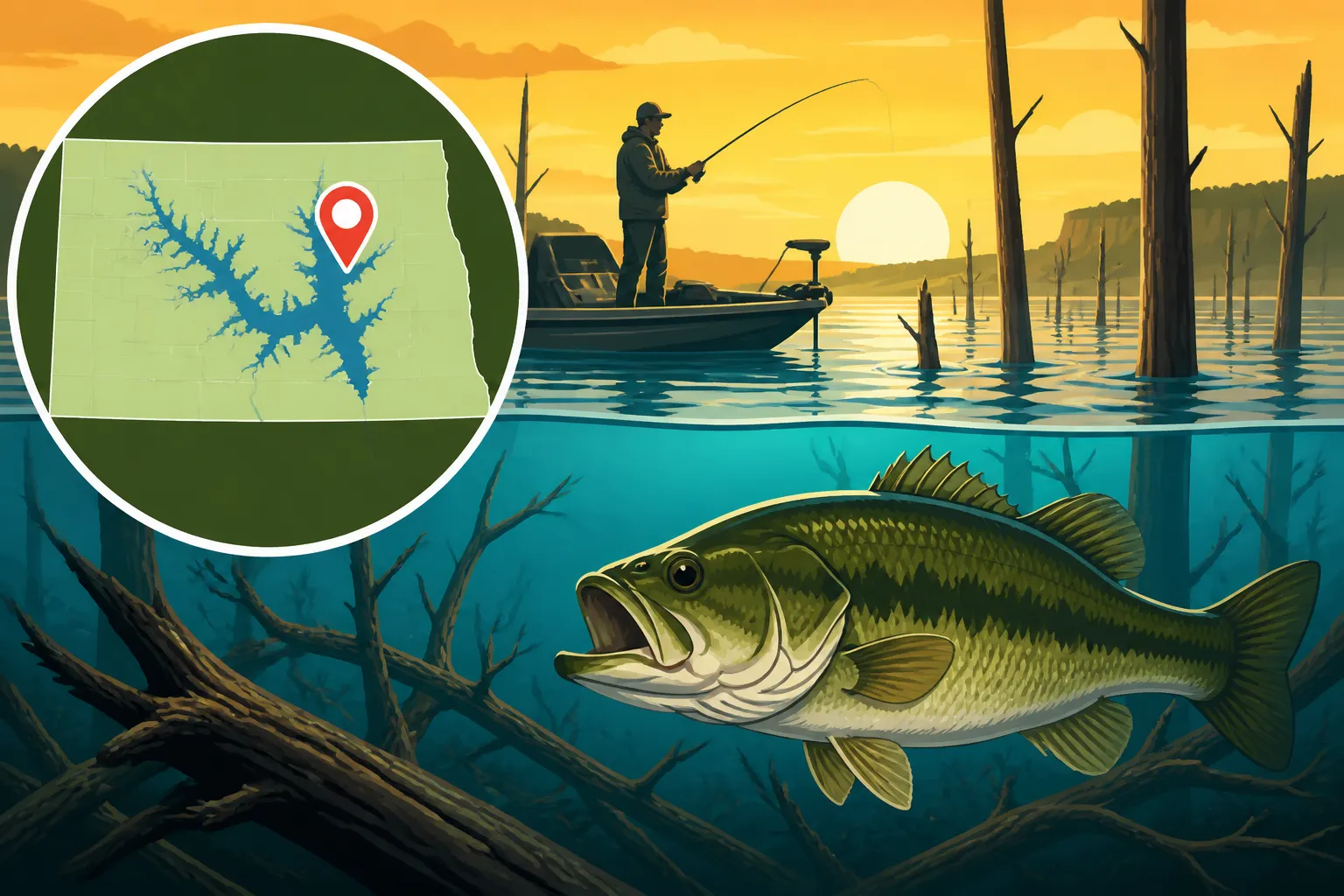
Devils Lake isn't your typical North Dakota fishery. Its constantly fluctuating water levels have created one of the most unique and productive fishing habitats in the country: vast expanses of flooded timber. What used to be farmland, roads, and even homesteads now lies submerged, forming an intricate underwater forest that provides unparalleled cover and feeding opportunities for fish.
Why Flooded Timber is a Fish Magnet
Imagine a dense, underwater forest. That's essentially what Devils Lake offers in many areas. As the lake's water levels rose significantly over the last few decades, it engulfed entire groves of trees, fence lines, and even old farm buildings. These submerged structures quickly transformed into a vibrant ecosystem, acting as natural fish attractors.
First and foremost, flooded timber offers incredible cover. For species like walleye, northern pike, and even yellow perch, these fallen trees and standing snags provide perfect ambush points to lie in wait for unsuspecting baitfish. It's like a natural fort where they feel safe from predators and can conserve energy while waiting for their next meal. Beyond just cover, this timber also creates a complex underwater topography. Eddies form around clumps of trees, current flows are altered, and different depths are created, all of which are critical factors that influence where fish will hold. Furthermore, the decaying wood itself fosters a rich micro-ecosystem, attracting insects, crustaceans, and various baitfish that form the base of the food chain, essentially creating a natural buffet for the game fish we love to chase.
Identifying Productive Timber Sections
Not all timber is created equal on Devils Lake. While any submerged wood can hold fish, certain sections are consistently more productive than others. The key is to look for areas where the timber provides a combination of favorable conditions. For instance, timber that's adjacent to deeper water access, like old creek channels or sharp break lines, is often prime real estate. Fish will use the timber for cover and feeding, but they'll often retreat to deeper, more stable water nearby, especially during changing weather patterns or intense sunlight.
Additionally, consider the density and type of timber. Sparse, scattered trees might hold a few fish, but dense stands of larger trees create more complex cover and a stronger sense of security for bigger fish. Old shelterbelts or established groves of mature trees that are now submerged are particularly good. You can often identify these on detailed bathymetric maps or even older topographical maps that show pre-flood features. Using your electronics to scout for isolated clumps of timber, submerged roads, or rock piles within or near the timber can also reveal hidden gems. Think about how a fish would move through the area – they're looking for transition zones, edges, and points of interest within the wood to maximize their feeding efficiency and safety.
Navigating and Fishing Flooded Timber Safely
Fishing flooded timber is undeniably challenging, and it comes with its own set of rules and required patience. Many anglers shy away from it due to the frustration of snags, but with the right approach and gear, it can be incredibly rewarding.
Boat Control and Safety in Timber
Attempting to navigate Devils Lake's flooded timber without a robust plan is a recipe for disaster. The biggest frustration for many anglers is constantly getting snagged, damaging their boat, or even bending a prop. To minimize these headaches, boat control is absolutely paramount. If you're running a traditional outboard, exercise extreme caution. Consider trimming your motor up to a shallow drive or even tilting it out of the water completely when maneuvering through dense areas. Jon boats or smaller aluminum boats with shallow drafts are often preferred for this type of fishing, as they can more easily glide over submerged obstacles.
The real game-changer for timber fishing is a reliable electric trolling motor, especially one with a spot-lock feature. Brands like Minn Kota's Ultrex or Humminbird's Ghost are invaluable, allowing you to hold your position against wind and current with precision, freeing up your hands to fish. This precision means you can inch your boat through small lanes, position yourself for accurate casts, and avoid damaging your main engine. Always proceed slowly, observing your electronics for hidden stumps or logs, and remember that submerged hazards might not always show up clearly. It's also wise to have a detailed map of the area, even if it's an old one showing pre-flood contours, which can help you anticipate where denser timber or other structures might be located. If you're new to the lake or feel hesitant about navigating these tricky waters, consider booking a trip with a local guide. Many experienced guides on FishingBooker specialize in Devils Lake and its unique challenges, offering invaluable local knowledge and ensuring a safer, more productive trip into the timber.
Essential Gear for Timber Fishing
When you're fishing among the trees, your gear needs to be up to the task of battling fish and snags. Light tackle simply won't cut it. Your rod and reel setup should lean towards heavy-action gear. For walleye and perch, a medium-heavy spinning rod (6'6" to 7'0") with a fast tip and a strong backbone is ideal. Pair this with a 2500-3000 series spinning reel spooled with 15-30 pound braided line. Braid is non-negotiable here; its lack of stretch allows you to feel subtle bites even amidst the clutter and, more importantly, gives you the power to yank snags free or pull stubborn fish out of the wood. For northern pike, step it up even further: a heavy-action casting rod (7'0" to 7'6") with a 50-65 pound braid and a strong baitcasting reel is recommended.
When it comes to lures, choose wisely. Jigging is a very effective technique here, but use jigs with robust hooks. Weedless jigs or those with snag guards can be a lifesaver. Crankbaits are productive, but opt for those with strong bills that deflect off wood rather than digging in. For pike, spinnerbaits and weedless spoons are excellent choices that can often be retrieved through cover with minimal snagging. Always carry a good pair of long-nosed pliers or a hook remover, as fish often inhale baits in this aggressive environment. And don't forget a sturdy net – once you pull a big walleye or pike out of the timber, you don't want to lose it boat-side!
Effective Techniques for Targeting Fish in Flooded Timber
Fishing Devils Lake's flooded timber demands specific techniques to overcome the inherent challenges and capitalize on the fish-holding potential. It's about precision, patience, and presenting your bait effectively in a chaotic environment.
Walleye Tactics in the Wood
Walleye absolutely love the cover that flooded timber provides, using it as an ambush point for passing baitfish. One of the most productive methods is vertical jigging. Position your boat right on top of or slightly upwind of a promising clump of timber, and drop your jig (like a Northland Fire-Ball Jig or a VMC Moon Tail Jig) straight down. You want to feel the wood occasionally, but not constantly get snagged. Experiment with different jig weights and colors based on water depth and clarity, but often, brighter colors or natural patterns work well. Tip your jig with a minnow, a piece of crawler, or a soft plastic swimbait like a Berkley Gulp! Minnow. The key is to work the jig slowly, gently bumping it off submerged branches, pausing, and watching for that subtle "thump" or slack line that indicates a bite.
Pitching jigs or soft plastics into openings within the timber is another deadly tactic. This requires accurate casting. Use your braided line to pitch a weedless jig head with a paddle tail or a grub into those small pockets or along the edges of dense timber. Let it sink, then slowly retrieve or hop it back to the boat. Slip bobber fishing can also be incredibly effective, especially in areas with slightly sparser timber or on the edges. Rig a minnow or a leech under a slip bobber, set your depth just above the snaggy bottom, and let the wind or current drift your bait through the timber. This allows for a more natural presentation and can tempt finicky walleye without constant snagging. Remember that walleye in timber are often aggressive, but they might not chase far, so keep your presentations close to the cover.
Perch and Pike Strategies
Yellow perch, another prized species in Devils Lake, will also congregate in and around flooded timber, especially when ice fishing. During open water, they often lurk in the same areas as walleye but might prefer slightly shallower edges or more dense, tangled brush where they can hide from larger predators. Small jigs tipped with wax worms, spikes, or small minnows fished under a bobber are excellent for perch. Look for subtle humps or old roadbeds that run through the timber, as these can be perch highways. Remember that perch often travel in schools, so if you find one, you're likely to find more.
Northern pike are absolute kings of the timber jungle. They thrive on the ambush opportunities it provides. For pike, you'll want to use larger, more robust lures that can withstand their razor-sharp teeth. Spinnerbaits are a fantastic choice for pike in timber because the spinning blade often deflects off wood, allowing for a relatively snag-free retrieve. Cast them tight to the timber and retrieve them with a steady pace, varying your depth. Large spoons, like a Dardevle or Johnson Silver Minnow, can also be effective, especially those with weedless hook setups. Topwater frogs or rats can be exhilarating if you find areas with slightly shallower, matted timber. Always use a heavy fluorocarbon or wire leader when targeting pike to prevent bite-offs. If you are interested in a more comprehensive look at these toothy critters, check out our guide on how to fish for northern pike in North Dakota.
Dealing with Snags and Break-offs
Let's be realistic: you're going to get snagged. It's an unavoidable part of fishing flooded timber. The key is to minimize the frustration and the loss of expensive tackle. This is where braided line truly shines. When you feel a snag, don't just pull harder. Instead, try slack-lining the lure – give some slack, then quickly snap the rod tip, often dislodging the lure. You can also try moving your boat to a different angle to pull from another direction. If all else fails, a sturdy lure retriever can save many baits.
To prevent snags, use a short, strong fluorocarbon leader (12-20 lb for walleye, 30-50 lb for pike) attached to your braided main line. This leader provides some abrasion resistance against the wood and is less visible than braid. Employ weedless hooks when possible, and retrieve your baits just fast enough to keep them from digging into the wood, but slow enough to be enticing. Learn to "read" your lure through the rod tip; you'll feel subtle bumps and taps before a full-blown snag, giving you a chance to react. It's a continuous learning process, but the reward of pulling a big fish from seemingly impenetrable cover is well worth the effort.
Prime Flooded Timber Locations on Devils Lake
Devils Lake is vast, but certain areas are particularly famous for their productive flooded timber fishing. Knowing where to start can save you a lot of time and frustration.
Specific Areas and Access Points
When most anglers talk about Devils Lake's flooded timber, they're often referring to the areas that were once dry land along the ever-expanding shoreline. Some of the most renowned flooded timber fishing spots include:
- Mauvais Coulee: Located on the western side of the lake, Mauvais Coulee has extensive areas of drowned trees and brush. It's a fantastic spot for both walleye and pike, especially in the spring and fall. The timber here can be quite dense, requiring careful boat navigation. Access can be found via various public boat ramps nearby, such as the one at Minnewaukan or the Church's Ferry area.
- Creel Bay: A large bay on the southeastern side of the main lake, Creel Bay offers numerous timber-filled pockets and points. It's popular with both open-water anglers and ice fishers. The trees here vary from scattered stands to dense forests, often holding good numbers of walleye and perch. The boat ramps around the City of Devils Lake provide easy access to this area.
- Black Tiger Bay and East Devils Lake: As you move further east, towards what's often considered the "East Devils Lake" section, you'll find more submerged roads, fence lines, and shelterbelts. These areas can be incredible for northern pike, but also hold good walleye, particularly during periods of low light or active feeding. Ramps like Grahams Island State Park offer access to these eastern expanses.
When planning your trip, consider checking detailed bathymetric maps alongside satellite imagery to identify likely timber locations and potential access points. While some timber spots are accessible from shore in certain areas, the most productive fishing usually requires a boat to get into the heart of the cover. Many anglers find that exploring the lake with a local expert, perhaps someone found through FishingBooker, is an excellent way to quickly learn the nuances of these specific spots without wasting precious fishing time or risking boat damage. For a broader overview of the lake, our comprehensive Devils Lake Fishing Guide for North Dakota Anglers offers more insights.
Seasonal Considerations for Timber Fishing
The behavior of fish in Devils Lake's flooded timber shifts significantly with the seasons, making it crucial to adapt your approach.
- Spring (Ice-Out to Early Summer): After the ice recedes, fish, particularly walleye, move shallow for spawning. The timber near spawning grounds and warmer bays becomes a prime location. Walleye will use the wood for cover as they transition to post-spawn feeding. Pike are also very active in shallow, timbered bays. This is a great time for pitching jigs and slow-rolling spinnerbaits near the edges of the timber.
- Summer: As water temperatures rise, fish might move slightly deeper within the timber or to the edges where the timber meets deeper channels. The dense shade and cooler water provided by the canopy of submerged trees make it an ideal refuge during bright, hot days. This is a fantastic time for vertical jigging or slip bobber fishing directly in the heart of the timber. Even when the bite is tough in open water, fish can often be found actively feeding in the timber.
- Fall: As water temperatures begin to drop, fish become increasingly active, feeding heavily in preparation for winter. Walleye and pike will aggressively use the timber as ambush points for baitfish migrations. This can be one of the best times to fish the timber, using a variety of presentations from jigs to crankbaits along the timber lines and within dense stands.
- Winter (Ice Fishing): Devils Lake's flooded timber is legendary for ice fishing. The standing timber provides structure, oxygen, and refuge for fish under the ice. When drilling holes, focus on the edges of major timber stands or sparse pockets within the wood. Perch and walleye will often school tightly here. Be extremely cautious when driving vehicles on the ice, especially near timber, as the wood can compromise ice thickness. Always check local ice conditions and be aware of Ice Fishing Shelter Rules on North Dakota Lakes if you plan to set up a fish house for an extended period. Our guide on how to ice fish in North Dakota provides more insights into safe and effective winter tactics.
| Species Targeted | Recommended Technique | Best Bait/Lure Types | Snag Potential | Notes for Timber |
|---|---|---|---|---|
| Walleye | Vertical Jigging | Jig + Minnow/Plastic | Moderate | Work slow, feel for wood, use braid. |
| Walleye | Pitching Jigs/Plastics | Weedless Jig Heads | Moderate | Accurate casts into openings. |
| Walleye | Slip Bobber | Minnow, Leech | Low | Drift through sparser timber, above snags. |
| Northern Pike | Spinnerbaits | Large Blades, Weedless | Low-Moderate | Cast tight to cover, steady retrieve. |
| Northern Pike | Spoons | Weedless Spoons | Moderate | Allow to flutter on descent. |
| Yellow Perch | Small Jigs | Jig + Wax Worm/Minnow | Low | Target edges, brush piles, small openings. |
Disclaimer
The information provided in this guide is for general informational purposes only. Fishing conditions, regulations, and ice thickness on Devils Lake can change rapidly. Always consult the latest North Dakota Game and Fish Department regulations before heading out. Exercise extreme caution when navigating and fishing in flooded timber, and prioritize your safety on the water.