How Big Is Devils Lake Compared to Other North Dakota Lakes?
If you've ever cast a line in North Dakota, you've probably heard tales of Devils Lake – its legendary fishing, its monster perch, and its incredibly vast and ever-changing waters. But how big is it, really, when you compare it to our other magnificent bodies of water? It’s a question many anglers ponder, wondering if its reputation for size truly stacks up against giants like Lake Sakakawea. Let's dive deep into understanding the true scale of Devils Lake and how it measures up against its North Dakota counterparts.
Understanding Devils Lake's Unique Nature and Fluctuating Size
Devils Lake isn't just a lake; it's a dynamic, living entity that has baffled scientists and captivated anglers for generations. Unlike most lakes, its size isn't a fixed number you can just look up and be done with. It's a constantly evolving landscape, which makes comparing it to other, more stable water bodies a fascinating challenge.
A Lake Like No Other: Devils Lake's Hydrology
What makes Devils Lake so unique, and honestly, a bit of a headache for mapmakers and anglers alike, is its hydrology. It’s an endorheic basin, which is a fancy way of saying it has no natural outlet. Imagine a giant bathtub with no drain, only faucets (precipitation and runoff) and evaporation. This means its water levels, and therefore its surface area, fluctuate dramatically based on rainfall and snowmelt cycles in its surrounding watershed. Over the past few decades, we've seen significant rises and falls, creating an incredible, ever-changing underwater landscape for fish. This constant change means that what was a road or a farm field twenty years ago might be prime fishing territory today, complete with flooded timber and submerged structures. It's truly a test of adaptability for both the fish and the folks trying to catch them.
Historical Highs and Lows: The Ever-Changing Shoreline
The history of Devils Lake is one of dramatic expansion and contraction. In the late 19th century, it was much smaller, almost like a collection of separate ponds. Then, a wet cycle began in the 1990s, and the lake started to swell, eventually reaching historic high levels in the early 2010s. This expansion submerged vast tracts of land, including farms, roads, and even entire towns, turning them into incredible fish habitat. Think of all that new structure: trees, fence lines, and old foundations providing perfect cover and feeding grounds for walleye and perch. It’s this fluctuating nature that creates some of the most fertile fishing grounds you'll ever encounter, but it also means the "size" of Devils Lake is a moving target. Its surface area can literally change by thousands of acres within a single season, let alone over decades.
The Impact on Local Infrastructure and Fishing
These massive fluctuations haven't just affected the lake's ecological makeup; they've had a profound impact on everything from boat ramps to local businesses in the surrounding communities. When the lake rises, roads get submerged, and existing boat launches become unusable, requiring new infrastructure to be built. Conversely, during drier periods, boat ramps might become too shallow, forcing anglers to seek out alternative access points. This constant adaptation means that if you haven't visited Devils Lake in a few years, you might find a completely different landscape, especially when it comes to shore access or where to launch your rig. This dynamic environment is part of the allure, but it definitely keeps us on our toes! Knowing the current conditions and recent water levels is always a good idea before heading out. Sometimes, connecting with local experts or using resources like FishingBooker to find a guide can be invaluable for navigating these ever-changing conditions.
Direct Comparison: Devils Lake vs. North Dakota's Largest Lakes
When we talk about "big" lakes in North Dakota, there are a few heavy hitters that immediately come to mind. While Devils Lake is undeniably massive, it's essential to put its scale into perspective by comparing it to the absolute giants created by the Missouri River.
Lake Sakakawea: The Missouri River's Giant
Let's not beat around the bush: Lake Sakakawea is North Dakota's undisputed monarch of freshwater. This colossal reservoir, formed by the Garrison Dam on the Missouri River, absolutely dwarfs Devils Lake in almost every measurable dimension. Spanning approximately 178 miles in length with a shoreline that snakes for over 1,300 miles – more than the entire California coastline – Lake Sakakawea is a true inland sea. Its surface area at full pool is roughly 368,000 acres, which is several times larger than even Devils Lake at its highest historical levels. The sheer volume of water it holds is staggering, and its depths can reach over 180 feet.
Fishing on Sakakawea is an entirely different beast compared to Devils Lake. While both offer incredible walleye fishing, Sakakawea’s vastness means anglers often need larger boats capable of handling big water conditions, especially when the notorious North Dakota winds kick up. The fishing patterns can be very different, too, relying on vast open water trolling and deep structure fishing, as detailed in our Lake Sakakawea Fishing Guide for North Dakota Anglers. While Devils Lake offers a unique, marshy, flooded-timber experience, Sakakawea presents wide-open expanses and dramatic, deep canyons.
Lake Oahe: The Southern Stretch of the Missouri
Just south of Lake Sakakawea, continuing the journey down the Missouri River, we encounter another immense body of water within North Dakota's borders: the northern portion of Lake Oahe. While the majority of Lake Oahe lies in South Dakota, a significant and productive section extends into North Dakota, contributing to the state's incredible fishing opportunities. Though not as long within North Dakota as Sakakawea, the North Dakota portion of Lake Oahe still represents a massive water body.
At full capacity, the entire Lake Oahe system covers about 370,000 acres and stretches for 231 miles, though only its northern reaches are within North Dakota. The characteristics of fishing on North Dakota's portion of Lake Oahe are similar to Sakakawea – it's big water fishing, often targeting walleye, northern pike, and especially channel catfish, as highlighted in our Lake Oahe Fishing Guide. The main difference when comparing it to Devils Lake is again that stability and immense depth of a riverine reservoir versus the ever-changing, shallower, and often timber-filled landscape of Devils Lake.
Other Notable Water Bodies: Red River, Missouri River, and Smaller Lakes
Beyond these two colossal reservoirs, North Dakota boasts a network of other significant fishing destinations. The Red River of the North, forming part of our eastern border with Minnesota, is a mighty river system known globally for its monster channel catfish. It's a river, not a lake, but its sheer length and volume make it a prominent feature on the state's aquatic map. Then there's the flowing stretch of the Missouri River itself, below Garrison Dam, offering unique fishing experiences for species like sauger and smallmouth bass.
We also have numerous smaller, but no less important, lakes and reservoirs scattered across the state, such as Lake Audubon, Jamestown Reservoir, and Lake Ashtabula. These bodies of water range significantly in size, from a few hundred to several thousand acres, offering diverse fishing experiences from panfish to pike. While some of these might rival Devils Lake in surface area during its smaller cycles, none come close to its historical maximums or the sheer scale of the Missouri River reservoirs. Each offers something special, contributing to North Dakota's reputation as a top fishing destination. Our guide on the Best Fishing Lakes in North Dakota covers many of these fantastic spots in more detail.
Devils Lake Size Comparison Table
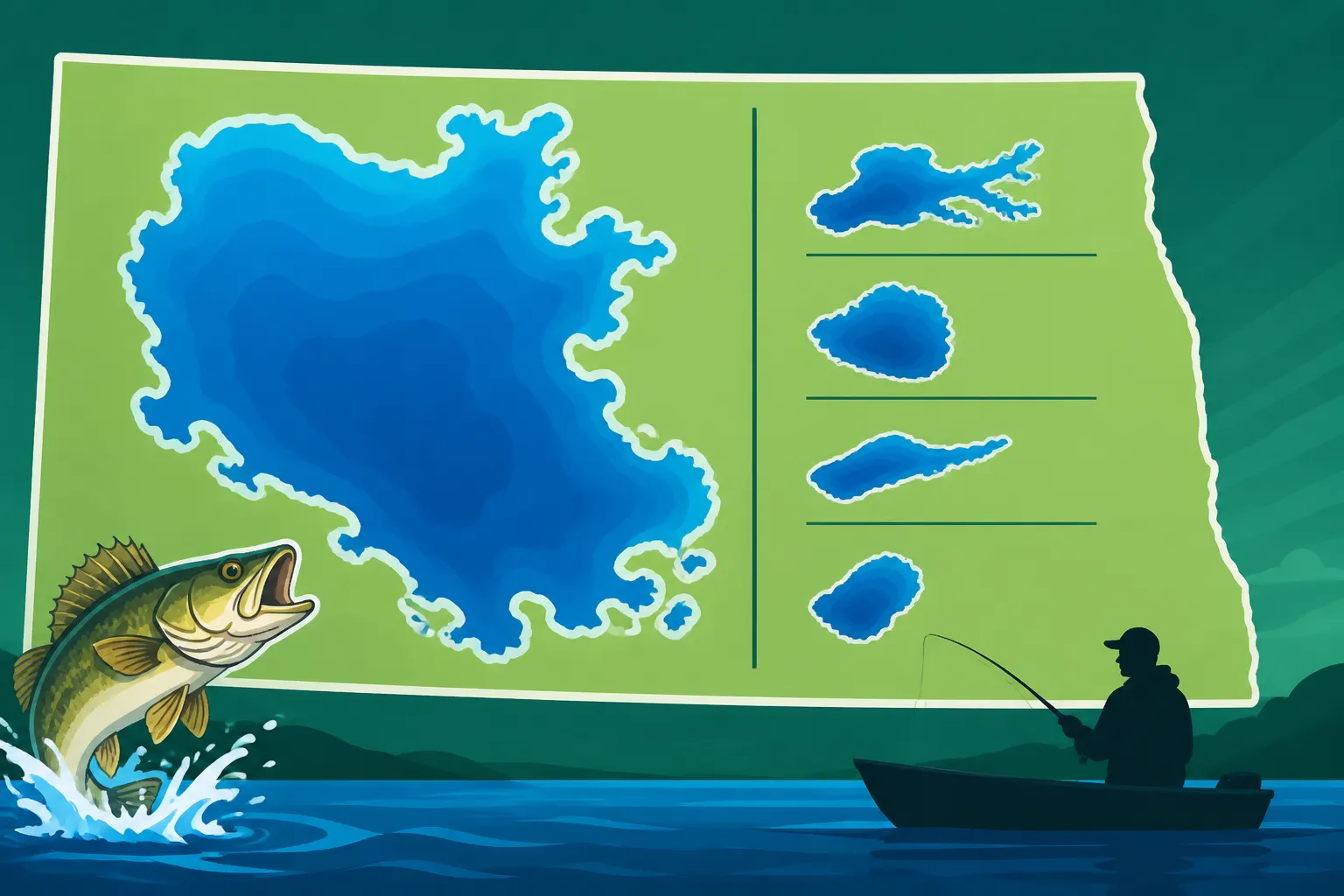
To give you a clearer picture of how Devils Lake stacks up against North Dakota's true giants, here's a comparative table. Keep in mind that Devils Lake's figures are highly variable due to its fluctuating nature.
| Feature | Devils Lake (at recent high) | Lake Sakakawea (at full pool) | Lake Oahe (ND portion, estimated) |
|---|---|---|---|
| Surface Area (Acres) | ~260,000 | ~368,000 | ~150,000 (within ND) |
| Length (Miles) | ~30 | ~178 | ~70 (within ND) |
| Shoreline (Miles) | ~400+ (highly variable) | ~1,300+ | ~200+ (within ND) |
| Max Depth (Feet) | ~50 | ~180 | ~100 (within ND) |
| Primary Type | Natural, Endorheic Basin | Riverine Reservoir | Riverine Reservoir |
Note: Figures for Devils Lake are approximate and fluctuate significantly based on water levels. Lake Oahe figures represent its approximate size and stretch within North Dakota.
Practical Implications for Anglers on Devils Lake
Understanding the unique size and fluctuating nature of Devils Lake is more than just a trivia fact; it has serious practical implications for any angler planning a trip there. From navigation to gear selection, this lake demands respect and preparation.
Navigating the Vastness: Challenges and Strategies
Folks, if you've ever spent a day on Devils Lake, you know it's a beast. At its larger sizes, navigating this sprawling, often shallow, and timber-filled lake can be a real challenge. You're not just dealing with open water; you're often maneuvering through areas that were dry land just a few years ago. This means flooded trees, submerged fence posts, and hidden roadbeds create a maze. While this structure is precisely what makes for phenomenal fishing – offering incredible cover for Devils Lake Walleye Fishing Spots and Devils Lake Perch Fishing Spots – it also presents navigational hazards. GPS units with good mapping are absolutely essential, and even then, local knowledge can make all the difference. Many anglers find success by focusing on specific arms or bays rather than trying to cover the entire lake in one trip. Leveraging a service like FishingBooker to find a guide can be a fantastic way to quickly learn the ropes and safely explore the best spots. These guides know the current conditions, submerged hazards, and where the fish are biting. For those exploring on their own, understanding the dynamics of Devils Lake Flooded Timber Fishing Spots is key to unlocking its secrets.
Planning Your Trip: Boat Size, Gear, and Safety
Given its immense, shallow, and often structure-laden expanses, the kind of boat you bring to Devils Lake matters. While a smaller boat might be fine on calm days in sheltered bays, the sheer size of the lake means it can get incredibly windy and choppy, sometimes with little warning. For serious anglers venturing out onto the main lake, a sturdy boat, often similar to what you'd use on Lake Sakakawea, is highly recommended. Our guide on Best Boats for Lake Sakakawea's Big Water offers relevant insights into boat types suitable for large, windy lakes. You'll also need appropriate safety gear, including enough life jackets for everyone on board and a reliable communication device.
Beyond the boat, your tackle needs to be versatile. You might be casting jigs in flooded timber one minute and trolling open water the next. This means a range of rods, reels, and baits, tailored to conditions that can change quickly. Good electronics, especially a reliable fish finder and GPS, are non-negotiable for finding fish and navigating safely. Don't forget to review the North Dakota Boat Registration Requirements and ensure all your paperwork is in order before you head out.
Why Devils Lake's Size Matters to Anglers (Beyond Just Numbers)
It's easy to get caught up in the numbers when talking about lake sizes, but for us anglers, it's about what those numbers mean for the fishing experience. Devils Lake's unique dimensions and fluctuating nature create an environment that's unparalleled in many ways.
Biodiversity and Ecosystem
The continuous expansion and contraction of Devils Lake have created an incredibly fertile and diverse ecosystem. As the water inundates new land, it brings with it nutrients from the soil and provides new habitat structures like flooded trees and grasslands. This rich environment supports a thriving forage base, which in turn fuels the growth of its famous game fish. The unique salinity of the lake, combined with its freshwater inflows, creates a productive blend that contributes to the exceptional size and health of its walleye, perch, and northern pike populations. The diverse array of habitats, from shallow weedy bays to deeper open water and snag-filled timber, means that What Fish Species Live in Devils Lake? is a long and impressive list, offering something for every angler.
Ice Fishing Dynamics
When winter blankets North Dakota, Devils Lake transforms into one of the premier ice fishing destinations in the world. Its massive size means vast expanses of ice, offering endless opportunities for anglers seeking those trophy walleye and jumbo perch. However, the size also presents challenges. Early ice conditions can vary significantly across different parts of the lake, making How Thick Ice Needs to Be for Ice Fishing a critical piece of knowledge, and demanding caution. Finding fish on such a large body of water can be like finding a needle in a haystack, often requiring extensive drilling and mobility. Experienced ice anglers will utilize snowmobiles or ATVs to cover ground, setting up portable shelters to brave the elements. Despite the challenges, the rewards are often spectacular, drawing ice fishing enthusiasts from all corners of the country to experience the thrill of chasing fish through the hardwater of this majestic lake. Our comprehensive guide on How to Ice Fish in North Dakota can provide you with all the essential tips for tackling this incredible winter fishery.
Disclaimer
The information provided in this guide is for general informational purposes only and is subject to change. Always consult the official North Dakota Game and Fish Department regulations and advisories before planning any fishing trip. Fishing conditions and rules can vary, and it is the angler's responsibility to ensure compliance with all current laws.