How Long Does a Trolling Motor Battery Last?
There's nothing quite as frustrating as being out on a beautiful North Dakota lake, whether you're slowly working a weed line on Devils Lake or holding position against the current on the Missouri River, only to have your trolling motor sputter and die. We've all been there, pushing our gear to the limit, and the lifespan of a trolling motor battery is a common concern for anglers. This guide is here to demystify how long your trolling motor battery will actually last and equip you with the knowledge to keep you powered up for a full day of fishing.
Understanding the Factors That Dictate Trolling Motor Battery Life
The question of "how long does a trolling motor battery last?" isn't as simple as pulling a number out of a hat. There are so many variables at play, from the type of battery you're running to how aggressively you're using your motor and even the weather conditions on the day. It's a complex interplay, and understanding these factors is the first step to accurately predicting your run time and avoiding being stranded.
Battery Type and Capacity (Amp-Hours)
At the heart of your trolling motor's endurance is the battery itself. Not all batteries are created equal, especially when it comes to sustained power delivery for electric motors. The key specification to look for is "amp-hours" (Ah), which essentially tells you how much energy the battery can store. A higher amp-hour rating means more stored energy, and therefore, a potentially longer run time.
For instance, a standard deep cycle marine battery might have a rating around 100 Ah. This capacity isn't just a number; it's a direct indication of how long the battery can supply a certain current. If your motor draws 10 amps, theoretically, a 100 Ah battery could run for 10 hours. However, that's under ideal conditions and doesn't account for efficiency losses, voltage drop, or the fact that you rarely fully discharge a battery in a perfectly linear way. Different battery chemistries, like traditional flooded lead-acid, AGM, or the newer lithium-ion, also play a huge role in how efficiently that stored energy is delivered and how much of it is truly usable.
Your Trolling Motor's Thrust and Power Draw (Amps)
The other side of the equation is your trolling motor itself. Every trolling motor has a "thrust" rating, measured in pounds (e.g., 55 lb thrust, 80 lb thrust), and this directly correlates to its power draw, measured in amps. A motor with higher thrust will generally draw more amps, especially when run at higher speeds. This is critical because the faster your motor drains amps, the quicker your battery will deplete.
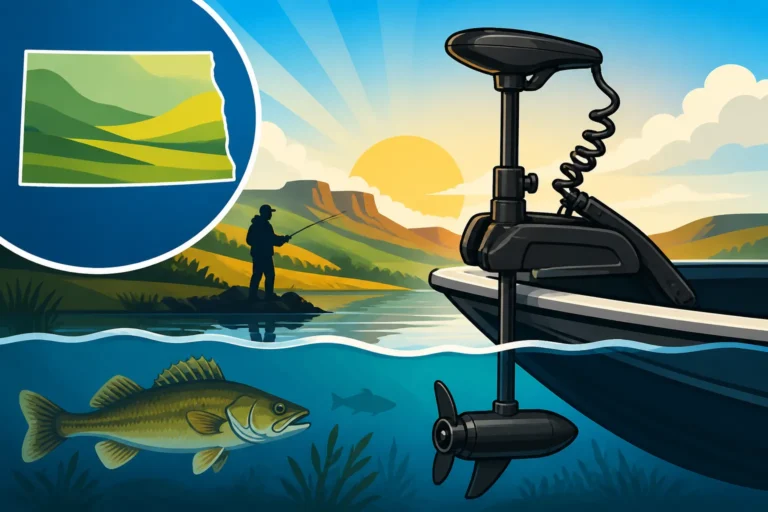
Imagine you're battling a stiff breeze on Lake Oahe, trying to hold your boat over a productive walleye hump. You're likely running your trolling motor at a higher setting, perhaps 70% or even 80% power, to combat the wind and maintain position. This higher setting means a significantly increased amp draw compared to just gently nudging along in calm conditions. So, while a battery might last X hours at a low setting, it could be cut in half or more if you're constantly pushing your motor near its maximum. You can often find the amp draw for different speed settings in your trolling motor's manual, which is a fantastic resource for estimating real-world performance. You can also explore options for Best Trolling Motors for North Dakota Lakes if you're in the market for an upgrade.
Environmental Conditions and Usage Patterns
Beyond the hardware, the environment and how you fish dramatically impact battery life. Wind is arguably the biggest factor for North Dakota anglers. A strong headwind requires your motor to work much harder, drawing more power. Similarly, current, especially on the Missouri or Red River, can drastically reduce your run time if you're trying to move upstream or hold against it. Temperature also plays a role; cold weather can reduce battery efficiency, meaning your battery might not deliver its full rated capacity on a frigid spring morning or during How to Ice Fish in North Dakota.
Your personal fishing style also matters. Are you constantly adjusting your speed, making sharp turns, or running your motor at high settings for extended periods? Or do you mostly use it for minor positional adjustments and slower cruising? The more active and demanding your usage, the shorter your battery will last. It's like comparing highway driving to stop-and-go city traffic for a car's fuel efficiency – the latter drains power much faster. Even the weight of your boat and its load can influence how hard your motor has to work.
Different Battery Technologies and Their Impact on Performance
The battery market has evolved quite a bit, offering anglers several choices. Each technology comes with its own set of advantages and drawbacks, particularly when it comes to sustained discharge for trolling motors. Understanding these differences can help you select the best power source for your specific fishing needs and ensure you get the run time you expect.
Deep Cycle Lead-Acid Batteries (Flooded, AGM, Gel)
For years, deep cycle lead-acid batteries have been the workhorse for trolling motors. Unlike starting batteries, which deliver a burst of power for a short time, deep cycle batteries are designed to provide a steady current over a long period and withstand repeated deep discharges without significant damage. Within the lead-acid family, you'll primarily find three types:
-
Flooded (Wet Cell) Batteries: These are your most traditional and often most affordable option. They contain liquid electrolyte that covers lead plates. They're generally robust but require maintenance, such as checking and topping off electrolyte levels with distilled water. They can also be a bit messy if tipped and tend to vent gases, so proper ventilation is key. Their usable capacity is often considered to be around 50% of their rated Ah to maximize lifespan, meaning a 100 Ah flooded battery might realistically give you 50 Ah of continuous use before you should recharge it.
-
AGM (Absorbed Glass Mat) Batteries: AGM batteries are a step up in technology and price. The electrolyte is absorbed into fiberglass mats between the plates, making them sealed, maintenance-free, and spill-proof. They also handle vibration better, charge faster, and tolerate deeper discharges than flooded batteries, offering closer to 80% usable capacity. This means more effective power for their size, which is a huge benefit when you're covering ground on larger bodies of water like Lake Sakakawea. They're a popular choice for serious anglers who want reliability without the upkeep.
-
Gel Cell Batteries: Gel batteries use a silica-based gel to suspend the electrolyte. Like AGMs, they are sealed, maintenance-free, and spill-proof. They are excellent for very deep discharges and have a long cycle life, but they charge slower and don't deliver high currents as efficiently as AGMs. They are also sensitive to overcharging, which can damage the gel. While reliable, they're less common for trolling motors compared to AGM due to their lower power output for their size and higher cost. When looking for a new battery, consider checking out options at your local Bass Pro Shops or online through Amazon for a wide selection.
The Rise of Lithium-Ion Batteries
Lithium-ion (LiFePO4) batteries are the new kids on the block for trolling motors, and they are quickly gaining popularity despite their higher upfront cost. They offer some compelling advantages that can revolutionize your time on the water:
-
Lighter Weight: This is a game-changer. Lithium batteries are significantly lighter than lead-acid batteries of equivalent capacity, often reducing boat weight by 50-70 pounds or more per battery. This can improve boat performance, fuel efficiency, and makes handling batteries much easier. If you're often loading and unloading your boat, or concerned about overall weight for trailer towing, this is a huge plus.
-
Consistent Power Output: Unlike lead-acid batteries, which see a noticeable drop in voltage as they discharge, lithium batteries maintain a much more consistent voltage throughout their discharge cycle. This means your trolling motor performs at peak power for longer, rather than slowly losing strength as the battery drains.
-
Higher Usable Capacity and Cycle Life: Lithium batteries can be discharged nearly 100% without damage, offering almost their full rated amp-hours. They also boast a much longer cycle life (how many times they can be charged and discharged) than lead-acid batteries, often thousands of cycles compared to hundreds. While the initial investment is higher, their longevity can make them more cost-effective over many years of use. For those serious about maximizing their time on the water, the consistent power and extended run time provided by these batteries often justify the expense. You can find many reputable brands of lithium batteries for marine use by doing a quick search online, including through retailers like Amazon.
| Battery Type | Pros | Cons | Typical Usable Capacity | Lifespan (Charge Cycles) | Cost Shape |
|---|---|---|---|---|---|
| Flooded Lead-Acid | Affordable, widely available, proven tech | Requires maintenance, spill risk, gases, heavier | ~50% | 100-300 | Lower |
| AGM Lead-Acid | Maintenance-free, spill-proof, vibration resistant, faster charging | Heavier than lithium, less consistent power than lithium, moderate lifespan | ~80% | 300-800 | Mid-Range |
| Gel Cell Lead-Acid | Very deep discharge tolerance, long cycle life, maintenance-free | Lower current output, sensitive to overcharging, heavier | ~80% | 500-1000 | Mid-High |
| Lithium-Ion (LiFePO4) | Lightweight, consistent power, high usable capacity, long lifespan, fast charging | Highest upfront cost, specific charging requirements | ~100% | 2000-5000+ | Higher |
Practical Ways to Extend Your Trolling Motor Battery's Run Time
Knowing what affects your battery's life is one thing, but actively doing something about it is another. Smart planning and consistent habits can significantly stretch your battery's run time, giving you more confidence on the water and fewer worries about cutting your trip short.
Proper Charging and Maintenance Routines
The way you charge and maintain your batteries has a profound impact on their overall health and lifespan. For lead-acid batteries, using a high-quality, multi-stage marine charger that matches your battery type (flooded, AGM, or gel) is crucial. These chargers optimize the charging process, preventing overcharging which can damage the battery. Always recharge your lead-acid batteries as soon as possible after use, even if they're not fully depleted, to prevent sulfation, which is the leading cause of premature battery failure. Avoid letting them sit discharged for extended periods, especially over winter. For winterizing your boat, including battery care, consider checking out articles like How Much It Costs to Winterize a Boat or Best Way to Winterize a Boat Motor for more detailed guidance.
Lithium-ion batteries have different charging requirements and often come with built-in Battery Management Systems (BMS) that protect them from overcharge, over-discharge, and temperature issues. While they are more forgiving, using a charger specifically designed for lithium (LiFePO4) batteries is still essential to ensure optimal performance and longevity. Regular inspection of battery terminals for corrosion and ensuring all connections are tight can also prevent power loss and extend life. Remember, a well-maintained battery is a happy battery!
Strategic Power Management on the Water
This is where your angling skills really come into play. Being mindful of how you use your trolling motor can dramatically save battery power. Instead of running your motor at 70-80% power constantly, try to utilize lower settings whenever possible. Many modern trolling motors are surprisingly efficient at lower speeds. If you're not battling heavy wind or current, even a small reduction in speed can yield significant gains in run time.
Consider using your main outboard motor to cover longer distances or to reposition your boat in heavy wind, saving your trolling motor battery for precise boat control over fishing spots. Using drift socks can also be a fantastic way to slow your drift in windy conditions without constantly relying on high trolling motor power. For those using advanced electronics, like Best Fish Finders for North Dakota Lakes, remember that these also draw power, so factor that into your overall usage. Being smart about how you deploy your power reserves is key to staying out longer.
Considering Multiple Batteries and Charging Solutions
For many North Dakota anglers, especially those with larger boats or who spend long days on vast waters like Lake Sakakawea, a single trolling motor battery simply isn't enough. Investing in a second or even a third deep-cycle battery, wired in parallel for a 12V system or in series for 24V or 36V systems (depending on your motor's requirements), is a common solution. This increases your overall amp-hour capacity and provides a much longer run time.
Another excellent strategy is to carry a portable jump starter or a compact auxiliary battery pack, particularly for smaller trolling motors or for emergency situations. While not designed for continuous use, they can provide enough juice to get you back to the ramp or sustain you for another hour or two if your primary battery runs unexpectedly low. Additionally, for electronics and other small devices, consider dedicated small power stations or Best Portable Power Station for Ice Fishing Electronics to keep your main trolling motor batteries focused on propulsion. You can find comprehensive gear checklists and recommendations at retailers like Bass Pro Shops, helping you select the right Essential Gear Checklist for North Dakota Fishing to keep you powered up.
Disclaimer
This article is for general informational purposes only and does not constitute professional advice. Laws, prices and regulations vary by location and change over time. Consult a qualified professional for guidance on your specific situation.