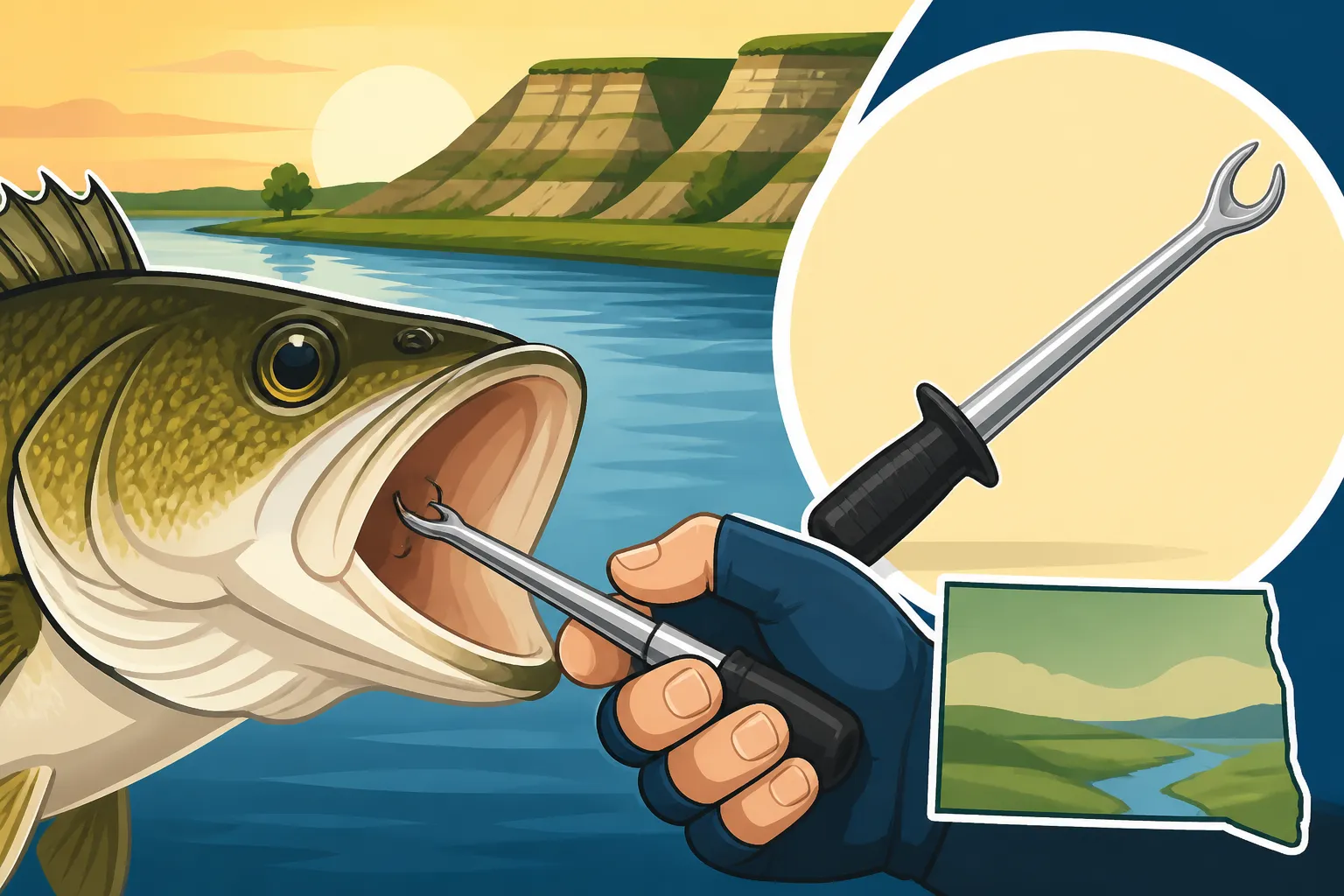
Best Hook Remover for Deep-Hooked Fish
There are few things as frustrating, or as heartbreaking, for an angler as reeling in a fish only to find it's swallowed your hook deep, way down in its gullet or gills. It's a moment that can quickly turn a potential catch-and-release success story into a stressful ordeal, leaving you wondering if the fish will survive, and often sacrificing a perfectly good lure. This guide is here to walk you through the world of hook removers, specifically designed for those tricky, deep-set hooks, helping you understand why they're essential, what types are out there, and how to use them to protect both your catch and your tackle.
The Deep-Hook Dilemma: Why Standard Pliers Just Don't Cut It
When you're out on the waters of Lake Sakakawea chasing walleye or casting for northern pike in Devils Lake, you sometimes hook a fish just right, a perfect corner of the mouth shot that makes for an easy release. But then there are those other times. The fish bites hard, inhales the bait, and suddenly your hook is nowhere in sight. This isn't just an inconvenience; it's a real problem for the fish, for your gear, and for your peace of mind.
The Perils of Deep Hooking for Fish
A hook lodged deep inside a fish's mouth, throat, or gills can cause significant trauma. The delicate tissues in a fish's gills are crucial for breathing, and even a small tear can severely compromise its ability to survive once released. When a hook is down in the gut, it can lead to internal bleeding or damage to vital organs. For anglers who value conservation and practice catch and release, especially with species like walleye where size limits might dictate releasing smaller fish, a deeply embedded hook means a much lower chance of survival for that fish. We all want to do our part to keep North Dakota's fisheries healthy, and a quick, clean release is a huge part of that.
Even if you intend to keep the fish, dealing with a deeply swallowed hook can make the cleaning process more difficult and potentially compromise the quality of the meat if you have to cut around damaged areas. The goal is always to harvest humanely, or release responsibly, and a good hook remover plays a vital role in both scenarios. Thinking about North Dakota Walleye Size Limit Rules and other regulations, knowing how to release fish unharmed is absolutely crucial for ethical angling.
The Frustration for Anglers and Protecting Your Gear
Beyond the welfare of the fish, a deeply swallowed hook can be incredibly frustrating for the angler. Trying to reach a hook with standard needle-nose pliers often feels like trying to perform surgery with clumsy tools. You might bend the hook, damage the lure, or worse, get a hook embedded in your own finger as the fish thrashes around. Losing a favorite crankbait or jig because you can't retrieve the hook without destroying it is just plain annoying, especially when you consider how much we invest in our tackle.
Furthermore, the time spent struggling with a deep hook is time you're not actually fishing. It pulls you out of the moment, tests your patience, and can even put a damper on an otherwise fantastic day on the water. Imagine you're on a hot bite during the North Dakota Open Water Fishing Season, and every other fish is swallowing the hook – that's a lot of lost time and potentially lost fish if you're trying to meet a specific daily limit. Having the right tool at hand minimizes this downtime and protects your valuable gear.
When Standard Pliers Just Won't Cut It
Most anglers start with a basic pair of needle-nose pliers in their tackle box, and for good reason—they're incredibly versatile. For hooks embedded in the lip or just inside the mouth, they work perfectly fine. The problem arises when the hook is truly deep. Needle-nose pliers often aren't long enough, and their jaw design isn't optimized for reaching around corners or through narrow passages without causing further damage. They lack the leverage and the specific angle needed to get a firm grip on a hook bend that's out of reach.
This is where specialized hook removers come into play. They are designed with unique shapes, lengths, and gripping mechanisms that allow you to reach far down, secure the hook, and extract it cleanly with minimal harm to the fish or the lure. It's a game-changer for those situations where you'd typically resort to cutting the line, leaving the hook to rust out (which isn't always a quick or harmless process for the fish).
Exploring the Arsenal: Types of Hook Removers
Just like there are different fishing techniques and baits for various species, there are also different types of hook removers designed to tackle specific deep-hooking scenarios. Knowing the pros and cons of each can help you choose the best tool for your North Dakota fishing adventures, whether you're targeting big northern pike or delicate yellow perch.
Pistol-Grip Style Removers
These removers look a bit like a small pistol or a pair of surgical pliers, often featuring a trigger-like handle and a long, slender shaft that extends to a specialized jaw at the end. They are typically made from aluminum or durable plastic, making them lightweight and corrosion-resistant. The main advantage of the pistol-grip style is their incredible reach. Some models can be upwards of a foot long, allowing you to access hooks deep within the throat of even larger fish.
The "pistol grip" design offers excellent leverage and control. You can hold the fish with one hand and operate the remover with the other, making it a very efficient tool. The jaws at the end are often designed to securely grasp the hook bend, and some even feature a small "push" mechanism to help dislodge the barb if you're using barbed hooks. These are often the go-to choice for anglers targeting toothy fish like northern pike, where keeping your fingers away from sharp teeth is paramount, or for larger walleye on Lake Sakakawea Fishing Guide for North Dakota Anglers where hooks can be swallowed whole.
Squeeze-Style (Tube) Removers
Simpler in design, squeeze-style removers often consist of a tube with a plunger and a small loop or claw at the end. To use it, you slide the loop over the fishing line, guide it down to the hook, and then push the plunger, which extends a mechanism to disengage the hook. These are often made of plastic, making them very affordable and light.
Their main benefit is their ease of use, especially for smaller fish or hooks that aren't super deep. They require a bit less finesse than the pistol-grip style, and can be quite effective for panfish or trout where the hook might be just past the lip. However, their reach is often more limited, and they might struggle with larger hooks or extremely deep-set situations. They are a good entry-level option, and many anglers keep one in their kit for quick, simple removals.
Forceps and Hemostats
These look exactly like what you'd see in a doctor's or surgeon's office. Forceps and hemostats are essentially very long, slender pliers with a locking mechanism that allows them to hold onto the hook securely once clamped down. They come in various lengths, but even the longest ones might not match the reach of a dedicated pistol-grip remover.
Forceps and hemostats excel at precision. For smaller hooks, particularly those found in panfish or small trout, they allow for very delicate work. The locking mechanism means you can clamp down on the hook and not lose your grip, freeing up a hand if needed. They are fantastic for removing small, stubborn hooks from delicate areas, but they might lack the brute force or extended reach required for large, deeply swallowed hooks from big, strong fish. You can find a good selection of these and other tools at fishing specialty stores like Bass Pro Shops or online retailers like Amazon.
Here's a quick comparison of these popular hook remover types:
| Feature | Pistol-Grip Style | Squeeze-Style (Tube) | Forceps/Hemostats |
|---|---|---|---|
| Reach | Excellent (longest) | Moderate | Good (precision) |
| Ease of Use | Good (intuitive grip) | Very Good (simple mechanics) | Good (requires some dexterity) |
| Control/Leverage | High | Moderate | High (locking grip) |
| Best For | Large, toothy fish; very deep hooks | Smaller fish; less severe deep hooks | Small hooks; delicate areas; precision |
| Durability | High (often aluminum) | Moderate (plastic) | High (surgical steel) |
| Cost (General) | Mid-range to High | Low | Low to Mid-range |
| Finger Safety | Excellent (keeps hands clear) | Good | Moderate (still closer to mouth) |
Choosing Your Weapon: What to Look for in a Quality Hook Remover
With various options available, how do you pick the right hook remover that will serve you best on the unpredictable waters of North Dakota? It boils down to a few key factors that prioritize effectiveness, durability, and ease of use. This isn't just about grabbing the cheapest option; it's about investing in a tool that will truly save fish and tackle.
Length and Reach: The Ultimate Decider
This is arguably the most critical factor for a deep-hook remover. If the hook is swallowed deep, a short tool simply won't reach it. Consider the types of fish you typically target in North Dakota. If you're often battling large northern pike or targeting big walleye that are known for inhaling baits, you'll want a remover with substantial length – sometimes 10 to 12 inches or even longer. This extended reach keeps your hands and fingers safely away from sharp teeth and allows you to manipulate the hook from a comfortable distance.
For smaller species, or if you predominantly fish with artificial lures that tend to hook in the mouth more often than deep in the gut, a slightly shorter model might suffice. However, even for panfish or trout, a hook can sometimes be swallowed. Always err on the side of slightly longer if you're unsure, as you can always use a longer tool for a shallow hook, but a short one won't magically extend for a deep one. Thinking about North Dakota Northern Pike Fishing Guide, a long remover is non-negotiable!
Material and Durability: Built for the Badlands and Beyond
North Dakota's weather and water conditions can be tough on gear. From the freezing temperatures of ice fishing season to the heat and humidity of summer, your equipment needs to withstand the elements. Look for hook removers made from durable, corrosion-resistant materials. Anodized aluminum is a popular choice for pistol-grip style removers, offering excellent strength-to-weight ratio and resistance to rust, which is vital when constantly exposed to water.
Stainless steel is another excellent material, often used in forceps and some pliers, known for its strength and resistance to corrosion. While plastic models can be very affordable and lightweight, ensure they are made from a high-quality, reinforced plastic that won't easily flex or break when you're trying to dislodge a stubborn hook. A flimsy tool is worse than no tool at all, especially when a fish's life or your favorite lure is on the line.
Ergonomics and Ease of Use: Your Hand's Best Friend
You want a hook remover that feels good in your hand and is easy to operate, especially when things get a little frantic on the boat or shore. Consider the grip: Is it comfortable? Does it offer good traction even when wet? Some removers have textured or padded handles for improved ergonomics. If possible, try to hold a few different models to see how they feel.
One-handed operation is a huge bonus, allowing you to control the fish with your other hand. Spring-loaded mechanisms can make opening and closing the jaws smoother and faster. Think about how easy it is to actuate the tool. A complex or stiff mechanism will only add to your frustration when you're trying to quickly and efficiently release a fish. Many anglers find the trigger mechanism of pistol-grip removers to be very intuitive and easy to use, even when wearing gloves during colder weather.
Mastering the Technique: How to Use a Hook Remover Effectively
Having the best hook remover in your tackle box is only half the battle; knowing how to use it properly is what truly makes a difference. The goal is always a swift, clean removal that minimizes stress and injury to the fish, especially if you plan on releasing it.
Getting Ready: Handling the Fish Safely
Before you even reach for the remover, you need to properly secure the fish. For many species, especially those with sharp fins or spines like walleye and perch, a firm but gentle grip on the base of the tail or directly behind the gills (being careful not to squeeze the gill plates themselves) is often best. For toothy critters like northern pike, a jaw spreader might be necessary to keep their mouth open and protect your fingers. Always wet your hands before handling a fish to minimize the removal of their protective slime coat, which is vital for their health.
If you're fishing from a boat, having a designated area where you can safely lay the fish for a few moments, or keeping it in the water while you work, can also reduce stress. Minimize the time the fish is out of the water, especially during warmer months. Remember that a stressed fish will thrash more, making removal harder and increasing the risk of injury to both the fish and yourself. Consider carrying a measuring board to quickly check against North Dakota Fishing Regulations Explained before releasing.
The Retrieval Process: Guiding, Gripping, and Gently Releasing
Once the fish is secure and you have your hook remover ready, the process involves a few key steps:
- Locate the Line: Slide the hook remover down the fishing line until it reaches the hook. This acts as a guide to ensure you're heading straight for the target.
- Reach the Hook Bend: Carefully maneuver the jaws of the remover so that they grasp the bend of the hook. This is crucial—don't try to grab the shank or the barb, but the curve of the hook where it begins to turn. For squeeze-style removers, ensure the loop or claw is fully around the hook.
- Depress the Barb (if applicable): If you're using barbed hooks, once you have a firm grip on the hook bend, apply gentle pressure to depress or rotate the barb slightly. This makes extraction much smoother and less damaging. This step is why many experienced anglers are moving towards using barbless hooks for catch and release.
- Push, Don't Pull: Instead of yanking the hook out, gently push the hook forward in the same direction it went in. This often helps to disengage the barb and allows the hook to slide out cleanly. Once disengaged, a gentle pull will bring the hook and lure out. The pistol-grip style removers are fantastic for this "push" motion, giving you precise control.
- Check for Damage: After removal, quickly inspect the fish's mouth and gills for any obvious damage. If there's minimal bleeding, the fish has a good chance of survival.
Remember, practice makes perfect. The more you use your hook remover, the more comfortable and efficient you'll become.
Post-Release Care: Ensuring a Strong Swim-Away
After the hook is out, the fish isn't out of the woods yet. Proper post-release care is vital for ensuring its survival. Gently place the fish back into the water, headfirst, and hold it upright until it regains its equilibrium and can swim off strongly under its own power. Sometimes, a gentle forward and backward motion can help force water over its gills, aiding in recovery. This is particularly important for larger fish or those that fought hard.
Avoid just tossing the fish back into the water, especially if it seems sluggish. Taking those extra few moments to revive a fish can mean the difference between a successful release and a casualty. This kind of responsible angling contributes to healthy fish populations and ensures that future generations can enjoy the incredible fishing opportunities North Dakota offers. Equipping yourself with items from an Essential Gear Checklist for North Dakota Fishing will undoubtedly include a good quality hook remover for these situations.
Disclaimer
This article is for general informational purposes only and does not constitute professional advice. Laws, prices and regulations vary by location and change over time. Consult a qualified professional for guidance on your specific situation.