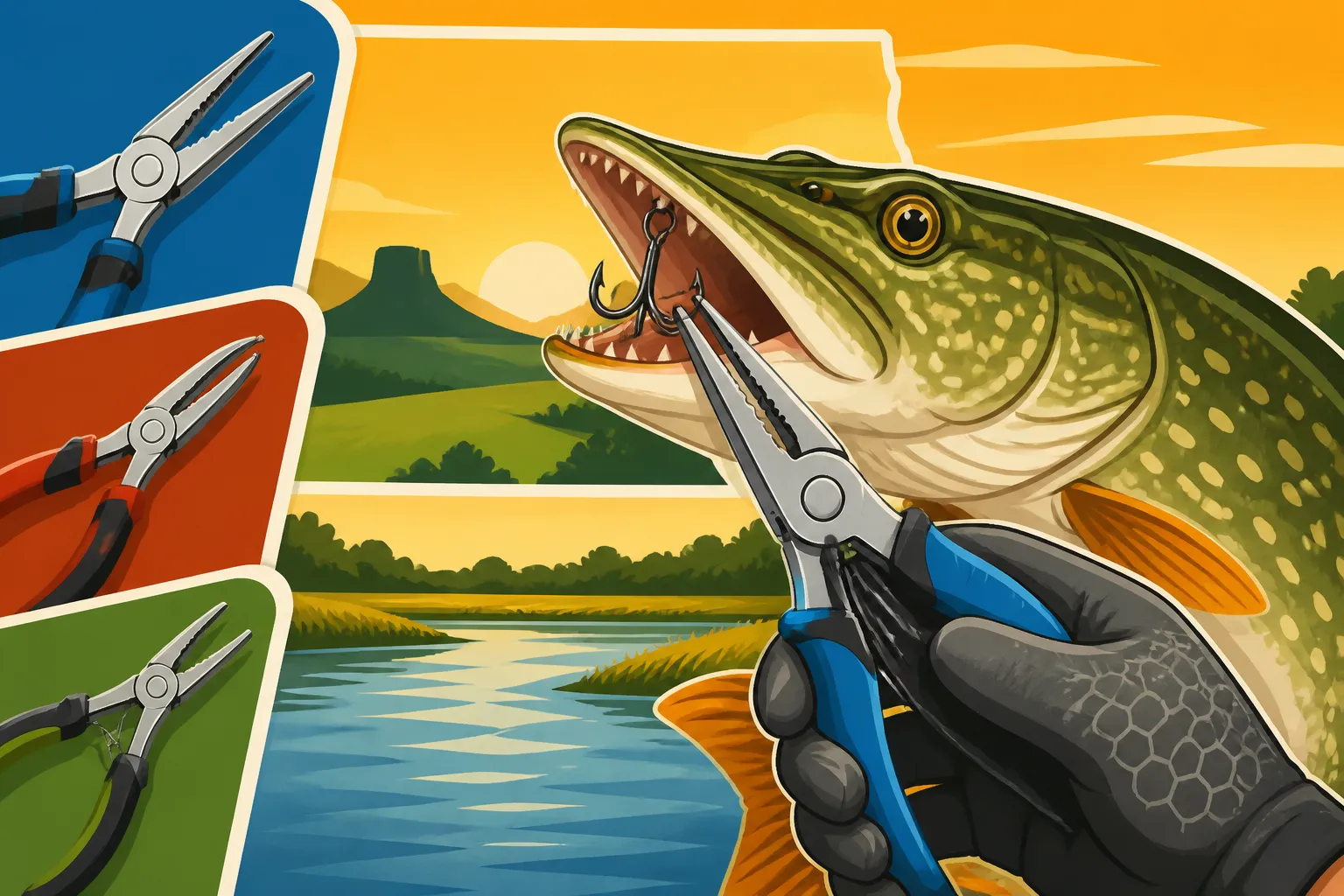
Best Pliers for Removing Pike Hooks
Northern pike are notorious for their aggressive strikes, and while landing one can be an exhilarating experience, the aftermath can be a real headache – especially when that hook is set deep within their formidable, tooth-filled jaws. Fumbling with inadequate tools or risking your fingers near those razor-sharp teeth isn't just dangerous for you, it's also incredibly stressful for the fish. This guide is here to walk you through everything you need to know about choosing and using the best pliers for safely and efficiently removing pike hooks, ensuring a smooth release for the fish and peace of mind for you.
The Unique Challenge of Northern Pike Hook Removal
Anyone who has spent time targeting northern pike knows they're not just any fish. They are powerful, cunning, and have a mouth designed for pure predation. This makes hook removal a very different game compared to, say, a yellow perch or even a walleye.
Understanding the Pike's Mouth Anatomy
Pike are apex predators, and their mouths are truly a marvel of natural engineering, built specifically for catching and holding prey. They're packed with hundreds of needle-sharp, backward-slanted teeth, not just lining their jaws, but also covering their tongue and gill rakers. These teeth are like tiny, perfectly designed grappling hooks, making it incredibly difficult to pull a hook out if it's deeply set, especially when the fish is still full of fight. Imagine trying to untangle barbed wire from a bristly, thrashing brush – that's often what it feels like when you're trying to retrieve a hook from a feisty pike.
When a pike clamps down, those teeth can easily slice through unprotected skin, standard monofilament fishing line, and even lighter gauge leaders. This means getting your bare fingers anywhere near that danger zone is an absolute recipe for disaster. Even a quick, seemingly innocent grab can result in a nasty injury that could cut your fishing day short and potentially require medical attention. Trust me, a spontaneous visit to the urgent care clinic for a hand full of pike teeth isn't how you want to remember your trophy catch.
Beyond the immediate danger to you, hooks set deep can cause significant trauma to the fish. If you're practicing catch-and-release, which many North Dakota anglers do, especially with those larger "slipper" pike that are so important for maintaining a healthy fishery, quick and clean hook removal is paramount. Fumbling around with inadequate pliers or trying to force a hook out can tear gills, damage vital organs, or cause excessive bleeding, greatly reducing the fish's chances of survival after release. It's about respecting the resource and ensuring future generations of anglers can enjoy these magnificent fish.
Why Standard Pliers Just Won't Cut It (Literally)
You might be thinking, "Pliers are pliers, right? I've got a decent pair in my toolbox at home." And while a basic pair of household pliers might suffice for a tiny panfish or a treble hook barely clinging to the lip of a walleye, they are woefully inadequate for the brute strength and formidable dental arsenal of a northern pike. Their jaws are often too short, too thick, or simply not strong enough to get a secure grip on a deeply embedded hook. They'll slip, bend, or fail to provide the leverage you need.
Many standard pliers also severely lack the necessary reach. Pike have long snouts, and if a hook is back in the crusher plates, embedded near the gills, or deeply swallowed, short-nosed pliers mean your hand is uncomfortably close to those teeth. This is precisely when an angler might instinctively try to rush the process, increasing the risk of injury to themselves and causing undue stress to the fish. It’s a common scenario that ends with frustration, a mangled lure, and sometimes a sadly injured fish, rather than a clean, successful release.
Furthermore, the materials of everyday household pliers are often not designed to withstand the harsh realities of the outdoor environment. Rust and corrosion can quickly set in, especially after repeated exposure to water, mud, and fish slime, making them stiff, difficult to operate, and ultimately unreliable precisely when you need them most. Investing in specialized fishing pliers isn't just about convenience; it's a critical investment in your safety, the efficiency of your hook removal, and the longevity of your essential fishing gear.
Essential Features for the Best Pike Pliers
Choosing the right pliers for pike isn't just about grabbing the first pair you see. There are specific features that make some pliers far superior for dealing with these toothy critters.
Length and Jaw Design: The Reach You Need
When you're squaring off with a pike, reach is your absolute best friend. You'll want to look for pliers with a minimum jaw length of 6-8 inches, with many experienced anglers preferring even longer models, often up to 11 or 12 inches, especially when targeting larger fish. This extended reach keeps your fingers and hand well away from those formidable rows of teeth, minimizing the risk of an accidental bite. Think of it as creating a critical safety buffer zone between your hand and the danger zone.
The jaw design itself is equally crucial. A truly effective set of pike pliers will typically feature long, slender jaws that are designed to easily navigate into the tight, intricate spaces within the pike's mouth. Some models will have a straight jaw, which is excellent for direct pulls on hooks that are clearly visible and accessible. Others might offer a bent-nose tip. This bent-nose design can be incredibly useful for reaching hooks set at awkward angles, nestled in hard-to-access areas around the gills, or deeper in the throat where a straight plier would struggle to get a good grip.
Beyond the overall shape, pay close attention to the tips of the jaws. They should be relatively fine, allowing for precision, but also incredibly strong and robust, enabling you to grip the hook shank firmly without slipping. Many high-quality pliers incorporate a finely serrated tip which provides extra purchase, ensuring that once you grab the hook, you maintain complete control throughout the entire removal process. The last thing you want is the hook slipping out of the pliers and re-embedding itself deeper, or worse, flying back at you or the fish.
Material and Construction: Durability and Grip
The material from which your pliers are constructed largely dictates their overall durability and, perhaps most importantly, their resistance to corrosion. Corrosion is a huge factor for any tool constantly exposed to a fishing environment. Stainless steel is a widely popular choice, offering a good balance of strength and reasonable corrosion resistance, especially if it's properly cared for. However, for ultimate protection against the elements, particularly if you fish frequently or in varied North Dakota conditions, marine-grade aluminum or even titanium can be far superior. These materials are not only lighter in hand but also incredibly resilient against rust and saltwater exposure.
The construction quality also plays a significant role. Look for pliers that feel solid and substantial in your hand, with no excessive play, wobble, or looseness in the pivot point. Some high-quality pliers might feature a spring-loaded design, which keeps the jaws open and ready for action. This might seem like a small detail, but it makes one-handed operation much easier when you're simultaneously trying to control a squirming fish. When you're out on the water, battling a lively pike, every bit of added convenience and reliability truly helps.
Often overlooked, but absolutely vital, are the handle grips. Ergonomic, non-slip grips, typically made from materials like rubber, composite, or textured plastic, provide a secure and comfortable hold even when your hands are wet, cold, or covered in fish slime. A good grip prevents accidental slips, which could lead to dropping your valuable pliers overboard or, more seriously, losing control of the fish and exposing your hands to danger. Whether you're extracting a deep hook or cutting a tough leader, a solid, reliable grip is paramount for safety and effectiveness.
Integrated Cutters and Other Features
Many modern fishing pliers come equipped with integrated line cutters, and for pike fishing specifically, this can be a real game-changer. Pike are notorious for "toothying off" line, meaning their sharp teeth can quickly fray or cut your leader during the fight or even when the hook is in their mouth. A sharp, reliable cutter, often made from super-durable tungsten carbide, allows you to quickly snip damaged line or even cut a hook if it's too deeply set to retrieve safely, prioritizing the fish's survival over a lost lure.
Beyond dedicated line cutters, some pliers offer a range of additional features that can add versatility to your angling toolkit. These might include crimping sleeves for making custom leaders, specialized split ring pliers for easily changing out treble hooks on lures, or even handy bottle openers (because, let's be honest, why not?). While these extra functions aren't strictly necessary for the core task of pike hook removal, they can certainly reduce the number of individual tools you need to carry on the water. Best Fishing Rods for North Dakota Anglers discusses how multi-functional gear can often simplify and streamline your entire setup.
Finally, consider how the pliers will be stored and carried. Many excellent pliers come with a robust sheath or holster that can be conveniently clipped to your belt, fishing vest, or boat console, keeping them readily accessible at all times. A lanyard attachment point is also a very smart feature, providing an extra layer of security and preventing your valuable pliers from accidentally going overboard, especially if you're fishing from a boat or a kayak on big, open waters like Lake Sakakawea. Losing your pliers mid-fight or needing them urgently is a frustration you definitely want to avoid!
Top Pliers Styles for Northern Pike
While the core function of pliers remains the same, different styles offer unique advantages for specific hook removal scenarios. Knowing which style to choose can make a big difference.
Long-Nose Pliers: The Angler's Workhorse
Long-nose pliers are arguably the most common and versatile type of pliers for almost any fishing task, including pike hook removal. Their defining feature is, of course, their extended, often slender jaws, which provide the crucial reach needed to bypass a pike's formidable teeth and get down to a deeply embedded hook. They come in various lengths, but for targeting pike, you'll definitely want to lean towards the longer end of the spectrum, perhaps 8 to 11 inches, to maximize that all-important safety margin.
The typically straight design of most long-nose pliers makes them excellent for grabbing a hook shank and exerting a direct, firm pull. They allow for precise manipulation, which is absolutely essential when trying to back out a barbed hook without causing further damage to the fish. Many anglers find these to be their absolute go-to choice because of their straightforward effectiveness and ease of use in the vast majority of hook scenarios they encounter.
When you're shopping for long-nose pliers, whether you're browsing options on Amazon or visiting a local Bass Pro Shops, you'll find a wide array of options. These range from basic, reliable stainless steel models to more advanced, highly corrosion-resistant aluminum or titanium pliers featuring ergonomic, comfortable grips. Always pay close attention to the robustness and rigidity of the jaws – a flimsy or poorly constructed pair will bend, twist, or even break under the pressure of a stubborn hook, rendering them completely useless when you need them most.
Bent-Nose Pliers: Navigating Tricky Angles
Bent-nose pliers are a fantastic complement to straight long-nose pliers, particularly when you're faced with hooks that are set in awkward, difficult-to-reach, or unusually angled positions. The distinct bend at the tip of the jaws, typically ranging between 20 to 45 degrees, allows you to approach a deeply embedded hook from an indirect angle. This can be incredibly advantageous if the hook is nestled behind gill plates, lodged deep in the throat, or simply oriented in a way that a straight tool cannot properly grasp without causing unnecessary stress or injury to the fish.
Imagine a pike that has aggressively swallowed your lure deep, with a treble hook buried near its gullet. Trying to get a straight pair of pliers in there might be impossible without severely stressing the fish or getting your hand dangerously close to those teeth. A bent-nose plier, however, allows you to "hook around" internal obstacles and get a firm, secure purchase on the hook shank, providing leverage and control where a straight plier would simply fail. This enhanced precision is key to minimizing injury to the fish and maximizing the chances of a successful, quick release.
While bent-nose pliers might not be your only pair of pike pliers, they are an invaluable tool to have in your tackle box, ready for those challenging situations. Many experienced North Dakota pike anglers wisely carry both straight and bent-nose options, ensuring they are prepared for virtually any hook removal scenario they might encounter on the water. They are particularly useful for those smaller, more intricate hook removal tasks where a delicate touch combined with brute strength is required, but with the necessary power to handle the toughest, most stubborn hooks.
Heavy-Duty Pliers: Power for Tough Situations
Sometimes, despite your best efforts, you'll encounter a situation where sheer brute strength, an unyielding grip, and the ability to cut through tough material are absolutely essential. This is where heavy-duty pliers truly shine. These aren't just larger versions of standard pliers; they are purpose-built tools with significantly thicker, stronger jaws, often crafted from hardened steel or specialized, ultra-durable alloys. They are specifically designed to handle the toughest hooks and the most aggressive, powerful fish. Their pivot points are heavily reinforced, and the handles are typically far more robust, providing maximum leverage and control.
Heavy-duty pliers are excellent for forcefully straightening out or cutting stubborn hooks, especially if a treble hook is deeply embedded and cannot be safely backed out without causing significant damage to the fish. While the primary goal is always to remove the hook cleanly, there are critical times when cutting the hook is undeniably the safest and quickest option for ensuring the fish's survival. The integrated cutters on these pliers are usually industrial-grade, capable of cleanly slicing through even thick gauge steel hooks with remarkable ease.
While they might be a bit bulkier and perhaps heavier than your average long-nose pliers, the immense peace of mind that comes from knowing you have the power and capability to tackle any hook situation is well worth the extra heft. For dedicated trophy pike anglers, or those who frequently encounter large, exceptionally feisty fish on expansive waters like Lake Sakakawea Fishing Guide for North Dakota Anglers, a good pair of heavy-duty pliers is an absolute necessity. Remember, the larger and stronger the fish, the more robust and powerful your hook removal tools need to be.
Here's a quick comparison of plier types to help you decide:
| Pliers Type | Key Advantage | Best Use Cases | Consider If… |
|---|---|---|---|
| Long-Nose | Excellent reach, direct pull, versatile | Most common hook sets, general purpose | You want one all-around workhorse for pike removal. |
| Bent-Nose | Access awkward angles, precise manipulation | Deep-set hooks, hooks in tricky spots | You often encounter deeply swallowed or awkwardly angled hooks. |
| Heavy-Duty | Superior strength, powerful cutting ability | Stubborn hooks, cutting hooks for fish safety | You regularly target large pike or need reliable hook cutters. |
Safe and Effective Hook Removal Techniques
Having the best pliers is only half the battle; knowing how to use them effectively and safely is just as important. Responsible angling means minimizing stress and harm to the fish.
Prioritizing Fish Welfare and Angler Safety
Before you even think about reaching for that hook, always prioritize two things: the well-being of the fish and your own personal safety. If you intend to release the pike, which is often the case for larger, older fish that are vital for the fishery, minimize its time out of the water. Have your pliers ready, easily accessible, and within arm's reach. Consider carrying a specialized fish gripper or a large, soft-mesh landing net to help you control the fish safely and humanely. Under no circumstances should you place your bare fingers or any unprotected body part near the pike's mouth. A simple mistake can easily lead to a trip to the emergency room, as those teeth are absolutely no joke.
Controlling the fish effectively is the absolute first step in a successful and safe hook removal. For smaller pike, a firm but gentle grip behind the head, just before the gills, can immobilize them enough for a quick hook removal. For larger, more powerful fish, a robust landing net or a fish-friendly cradle can help keep them calm, contained, and prevent injury. Some anglers choose to use specialized protective gloves for added safety, though it's important to remember that no glove is truly bite-proof against the crushing power and razor-sharp teeth of a truly large pike. The key objective is to keep the fish as still and calm as possible to prevent injury to both of you during the sensitive removal process. North Dakota Fishing Regulations Explained emphasizes responsible angling practices, and proper hook removal is a significant component of that commitment.
Always take a moment to assess the specific hook set. Is it a simple lip hook, set cleanly in the corner of the mouth, or deeply swallowed down the gullet? Your approach and the urgency of your actions will vary significantly based on this assessment. If it's a simple lip hook, it will likely be a quick and straightforward removal. If it's deep, however, be prepared to take a bit more time and extreme care, or even make the difficult but necessary decision to cut the line if clean removal seems impossible without causing severe harm to the fish. Remember, a live fish swimming away, even with a small hook that will eventually rust out, is always preferable to a dead fish resulting from a botched or overly aggressive removal attempt. This principle is especially important in cold conditions, as discussed in How to Ice Fish in North Dakota techniques, where quick handling is even more critical.
Step-by-Step Hook Removal Process
Once the fish is securely controlled and as calm as possible, gently but firmly grasp the hook shank with your pliers. Position the jaws as close to the bend of the hook as possible, right where it enters the fish's flesh. The goal is to achieve a solid, non-slip grip that gives you maximum control. If it happens to be a treble hook, try your best to grab the shank of the specific hook point that is actually embedded, rather than trying to manipulate the entire lure; this provides much better leverage and precision during removal.
With a firm and steady grip, apply slow, controlled, and consistent pressure. It is absolutely crucial that you do not yank, jerk, or forcefully rip the hook out. Instead, back the hook out along the exact same path it went in. This often means twisting the hook slightly while simultaneously pulling, especially if you're dealing with a barbed hook. If you can, gently push the barb through the skin first to disengage it, then reverse direction and pull the hook out smoothly. For deeply swallowed hooks, gently rotate the pliers to carefully dislodge the hook and then pull it straight out. Sometimes, a gentle wiggling motion can help loosen the hook's purchase.
After the hook is successfully out, quickly and thoroughly inspect the fish for any excessive bleeding, torn flesh, or other visible damage. If the fish is bleeding heavily from the gills, it's often an unfortunate sign of a critical internal injury, and its chances of survival are sadly low. If it's a minor lip wound, the fish will likely recover quickly. Once the hook is removed and you've assessed the fish, immediately get it back into the water, allowing it to recover and swim off naturally. If it appears sluggish or needs a moment to regain its strength, gently hold it upright in the water, facing into any current, until it kicks strongly with its tail and swims away under its own power.
When to Cut the Line or the Hook
There will inevitably be times, despite your best efforts, your excellent technique, and even the highest quality pliers, when a hook is simply too deeply embedded or in too precarious a position to remove safely without causing irreversible harm. This is precisely where your integrated line cutters or a separate, dedicated pair of heavy-duty cutters come into play as a vital backup. If a hook is swallowed deep in the gullet, for instance, and you're causing too much trauma to the fish by trying to extract it, cutting the line as close to the hook as possible is often the most humane and responsible option. In most cases, fishing hooks are designed to eventually rust out or be expelled by the fish's natural processes.
If you're dealing with a multi-pronged treble hook and only one point is deeply embedded in a difficult spot, you might consider the tactical decision of cutting off the other two points of the treble hook. This significantly reduces the risk of further injury to the fish during the removal process and makes it much easier to focus your efforts on backing out the single, stubborn embedded hook point. High-quality, robust cutters, like those often found on dedicated pike pliers, will make this task quick, clean, and efficient, causing minimal additional stress.
Knowing when to make the tough call to cut the line or the hook is a judgment call that typically comes with experience. However, a good general rule of thumb is: if you cannot clearly see the hook point or barb, or if the fish is thrashing violently and showing clear signs of extreme stress and exhaustion during your removal attempts, it's probably time to cut your losses (the lure) and prioritize the fish's life. Always carry extra leaders and hooks in your Essential Gear Checklist for North Dakota Fishing so you don't mind sacrificing one lure for the greater good of the fish's well-being. This responsible approach directly supports the sustainability and health of the incredible fishing in North Dakota's beautiful waters, like those on the Missouri River system.
Caring for Your Pike Pliers
Your pike pliers are an investment in safety and efficiency. To ensure they last for many seasons of toothy encounters, proper care is crucial.
Cleaning and Drying After Every Use
Just like any essential piece of fishing gear, your pike pliers will perform better, last significantly longer, and remain reliable if they receive proper, consistent care, especially after each and every outing. After every single fishing trip, even if it was just for a short hour, make it a point to take a few moments to thoroughly clean your pliers. This means rinsing them under fresh, clean water to meticulously remove any fish slime, blood, mud, dirt, or saltwater residue. Pike fishing often involves battling through murky, vegetation-rich waters, and these contaminants can be highly corrosive to metal tools over time.
Don't just rinse and toss them aside. After a thorough rinsing, it's absolutely critical to completely dry your pliers using a clean towel or rag. Pay special attention to the pivot points, any serrated edges, and particularly the cutting surfaces, as these are areas where moisture can easily linger and initiate the insidious process of rust or corrosion. While simply allowing pliers to air dry can work, a quick and diligent wipe-down ensures that no moisture is left behind to cause problems. This seemingly simple step goes an incredibly long way in preventing the dreaded "frozen" pliers where rust seizes up the action, rendering them stiff, difficult, or even impossible to use when you need them most.
For an extra layer of protection, particularly if your pliers are made from stainless steel or carbon steel, you might consider applying a very light coat of a high-quality, corrosion-inhibiting oil or a silicone spray. This creates a protective barrier against moisture and salt. Even high-end aluminum or titanium pliers, while naturally more resistant to corrosion, still benefit significantly from regular cleaning to ensure consistently smooth operation and optimal longevity. This diligent care will help ensure your tools are always ready for your next adventure chasing North Dakota Northern Pike Fishing Guide.
Lubrication and Storage for Longevity
The pivot point on your pliers is a crucial mechanical component that demands regular attention. Over time, friction from repeated use, combined with accumulated grit, dirt, and dried contaminants, can make the pliers stiff, squeaky, and difficult to open and close smoothly. Applying a small, precise drop of a light, high-quality oil or a specialized fishing reel lubricant to the pivot point after thoroughly cleaning and drying your pliers will keep them operating freely and smoothly. Work the pliers open and closed a few times to evenly distribute the lubricant throughout the mechanism.
Proper storage is just as important, if not more so, than diligent cleaning. Avoid the common mistake of simply tossing your pliers haphazardly into a cluttered tackle box where they can rub and bang against other metal objects. This can potentially scratch off protective coatings, dull precision cutters, or even bend delicate jaw tips. Many high-quality pliers wisely come with a dedicated sheath or holster. Use it! This not only protects the pliers from physical damage but also prevents them from damaging other sensitive gear or, more importantly, accidentally poking or cutting you when you reach into your bag.
Always store your pliers in a dry, stable environment. If you frequently leave them in your boat or garage, particularly over the long, cold North Dakota winter, ensure they are not exposed to extreme humidity swings or condensation, which can accelerate corrosion. Bringing them inside to a climate-controlled area or storing them in a sealed, dry container can dramatically extend their lifespan. Think of it as winterizing your smaller, crucial gear, just as diligently as you would your boat or larger, more expensive equipment.
Sharpening Cutters and Addressing Minor Issues
If your pliers feature integrated line cutters, you will inevitably notice them becoming dull over time, especially if you're frequently cutting tough braided line or heavier leaders. Some truly high-end pliers are designed with convenient, replaceable carbide cutter inserts, which is a fantastic and very practical feature. For those with fixed cutters, a specialized sharpening tool or a fine-grit diamond file can be carefully used to restore a sharp edge. Always exercise extreme caution when sharpening to avoid injury to yourself and to maintain the correct cutting angle for optimal performance.
Periodically, take the time to thoroughly inspect your pliers for any signs of wear and tear, such as slightly bent jaw tips, excessive play or looseness in the pivot, or cracks in the handle grips. Addressing minor issues early on can often prevent them from escalating into major problems that could compromise the tool's effectiveness or safety down the line. A slightly bent jaw might be carefully straightened with another tool or by applying gentle pressure, but severe damage often means it's time to invest in a reliable replacement. When considering all your essential tools, remember that Best Fishing Tackle for North Dakota Lakes includes these kinds of relied-upon implements.
Ultimately, don't be afraid to invest in quality pliers from the very beginning. While budget-friendly options are certainly available, pliers from reputable brands tend to use superior materials and employ better construction techniques, leading to significantly greater durability, reliability, and precision. When it comes to something as crucial as safely and efficiently removing hooks from a notoriously toothy northern pike, compromising on quality can have serious consequences. A good pair of pliers isn't just another tool; it's a vital investment in your personal safety and a commitment to responsible, ethical angling practices. When assembling your kit, consider all the gear needed for a successful trip, perhaps thinking about Best Boats for North Dakota Lakes and Best Fishing Tackle for North Dakota Lakes to ensure you're fully prepared.
Disclaimer
This article is for general informational purposes only and does not constitute professional advice. Laws, prices and regulations vary by location and change over time. Consult a qualified professional for guidance on your specific situation.