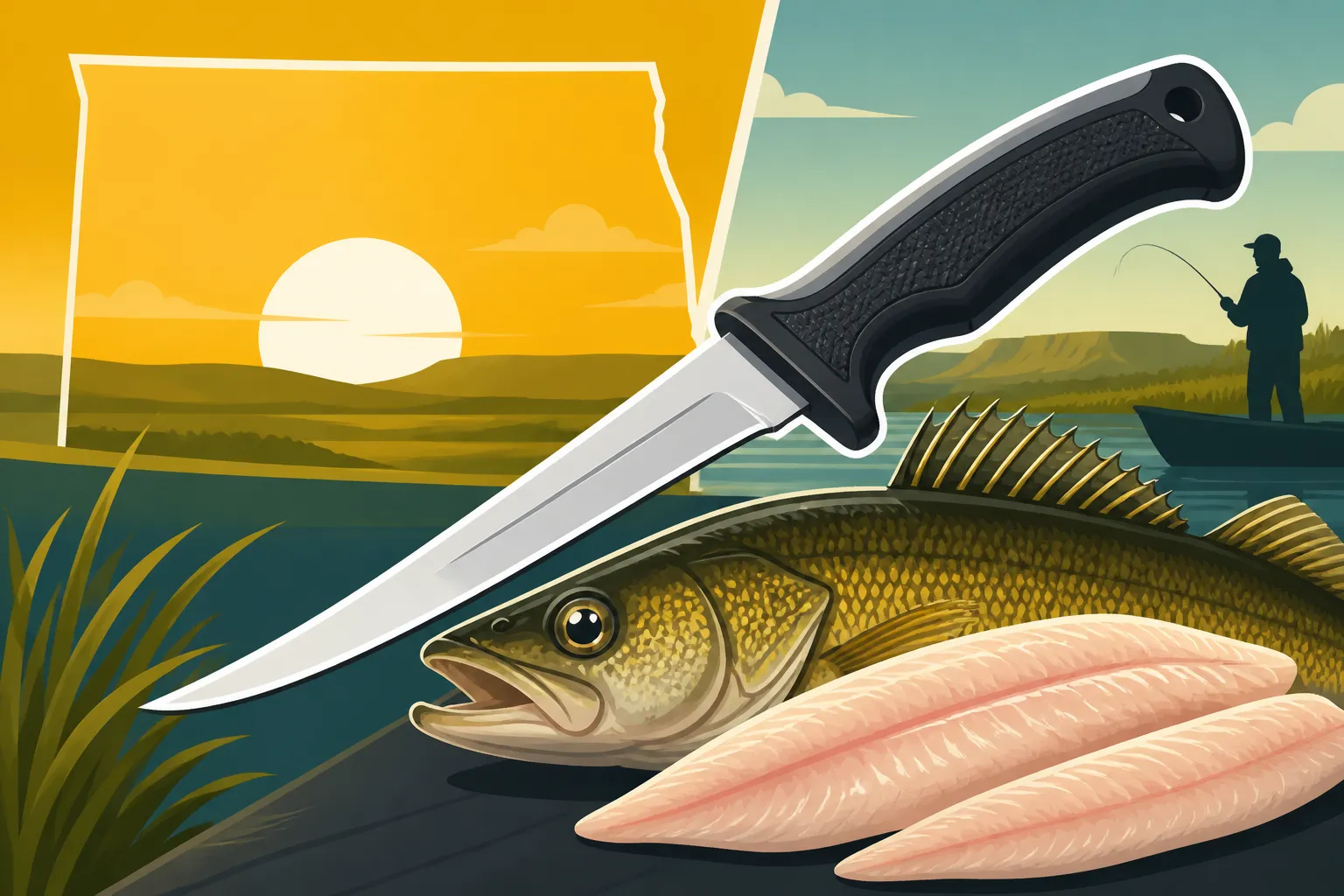
Best Fillet Knife for Walleye
If you've spent a glorious day out on the waters of Lake Sakakawea or Devils Lake, bringing home a cooler full of beautiful walleye, you know the true reward isn't just the catch—it's the delicious fillets waiting to be prepared. But let's be honest, nothing sours that post-fishing euphoria faster than struggling with a dull, clumsy knife that turns a simple task into a frustrating battle against bones and torn flesh. This guide is all about helping you conquer that challenge, diving deep into what makes a fillet knife truly exceptional for walleye and ensuring your cleaning station experience is as smooth as your cast.
Why the Right Fillet Knife Matters for Walleye
When you're dealing with North Dakota walleye, you're not just cutting through a generic piece of fish. You're working with a species known for its delicate, flaky white meat and a particular bone structure that demands precision. A run-of-the-mill kitchen knife simply won't cut it—literally. Investing in the right tool not only makes the job easier but also maximizes your yield, ensuring you get as much of that prized walleye meat as possible from every fish.
The Walleye Challenge: Bones and Fine Flesh
Walleye have a relatively fine bone structure and tender flesh that can easily be bruised or torn if not handled correctly. Unlike some larger, tougher fish, you can't just hack away at a walleye and expect pristine fillets. The goal is to glide the blade smoothly along the backbone, separating the meat cleanly and efficiently, while also navigating around the rib cage with minimal waste. Many anglers experience the frustration of leaving good meat on the frame because their knife was too stiff to follow the contours, or they ended up with a ragged fillet because the blade wasn't sharp enough or was too thick for the delicate task. It's a common story: you've spent all day perfecting your North Dakota Walleye Fishing Guide techniques, only to lose a significant portion of your catch to a poor filleting job.
Imagine trying to precisely remove the delicate pin bones or work around the rib cage with a heavy, inflexible blade. It’s like trying to paint a masterpiece with a broomstick! The unique anatomy of a walleye—its relatively slender body and the way its bones are set—requires a specific type of blade that can bend and flex to hug those contours. Without that flexibility, you're either going to leave meat behind or you're going to tear into the fillet, compromising its quality and presentation. It's a skill that takes practice, but even the most seasoned angler will tell you that the right tool makes all the difference in achieving those beautiful, boneless fillets.
Beyond Just "Sharp": What Makes a Fillet Knife Effective?
While sharpness is, without a doubt, the foundation of any good knife, a fillet knife for walleye needs more than just a keen edge. We're talking about a specialized tool designed for a very specific job. Think about it: you wouldn't use a hammer to drive a screw, right? The same principle applies here. An effective walleye fillet knife boasts a combination of blade flexibility, length, shape, and handle ergonomics that work together to provide optimal control and precision.
Consider the blade's profile: it's typically narrower and thinner than a standard kitchen knife, allowing it to easily slice through fish flesh without resistance. The flexibility is crucial for maneuvering around the spine and rib cage, ensuring you get every last bit of delicious meat. A rigid blade might be great for heavier cutting tasks, but for the nuanced work of filleting a walleye, it's a hindrance. Then there's the handle, which might seem like a secondary consideration, but it's paramount for both comfort and safety. A non-slip grip, especially when your hands are wet and slimy, prevents accidents and provides the control needed for delicate cuts. Without these specialized features, even the sharpest blade can't perform at its best, leaving you with less-than-perfect fillets and a lot of unnecessary effort.
Key Features to Look for in a Walleye Fillet Knife
Choosing the "best" fillet knife isn't about finding the most expensive one; it's about finding the one that best suits your needs, your hand, and the type of fish you're cleaning. For walleye, there are a few non-negotiable features that really elevate a knife from "okay" to "exceptional."
Blade Length and Flexibility
When it comes to filleting walleye, blade length is a critical factor. For the average walleye caught across North Dakota, from the smaller ones caught near shore to the larger specimens pulled from Best Fishing Lakes Near Bismarck, a blade length between 6 to 9 inches is generally ideal. A 6-inch blade offers excellent control for smaller fish or for making very precise cuts around delicate areas. If you're consistently catching larger walleye, say 20 inches or more, an 8-inch or even 9-inch blade might be more efficient for making long, sweeping cuts down the length of the fish. Too short, and you'll find yourself making multiple cuts, leading to a less clean fillet. Too long, and it becomes unwieldy and difficult to control, especially for beginners.
But length is only half the story; flexibility is arguably even more important for walleye. A good walleye fillet knife should have a thin, flexible blade that allows you to feel the bones as you work. This isn't about having a blade that wobbles like a wet noodle, but rather one that can bend and conform to the natural curves of the fish's skeleton. This flexibility enables you to hug the backbone tightly, minimizing wasted meat, and to meticulously separate the rib bones without tearing into the fillet. Without adequate flexibility, you'll be fighting the knife, not the fish, and you'll likely leave a lot of good meat attached to the frame. Look for blades described as "semi-flexible" or "flexible" rather than "stiff" for optimal walleye filleting.
Blade Material and Edge Retention
The material of your fillet knife blade dictates its sharpness, how long it holds an edge, and its resistance to corrosion. Most quality fillet knives are made from some form of stainless steel. Standard stainless steel is excellent for corrosion resistance, which is crucial when working around water and fish slime, but it might not hold its edge as long as higher-carbon varieties. High-carbon stainless steel offers a great balance, combining good rust resistance with superior edge retention, meaning you won't have to sharpen it as frequently during a filleting session. Essential Gear Checklist for North Dakota Fishing always includes a good knife, and part of that goodness comes down to the blade material.
Edge retention is a massive time-saver and a frustration-reducer. Imagine having to stop every other fish to re-sharpen your knife when you've got a cooler full of North Dakota Northern Pike Daily Limit of walleye to clean. A blade that holds a razor-sharp edge allows for consistent, clean cuts from the first fish to the last. While high-carbon steel might require a bit more attention in terms of drying and occasional oiling to prevent staining, the superior edge performance is often worth the extra care. Ultimately, a sharp knife is a safe knife, demanding less force and reducing the risk of slipping, which is a big concern when you're dealing with slippery fish and wet hands.
Handle Ergonomics and Grip
A fillet knife can have the sharpest, most flexible blade in the world, but if the handle isn't comfortable and secure, it's practically useless—and potentially dangerous. When your hands are cold, wet, or covered in fish slime after a successful day, a good grip is paramount. Look for handles made from materials like textured rubber, composite plastic, or even certain treated woods that provide a positive, non-slip hold. The handle should feel balanced in your hand, neither too heavy nor too light, and designed to minimize hand fatigue, especially if you're processing a large catch.
Ergonomics play a huge role in control and precision. A handle that molds naturally to your hand allows for finer motor control, which is essential for guiding the blade along the delicate contours of a walleye. Some handles feature finger grooves or specific textures that enhance grip, even when slick. Before committing to a knife, if possible, hold it in your hand and mimic the filleting motion. Does it feel secure? Does it feel comfortable? Are there any hot spots that might cause discomfort after a few fish? Manufacturers like Rapala and Bubba Blade often prioritize ergonomic handle designs, knowing that a secure grip translates directly to safer, more efficient filleting. You want a handle that gives you confidence, not one you're constantly worried about slipping out of your grasp.
Types of Fillet Knives for Walleye Anglers
Just as there are different ways to catch a walleye, there are different tools to clean them. Depending on your personal preference, the volume of fish you typically clean, and your budget, one type of fillet knife might be a better fit for you than another.
Manual Fillet Knives
The classic, manual fillet knife is a staple for many anglers, and for good reason. These are the knives you traditionally think of: a single blade, a handle, and all the cutting power comes from your own hand and skill. The biggest advantage of a manual knife is the unparalleled control and precision it offers. You can truly "feel" your way along the backbone and ribs, making minute adjustments to the blade's angle to maximize meat yield and create beautiful, clean fillets. For anglers who clean a few fish at a time or take pride in the craft of filleting, a good manual knife is often the preferred choice.
Manual knives don't require any power source, making them incredibly versatile. You can clean your fish on the boat, at the cleaning station at the campground, or right in your kitchen. They're typically less expensive than their electric counterparts, and they come in a vast array of blade lengths, flexibilities, and handle designs. Whether you're a beginner learning the ropes or a seasoned veteran who values the tactile feedback of the blade, a quality manual fillet knife is a foundational tool. Many highly-regarded brands offer excellent manual options that can be found at retailers like Bass Pro Shops or even a wide selection on Amazon, giving you plenty of choices to match your preferences. Just remember, a manual knife demands a sharp edge, so be prepared to keep it honed regularly.
Electric Fillet Knives
For many North Dakota anglers, especially those who come back from a successful outing with a substantial North Dakota Walleye Size Limit Explained full of fish, an electric fillet knife is an absolute game-changer. The primary benefit of an electric knife is speed and reduced effort. Instead of your arm doing all the work, a vibrating or reciprocating blade does the heavy lifting, making quick work of large numbers of fish. This can be a huge relief after a long day of fishing, preventing arm fatigue and getting you to the dinner table much faster.
Electric knives are particularly effective for consistent, straight cuts along the backbone, and they can make quick work of removing skin. While some anglers argue they offer less "feel" than a manual knife, leading to slightly less precise cuts or more wasted meat for very delicate species, for walleye, they are incredibly efficient. Modern electric fillet knives often come with different blade options, some more flexible than others, allowing for some customization. You can find both corded models (great for a dedicated cleaning station with power) and battery-powered cordless options (perfect for dockside cleaning or remote locations). Brands like Bubba Blade and Rapala offer popular electric fillet knife models that are widely used by walleye enthusiasts. If you're consistently processing significant catches, say after a full day fishing Lake Sakakawea Fishing Guide for North Dakota Anglers, an electric fillet knife might be the best investment to make your post-fishing chores a breeze.
| Feature | Manual Fillet Knife | Electric Fillet Knife |
|---|---|---|
| Control | High; excellent for precision and feel | Moderate; less tactile feedback, good for straight cuts |
| Speed | Slower; depends on skill and blade sharpness | Fast; significantly quicker for multiple fish |
| Effort | Requires more physical effort | Less physical effort, reduces fatigue |
| Portability | Highly portable; no power source needed | Varies; cordless models are portable, corded need outlet |
| Precision | Superior for delicate cuts and maximizing yield | Good for general filleting, can be less precise |
| Cost | Generally lower initial cost | Higher initial cost, but can save time |
| Maintenance | Regular sharpening and honing required | Blade cleaning, occasional battery charging if cordless |
| Best For | Anglers cleaning a few fish, valuing craftsmanship | Anglers processing large volumes, seeking efficiency |
Maintaining Your Walleye Fillet Knife
A high-quality fillet knife is an investment, and like any good tool, it performs best with proper care. Taking a few extra minutes to maintain your knife will ensure it stays sharp, safe, and ready for many seasons of North Dakota walleye.
Sharpening and Honing for Peak Performance
The old adage "a sharp knife is a safe knife" holds particularly true for filleting. A dull knife requires more force, increasing the risk of slips and accidents. Sharpening is the process of removing material from the blade to create a new, keen edge, while honing realigns an already sharp but bent edge. For a manual fillet knife, you'll want to regularly hone the blade, perhaps after every few fish or at the start of each filleting session, using a fine ceramic or steel honing rod. This keeps the edge perfectly aligned and extends the time between full sharpenings.
When the knife truly starts to feel dull, it's time for proper sharpening. There are many options available, from traditional sharpening stones (whetstones) that require a bit of practice to electric sharpeners that provide a consistent angle with minimal effort. Regardless of the method, aim for a consistent angle (typically between 15-20 degrees for a fillet knife) to achieve that razor-sharp edge. If you're using an electric fillet knife, the blades themselves will eventually dull and need replacing, though some can be sharpened. Regular maintenance ensures your knife glides effortlessly through the fish, making the whole process quicker and more enjoyable. Knowing How to Fillet a Northern Pike Without Bones (or a walleye) relies heavily on that consistently sharp edge.
Cleaning and Storage for Longevity
After each filleting session, thorough cleaning of your knife is crucial. Even stainless steel can rust or stain if left with fish residue, blood, or moisture. Always wash your fillet knife by hand with warm, soapy water immediately after use. Avoid putting it in the dishwasher, as the harsh detergents and high heat can damage the blade, dull the edge, and degrade handle materials over time. Pay special attention to cleaning around the handle and any crevices where gunk might accumulate.
Once clean, dry the blade completely with a towel. Moisture is the enemy of any metal blade. For storage, a protective sheath is highly recommended. This not only protects the blade from dulling by bumping into other utensils but also keeps you safe from accidental cuts. Many fillet knives come with a plastic or nylon sheath, which is perfectly adequate. Alternatively, a knife block or a magnetic strip can be used, as long as the blade isn't left exposed to potential damage or moisture. Proper cleaning and storage will prevent corrosion, maintain the integrity of the handle, and ensure your "best fillet knife for walleye" remains a reliable companion for years of North Dakota fishing adventures.
Disclaimer
This article is for general informational purposes only and does not constitute professional advice. Laws, prices and regulations vary by location and change over time. Consult a qualified professional for guidance on your specific situation.