Electric vs Manual Fillet Knife
You've just had a banner day out on Lake Sakakawea, reeling in a cooler full of walleye or perhaps a couple of impressive northern pike from Devils Lake. Now the hard work begins – cleaning that catch. For many anglers, this is where the joy can quickly turn into a chore, especially if you're wrestling with the wrong tools. Choosing between an electric fillet knife and a manual one can make a huge difference in how quickly and efficiently you process your fish, impacting everything from your arm fatigue to the quality of your fillets. This guide is here to break down the ins and outs of both options, helping you decide which knife will be your best companion for North Dakota's diverse fishing opportunities.
The Power and Precision of Electric Fillet Knives
Electric fillet knives have really changed the game for many anglers, especially those who find themselves cleaning a good number of fish after a successful outing. They take a lot of the strenuous work out of filleting, letting the motor do the heavy lifting.
How Electric Fillet Knives Work Their Magic
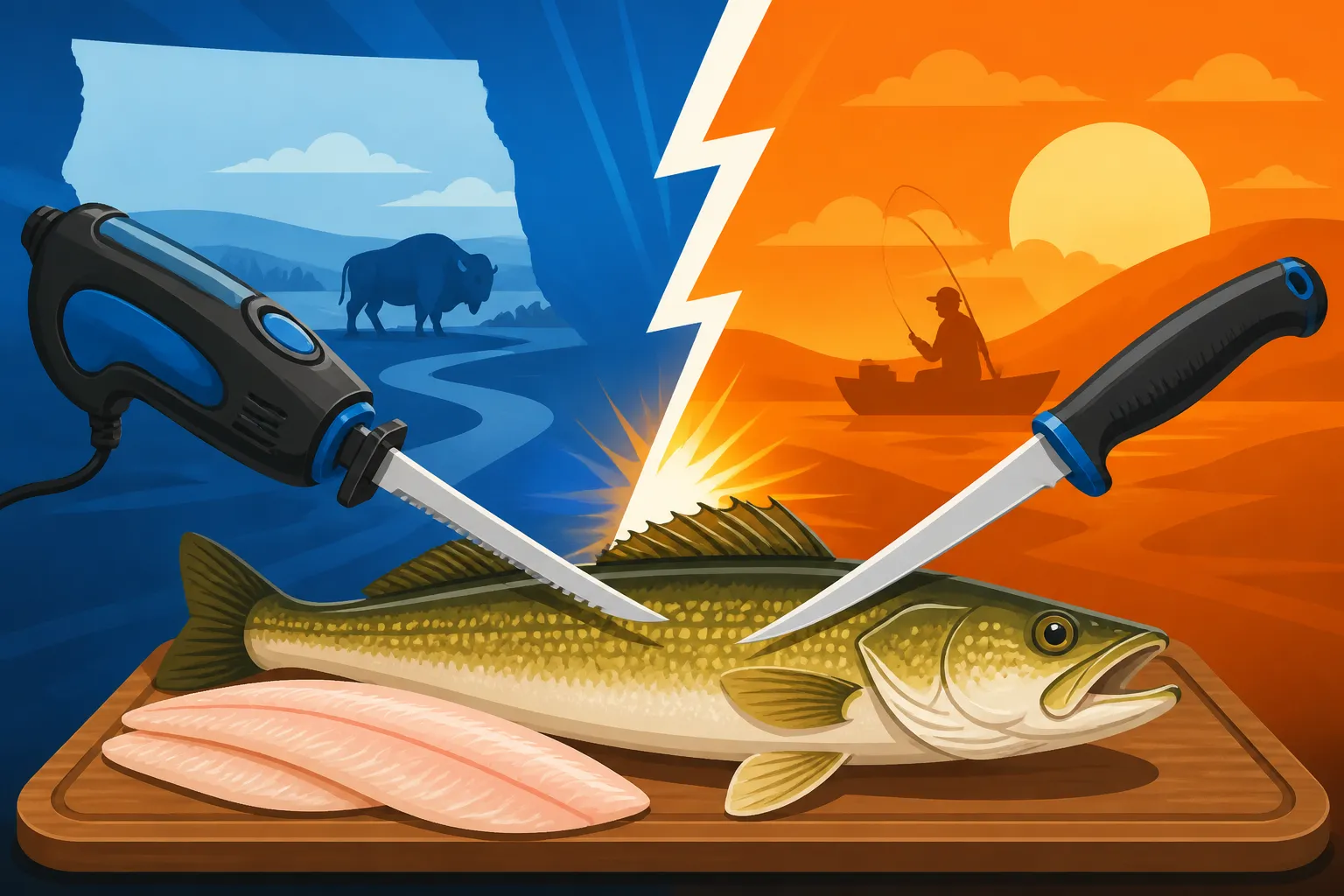
At its core, an electric fillet knife is essentially a small, motorized saw designed for precision work on fish. It uses a vibrating or reciprocating blade, powered by either a cord plugged into an outlet or a rechargeable battery. The blades are typically long and thin, with serrated edges that vibrate at high speeds, making quick work of tough scales, bones, and skin. You're not sawing with your arm; you're guiding the blade, letting the motor do the cutting. This can be a huge advantage when you're dealing with larger, tougher fish or a big pile of smaller ones. Imagine trying to get through the thick backbone of a sizable Lake Oahe catfish with a manual knife versus gliding through it with an electric one – the difference is night and day.
One of the biggest benefits here is consistency. Even if you're not a master at filleting, an electric knife can help you achieve relatively clean, uniform fillets with less effort. This means more meat for the table and less waste, which is something every angler appreciates after spending time and money out on the water. Many anglers swear by them for species like walleye, where getting clean fillets quickly is paramount. You can find a wide variety of models, from those designed for home use to heavy-duty, commercial-grade options, often available through retailers like Bass Pro Shops or online platforms like Amazon.
The Perks and Pitfalls of Going Electric
Like any tool, electric fillet knives come with their own set of advantages and disadvantages that are important to consider before you make a purchase.
The Upsides: Speed, Efficiency, and Less Fatigue
Let's be honest, after a long day of fishing, the last thing most of us want to do is spend another hour or two meticulously filleting fish by hand. This is where an electric knife truly shines. They are incredibly fast, reducing filleting time significantly. For example, cleaning a cooler full of a dozen perch from Devils Lake or five or six walleye from the Missouri River can go from a lengthy chore to a relatively quick task. The motor does most of the cutting, which translates to much less hand and arm fatigue. If you have any issues with grip strength, arthritis, or just want to save your hands for casting another day, an electric knife can be a game-changer.
They also make cleaning larger, bonier fish much easier. Think about a big northern pike – those Y-bones can be a real challenge for even seasoned anglers with a manual knife. An electric knife, with its powerful, oscillating blade, can often glide through these tougher spots with greater ease and precision. This means you're less likely to leave meat on the bone or accidentally cut yourself struggling with a particularly stubborn section. Plus, if you're processing fish at a cleaning station with access to power, the convenience is unparalleled.
The Downsides: Portability, Noise, and Maintenance
However, electric knives aren't without their drawbacks. The most obvious one is power. Corded models require an outlet, which isn't always available at a remote fishing access site or out on the ice. While battery-powered options solve this portability issue, they come with their own set of concerns: battery life, charging time, and the potential for the battery to die mid-fillet. Nobody wants to be halfway through cleaning a trophy North Dakota Northern Pike Fishing Guide only to have their battery give up the ghost. These units also tend to be bulkier and heavier than their manual counterparts, taking up more space in your tackle box or boat.
Another factor is the noise. Electric knives can be quite loud, which might not bother you in a noisy outdoor cleaning station, but could be a nuisance if you're filleting indoors or in a quieter environment. They also require a bit more maintenance than a manual knife. The blades need to be cleaned thoroughly after each use, and some parts might need occasional lubrication or replacement. While often easier to use, they can sometimes create more "sawdust" or fine fish particles during the filleting process, which might require a bit more rinsing. You also need to be very careful with the power cord if it's a corded model, ensuring it doesn't get wet or snagged.
The Art and Accessibility of Manual Fillet Knives
Before electric knives came along, every fish was cleaned with a trusty manual fillet knife, and for many anglers, it's still the preferred tool. There's an art to using a good manual knife, and it offers a level of control and feel that electric models simply can't match.
Understanding the Craft of Manual Filleting
A manual fillet knife is a testament to simplicity and skill. It's essentially a very sharp, flexible blade, usually made of stainless steel, attached to a comfortable handle. The flexibility of the blade is key, allowing you to follow the contours of the fish's spine and ribs with precision, separating the meat from the bone without wasting precious fillets. Mastering a manual knife takes practice, a good eye, and a steady hand. It's about feeling the bones, guiding the blade with subtle pressure, and making clean, smooth cuts.
For many, using a manual knife is part of the ritual of fishing. There's a satisfaction that comes from expertly filleting a fish with your own hands, producing perfect, boneless cuts. It's also incredibly versatile – you can adjust your technique on the fly depending on the species, size, and even the temperature of the fish. Whether you're cleaning delicate perch or larger walleye, a skilled hand with a sharp manual knife can produce fantastic results. This kind of knife is often found in every angler's Essential Gear Checklist for North Dakota Fishing.
The Good and the Gritty of Manual Knives
Manual fillet knives have stood the test of time for good reason, but they aren't always the perfect solution for every angler or every situation.
The Advantages: Control, Portability, and Quiet Efficiency
The number one advantage of a manual fillet knife is the unparalleled control it offers. You feel every bone, every shift in resistance, allowing for incredibly precise cuts. This level of feedback helps you maximize your yield, ensuring you get as much clean meat off the fish as possible. Many professional guides and experienced anglers prefer manual knives for this reason, believing they can get a cleaner, higher-quality fillet, especially from species like a big North Dakota Walleye Fishing Guide.
Manual knives are also inherently portable. There are no cords to worry about, no batteries to charge, and they are typically much lighter and more compact than electric models. You can easily slip one into a tackle box or even a pocket, making it ideal for shore fishing, kayak fishing, or remote ice fishing trips where power is scarce. They are also silent, which is a nice bonus when you're enjoying the quiet solitude of nature or working early in the morning. Maintenance is generally simpler too; a good wash, a quick dry, and maybe a regular sharpening are usually all that's needed. How to Winterize Fishing Gear After the Season is a good time to sharpen your blades.
The Disadvantages: Effort, Skill, and Slower Processing
The biggest drawback of manual fillet knives is the physical effort and skill required. Cleaning a large number of fish, say after a successful run of North Dakota Yellow Perch Fishing Guide, can quickly become exhausting. Your hands and wrists can cramp up, and if your knife isn't razor-sharp, the task becomes even more arduous. Achieving clean, boneless fillets consistently takes practice and a certain level of dexterity that not everyone possesses or wants to develop.
For beginners, or those who only clean fish occasionally, the learning curve can be frustrating. You might end up with ragged fillets, leave a lot of meat on the bones, or even cut yourself trying to force the blade. Cleaning tougher fish, like a mature channel catfish, can be especially challenging, as their thick skin and robust bones demand significant force and a very sturdy blade. The overall processing time is almost always longer with a manual knife compared to an electric one, which can be a real consideration if you're dealing with a large catch or trying to get the fish on ice quickly to maintain freshness.
Choosing Your Weapon: Electric vs. Manual in North Dakota Scenarios
So, how do you decide which type of fillet knife is right for your North Dakota fishing adventures? It really boils down to your personal preferences, the types of fish you target, and where you'll be doing most of your cleaning.
The Great Fillet Knife Showdown: A Comparison
Let's lay out the key differences side-by-side to help you visualize the choice.
| Feature | Electric Fillet Knife | Manual Fillet Knife |
|---|---|---|
| Speed | Very fast, ideal for high volume | Slower, depends on skill and fish size |
| Effort/Fatigue | Very low, motor does the work | High, especially with many or large fish |
| Skill Required | Lower learning curve for basic filleting | High, requires practice for clean fillets |
| Portability | Varies (corded less, battery-powered more portable) | Excellent, lightweight, no power needed |
| Noise | Can be loud | Silent |
| Precision/Feel | Less direct control, can be powerful but less nuanced | High, excellent feel for bones and contours |
| Maintenance | Blades, motor, battery care (if applicable) | Sharpening, washing, drying |
| Cost | Generally higher initial investment | Generally lower initial investment |
| Best For | Large volumes, tough fish, reducing fatigue | High precision, portability, quiet environments, learning |
Situational Selection for North Dakota Anglers
Think about a few common North Dakota fishing scenarios to guide your decision:
- You're at a busy cleaning station at Garrison Bay on Lake Sakakawea: If you have access to power, an electric knife is often the king here. You can process a limit of walleye and some hefty northern pike quickly and efficiently, then get them into one of your Best Coolers for Keeping Fish Fresh without holding up the line. The noise isn't an issue, and you'll appreciate saving your arms.
- You're ice fishing on a remote corner of Devils Lake: Here, portability is paramount. A manual knife is your go-to. You can clean a few perch or a walleye right on the ice, or easily transport your catch back to a heated ice house or cabin. If you have a portable power station, a battery-powered electric knife could work, but you'll need to monitor battery life closely. This is where a good Best Fillet Knives for Walleye and Pike for ice fishing comes in handy.
- You're bank fishing on the Red River for channel catfish: Catfish can be tough to clean, with thick skin and robust bones. If you're only catching a couple, a super sharp, sturdy manual knife might be fine, offering that control for the skinning process. However, if you hit a hot bite and have several big ones, a battery-powered electric knife or bringing a corded one to a location with power would significantly ease the burden. Remember to check out How to Clean a Channel Catfish for tips.
- You're a beginner angler learning the ropes: Starting with a high-quality manual knife can really help you learn the anatomy of a fish and develop the "feel" for filleting. It's a foundational skill. Once you're comfortable, you might graduate to an electric knife for speed, but knowing how to use a manual one is invaluable. It’s a core piece of your Complete Beginner Gear List for North Dakota Fishing.
Ultimately, many seasoned North Dakota anglers find themselves owning both. A high-quality manual knife for those precise, delicate jobs or when power isn't available, and a powerful electric knife for volume, speed, or when tackling larger, tougher species like How to Fillet a Northern Pike Without Bones. Consider what kind of fish you typically catch, how many, and where you do your cleaning to make the best choice for your personal fishing style.
Caring for Your Fillet Knives
No matter which type of fillet knife you choose, proper care is essential to ensure its longevity and performance. A dull knife, whether electric or manual, is not only inefficient but also dangerous.
Keeping Blades Sharp and Ready
For manual knives, regular sharpening is non-negotiable. Invest in a good quality sharpening stone, ceramic rod, or even an electric knife sharpener designed for fillet blades. A few quick passes before and after each use can keep your blade in prime condition. There are many guides and videos out there on how to achieve a razor edge. Always test the sharpness before starting to fillet – a truly sharp blade will slice paper easily.
Electric knife blades also need to be maintained. While they don't require traditional sharpening in the same way, the individual blades can dull over time, especially if you hit bone frequently. Many electric knives come with replaceable blade sets, so it’s a good idea to have spares on hand. You can often find replacement blades from manufacturers or through retailers like Amazon or Bass Pro Shops. Replacing them periodically will ensure your knife continues to perform at its best.
Cleaning and Storage for Longevity
After every use, both electric and manual knives need thorough cleaning. Fish guts and scales can dry and stick to the blade, handle, and even the motor housing of an electric knife, leading to odors and potential hygiene issues.
For manual knives, a good wash with warm, soapy water immediately after use is usually sufficient. Pay attention to the area where the blade meets the handle, as this can be a common spot for residue to accumulate. Dry the knife completely before storing it to prevent rust, especially with high-carbon steel blades (though most modern fillet knives are stainless steel). Store it in a sheath or a knife block to protect the blade and prevent accidental cuts.
Electric knives require a bit more attention. Always unplug a corded model, or remove the battery from a cordless one, before cleaning. Detach the blades and wash them separately with warm, soapy water. The handle and motor unit should be wiped down with a damp cloth, making sure not to immerse the motor in water. Allow all components to dry completely before reassembling or storing. Proper storage, away from humidity and protected from impact, will extend the life of your investment.
Disclaimer
This article is for general informational purposes only and does not constitute professional advice. Laws, prices and regulations vary by location and change over time. Consult a qualified professional for guidance on your specific situation.