Best Fillet Knives for Walleye and Pike
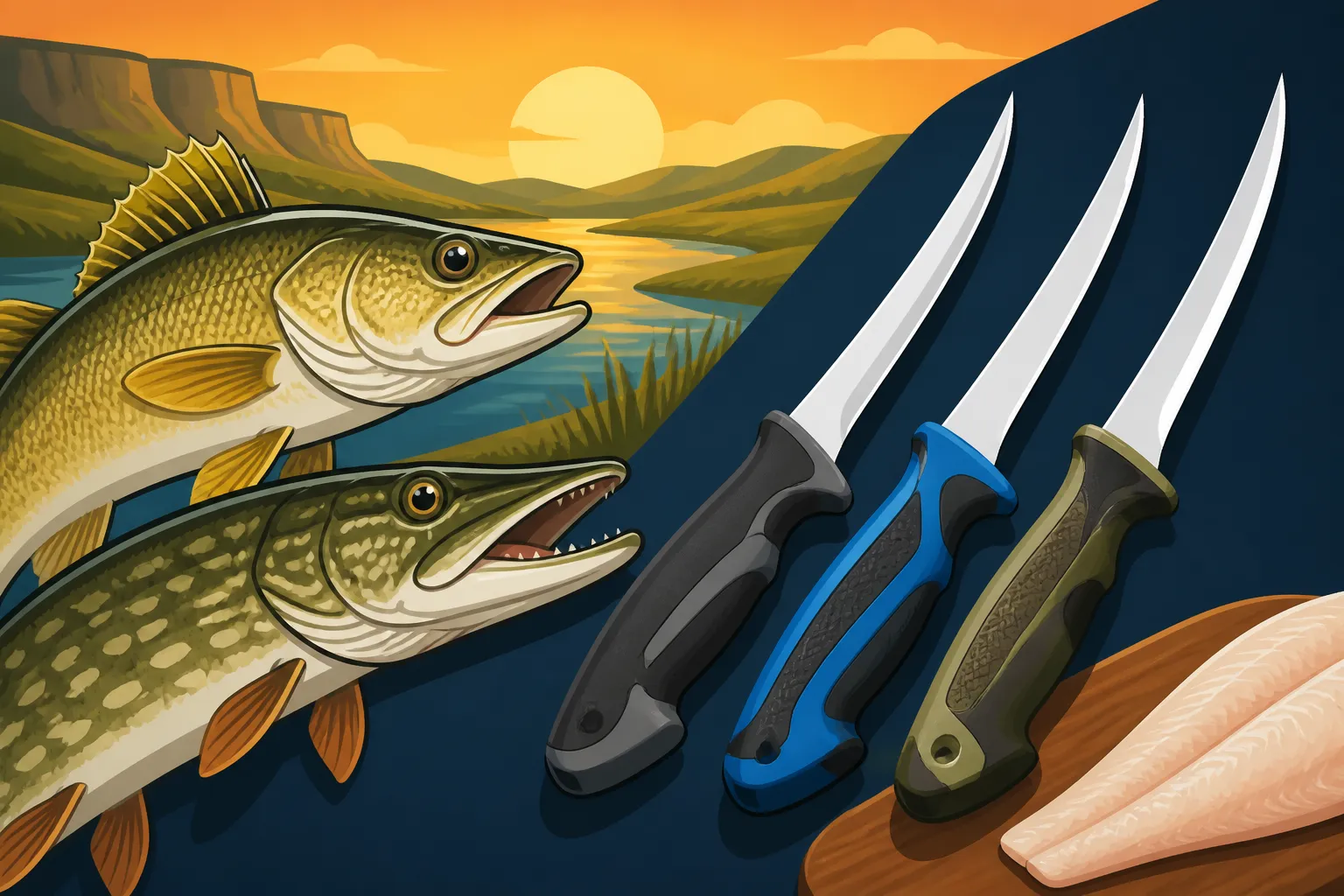
There’s nothing quite like a successful day out on the waters of Lake Sakakawea or Devils Lake, bringing home a cooler full of beautiful walleye or a massive northern pike. But the joy of the catch can quickly turn into a chore when it comes to cleaning your fish, especially if you’re struggling with a dull or ill-suited knife. This guide is here to help you navigate the world of fillet knives, ensuring you have the perfect tool for processing your North Dakota walleye and pike efficiently and safely.
Why a Dedicated Fillet Knife is Essential for Walleye and Pike
Many anglers, especially beginners, make the mistake of trying to fillet their catch with a regular kitchen knife or even a general-purpose hunting knife. While these might get the job done in a pinch, they often lead to frustration, wasted meat, and even an increased risk of injury. Walleye and northern pike, with their distinct anatomies, really demand a specialized tool to maximize your yield and make the cleaning process enjoyable rather than daunting.
Preserving Precious Meat and Preventing Waste
Imagine carefully reeling in a gorgeous 20-inch walleye from the Missouri River, only to lose a significant portion of its delicate fillets to a knife that’s too thick or simply not sharp enough. It’s disheartening! A dedicated fillet knife, with its thin, flexible blade, allows you to hug the bone structure much more closely. This precision is absolutely crucial, especially when dealing with the subtle contours of a walleye rib cage or working around the dense Y-bones of a northern pike. Using the right knife means you're maximizing every bit of that delicious protein, making your hard-earned catch go further. It’s not just about getting the meat off the bone; it’s about getting all the meat off the bone, leaving behind a clean carcass. This is particularly important when you're adhering to North Dakota Walleye Size Limit Rules or other harvest regulations, as you want every legal fish to provide its maximum yield.
Enhancing Safety and Reducing Effort
Let's be honest, cleaning fish can be slippery business. When you're using a dull knife or one that doesn't fit your hand well, you naturally apply more force. More force, combined with a slippery fish and a less-than-ideal blade, is a recipe for an accident. A sharp, well-designed fillet knife glides through flesh with minimal effort, reducing the chance of the blade slipping and cutting you instead of the fish. Think about it: a sharp knife is a safe knife because it requires less pressure to perform its task. The ergonomic handles on many modern fillet knives are also designed to provide a secure grip even when wet or slimy, further enhancing your safety. It transforms the often arduous task of fish cleaning into a smooth, efficient operation, letting you focus on the technique rather than battling your tools.
Key Features to Look For in a Quality Fillet Knife
When you start looking at fillet knives, you'll quickly realize there's a huge variety out there. It's not just about picking the sharpest one you see; it's about finding the one that best suits your hands, the fish you typically catch, and your filleting style. Consider these critical features before making your choice.
Blade Material and Sharpness Retention
The heart of any good fillet knife is its blade. Most quality blades are made from either high-carbon stainless steel or stainless steel. High-carbon stainless steel offers an excellent balance of sharpness, edge retention, and corrosion resistance. It holds an edge beautifully, meaning fewer interruptions for sharpening during a long filleting session, and it resists rust, which is vital in a wet environment. Stainless steel is also a good option, often more affordable, but might require more frequent sharpening to maintain a razor-sharp edge. The sharpness right out of the box is important, but how well it retains that sharpness after several fish is what truly sets a great knife apart. When you're dealing with the tougher skin and scales of a large pike, or the delicate flesh of a walleye, a blade that stays keen will make all the difference. You can often find a good selection of knives and sharpening tools at sporting goods stores like Bass Pro Shops or online at Amazon.
Blade Length and Flexibility
This is where things get really specific to walleye and northern pike.
- Blade Length: For most walleye, a blade in the 6 to 7.5-inch range is usually ideal. It's long enough to make clean cuts along the backbone without needing multiple passes, but not so long that it becomes unwieldy for smaller fish. For bigger northern pike, especially those pushing into the trophy sizes, you might want to consider a longer blade, perhaps 8 to 9 inches, to handle their larger body cavity and length. However, too long a blade can hinder precision.
- Flexibility: Walleye, with their relatively thin bodies and delicate rib cages, benefit greatly from a flexible blade. A flexible blade allows you to bend and contour it along the fish's spine and ribs, maximizing meat removal and getting those clean, boneless fillets. For pike, while flexibility is still useful for cleaning around the Y-bones, a slightly stiffer blade can be advantageous for slicing through their tougher skin and larger body mass. A moderately flexible blade is often a good compromise for anglers targeting both species, as discussed in detail in Best Fillet Knives for Walleye.
Handle Design and Ergonomics
A knife is only as good as how comfortably and securely you can hold it. The handle design is paramount for safety and comfort, especially when your hands are wet or covered in fish slime. Look for handles made from non-slip materials like textured rubber or certain synthetic polymers. These materials provide excellent grip, even in less-than-ideal conditions. The ergonomic shape is also crucial; it should fit naturally in your hand, preventing fatigue and allowing for precise control. Some handles even feature finger grooves or guards to prevent your hand from slipping onto the blade. A comfortable, secure grip means you have better control over the blade, translating to cleaner fillets and a safer filleting experience.
Manual vs. Electric Fillet Knives
When it comes to the act of filleting, you essentially have two main categories of knives to choose from: the traditional manual knife and the increasingly popular electric fillet knife. Both have their dedicated fan bases and specific applications where they shine. Understanding the pros and cons of each will help you decide which is the right tool for your North Dakota fishing adventures.
Manual Fillet Knives: Precision and Portability
The manual fillet knife is the classic choice, and for good reason. It offers unparalleled precision, allowing skilled anglers to feel the bone structure and guide the blade with incredible accuracy. This tactile feedback is invaluable when you're trying to extract every last bit of meat from a walleye or meticulously work around the tricky Y-bones of a northern pike. They are also incredibly portable, lightweight, and don't require any power source, making them ideal for cleaning fish dockside, at a remote cabin, or even right on the ice during How to Ice Fish in North Dakota. While manual knives demand a bit more skill and practice to master, they are generally more durable and require less maintenance than their electric counterparts. A good manual knife, with proper sharpening, can last a lifetime. Learning to use one effectively is a skill that pays dividends for years.
Electric Fillet Knives: Speed and Ease
Electric fillet knives are a game-changer for many anglers, especially when you're faced with a pile of fish to clean after a successful day out on Lake Sakakawea. Their vibrating or reciprocating blades do most of the work for you, making quick and effortless cuts through even tough fish. They significantly reduce the physical effort and fatigue associated with filleting, allowing you to process many fish in a fraction of the time it would take with a manual knife. This speed is a huge advantage for larger catches or when fishing with a group. While they may sacrifice a tiny bit of the fine precision a master can achieve with a manual knife, modern electric fillet knives are incredibly efficient at removing fillets with minimal waste. They come in both corded and cordless options, with cordless versions offering greater flexibility for use away from power outlets, though you'll need to keep batteries charged. They're particularly helpful for species like northern pike, where their power can easily handle the tough skin and bones.
| Feature | Manual Fillet Knife | Electric Fillet Knife |
|---|---|---|
| Precision | High, with tactile feedback | Good, but less fine-tuned tactile feel |
| Speed | Moderate, depends on skill and fish size | Very High, significant time savings |
| Effort | Requires more physical effort and skill | Minimal physical effort, easy to use |
| Portability | Excellent, no power source needed | Good (cordless) to limited (corded), requires power |
| Maintenance | Sharpening, cleaning | Blade replacement, cleaning, battery charging |
| Best For | Anglers valuing precision, smaller catches, remote use | High volume cleaning, larger fish, reducing fatigue |
| Skill Level | Requires practice to master | Easy for beginners to pick up |
Choosing the Right Knife Specifically for Walleye
Walleye are North Dakota's most prized game fish, and their delicate, flaky white meat is highly sought after. Filleting them correctly ensures you get the most out of every catch. The right knife makes all the difference in achieving those beautiful, boneless fillets.
Ideal Blade Length and Flexibility for Walleye
When targeting walleye, whether you're pulling them from Devils Lake or the Sheyenne River, the sweet spot for a fillet knife blade length is typically between 6 to 7.5 inches. This length provides enough reach to go from head to tail in one smooth pass on most average-sized walleye, while still being short enough to maintain excellent control for smaller fish. More importantly, walleye filleting truly benefits from a blade with significant flexibility. A flexible blade, like those commonly found in quality fillet knives, allows you to effortlessly follow the contour of the fish's spine and ribs. This means you can scrape every bit of meat from the bones, leaving a perfectly clean carcass and maximizing your yield. Trying to use a stiff blade on a walleye often results in jagged cuts, missed meat, and general frustration. This characteristic is precisely why some anglers might carry a specific knife for walleye and another for other species, emphasizing how crucial the right tool is for the job. You’ll find a great selection of flexible blade knives at your local Bass Pro Shops or online platforms like Amazon.
Techniques for Maximizing Walleye Fillet Yield
With the right flexible knife in hand, you can truly master the art of filleting walleye. Start by making a cut behind the pectoral fin down to the backbone, but not through it. Then, turn your knife and run it along the backbone towards the tail, letting the flexible blade do the work of separating the meat from the bone. The key is to keep the blade pressed firmly against the bone structure. Once you reach the tail, you can either cut the fillet off completely or leave a small piece of skin attached to help you skin the fillet. For skinning, lay the fillet skin-side down, grip the tail end, and run your knife at a shallow angle between the skin and the meat. Again, the flexibility of the blade helps you maintain that angle, preventing you from cutting into the skin or leaving too much meat on it. It’s a technique that becomes almost second nature with practice, ensuring you get those picture-perfect, boneless walleye fillets ready for the pan. This skill is valuable whether you're targeting big walleye on Lake Sakakawea Walleye Fishing Spots or smaller ones in a local pond.
Choosing the Right Knife Specifically for Northern Pike
Northern pike, with their formidable size, tough skin, and notorious "Y-bones," present a unique filleting challenge. While their meat is delicious, many anglers are intimidated by the cleaning process. However, with the right knife and technique, those Y-bones become much less of a headache.
Blade Characteristics for Handling Pike's Toughness
Northern pike demand a knife that can handle their robust anatomy. For pike, especially the larger ones, a slightly longer blade, in the 8 to 9-inch range, is often preferred. This length gives you the leverage and reach to make long, continuous cuts along their substantial backbone. While some flexibility is still good for working around bones, a blade that is too flexible might struggle with the tougher skin and thicker flesh of a large pike. Therefore, look for a blade that offers a good balance of stiffness and flexibility – enough backbone to push through the initial cuts, but still pliant enough to navigate the Y-bone structure. The sharpness and edge retention, as mentioned before, become even more critical here, as a dull blade will simply not cut it (pun intended!) against the pike's resilient hide. Remember, proper sharpening is key, as covered in Best Fillet Knives for Walleye and Pike.
Navigating the Y-Bones: Specialized Techniques
The Y-bones are the bane of many pike anglers, but they don't have to be. There are specialized filleting techniques that, combined with the right knife, make removing them straightforward. After you've removed the main fillet from the backbone, you'll notice a line of small, hard Y-bones running through the upper portion of the fillet. Instead of trying to cut through them, you cut around them.
One common method involves making two parallel cuts, one above and one below the line of Y-bones, creating a V-shaped channel. Then, simply slice out the strip of meat containing the Y-bones. You'll be left with two boneless strips of pike meat. Another technique, often called the "five-cut method," involves making a series of precise cuts to separate the Y-bone section from the boneless meat. This is where a slightly stiffer blade, maybe 7.5 to 8 inches, can actually help provide the control needed for these precise incisions. It might seem daunting at first, but with a bit of practice and a good, sharp knife, you'll be processing pike fillets like a pro, making the most of your catch from great pike waters like Trophy Northern Pike Waters in North Dakota.
Maintaining Your Fillet Knife for Longevity and Performance
Having the best fillet knife is only half the battle; keeping it in top condition is what truly ensures years of reliable performance. A well-maintained knife is not only more effective but also safer to use. Just like you'd meticulously care for your fishing reels or Best Boats for North Dakota Lakes, your fillet knife deserves the same attention.
Sharpening for Optimal Performance
A dull knife is not only frustrating but dangerous. The most critical aspect of fillet knife maintenance is regular sharpening. You don't need a professional sharpener every time; a good quality knife sharpener, like a ceramic rod, whetstone, or even a handheld sharpener, is usually sufficient for touch-ups. After every few fish, or certainly after each filleting session, give your blade a few passes. The goal isn't to create a new edge every time, but to maintain the existing one. For knives that have truly lost their edge, a coarser grit stone followed by a finer one will restore it. Always follow the manufacturer's instructions for your specific sharpener to ensure you maintain the correct angle. Investing in a quality sharpening system is just as important as the knife itself, and you can find many options at outdoors retailers or on Amazon. Remember, a truly sharp blade should glide through fish flesh with minimal resistance, making the entire filleting process smoother and more enjoyable.
Cleaning and Storage Best Practices
After the hard work of filleting is done, proper cleaning and storage are essential to prevent corrosion and damage.
- Cleaning: Immediately after use, wash your fillet knife thoroughly with warm, soapy water. Pay close attention to the blade and the junction where the blade meets the handle, as fish residue can accumulate there and lead to unpleasant odors or even bacterial growth. Rinse it completely and then immediately dry it by hand with a clean cloth. Air drying, especially in humid conditions, can lead to water spots and rust, even on stainless steel blades.
- Storage: Once clean and dry, store your knife properly. Many fillet knives come with a sheath, which is ideal for protecting the blade and preventing accidental cuts. If your knife doesn't have a sheath, consider purchasing a universal one or a knife block designed for thin blades. Avoid tossing it loosely into a tackle box or drawer where the blade can get dulled, chipped, or pose a safety risk. Proper storage also means keeping it away from excessive moisture or extreme temperature fluctuations. Taking these simple steps will ensure your fillet knife is always ready for your next successful North Dakota fishing trip.
Disclaimer
This article is for general informational purposes only and does not constitute professional advice. Laws, prices and regulations vary by location and change over time. Consult a qualified professional for guidance on your specific situation.