Best Cooler Size for a Day of Fishing
There’s nothing quite as frustrating as reeling in a beautiful walleye or a chunky perch on a fantastic North Dakota fishing day, only to realize your cooler is either overflowing already or so tiny you can barely fit a sandwich, let alone your catch. Choosing the right cooler for a single day on the water might seem simple, but it can significantly impact your comfort, the freshness of your fish, and your overall enjoyment. This guide will walk you through everything you need to consider to pick the perfect cooler size for your next North Dakota fishing adventure.
Why Cooler Size Matters More Than You Think
Anglers often overlook the seemingly mundane detail of cooler size, only to be hit with regret mid-trip. It's more than just a box for ice; it's a critical piece of gear that directly affects your experience, whether you're out for a quick few hours or a full sunrise-to-sunset marathon.
The Frustration of Too Small
Imagine this: you've hit a hot bite on Devils Lake, perch are practically jumping into the boat, and you're having an absolute blast. You open your cooler, ready to stash your latest catch, only to find it's already crammed with drinks, your lunch, and a couple of smaller fish from earlier. Now you're faced with a dilemma: do you try to jam them in, potentially bruising your prized catch, or do you start throwing ice and food overboard? Neither is a great option. A cooler that's too small forces difficult compromises, can lead to spoiled food, and worst of all, can mean you have to stop fishing just when things are getting good because you've run out of space for your keepers. It's a common scenario, especially when those North Dakota fish decide to cooperate!
The Burden of Too Large
On the flip side, bringing a cooler that's excessively large for a day trip can be just as much of a headache, albeit a different kind. Picture lugging a massive 100-quart cooler designed for multi-day camping or a guided charter, just for a solo afternoon of shore fishing on Lake Audubon. It's heavy when empty, and an absolute beast when filled with ice and a few sodas. It takes up valuable space in your truck bed, boat, or even your kayak. Plus, a cooler that's too big means you'll need significantly more ice to keep its contents cold, which adds to the weight and expense. You're essentially paying to cool a lot of empty air, and that's not exactly efficient or enjoyable when you're trying to keep things streamlined for a simple day trip.
Factors to Consider When Choosing Your Day Trip Cooler
Selecting the right cooler isn't a one-size-fits-all proposition. It really boils down to a few key variables that are unique to your specific fishing plans. Thinking through these points before you buy or pack can save you a lot of hassle.
How Many Fish Are You Hoping to Keep?
This is arguably the most crucial question. North Dakota is home to some incredible fishing, and bag limits can vary greatly depending on the species and the specific body of water. Are you targeting walleye on Lake Sakakawea, where you might be keeping several nice-sized fish? Or are you planning to jig for panfish, like yellow perch, on a smaller lake, where you could potentially keep a larger number of smaller fish? For example, the daily limit for walleye might be five, but for yellow perch, it could be much higher. You'll want to check the North Dakota Fishing Regulations Explained for specific limits.
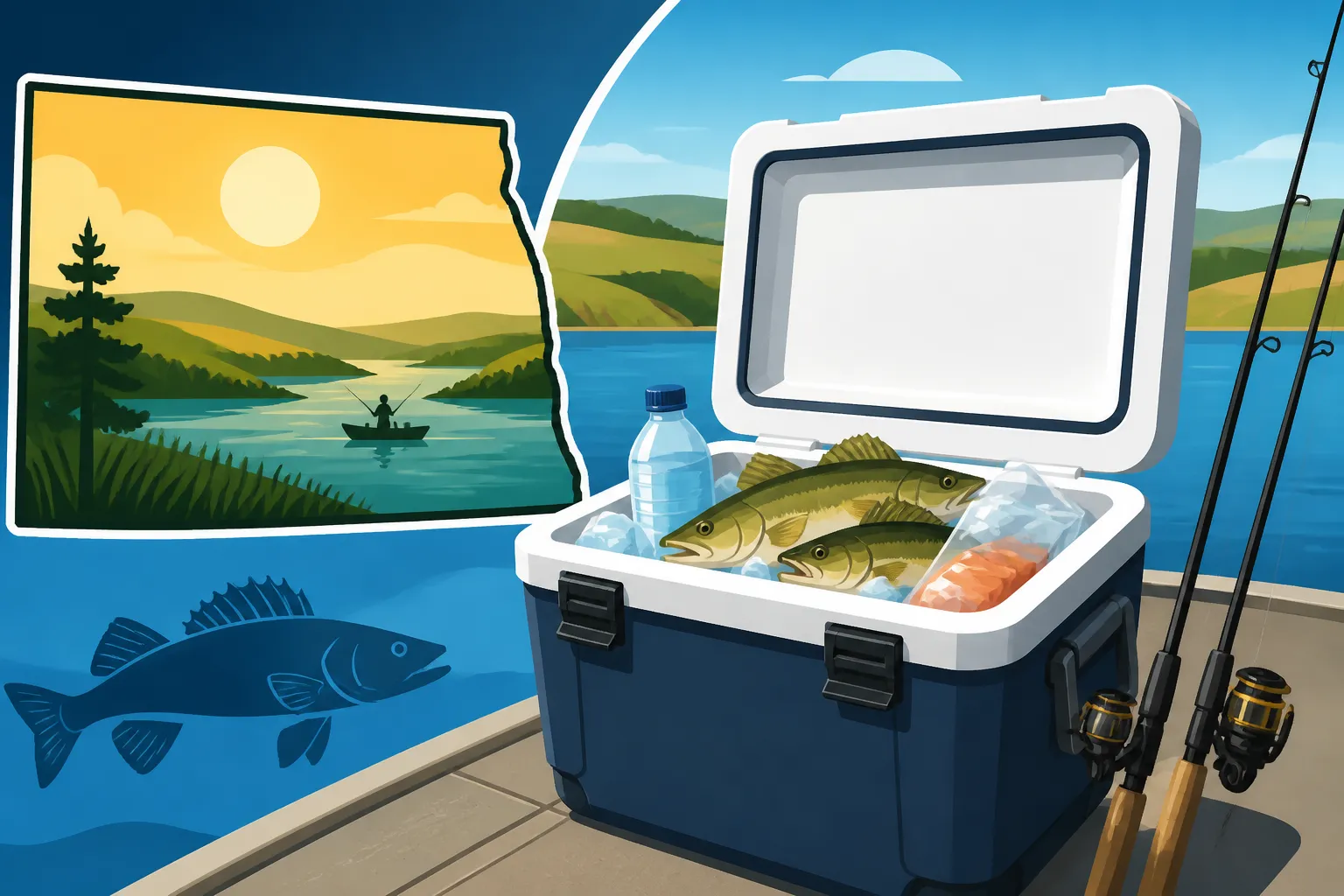
Consider the size of the fish you're realistically expecting. A 20-inch walleye takes up more space than a 10-inch perch. If you're aiming for larger species like northern pike, a couple of those can quickly fill a medium-sized cooler. Overestimating your catch is always better than underestimating, but aim for realism to avoid lugging around unnecessary bulk. A good rule of thumb is to allow roughly 1 to 1.5 quarts of cooler space per pound of fish, but remember fish are bulky, not perfectly compressible.
How Long Will Your Fishing Day Be?
Are you heading out at dawn and not returning until after sunset, or are you just planning a quick few hours on the water? The duration of your trip directly impacts how long your ice needs to last and, consequently, how much space you need for ice. A quick morning trip might only require a small amount of ice and a compact cooler. However, if you're out for 8-10 hours under the summer sun, especially on a large, open body of water like Lake Sakakawea, you'll need a cooler with excellent insulation and enough capacity for plenty of ice to keep your catch perfectly chilled. This is particularly vital for preserving the quality of your fish, especially during warmer months.
What Else Are You Packing?
Most people don't just put fish in their cooler. You've got lunch, snacks, drinks, and often, bait. Live minnows or worms need to stay cool to stay lively, especially if you're planning to use them for Best Live Bait for North Dakota Walleye. If your cooler is pulling double duty for provisions and your catch, you need to factor that into your size calculations. A family outing, for instance, might mean a lot more snacks and drinks than a solo trip, potentially requiring a split cooler setup or a larger single cooler. Don't forget any sauces or condiments for that shore lunch!
Your Fishing Style and Transportation
How are you getting to and from your fishing spot, and what kind of fishing are you doing?
- Boat Anglers: If you have a larger boat, like those common on Lake Sakakawea or Devils Lake, you might have more flexibility with cooler size. Many boats have dedicated storage spots, or enough deck space for a larger cooler. However, even on a boat, you don't want a cooler that's constantly underfoot or too heavy to move safely. Consider if it needs to fit under a seat or in a specific compartment.
- Shore Anglers: Mobility is key for shore fishing. A cooler that's easy to carry from your vehicle to your spot on the bank is paramount. Think about coolers with wheels or comfortable shoulder straps. You're not going to want to drag a 70-quart behemoth across uneven terrain. Best Bank Fishing Spots in North Dakota often require a bit of a walk.
- Kayak/Canoe Anglers: Space is at an absolute premium in a kayak or canoe. You'll need a compact, often longer and narrower cooler that fits securely in the hull or on the deck without impeding your paddling or casting. Soft-sided coolers can be a fantastic option here for their flexibility and lighter weight, especially when you're considering Best Kayaks for North Dakota Fishing.
Common Cooler Sizes and Their Best Uses for North Dakota Fishing
Let's break down some common cooler size categories and see how they stack up for typical North Dakota fishing scenarios. Remember, cooler capacities are usually measured in quarts.
| Cooler Size Category | Typical Quart Range | General Capacity | Ideal North Dakota Fishing Use Case |
|---|---|---|---|
| Small | 15-25 Quarts | 10-20 Cans | Solo short trips, lunch & drinks only, small panfish catch, bait cooler |
| Medium | 30-50 Quarts | 25-40 Cans | Day trip for 1-2 anglers, moderate walleye/pike catch, family outing with food/drinks |
| Large | 60-80 Quarts | 50-70 Cans | Day trip for 2-4 anglers, multiple species limits, longer trips, combined food/fish storage |
| Extra Large | 90+ Quarts | 75+ Cans | Multi-day trips, commercial use, trophy fish, group outings with large provisions |
Small Coolers (15-25 Quart)
These are your compact companions, perfect for minimalists or specific needs.
When you're heading out for a quick, solo morning trip, say, trying your luck for some smallmouth bass on Lake Audubon, a 15-25 quart cooler is often all you need. It's ideal for a few sandwiches, some cold drinks, and maybe a small bag of bait. If you happen to catch a couple of nice yellow perch, there's usually just enough room to keep them on ice without everything getting too crowded. Think of these as your personal lunch pail that can also handle a modest catch.
They're fantastic for shore anglers or kayak fishermen where space and weight are critical. You can easily strap one to your paddleboard or carry it a good distance to that secluded spot. Many anglers even use a small cooler like this solely for their bait, ensuring those minnows or crawlers stay lively and fresh throughout the day, while a separate, larger cooler handles drinks and fish. Brands often have these readily available, and you can usually find good options on Amazon or at local sporting goods stores.
The main drawback, of course, is limited capacity. If the bite is unexpectedly hot, or if you decide to extend your day, you'll quickly run out of room. They're also not ideal for keeping larger fish, as a single decent walleye might take up most of the internal space. So, for targeting larger fish like northern pike, you'll definitely want to size up.
Medium Coolers (30-50 Quart)
This is often the sweet spot for many North Dakota anglers embarking on a full day of fishing.
A 30-50 quart cooler provides a much better balance of portability and capacity. This size is typically perfect for 1-2 anglers on a full day trip, allowing ample space for drinks, lunch for two, and a respectable limit of walleye or a couple of good-sized northern pike. If you're heading to a popular walleye spot like the Missouri River below Garrison Dam, and hoping to fill your limit, this size will comfortably accommodate your catch and your refreshments. You won't feel like you're playing Jenga every time you want to add a fish.
These coolers are still manageable for most boat types and can be carried by one person over shorter distances if they have sturdy handles. They’re also a good choice for smaller family outings where you need to keep snacks and drinks for the kids, plus have room for any fish you might bring home. Many of these coolers from brands like Bass Pro Shops offer decent insulation, keeping ice for a full day even in warmer North Dakota summer temperatures. They strike a great balance between not being too cumbersome and offering sufficient storage.
However, if you're planning a trip with more than two people, or if you're really hitting a mixed bag of species with generous limits, you might find yourself wishing for a little extra room. For example, if you're trying to combine a full limit of walleye with a dozen perch, you might start to feel the squeeze.
Larger Coolers (60+ Quart)
When you're serious about your catch, or fishing with a group, these coolers shine.
For those ambitious trips, group outings, or when targeting multiple species with higher limits, a 60-80 quart cooler becomes the workhorse. Think about a day trip targeting both walleye and crappie, or when you're fishing with three or four buddies on Lake Sakakawea. This size can handle a significant amount of fish, along with all the provisions needed for a long day on the water. You can easily fit multiple limits of walleye or northern pike, often lying flat for better preservation, plus all your food, drinks, and bait.
These larger coolers are definitely more suited for boat use, as they can be quite heavy when fully loaded with ice, drinks, and fish. While some might come with wheels, hauling them long distances is not practical. They provide superior ice retention due to their sheer volume, meaning your catch will stay colder for longer, which is crucial for quality, especially if you have a bit of a drive home. Many anglers who are serious about their fishing often opt for one of these for the main catch and then use a smaller cooler for personal drinks and snacks.
For situations where you might be exploring different areas or dealing with varying regulations, having a larger cooler ensures you're prepared for whatever North Dakota's waters throw at you. Just make sure your vehicle has the space, and you have the muscle power to move it around! For huge hauls or multi-day trips, some anglers even opt for 90-120+ quart coolers, but for a single day, 60-80 quarts is usually the practical upper limit for most recreational anglers.
Tips for Maximizing Cooler Performance (Regardless of Size)
Choosing the right size is just the first step. To truly get the most out of your cooler, especially on a warm North Dakota summer day, you need to employ some smart strategies. Even the best cooler can fail if not used correctly.
Pre-Chilling is Key
This is a game-changer, yet so many people skip it! Think of your cooler as a giant insulated thermos. If you put hot coffee in a cold thermos, it cools down faster. The same applies to ice. If you throw ice into a warm cooler (especially one that's been sitting in a hot garage or truck bed), a significant portion of that ice will melt immediately just to bring the cooler's internal temperature down.
The night before your fishing trip, pre-chill your cooler. You can do this by filling it with sacrificial ice, a few frozen water bottles, or even just leaving it open in a cool basement or garage overnight. In the morning, dump out the sacrificial ice and add your fresh, clean ice. This simple step can dramatically extend the life of your ice, keeping your catch colder and your drinks frosty for much longer. It's a small effort with a huge payoff, preventing that early melt-down that so often plagues day trips.
Ice Management Strategies
Not all ice is created equal, and how you use it matters.
- Block Ice vs. Cubed Ice: Block ice melts much slower than cubed ice because it has less surface area exposed to the air. A combination often works best: lay down a base of block ice, then fill in around your items with cubed ice for maximum contact. You can even make your own block ice by freezing large containers of water (like milk jugs or plastic soda bottles). These frozen bottles can also double as drinking water as they melt, reducing plastic waste.
- Layering: Place your coldest items and your fish directly on or under the ice. Keep things like sandwiches or fruit that you don't want to get soggy in a separate, dry bag or on top of a layer of ice with a barrier. When it comes to fish, lay them flat if possible, fully surrounded by ice. This ensures even chilling and better preservation of the meat.
- Don't Drain the Water: This might sound counterintuitive, but ice-cold water is actually a better insulator than air. Unless your cooler is overflowing, don't drain the melted ice water. The slushy mix will keep your fish and drinks colder for longer. Just make sure your fish are in direct contact with this icy slush.
Smart Packing Techniques
Packing your cooler strategically can optimize space and cold retention.
- Fill It Up: A full cooler stays cold longer than a half-empty one. If you have extra space after packing your essentials, fill it with additional ice, frozen water bottles, or even crumpled newspapers (as insulation) to reduce air pockets. This limits the amount of warm air that needs to be cooled down.
- Organize Your Contents: Put items you'll access frequently (like drinks) on top, so you don't have to dig through everything, letting out cold air each time. For fish, create a dedicated section or layer at the bottom, especially if you're using a single cooler for both provisions and catch. Using Ziploc bags for fish can help keep them separate from food and prevent unwanted fish odors or slime from contaminating other items.
- Limit Opening the Lid: Every time you open the cooler, warm air rushes in, and cold air escapes. Try to minimize how often you open the lid. If you know you'll be grabbing drinks frequently, consider a separate small cooler just for beverages, leaving your main cooler dedicated to keeping your fish and food items perfectly chilled. This really makes a difference over a long North Dakota summer day. This is an essential practice, often learned the hard way when your ice disappears too fast. Consider keeping an Essential Gear Checklist for North Dakota Fishing with a reminder for cooler prep!
Remember, the goal is to keep that hard-earned catch in prime condition until you get home to the fillet table. With the right cooler size and these smart packing tips, you'll be well on your way to a successful and enjoyable North Dakota fishing trip.
Disclaimer
This article is for general informational purposes only and does not constitute professional advice. Laws, prices and regulations vary by location and change over time. Consult a qualified professional for guidance on your specific situation.