Yellow Perch and Panfish Daily Limits Explained
Anglers in North Dakota often grapple with understanding the nuances of daily and possession limits, especially when it comes to the highly popular yellow perch and various other panfish. It's easy to get confused when regulations vary slightly by species or even specific bodies of water, leading to uncertainty about what you can legally keep. This comprehensive guide is here to untangle those rules, providing clear explanations of North Dakota's daily limits for yellow perch and other panfish so you can fish with confidence.
Understanding North Dakota's Panfish Categories
When you're out on the water, whether it's the vast expanse of Lake Sakakawea or a cozy local pond, you'll encounter a variety of fish that fall under the general umbrella of "panfish." These are the species that are often plentiful, fun to catch, and truly delicious, making them a staple for many anglers across the state. But it's not enough to just know what a panfish is; understanding the specific species and how they are categorized by the North Dakota Game and Fish Department (NDGFD) is the first step toward adhering to the rules and being a responsible angler.
Defining "Panfish" in North Dakota
When we talk about "panfish" in North Dakota, we're generally referring to a group of smaller, schooling fish that are incredibly popular with anglers, not just for their feisty fight on light tackle but also for their delicious taste. The term itself is pretty descriptive – they're the perfect size to fit in a frying pan! While there's no single scientific definition, in the context of fishing regulations here in our great state, it typically encompasses species like yellow perch, crappie (both black and white), bluegill, other sunfish species (like pumpkinseed), rock bass, and white bass. These fish are often found in similar habitats, offering fantastic opportunities for anglers of all ages and skill levels.
It’s easy to group them all together in your mind, but it's crucial to remember that while they share the "panfish" label, their individual regulations can differ. Thinking of them as one big homogenous group could lead to accidentally overharvesting a specific species, which is something we all want to avoid to protect our fisheries. The North Dakota Game and Fish Department categorizes them carefully to manage populations effectively, ensuring that these accessible and enjoyable fishing opportunities remain strong for generations to come. So, while you might be targeting "panfish" in general, it's always best practice to know exactly which species you're reeling in.
Common Panfish Species Found Here
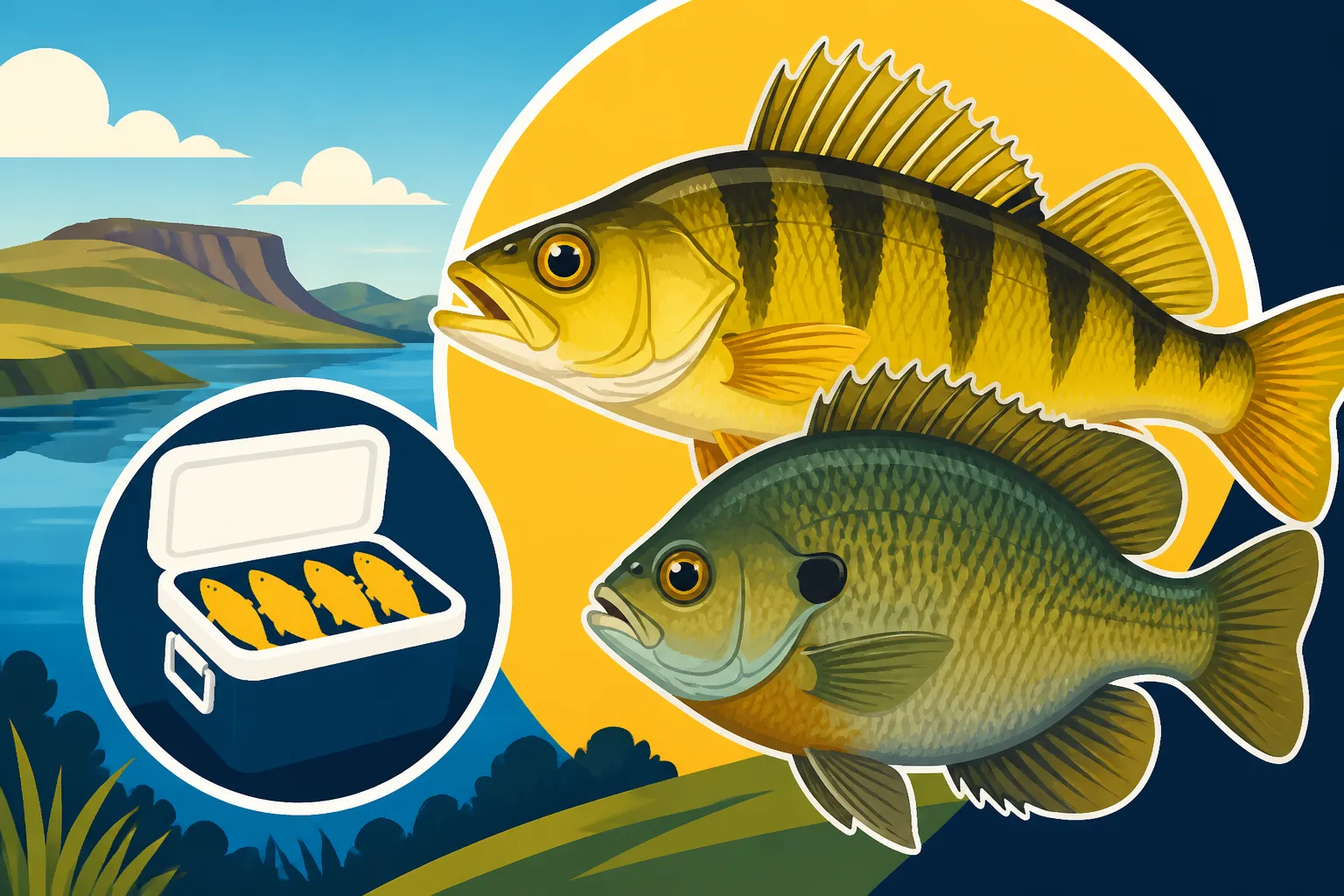
North Dakota's diverse waters are home to a thriving population of various panfish, each with its own charm and fan base. The undisputed king of panfish here is arguably the yellow perch. Known for its distinct vertical stripes and orange fins, the yellow perch is highly sought after, especially during the ice fishing season. You'll find them in abundance in many of our large lakes, including the legendary Devils Lake. These fish are not only prolific but also offer some of the best table fare you can find in freshwater. For a deeper dive into this popular species, check out our North Dakota Yellow Perch Fishing Guide.
Beyond perch, we have robust populations of crappie, specifically both black crappie and white crappie. These slab-sided beauties are notorious for biting aggressively, particularly around submerged timber or brush piles. Bluegill and other sunfish, with their vibrant colors and willingness to bite almost anything, are often the first fish many young anglers catch, providing an exciting introduction to the sport. Rock bass, though less common in some areas, can also be found in rocky structures. And let's not forget white bass, which often provide explosive action, especially during their spawning runs or when chasing schools of baitfish. Each of these species contributes uniquely to the rich tapestry of fishing opportunities across North Dakota, from the smallest farm ponds to the mighty Missouri River.
Yellow Perch Daily and Possession Limits
Yellow perch are undoubtedly one of North Dakota's most beloved fish species. Their aggressive bites and delectable meat make them a top target for anglers year-round, especially during the colder months when ice fishing takes center stage. Because of their immense popularity, understanding the specific daily and possession limits for yellow perch is paramount for any angler venturing onto North Dakota's waters. These limits are carefully set to balance recreational opportunities with the long-term health of the fishery.
Standard Statewide Perch Limits
Alright, let's talk about the big one: yellow perch. This is the panfish that draws anglers from all corners of the state, particularly when the ice thickens. For many, a bucket full of golden-fried perch fillets is the ultimate North Dakota winter treat. Given their popularity, it’s no surprise that the North Dakota Game and Fish Department has specific regulations to manage their populations. Generally speaking, the statewide daily limit for yellow perch in North Dakota is quite generous, allowing anglers to harvest a good number of fish for their frying pans. Most commonly, you'll find the daily limit set at 30 yellow perch. This means that in a single day of fishing, from midnight to midnight, you can legally keep up to 30 of these delicious fish.
It's important to differentiate between a "daily limit" and a "possession limit," which we'll delve into shortly. The daily limit applies to the fish you harvest within that 24-hour period. So, if you go out early, catch 30, and then decide to go out again in the evening of the same day, you cannot legally harvest any more perch once you've hit that 30-fish mark. This standard limit aims to balance angler opportunity with the sustainability of the perch population, ensuring that there are plenty of fish left to reproduce and grow for future seasons. Always double-check the current North Dakota Fishing Regulations Explained for any updates or last-minute changes before you head out.
Exceptions and Special Waters for Perch
Now, here's where things can get a little tricky, and why paying close attention to the details is so important. While the 30-perch daily limit is generally standard across North Dakota, there are absolutely exceptions. Certain lakes or specific fishing zones might have different, often more restrictive, regulations in place. These special regulations are usually implemented by the NDGFD to address particular biological concerns, such as protecting a recovering population, managing a unique trophy fishery, or preventing overharvest in smaller, more vulnerable bodies of water. For example, a smaller, heavily pressured lake might have a reduced daily limit to prevent it from being fished out quickly.
A prime example is often seen in certain "management lakes" or experimental areas. These exceptions are always clearly listed in the annual fishing proclamation, so it's not a secret, but you have to be diligent about looking it up for the specific body of water you plan to fish. Before you hit the ice or launch your boat, especially if you're exploring a new lake, take a few minutes to consult the official regulations. You can usually find a detailed breakdown of specific lake rules in the North Dakota Fishing Season Dates and Limits guide. Ignoring these exceptions, even accidentally, can lead to fines and penalties, and nobody wants their fishing trip ruined by a run-in with a game warden because they didn't check the rules for Devils Lake or some other specific perch hotspot. Many anglers flock to Devils Lake Perch Fishing Spots but it's crucial to know the specific regulations that might apply there.
Understanding Possession Limits for Perch
Beyond the daily limit, North Dakota also has a "possession limit" for yellow perch, and this is where some anglers can get tripped up. The possession limit refers to the maximum number of fish an individual can have in their possession at any given time, whether that's in their cooler on the lake, in their vehicle, or stored at their home. For yellow perch, the general statewide possession limit is typically twice the daily limit, meaning you can usually possess up to 60 yellow perch. This distinction is critical, especially for those of us who enjoy longer fishing trips or like to stock up the freezer with those tasty fillets.
Let's imagine you're on a multi-day ice fishing trip to Devils Lake. On day one, you catch your daily limit of 30 perch. You can keep these fish. On day two, you go out again and catch another 30 perch. Now you have 60 fish in your cooler or fish house, and you're at your possession limit. You cannot legally harvest any more perch until you've reduced your possession. This means if you decide to go out on day three, you would need to consume or give away some of your already-caught fish to make room under the possession limit for any new catches. The possession limit is designed to prevent long-term stockpiling that could impact fish populations and also to ensure fair distribution of the resource among all anglers. It’s also wise to keep your fish in an identifiable state while in possession, meaning whole or partially cleaned, until they reach your permanent residence, making it easier for game wardens to verify species and count if needed.
Other Panfish Species and Their Limits
While yellow perch often steal the spotlight, North Dakota's waters offer a fantastic array of other panfish species that provide excellent fishing opportunities and make for delicious meals. Each of these species plays a unique role in our ecosystems and comes with its own set of specific regulations. Understanding these differences is key to a successful and legal fishing trip, whether you're targeting crappie in a brush pile or bluegill near lily pads.
Crappie Limits: Black and White
Crappie, both black crappie and white crappie, are another highly sought-after panfish in North Dakota. These speckled beauties are a blast to catch and make for excellent table fare, often found in schools around submerged structures like fallen trees, brush piles, or even artificial habitat placed by the NDGFD. While they are equally popular, their daily and possession limits are often different from yellow perch. Typically, the statewide daily limit for crappie is 10 fish. This applies to both black and white crappie, and usually refers to a combined total, meaning you can't keep 10 black crappie and 10 white crappie in one day – it's 10 total crappie of either species.
Just like with perch, the possession limit for crappie is generally twice the daily limit, so you can possess up to 20 crappie at any given time. This more conservative limit compared to perch reflects differences in their population dynamics, reproductive rates, and vulnerability to angling pressure. Crappie populations can sometimes be more susceptible to fluctuations, and these limits help maintain healthy numbers. Anglers targeting crappie often use small jigs, minnows, or even tiny crankbaits. Gear like a portable fish finder, available on sites like Amazon, can be incredibly helpful for locating those crappie schools hiding in structure. Remember to always consult the current North Dakota Crappie Fishing Guide for the most up-to-date information on limits and techniques.
Bluegill and Sunfish Regulations
Bluegill, pumpkinseed, and other sunfish species are the quintessential "starter fish" for many young anglers, but they are also enjoyed by seasoned veterans for their aggressive bites and widespread availability. They are often found in warmer, shallower waters, especially around weed beds, docks, and lily pads. These colorful fish might not grow as large as a trophy walleye, but their abundance and willingness to bite make them a fantastic target for a fun day on the water. In North Dakota, the daily and possession limits for bluegill and other sunfish are typically quite generous, reflecting their robust populations and rapid reproductive rates.
Generally, the statewide daily limit for bluegill and other sunfish is 20 fish. This means you can keep up to 20 of these combined species in a single day. The possession limit, following the standard pattern, is usually 40 fish. These limits allow anglers to enjoy a productive day of fishing without significantly impacting the overall population health. Many anglers use small worms, waxworms, or even tiny artificial lures to entice these feisty panfish. They are excellent for introducing children to fishing due to their eager bites and accessibility from shore, making them a staple in many family fishing outings. Knowing the Bluegill Habitat in North Dakota can greatly improve your chances of finding these prolific fish.
White Bass and Rock Bass Considerations
While often grouped with panfish due to their size and popularity for eating, white bass and rock bass sometimes fall under slightly different regulatory umbrellas or have unique considerations compared to perch and crappie. White bass are particularly known for their schooling behavior and aggressive feeding frenzies, often chasing baitfish near the surface, providing exciting action for anglers. They are widespread in many of North Dakota's larger reservoirs and rivers, offering a different kind of panfish experience.
For white bass, the daily and possession limits can be very liberal, reflecting their often abundant populations and fast growth rates. In many North Dakota waters, there is no daily or possession limit for white bass. This means anglers can keep as many as they legally catch, which is fantastic news if you stumble upon a large school during a feeding spree. However, it's always, always essential to confirm this in the official proclamation for the specific water you are fishing, as regulations can change. Rock bass, on the other hand, are less prevalent and typically fall under the general "other panfish" category, often aligning with bluegill or sunfish limits if specifically regulated. If not listed separately, they generally default to the most conservative "unlisted species" rule, but usually, they are managed with other sunfish. Always double-check the North Dakota Fishing Regulations Explained to be absolutely certain before you start keeping them.
Why These Limits Matter: Conservation and Sustainable Fishing
It's easy to get caught up in the excitement of a good bite and forget the bigger picture, but every regulation, especially daily and possession limits, is designed with a vital purpose: the long-term health and sustainability of our fisheries. These limits aren't just arbitrary rules to make fishing harder; they are carefully crafted by experts to protect the very resources we cherish. By understanding the "why" behind these limits, we become more engaged and responsible stewards of North Dakota's incredible aquatic environments.
Preventing Overharvesting and Protecting Ecosystems
It's easy to look at a lake teeming with fish and think, "What's the harm in keeping a few extra?" But those daily and possession limits aren't arbitrary numbers; they are carefully determined by fisheries biologists who study fish populations, reproductive rates, and the overall health of the aquatic ecosystem. The primary reason for having these limits is to prevent overharvesting. Panfish, especially species like yellow perch, can be incredibly abundant, but they are not limitless. If too many fish are removed, especially larger, older spawning fish, the population can quickly decline. This can lead to fewer fish for everyone, smaller average sizes, and a less enjoyable fishing experience in the long run.
Overharvesting doesn't just impact the target species; it can ripple through the entire ecosystem. For instance, panfish like perch are a vital food source for larger predatory fish such as walleye and northern pike. A depleted perch population can lead to a decline in these other popular game fish as well. By adhering to the established limits, anglers become crucial partners in conservation. We are effectively helping to manage the resource, ensuring that the delicate balance of the aquatic environment remains intact. This proactive management, often supported by stocking programs and habitat improvement projects, is what keeps North Dakota's fisheries vibrant and healthy for all.
Ensuring Future Fishing Opportunities
Imagine a future where your favorite lake for yellow perch or crappie fishing is no longer productive. That's a grim thought, right? Daily and possession limits are a fundamental tool in preventing such a scenario, directly ensuring that there are ample fish for future generations of anglers. When we respect these limits, we're not just following rules; we're actively investing in the longevity of our sport. Each fish released or left to reproduce contributes to the next year's hatch, maintaining a robust and diverse fishery.
The North Dakota Game and Fish Department invests significant resources into monitoring fish populations, conducting surveys, and adjusting regulations as needed. These limits are a dynamic part of their strategy, changing to adapt to environmental factors, angling pressure, and the health of specific fish stocks. For example, if a particular lake's perch population sees a dip due to a tough winter or poor spawn, the NDGFD might temporarily reduce the daily limit to allow the population to rebound. Conversely, if a species is thriving and abundant, limits might be more liberal. By understanding and respecting these limits, we, as anglers, play a direct role in sustaining the incredible fishing heritage of North Dakota, making sure that future kids can experience the thrill of catching their first Yellow Perch Record Catch on Devils Lake or reeling in a stringer of delicious panfish.
Special Considerations and Common Misconceptions
Navigating fishing regulations can sometimes feel like trying to solve a puzzle, especially when you're dealing with multiple species or unique water bodies. It's not uncommon for anglers to have questions about how different limits interact, whether size restrictions apply to panfish, or if rules change when crossing state or tribal lines. Clearing up these common points of confusion will help ensure your fishing trip is both productive and fully compliant with North Dakota law.
Mixed Bag Limits: What Happens When You Catch Different Panfish?
This is a common question that comes up, especially when you're having a great day and different species are biting! What happens if you catch a mix of yellow perch, crappie, and bluegill? Do their limits stack, or is there an overarching panfish limit? Generally, in North Dakota, the daily and possession limits are species-specific. This means that the limit for yellow perch (e.g., 30 fish) is separate from the limit for crappie (e.g., 10 fish), which is separate from the limit for bluegill (e.g., 20 fish). You can, theoretically, fill your daily limit for each of these species on the same day, provided you adhere to each individual species' limit.
For instance, you could catch and keep 30 yellow perch, and 10 crappie, and 20 bluegill in a single day. Your possession limit would then be 60 yellow perch, 20 crappie, and 40 bluegill. This "mixed bag" approach allows anglers to enjoy the diversity of North Dakota's panfish populations. However, the critical takeaway here is to correctly identify your catch. Don't mistake a small crappie for a large bluegill to try and skirt a limit, as game wardens are experts at species identification! If you're unsure about a fish, it's always best to release it or consult your regulations guide or an experienced angler.
Length Limits and "Slot Limits" for Panfish
When talking about regulations for popular game fish like walleye or northern pike, length limits and "slot limits" are common. These rules dictate a minimum or maximum size of fish you can keep, or a "slot" within which fish must be kept (e.g., you can only keep fish between 14 and 18 inches, with one over 24 inches). This is done to protect breeding-size fish or to encourage growth into trophy sizes. However, for most panfish species in North Dakota, length limits and slot limits are generally not in place.
The primary management tool for yellow perch, crappie, bluegill, and other common panfish is the straight numerical daily and possession limit. This simplifies things considerably for panfish anglers, as you don't typically need to carry a measuring tape for your perch or crappie unless specifically stated for an experimental water. While the absence of length limits might make things easier, it also means that anglers have a responsibility to consider releasing larger, older panfish if they wish to promote a trophy fishery in their favorite spot. These larger fish are vital breeders, contributing significantly to the next generation. Always review the annual North Dakota Walleye Size Limit Rules to see how they compare to panfish regulations.
Tribal Waters and Border Waters: Different Rules?
North Dakota shares borders with several other states and is home to tribal lands, and this often raises questions about fishing license requirements and regulations. The simple answer is: yes, rules can absolutely be different! When fishing on tribal waters, such as portions of Lake Sakakawea that fall within reservation boundaries or on specific tribal lakes like those near the Spirit Lake Nation at Devils Lake, you might need a separate tribal fishing license or permit in addition to your state license. The regulations for daily limits, possession limits, and even seasons can also vary on these waters. It's crucial to research specific tribal regulations before fishing, as state rules typically do not apply. You can find more information on Fishing Rules on North Dakota Tribal Waters.
Similarly, when fishing border waters like the Red River (shared with Minnesota) or portions of the Missouri River/Lake Oahe (shared with South Dakota), reciprocal agreements sometimes exist where a license from either state is valid. However, the fishing regulations (limits, seasons, etc.) can still differ between states or might have specific "border water" rules that supersede general state laws. For instance, the Reciprocal Fishing Rules on the Red River Border Waters outline how limits might apply to those boundary waters. Always confirm the specific rules for the exact section of water you plan to fish, particularly concerning daily and possession limits, as these can impact your legal harvest. A quick search on the North Dakota Game and Fish Department website or the Minnesota DNR site can save you a lot of headache.
Practical Tips for Adhering to Limits
Knowing the regulations is one thing, but practically adhering to them while actively fishing can sometimes be a challenge. When the fish are biting, and you're caught up in the excitement, it's easy for small mistakes to happen. However, with a few simple strategies and tools, you can easily stay compliant with North Dakota's panfish limits, ensuring a worry-free and enjoyable day on the water. These tips will help you manage your catch and be a responsible steward of our fisheries.
Counting Your Catch Accurately
Keeping track of your daily limit might sound straightforward, but when the bite is hot, or you're fishing with a group, it's surprisingly easy to lose count. Imagine you're on a fantastic perch bite on Devils Lake, reeling in fish after fish. You're having a blast, and before you know it, you've got a pile of fish. This is when accurately counting becomes paramount. A simple but effective method is to use a clicker counter, often used by golf pros, or even just move a small bead or button from one pocket to another for every fish you keep. These are small, inexpensive tools you can find on Amazon or at any local bait shop.
If you're fishing with family or friends, designate one person to keep a running tally for the group, or ensure everyone is responsible for their own individual count. Remember, limits are per angler, not per boat or per group (unless specifically stated as a household limit in rare cases for certain species, which is not common for panfish). So, if three anglers are in an ice house, and the limit is 30 perch, the group can collectively keep 90 fish, but each individual must not exceed their 30-fish limit. This means clearly separating your catch from others, especially if you plan to clean them later. If in doubt, err on the side of caution and stop fishing for that species once you feel you're getting close. How to Catch Perch Through the Ice in North Dakota is a popular query, and knowing your limits is part of that successful outing.
Tools to Help You Stay Compliant
Beyond simply counting, there are a few practical tools and habits that can make adhering to daily and possession limits much easier and stress-free. First and foremost, always have a copy of the current North Dakota Fishing Proclamation with you. Whether it's a physical booklet, a downloaded PDF on your phone, or accessible via the official NDGFD app, having the rules readily available for quick reference is invaluable. You can usually pick up a free booklet at bait shops, sporting goods stores, or online.
Secondly, for panfish, while length limits are rare, if you do encounter a specific lake with one, a small, floating ruler can be incredibly helpful. You can often find compact, foldable rulers or even stickers with measurements on Amazon that attach to your cooler or tackle box. For those who frequently fillet their catch on the ice or bank, keeping fish whole until you reach your permanent residence or a designated cleaning station can help prove compliance if a game warden asks to inspect your catch. This makes it easier to identify the species and count the fish without ambiguity. Finally, a good fish basket or cooler helps you manage your catch, preventing them from scattering and making counting simpler. Remember, being prepared means less stress and more enjoyment on the water!
Proper Release Techniques for Unwanted Fish
No matter how careful you are, there will be times when you catch fish that you either don't want to keep (maybe they're too small, or you've already reached your limit) or that are an unintended species. Knowing how to properly release these fish is just as important as knowing the limits, as it contributes directly to the sustainability of the fishery. Panfish, being relatively hardy, often have a good survival rate after release if handled correctly. The goal is to minimize stress and injury.
When releasing fish, try to keep them in the water as much as possible. If you must remove them, do so quickly. Use a de-hooking tool or needle-nose pliers to gently remove the hook, especially if it's deeply set. Avoid touching their gills or eyes. If the fish is legal to keep but you're releasing it because you've hit your limit, try to avoid putting it on the ice or dry ground, as this can remove their protective slime layer and potentially lead to infection. For deeply hooked fish, especially smaller ones, it might be better to snip the line close to the hook rather than trying to rip it out, as the hook will often rust away. Equip yourself with the right tools, like a good pair of fishing pliers (you can find various options on Amazon), to make these quick releases efficient and safe for the fish. This simple act of careful release ensures those fish live to fight another day, contributing to the health of the North Dakota fishery.
North Dakota Panfish Daily and Possession Limits (General Statewide)
| Species | General Daily Limit | General Possession Limit | Common Habitat Notes |
|---|---|---|---|
| Yellow Perch | 30 | 60 | Lakes, reservoirs; especially abundant in Devils Lake. |
| Black/White Crappie | 10 (combined) | 20 (combined) | Submerged timber, brush piles, calm bays in lakes. |
| Bluegill/Sunfish | 20 (combined) | 40 (combined) | Weed beds, docks, shallow warm water in ponds and lakes. |
| White Bass | No Limit | No Limit | Large reservoirs, rivers; often schooling and chasing bait. |
| Rock Bass | 20 (combined with sunfish) | 40 (combined with sunfish) | Rocky structures, clear lakes and streams. |
Note: Always consult the current North Dakota Game and Fish Department Fishing Proclamation for specific regulations, as limits can vary by body of water or change annually.
Disclaimer
Please remember that fishing regulations are subject to change. While every effort has been made to provide accurate and up-to-date information in this guide, it is ultimately the angler's responsibility to verify current regulations with the North Dakota Game and Fish Department before heading out to fish. This article is for informational purposes only and should not be considered a substitute for the official fishing proclamation.