North Dakota Chinook Salmon Regulations
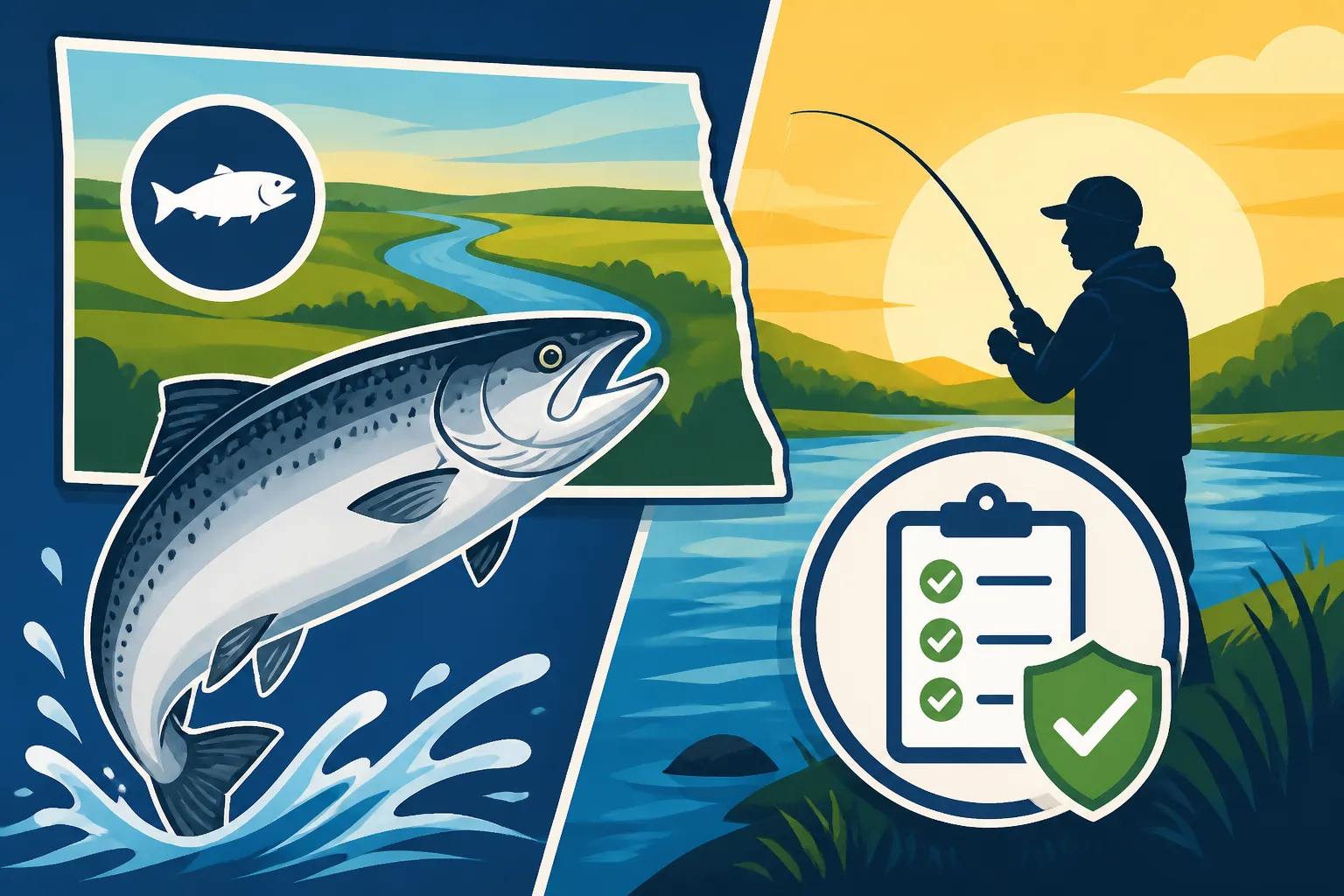
For many anglers, the thought of fishing in North Dakota conjures images of massive walleye, feisty northern pike, or giant Red River catfish. But did you know North Dakota also offers a unique opportunity to chase Chinook Salmon? These powerful, hard-fighting fish provide an exciting challenge, primarily in the vast waters of Lake Sakakawea. However, like all game species, they come with their own set of specific rules and regulations that can sometimes feel a bit murky. This guide is here to clear the waters, detailing everything you need to know about North Dakota's Chinook Salmon regulations to ensure your next salmon adventure is both successful and fully compliant.
Understanding Chinook Salmon Fishing in North Dakota
It’s easy to get caught up in the excitement of a big fish, but understanding the unique place Chinook Salmon hold in North Dakota's fisheries is key to appreciating and respecting the regulations. These aren't your typical prairie lake dwellers.
Why Chinook Salmon are Unique in North Dakota
Unlike walleye or northern pike, Chinook Salmon are not native to North Dakota's waters. They are a Pacific salmon species that thrive in cold, deep water, making Lake Sakakawea – a massive reservoir on the Missouri River system – an ideal, albeit unique, habitat. The North Dakota Game and Fish Department actively manages this fishery through an intensive stocking program. Every year, thousands of juvenile salmon are released into Lake Sakakawea, transforming it into a premier landlocked salmon fishery. This means that every Chinook Salmon you encounter is a testament to dedicated conservation efforts and management, which in turn influences the specific regulations governing their harvest.
The challenges of maintaining a salmon fishery in an inland state like North Dakota are immense. These fish rely heavily on abundant smelt, a small forage fish, for their growth and survival. Fluctuations in smelt populations, water levels, and overall lake health directly impact the salmon's well-being and, consequently, the number and size of fish available to anglers. Because of this careful balance, the regulations are designed to protect the health of the fishery while still providing rewarding opportunities for anglers. It’s a delicate dance, and understanding this background helps underscore why certain limits and rules are in place.
General Overview of Chinook Salmon Regulations
When it comes to fishing for Chinook Salmon in North Dakota, the regulations primarily revolve around daily and possession limits. These limits are set by the North Dakota Game and Fish Department to manage the harvest sustainably, ensuring there are enough fish for future generations while allowing current anglers to enjoy the resource. Generally, these regulations are fairly straightforward, but they can occasionally be adjusted based on population assessments and environmental conditions. It's crucial for anglers to always consult the most current North Dakota Fishing Guide or the official North Dakota Game and Fish Department website before heading out, as rules can change between seasons.
For instance, you might be accustomed to different limits for walleye in various lakes, or specific slot limits for northern pike. However, Chinook Salmon typically have a uniform daily and possession limit across the state wherever they are found, which in North Dakota primarily means Lake Sakakawea and the connected Missouri River system. This consistency makes it a bit easier to remember the rules once you learn them, but never take it for granted. Always double-check! Knowing these basic tenets sets the stage for a responsible and enjoyable fishing trip. If you're planning a trip, be sure to check the general North Dakota Fishing Regulations Explained for all species, as salmon rules fit within the broader framework.
Specific Daily and Possession Limits for Chinook Salmon
Navigating fishing limits can sometimes feel like trying to solve a puzzle, especially when you're excited to hit the water. For Chinook Salmon, understanding the precise daily and possession limits is paramount to staying on the right side of the law.
Current Daily Limits Explained
As of the current fishing proclamation, the daily limit for Chinook Salmon in North Dakota is five fish. What does this mean in practical terms? It means that, within a 24-hour period, you, as an individual angler, cannot harvest and retain more than five Chinook Salmon. Once you've reached that limit, you must cease fishing for Chinook Salmon for the remainder of that day. This rule applies whether you're fishing alone, with family, or with a group of friends. Each licensed angler in your party is subject to their own individual daily limit of five fish.
Let's imagine a scenario: You and a buddy head out onto Lake Sakakawea for a day of salmon fishing. By lunchtime, you've both had incredible luck, and you've each landed five beautiful Chinook. At this point, even though you might see more salmon on your fish finder, you both must stop actively targeting and keeping Chinook Salmon. You could switch to fishing for other species, like smallmouth bass or walleye, assuming you haven't hit their respective daily limits. The purpose of this limit is to spread the opportunity among more anglers and prevent overharvest, especially for a managed, stocked fishery that doesn't naturally reproduce in large numbers here. It helps ensure that everyone has a fair shot at catching these prized fish. You can find more details about how these limits are structured in the broader North Dakota Fishing Season Dates and Limits document.
Understanding Possession Limits
The possession limit is often where anglers get confused, especially if they're on a multi-day trip. While the daily limit dictates how many fish you can keep in a 24-hour period, the possession limit dictates the maximum number of fish you can have in your physical possession, anywhere, at any given time. For Chinook Salmon in North Dakota, the possession limit is currently ten fish. This means you cannot have more than ten Chinook Salmon, whether they are fresh, frozen, filleted, or otherwise processed, in your cooler, freezer at home, vehicle, or anywhere else under your control.
Think of it this way: if you caught your daily limit of five Chinook Salmon on Monday, you could then catch another five on Tuesday, bringing your total to ten. However, once you reach that ten-fish possession limit, you cannot harvest any more Chinook Salmon until you have legally consumed or given away some of your possessed fish, bringing your total possession back below the limit. This rule is particularly important for anglers making a weekend trip or those who live a significant distance from Lake Sakakawea. It prevents individuals from stockpiling large quantities of fish over an extended period, which could put undue pressure on the fishery. Always be mindful of both limits simultaneously. For a visual reminder, check out the table below which summarizes the limits.
| Species | Daily Limit | Possession Limit | Primary North Dakota Habitat |
|---|---|---|---|
| Chinook Salmon | 5 | 10 | Lake Sakakawea, Missouri River |
| Walleye (General) | 5 | 10 | Statewide (many lakes) |
| Northern Pike (General) | 5 | 10 | Statewide (many lakes) |
Important Rules Beyond Just Numbers
Fishing regulations aren't just about how many fish you can keep; they also cover how you catch them and what you can use. These rules are crucial for ethical angling and the long-term health of the Chinook Salmon fishery.
Equipment and Bait Restrictions
When targeting Chinook Salmon in North Dakota, anglers generally operate under the state's standard fishing equipment regulations. This means no specialized salmon-specific gear restrictions beyond what applies to all game fish. Typically, you're allowed to use up to four lines per angler while open water fishing, and two lines while ice fishing. However, for most Chinook Salmon anglers on Lake Sakakawea, trolling with downriggers, planer boards, or lead core line, often with multiple rods, is a common and effective technique. If you're setting up a new trolling spread, you might find a fantastic selection of appropriate rods, reels, and specialized line on Amazon, which can handle the deep dives and powerful runs of a big Chinook. Just remember to stay within your allowed number of lines per person.
Regarding bait, general regulations allow for the use of artificial lures and natural baits. For Chinook Salmon, popular choices include trolling spoons, plugs, and sometimes even baitfish imitations. Snagging, which is intentionally hooking a fish in any part of its body other than the mouth, is strictly prohibited for Chinook Salmon and almost all other game fish in North Dakota, with the sole exception of paddlefish during a specific season and location. These rules are in place to promote fair chase and prevent waste. Using legal methods ensures that the sport remains challenging and sustainable. Always make sure your chosen gear and methods align with the overall North Dakota Fishing Regulations Explained.
Identifying Chinook Salmon vs. Other Species
It's absolutely essential to be able to correctly identify the fish you catch, especially when daily and possession limits vary by species. While a large Chinook Salmon is quite distinct, smaller ones, or those caught in specific conditions, could potentially be confused by an inexperienced angler with other game fish, though it's less common in North Dakota than in regions with more diverse salmonid populations. The most defining characteristics of a Chinook Salmon include its dark, heavily spotted tail (often with spots on both lobes), black gum line, and pointed dorsal fin. Their body shape is typically streamlined and torpedo-like, reflecting their powerful swimming ability.
If you happen to catch a fish and are unsure if it's a Chinook Salmon, it's always best to err on the side of caution. If you cannot positively identify it as a Chinook and it doesn't meet the size or species criteria for what you're targeting, it's safest to release it immediately and unharmed. Mistaken identity can lead to accidental violations of daily limits for another species, which could result in penalties for fishing without a license or exceeding limits. Taking a quick photo for later identification or consulting an experienced angler or the North Dakota Game and Fish Department website can be helpful. Understanding these subtle differences is key to adhering to the North Dakota Chinook Salmon Limit on Lake Sakakawea and other species-specific rules.
The Role of Seasons and Water Bodies
Fishing is often a dance with the calendar and the map. For Chinook Salmon in North Dakota, understanding where and when to fish is just as important as knowing the specific limits.
Is There a Specific Season for Chinook Salmon?
One of the great things about fishing for many species in North Dakota is the relatively long and often year-round season, and Chinook Salmon are no exception. There isn't a specific, separate "salmon season" that opens and closes at unique times of the year. Instead, Chinook Salmon fishing is generally open as part of the statewide open water fishing season, which typically runs from April 1st of one year through March 31st of the next. This means you can target these magnificent fish for the majority of the year, whenever water conditions and your personal schedule allow.
While the season is technically open for a long stretch, the best times to target Chinook Salmon often align with cooler water temperatures, particularly in the spring and fall. These periods, including the early "ice-out" phase and the late fall "pre-spawn" build-up, are when salmon are most active and accessible to anglers. During the peak summer heat, they tend to retreat to deeper, cooler sections of Lake Sakakawea. Knowing the general North Dakota Fishing Season Calendar is always a good idea, as it provides the overall framework for all species, including Chinook. Just because the season is open doesn't mean the fish are always biting or easy to find, so paying attention to seasonal patterns is a huge part of the salmon fishing puzzle.
Chinook Salmon Regulations on Lake Sakakawea
When we talk about Chinook Salmon fishing in North Dakota, we are almost exclusively talking about Lake Sakakawea. This massive reservoir, stretching over 178 miles with more than 1,300 miles of shoreline, is the heart of North Dakota's salmon fishery. The deep, cold waters of Sakakawea, combined with a healthy population of prey fish like smelt, create the perfect environment for these landlocked salmon to thrive. Consequently, all the Chinook Salmon regulations discussed – the daily limit of five and possession limit of ten – are specifically tailored to and primarily enforced on Lake Sakakawea.
While the Missouri River directly downstream from Lake Sakakawea can occasionally yield a stray salmon, it's Lake Sakakawea itself that is managed for this species. There are no specific zones or unique rules within Lake Sakakawea that differentiate salmon regulations. What applies in the deep western bays near Williston will generally apply to the eastern reaches near the Garrison Dam. However, it's always wise to be aware of any signs posted at boat ramps or recreation areas that might indicate temporary restrictions or local advisories, though these are rare for species-specific regulations. If you’re heading out to target them, make sure to check out our detailed guide on Lake Sakakawea Chinook Salmon Fishing for more location-specific tips. The sheer size of this lake means that understanding both the regulations and the best fishing spots becomes a critical combination for success.
Licenses and Endorsements for Chinook Salmon Fishing
Before you even think about dropping a line for Chinook Salmon, the very first regulation you need to be aware of is licensing. It's the foundation of legal fishing in North Dakota, and it’s critical to get right.
Do You Need a Special License for Salmon?
This is a common question, and thankfully, the answer is usually straightforward: no, you do not need a special or additional endorsement specifically for Chinook Salmon in North Dakota. A general valid North Dakota fishing license is all that's required to legally pursue and harvest Chinook Salmon, assuming you adhere to all other regulations. This is a relief for many anglers, as some states or specific fisheries require separate tags or stamps for certain trophy or managed species.
The standard North Dakota fishing license covers all legal game fish species, from walleye and northern pike to perch and, yes, Chinook Salmon. So, if you've already purchased your annual resident or nonresident fishing license, you're good to go for salmon. However, if you're unsure which license you need or what options are available, our comprehensive North Dakota Fishing License Guide provides all the details. It covers everything from resident and nonresident options to various term lengths. The simplicity of not needing an extra salmon-specific endorsement makes planning your Lake Sakakawea salmon trip just a little bit easier, allowing you to focus more on rigging your spoons and less on navigating complex paperwork.
Nonresident Considerations for Salmon Fishing
For anglers visiting North Dakota from out of state to chase those impressive Chinook Salmon, the licensing process is designed to be accessible, but it's important to understand your options. Nonresidents are, of course, required to purchase a nonresident fishing license. The North Dakota Game and Fish Department offers several convenient options that cater to different trip durations, making it easy to pick the right one for your salmon adventure.
You can choose from an annual North Dakota Nonresident Season Fishing License Cost, which is perfect if you plan multiple trips throughout the year or intend to fish for an extended period. For shorter visits, there are also temporary licenses available, such as the Nonresident 3-Day Fishing License in North Dakota or a 10-day option. These shorter-term licenses are often a cost-effective choice for a dedicated salmon fishing weekend or a week-long vacation on Lake Sakakawea. Remember, regardless of the duration, these nonresident licenses grant you the same rights and access to the Chinook Salmon fishery as a resident license, as long as you adhere to all other state fishing regulations. You can typically purchase these licenses online through the North Dakota Game and Fish Department's website, or from various license vendors across the state. This flexibility ensures that visitors have every opportunity to experience the thrill of North Dakota salmon fishing.
Best Practices and Conservation
Fishing regulations are just one piece of the puzzle; responsible angling also involves ethical practices and a strong commitment to conservation. This is particularly true for a unique, managed fishery like North Dakota's Chinook Salmon.
Catch and Release Guidelines
While many anglers pursue Chinook Salmon for their delicious table fare, there are times when catch-and-release is the best option, whether it's because you've reached your daily limit, are targeting a trophy, or simply want to conserve the resource. Practicing proper catch-and-release techniques is vital to ensure the survival of released fish. Chinook Salmon are powerful fish, and a long fight can exhaust them. Minimizing stress and handling time is key.
When releasing a Chinook Salmon, try to keep the fish in the water as much as possible. Use a rubberized landing net to protect their slime coat and fins. If you must remove the fish from the water for a quick photo, do so gently, supporting its body horizontally, and return it quickly. Avoid putting your fingers in its gills or squeezing its belly. If the fish appears exhausted, hold it gently in the water, facing into a mild current if possible, until it regains its strength and can swim away on its own. Using single, barbless hooks can also significantly reduce injury and make hook removal much easier. By adopting these careful practices, you contribute to the health and vitality of the Chinook Salmon population in Lake Sakakawea, allowing others to enjoy the same thrilling experience in the future.
Reporting and Staying Informed on Regulations
The world of fishing regulations isn't static; it can and does change. The North Dakota Game and Fish Department constantly monitors fish populations, habitat conditions, and angler harvest data to make informed decisions about management. This means that regulations, including those for Chinook Salmon, can be adjusted between seasons or even mid-season if significant changes warrant it. Staying informed is every angler's responsibility, and it's easier than ever with today's technology.
The primary source for current regulations is always the official North Dakota Game and Fish Department website. They publish an annual fishing proclamation, which serves as the definitive guide to all rules and limits. You can usually find a downloadable PDF version of the guide, and sometimes they even highlight specific changes, such as What Changed in North Dakota's 2026 to 2028 Fishing Regulations?. Signing up for their email newsletters or following their social media channels can also provide timely updates. Additionally, physical copies of the fishing guide are often available at license vendors, bait shops, and Game and Fish offices. Before any fishing trip, especially for a specific species like Chinook Salmon, take a few minutes to quickly review the latest regulations. It's a small effort that can save you a lot of grief and ensures you're a responsible steward of North Dakota's fantastic fishing resources.
Disclaimer
Please remember that regulations can change. While this guide provides a comprehensive overview based on current information, it is always your responsibility to consult the most recent North Dakota Game and Fish Department fishing proclamation before you head out on the water. This guide is for informational purposes only and does not constitute legal advice.