Do You Need a License to Fish on Private Land in North Dakota?
It’s a common scenario: you’ve got a fantastic fishing spot right there on private land, maybe even a pond or a small lake that feels entirely your own. You’re just looking to cast a line, relax, and perhaps catch a few for dinner. In that moment, the last thing you want to do is navigate a labyrinth of regulations, especially when it feels like you're not even on public waters. Many anglers assume that if they own the land, or have permission to fish on it, a fishing license isn't necessary. But in North Dakota, like many places, the rules aren't always as straightforward as they seem, and misunderstanding them can lead to unexpected fines. This guide will unravel whether you need a license to fish on private land in North Dakota, cutting through the confusion to give you a clear answer.
Understanding North Dakota's Fishing License Requirements
Let's get right to it: generally, if you're fishing in North Dakota, you need a fishing license. This isn't just a suggestion; it's a legal requirement designed to fund conservation efforts, fisheries management, and habitat restoration across our beautiful state. The North Dakota Game and Fish Department uses these funds to ensure healthy fish populations for everyone, from the seasoned angler on Lake Sakakawea to a youngster dropping a line in a quiet farm pond.
General Rules for Anglers
The basic premise is that anyone aged 16 or older needs a valid North Dakota fishing license to legally fish in the state's waters. This applies whether you're dangling a worm off a dock on Devils Lake, casting for walleye on the Missouri River, or ice fishing in a cozy shanty. The type of license you need can vary, from annual resident licenses to short-term nonresident options, but the core requirement remains: if you’re fishing, you generally need one. It's not about how skilled you are, or how many fish you plan to keep; it’s about compliance with state law. You can delve into the specifics of a North Dakota Fishing License Guide to understand all the options available.
Age Exemptions and Special Circumstances
Now, there are some important exceptions to the general rule. For instance, children under the age of 16 are typically exempt from needing a fishing license in North Dakota. This is fantastic news for families, encouraging youngsters to get out and experience the joy of fishing without an extra hurdle. It’s part of the effort to cultivate the next generation of anglers. For more details on who needs a license, check out our guide on Fishing License Age Requirements in North Dakota. Additionally, there are often specific provisions or discounts for certain groups, such as eligible seniors and disabled individuals. North Dakota offers programs like North Dakota Senior Fishing License Discounts to make fishing more accessible for these valued members of our community. Always double-check the latest regulations, as these rules can occasionally be updated.
When Private Land Fishing Doesn't Require a License
This is where the nuance really comes into play. The crucial distinction isn't whether the land is private, but whether the water you're fishing in is truly private and disconnected from public water systems.
Truly Private, Self-Contained Ponds
The primary exception for fishing without a license on private land in North Dakota applies to genuinely private, self-contained ponds or lakes. What exactly does "self-contained" mean? It means the body of water has absolutely no connection, either above ground or below ground, to any public waterways like rivers, streams, or larger lakes. Imagine a dugout pond in a farmer's field that fills only from rainfall or groundwater seepage, with no inlet or outlet flowing to or from a natural stream. If this pond is entirely on private property and doesn't connect to any external water system, then generally, neither the landowner nor their invited guests would need a state fishing license to fish in it. It truly is considered private property, end of story. This often applies to small, man-made impoundments.
Landowner and Guest Privileges on Isolated Waters
If you are a landowner, or a guest fishing with permission on a truly isolated, private pond as described above, you are likely exempt from the state fishing license requirement for that specific body of water. This privilege is rooted in the idea that if the water is entirely within the bounds of private property and doesn't affect or draw from public resources, then the state's licensing requirements don't apply. It's a bit like having a swimming pool in your backyard; you don't need a public permit to swim in it. However, it’s absolutely critical that this body of water meets the "self-contained" definition. Many landowners often wonder about their own property; you can read more about it in our article, North Dakota Fishing Certificate Exemption for Landowners. When inviting guests, it’s a good idea to ensure they understand these specific rules and that they have your explicit permission.
Key Considerations for Private Water Fishing
The challenge with private water fishing isn't usually about the land itself, but about the water's connectivity. Many bodies of water, even those seemingly isolated, have hidden connections that can trip up an unsuspecting angler.
The Critical Role of Connecting Waters
This is the most misunderstood aspect of private land fishing. Many ponds, sloughs, or small lakes that appear private often have inlets or outlets that connect to a larger stream, river, or public lake, even if only seasonally or during high water events. For example, a "private" pond might have a culvert that drains into a nearby creek during spring runoff, or it might be fed by an underground spring that is part of a larger aquifer system connected to a public river. If any part of that water system connects to public waters, directly or indirectly, then it is generally considered part of the public fishery, and state fishing regulations—including the need for a license—apply.
It can be incredibly difficult to tell if a body of water is truly self-contained without detailed hydrological knowledge. What looks like a stagnant pond might be part of a subtle watershed. Anglers often face the frustration of assuming a water body is private only to find out later it has a connection they weren't aware of. This is why when in doubt, it's always safer to assume a license is needed or to consult with the North Dakota Game and Fish Department for clarification.
Stocking, Ownership, and Navigability
Another common misconception revolves around who stocked the fish or who owns the land beneath the water. Some landowners believe that if they stocked their pond with fish, or if they own the entire bed of the lake, it somehow makes it exempt. Unfortunately, this is rarely the case if the water body has any connection to public waters. The act of stocking fish or owning the underlying land doesn't automatically privatize the water for licensing purposes if it's connected to a broader public system.
Furthermore, in some legal contexts, if a body of water is deemed "navigable" – meaning it could theoretically be used for public travel, even by small craft – it might also fall under state regulation, regardless of surrounding land ownership. While this usually applies to larger rivers and lakes, it's part of the broader legal framework that prioritizes public access and resource management. The bottom line is that while your land might be private, the water often isn't. When acquiring gear for private pond fishing, like a new fishing reel or a tackle box, remember you can often find great options on Amazon, but always prioritize understanding the rules of the specific water body you intend to fish.
Consequences of Fishing Without a License
Ignoring the license requirements, even on what you think is private land, can lead to some unpleasant surprises. North Dakota takes its conservation laws seriously, and game wardens are dedicated to upholding them.
Fines and Penalties for Non-Compliance
If you're caught fishing without a valid license in North Dakota, even on private land that turns out to be connected to public waters, you could face significant penalties. The specific fine amount can vary depending on whether it's a first offense, the type of infraction, and other circumstances, but it's rarely a slap on the wrist. These fines are designed to deter illegal fishing and ensure that everyone contributes to the conservation efforts. Beyond the monetary cost, a citation can be a frustrating and time-consuming experience, often involving court appearances. To understand the full scope of potential repercussions, our article on Penalties for Fishing Without a License in North Dakota provides more detailed information. It’s simply not worth the risk.
Game Warden Authority and Property Access
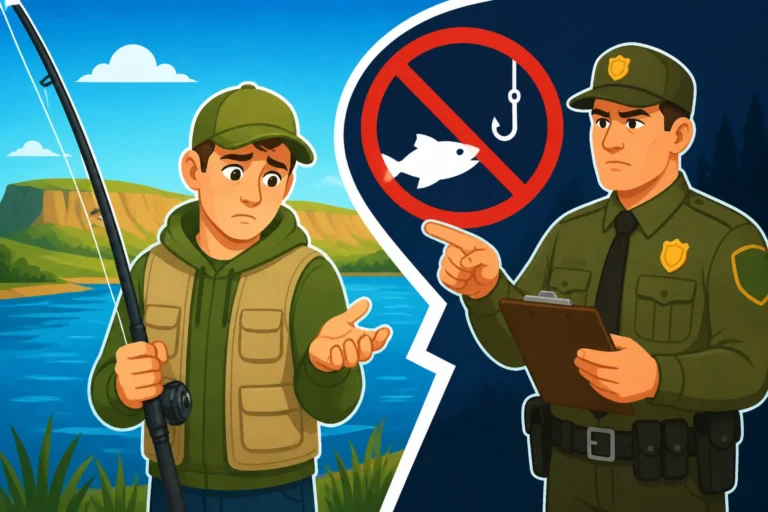
A common question that arises is, "Can a game warden even come onto my private land to check if I have a license?" The answer, generally, is yes. Game wardens in North Dakota have the authority to enforce game and fish laws, and this often includes entering private land to investigate potential violations or to check licenses of individuals who are actively hunting or fishing. This authority is crucial for ensuring compliance and protecting wildlife resources across the state. They are not simply limited to public parks or boat ramps. If you're out fishing, even on a property you own, you should be prepared for a warden to approach and ask to see your license. Our guide on Can a Game Warden Check Your License in North Dakota? offers more clarity on their legal powers. They are there to protect the resource, and that job sometimes requires them to cross property lines.
How to Ensure You're Compliant
Navigating regulations can feel like a chore, but with a little proactive effort, you can ensure your fishing adventures in North Dakota are always legal and worry-free.
Checking Official Regulations and Resources
The absolute best way to stay compliant is to familiarize yourself with the official rules and regulations published by the North Dakota Game and Fish Department (NDGFD). They release an annual fishing proclamation that details all license requirements, season dates, limits, and special regulations. You can usually find a copy online, or pick one up at license vendors. This document is your definitive guide. It’s often overwhelming to read through the entire thing, but understanding the sections relevant to your activity is crucial. Our article, North Dakota Fishing Regulations Explained, offers a user-friendly breakdown of what you need to know.
When it comes to specific bodies of water, especially those on private land, if there's any doubt about its connectivity to public waters, the NDGFD is your go-to resource. A quick phone call or email to their regional office can save you a lot of headache down the line. They are there to help anglers understand the rules, not just to enforce them.
Purchasing Your North Dakota Fishing License
If you've determined you need a license, acquiring one is incredibly easy and convenient. You can purchase your North Dakota fishing license online through the official NDGFD website, which is often the quickest method. Many anglers appreciate the convenience of being able to purchase and print their license from home, ensuring they are compliant before even heading out the door. You can also pick up a license at numerous retail vendors throughout the state, including bait shops, sporting goods stores, and even major retailers like Walmart, during regular business hours. For a comprehensive overview of where and how to get your license, our guide on Where to Buy a North Dakota Fishing License is a great starting point.
When purchasing a license, you'll need to provide some basic personal information. Make sure all your details are accurate to avoid any issues. And remember, it's not just about having the license; it's about having it readily available for inspection if a game warden asks. A physical copy is always a good idea, though some digital options are now available. You can even find fishing accessories like a sturdy tackle box or polarized sunglasses on Amazon to complement your angling adventures once your license is secured.
Understanding the Fishing, Hunting, Furbearer Certificate
One additional piece of the puzzle for some anglers in North Dakota is the Fishing, Hunting, and Furbearer Certificate. This certificate, often abbreviated as the "FHF certificate," is a foundational requirement for most adult resident hunting and fishing licenses. It's not a license itself, but rather a prerequisite for purchasing certain licenses. Think of it as a necessary permit you get once, and then you can buy your actual fishing license on top of it. For many, this is included in the initial purchase process, but it’s an important detail not to overlook. Our article, The Fishing, Hunting, Furbearer Certificate Explained, provides a full breakdown of this requirement and who needs it. For example, if you're buying a season-long fishing license, you will likely need this certificate as well.
It’s often these little nuances that can cause confusion, but with the right information, you can ensure you’re fully prepared and ready to enjoy North Dakota’s incredible fishing opportunities, whether on public waters or those rare, truly private ponds. Always err on the side of caution, and if in doubt, get that license. It’s a small investment for peace of mind and supporting the future of fishing in the state.
Summary of License Requirements for Private Water Fishing
To help clarify the requirements, here’s a quick summary table that breaks down when a fishing license is generally needed for fishing on private land in North Dakota:
| Water Body Type | Connection to Public Waters | License Requirement | Notes |
|---|---|---|---|
| Truly Private Pond/Lake | No connection (fully self-contained) | Generally NOT required | This is the rare exception. The water must be entirely on private land and have no inflow/outflow to public systems. Landowner and invited guests typically exempt. |
| Private Pond/Lake with Connection | Seasonal or year-round connection (e.g., stream, culvert, groundwater) | ALWAYS required | Even if the connection is subtle or intermittent, if the water interacts with public systems, a license is needed for anyone 16 or older. |
| River/Stream on Private Land | YES | ALWAYS required | Rivers and streams are almost universally considered public waters, even if they flow through private property. |
| Reservoir/Large Lake with Private Access | YES | ALWAYS required | If the water body itself is public (like Lake Sakakawea or Devils Lake), but you access it via private land, a license is still required. |
Ultimately, it comes down to the nature of the water, not just the land it sits on. The vast majority of fishing opportunities in North Dakota, even those accessed through private property, will require a state fishing license.
Disclaimer
The information provided in this guide is for general informational purposes only and does not constitute legal advice. Fishing regulations in North Dakota can change, and interpretations may vary. Always consult the official North Dakota Game and Fish Department regulations and, if necessary, contact the department directly for the most current and accurate information pertaining to your specific situation before engaging in any fishing activities.