Fishing Weed Lines for Northern Pike
Finding northern pike can sometimes feel like a treasure hunt, especially when they disappear from the obvious spots. Many anglers struggle to consistently locate these toothy predators, often because they overlook one of the most reliable hiding and ambush grounds: the weed lines. This comprehensive guide will take you deep into the world of fishing weed lines for northern pike in North Dakota, equipping you with the knowledge and techniques to successfully target these elusive fish.
Understanding Northern Pike and Their Weed Line Affinity
Northern pike are ambush predators, and their entire existence revolves around finding the perfect hiding spot to surprise unsuspecting prey. In North Dakota's diverse waterways, from sprawling Lake Sakakawea to the smaller prairie lakes and river backwaters, weed lines are often their preferred address.
Why Pike Love Weeds
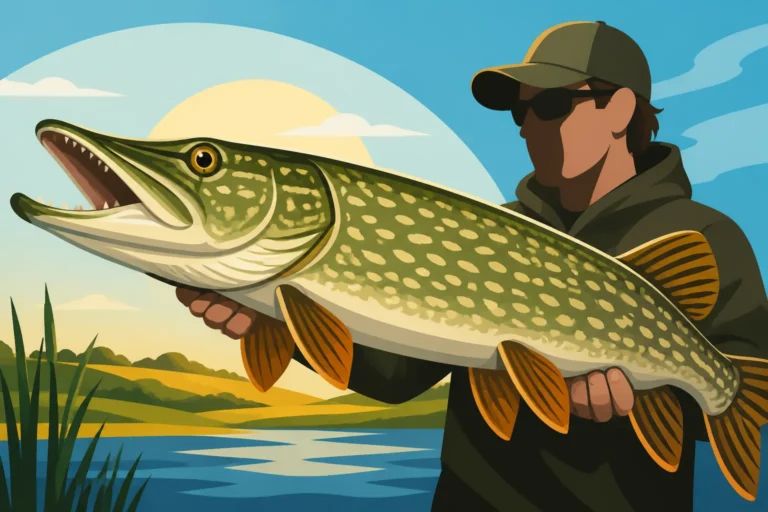
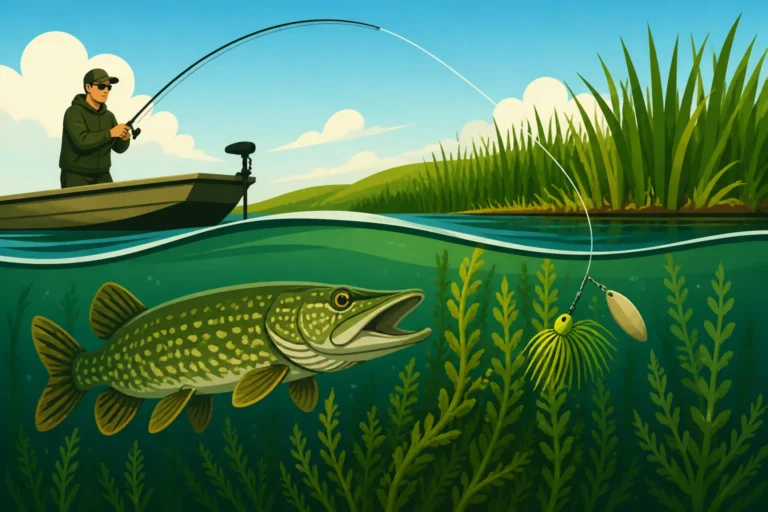
Weed lines, whether they're submerged cabbage, emergent reeds, or a blend of both, offer a multi-faceted haven for northern pike. Firstly, they provide unparalleled camouflage. A pike's mottled green and white coloration blends seamlessly with aquatic vegetation, allowing them to disappear into the dappled sunlight and shadows, waiting for an opportunity. Imagine a large pike lying perfectly still, its body aligned with a thick weed stalk, completely invisible to a passing walleye or perch. This stealth is crucial for their hunting success.
Secondly, weeds are essentially underwater grocery stores. They attract a plethora of baitfish, such as perch, shiners, and young panfish, which feed on the small invertebrates and algae living on and among the plants. These baitfish, in turn, become the primary food source for pike. It's a natural ecosystem: the weeds provide shelter and food for smaller fish, and those smaller fish become an easy meal for the pike lurking within. If you're wondering, "What Do Northern Pike Eat?", the answer often starts with what's abundant in the weeds. The dense cover also offers protection from other predators and strong currents, creating a comfortable and secure environment. For a pike, a healthy weed line isn't just a home; it's a strategically chosen fortress from which they can dominate their territory.
Identifying Productive Weed Lines
Not all weed lines are created equal. To consistently catch pike, you need to develop an eye for identifying the most productive ones. The "edge" is almost always key. Pike rarely sit in the middle of a massive, impenetrable weed bed because it hinders their ability to ambush. Instead, they prefer the transition zones: the outside edges, points, pockets, and lanes within the weeds. These areas offer a balance of cover and open water access for striking prey. Look for weed lines that drop off into deeper water, creating a distinct "break." Pike will often patrol these edges, darting out into the open to snatch a meal before retreating to cover.
Water depth is another critical factor. While pike can be found in shallow weeds, especially during early spring or late fall, they often relate to weeds that extend into slightly deeper water, typically 6 to 15 feet, depending on the lake and time of year. Consider the type of vegetation too. Coontail, pondweed, and milfoil are common aquatic plants in North Dakota and all offer excellent cover. Harder, sparser weed lines that offer more open pockets and clear lanes are often more productive than extremely dense, matted beds where a lure would constantly snag. Pay attention to changes in vegetation density or type, as these irregularities often concentrate fish.
Seasonal Weed Line Movement
Northern pike, like most fish, are highly influenced by the changing seasons and water temperatures, which directly affect weed growth and their own metabolism. Understanding these Seasonal Fish Movement Patterns in North Dakota Lakes is vital for weed line success.
In early spring, right after ice-out, pike often relate to the shallowest weed growth, which is usually the first to green up and warm slightly. These pre-spawn and early post-spawn fish will be cruising the newly emerging weeds in bays and protected coves, gorging themselves after the long winter. This is a fantastic time to target the shallow fringes of weed beds.
As summer progresses and water temperatures rise, the shallow weeds can become too warm and oxygen-depleted for larger pike. They tend to move to deeper weed lines, often those found on offshore humps, points, or along steep breaks where the weeds meet cooler, deeper water. These deeper weed edges provide a thermal refuge and consistent access to cooler, oxygenated water while still offering excellent ambush cover. During the heat of the day, they might be tucked tight into the densest part of the deeper weeds, only moving to the edges during low-light conditions.
In the fall, as water temperatures begin to drop, pike will again become more active and aggressive. They will move back into shallower to mid-depth weed lines, bulking up for winter. This can be one of the best times to target weed lines, as pike are often highly concentrated and actively feeding. They'll be on the hunt, often sitting right on the outside edge of healthy green weeds before they start to die back. Even as ice begins to form, pike will continue to relate to whatever green weeds remain under the ice, often targeting the deepest patches of healthy vegetation.
Essential Gear for Fishing Weed Lines
Successfully fishing weed lines for northern pike demands a specific arsenal of gear designed to handle their aggressive strikes, sharp teeth, and the challenging environment of heavy cover. Having the right tools makes all the difference between frustration and triumph.
Rods, Reels, and Line Choices
When it comes to rods for weed line pike, you're going to want something with backbone. A medium-heavy to heavy power spinning or baitcasting rod, typically 6'6" to 7'6" in length, is ideal. This length provides good casting distance to cover large weed flats and the leverage needed to pull a strong pike out of dense cover. The fast to extra-fast action allows for quick hook sets and better sensitivity to detect subtle bites. For options, check out some of the Best Fishing Rods for North Dakota Anglers.
Matching your rod with a reliable reel is paramount. For spinning setups, a 3000 to 4000 series reel with a smooth drag system is generally sufficient. For baitcasting, a reel with a good gear ratio (e.g., 6.4:1 or higher) for quick line pickup is beneficial, especially when you need to keep slack out of your line and get fish away from snags. Durability is key, as pike fishing can be tough on gear.
Line choice is critical for fishing heavy weeds. Braided line is king here. Its lack of stretch provides excellent sensitivity, allowing you to feel even the lightest takes, and its incredible strength cuts through weeds much better than monofilament or fluorocarbon. A 30 to 50 lb test braided line is a good starting point. While braided line is excellent, it can be visible in clear water. A 12- to 20-inch leader of 40- to 80-pound test fluorocarbon or a wire leader is absolutely essential to prevent toothy pike from biting through your line. Fluorocarbon leaders offer a nearly invisible presentation, while wire leaders provide maximum bite protection. You can often find great deals on these specialized lines and leaders on platforms like Amazon.
Lure Selection for Weedy Environments
The key to successful weed line pike fishing is using lures that can either glide over the top of the weeds, slither through them without snagging, or are designed to be relatively weedless. Your tackle box should have a variety of these options. Explore more specialized options in our guide to the Best Fishing Tackle for North Dakota Lakes.
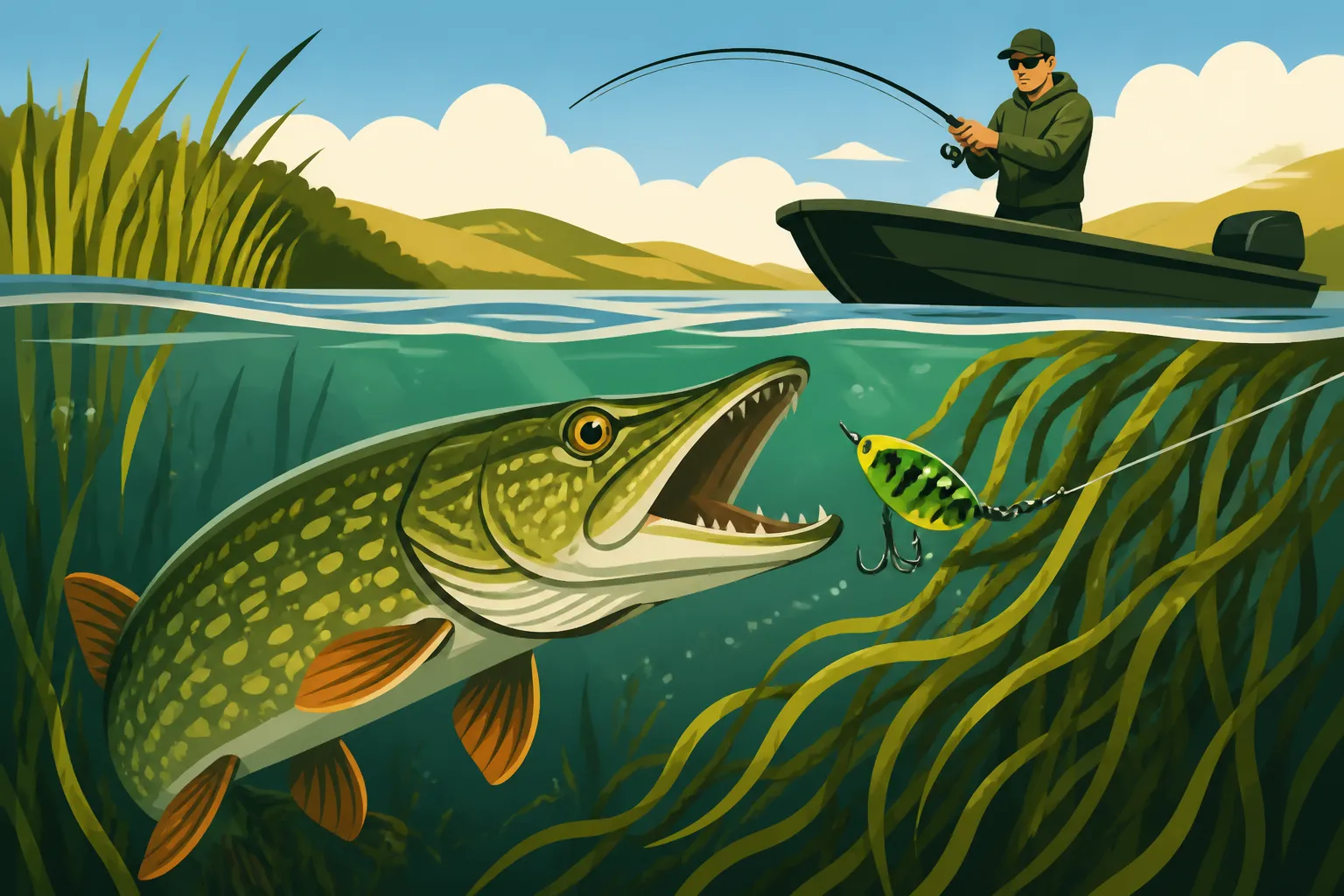
Spinnerbaits are workhorses for pike in weeds. Their single upright hook and wire arm deflect off vegetation, making them remarkably weedless. The flash and vibration of the blade often draw strikes from aggressive pike. White, chartreuse, and perch patterns are always great choices.
Spoon lures, especially those with a single hook dressed with a plastic grub or trailer, can also be effective. Weedless spoons, like the Johnson Silver Minnow, are designed to slide over weeds and are excellent for targeting pike hidden deep within. The erratic wobble of a spoon mimics a wounded baitfish, a meal pike can't resist.
Soft plastic jerkbaits or swimbaits, rigged weedless on a wide-gap EWG (Extra Wide Gap) hook, are incredibly versatile. They can be twitched and paused over submerged vegetation, mimicking dying baitfish. Colors that imitate local forage, such as white, grey, or natural perch patterns, are highly effective. The plastic body helps the hook remain snag-free until a fish strikes.
Topwater lures come alive when pike are feeding aggressively in shallower weed pockets or over submerged mats. Frogs, hollow-bodied soft plastic baits, and walk-the-dog style lures can draw explosive strikes. The excitement of a pike blowing up on a topwater lure is unmatched!
For a more comprehensive look at what works, consider consulting resources like the Best Lures for Northern Pike in Spring, which covers many excellent choices for various conditions.
| Lure Type | Best Use Case | Weed Resistance | Retrieval Style | Key Advantages |
|---|---|---|---|---|
| Spinnerbaits | Dense weeds, patchy weeds, searching | Excellent | Steady retrieve, stop-and-go, erratic jerks | Weedless, good vibration/flash, covers water quickly |
| Weedless Spoons | Submerged mats, heavy cabbage, targeting specific pockets | Excellent | Slow retrieve, lift-and-drop, steady wobble | Minimal snagging, classic wounded baitfish action |
| Soft Plastic Swimbaits/Jerkbaits (EWG rigged) | Medium to heavy weeds, subtle presentations, vertical jigging | Excellent | Twitch, pause, steady retrieve, jigging | Versatile, realistic profile, customizable action |
| Topwater Lures | Shallow weeds, calm conditions, aggressive fish | Good | Walk-the-dog, popping, steady retrieve | Exciting strikes, draws fish from cover |
| Inline Spinners | Weed edges, sparse weeds, open pockets | Moderate | Steady retrieve, varying speeds | Flash and vibration, triggers reaction strikes |
Tackle Accessories for Pike in Weeds
Beyond rods, reels, and lures, a few essential accessories will make your weed line pike fishing much more efficient and enjoyable.
First and foremost, a long-nosed pliers or jaw spreader is non-negotiable. Pike have rows of incredibly sharp teeth, and trying to unhook them with your bare hands is asking for trouble. A good pair of pliers allows you to safely remove hooks without risking injury to yourself or the fish. A jaw spreader can be used to hold their mouth open on larger fish, making hook removal even safer, especially if the hook is deep.
A large landing net with a rubberized mesh is also highly recommended. Pike can be quite feisty boatside, and a net helps secure the fish quickly and reduces the chance of it flopping off the hook and back into the weeds (or worse, onto your boat floor). The rubberized mesh is gentler on the fish's slime coat, aiding in their survival if you plan on releasing them.
Don't forget a good line cutter (braid scissors work best for braided line) and a variety of snaps and swivels if you plan on changing lures frequently. Lastly, a good quality tackle box or bag that can organize your assortment of pike lures is invaluable. You'll want easy access to different options as conditions change. You can find robust and organized tackle storage solutions on Amazon that are perfect for keeping your specialized pike gear in order.
Effective Techniques for Fishing Weed Lines
Successfully coaxing northern pike out of their weedy lairs requires a combination of precise casting, varied retrieval methods, and strategic lure presentations. It's about presenting your bait in a way that triggers their ambush instincts.
Casting and Retrieval Strategies
When casting to weed lines, accuracy is paramount. You want your lure to land precisely on the edge of the weeds, in a pocket, or along a clear lane. Overthrowing into thick cover will only result in snags and frustration. Practice makes perfect here. Consider how to effectively execute Northern Pike Casting Techniques.
Once your lure hits the water, the retrieval style depends heavily on the lure type and the density of the weeds. For spinnerbaits and weedless spoons, a steady retrieve often works best, allowing the lure to deflect off vegetation. Vary your retrieve speed: sometimes a fast burn triggers a reaction strike, while other times a slower, more deliberate retrieve is needed. Incorporating pauses and jerks can imitate a wounded baitfish, which is often irresistible to pike. If you feel your lure touch weeds, a sharp snap of the rod tip can often rip it free without a snag, often triggering a follow-up strike from a curious pike.
For soft plastics rigged weedless, consider a twitch-pause retrieve. Cast past the target area, let it sink slightly, then twitch your rod tip sharply a few times, allowing the lure to dart and glide. Pause briefly, letting it flutter naturally. Many strikes occur on the pause. Experiment with the length of your pauses; sometimes a longer pause is needed to entice a wary pike. Remember, pike are ambush predators, so making your lure appear vulnerable and easy to catch is often the key.
Trolling Weed Edges
While casting is effective for specific weed pockets and shallower lines, trolling can be an incredibly productive method for covering larger weed flats or long, extensive weed edges, especially in bigger waters like Lake Sakakawea or Devils Lake. The goal is to keep your lure running just outside or barely tickling the top of the weed line.
Medium- to deep-diving crankbaits are excellent for this, as they can be precisely tuned to run at a specific depth. Choose crankbaits that have a wide wobble and are durable enough to handle occasional contact with vegetation. Colors that mimic perch, shiners, or even bright attractor colors like firetiger or chartreuse can be very effective.
When trolling, pay close attention to your electronics. Your Best Fish Finders for North Dakota Lakes will help you identify the depth of the weed edge and the presence of any baitfish or deeper-sitting pike. Adjust your trolling speed and lure depth accordingly. Slow trolling (2-3 mph) is often most productive, allowing pike ample time to react to the lure. Use your Minn Kota or other trolling motor to maintain a consistent speed and path along the weed line. If you start snagging too many weeds, either speed up slightly, shorten your line, or switch to a shallower running crankbait. Conversely, if you're not getting any action, you might need to try a deeper diver or slow down to let your lure get closer to the weeds.
Jigging and Live Bait Presentations
Sometimes, pike are simply not chasing fast-moving lures. This is when jigging or presenting live bait can be incredibly effective, especially in deeper weed edges or during tougher bites.
For jigging, consider using heavier jigs (e.g., 3/8 to 1 ounce) tipped with a large plastic grub, swimbait, or even a minnow imitation. Work these jigs vertically or in short casts along the deeper weed edges. A lift-and-drop retrieve, allowing the jig to fall and flutter near the weeds, can trigger strikes. Pay close attention on the fall, as pike often hit a jig as it descends. Jigging is particularly effective when pike are holding tight to structure or when you've located a concentration of fish on your electronics.
Live bait, when permitted by regulations, can be a game-changer for wary pike. Large minnows, suckers, or even small perch (again, check local bait regulations carefully) rigged under a slip bobber are highly effective. Position your bobber stop so the baitfish hovers just above the weed tops or along the weed edge. The natural movement and scent of live bait are often irresistible. You can fish live bait from a stationary boat, casting to specific weed pockets, or by slowly drifting along a weed line. When a pike takes the bait, allow them a moment to fully engulf it before setting the hook to ensure a solid connection, especially with larger bait.
Remember, whether you're casting, trolling, or jigging, constantly observe your surroundings, adapt your techniques, and don't be afraid to experiment with different lures and retrieves until you find what the pike are biting on that day.
Navigating and Accessing Weed Line Hotspots
Successfully fishing weed lines for northern pike isn't just about the right lure; it's also about understanding the terrain, mastering boat control, and knowing how to approach these productive areas, regardless of whether you're in a boat or on shore.
Reading the Water and Using Electronics
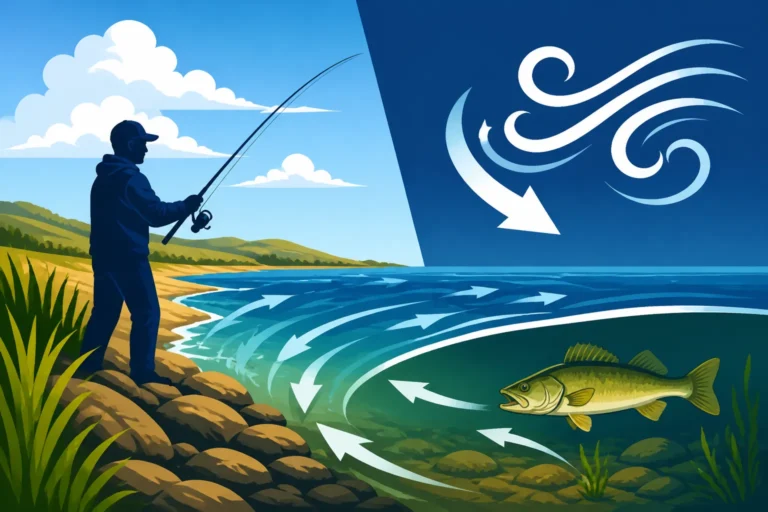
One of the most valuable skills for any angler targeting weed lines is the ability to "read the water." This means observing visual cues that indicate the presence of weeds and potential pike hiding spots. Look for differences in water color, which can signify changes in depth or vegetation density. Ripples or swirls can indicate fish activity or current patterns around weed beds. Even subtle changes in the wind's effect on the water's surface can show you where a weed line might be creating a break.
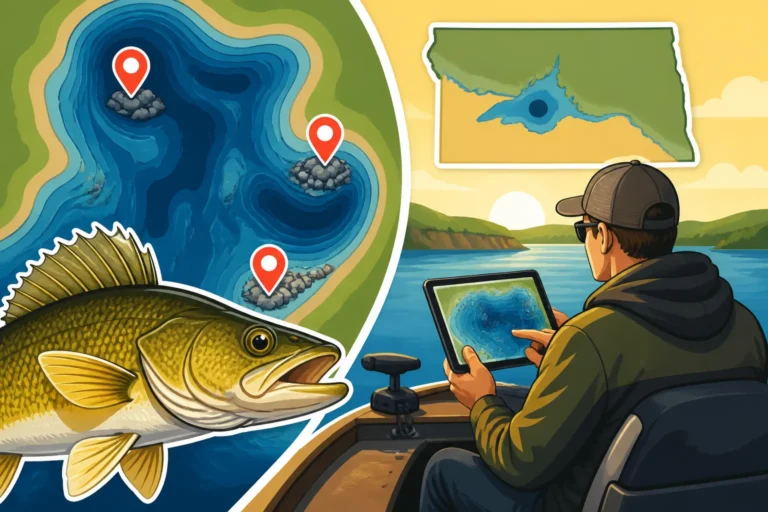
However, modern fish finders are truly indispensable tools for pinpointing weed line hotspots, especially for submerged vegetation that isn't visible from the surface. A good fish finder, like those discussed in the Best Fish Finders for North Dakota Lakes, will allow you to:
- Locate Weed Edges: Side imaging and down imaging transducers excel at showing the distinct lines where weeds meet open water. This is crucial for precise lure placement.
- Identify Weed Types and Density: Some units can differentiate between hard-bottom weeds (like cabbage) and softer weeds (like coontail), helping you target preferred pike habitats.
- Spot Baitfish: Weeds are baitfish magnets, and your electronics can help you see schools of baitfish, which often indicates pike nearby.
- Mark Pike: While pike can be difficult to mark when they're tucked tight into weeds, you'll often see them as distinct arches or blobs suspended just outside the weed edge, waiting to ambush.
Using your GPS, mark productive weed pockets, points, or lanes as waypoints. This allows you to return to these hotspots quickly and efficiently on future trips.
Boat Control and Positioning
Effective boat control is critical when fishing weed lines, whether you're casting or trolling. The goal is to maintain control while keeping a safe distance so you don't spook the fish.
For casting: A bow-mounted electric trolling motor, like those from Minn Kota or Motorguide, is your best friend. It allows for silent, precise positioning along the weed line. Use it to slowly creep along the outside edge, casting into pockets and along points. Maintain a slight distance (20-40 feet) from the visible or marked weed edge, casting your lure into the zone where pike are likely to be lurking. When fishing wind-blown weed lines, use your trolling motor to "hold" against the wind, allowing you to present your lure effectively into the wind or with the wind, depending on what the fish prefer.
For trolling: An electric trolling motor (or even a kicker motor on larger boats) allows you to maintain a consistent speed and track perfectly along the weed edge. Pay close attention to your speed and direction, making subtle adjustments to keep your lures in the strike zone without constantly dragging through weeds. Remember, pike often relate to specific contours or transitions, so precise boat control helps you stay on those productive lines.
If you are using a larger vessel, understanding the nuances of the Best Boats for North Dakota Lakes will assist in navigating the vastness of lakes such as Lake Sakakawea, ensuring you can access these weed-line havens.
Shore Fishing and Kayak Strategies
Even without a large boat, weed lines are perfectly accessible for shore anglers and kayakers, though it requires a slightly different approach.
Shore Fishing: Many North Dakota lakes and rivers have public access points that offer direct access to weed-lined shorelines. When fishing from shore, focus on points, coves, and areas where the weed line comes within casting distance. Longer rods (7-9 feet) can help you reach further out. Use weedless lures like spinnerbaits, weedless spoons, and Texas-rigged soft plastics to avoid constant snags. Look for visible weed edges or patches that break up the uniform shoreline. Often, the transition where a hard bottom meets softer, weedier areas can be a hotspot. Our guide on How to Cast for Northern Pike From Shore provides additional tips for land-based angling.
Kayak Fishing: Kayaks offer a fantastic stealth advantage for weed line fishing. They are quiet, can navigate shallow water, and allow you to get right into those tight pockets and lanes that larger boats can't reach. The Best Kayaks for North Dakota Fishing are stable enough for casting and can be easily maneuvered with a paddle or even a small electric motor. When kayak fishing, approach weed lines slowly and quietly. Use your paddle to steer and adjust your position, keeping your casts accurate. The same weedless lures that work from a boat will be effective from a kayak. Pay attention to wind direction, as it can make kayak fishing challenging. An anchor can be invaluable for holding your position on windy days or when you find a productive stretch of weeds.
Regardless of your mode of transport, approaching weed lines quietly and with precision will significantly increase your chances of success.
Advanced Tips and Troubleshooting
Even with the right gear and techniques, fishing weed lines for northern pike presents unique challenges. Knowing how to troubleshoot common issues and refine your approach can elevate your success rate.
Dealing with Snags and Break-offs
The unfortunate reality of fishing dense weed lines is that snags are almost inevitable. It's not a matter of if, but when. The key is to minimize them and recover efficiently.
Minimizing Snags:
- Weedless Lure Selection: Prioritize lures explicitly designed to be weedless, as discussed earlier.
- Accurate Casting: Avoid overshooting your target. Landing a lure deep in impenetrable weeds is a guaranteed snag. Aim for the edges, pockets, and lanes.
- Rod Angle and Retrieval: Keep your rod tip up when retrieving over shallow weeds to help lift the lure over snags. When you feel a weed, a sharp snap can sometimes free the lure.
- Line Check: Regularly check your line, especially braided line, for frays or weak spots after battling a fish or freeing a snag. Even small nicks can lead to a heartbreaking break-off on your next trophy fish.
Dealing with Snags:
- Don't Yank Immediately: When you feel a snag, resist the urge to violently yank. Often, a gentle jiggle or a change in rod angle can free the lure.
- "Bowstring" Technique: If persistent, point your rod directly at the snag, pull the line taut, and then "bowstring" the line by plucking it like a guitar string. The vibrations can sometimes dislodge the hook.
- Go to the Snag: If safe and possible, motor or paddle directly to the snag. From a vertical position, you can often free the lure more easily. Use a telescopic pole with a hook retriever if you have one.
- Line Savers: Consider carrying a line-saving tool, which can sometimes push a snagged lure free.
- Sacrifice the Lure: Sometimes, the only option is to break off. Better to lose a lure than damage your rod or reel. This is why having enough spare leaders is crucial.
Despite your best efforts, sometimes a Pike will take you deep into the weeds, and the fight might seem lost. Knowing How Big Do Northern Pike Get in North Dakota? can prepare you for the kind of battles you might face.
Adapting to Weather and Water Conditions
Pike, like all fish, are influenced by environmental factors. Being able to adapt your strategy to changing weather and water conditions can turn a slow day into a successful one.
- Wind: Wind can be a blessing or a curse. A moderate chop can break up the water's surface, providing cover for pike and making them less wary. Wind also pushes baitfish into weed lines, concentrating pike. However, strong winds make boat control difficult. When it's windy, focus on wind-blown points and edges of weed beds.
- Sunlight: Bright, sunny days often push pike deeper into the weed cover or into shadier areas. Use lures that mimic baitfish darting in and out of cover. On cloudy days or during low-light conditions (dawn/dusk), pike are often more active on the weed edges and can be more willing to chase faster-moving baits.
- Water Temperature: As mentioned in the seasonal movements, water temperature dictates pike activity levels. In colder water (early spring, late fall), a slower presentation might be needed. As water warms, pike become more aggressive and will chase faster lures.
- Water Clarity: In clear water, pike can be more wary. Use natural colors and longer fluorocarbon leaders. In stained or turbid water, brighter colors (chartreuse, orange) and lures with more vibration (spinnerbaits with larger blades) can help pike locate your offering.
For more general knowledge about the species you're targeting in various conditions, a good resource to review is the North Dakota Northern Pike Fishing Guide.
Safe Pike Handling and Release
Northern pike are incredible sportfish, but their sharp teeth and powerful jaws demand respect. Proper handling is essential for both your safety and the health of the fish, especially if you plan to release them.
Safety First:
- Pliers/Jaw Spreader: Always have your long-nosed pliers or jaw spreader ready before you even land the fish.
- Gaff vs. Net: For most recreational fishing, a large rubberized landing net is preferable to a gaff, which can cause significant injury to the fish if you intend to release it.
- Hold Firmly: When handling a pike, grip it firmly behind the head and gill plates, avoiding the actual gills. You can also use a fish gripper tool to secure its lower jaw.
Unhooking and Release:
- Minimize Air Time: Keep the fish in the water as much as possible, especially if you're taking photos. Prolonged air exposure can stress a fish and reduce its chances of survival.
- Quick Hook Removal: Using your pliers, carefully remove the hook. If the hook is deep, consider cutting the line and leaving the hook in, as the hook will often rust out. Trying to forcibly remove a deeply embedded hook can cause more harm.
- Revive the Fish: If the fish seems sluggish, hold it gently in the water, facing into the current, and move it back and forth to help oxygenate its gills until it swims away under its own power.
- Know the Regulations: Be aware of the North Dakota fishing regulations, including size limits and possession limits for northern pike. If you do plan to keep a pike, you might be interested in learning How to Fillet a Northern Pike Without Bones to get the most out of your catch.
By mastering these advanced tips and committing to safe handling practices, you'll not only enhance your fishing success but also contribute to the conservation of North Dakota's incredible northern pike fishery.
Disclaimer
Please be aware that fishing regulations, including licensing requirements, season dates, and limits, can change. Always consult the latest North Dakota Game and Fish Department (NDGFD) proclamations and regulations before heading out on the water. This guide is for informational purposes only and should not replace official sources.