Deep Water Structure Fishing Techniques
It’s a feeling every angler in North Dakota knows well: you’re out on a vast lake like Sakakawea or Devils Lake, the wind is whipping, and you just know there are fish down there, but finding them feels like searching for a needle in a haystack. The surface looks featureless, yet beneath the waves lie incredible hidden worlds—underwater hills, old river channels, and rock piles. This guide is all about equipping you with the knowledge and techniques to confidently unlock the secrets of deep water structure, turning those frustrating blank days into memorable catches.
Decoding Deep Water Structure in North Dakota
When we talk about "deep water structure" in North Dakota, we're really talking about anything on the lakebed that's different from the surrounding area. It's not just about the deepest parts of the lake; it's about significant changes in depth, composition, or cover that break up an otherwise monotonous bottom. Fish, especially game fish like walleye, perch, and even some of our big northern pike, are incredibly structure-oriented. They use these features for ambush points, protection from predators, and staging areas for feeding or spawning. Ignoring structure is like trying to find game in a forest without looking for trails or clearings – you might get lucky, but you're missing the obvious clues.
What Defines "Deep Water Structure"?
Deep water structure refers to any distinct feature on the bottom of a lake or river that’s submerged in deeper sections of the water column. This could be anything from subtle changes in depth to dramatic underwater mountains. Think about what the landscape looks like above water – rolling hills, sharp cliffs, meandering rivers – and then imagine that same complexity underneath. These features create currents, eddies, and areas of shade or warmth that attract baitfish, and where baitfish go, predatory game fish follow. It’s a complete ecosystem centered around these variations.
For instance, on Lake Sakakawea, which is essentially a flooded river valley, you'll find submerged points that were once hillsides, old creek beds that are now deep trenches, and even entire flooded towns or farmsteads. These aren't just random bumps; they are critical habitats. Devils Lake, with its fluctuating water levels, has submerged trees, fences, and roadbeds that become phenomenal deep water structure, constantly changing as the lake expands and contracts.
Why Structure is a Fish Magnet
Fish, like us, seek comfort and advantage. Deep water structure provides both. For one, it offers refuge from harsh conditions. In summer, deeper water is cooler and holds more oxygen, making structure in these areas a vital cool-water sanctuary. In winter, deeper spots might be slightly warmer or offer protection from strong currents under the ice. But beyond comfort, structure is prime real estate for hunting. Points, humps, and ledges act as natural ambush points where predators can wait for unsuspecting baitfish to swim by. The varying depths and currents around structure also concentrate food sources, making it easier for fish to find a meal without expending too much energy.
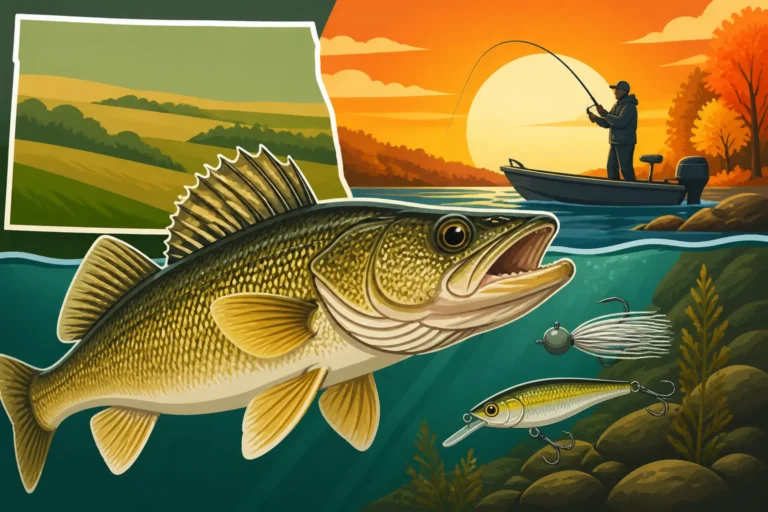
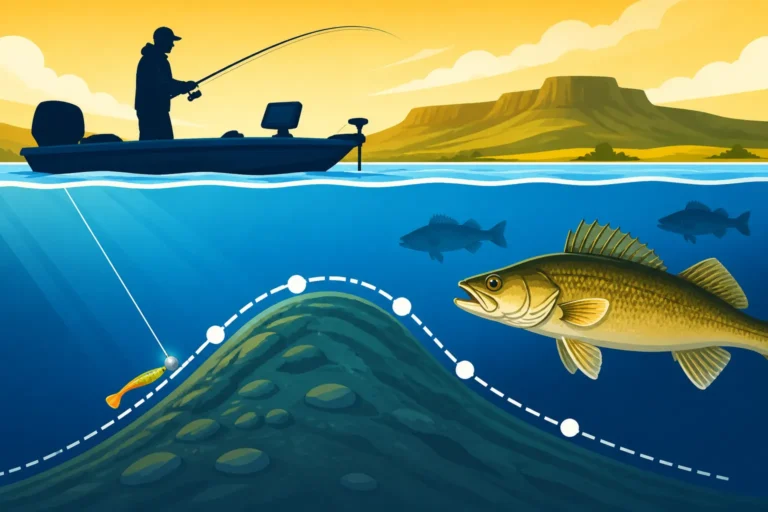
Imagine a walleye lurking at the edge of a deep submerged humps, its dark back blending perfectly with the bottom. As a school of minnows passes over the top, the walleye darts out, grabs a meal, and retreats to its safe haven. Without that hump, those walleye would be scattered, harder to find, and less likely to be in a consistent feeding pattern. This is why when you find fish on structure, you often find several – it’s a shared, advantageous territory.
Common Types of Deep Water Structure
North Dakota lakes offer a fascinating variety of deep water structures, each demanding a slightly different approach. Knowing what to look for on your electronics or maps is the first step.
- Humps and Mounds: These are essentially underwater hills that rise from the bottom, but don't break the surface. They can be small, isolated knolls or sprawling plateaus. Fish often hold on the windward side of a hump where currents push bait, or on the leeward side in calmer water. On Lake Sakakawea, you'll find numerous humps that become prime walleye spots, especially during mid-summer.
- Points and Submerged Islands: Points are extensions of land that taper out into the water. Submerged islands are similar but are completely separated from the mainland. Both provide excellent travel corridors and feeding areas. The "nose" of the point or island, where it drops off into deeper water, is often a hotspot. Look for these on topographical maps of lakes like Lake Oahe or the Missouri River.
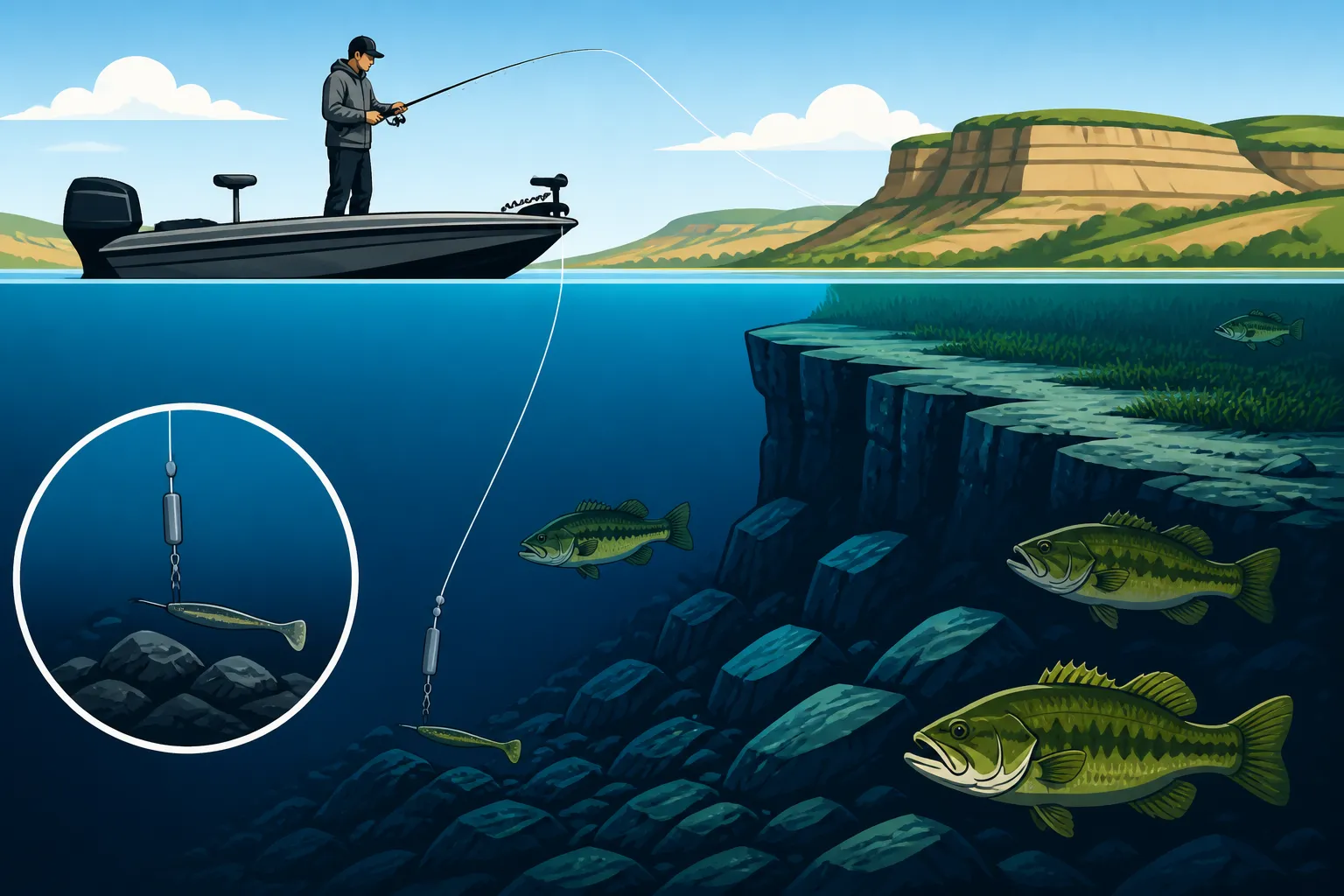
- Ledges and Breaks: A ledge is a sharp, vertical or near-vertical drop-off. A break is a more gradual but distinct change in depth. These provide multiple depth zones for fish and can act as highways for migrating schools. Walleye love to cruise ledges, moving up and down to feed at different depths depending on light conditions and bait presence. The old river channels in Devils Lake are essentially massive, extensive breaks.
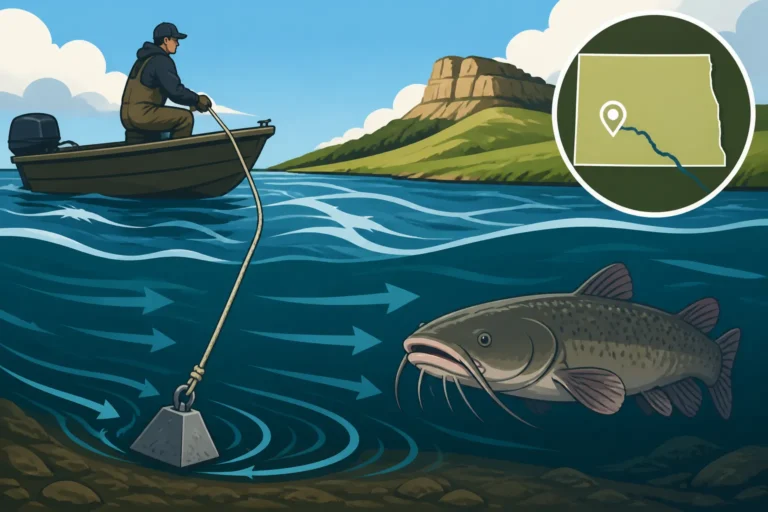
- Old Riverbeds and Trenches: Many of North Dakota’s larger reservoirs, like Lake Sakakawea, were created by damming rivers. The original riverbeds remain as deeper trenches running through the lake. These deep channels are often current-swept and can hold significant numbers of fish, especially catfish in the Red River or walleye in the main Missouri River channel.
- Man-Made Structures: Don't forget the historical impact of human activity. Flooded roadbeds, building foundations, fence lines, and even old bridge pilings can become exceptional fish habitat. These are particularly prevalent in reservoirs with fluctuating water levels, offering hard cover and unique ambush points. For example, parts of Devils Lake are famous for submerged timber and roads, creating fantastic Devils Lake Perch Fishing Spots.
Essential Arsenal for Deep Water Structure Anglers
Tackling deep water structure isn’t just about knowing where to go; it’s about having the right tools for the job. You wouldn’t try to build a house with a butter knife, and you shouldn’t try to fish deep water with inadequate gear. The equipment needs to handle heavier weights, deeper lines, and the sometimes brutal conditions our North Dakota waters can throw at you. From sensitive rods to sophisticated electronics, every piece plays a crucial role in your success.
Rods, Reels, and Line Selection
Choosing the right rod, reel, and line can make or break your deep water structure fishing experience. It's a balance of sensitivity, power, and durability.
- Rods: For deep water, you generally want a rod with a good backbone but a sensitive tip. A medium-heavy to heavy power rod, typically 6'6" to 7'6" in length, is ideal. The stiffer backbone allows you to set the hook effectively through a lot of line and handle heavier weights. The sensitive tip is crucial for detecting subtle bites, especially when your bait is far below the surface. Many anglers swear by graphite rods for their superior sensitivity. When you're jigging a ½ oz or ¾ oz jig in 30 feet of water, feeling that faint thunk of a walleye inhale your bait is everything. Check out guides on Best Fishing Rods for North Dakota Anglers for more specific recommendations.
- Reels: Matching your reel to your rod is important. For jigging and rigging, a spinning reel in the 2500-3000 size range with a smooth drag system is usually perfect. If you're trolling or using heavier weights for catfish, a baitcasting reel offers more power and better line control, especially for accurate drops. The key is a strong, reliable retrieve and a drag that won't give out when a big walleye or northern pike decides to make a run.
- Line: This is perhaps the most critical component for deep water. You need line that minimizes stretch to maximize sensitivity and hook-setting power.
- Braided Line: This is king for deep water. It has virtually no stretch, so you feel every bump and bite. A 10-20 lb test braided line is common for walleye, often with a 6-10 lb fluorocarbon leader. The leader provides invisibility to fish in clear water and offers abrasion resistance against sharp rocks or zebra mussels. Brands like PowerPro or Berkley X9 are popular choices you can find on Amazon.
- Fluorocarbon Line: Some anglers prefer straight fluorocarbon for its low visibility and good abrasion resistance, especially in clear lakes. However, it does have more stretch than braid, which can reduce sensitivity in very deep water. A 10-12 lb test can work, particularly if you're not going excessively deep.
- Monofilament Line: While good for topwater or shallower presentations, monofilament's stretch makes it less ideal for deep water structure fishing where sensitivity is paramount. It’s best to avoid it for these specific techniques. For a deeper dive, read up on Best Fishing Line for North Dakota Lakes.
The Indispensable Role of Electronics
Gone are the days of guessing. Modern marine electronics are your eyes and ears beneath the waves, turning what was once a blind endeavor into a strategic hunt. You absolutely cannot effectively fish deep water structure without reliable electronics.
- Sonar (2D/Traditional Sonar): This is your bread and butter. It uses sound waves to paint a picture of what's directly beneath your boat. You'll see the bottom contour, identify hard vs. soft bottom, and most importantly, mark fish arches. Learning to interpret these arches is key. A single arch means a single fish, while a cluster means a school. The depth and shape tell you a lot about the fish's size and how it's relating to the bottom.
- Down Imaging/DownScan: This technology provides a photo-like view directly below your boat, rendering structure with incredible detail. You can easily distinguish between rock piles, submerged timber, or even schools of baitfish. It's excellent for identifying what the structure actually is, helping you choose the right presentation.
- Side Imaging/SideScan: If you want to cover ground and find structure off to the sides of your boat, Side Imaging is revolutionary. It scans out to each side, revealing humps, points, and even individual fish that might be hundreds of feet away. This is invaluable for quickly locating vast areas of structure without driving directly over them. If you’re fishing big water like Lake Sakakawea, this is a game-changer for finding those hidden gems.
- GPS and Chartplotter: Once you find a piece of promising structure, mark it! Your GPS allows you to save waypoints and navigate precisely back to productive spots. A chartplotter, which integrates GPS with detailed lake maps, allows you to see contours, depths, and potential structure before you even get there. Many units come pre-loaded with Lakemaster or Navionics maps, which are incredibly detailed for North Dakota waters. Understanding How to Find Walleye Structure With a Map is crucial here. Learning to utilize features like waypoint management and creating trails can improve your efficiency exponentially. Brands like Humminbird and Garmin offer excellent units suitable for these tasks.
Lures and Baits Tailored for Depth
The lures and baits you choose need to reach the fish and appeal to them in their deep water environment. This often means heavier options and those designed for vertical presentation.
- Jigs: Heavy jigs (½ oz to 1 oz or more) are fundamental. Paired with soft plastics (paddle tails, curly tails, or straight worms) or live bait (minnows, leeches, nightcrawlers), they are incredibly versatile. Jigging spoons are also fantastic for deep water, especially in winter or when fish are aggressively feeding on baitfish. The flash and flutter mimic injured bait, triggering reactionary strikes.
- Bottom Bouncers and Spinners/Crawler Harnesses: This is a classic North Dakota walleye presentation. A bottom bouncer keeps your bait near the bottom while your spinner rig, often tipped with a crawler or leech, trails behind. The flash and vibration of the spinner, combined with live bait, are irresistible to walleye. This setup is excellent for slowly covering deep flats, ledges, or the edges of humps.
- Deep-Diving Crankbaits: While not strictly "structure fishing" in the jigging sense, deep-diving crankbaits are essential for controlled trolling over deep structure. Lures like Rapala Down Deep Husky Jerks or Berkley Flicker Shads can reach depths of 20-30 feet or more, allowing you to present a wobbling, baitfish-imitating lure right into the strike zone. Trolling these can be a highly effective way to trigger bites from actively feeding fish, especially during summer.
- Live Bait Rigs: Simple live bait rigs, such as a slip-sinker rig with a hook or a Lindy Rig, are incredibly effective. These allow you to present a minnow, leech, or nightcrawler naturally right on the bottom or suspended slightly above. The key is to use enough weight to stay in contact with the bottom without anchoring your bait in one place. These are excellent for finicky fish that might shy away from artificials.
Mastering Deep Water Structure Fishing Techniques
Once you've located promising structure and geared up, it's time to put theory into practice. Fishing deep water structure requires specific techniques to maintain contact with the bottom, present your bait effectively, and detect those often subtle deep water bites. Each method has its time and place, and becoming proficient in all of them will dramatically increase your success.
Vertical Jigging for Pinpoint Accuracy
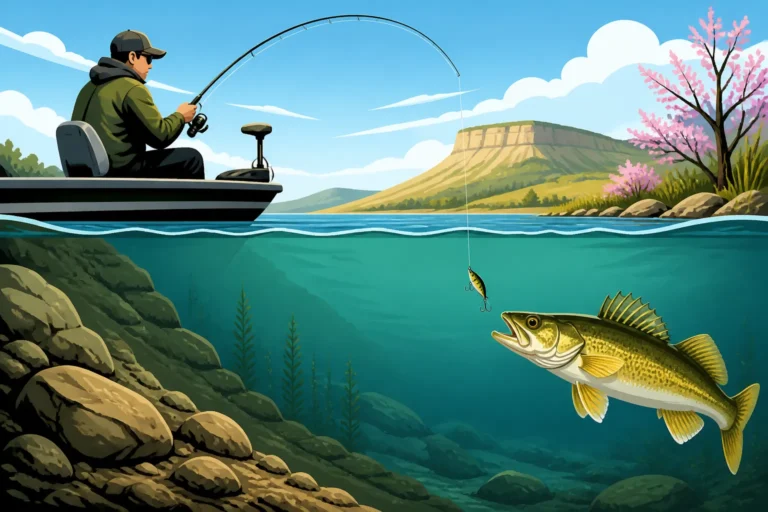
Vertical jigging is one of the most direct and effective ways to target fish holding tightly to deep water structure. The goal is to keep your lure as close to directly below your boat as possible, allowing for maximum control and feel.
- Boat Positioning: The most crucial aspect of vertical jigging is boat control. You need to position your boat directly over or just slightly upwind/upcurrent of the structure you want to fish. Using your trolling motor (like a Minn Kota Terrova with Spot-Lock) is invaluable here. Spot-Lock allows you to virtually anchor your boat in place, even in windy conditions, keeping you over that precise spot. Without it, you'll be constantly adjusting, which can be exhausting and reduce your fishing time.
- Presentation: Once positioned, drop your jig straight down until it hits the bottom. Engage your reel and slowly lift the rod tip, then let the jig fall back down on a semi-slack line. The "fall" is often when the strike occurs, so pay close attention. Experiment with the height of your lift and the speed of your fall. Sometimes a gentle twitch is all it takes; other times, a more aggressive rip-and-drop is necessary. Always maintain enough tension to feel the jig, but allow it to fall naturally.
- Bite Detection: Deep water bites can be incredibly subtle. It might feel like a slight "thump," a sudden weightlessness, or simply the line going slack when it should still be falling. The key is to watch your line and feel for any anomaly. With braided line, you'll feel more, but it still requires focus. Don't hesitate to set the hook if something feels "off." Often, that "snag" you thought you felt was actually a walleye with your jig in its mouth.
Live Bait Rigging Strategies
When fish are less aggressive or holding tighter to the bottom, live bait rigging can often outperform artificial lures. The natural action and scent of live bait are hard for any fish to resist.
- The Slip Sinker Rig: This is a timeless classic. It consists of a sliding sinker (typically an egg sinker or walking sinker) above a swivel, a fluorocarbon leader, and a hook. The beauty of the slip sinker is that fish can pick up the bait and run without feeling the weight of the sinker, giving you time to let them take it deeper before setting the hook. This is especially effective when fish are finicky.
- Lindy Rigs and Other Bottom Walkers: Lindy Rigs are a popular variation, often featuring a walking sinker that's less prone to snagging. They are designed to be slowly dragged or drifted along the bottom, allowing the live bait (minnows, leeches, or crawlers) to enticingly float just above the structure. This is a great technique for covering deep flats or the edges of humps where fish might be spread out. For a comprehensive overview, look into Best Live Bait for North Dakota Walleye.
- Drifting vs. Trolling: You can deploy live bait rigs by slowly drifting with the wind or current, or by using your trolling motor to move at a very slow speed (0.5 to 1.5 mph). When drifting, pay attention to how your line is entering the water – it should be at a slight angle. If it's straight down, you're going too fast. The goal is to present the bait naturally, so it looks like an easy meal.
Controlled Trolling Over Deep Structure
Trolling with crankbaits or even spinner rigs can be incredibly effective for covering larger areas of deep water structure, especially when fish are actively feeding and somewhat dispersed. It’s a search technique that allows you to find active fish and then potentially switch to more precise methods once a pattern emerges.
- Deep-Diving Crankbaits: As mentioned, lures like the Rapala Deep Husky Jerk or Berkley Flicker Shad in various sizes and colors are excellent for reaching depths of 15-30 feet or more. Match your lure's diving depth to the top of the structure or the depth at which you're marking fish.
- Trolling Motor Control: Maintaining a consistent speed and precise boat path is crucial. Again, a GPS-enabled trolling motor is a massive advantage. You can program routes to follow contour lines, zig-zag over humps, or make precise passes over a known hotspot. Experiment with speeds between 1.5 and 3 mph; sometimes a slight acceleration or deceleration can trigger a strike.
- Lead Core and Snap Weights: To get lures even deeper or to fine-tune depths, anglers often employ lead core line or snap weights. Lead core line has a lead core inside a braided sheath, allowing it to sink a certain amount per color (typically 10 yards). Snap weights are lead weights that clip onto your main line, adding extra depth to your crankbaits. Understanding how much line out, weight, and speed affects depth is key for precise presentations. This can become a complex but highly rewarding technique.
Interpreting Your Electronics: Finding the Hidden Gems
Your fish finder isn't just a pretty screen; it's your window to the underwater world. Learning to effectively interpret what it's showing you is the difference between blindly casting and surgically targeting fish. It takes practice and patience, but mastering this skill will revolutionize your deep water structure fishing. Many anglers initially struggle with how to read their units, but with a bit of dedication, you'll start seeing patterns and identifying fish with confidence. For more general insights, consider checking out our guide on Best Fish Finders for North Dakota Lakes.
Demystifying Your Sonar and Down Imaging
Understanding the basics of what your sonar is telling you is the foundation of deep water structure fishing. Each ping tells a story.
- Reading the Bottom: Your 2D sonar will show the bottom as a solid line. A hard, jagged bottom (like rocks) will appear thicker and often have a strong secondary return (a weaker echo below the main one). A soft, muddy bottom will look thinner and less distinct. This tells you about the habitat. For instance, if walleye are feeding on crayfish, a hard, rocky bottom might be more productive.
- Identifying Structure: Humps and points will show up as rising contours. Ledges will be sharp drops. Submerged timber will look like vertical lines or jagged blobs extending up from the bottom. Down Imaging makes identifying these structures much clearer, almost like a black and white photograph. You'll see individual branches on a submerged tree or distinct boulders in a rock pile. The more time you spend looking at different types of structure with your Down Imaging, the better you'll become at recognizing them.
- Marking Fish: Fish typically appear as "arches" on 2D sonar. A complete arch means the fish passed through the full cone of your transducer. Partial arches or lines mean it was on the edge. The size and thickness of the arch can give you a clue about the fish's size. Small baitfish often show up as clouds or scattered dots. On Down Imaging, fish often appear as bright white dots or small, distinct shapes. If they're tightly associated with the bottom or structure, they might blend in, so look for those small anomalies. Learning your Best Fish Finder Settings for Walleye can significantly improve target separation.
Using GPS and Mapping for Structure Identification
Your GPS and detailed mapping charts are just as important as your sonar for deep water structure fishing. They help you proactively find potential spots and accurately navigate to them.
- Pre-Fishing Reconnaissance: Before you even leave the dock, use your chartplotter or a mapping app (like Navionics or Lakemaster on your phone/tablet) to study the contours of the lake. Look for abrupt changes in depth, long tapering points, isolated humps, or old river channels. These are your starting points. Mark potential waypoints for investigation.
- Creating Custom Maps: Many modern units allow you to create your own custom maps as you drive around. This is incredibly powerful in North Dakota lakes, where contours can change due to fluctuating water levels or siltation. By recording sonar data, you can build highly detailed, personalized maps of your favorite spots, revealing subtle structure that might not be on commercial charts.
- Waypoint Management: As you find productive areas, mark them as waypoints. Give them descriptive names ("Walleye Hump 1," "Rocky Ledge") so you remember what you found there. Use your GPS to make precise passes over these waypoints, staying on the fish. You can also track your trolling paths, seeing exactly where you caught fish and replicating those successful routes. This systematic approach is key to consistently finding fish, especially when learning How to Fish Deep Water Humps for Walleye.
Seasonal Adaptations for Deep Structure Success
Fish don't stay in one place all year, and neither should your approach to fishing deep water structure. Their movements are largely dictated by water temperature, available food, and spawning cycles. Understanding these seasonal shifts is paramount to knowing when and how to target deep water structure effectively in North Dakota. Our guide on Seasonal Fish Movement Patterns in North Dakota Lakes can give you an even broader context.
Spring Transition and Deep Structure
Spring is a time of change, with ice-out transforming the lakes and rivers. While many fish, especially walleye, are focused on shallower spawning grounds immediately after ice-out, they will retreat to deeper structure as the water warms and they recover.
- Post-Spawn Recovery: After the exhausting spawn, many walleye, for example, will move to nearby deep water structure to recuperate. This might be the first deep breaks off of spawning flats or submerged points that offer easy access to both shallow and deep water. They won't be as aggressive immediately after spawning, but they will feed.
- Emerging Baitfish: As baitfish become more active in the warming waters, they too will start to relate to deeper structure. Walleye, northern pike, and other predators will follow, using these features as ambush points for feeding. Look for structure adjacent to spawning areas or connecting shallow bays to deeper main lake basins. Slow presentations with live bait, like minnows on a slip-sinker rig, can be highly effective during this transition period.
Summer's Deep Water Refuge
Summer means warm surface water, and for many cold-water species or even those seeking comfort, deep water becomes their primary refuge. This is when deep structure truly shines.
- Cool Water & Oxygen: In the heat of July and August, the surface waters of large North Dakota lakes can become quite warm, and oxygen levels can deplete in shallower, stagnant areas. Fish retreat to the cooler, more oxygenated waters found around deep humps, ledges, and river channels.
- Consistent Patterns: Once you find fish on deep structure in summer, the patterns tend to be more consistent day-to-day than in other seasons. They'll relate to specific sides of humps (often the wind-blown side or the deeper edge), or concentrate in specific depth ranges on ledges. Trolling deep-diving crankbaits or presenting bottom bouncers with crawler harnesses can be incredibly effective when fish are scattered but feeding. Vertical jigging over known schools marked on your electronics is also a killer tactic for finding fish that are stacked up. This is often the Best Time of Day to Catch Walleye in deep water, especially early mornings and evenings.
Fall Feeds on Deep Structure
As water temperatures begin to drop in the fall, many fish enter a "feeding frenzy" mode, bulking up for the long winter ahead. Deep water structure continues to be a prime location, often holding large schools of actively feeding fish.
- Migration Routes: Fish will often use deep structure as migration routes, moving from summer haunts to wintering areas, or following baitfish that are also moving. Deep points and main lake humps are key transition areas.
- Aggressive Feeding: Fall can offer some of the most aggressive deep water bites. Fish are actively chasing down bait. This is a great time to use larger jigs, heavier spoons, or more aggressive trolling presentations with deep-diving crankbaits. The fish are often more tolerant of boat noise and will hit a wider variety of lures. Focus on structure adjacent to deeper basins, as fish will be moving between feeding grounds and eventually deeper winter holes. The North Dakota Fishing Season Calendar can help you time your trips.
Troubleshooting Common Deep Water Challenges
Deep water structure fishing, while rewarding, isn't without its challenges. Snags, lost fish, and unpredictable behavior are all part of the game. Being prepared to troubleshoot these common issues will save you frustration and keep you fishing effectively. It’s important to remember that every angler, even the most seasoned veteran, faces these hurdles.
Dealing with Snags and Break-offs
Snags are an inevitable part of fishing structure. It's a sign you're in the right place, but too many can quickly drain your tackle box and your patience.
- Prevention is Key: The best way to deal with snags is to try and prevent them. Use lures appropriate for the structure (e.g., a weedless jig near timber, a bottom bouncer with a wire arm over rocks). Keep your line as vertical as possible when jigging or using live bait rigs to minimize the angle at which your lure can get wedged. When trolling, understand your crankbait’s diving depth and avoid running it directly into heavy cover.
- The "Pop" Technique: If you do get snagged, don't just pull harder. First, give some slack to your line, then quickly snap your rod tip upwards. This "pop" can often free the lure. Sometimes, driving your boat in the opposite direction from which you were snagged can also free a lure.
- Sacrificial Rigs: For especially snaggy areas, consider using sacrificial rigs. For example, some bottom bouncers are designed with breakaway arms. Or, tie a lighter line to your sinker when rigging, so if the sinker snags, you only lose the weight, not your entire rig. Keeping a supply of spare sinkers from Amazon can save a trip.
- Sharp Hooks: Ensure your hooks are sharp. A dull hook can deflect off a fish's mouth, leading to a lost fish, or get caught more easily on structure. A hook sharpener is a small, but vital tool.
Adjusting to Changing Fish Behavior
Fish are not robots; their behavior can change rapidly due to weather, pressure, or even time of day. What worked yesterday might not work today.
- Environmental Factors: Pay close attention to changes in weather, wind direction, and barometric pressure. A strong cold front can shut down a bite, pushing fish deeper or making them less active. Adjust your presentation: slow down, use smaller baits, or switch to live bait. If the wind picks up, fish might move to the calmer, leeward side of a hump.
- Experimentation: If the bite dies, don't be afraid to change things up.
- Change Lure Color/Size: What worked in clear water might not work in stained water. What worked for active fish might be too big for finicky ones.
- Change Presentation Speed/Action: Speed up your retrieve, slow it down, add more pauses, or try more aggressive jigging motions.
- Change Depth: Even a few feet can make a huge difference. Fish might move slightly up or down a ledge.
- Change Location: If a spot that was hot goes cold, don't be stubborn. Move to another piece of similar structure, or try a different type of structure entirely. Sometimes, fish just move on.
- Confidence is Key: Even when things are tough, maintaining a positive attitude and confidence in your techniques is important. Keep experimenting, keep learning, and eventually, you'll crack the code. Every tough day on the water teaches you something new, making you a better angler in the long run.
Deep Water Structure Fishing Technique Comparison
| Technique | Primary Lure/Bait | Best For | Advantages | Disadvantages |
|---|---|---|---|---|
| Vertical Jigging | Jigs (soft plastics, spoons) | Precise targeting, active fish, small areas | Max sensitivity, precise bait placement | Requires excellent boat control, small area |
| Live Bait Rigging | Minnows, leeches, nightcrawlers | Finicky fish, slow presentation, larger areas | Natural presentation, high success rate with live bait | Slower coverage, more prone to snags with exposed hooks |
| Controlled Trolling | Deep-diving crankbaits, spinner rigs | Covering large areas, locating active fish | Efficient search method, triggers reaction strikes | Less precise bait placement, requires specific gear |
| Bottom Bouncing | Spinner rigs with live bait | Covering contours, moderate depths | Good for covering ground, stays near bottom | Can be snag-prone in heavy cover, slower than crankbait trolling |
Disclaimer
Fishing regulations, license requirements, and safety guidelines can change. Always consult the most current North Dakota Game and Fish Department regulations before heading out on the water. This guide is for informational purposes only and does not constitute legal advice. Safe boating and fishing practices are essential for everyone's enjoyment and well-being.