How to Fish Deep Water Humps for Walleye
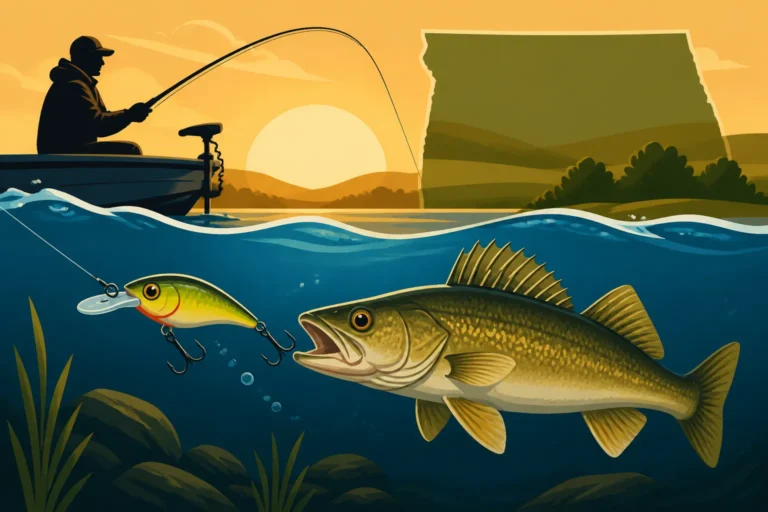
It's incredibly frustrating when you're out on the vast waters of a North Dakota lake, seeing plenty of open water but struggling to pinpoint where those elusive walleye are hiding, especially when they've retreated to deeper zones. This guide is here to demystify deep water humps, those underwater treasures that act as magnets for walleye, and arm you with the knowledge and techniques to effectively fish them, turning those frustrating days into successful ones.
Understanding Deep Water Humps and Why Walleye Love Them
Before we can even think about casting a line, we've got to understand what we're looking for beneath the surface. Deep water humps are more than just bumps; they're vital ecosystems for walleye.
What Exactly is a Deep Water Hump?
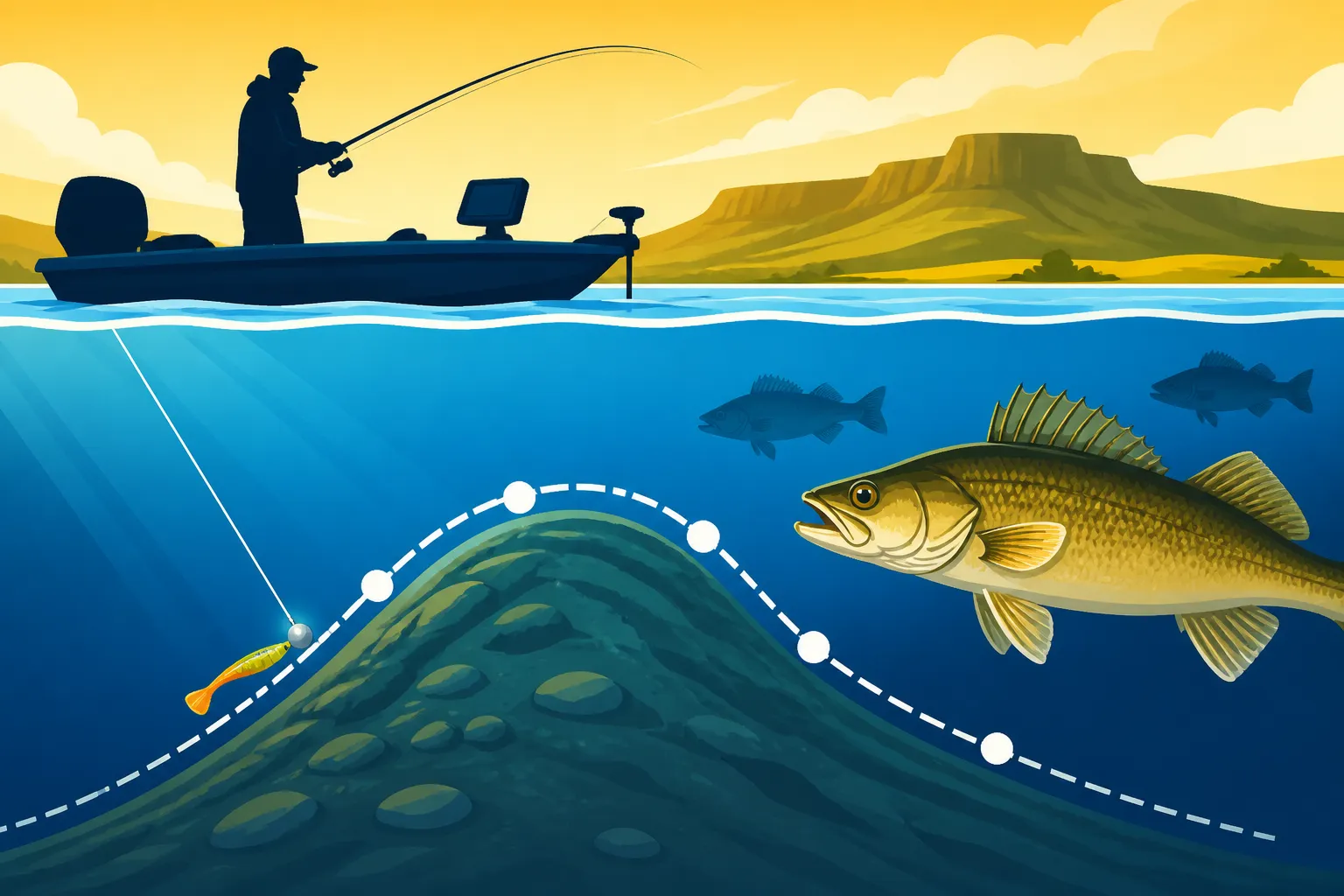
Imagine a hill on land, but completely submerged underwater, often rising from a much deeper lakebed. That's essentially a deep water hump. They aren't typically as dramatic as steep cliffs or sharp drop-offs you might find along shorelines or main lake points. Instead, they are often subtle, gradually rising structures that can vary in size from a small knoll the size of a car to expansive underwater plateaus spanning acres.
These humps are formed by various geological processes—sometimes they're ancient glacial deposits, other times remnants of submerged land features. What makes them so special is their isolated nature. Unlike shoreline structures, humps are often far from the hustle and bustle of recreational boat traffic and can be surrounded by miles of otherwise featureless, deep water. This isolation makes them a safe haven and a prime hunting ground for walleye and their prey. The top of a hump might be 15-20 feet deep, while the surrounding basin plunges to 40-60 feet or more, creating distinct depth changes that fish rely on.
Why Walleye Gravitate Towards These Structures
Walleye are opportunistic predators, and deep water humps offer a perfect storm of conditions that cater to their needs for food, comfort, and safety. First and foremost, these structures act as congregating points for baitfish. Think about it: a hump rising from the deep provides an abrupt change in depth and current, creating eddies and upwellings that concentrate plankton and smaller baitfish like ciscoes, smelt, and shiners. Where the baitfish go, the walleye follow. It's a natural buffet.
Beyond food, humps offer walleye a strategic ambush point. They can lie in wait along the edges, using the sudden change in depth as cover, ready to dart out and snatch an unsuspecting meal. During the warmer months, the slightly cooler, deeper water around the base of a hump can provide a thermal refuge from the scorching surface temperatures, offering a comfort zone. Conversely, the shallower top of a hump can warm up quicker in spring or offer sunning opportunities for both walleye and their prey. These structures also provide a degree of protection from harsh currents in larger systems like the Missouri River, allowing walleye to expend less energy while still having access to food. They're basically the five-star resorts of the underwater world for a hungry walleye.
Essential Gear and Electronics for Deep Hump Walleye Fishing
Successfully tackling deep water humps means you can't just wing it with any old gear. You need the right tools, especially when it comes to finding these hidden gems and presenting your bait effectively.
Must-Have Electronics: Fish Finders and GPS
Let's be real, trying to find a deep water hump without a good fish finder and GPS is like trying to find a needle in a haystack in the dark. It's simply not going to happen efficiently. Your electronics are your eyes and ears underwater, giving you the critical advantage. A modern fish finder equipped with 2D sonar, Down Imaging, and especially Side Imaging capabilities is invaluable. Side Imaging allows you to scan wide swaths of the lakebed to either side of your boat, revealing humps, rock piles, and even individual fish that you might otherwise miss. It saves an incredible amount of time by allowing you to "see" structures without driving directly over them.
Once you find a hump, your GPS is your best friend. Mark waypoints meticulously. Don't just mark the center; mark the edges, the top, any baitfish schools you see, or individual walleye. This allows you to precisely return to productive areas and approach them from different angles. Many anglers will spend hours just idling around with their electronics, meticulously scanning and mapping out every contour of a promising hump before even making a single cast. You can find excellent fish finders and chartplotters, complete with detailed mapping capabilities, on platforms like Amazon, offering a range of options for every budget. For more on what to look for, check out our guide on the "Best Fish Finders for North Dakota Lakes".
Rods, Reels, and Line for Deep Water Presentations
When you're fishing deep, sensitivity and power are key. You'll want a rod that's long enough to provide good line control but sensitive enough to detect the subtle bites of a walleye in 30+ feet of water. A medium-heavy power, fast-action spinning rod, typically in the 6'6" to 7'6" range, is often ideal. The fast action allows for quick hook sets and better feel, while the medium-heavy power gives you the backbone to fight a strong walleye from deep down.
For reels, a quality spinning reel in the 2500-3000 size range will balance well with these rods. Look for a smooth drag system, which is crucial for handling hard runs without breaking your line. Speaking of line, this is where many anglers make mistakes in deep water. Braided line is your ally. Its no-stretch property transmits every tap and bump directly to your rod tip, which is invaluable when fishing deep. A 10-20 lb test braided line is a good starting point. However, because walleye can be line-shy, especially in clear North Dakota waters, always tie on a fluorocarbon leader (6-12 lb test, 4-8 feet long) to your braided main line. Fluorocarbon is nearly invisible underwater and provides good abrasion resistance against rocks and the walleye's teeth. Finding quality braided line and fluorocarbon leaders is easy on sites like Amazon. For specific recommendations, our "Best Fishing Rods for North Dakota Anglers" article has more details.
Lures and Bait: What Works Best Down Deep
The choice of lure or bait depends heavily on the technique you're using and the walleye's mood. However, for deep water humps, there are a few consistent performers.
- Heavy Jigs: When vertical jigging, you need jigs heavy enough to get down to the fish quickly and maintain contact with the bottom, especially in wind or current. Jigs from 3/8 oz to 3/4 oz, tipped with a lively minnow, a plastic grub, or a paddle tail, are incredibly effective. The added weight helps you feel the bottom and those light bites. We've got more tips on specific jig recommendations in our "Best Jigs for North Dakota Walleye" guide.
- Blade Baits: These vibrating metal lures are phenomenal for deep vertical presentations. They mimic struggling baitfish and can trigger aggressive reaction strikes. The key is to lift and drop them, letting them flutter back down.
- Spoons: Like blade baits, spoons offer flash and vibration. Jigging spoons can be very effective, especially when tipped with a minnow head or a piece of plastic.
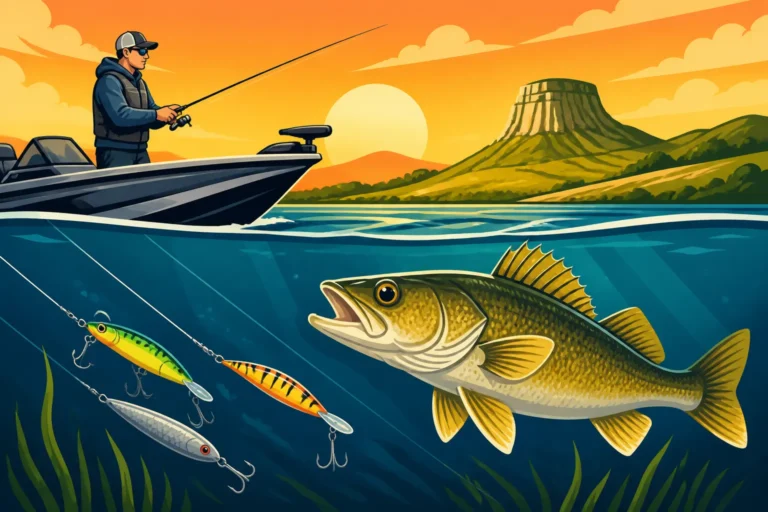
- Deep-Diving Crankbaits: While not always the primary choice for directly on top of a hump, deep-diving crankbaits are excellent for trolling the edges or surrounding flats of a hump, especially when walleye are spread out. Match the bait's dive curve to the depth you're targeting. You can learn more about these in our "Best Crankbaits for North Dakota Walleye" article.
- Live Bait Rigs: For more finicky walleye, a classic live bait rig (like a slip sinker rig or Lindy Rig) with a lively shiner, fathead minnow, leech, or nightcrawler can be unbeatable. The natural presentation is often what it takes to get bites when other lures fail. The weight of the sinker should be just enough to keep contact with the bottom, allowing your bait to float or drift naturally. Consider checking "Best Live Bait for North Dakota Walleye" for local favorites.
Remember, the key is often presenting your offering right on the bottom or just a few inches above it, as that's where walleye will typically be hunting on these structures.
Locating and Actively Fishing Deep Water Walleye Humps
Finding and fishing these submerged walleye havens requires a combination of modern technology, keen observation, and strategic boat control. It's an art form that pays dividends.
Scouting Strategies: Finding the Productive Humps
This is where your electronics truly earn their keep. Start by using detailed contour maps of the lake, often pre-loaded on your fish finder or available from services like Lakemaster or Navionics. Look for areas where contour lines show distinct rises in the otherwise deep, flat bottom. These are your potential humps. Once you've identified a promising area on the map, it's time to put the boat in the water and start idling.
Don't just motor right over the top. Instead, make wide passes around the general area, utilizing your Side Imaging to effectively "mow the lawn" and scan for the actual structure. Look for variations in bottom composition – rock, gravel, or even isolated patches of weeds can hold fish. Pay close attention to baitfish schools; if you see clouds of bait, walleye are usually not far behind. When you confirm a hump, start meticulously mapping it with your GPS. Mark the peak, the edges, and any distinct features like boulders or transition zones. Remember, walleye will often relate to one side of a hump more than the other, depending on wind, current, and light conditions. This detailed scouting is what separates consistently successful deep water anglers from those just getting lucky. For more in-depth mapping strategies, refer to our article "How to Find Walleye Structure With a Map."
Presentation Techniques for Deep Walleye
Once you've found a hump and marked some fish, it's time to present your bait. The trick is to stay on top of or very close to the fish, which can be challenging in wind or current.
- Vertical Jigging: This is arguably the most common and effective method for deep humps. Position your boat directly over the fish you see on your sonar. Drop a heavy jig (with bait or plastic) straight down, letting it hit the bottom. Then, gently lift it a few inches or a foot, and let it fall back, always maintaining contact. Many bites occur on the fall or as the jig rests on the bottom. The key here is boat control – use your trolling motor (a spot-lock feature is a game-changer!) to keep yourself positioned directly over the structure. This is a very active fishing style and can be incredibly rewarding. Our "Jigging for Walleye on Lake Sakakawea" guide has some excellent insights.
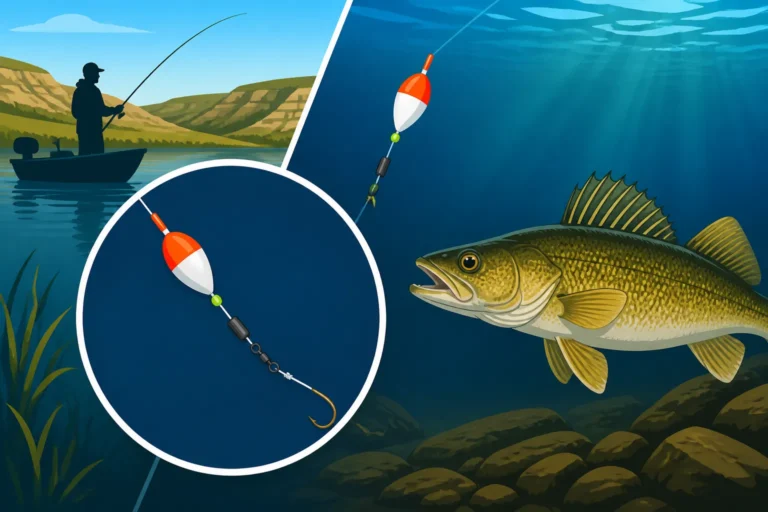
- Slip Bobber Rigging: While often associated with shallower water, slip bobbers can be effective on deep humps, especially when walleye are suspended just above the structure or are finicky. Set your bobber stop to position your live bait (minnow, leech, or crawler) just above the top of the hump. This is a more passive presentation but can be deadly when walleye aren't chasing.
- Bottom Bouncing/Snelled Rigs: For covering more ground while staying on a hump, a bottom bouncer with a snelled spinner rig or plain hook (often tipped with a crawler or leech) can be excellent. Drift or slow-troll these rigs over the top and along the edges of the hump. The heavy weight of the bottom bouncer helps keep your bait in the strike zone, bouncing along the bottom, which is often where walleye are feeding.
- Slow Trolling Crankbaits: If walleye are spread out or suspended around the hump rather than tightly schooled on top, slow-trolling deep-diving crankbaits can entice strikes. Use your electronics to monitor bait depth and adjust your lure's running depth accordingly. This method is particularly effective around the perimeter of the hump, where walleye might be cruising for food.
Experiment with different presentations and retrieve speeds. Some days, a subtle twitch is all it takes; other days, an aggressive snap-jigging motion is what triggers a bite.
Common Mistakes to Avoid When Fishing Deep Humps
Even experienced anglers can fall victim to common pitfalls when targeting deep water walleye. Being aware of these can save you a lot of frustration.
One of the biggest mistakes is not trusting your electronics. If your fish finder isn't showing fish, they're probably not there, or at least not in an active feeding mood. Don't waste hours casting blindly. Another common error is poor boat control. In deep water, wind and current can quickly push you off a precise spot. Without a good trolling motor or an effective anchor system, you'll constantly be repositioning, which spooks fish and wastes valuable fishing time. Consider investing in a high-quality, GPS-enabled trolling motor with spot-lock if you plan on serious deep water hump fishing.
Furthermore, not adjusting your presentation is a frequent misstep. Walleye behavior changes throughout the day due to light, temperature, and pressure. If vertical jigging isn't working, try a slow drift with a live bait rig. If they're hitting the bottom, try suspending your bait a foot or two up. Don't be afraid to change lure colors, sizes, or even bait types until you find what they want. Finally, moving too fast or making too much noise can shut down a bite. Walleye in deep water can be very sensitive to boat noise and shadows. Approach humps quietly and work them thoroughly and patiently. Sometimes, just sitting still for a while after arriving can allow fish to settle back down and become active again.
Seasonal Considerations for Deep Hump Fishing
Deep water humps can be productive year-round, but the best times often align with specific environmental conditions and walleye behaviors. Understanding these nuances will help you plan your trips.
Summer and Fall: Peak Deep Water Hump Action
Summer is arguably the prime time for targeting walleye on deep water humps in North Dakota. As surface waters warm up, walleye often retreat to cooler, deeper water, making humps a critical thermal refuge. They'll actively feed on the abundant baitfish that also relate to these structures. During this period, you'll often find schools of walleye congregating tightly on top or along the edges of the humps, especially during low-light periods like dawn and dusk, or on cloudy days. During bright sunshine, they might drop deeper into the surrounding basin but will move back onto the hump to feed. Targeting the "Best Depth for Summer Walleye on Sakakawea" will often lead you to these deep structures.
As fall approaches, the water temperature begins to drop, signaling a major feeding frenzy for walleye as they prepare for winter. This is another fantastic time for deep hump fishing. Walleye will continue to use these structures, often becoming even more aggressive as they bulk up. The patterns might shift slightly, with fish spending more time on the hump tops during the day as the water cools, but the principle remains the same: humps concentrate bait, and therefore, walleye. Our "Fall Walleye Fishing Patterns in North Dakota" guide delves deeper into these seasonal shifts.
Winter Ice Fishing on Deep Humps
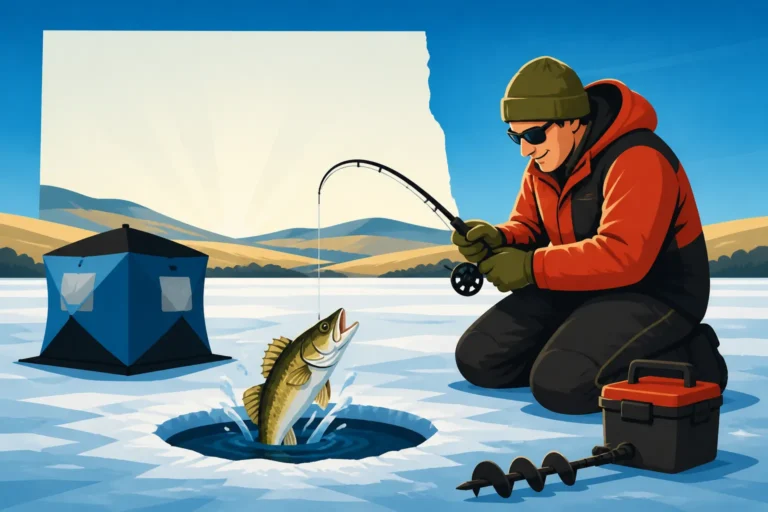
Don't hang up your gear when the lake freezes! Deep water humps are just as, if not more, crucial for ice fishing. Once the ice forms, walleye are still drawn to these underwater islands, offering fantastic opportunities for hard-water anglers. The trick is to locate the hump and then strategically drill holes around its peak, edges, and even into the surrounding basin.
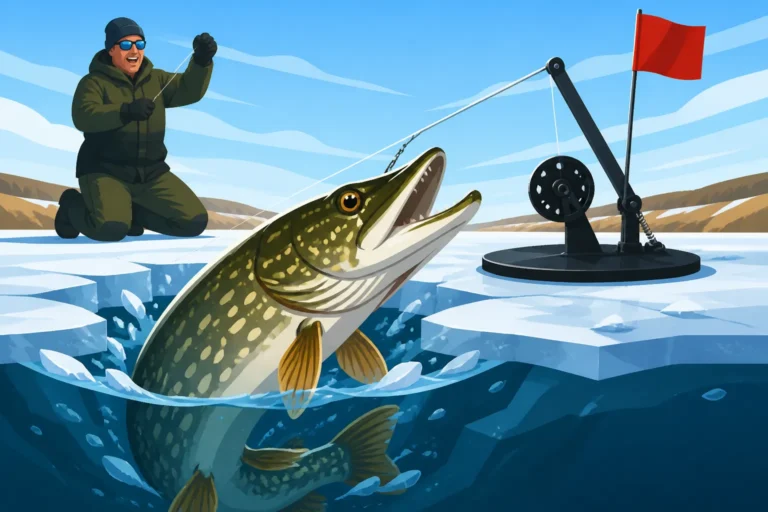
During early and mid-winter, walleye might be active on the hump's top and slopes, especially during low-light periods. As winter progresses and oxygen levels can sometimes deplete in deeper basins, walleye might relate even more tightly to the hump's structure. Active jigging with spoons, blade baits, or heavy glow jigs tipped with a minnow head or a full minnow is highly effective. You can also set up tip-ups with live bait around the perimeter for a more passive approach, especially for larger, cruising walleye. Just as in open water, good electronics are paramount for ice fishing humps – a flasher or a full-color sonar unit will show you the hump's profile, your lure, and the fish, allowing for precise presentations. For detailed ice fishing strategies, consult our "How to Ice Fish in North Dakota" comprehensive guide.
It's a year-round game, folks, and understanding how these deep humps function in different seasons is key to consistent success.
Deep Water Walleye Fishing Techniques Comparison
Here's a quick look at some of the most effective techniques for tackling those deep water humps, helping you decide which approach might be best for your next North Dakota walleye adventure.
| Technique | Ideal Depth (feet) | Best Bait/Lure | Pros | Cons |
|---|---|---|---|---|
| Vertical Jigging | 15-45+ | Heavy jigs (1/2-3/4 oz) tipped with minnow/plastic | Excellent feel, precise presentation, good for schooling fish | Requires good boat control, can be tiring, less coverage |
| Slip Bobber Rigging | 10-30 | Live minnows, leeches, nightcrawlers | Natural presentation, less active, good for finicky fish | Limited to shallower humps or specific fish depth, slow to cover water |
| Bottom Bouncing | 15-40 | Spinner rigs, snelled hooks with crawlers/leeches | Covers ground effectively, keeps bait on bottom, good for scattered fish | Less sensitive than jigging, can get snagged more easily on rocky humps |
| Slow Trolling Crankbaits | 15-35 (lure specific) | Deep-diving crankbaits (e.g., Shad Raps, Flicker Shads) | Excellent for searching large areas, appeals to aggressive fish | Can be less precise over small humps, might require specific trolling gear |
Remember, walleye regulations, including "North Dakota Walleye Size Limit Rules" and daily limits, are always subject to change, so always check the latest North Dakota Game and Fish Department proclamations before heading out.
Disclaimer
This article is for general informational purposes only and does not constitute professional advice. Laws, prices and regulations vary by location and change over time. Consult a qualified professional for guidance on your specific situation.