When Do Chinook Salmon Bite on Lake Sakakawea?
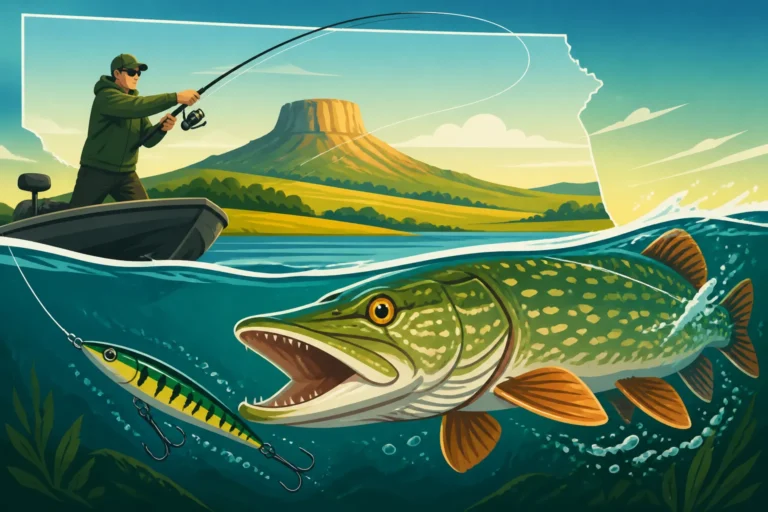
It's incredibly frustrating when you're geared up for an epic fishing trip, especially for something as sought-after as Chinook salmon, and you just can't seem to locate them or get them to bite. Lake Sakakawea is a massive body of water, and finding those elusive "kings" can feel like searching for a needle in a haystack. This guide is here to unravel the mysteries of Chinook salmon behavior on Lake Sakakawea, helping you understand their patterns, the best times to target them, and the techniques that will put more of these powerful fish in your boat.
Understanding Chinook Salmon Behavior in Lake Sakakawea
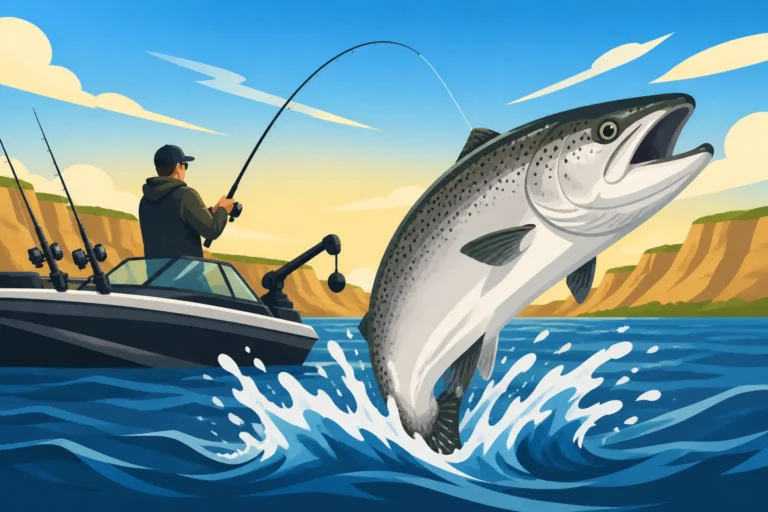
Chinook salmon are a unique and exciting species to pursue in North Dakota, primarily found in the sprawling waters of Lake Sakakawea. Unlike native species, these anadromous fish (meaning they typically migrate from saltwater to freshwater to spawn) thrive in Lake Sakakawea thanks to a dedicated stocking program. Their behavior is heavily influenced by the lake's vastness, its depth, and, crucially, the availability of their primary food source: rainbow smelt.
The Lake Sakakawea Ecosystem and Salmon
Lake Sakakawea, a reservoir formed by the Garrison Dam on the Missouri River, offers a complex and dynamic environment that Chinook salmon have adapted to remarkably well. The deep, cold waters of the lake mimic some of their natural preferences, especially during the warmer months when they seek out cooler temperatures and higher oxygen levels. The North Dakota Game and Fish Department meticulously manages the Chinook population through annual stocking efforts, ensuring there's a viable fishery for anglers to enjoy. Without this active management, the Chinook salmon population wouldn't sustain itself in the lake.
These salmon are predators, and their movements are almost entirely dictated by the presence of baitfish, primarily rainbow smelt. When you're out on the water, you're not just looking for salmon; you're often looking for schools of smelt. If you find the bait, the salmon are likely not far behind. The health and abundance of the smelt population directly impact the overall condition and biting patterns of the Chinook. Fluctuations in smelt numbers, due to various environmental factors, can make fishing tougher or easier from year to year. Understanding this predator-prey relationship is foundational to cracking the code of when and where the salmon will bite.
Seasonal Migrations and Depth Preferences
Chinook salmon are constantly on the move, driven by water temperature, oxygen levels, and the pursuit of food. Their seasonal migrations are key to understanding their biting windows. In the colder months, after the ice recedes, they might be found shallower as the lake's temperatures are more uniform. However, as summer progresses and the surface waters warm significantly, these cold-water fish retreat to the depths, often congregating near the thermocline – the layer where water temperature changes rapidly – where cooler, oxygen-rich water provides ideal conditions.
During summer, it's not uncommon to find Chinook salmon suspended over deep basins or along submerged creek channels, sometimes 50 to 100 feet down or even deeper. They'll follow the smelt, which also seek out these comfortable temperature zones. Come fall, as the lake's water temperatures begin to drop again, salmon will start to move shallower and become more active, especially as they approach their spawning period. This pre-spawn aggregation, particularly near the Garrison Dam area, marks one of the most exciting times to target them, as they become incredibly aggressive. Knowing these general seasonal depth preferences is your first step in narrowing down where to deploy your lines.
Prime Biting Windows: Spring, Summer, and Fall Tactics
When it comes to Chinook salmon, there isn't one single "best" time to bite; rather, there are distinct windows throughout the open water season, each requiring different tactics. Each season presents its own set of challenges and opportunities, and understanding these nuances will significantly improve your chances of success. It's about adapting your approach to what the fish are doing, not forcing them to bite on your terms.
Spring Salmon Fishing After Ice-Out
After the long North Dakota winter, when the ice finally melts and open water returns, Chinook salmon can offer an excellent early-season bite. Typically, from late April through May, as the water temperatures slowly climb from the low 40s into the 50s Fahrenheit, salmon become more active. During this period, they often cruise shallower depths, sometimes in the 20 to 40-foot range, though they can still be found deeper depending on the specific location and the lake's overall water temperature profile.
The spring bite is characterized by fish that are often hungry after a less active winter, and they'll readily strike trolled spoons and stickbaits. Focus on areas where warming water might attract baitfish, such as points, bays, and the main lake contours that transition into deeper water. While the water is still cold, fish might not be as aggressive as in the fall, so a slightly slower troll speed can be effective. This can be a fantastic time to use planer boards to spread out your lines and cover more water, especially when targeting fish that might be scattered. While we're talking salmon, many of the principles of cold water trolling and structure fishing overlap with what you'd do for other species; if you're interested in similar tactics, check out our guide on Early Spring Walleye Techniques in North Dakota.
Summer's Deepwater Challenge
Summer on Lake Sakakawea brings its own set of challenges for Chinook salmon anglers. As the intense North Dakota heat bakes the surface, the salmon retreat to the cooler, deeper reaches of the lake, often suspending in open water or near deep structure. This is when the term "deepwater challenge" truly comes into play. Locating these fish can be tough, as they might be anywhere from 60 to over 100 feet deep, following schools of rainbow smelt that also seek comfortable temperatures.
To consistently catch salmon in summer, you'll need specialized gear like downriggers or lead core lines to get your lures down to the precise depths where the fish are holding. Trolling is almost exclusively the method of choice. The key is to find the thermocline and target it, often with spoons or flasher-and-fly combinations. Early mornings and late evenings typically offer the best bite windows, as the low light conditions can encourage salmon to be more active, even in the depths. During midday, they might become lethargic and less willing to chase. This is where patience and persistence become your greatest assets. For a deeper dive into summer salmon fishing, our article on Chinook Salmon Trolling on Lake Sakakawea offers even more specific strategies.
The Fall Spawning Run and Aggressive Bites
Without a doubt, late summer and fall, typically from late August through October, represent the most anticipated and often the most productive time for Chinook salmon fishing on Lake Sakakawea. This is when the salmon begin their pre-spawn and spawning migrations, often congregating near the Garrison Dam where they are stocked. The fish become incredibly active and aggressive, feeding heavily in preparation for spawning, making them more willing to strike lures. This period is when many anglers catch their biggest salmon of the year.
During the fall run, salmon can be found at varying depths, but they often move shallower as they approach the dam. Trolling large spoons, J-plugs, and other aggressive baits can be highly effective. The key is to find the concentrations of fish, which can sometimes be visible on your sonar as massive schools of bait and predatory fish. The bite can be furious and relentless when you hit a good school. Weather changes, like cooling fronts, can often trigger even stronger feeding frenzies. Understanding the full journey of these fish is fascinating; for more context, consider reading about the Chinook Salmon Life Cycle in Lake Sakakawea.
| Season | Typical Depths (Feet) | Preferred Lures | Key Tactics | Best Times of Day |
|---|---|---|---|---|
| Spring | 20-50 | Spoons, Stickbaits | Trolling, Planer Boards, Slower Speeds | Mid-morning, Afternoon |
| Summer | 60-120+ | Spoons, Flashers & Flies | Downriggers, Lead Core, Deep Trolling | Early Morning, Late Evening |
| Fall | 30-80 (Near Dam) | Large Spoons, J-Plugs, Flies | Aggressive Trolling, Focus on Dam Area | All Day, Especially Peak Spawning |
Essential Gear and Techniques for Lake Sakakawea Chinook
Chasing Chinook salmon on Lake Sakakawea isn't just about knowing when they bite; it's also about having the right tools and employing the most effective techniques to get your lure in front of these powerful fish. Without the proper gear, you'll find yourself struggling against the lake's size and the salmon's fighting prowess. This is not a fishery for light tackle; these are robust fish that demand respect and specialized equipment.
Trolling Setups for Success
For most Chinook salmon fishing on Lake Sakakawea, trolling is the name of the game, and a robust trolling setup is non-negotiable. You'll want medium-heavy to heavy action rods, typically 8 to 10 feet long, designed for trolling. These longer rods help spread out lines and absorb the shock of a big salmon strike. Pair these with conventional level-wind reels spooled with at least 20-30 lb test monofilament or braided line. Many anglers opt for braided main lines for their sensitivity and strength, often adding a monofilament or fluorocarbon leader for abrasion resistance and invisibility.
The real game-changers for deepwater salmon are downriggers, lead core line, and dipsy divers. Downriggers allow you to precisely control the depth of your lure, dropping it down to exactly where the fish are marked on your sonar. Lead core line, with its color-coded segments, achieves depth through its weight and resistance, letting you present lures at various levels without heavy weights directly on your main line. Dipsy divers are another excellent tool, using water resistance to pull lures out to the side and down, covering a wider swath of water. When it comes to lures, spoons in various sizes and colors (silver, chartreuse, blue/silver, orange) are perennial favorites, as are flasher-and-fly combinations. Brands like Northern King, Dreamweaver, and Michigan Stinger spoons are popular among salmon anglers for their enticing action and proven track record. You can find a huge selection of these specific trolling lures and tackle accessories on Amazon, which makes getting geared up convenient. For a comprehensive overview of how to maximize your trolling efforts, be sure to check out our detailed guide on Best Trolling Speed for Chinook Salmon.
Reading the Water and Electronics
In a lake the size of Sakakawea, successfully finding Chinook salmon without reliable electronics is like trying to navigate a foreign city without a map. A quality fish finder and GPS unit are absolutely essential. Your fish finder will be your eyes underwater, helping you locate schools of baitfish (remember, find the smelt, find the salmon!) and identify individual salmon arches. Look for "bait balls" – dense concentrations of smelt – often suspended at specific depths. When you see larger, distinct arches in or near these bait balls, you're in the strike zone.
Beyond just marking fish, your electronics help you "read the water." Pay attention to the water temperature readings and look for defined thermoclines, especially during summer. Salmon will often orient themselves along these temperature breaks. Your GPS, paired with detailed lake maps, allows you to pinpoint exact locations, mark productive spots, and navigate safely across the vast lake. You can use it to track your trolling paths, ensuring you can replicate successful runs over specific submerged structures, old river channels, or humps where fish might be congregating. Investing in a good unit like those from Humminbird or Lowrance can make a huge difference in your success rate. If you're looking to upgrade your setup, our guide to the Best Fish Finders for North Dakota Lakes has some excellent recommendations to consider. It’s also worth consulting an Essential Gear Checklist for North Dakota Fishing to ensure you don’t forget any other crucial items.
Beyond the Bite: Regulations and Conservation
While the thrill of the bite and the fight of a Chinook salmon is what draws many anglers to Lake Sakakawea, it's equally important to understand the regulations governing this fishery and to practice responsible angling. These rules are in place not just for your safety and fair chase, but also to ensure the long-term health and sustainability of the Chinook salmon population in North Dakota. Ignoring them can lead to significant penalties and, more importantly, can harm the fishery we all cherish.
Understanding North Dakota Chinook Salmon Regulations
The North Dakota Game and Fish Department sets specific rules for Chinook salmon, which can sometimes differ from general fishing regulations for other species. These regulations typically include daily creel limits (how many fish you can keep in a day) and possession limits (how many you can have with you or stored). For Chinook salmon, these limits are crucial because the population is sustained by stocking, not natural reproduction. Overharvesting could quickly deplete the fishery.
Always check the current North Dakota Fishing Guide or proclamation before you head out, as regulations can change from year to year. There might be specific length limits, special tagging requirements, or even certain areas that are closed to fishing during certain times to protect spawning aggregations. For example, the daily limit for Chinook salmon is usually quite generous, reflecting the department's goal to provide ample opportunity while also managing the stocked resource. Ignoring these rules, even unknowingly, can result in fines and loss of fishing privileges. To stay fully informed about all the current rules, make sure to read the comprehensive North Dakota Chinook Salmon Regulations.
Responsible Angling for Sustainable Fisheries
As anglers, we have a responsibility to protect the resources we enjoy. Practicing responsible angling is vital for the sustainability of Lake Sakakawea's Chinook salmon fishery. This means more than just following the limits; it extends to how we handle fish and how we care for the environment. If you plan to release salmon, do so quickly and carefully, minimizing their time out of the water. Use appropriate landing nets that don't damage their scales or protective slime coat.
Furthermore, preventing the spread of Aquatic Nuisance Species (ANS) is paramount. Lake Sakakawea, like many waters, faces threats from invasive species like zebra mussels and quagga mussels. These can devastate ecosystems and impact fisheries. Always remember the "Clean, Drain, Dry" protocol:
- Clean: Remove all visible aquatic plants and animals from your boat, trailer, and fishing gear before leaving any water body.
- Drain: Drain all water from your boat, including the bilge, livewells, and motor, before transporting it.
- Dry: Allow your boat and equipment to thoroughly dry for an extended period, especially if moving between different water bodies.
By taking these simple, yet critical, steps, you play a direct role in protecting Lake Sakakawea's pristine waters and ensuring that the thrill of catching Chinook salmon can be enjoyed by future generations. For more detailed instructions on how to protect North Dakota's waters, consult our guide on Aquatic Nuisance Species Rules for Boaters.
Disclaimer
Please remember that fishing regulations, conditions, and fish behavior can change. Always consult the most current North Dakota Game and Fish Department regulations and local advisories before heading out on your fishing trip. Stay safe on the water!