Best Line Weight for Walleye Trolling
One of the most common frustrations North Dakota anglers face, especially when trying to dial in their walleye trolling game, is figuring out the right fishing line. It can feel like a guessing game – too heavy and your presentation looks unnatural, too light and you risk snapping off a trophy. This comprehensive guide is here to untangle the complexities of line weight, helping you choose the best line for walleye trolling across North Dakota's diverse and often challenging waters, ensuring you're rigged for success.
Understanding the Importance of Line Weight in Walleye Trolling
When you're out on the water, whether it's the vast expanse of Lake Sakakawea or the storied waters of Devils Lake, every detail matters. The line connecting your rod tip to your lure is arguably one of the most critical, yet often overlooked, components of your trolling setup. It's not just about getting the bait in the water; it's about control, presentation, and ultimately, landing that fish. The weight, or pound test, of your fishing line dictates so much more than just its breaking strength – it influences your lure's diving depth, your sensitivity to subtle bites, and your ability to manage a fish once it's hooked.
Think about it this way: a heavier line has a larger diameter. That increased diameter creates more resistance in the water, which means your crankbait or spinner rig won't dive as deep as it would on a lighter, thinner line. This is a crucial detail for walleye, which are often found holding at very specific depths. If your lure isn't reaching the strike zone, you're simply not going to catch fish, no matter how perfect your lure color or trolling speed. Conversely, a line that's too light for the conditions might get your lure down, but it could easily snap if you hit a snag or hook into a truly aggressive walleye. The balancing act is real, and it’s why understanding line weight is paramount for effective walleye trolling.
Sensitivity is another huge factor. Walleye bites, especially in colder water or during a tough bite, can be incredibly subtle – sometimes just a slight tick or a feeling of added weight. A thinner, lighter line often transmits these subtle sensations more effectively than a thick, stretchy line. This allows you to react quicker, setting the hook before the walleye has a chance to drop the bait. It’s the difference between wondering "was that a bite?" and confidently sweeping the rod back to plant that hook. Moreover, the type of line material itself plays into this, with some materials inherently more sensitive than others, which we'll dive into shortly.
Factors Influencing Your Line Weight Choice
Choosing the "perfect" line weight isn't a one-size-fits-all answer; it's a dynamic decision influenced by several key factors. The conditions you're fishing in and the specific techniques you're employing will always play a significant role. Ignoring these variables is like trying to use a screwdriver to hammer a nail – you might get lucky, but it's not the right tool for the job.
Water Clarity and Depth
The clarity of the water you're fishing in is a huge consideration. In North Dakota, you have everything from the relatively clear waters of the Missouri River system, particularly below Garrison Dam, to the often murkier, nutrient-rich lakes like Devils Lake, and the stained flows of the Red River. In clear water, fish can be more line-shy. A thinner, less visible line can be a real advantage, making your presentation seem more natural. Here, dropping down a pound or two in line weight might make a difference, or opting for a fluorocarbon leader with a braided main line.
Depth also dictates line choice. If you're trolling deep diving crankbaits in 20-30 feet of water on Lake Sakakawea, a heavier line will significantly reduce your lure's diving ability, forcing you to use more weight or longer leads, complicating your setup. Conversely, if you're shallow water trolling over weed beds in 8-12 feet, a slightly heavier line might not hinder your depth too much and offers more abrasion resistance if you contact vegetation. Understanding the nuances of North Dakota Fishing Regulations Explained for specific waters can also help inform your choices.
Lure Type and Size
The specific lure you're trolling makes a big difference. Are you pulling large, deep-diving crankbaits like a Salmo Hornet or a Berkley Flicker Shad? Or perhaps you're using bottom bouncers with spinner rigs, which involve a different dynamic? Larger, more aggressive lures can handle slightly heavier lines without their action being completely compromised. If you're pulling a larger lure, say a #9 Shad Rap, a 12-pound test monofilament or fluorocarbon might be perfectly fine. However, if you're trying to achieve maximum depth with a smaller, lighter crankbait, you'll want to lean towards the lighter end of the spectrum, maybe 8-10 pound test.
Bottom bouncers and spinner rigs present a different scenario. With these, the line's primary job is to connect your rod to the bottom bouncer, which then carries your snell and bait. Here, line diameter still affects how much drag the water creates, influencing how much weight you need to stay vertical at a given speed. However, the direct impact on lure action is less pronounced than with diving crankbaits. The strength to hold bottom and resist snags becomes more critical, making heavier lines in the 15-20 pound range common for main lines, often paired with a lighter fluorocarbon snell for bait presentation.
Target Fish Size and Cover
Let's be honest, everyone wants to hook into a trophy walleye! The potential size of the fish you're targeting should absolutely factor into your line weight decision. If you know you're fishing waters with a good chance of hooking into a 5-10 pound walleye, or even bigger, you need line with enough backbone to handle those powerful runs and head shakes. A 6-pound test line might be sporty, but it's also a recipe for heartbreak if that giant walleye dives into a snag. Knowing the "North Dakota Walleye Size Limit Rules" can help you gauge the potential size of fish in certain areas.
Furthermore, the type of underwater structure and cover in the area you're trolling is paramount. Are you trolling open water over a clean basin? Or are you hugging contour lines near submerged timber, rock piles, or dense weed beds? Fishing around heavy cover demands a tougher, more abrasion-resistant line. Braided lines, with their incredible strength-to-diameter ratio and abrasion resistance, shine here, though a good fluorocarbon leader is often added to counter their visibility. You might find a wide variety of strong fishing lines available on Amazon to suit these needs. Snags happen, and having a line that can withstand a bit of abuse without immediately snapping will save you money and frustration.
Common Line Types and Their Ideal Weights for Walleye Trolling
Now, let's talk about the specific types of fishing line you'll encounter and how their characteristics play into choosing the best weight for walleye trolling. Each type has its own strengths and weaknesses, making them suitable for different situations.
Monofilament Line
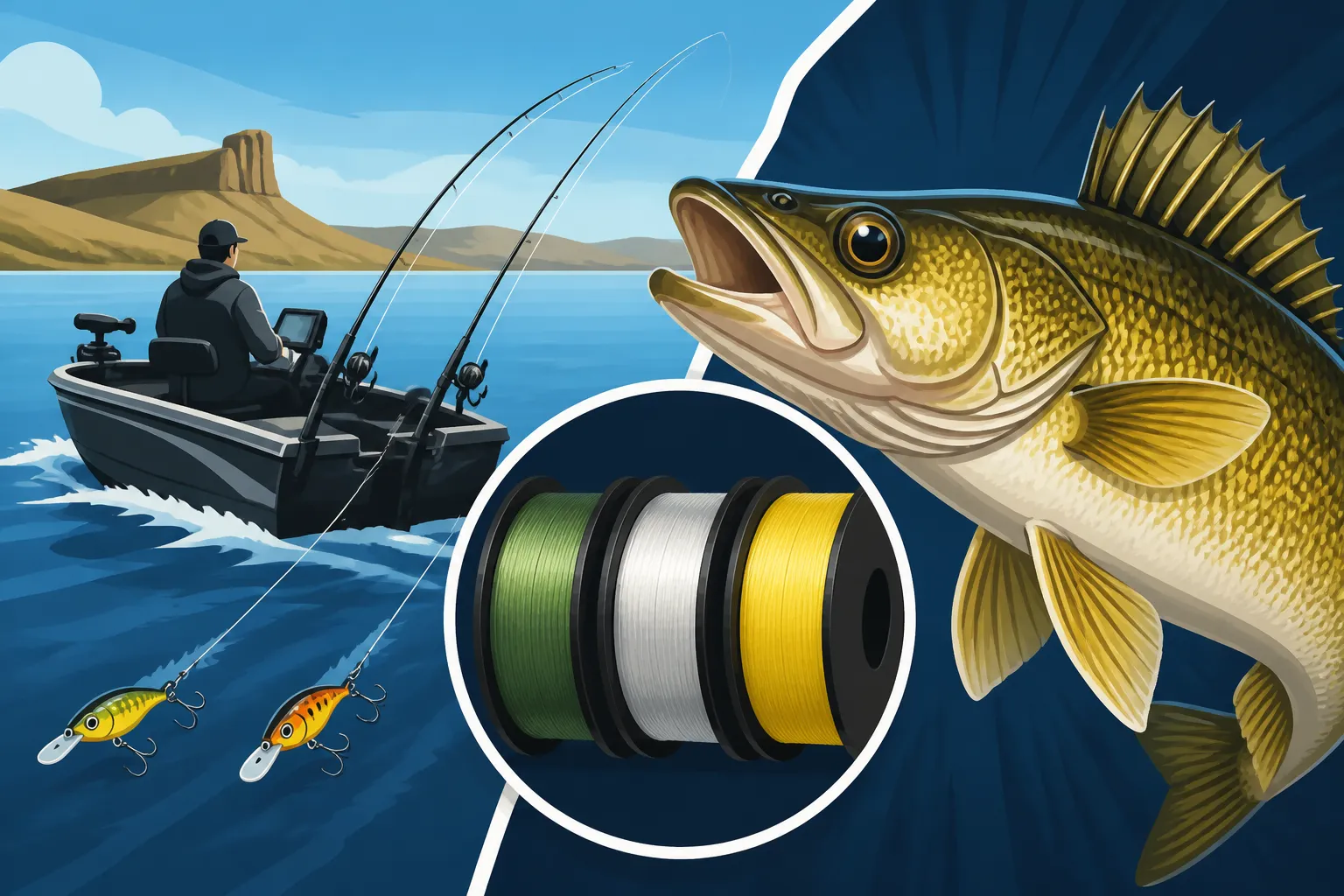
Good old monofilament, or "mono," is often the starting point for many anglers, and for good reason. It's affordable, has excellent knot strength, and its inherent stretch acts like a shock absorber, which can be forgiving during sudden runs or head shakes from a walleye. This stretch can also be beneficial in clear water, as it makes your lure's retrieve feel a bit more natural. However, that same stretch also reduces sensitivity, making it harder to detect those subtle walleye bites, especially when trolling long lines or in deeper water. Its larger diameter for a given breaking strength also means more water resistance, reducing your lure's diving depth.
For walleye trolling, monofilament in the 8 to 12-pound test range is generally a good starting point.
- 8-pound mono: Ideal for shallower trolling with smaller crankbaits where maximum depth and a subtle presentation are key, especially in clearer lakes with less heavy cover. It's also great for lighter bottom bouncer setups.
- 10-pound mono: A versatile choice, offering a good balance of strength and manageability. It's a solid all-around option for most crankbait trolling scenarios in North Dakota.
- 12-pound mono: Good for slightly larger crankbaits, or when you're fishing around moderate cover where a bit more abrasion resistance is desired. It will reduce your lure's maximum diving depth, so keep that in mind.
Fluorocarbon Line
Fluorocarbon has gained immense popularity, and for good reason. Its primary advantage is its near-invisibility underwater, a huge plus for wary walleye in clear conditions. Fluorocarbon also boasts excellent abrasion resistance, making it a favorite for fishing around rocks, zebra mussels, or submerged timber, which you'll find in abundance on many North Dakota waters. It has significantly less stretch than monofilament, offering increased sensitivity, allowing you to feel more of what's happening at the end of your line. However, it can be stiffer and less forgiving with knot tying, and generally comes at a higher price point. Many anglers buy fluorocarbon in bulk from retailers like Amazon.
When considering fluorocarbon for walleye trolling, a range of 10 to 15-pound test is usually appropriate.
- 10-pound fluorocarbon: Excellent for achieving maximum diving depth with crankbaits due to its thinner diameter and reduced stretch. It offers superb sensitivity and stealth.
- 12-pound fluorocarbon: A great all-purpose trolling line for crankbaits and a fantastic choice for leaders when paired with braided main lines. It balances stealth, strength, and abrasion resistance.
- 15-pound fluorocarbon: Ideal for heavier cover or when targeting larger fish where you need extra confidence against break-offs. It's also a good choice for bottom bouncer main lines where you value abrasion resistance and low stretch.
Braided Line
Braided line is the heavy hitter in the fishing line world, known for its incredible strength-to-diameter ratio and zero stretch. This means extreme sensitivity, allowing you to feel every bump, tic, and bite with amazing clarity. Its thin diameter also allows lures to dive deeper than on comparable pound-test monofilament or fluorocarbon. However, braid is highly visible underwater, which can be a turn-off for clear-water walleye, and it has poor abrasion resistance against sharp objects like rocks or mussels. Due to its slick nature, knots can sometimes slip if not tied correctly, and it can be expensive. For these reasons, braid is almost always paired with a monofilament or, more commonly, a fluorocarbon leader of varying lengths.
For walleye trolling, braided line typically serves as the main line on your reel, and you'll often spool it up in the 10 to 20-pound test range.
- 10-pound braided main line: Excellent for achieving maximum depth and sensitivity with crankbaits, especially when paired with a 10-12 pound fluorocarbon leader.
- 15-pound braided main line: A very popular choice, offering a great balance of strength for fighting fish and retrieving snags, while still maintaining excellent sensitivity. Pair with a 10-15 pound fluorocarbon leader.
- 20-pound braided main line: Best for heavy bottom bouncer applications, trolling in dense cover, or when fishing for exceptionally large walleye where sheer pulling power is needed. A 12-17 pound fluorocarbon leader is common with this setup.
Here's a quick comparison table to help visualize these line types and their ideal uses for walleye trolling:
| Line Type | Key Characteristics | Recommended Trolling Weight Range | Ideal North Dakota Scenario |
|---|---|---|---|
| Monofilament | Stretchy, good knot strength, floats, affordable | 8-12 lb | Shallow crankbait trolling, clear water, beginner friendly |
| Fluorocarbon | Low stretch, nearly invisible, abrasion-resistant | 10-15 lb | Deeper crankbait trolling, clear water, rocky structure, leaders |
| Braided | Zero stretch, high strength/diameter, highly visible | 10-20 lb (main line) | Deep water, heavy cover, bottom bouncing (always with leader) |
Matching Line Weight to North Dakota's Diverse Walleye Fisheries
North Dakota is a walleye angler's paradise, but the diverse environments, from massive reservoirs to flooded prairie lakes and winding rivers, mean there's no single "best" line weight. You'll need to adapt your choices to the specific body of water you're fishing.
Trolling on Lake Sakakawea and Lake Oahe
These immense Missouri River reservoirs are known for their deep, often clear to slightly stained waters, and the potential for true trophy walleye. When trolling crankbaits on these big waters, you're often looking to get lures down to 15-30 feet or more. This is where the lower stretch and thinner diameter of fluorocarbon or braided main lines shine. For crankbait trolling, a 10-pound fluorocarbon main line or a 10-15 pound braided main line with a 10-12 pound fluorocarbon leader is incredibly effective. The fluorocarbon will help with stealth in the clearer water, and the reduced stretch aids in detecting subtle bites over long trolling passes. When using heavier bottom bouncers, especially in deeper, potentially snaggy areas, a 15-20 pound braided main line with a 15-pound fluorocarbon leader provides the strength and abrasion resistance needed to pull through. Remember to check out the "Lake Sakakawea Walleye Fishing Spots" guide for more specific location tips.
Walleye Trolling on Devils Lake
Devils Lake is a unique beast – a flooded prairie lake known for its incredibly productive walleye fishery, but also its abundant flooded timber, brush, and variable water clarity. Here, abrasion resistance is key. While you might encounter some clearer areas, much of Devils Lake can be stained, making line visibility less of a primary concern than sheer durability. When trolling crankbaits near flooded timber, a 12-pound monofilament can be a forgiving choice, especially for those new to the lake, thanks to its shock-absorbing qualities. However, a 15-pound braided main line with a 12-15 pound fluorocarbon leader is often the preferred setup for seasoned anglers. The braid gives you the power to rip lures free from snags, and the fluorocarbon leader adds a layer of stealth and abrasion resistance where it counts. For specific insights, check out "Devils Lake Walleye Fishing Spots".
River Trolling: Missouri River and Red River
River systems like the Missouri and Red River present their own set of challenges, primarily strong currents. Trolling in current requires heavier weights to keep your lure in the strike zone, and your line choice will directly impact how much weight you need. On the Missouri River below the dams, where the water can be quite clear, a 10-12 pound fluorocarbon main line or a 15-pound braided main line with a 12-pound fluorocarbon leader works well for crankbaits, balancing stealth with the strength needed to manage current and potential snags. The "Missouri River Fishing Guide" offers extensive information on this productive river.
For the Red River, famous for its giant channel catfish but also holding good walleye, the water is typically stained to muddy. Here, line visibility is less of an issue, and strength combined with abrasion resistance against submerged logs and debris becomes paramount. A 15-20 pound braided main line with a 15-20 pound fluorocarbon or heavy monofilament leader is a robust choice. The braid helps you feel your way through the current and detect bites, while the heavy leader provides protection against the rough river bottom and snags. The strong current can make it feel like you’re constantly battling the line, so choosing a line that cuts through the water effectively is important.
Other North Dakota Lakes
For smaller, calmer lakes like Lake Ashtabula, Jamestown Reservoir, or those in the Turtle Mountains, your line choice can be a bit more flexible. If the water is clear and the walleye are finicky, lighter 8-10 pound monofilament or fluorocarbon can be effective for crankbaits. If you're encountering more weeds or submerged brush, bumping up to 12-pound test or using a braided main line with a fluorocarbon leader will give you more confidence. Always consider the specific conditions and structure of the lake you're on. For a broader overview, the "North Dakota Walleye Fishing Guide" is an excellent resource.
Ultimately, the best line weight for walleye trolling in North Dakota is a choice you make based on a combination of factors: the specific water body, the depth you're targeting, the type of lure you're using, and the potential size of the fish and amount of cover. Experimentation is key, but by understanding the properties of each line type and how different weights affect your presentation, you'll be well on your way to more successful walleye days on the water. Don't be afraid to adjust as conditions change; flexibility is a walleye angler's best friend. You might even find it useful to keep multiple spools with different line types and weights readily available, which can be found easily on Amazon.
Disclaimer
This article is for general informational purposes only and does not constitute professional advice. Laws, prices and regulations vary by location and change over time. Consult a qualified professional for guidance on your specific situation.