North Dakota Fishing Regulations Explained
Trying to make sense of all the rules and regulations before heading out on North Dakota's incredible waters can feel like deciphering ancient texts. It’s frustrating when you just want to enjoy a peaceful day of fishing but worry about inadvertently breaking a rule. This comprehensive guide is here to untangle the complexities of North Dakota fishing regulations, making it easier for every angler to understand the rules and enjoy their time on the water with confidence.
Understanding the Foundation of North Dakota Fishing Regulations
Before you even cast a line, it's really important to get a handle on why these regulations exist in the first place and where to find the most accurate information. It's not just about stopping you from having fun; it's about safeguarding the amazing fishing opportunities we all cherish here in North Dakota for generations to come.
Why Regulations Matter for Anglers and the Ecosystem
Think about it this way: North Dakota boasts some truly fantastic fisheries, from the sprawling waters of Lake Sakakawea to the unique ecosystem of Devils Lake and the mighty Red River. These natural resources aren't infinite, and without careful management, they could easily be overfished or damaged. Regulations are essentially the roadmap for sustainable fishing. They help manage fish populations, ensuring there are enough fish to reproduce and grow, maintaining a healthy balance within the aquatic environment. If everyone just took as many fish as they wanted, or used any method they pleased, our favorite species like walleye and northern pike would dwindle rapidly. It’s a collective effort, and adhering to the rules is how we all contribute to keeping North Dakota a premier fishing destination. This isn't just about fish, either. It's about preserving the entire aquatic ecosystem, from the smallest invertebrates to the biggest trophy catches.
Beyond population management, regulations also play a critical role in protecting habitat. Rules about where and when you can fish, or restrictions on certain types of gear, often have ecological reasons behind them. For example, specific areas might be closed during spawning seasons to allow fish to reproduce undisturbed. Think of how delicate newly hatched fry are, or how important it is for adult fish to complete their annual rituals without undue stress. These regulations ensure that natural cycles can continue unimpeded, directly impacting the health and abundance of future fish stocks. It’s a long-term investment, and every angler's compliance pays dividends for everyone.
Sometimes, regulations also focus on public safety and fair chase. Rules regarding the number of lines, the use of certain baits, or even the distance between ice fishing shelters are designed to make the experience safe and equitable for all participants. Nobody wants to be tangled up with another angler's line or feel like someone has an unfair advantage. It’s about creating a shared space where everyone can enjoy the sport responsibly. This holistic approach means that what might seem like a minor rule actually contributes to a much larger picture of conservation and enjoyable recreation for all.
Navigating the North Dakota Game and Fish Department
When it comes to official fishing information, the North Dakota Game and Fish Department (NDGFD) is your absolute go-to source. They are the agency responsible for setting, monitoring, and enforcing all fishing regulations in the state. Their website is a treasure trove of information, offering access to the latest fishing proclamations, license purchasing options, and even weekly fishing reports. Trying to get your information from an outdated forum post or a friend of a friend's casual advice is a recipe for trouble. Always double-check with the source.
The NDGFD publishes an official "Fishing Guide" or "Proclamation" booklet annually, typically available in print at license vendors or accessible as a PDF on their website. This guide is truly the bible for North Dakota anglers. It details everything from statewide license requirements to specific daily limits, possession limits, season dates, and water-specific rules. It's highly recommended to grab a copy or at least bookmark the digital version before you head out, especially if you're fishing a new body of water or targeting a different species than usual. You can often find these printed booklets at sporting goods stores, bait shops, and even sometimes at larger retailers that sell fishing gear. If you prefer a digital version, a quick search on Amazon or the NDGFD website can get you exactly what you need.
Beyond the formal regulations, the NDGFD also provides invaluable resources through their public outreach efforts. They host workshops, maintain a robust social media presence, and have a knowledgeable staff ready to answer questions. Don't hesitate to reach out to them directly if you have a specific, complex question that isn't clearly answered in the proclamation. It's always better to ask and be sure than to guess and potentially face consequences. They are there to help anglers understand and comply with the rules, not just to enforce them.
Key Components of the Fishing Proclamation
The annual North Dakota Fishing Proclamation is a comprehensive document that lays out all the rules you need to know. It's not light reading, but it's essential. At its core, it covers several main areas: general statewide rules, specific water body exceptions, and species-specific regulations. You'll find sections dedicated to licenses, daily and possession limits, legal methods of taking fish, ice fishing rules, and aquatic nuisance species prevention. Understanding how these different components interact is key to avoiding violations.
For example, the proclamation will first detail the North Dakota Fishing License Guide, explaining who needs one and what types are available, like a season license or a shorter-term nonresident option. Then, it will dive into the general statewide limits, which apply to most waters. However, almost immediately, it will start listing exceptions for specific lakes, rivers, or even sections of rivers. This is where many anglers get tripped up. A general rule might say you can keep 5 walleye, but on Devils Lake, there might be a slot limit or a different daily bag. It's vital to cross-reference the general rules with the specific water you intend to fish.
Another critical component is the "Legal Methods of Taking Fish" section. This outlines what gear and techniques are permissible. Are trotlines allowed? What about spearfishing? Can you use artificial lures only or live bait? These details can vary not only by state but also by specific water body within North Dakota. For instance, while most areas allow two lines, ice fishing rules often permit a higher number. Always check this section carefully to ensure your preferred method of fishing is legal for your target location and species. Remember, ignorance of the law is no excuse, and having the proclamation handy, perhaps a physical copy bought from a local bait shop or ordered from Amazon, can save you a lot of headache.
General Statewide Fishing License Requirements and Exemptions
Alright, let's talk about the very first hurdle for almost every angler in North Dakota: the fishing license. It's a fundamental requirement, and understanding who needs one, who might be exempt, and the different types available is crucial before you even think about packing your tackle box.
Who Needs a North Dakota Fishing License?
Generally speaking, if you're 16 years of age or older and plan to fish in North Dakota, you need a fishing license. This applies whether you're a resident or a nonresident. This isn't just a suggestion; it's a legal requirement. The money generated from license sales goes directly back into managing and improving North Dakota's fisheries, funding everything from fish stocking programs to habitat restoration and enforcement. So, when you buy a license, you're not just getting permission to fish; you're actively contributing to the future of the sport here.
For North Dakota residents, there are a few common options. Most folks opt for the annual fishing license, which typically runs from January 1st to March 31st of the following year, giving you more than a full year of fishing opportunities. There's also the option of a combination hunting and fishing license, which can be a convenient and sometimes more cost-effective choice if you enjoy both activities. Additionally, anglers usually need to purchase a "Fishing, Hunting, Furbearer Certificate" in addition to their license. This certificate is a base requirement for most types of recreational fishing and hunting in the state, essentially acting as a prerequisite before you can buy your actual fishing or hunting license. For a deeper dive into these options, you might find our guide on the North Dakota Resident Fishing License Options incredibly helpful.
Nonresidents also need a license, and the state offers several choices to accommodate visitors, whether they're here for a quick weekend trip or an extended vacation. These include annual licenses, as well as shorter-term options like a 3-day or 10-day license. This flexibility is great for tourists or those just passing through who want to experience North Dakota's fishing without committing to a full year. Each option has its own fee structure, and it's always best to plan ahead and purchase your license before you hit the water. You can often purchase licenses online through the NDGFD website, or at various vendors across the state. Our post on North Dakota Nonresident Fishing License Options breaks down these choices in detail.
Special Exemptions and Free Fishing Days
While most adults need a license, there are some really important exemptions and special opportunities that can save you a few bucks or allow certain groups to fish without a full license. For instance, children under the age of 16 are generally exempt from needing a fishing license in North Dakota. This is a fantastic way to encourage young people to get into fishing without the barrier of an extra cost for parents. It’s a policy designed to foster a love for the outdoors in the next generation of anglers, allowing them to try it out easily.
Beyond age exemptions, North Dakota also offers specific "Free Fishing Days" each year. These are designated days, typically a weekend in early summer, when residents and nonresidents alike can fish without a license. It's a perfect opportunity for beginners to try fishing for the first time, for families to enjoy a cost-free outing, or for experienced anglers to introduce a friend to the sport. These days are usually announced well in advance by the NDGFD, and they can be a great way to explore the waters without the initial investment of a license. Keep an eye on the NDGFD website for specific dates, which are often highlighted in our North Dakota Free Fishing Days article.
There are also specific exemptions for certain populations. For example, some individuals with disabilities, or active-duty military personnel and veterans, may qualify for special discounted licenses or exemptions. These programs are designed to acknowledge service and provide access to outdoor recreation for those who might face unique challenges. It’s always worth checking the specific criteria on the NDGFD website if you believe you might qualify for one of these special provisions. These often require proper documentation or proof of eligibility, so make sure you have everything in order before attempting to purchase a discounted license.
Non-Resident License Considerations
If you're visiting North Dakota from another state, getting your fishing license is one of the first things you'll need to sort out. It's a common misconception that if you have a license from your home state, it's valid everywhere. Unfortunately, that's not the case; North Dakota requires its own license for anyone fishing within its borders, unless a specific reciprocal agreement is in place for border waters (which we'll touch on later).
North Dakota understands that not every nonresident is looking for a full season of fishing. That’s why they offer flexible options like the 3-day and 10-day nonresident licenses. These short-term licenses are perfect for vacationers, those on a business trip who squeeze in a day or two of fishing, or even folks who just drive over the border for a specific tournament or event. They are generally more affordable than an annual nonresident license and cater directly to the needs of transient anglers. You can easily purchase these online, often even on the day you plan to fish, through the NDGFD's licensing portal.
It's also important for nonresidents to be aware of the "Fishing, Hunting, Furbearer Certificate" requirement mentioned earlier. Just like residents, most nonresidents will need to purchase this certificate in addition to their chosen fishing license. This often catches out-of-state anglers by surprise, as it's not a common requirement in every state. However, it's a straightforward purchase and is typically offered as an add-on during the online license acquisition process. Always verify the total cost and required components before completing your purchase to ensure you're fully compliant.
General Statewide Daily and Possession Limits
Once you’ve got your license sorted, the next big piece of the puzzle is understanding how many fish you can actually keep. This is where "daily limits" and "possession limits" come into play, and they are critical rules that every angler needs to know and respect to avoid serious trouble.
Decoding Daily Limits and What They Mean
A daily limit refers to the maximum number of fish of a specific species you are allowed to take and keep in a single calendar day. This is probably the most commonly understood regulation, but there's a nuance: it refers to fish caught during a 24-hour period, typically from midnight to midnight. For instance, if the daily limit for walleye is 5, you can only keep 5 walleye between 12:00 AM and 11:59 PM on a given day. Once you've reached that limit, you must stop fishing for that species for the rest of the day, or switch to catch-and-release for that species.
Let’s imagine you're out on Lake Sakakawea, and the North Dakota Walleye Size Limit Rules state a daily limit of 5. You catch five beautiful walleye by lunchtime. That's it for your walleye keeping for the day. You can continue to fish for other species, or you can switch to strictly catch-and-release for walleye, ensuring any fish you catch are immediately returned to the water unharmed. The key is that once those 5 fish are in your possession and are counted towards your daily limit, you cannot replace them with larger fish later in the day, nor can you catch and keep more than 5. It's a hard stop.
It’s also important to remember that daily limits can vary significantly by species and even by water body. What's legal on Devils Lake might be different on the Missouri River. Always consult the current fishing proclamation for the specific body of water you're targeting. For example, the North Dakota Northern Pike Daily Limit might be more generous in some areas compared to the more sought-after walleye. This differentiation is a direct result of population dynamics and management goals for each species and location.
Understanding Possession Limits Beyond the Daily Catch
This is where things sometimes get a little more confusing for anglers, especially those on multi-day trips or who process their catch at the end of a long weekend. A possession limit is the maximum number of fish of a specific species that you can have in your actual possession at any given time, regardless of when or where they were caught. This includes fish in your livewell, cooler, freezer at home, or even processed fillets.
Typically, the statewide possession limit in North Dakota is twice the daily limit for most species. So, if the daily limit for walleye is 5, the possession limit would generally be 10. This means if you fish for two days and catch your daily limit of 5 walleye each day, you could theoretically have 10 walleye in your freezer. However, if you're on a three-day trip, and you've already kept 10 walleye from the first two days, you would be at your possession limit, meaning you couldn't keep any more on the third day, even if you hadn't hit that day's daily limit yet.
The rule exists to prevent excessive harvesting over extended periods and to make enforcement practical. Game wardens can check not just what's in your boat, but also what's in your vehicle or camp cooler. For instance, a group of anglers camping for a week needs to be very mindful of their collective possession limit. If each angler has a daily limit of 5 walleye and a possession limit of 10, a group of four could legally have up to 40 walleye in their combined possession at camp, assuming they harvested them over multiple days and each individual's catch was clearly identifiable. Proper labeling of individual catches can be crucial in these scenarios, especially when traveling.
How Special Area Regulations Can Override General Rules
This is perhaps the most critical point: general statewide daily and possession limits are just that—general. Almost every significant body of water in North Dakota has its own set of special regulations that can completely override the statewide rules. This is done to manage specific populations, address unique environmental factors, or enhance particular fishing opportunities on those waters. Ignoring these specific rules can quickly lead to a citation.
Take Devils Lake, for example. Historically, due to its fluctuating water levels and incredible productivity, it has often had very specific walleye and perch regulations that differ from the statewide norm. You might see slot limits (where fish within a certain size range must be released) or different daily and possession limits for various species. Similarly, the Missouri River system, including Lake Sakakawea and Lake Oahe, might have unique rules for species like Chinook salmon, which are stocked specifically there. Our detailed guide on North Dakota Chinook Salmon Regulations would be essential for anyone targeting these fish.
The key takeaway here is always check the specific regulations for the water you intend to fish. The NDGFD's annual proclamation has dedicated sections listing these water-specific rules. Don't assume that what you know about one lake applies to another, even if they're relatively close. A quick check of the regulations before you launch your boat or drill your first ice hole can save you a lot of grief and ensure you're fishing legally. You can even use the NDGFD website's interactive map feature to quickly look up regulations by specific lake or river.
Here's a simplified table of General Statewide Daily and Possession Limits for some common species. Always refer to the official North Dakota Fishing Proclamation for the most current and specific regulations, as these are subject to change and specific water bodies often have different rules.
| Species | General Statewide Daily Limit | General Statewide Possession Limit | Notes |
|---|---|---|---|
| Walleye | 5 | 10 | Many popular lakes (e.g., Devils Lake, Sakakawea) have special regulations including slot limits or different daily/possession limits. Always check specific water body rules. |
| Northern Pike | 5 | 10 | Some waters may have length restrictions or different daily limits. |
| Yellow Perch | 30 | 60 | High limits reflect abundant populations, especially in lakes like Devils Lake. Refer to Yellow Perch and Panfish Daily Limits Explained for more details. |
| Black/White Crappie | 30 | 60 | Similar to perch, these panfish often have generous limits. |
| Bluegill | 30 | 60 | Another popular panfish with high daily and possession limits. |
| Channel Catfish | 5 | 10 | Red River has special, more liberal regulations for catfish. See North Dakota Catfish Limit Rules for specific Red River rules. |
| Sauger | 5 | 10 | Often found with walleye; identification is key. Statewide limits apply unless specified otherwise for particular waters (e.g., Missouri River). |
| Smallmouth Bass | 5 | 10 | Popular in rocky areas of larger lakes and rivers. |
| Chinook Salmon | 3 | 6 | Primarily found in Lake Sakakawea. Special regulations and annual stocking efforts make these a unique target. |
| Sturgeon (Shovelnose) | 1 | 1 | Highly regulated. Specific seasons and tagging requirements apply. |
| Paddlefish | 1 | 1 | Highly regulated. Specific snagging season, dates, and tagging requirements on the Yellowstone and Missouri Rivers. |
Important Season Dates and Open Water Rules
North Dakota offers fishing opportunities year-round, which is fantastic! But that doesn’t mean it’s a free-for-all every single day. Certain seasons and specific rules apply to different times of the year and different species, especially when it comes to open water fishing.
The Year-Round Nature of North Dakota Fishing
One of the great things about fishing in North Dakota is that, for many species and most waters, the season is technically open year-round. Unlike some states that have specific opening and closing dates for popular game fish, you can often target walleye, northern pike, and panfish throughout the entire year, transitioning from open water in the warmer months to ice fishing during winter. This continuous access is a huge draw for anglers who love to fish whenever the mood strikes.
However, "year-round" doesn't mean "regulation-free." While you can fish for many species, the daily and possession limits, as well as size restrictions, still apply every single day of the year. So, if you're out chasing northern pike in April right after ice-out, the same North Dakota Northern Pike Daily Limit that applies in July still applies. The consistency of the general season is a blessing, but it means you always need to be aware of the other rules in play.
It's important to differentiate between general open seasons and specific closures or special dates. While the broad fishing season is continuous, there might be very localized or species-specific closures for spawning protection, for example, or for paddlefish snagging season which has a very specific, limited timeframe. Always consult the North Dakota Fishing Season Dates and Limits for the most accurate and up-to-date information for your target species and location. This ensures you're not caught off guard by a temporary restriction.
Specific Season Closures and Exceptions
Despite the general year-round open season, there are indeed specific times or conditions under which fishing may be restricted or entirely closed for certain species or areas. These closures are typically put in place for critical biological reasons, such as protecting spawning fish or managing sensitive populations. For instance, while generally open, areas around fish spawning beds might have temporary access restrictions during peak spawning times for specific species to minimize disturbance.
The most notable exceptions often involve species like paddlefish. The paddlefish snagging season on the Yellowstone and Missouri Rivers in North Dakota is highly specific, usually only open for a few weeks in May. It requires a special tag in addition to a regular fishing license, and there are strict rules about snagging methods, harvest limits, and even the time of day you can fish. This kind of precise regulation is a prime example of a specific season closure/opening that anglers must adhere to. Ignoring these could lead to severe penalties, including fines and loss of fishing privileges.
Another less common but still possible scenario involves emergency closures. In rare instances, environmental factors like extreme drought, disease outbreaks, or significant pollution events might lead the NDGFD to temporarily close a body of water or restrict fishing for certain species to protect the resource. These are usually communicated through immediate press releases and updates on their website. As a responsible angler, staying informed through official channels is paramount. Always check the NDGFD website or local news sources for any last-minute changes before you head out.
Gear Restrictions for Open Water Fishing
When fishing in North Dakota’s open waters, there are clear rules about the types and number of lines you can use, as well as other gear restrictions designed for fair chase and sustainable harvest. Generally, an angler is permitted to use up to two lines while fishing in open water. Each line can have a single hook or multiple hooks, as long as the legal number of hooks is not exceeded (typically three hooks per line, but always verify). This "two-line" rule is a pretty standard one across many states.
However, even with this general rule, there can be exceptions. For example, some community fishing ponds or designated children's fishing areas might have even stricter one-line limits to manage pressure and ensure safety for young anglers. Conversely, during ice fishing season, the allowed number of lines typically increases, reflecting the different dynamics of hard water fishing. This highlights the importance of not making assumptions and checking the regulations for your specific activity and location.
Beyond the number of lines, the proclamation also details restrictions on certain fishing methods or gear. For instance, using spears, bows, or trotlines might be permitted for specific species or in specific waters, but often under very stringent conditions and with special licensing or tagging requirements. Snagging, except for the designated paddlefish season, is generally illegal. Using game fish as bait is also prohibited. These rules are in place to ensure ethical angling practices and to prevent wasteful take of fish. Always ensure your tackle and techniques align with the current North Dakota Fishing Regulations Explained in the annual guide.
Ice Fishing Regulations: Specific Rules for Hard Water Anglers
When the lakes freeze over and the landscape turns to a blanket of white, a whole new world of fishing opens up in North Dakota. Ice fishing is incredibly popular here, but it comes with its own distinct set of rules and safety considerations that are different from open water fishing.
Ice Shelter Requirements and Removal Dates
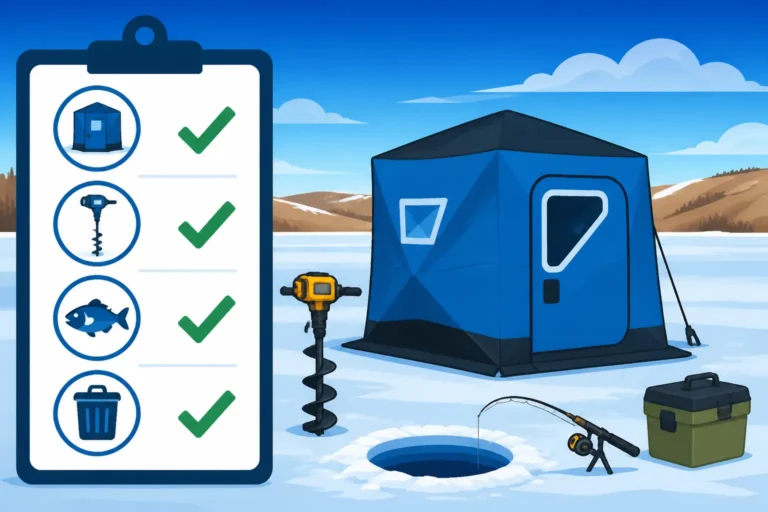
One of the most defining aspects of North Dakota ice fishing is the widespread use of ice shelters, from simple portable shanties to elaborate, permanent "fish houses." While these provide welcome refuge from the brutal North Dakota winter winds, they are subject to strict regulations, especially concerning their identification and removal. All ice shelters, whether portable or permanent, must be clearly marked with the owner's name, address, and telephone number in legible characters at least one inch high. This ensures accountability and helps the NDGFD contact owners if there are issues.
For permanent ice houses that are left on the ice overnight, there's an additional registration requirement. These larger shelters often need to display a valid registration number issued by the NDGFD. This is similar to boat registration and helps the department keep track of structures on the ice. Failing to properly mark or register your permanent fish house could lead to fines. Our article on Fish House Registration Requirements in North Dakota provides a full breakdown of what you need to do.
Perhaps the most critical regulation regarding ice shelters is the removal deadline. All ice fishing shelters, whether permanent or portable, must be removed from the ice by a specific date, typically March 15th each year. This date is rigid and is strictly enforced to prevent shelters from breaking through the ice as it thins and becoming hazards to navigation and property. If a shelter is not removed by the deadline, the owner faces significant fines, removal costs, and potentially the seizure of the shelter. It's a non-negotiable rule that protects both the environment and public safety.
Line Limits and Hole Spacing on the Ice
Unlike open water where you're typically limited to two lines, ice fishing in North Dakota usually allows for a more generous number of lines, often up to four. This gives anglers a better chance to cover different depths or target multiple species through various holes. However, each line must still be actively attended, meaning you need to be close enough to quickly respond to a bite. You can't just set four lines and walk away to warm up for an hour.
The spacing of your ice holes is also important, particularly on heavily fished lakes. While there isn't a strict statewide minimum distance between your own holes, common sense and courtesy dictate that you shouldn't drill so many holes that you infringe on another angler's space or create a hazard. More importantly, there are rules about the aggregate number of lines used by a group. If you're fishing with a partner, and you're each allowed four lines, your combined lines can't exceed eight total.
Additionally, there might be regulations regarding the size of ice holes. While most standard auger sizes are perfectly legal, excessively large holes that could pose a safety risk might be prohibited. Always ensure your equipment and setup comply with the specific North Dakota Ice Fishing Rules outlined in the current proclamation. The idea is to allow for effective fishing while maintaining safety and shared access to the resource for everyone on the ice.
Ice Fishing Safety and Legal Considerations
Beyond shelters and lines, there are broader legal and safety considerations for ice fishing. While not strictly "regulations" in the sense of limits, being mindful of ice thickness is paramount. The NDGFD recommends a minimum of 4 inches of clear, solid ice for safe foot travel and 8-12 inches for cars and light trucks. Driving on ice is always at your own risk, and conditions can change rapidly. Always check local ice reports and use extreme caution.
The use of bait also has specific rules for ice fishing. While live baitfish are popular, there are restrictions on transporting them and using them in certain waters to prevent the spread of aquatic nuisance species (ANS). You might be able to use minnows caught from one lake in that same lake, but transporting them to another can be illegal. Our guide on Aquatic Nuisance Species Rules for Boaters provides critical information that applies to ice anglers too, concerning bait and equipment cleaning.
Finally, while the allure of a remote spot is strong, remember that property rights still apply on the ice. While the ice itself is public domain, accessing it over private land without permission is trespassing. Always use designated public access points or seek permission from landowners. And as always, leave no trace. Pack out everything you pack in, including any trash, broken gear, or leftover bait. Responsible angling ensures that everyone can continue to enjoy North Dakota's incredible ice fishing opportunities.
Species-Specific Regulations: What You Need to Know for Key Fish
North Dakota is home to a fantastic diversity of fish, and the regulations reflect that. What applies to a trophy walleye might be completely different for a channel catfish or a small panfish. Understanding these species-specific rules is critical for any angler targeting a particular catch.
Walleye and Northern Pike: Size and Creel Limits
Walleye are undoubtedly the most sought-after game fish in North Dakota, attracting anglers from all over. Because of their popularity, walleye regulations are often among the most detailed and frequently modified. While the general statewide daily limit for walleye is typically 5, many of North Dakota's premier walleye lakes, such as Devils Lake and Lake Sakakawea, often have special rules, including length restrictions (e.g., a "slot limit" where fish between certain sizes must be released) or reduced daily limits. For example, some years might see a "no-size-limit" rule to encourage harvest of smaller fish, while others might have a slot limit to protect larger spawning females. Always consult the North Dakota Walleye Size Limit Rules for the specific water you plan to fish.
Northern Pike are another fantastic game fish, known for their aggressive strikes and impressive size. The North Dakota Northern Pike Daily Limit is generally 5 statewide, with a possession limit of 10. While pike are often managed with more liberal limits than walleye, there can still be exceptions. Some specific lakes might have length restrictions, particularly to protect larger, trophy-sized pike. It's not uncommon to hear of massive pike caught in North Dakota, especially on lakes like Devils Lake or in the Missouri River system. Because they are often abundant, pike can be a great target species when walleye fishing is slow, providing plenty of action and often a good meal.
It's also worth noting that both walleye and northern pike are open for fishing year-round in North Dakota, with the previously mentioned caveat about specific daily and possession limits. When cleaning your catch, remember that fillets must be kept in a way that allows for species identification until you reach your final destination. This often means leaving a patch of skin on the fillet or keeping the fish whole until you get home. This rule is particularly important if you're mixing walleye and sauger, as they can look similar, and distinguishing between them is important for enforcing limits.
Perch and Panfish: Liberal Limits and Popularity
North Dakota is famous for its yellow perch, especially the "jumbo perch" found in lakes like Devils Lake. These panfish are incredibly popular, especially for ice anglers, because of their delicious taste and willingness to bite. Reflecting their abundance and productive fisheries, the daily limits for yellow perch are much more liberal than for walleye or pike, often around 30 per day, with a possession limit of 60. This allows anglers to truly stock up on these tasty fish, making them a staple of many North Dakota fish fries. You can find more specific details in our guide on Yellow Perch and Panfish Daily Limits Explained.
Beyond yellow perch, other panfish like crappie and bluegill are also popular targets in various North Dakota waters. Similar to perch, these species often have generous daily and possession limits, reflecting healthy populations that can sustain higher harvest rates. Crappie, in particular, can be found in impressive numbers in certain lakes, providing fast-paced action. These panfish are excellent for introducing new anglers, especially kids, to fishing because they are often easier to catch and provide consistent action. The generous limits mean that a successful outing can yield a significant amount of fish for the dinner table.
While limits are generous, anglers should still practice responsible harvesting. Only keep what you will eat or reasonably share. Over-harvesting, even within legal limits, can sometimes impact local populations, especially in smaller lakes. The health of our panfish populations relies on all of us doing our part to be responsible stewards of the resource. And remember, even with these smaller fish, the same rules about identifying your catch until you get home apply.
Catfish and Paddlefish: Unique Rules and Opportunities
Channel catfish are another fantastic North Dakota game fish, particularly abundant in the Red River of the North, which is renowned for its trophy-sized cats. The general statewide daily limit for channel catfish is 5, with a possession limit of 10. However, the Red River, due to its exceptional catfish fishery, has its own special regulations, often allowing a higher daily limit. Our article on North Dakota Catfish Limit Rules will give you the precise details for the Red River and other specific catfish hotspots. These fish provide an incredible fight and are excellent table fare, making them a favorite for many anglers.
Paddlefish are truly unique and represent a special, highly regulated fishing opportunity in North Dakota. These prehistoric fish are snagged rather than caught on hook and line, and the season is very short and specific, typically occurring for a few weeks in May on a designated stretch of the Yellowstone and Missouri Rivers. To participate, anglers need a special paddlefish tag in addition to their regular fishing license. The daily and season limit is one paddlefish per angler, and once you've harvested one, you cannot participate in the paddlefish snagging season for the remainder of that year.
The regulations for paddlefish are stringent for a good reason: they are a long-lived, slow-growing species, and their populations require careful management. Rules include mandatory reporting of harvested fish, specific gear requirements (e.g., heavy rods, strong line, special hooks), and sometimes even time-of-day restrictions for snagging. It's an exciting and memorable experience, but one that demands absolute adherence to the rules. If you're considering paddlefish snagging, make sure you thoroughly review the specific section in the North Dakota Fishing Proclamation and any supplementary guides from the NDGFD.
Watercraft and Aquatic Nuisance Species (ANS) Regulations
Fishing from a boat, kayak, or even a canoe offers incredible access to North Dakota's vast waters. But with that freedom comes a responsibility to follow watercraft safety rules and, crucially, to help prevent the spread of Aquatic Nuisance Species (ANS). These invasive species pose a serious threat to our fisheries and ecosystems.
Boat Registration and Safety Essentials
Any motorized watercraft, and any sailboat over 16 feet in length, operating on North Dakota waters must be registered with the North Dakota Game and Fish Department. This applies to residents and nonresidents alike. When you register your boat, you'll receive a registration number and a decal that must be displayed prominently on your vessel. The registration typically needs to be renewed every three years. Our guide to North Dakota Boat Registration Requirements will walk you through the entire process, including the specific fees associated with different boat sizes.
Beyond registration, basic boating safety equipment is a must. This includes having a sufficient number of U.S. Coast Guard-approved life jackets for everyone on board, a sound-producing device (like a whistle or horn), navigation lights if operating after sunset, and a fire extinguisher if your boat has an enclosed fuel compartment or permanently installed fuel tank. These aren't just good ideas; they are legal requirements designed to keep you and your passengers safe on the water.
Operating a boat under the influence of alcohol or drugs (Boating Under the Influence, or BUI) is illegal and carries severe penalties, just like driving a car while impaired. North Dakota also has specific age requirements for operating certain types of watercraft, especially for personal watercraft (PWCs) or motorized boats without supervision. It’s always best to familiarize yourself with the full boating safety regulations, which are usually included as a section in the annual fishing proclamation or available on the NDGFD website. Safety should always be your top priority on the water.
Preventing the Spread of Aquatic Nuisance Species
This is a really big deal in North Dakota, and it's something every boater and angler needs to take seriously. Aquatic Nuisance Species (ANS), like zebra mussels, Eurasian watermilfoil, and Asian carp, can wreak havoc on native ecosystems, destroy fisheries, and clog waterways. Once established, they are incredibly difficult, if not impossible, to eradicate. North Dakota has proactive laws to prevent their introduction and spread, and compliance is mandatory for anyone using the state’s waters.
The core of ANS prevention is the "Clean, Drain, Dry" protocol. This means:
- CLEAN all visible aquatic plants, animals, and mud from your boat, trailer, and fishing gear before leaving any water access area. Pay special attention to your propeller, anchor, and fishing lines.
- DRAIN all water from your boat, including the livewell, bilge, and engine cooling system, before leaving the water access area.
- DRY your boat and equipment thoroughly before launching into another body of water. A minimum of five days is often recommended for drying, especially in warmer weather.
These steps are legally required. North Dakota law also prohibits transporting live baitfish from one water body to another, unless they were purchased from an authorized vendor and you have documentation, or they are within a select list of approved bait species. Even bringing water from one lake to another in a bait bucket can be illegal. Game wardens actively check boats and trailers at access points and along roadways to ensure compliance. Our comprehensive guide, Aquatic Nuisance Species Rules for Boaters, offers even more detailed information on how to protect North Dakota's precious waters.
Rules for Using Bait and Transporting Water
The rules surrounding bait use and water transport are directly tied to ANS prevention. When it comes to live bait, particularly minnows, shiners, or other small fish, you need to be extremely careful. While legal to use in many instances, their origin and how they are transported are critical. For example, if you catch minnows from one lake, you can typically use them in that same lake. However, transporting those same minnows to a different lake, even one nearby, is usually prohibited. This is because non-native species or diseases can inadvertently be transported along with the baitfish.
The NDGFD maintains a list of approved baitfish species that can be legally used, and for purchased bait, it's essential to retain the receipt as proof of origin. If you purchase live bait from a bait shop, make sure it's from a certified dealer and ask about any specific restrictions for the waters you plan to fish. You can find up-to-date lists of regulated bait shops and species on the NDGFD website. Always dispose of unused bait in the trash, never release it into the water or onto the shore.
Water itself is also a vector for ANS. This is why the "Drain" rule is so important. All water, from livewells, bilges, and even bait buckets, must be drained before leaving a boat ramp or access area. Some anglers use portable aerated bait containers that they bring from home, but the water in those containers must also be from the lake you are currently fishing, and then drained before you leave. These regulations are sometimes seen as an inconvenience, but they are absolutely vital to protecting North Dakota's fantastic fishing opportunities from irreversible harm caused by invasive species. Your diligence in following these rules is a direct contribution to preserving our cherished waters.
Penalties for Non-Compliance and Enforcement
No one wants to break the rules, and most anglers are respectful of regulations. However, mistakes can happen, or worse, some individuals knowingly disregard the law. It’s important to understand the potential consequences of not following North Dakota’s fishing regulations, as they can range from minor fines to serious legal trouble.
Consequences of Fishing Without a License or Violating Limits
The most common violation, and perhaps the easiest to avoid, is fishing without a valid license. If you're caught fishing without a required license (or the necessary certificate), you can expect to face fines. The exact amount can vary depending on whether you're a resident or nonresident, and if it's a first offense or a repeat offense. Beyond the fine, you might also be required to purchase the appropriate license on the spot or face further penalties. Our article, Penalties for Fishing Without a License in North Dakota, dives into this specific issue.
Violating daily or possession limits for fish species can lead to even more significant penalties. If you're found with more fish than legally allowed, you could face substantial fines for each fish over the limit. Additionally, the excess fish will likely be confiscated. In more egregious cases, or for repeat offenders, you could even lose your fishing privileges for a period of time, not just in North Dakota but potentially in other states through interstate compacts. Imagine being banned from fishing for a year or more – that's a serious consequence for exceeding a limit.
More severe violations, such as using illegal fishing methods (like snagging outside of designated seasons), fishing in closed areas, or deliberately destroying habitat, can result in much harsher penalties. These might include larger fines, court appearances, community service, extended license revocations, and even jail time in extreme cases. It's a stark reminder that these regulations are laws, and disrespecting them carries significant legal repercussions.
The Role of Game Wardens and Self-Enforcement
North Dakota Game and Fish Department wardens are the primary enforcers of fishing regulations. These dedicated officers are highly trained and have the authority to stop, inspect, and question anglers to ensure compliance. They conduct patrols on lakes, rivers, and at boat ramps, often checking licenses, fish limits, and ensuring ANS prevention measures are being followed. They are often knowledgeable anglers themselves and are usually willing to answer questions if you approach them respectfully. Their job is not just to catch offenders but also to educate the public and protect the resource.
As anglers, we also have a role in "self-enforcement" and peer pressure. Most experienced anglers understand the importance of regulations for conservation. If you see someone clearly violating a rule – for instance, keeping undersized fish, exceeding limits, or failing to clean their boat of weeds – don't hesitate to politely educate them if it feels safe to do so. Often, people genuinely don't know the specific rule for a particular lake. If it's a blatant or repeated violation, or if you feel uncomfortable confronting someone, it's best to report it to the NDGFD.
Remember, a game warden’s check is a routine part of fishing. Be cooperative, have your license readily available (digital or physical), and be transparent about your catch. Trying to hide fish or being evasive will only lead to greater suspicion and potential problems. Their presence is ultimately for the good of the fishery and ensures that everyone plays by the same rules, preserving the resource for all.
How to Report Violations and Protect Our Fisheries
If you witness a fishing violation that you believe is serious or requires official intervention, reporting it to the North Dakota Game and Fish Department is easy and confidential. You can typically find a "Report a Poacher" or "Report a Violation" hotline number on the NDGFD website or in the annual fishing proclamation. Many states, including North Dakota, have dedicated toll-free numbers specifically for this purpose. You can also often submit reports online.
When reporting a violation, try to provide as much detail as possible. This includes:
- The date and approximate time of the incident.
- The specific location (lake name, river stretch, nearest access point, etc.).
- A description of the individuals involved (number of people, their physical descriptions, clothing).
- A description of any vehicles or boats involved (make, model, color, license plate or boat registration number).
- The nature of the violation (e.g., keeping too many fish, fishing in a closed area, illegal netting).
- Any other relevant observations.
Providing accurate and detailed information greatly assists game wardens in investigating the report effectively. Your identity as the reporting party will remain confidential. By taking the time to report violations, you are actively participating in the conservation efforts that keep North Dakota's fisheries healthy and abundant for everyone. It’s a vital way to protect the integrity of the sport and ensure that those who choose to break the law are held accountable.
Disclaimer
The information provided in this guide is intended for general informational purposes only and is not a substitute for the official North Dakota Fishing Proclamation. Regulations can change frequently. Always consult the latest official North Dakota Game and Fish Department publications and website for the most current and accurate rules and regulations before fishing.