Fishing License Rules for Border Waters With South Dakota
Navigating fishing regulations can sometimes feel like trying to untangle a bird's nest of fishing line, especially when you're dealing with waters that stretch across state lines. It’s easy to get confused about which license you need when you're casting your line in waters shared by North Dakota and South Dakota. This guide is here to clarify those rules, making sure you understand exactly what's required so you can focus on the joy of fishing without any worry of legal snags.
Understanding Border Water Agreements
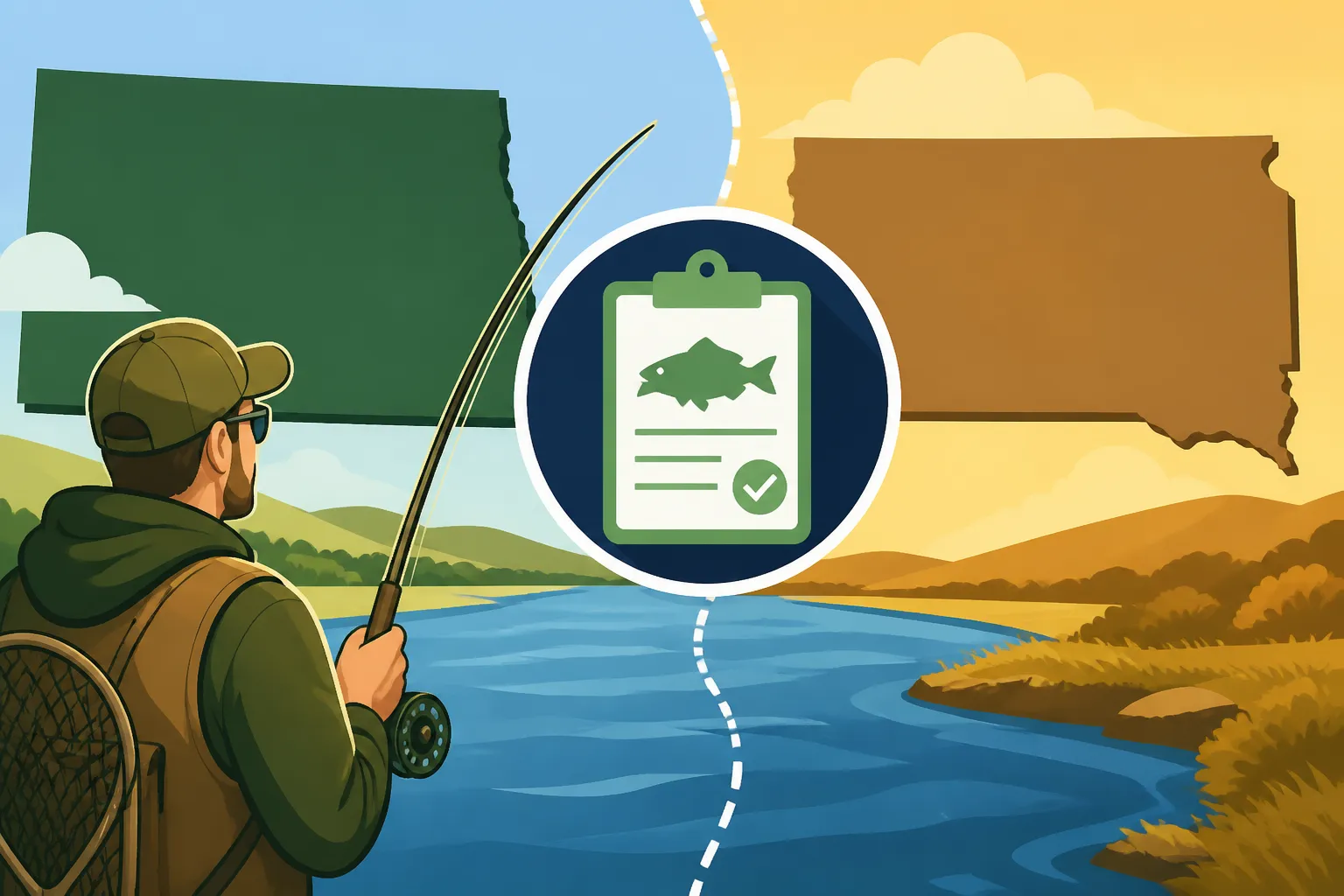
When you're out on the water, whether it's the gentle flow of a river or the expansive stretch of a reservoir, the last thing you want to worry about is whether your fishing license is valid for the exact spot where your lure just landed. The good news is that North Dakota and South Dakota have a long-standing agreement to simplify things for anglers on certain shared waters. This reciprocal agreement is a huge help, preventing the need for multiple licenses in what are essentially the same fishing grounds.
The Reciprocal Agreement Between North Dakota and South Dakota
The core of this agreement is pretty straightforward: if you have a valid fishing license from either North Dakota or South Dakota, you are generally permitted to fish in the designated border waters. This means a North Dakota fishing license is valid on the South Dakota side of these specific waters, and vice-versa. It's designed to make fishing more accessible and enjoyable for everyone, eliminating the bureaucratic headache of needing two separate state licenses just to fish the same body of water.
However, it's crucial to remember that while the license itself might be reciprocal, the rules of the state that issued your license still largely apply to you. This can get a little tricky, so understanding the nuances is key. For example, if you're a North Dakota resident fishing on the South Dakota side of a border water with your North Dakota license, you generally follow North Dakota's statewide regulations regarding things like bag limits and size restrictions, unless specifically stated otherwise for that border water. This is why it’s so important to be familiar with the comprehensive North Dakota Fishing Regulations Explained If you're looking for details on specific license types, our guide on North Dakota Resident Fishing License Options, or even North Dakota Nonresident Fishing License Options, can help clarify which license might be best for your situation.
Specific Waters Covered by the Agreement
This reciprocal agreement doesn't cover all waters between the two states, only those specifically designated as "border waters." The primary body of water where this agreement is in full effect is the Bois de Sioux River and a portion of the Red River of the North as it flows between the two states.
Let's break that down a bit:
- Bois de Sioux River: This river forms a natural boundary between southeastern North Dakota and northeastern South Dakota. For its entire length along this border, the reciprocal license agreement applies. Anglers holding a valid North Dakota or South Dakota fishing license can fish its waters.
- Red River of the North: The reciprocal agreement extends to the Red River of the North where it flows between North Dakota and Minnesota, but it also applies to the segment of the Red River that forms the border with South Dakota, specifically at its southernmost point where the Bois de Sioux River meets it. It’s a bit of a confluence, and the reciprocal rules continue there.
It's important to recognize that while the main portion of Lake Oahe is a significant body of water shared by both states, the reciprocal agreement does not apply to the entirety of Lake Oahe. While much of Lake Oahe is in South Dakota, the upper reaches extend into North Dakota. Anglers fishing the North Dakota portion of Lake Oahe must possess a North Dakota fishing license, and those fishing the South Dakota portion must have a South Dakota fishing license. This distinction is vital for avoiding potential issues. Always check a detailed map or the latest regulations to confirm if you're truly in a reciprocal zone or if you need a specific state license.
What Constitutes "Border Water" for Licensing?
This is where it can get a little fuzzy for anglers who aren't intimately familiar with the exact geographical lines. Generally, "border water" refers to the entire water body that physically separates the two states, from bank to bank. On the Bois de Sioux River, this is relatively straightforward; the river itself is the border.
However, the question often arises: what if you’re launching from one state and fishing near the other bank? Does that count? Yes, as long as you are within the designated reciprocal waters, your license from either state is valid. This means you can cast from the North Dakota side of the Bois de Sioux River with a South Dakota license, or vice versa, and legally fish the entire width of the river.
The tricky part comes when you accidentally drift or motor out of these specifically designated reciprocal waters into non-reciprocal territory. Imagine you’re on the Red River enjoying the day, and you drift a little too far south into an area of Lake Oahe that isn't part of the reciprocal agreement. Suddenly, your North Dakota license might not be sufficient if you’re actively fishing in what is now considered exclusively South Dakota waters. This is why situational awareness and perhaps a good GPS unit or a detailed map, which you can easily find on Amazon, are invaluable when fishing these border regions. Always confirm the boundaries, especially if you plan to explore a wide area.
Key Rules and Exceptions for Fishing These Waters
Even with a reciprocal license agreement, it’s not quite a free-for-all. There are specific regulations you need to adhere to, and these can sometimes depend on which state's license you hold. Knowing these nuances is essential for a stress-free day on the water.
License Requirements for Residents and Nonresidents
For residents of North Dakota or South Dakota, the rule is simple: a valid fishing license from your home state is all you need to fish the reciprocal border waters. So, a resident of Fargo with a North Dakota license can fish the Bois de Sioux just as easily as a resident of Milbank with a South Dakota license.
For nonresidents, it's pretty much the same principle. If you're visiting from, say, Minnesota, you'd purchase a nonresident license from either North Dakota or South Dakota. That single nonresident license would then grant you access to the reciprocal border waters. This means you don't need to double up and buy a nonresident license from both states. You can learn more about the different options and pricing in our North Dakota Nonresident Fishing License Options.
A general rule of thumb is to carry the current fishing proclamation or a digital copy from the state that issued your license. These often include specific sections on border water agreements and can be your best reference in a pinch. You can also find physical copies of these guides or waterproof versions for your tackle box on Amazon.
Equipment, Bag Limits, and Season Considerations
This is where the reciprocity can get a little complex. While your license might be accepted by both states on these specific border waters, it's generally understood that you adhere to the fishing regulations (like daily bag limits, size restrictions, and line limits) of the state that issued your license.
For example, if you're a North Dakota angler fishing the Bois de Sioux with your North Dakota license, you'll abide by North Dakota's North Dakota Walleye Size Limit Rules and North Dakota Northern Pike Daily Limit, as well as the rules about how many lines you can fish with in North Dakota. Conversely, a South Dakota angler fishing the same water with a South Dakota license would follow South Dakota's regulations.
This can sometimes lead to situations where two anglers in the same boat, each holding a different state's license, might legally have different daily limits for the same species. It's rare, but it highlights the importance of knowing your state's rules, even when fishing on shared waters. Always consult the current year's North Dakota Fishing Season Dates and Limits. For details about how many lines you can use, refer to How Many Lines Can You Fish With in North Dakota.
Special Regulations and Species-Specific Rules
Occasionally, there might be very specific, localized regulations on certain stretches of border waters that both states agree upon and enforce uniformly, regardless of which state's license you hold. These are typically put in place for conservation efforts or to manage specific fisheries. For instance, there might be a special restriction on a particular species during its spawning season in a specific area. These will usually be explicitly outlined in both states' fishing proclamations, often in a section dedicated to border water rules.
It's always a good idea to check for these special regulations before heading out, especially if you're targeting a particular species. For the most up-to-date and accurate information, the North Dakota Game and Fish Department website is an invaluable resource. They frequently update their fishing proclamations, which serve as the official guide to all current fishing laws.
Practical Scenarios and Common Questions
Fishing border waters can lead to some unique situations and frequently asked questions. Let's tackle a few common scenarios that anglers often encounter, helping you navigate them smoothly.
Fishing from Shore or a Dock
The reciprocal license agreement generally applies whether you're fishing from a boat, from shore, or from a dock on the designated border waters. If you're on the North Dakota bank of the Bois de Sioux River and you have a valid South Dakota fishing license, you are legally covered to fish. The same holds true if you're on the South Dakota side with a North Dakota license.
The key here, again, is being on or adjacent to the designated reciprocal water. If you walk a few yards away from the river into an area that is clearly within one state's exclusive land ownership and not part of the border water designation, then the reciprocal agreement wouldn't apply, and you'd need the license for the state you're physically in. But for typical shore fishing along the banks of the Bois de Sioux, your single license from either state is sufficient.
Navigating Across State Lines While Fishing
This is perhaps the most common point of confusion and a scenario that requires careful attention. Let's say you're on a boat in the Bois de Sioux River, which is a reciprocal water. You have your North Dakota license, and you're legally fishing. Now, imagine you decide to take a scenic detour up a small tributary that flows entirely within South Dakota and is not considered part of the reciprocal agreement. If you start fishing in that tributary, your North Dakota license suddenly becomes invalid for that specific location.
The critical takeaway: the reciprocal agreement applies to the designated border waters only. If your boat ventures into waters that are entirely within one state and not part of that agreement, you must then possess the appropriate license for that state. This is especially pertinent for larger systems like the upper reaches of Lake Oahe, where the reciprocal agreement does not apply. Always be mindful of your location. Using a modern GPS unit with detailed mapping can be incredibly helpful for identifying state lines and reciprocal water boundaries, many of which are available for purchase from retailers like Amazon.
What to Do If You're Unsure
It's completely understandable to be unsure about regulations sometimes. The best approach is always to err on the side of caution and seek clarification. Here's a breakdown of what you can do:
- Consult the Latest Proclamations: Both the North Dakota Game and Fish Department and the South Dakota Game, Fish and Parks Department publish annual fishing proclamations. These documents are the ultimate authority and contain detailed maps and specific rules for border waters. Keep a physical or digital copy handy.
- Contact Game Wardens: If you're still uncertain, especially about a specific spot or a complex situation, contact the respective state's game and fish department. They employ dedicated game wardens whose job it is to know these rules inside and out and to help educate anglers. It's far better to ask a question than to inadvertently break a regulation.
- Review Online Resources: Many state agencies have comprehensive websites with FAQs and interactive maps. These can be a quick and easy way to get answers before you even leave home. Our guide on North Dakota Fishing License Online Purchase Options, can point you to the official NDGF site.
Remember, ignorance of the law is not a valid defense. Taking a few extra minutes to confirm can save you a lot of hassle and potential fines down the road.
Enforcement and Penalties for Non-Compliance
Nobody wants their fishing trip to end with a ticket or a confrontation with a game warden. Understanding how border water rules are enforced and what the penalties are for non-compliance is crucial for every angler.
Game Warden Authority on Border Waters
Game wardens from both North Dakota and South Dakota have concurrent jurisdiction on the designated reciprocal border waters. This means that a North Dakota game warden can enforce North Dakota fishing laws on any angler within those border waters, even if that angler is closer to the South Dakota bank. Similarly, a South Dakota game warden can enforce South Dakota laws within the same area.
Here's where it gets interesting: if you, as a North Dakota licensed angler, are following North Dakota's regulations, a South Dakota game warden will respect that you are compliant with your licensing state's rules, even if South Dakota's rules for that species might be different. However, if you are, for instance, using more lines than allowed by your North Dakota license while fishing these border waters, both a North Dakota or a South Dakota game warden could issue you a citation for violating the rules of your licensing state.
Essentially, they work together to ensure conservation and compliance, and they are well-versed in the reciprocal agreements. They're usually fair and understanding, but they expect you to know and follow the rules of the license you hold.
Consequences of Fishing Without a Proper License
Fishing without a proper license, or not adhering to the regulations of the license you possess, can lead to various penalties. The specific fines and repercussions can vary depending on the severity of the infraction, whether it's a first offense, and the specific state's laws. Generally, you can expect:
- Fines: These are the most common penalties. Fines for fishing without a license in North Dakota can be substantial, often hundreds of dollars, plus court fees. These costs quickly outweigh the price of a license. Our detailed article on Penalties for Fishing Without a License in North Dakota, offers a deeper dive into this topic.
- Seizure of Equipment: In some cases, especially for repeat offenders or serious violations, game wardens may have the authority to seize your fishing equipment, including rods, reels, and even your boat.
- Loss of Fishing Privileges: You might face a temporary or permanent suspension of your fishing privileges in the state where the violation occurred, and sometimes this can extend to other states through interstate compacts.
- Criminal Charges: While rare for a simple license infraction, more serious violations, such as fishing during a closed season for a protected species or exceeding limits by a large margin, could potentially lead to criminal charges.
It simply isn't worth the risk. A small investment in a valid fishing license and a few minutes spent understanding the rules can save you from a major headache and financial setback.
Reciprocal Border Water Fishing Summary
To make things a little easier to digest, here’s a quick summary of the reciprocal fishing license rules between North Dakota and South Dakota. This table outlines the key aspects and what you, as an angler, need to remember when planning your trip to these shared waters.
| Feature | North Dakota – South Dakota Border Waters Reciprocity Rules |
|---|---|
| Applicable Waters | Primarily the Bois de Sioux River and the southernmost portion of the Red River of the North where it borders both states. Does NOT apply to Lake Oahe. |
| License Validity | A valid fishing license from either North Dakota or South Dakota is accepted for fishing in the designated reciprocal waters. This applies to both resident and nonresident licenses. |
| Regulations to Follow | Anglers must adhere to the fishing regulations (bag limits, size limits, line limits, seasons) of the state that issued their fishing license. |
| Enforcement | Game wardens from both states have concurrent jurisdiction. They will enforce the regulations of the state from which your license was issued. |
| Key Exceptions/Notes | Special, localized regulations might exist that supersede individual state rules; always check current proclamations. If you leave designated reciprocal waters and enter non-reciprocal territory, you must possess a license for the state you are actively fishing in. |
Remember, this table is a summary. Always refer to the official fishing proclamations from the North Dakota Game and Fish Department and the South Dakota Game, Fish and Parks for the most current and detailed regulations. Happy fishing, and stay safe out there!
Disclaimer
Please remember that fishing regulations can change. While every effort has been made to provide accurate and up-to-date information in this guide, it is ultimately the angler's responsibility to consult the official North Dakota Game and Fish Department and South Dakota Game, Fish and Parks websites or their current fishing proclamations for the most recent and complete regulations before heading out onto the water. This guide is for informational purposes only and should not be considered a substitute for official legal documents.