Fishing License Rules for Border Waters With Minnesota
It's incredibly common to feel a little lost when you're trying to figure out which fishing license you need, especially when your fishing adventures take you to waters that literally divide states. The border waters between North Dakota and Minnesota are a prime example, causing many anglers to scratch their heads. This comprehensive guide will clear up all that confusion, detailing the specific rules and reciprocal agreements so you can cast your line worry-free and enjoy your time on the water.
Understanding the Reciprocal Agreement
Navigating the bureaucracy of fishing licenses can be a real drag, and when two states share a waterway, it often feels like you need a law degree to understand the rules. Thankfully, North Dakota and Minnesota have a long-standing agreement that simplifies things immensely for anglers on their shared border waters. This reciprocal licensing agreement is a huge win for anyone looking to enjoy the fantastic fishing opportunities these rivers and lakes provide without the hassle of buying two separate state licenses.
What Reciprocity Means for Anglers
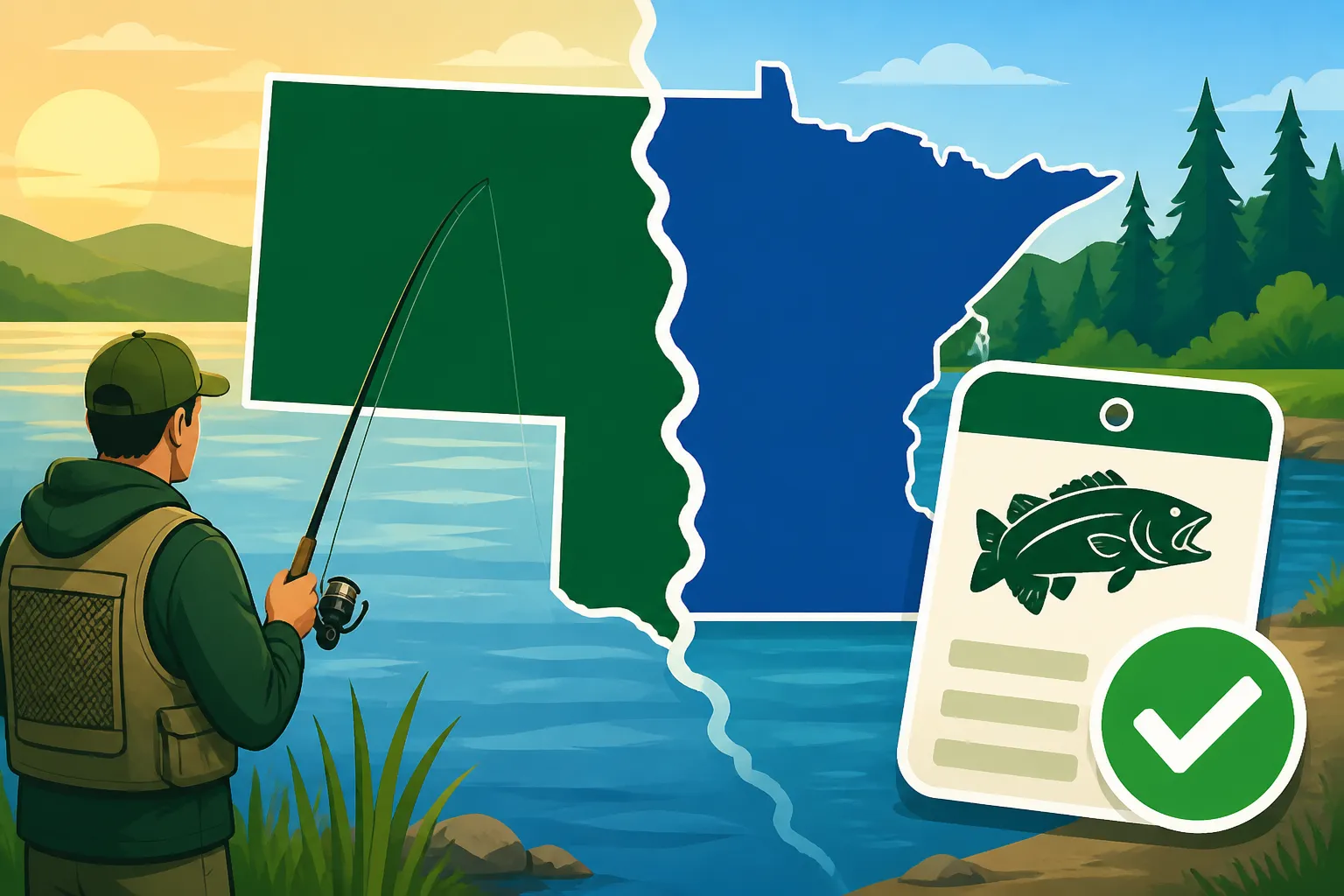
At its core, reciprocity on these border waters means that if you possess a valid resident or nonresident fishing license from either North Dakota or Minnesota, you are legally permitted to fish in the designated reciprocal waters of both states. This is a game-changer because it eliminates the need to purchase an additional license, saving you money and paperwork. So, if you're a North Dakota resident heading out onto the Red River, your North Dakota fishing license is all you need, even if you drift into Minnesota waters. The same applies if you're a Minnesota resident fishing those same waters with your Minnesota license. It really streamlines the process and encourages more people to get out there and fish, which is what we all want. This agreement is a testament to the collaborative spirit between the states, recognizing the shared natural resource and the enjoyment it brings to so many.
However, it's vital to grasp that this isn't a free pass to fish anywhere in either state. The reciprocity is strictly limited to the specifically designated boundary waters. You can't, for example, use your North Dakota license to fish Lake of the Woods entirely within Minnesota, nor can a Minnesota license grant you access to Devils Lake in North Dakota. This distinction is paramount, as venturing into non-reciprocal waters without the correct license can lead to significant penalties, including fines and the potential confiscation of your gear. Always confirm you're in a designated border water before assuming your single license covers you.
Key Differences in Rules Even with Reciprocity
While your license might be valid in both states on shared waters, it's crucial to understand that fishing regulations themselves are not always perfectly reciprocal. This is a common misconception that can land even the most well-intentioned angler in hot water. Each state's Game and Fish Department sets its own specific rules regarding length limits, daily creel limits, season dates, and even what types of bait or tackle are allowed for certain species. These can differ from one state to the other, even on the same body of water, depending on where you are physically located or what the predominant management strategy is for that section of the waterway.
For instance, you might be fishing for walleye on the Red River. While your North Dakota license allows you to fish, if you're physically in Minnesota waters, you generally need to adhere to Minnesota's specific walleye regulations for that river segment. If you're on the North Dakota side, you follow North Dakota's rules. This often creates a tricky situation, especially for those drifting or moving a boat between state lines. The safest practice is always to carry both the most recent North Dakota Fishing Regulations Explained and the Minnesota fishing regulations booklet, or at least have access to them digitally. Some anglers even keep a printout of the specific border water rules from both states in a waterproof bag, which you can easily find options for on Amazon, just to be absolutely sure. Ignorance of the law is never an excuse, and game wardens from either state have the authority to enforce their respective regulations within their jurisdiction.
It’s not just about the fish, either. Other aspects of fishing, such as ice fishing shelter rules or boat registration requirements, might also differ. For example, when must ice shelters be removed from North Dakota lakes versus Minnesota lakes might have different deadlines. While boat registration is typically handled by your state of residence, understanding and following the specific Aquatic Nuisance Species Rules for Boaters from both states is paramount, especially when crossing state lines. Always double-check any specific equipment or seasonal rules that might impact your outing.
Specific Border Waters Covered
North Dakota and Minnesota share a few significant waterways that are covered by this reciprocal fishing license agreement. These are vital arteries for recreation and provide incredible fishing opportunities for various species. Knowing exactly which bodies of water fall under this agreement is the first step to a hassle-free fishing trip.
The Red River of the North
The mighty Red River of the North is arguably the most famous and heavily fished of the border waters. This river forms a natural boundary between North Dakota and Minnesota for a significant stretch, from the Canadian border down to its confluence with the Bois de Sioux River. Anglers flock here primarily for its legendary channel catfish, but it also offers excellent fishing for walleye, northern pike, and other species. For anyone looking to explore the incredible Red River Catfish Fishing Spots in North Dakota, or even try for some of the immense northern pike that lurk in its waters, this reciprocal agreement is a blessing.
When you're out on the Red River, whether you're anchored near Grand Forks or drifting south of Fargo, your valid North Dakota fishing license or Minnesota fishing license will cover you across the entire width of the river. This means you don't have to worry if your boat drifts a few yards into the "other" state's territory. However, as mentioned, the specific harvest regulations (like daily limits or size restrictions) can still vary based on the state whose immediate shoreline you are nearest or whose regulations are explicitly adopted for that section. It’s a good idea to consult the "Reciprocal Fishing Rules on the Red River Border Waters" guide, which is often updated annually by both state agencies to consolidate the specific rules for ease of understanding. Often, for simplicity, both states will agree to honor the more conservative limit on shared species, but this isn't always the case, so staying informed is key.
Bois de Sioux River
Flowing south from Lake Traverse, the Bois de Sioux River marks another important segment of the North Dakota-Minnesota border. This river, though smaller than the Red, still offers solid fishing and is included in the reciprocal agreement. It eventually joins the Otter Tail River to form the Red River of the North. Anglers here can find similar species to the Red River, including walleye, northern pike, and channel catfish, though often in different concentrations and sizes due to the river's characteristics.
Just like on the Red River, a valid fishing license from either North Dakota or Minnesota grants you the legal right to fish the entire breadth of the Bois de Sioux River. This uniformity across the river makes it easy for local residents and visitors alike to enjoy fishing without concern over invisible state lines in the water. For those interested in the specific regulations that apply to these waters, the respective state game and fish departments typically publish clear guidelines, sometimes even highlighting unique rules for certain segments of the river. These details are usually found in the annual North Dakota Fishing Regulations Booklet 2026 to 2028 or its Minnesota counterpart. Always remember that even if your license is valid, you still need to follow the specific catch limits and methods that apply.
Traverse and Mud Lakes
The reciprocal agreement also extends to Lake Traverse and Mud Lake, which are located at the very southern end of the North Dakota-Minnesota border, just before the Bois de Sioux River begins its journey north. These lakes are valuable fisheries, known for walleye, northern pike, and panfish. For anglers operating on these unique water bodies, the same reciprocal license rules apply, ensuring a seamless experience.
These lakes present unique fishing environments, often shallower and more prone to vegetation than the rivers. The species composition can be slightly different, and fishing techniques might vary. For instance, anglers targeting yellow perch or crappie might find different patterns here than on the larger Red River. Your fishing license from either state allows you to fish anywhere on these lakes without needing a second license. However, always be mindful of which state's specific fishing seasons, size limits, and bag limits are in effect for the particular species you are targeting. This is especially true for popular panfish like yellow perch and crappie, where daily limits can sometimes vary, so checking the current North Dakota Yellow Perch Daily Limit and Minnesota's equivalent is a wise move.
Practical Scenarios and Common Questions
Even with reciprocal agreements in place, real-world fishing situations can still throw a curveball. Anglers often have specific questions about how these rules apply to their particular setup or residency. Let’s tackle some of the most common scenarios and clear up any lingering doubts.
Fishing from Shore or a Boat
One of the most frequent questions we hear is whether the reciprocal agreement applies equally to shore anglers and those fishing from a boat. The answer is a resounding yes, but with an important nuance. If you are fishing from a boat on the Red River, Bois de Sioux River, or Lakes Traverse and Mud, your valid North Dakota or Minnesota license covers you across the entire width of the water body. This is the beauty of the reciprocity—it's about the water, not the vessel.
However, if you are fishing from shore, the situation becomes a bit simpler and stricter: you are fishing in the waters of the state whose land you are standing on. So, if you're standing on the North Dakota bank of the Red River, you must have a valid North Dakota fishing license. If you step over to the Minnesota side, you must have a valid Minnesota fishing license. The reciprocal agreement for licenses still applies in the sense that if you have a North Dakota license, you can fish from the Minnesota shore if you're still on a reciprocal water. But the primary rule is that you must be licensed by at least one of the reciprocal states. Many anglers choose to get a "North Dakota Fishing License Online Purchase Options" or use "North Dakota Fishing License Retail Vendors Like Walmart" to ensure they're covered. This distinction is crucial for shore anglers, as inadvertently crossing into a state without a valid license (even if the water itself is reciprocal) can lead to penalties. Always know exactly where you're standing or launching from.
Resident vs. Nonresident Licenses
The reciprocal agreement works for both resident and nonresident licenses. If you are a resident of North Dakota, your North Dakota resident fishing license covers you on the border waters. Similarly, if you're a Minnesota resident, your Minnesota resident license does the trick. Where it gets interesting is for nonresidents. If you're visiting from a third state, say Iowa or South Dakota, you only need to purchase one nonresident fishing license from either North Dakota or Minnesota to fish the shared border waters. This is excellent news for traveling anglers!
For example, a visitor from Montana could purchase a North Dakota Nonresident Season Fishing License Cost or even a shorter-term option like the Nonresident 3-Day Fishing License in North Dakota, and that would be valid for fishing the Red River from either bank or boat, according to the reciprocal agreement. The choice of which state's nonresident license to buy often comes down to convenience, cost (as prices can vary), or where you plan to spend the majority of your non-border water fishing time if you intend to fish other lakes. It’s always a good idea to check the specific "North Dakota Nonresident Fishing License Options" and compare them to Minnesota’s offerings to find the best fit for your trip duration and budget. Just remember, your chosen nonresident license must be valid for the duration of your fishing trip.
Enforcement and Game Wardens
Game wardens from both North Dakota and Minnesota have the authority to patrol and enforce fishing regulations on the shared border waters. They often work cooperatively, and it's not uncommon to see wardens from both states working together, or for a warden from one state to check licenses and compliance even if you're temporarily on the "other" side of the river. The key takeaway here is that you must be compliant with the laws of whichever state's jurisdiction you are in at that moment, even with the reciprocal license agreement.
If a game warden from Minnesota stops you on the Red River, and you only possess a North Dakota license, that North Dakota license is perfectly valid for fishing purposes due to the reciprocal agreement. However, if that same warden identifies a violation of Minnesota's specific fishing regulations (e.g., an over-limit of walleye according to Minnesota's rules, even if it might be legal under North Dakota's rules), they can still issue a citation. This highlights the importance of carrying the most current regulations for both states. You can often find these printed booklets at bait shops, sporting goods stores like those that might stock items from Amazon, or readily available on the North Dakota Game and Fish Department website. Knowing that "Can a Game Warden Check Your License in North Dakota?" is always a possibility, being prepared with proper identification and current licenses is essential for a smooth interaction. Penalties for Fishing Without a License in North Dakota or for violating specific regulations can be steep, so it's always better to be over-informed than under-prepared.
Where to Get Your License
Once you've wrapped your head around the reciprocal rules, the next step is actually getting your hands on a fishing license. Luckily, both North Dakota and Minnesota have made the process relatively straightforward, offering several convenient options for anglers.
Online and In-Person Options
For North Dakota, purchasing a fishing license is incredibly easy and flexible. The most popular method these days is online through the North Dakota Game and Fish Department's website. It's a quick, secure process where you can purchase your license from the comfort of your home, print it out immediately, or even keep a digital copy on your phone. This is particularly convenient for planning a trip, as you can get everything sorted before you even hit the road. Many anglers appreciate this digital convenience, especially when trying to ensure their North Dakota Fishing License Expiration Date is clear.
If you prefer a more traditional route or need some specific advice, you can also purchase a North Dakota fishing license in person. Licenses are sold at various vendors across the state, including many bait shops, sporting goods stores, convenience stores, and county auditors' offices. These locations often have knowledgeable staff who can answer questions about local fishing spots or the latest conditions. For those who enjoy browsing for gear while they get their license, stopping at a local retailer can be a great way to combine tasks. Remember to bring a valid ID, especially if you're applying for a resident license, to confirm your eligibility.
| Feature | North Dakota License Purchase | Minnesota License Purchase |
|---|---|---|
| Online Purchase | Yes (NDG&F website) | Yes (MNDNR website) |
| In-Person | Bait shops, retailers, county offices | Bait shops, retailers, county offices |
| Required ID | Driver's License/State ID (for residency proof) | Driver's License/State ID (for residency proof) |
| Payment Options | Credit/Debit Card (online), Cash/Card (in-person) | Credit/Debit Card (online), Cash/Card (in-person) |
| Nonresident Options | Yes (various durations) | Yes (various durations) |
Essential Documents Needed
Regardless of whether you choose to purchase your fishing license online or in person, you’ll need a few essential pieces of information. For all anglers, this typically includes your full legal name, date of birth, and current address. This information is standard for identification purposes and helps maintain accurate records. It's also part of the data collection that helps fisheries managers understand angler participation and population demographics, which in turn informs future management decisions and stocking programs.
If you are a North Dakota resident seeking a resident fishing license, you will also need to provide proof of residency. This is usually verified by a valid North Dakota driver's license or state-issued ID. For those who have recently moved to the state, there may be specific residency requirements, such as living in North Dakota for a certain period, so it’s always best to check the "North Dakota Resident Fishing License Options" or contact the North Dakota Game and Fish Department directly if you have any doubts. Ensuring you have all these documents ready before you begin the purchase process will save you time and hassle, getting you out on the border waters faster with your valid license in hand.
Disclaimer
Please note that fishing regulations and license requirements are subject to change. While this guide provides a comprehensive overview, it is essential to always consult the most current North Dakota Game and Fish Department and Minnesota Department of Natural Resources regulations before you head out fishing. This information is for general guidance only and should not be considered legal advice.