Best Kayak Anchors for River Current
There's nothing quite like the feeling of paddling your kayak into a prime fishing spot on one of North Dakota's beautiful rivers, only to have the current mercilessly pull you away just as you're about to make the perfect cast. It's a universal frustration for kayak anglers, feeling like you're constantly fighting the river instead of enjoying the fishing. This guide is all about helping you conquer that challenge, diving deep into the best kayak anchors and anchoring techniques specifically designed for navigating and holding your position in river currents, ensuring you spend more time fishing and less time drifting.
The Kayak Angler's River Current Conundrum: Why Anchors Are Essential
Fishing from a kayak on a flowing river or stream presents a unique set of challenges that still water doesn't. You're constantly at the mercy of the current, which can make precise lure presentation, bait soaking, and even just staying in a productive area incredibly difficult. Without an effective anchoring system, you're essentially just drifting, and while that can be fun for some types of fishing, it's rarely ideal when you're trying to target specific structure or species.
The Unpredictability of River Flows
North Dakota's rivers, like the Red River or the mighty Missouri, aren't static bodies of water. Their flows can change dramatically based on recent rainfall, dam releases, and even the natural contours of the riverbed. One moment you might be in a gentle eddy, the next you could be swept into a strong main channel. This unpredictability means you need an anchoring solution that's not only robust but also versatile enough to handle varying conditions. Imagine trying to work a deep eddy for channel catfish on the Red River of the North Fishing Guide only to have the subtle current shifts constantly nudge you out of the prime strike zone. It's enough to drive a patient angler absolutely batty!
Maintaining Position for Effective Fishing
Effective fishing, especially for species like walleye, northern pike, or catfish in a river, often hinges on precise positioning. Whether you're trying to drift a jig down a seam, hold steady over a submerged log, or present cut bait in a specific hole, you need to be able to stay put. Without an anchor, you're essentially forced to keep paddling, which takes away from your focus on fishing and can quickly tire you out. Think about trying to cast precisely for a big northern pike hiding in a weed line on the Missouri River Fishing Guide when your kayak is constantly spinning and drifting. It’s a recipe for frustration and missed opportunities. An anchor allows you to "plant" yourself, freeing up your hands to fish, adjust your tackle, and truly focus on the bite.
Safety First: Beyond Just Fishing Efficiency
While an anchor's primary role is to help you fish better, it's also a critical safety tool, especially in a river environment. Being able to stop your drift quickly can prevent you from running into submerged obstacles, navigating dangerous rapids unintentionally, or being swept downstream into an unfamiliar area as daylight fades. A reliable anchor provides a sense of control and security. Furthermore, if you need to attend to gear, grab a snack, or handle a fish, having your kayak held steady by an anchor means you're not distracted by constant paddling, reducing the risk of capsizing or losing important items overboard. This becomes even more crucial when you're exploring new waters or dealing with unexpected weather changes, reinforcing the importance of a well-chosen and properly deployed anchor system. Fishing From a Kayak in North Dakota can be incredibly rewarding, but safety should always be your top priority.
Exploring Your Anchor Options: The Best Types for North Dakota Rivers
When it comes to anchoring a kayak in a river current, you need something that can grab hold of the bottom and resist the pull of the water without being excessively heavy or cumbersome. Traditional boat anchors are often overkill and too bulky for a kayak, so anglers have developed clever, compact solutions. The right choice often depends on the type of river bottom you're typically fishing and the strength of the current.
Grappling Anchors: Versatility for Varying Bottoms
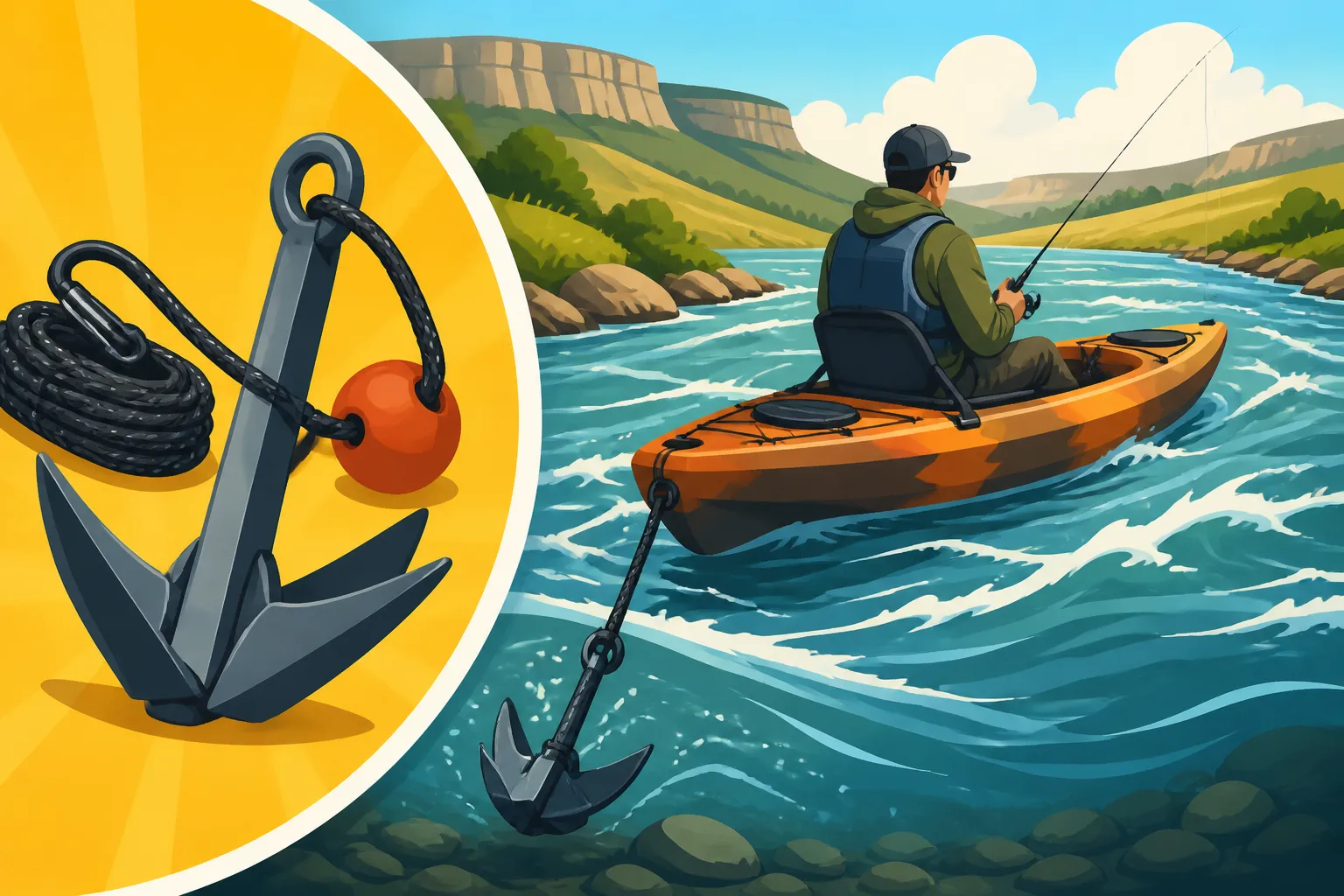
Grappling anchors are perhaps the most popular choice for kayak anglers, and for good reason. They typically feature four foldable prongs that can dig into various river bottoms, from muddy flats to rocky areas. When deployed, the prongs spread out, creating a good hold. When it's time to retrieve, they usually fold back in, making them compact for storage. The beauty of a grappling anchor is its versatility. You can use a lighter weight (1.5 to 3 pounds is common for kayaks) because the prongs do most of the work, hooking onto structure or digging into softer sediment. Many anglers keep a small grappling anchor in their kayak for quick stops. You can find excellent options at outdoor retailers like Bass Pro Shops or even through online vendors like Amazon, offering a range of sizes and weights to suit your specific kayak and fishing conditions.
These anchors are particularly effective in rivers with mixed bottoms, where you might encounter patches of gravel, rock, or mud. The prongs give you a chance to catch on something substantial, even if the bottom isn't perfectly uniform. For example, if you're fishing a stretch of the Missouri River known for its rocky banks but also has some silty stretches in the deeper bends, a grappling anchor offers the best chance of holding securely in both scenarios. Just remember, a lighter grappling anchor can still get hung up in heavy rock gardens, so always be mindful of where you're deploying it, and consider adding a retrieval ring for those trickier situations.
Drag Chains and DIY Solutions: Simple and Effective
Sometimes, simplicity is key, especially when you're dealing with relatively gentle currents or want an anchor that's less prone to snagging. Drag chains are exactly what they sound like: a length of heavy chain used as an anchor. The idea is that the chain conforms to the river bottom, and its weight and length create friction, holding your kayak in place. They work especially well on softer, muddy, or sandy bottoms where prongs might not dig in effectively. They're also less likely to get permanently snagged in rocky areas because there are no rigid prongs to jam.
Many anglers create their own drag chains from old chain pieces, perhaps adding a small weight at the end for extra holding power. This can be a fantastic, cost-effective solution. Just make sure the chain is heavy enough for the current you expect to encounter. A 3-5 foot length of heavier chain can often outperform a small grappling anchor in certain conditions, especially when you want a gentler, more forgiving hold that's less likely to spook fish. For instance, when drifting for walleye with a Bottom Bouncer Rig for Walleye setup in a moderate current, a drag chain can slow your drift just enough without completely stopping your forward momentum, allowing for a more natural presentation of your bait.
Stake-Out Poles and Shallow Water Solutions: Stealth and Control
For those times when you're fishing in shallower river sections, perhaps along a bank or in a backwater eddy, a stake-out pole (also known as a push pole or shallow water anchor) can be an absolute game-changer. These are long, sturdy poles, usually made of fiberglass or aluminum, with a pointed tip that you simply push into the riverbed to secure your kayak. The top often has a handle or a T-grip for easy deployment and a tether point to attach to your kayak.
The primary advantage of a stake-out pole is stealth and ease of use. There's no splashing of an anchor, no reeling in a rope – you just push it down, and you're held. They are incredibly quiet, which is perfect for stalking wary fish in skinny water. However, their effectiveness is limited to shallower depths where the pole can reach the bottom and penetrate it sufficiently to hold. They won't work in deep channels or on extremely hard, rocky bottoms. For North Dakota anglers exploring the shallower stretches of tributaries or the slower backwaters of larger rivers, a stake-out pole is an indispensable tool for maintaining a precise, quiet position without all the fuss of a traditional anchor. Many kayak manufacturers and accessory brands offer stake-out poles, and they are readily available at stores catering to kayak fishing, including online retailers.
Building Your Anchor System: Components Beyond Just the Weight
The anchor itself is just one piece of the puzzle. A truly effective kayak anchor system for river current involves several other crucial components that ensure safe, efficient, and frustration-free deployment and retrieval. Thinking of your anchor as part of a larger system, rather than just a weight on a rope, will drastically improve your on-water experience.
The Crucial Role of Anchor Rope and Line Selection
Choosing the right anchor rope is just as important as choosing the right anchor. You need a rope that is strong, durable, and has some stretch to absorb the shock of current and boat movement. Nylon rope is a popular choice because it offers excellent strength and a good amount of stretch. Its abrasion resistance is also a plus when it's rubbing against rocky riverbeds or your kayak's hull. The diameter should be comfortable to handle – typically 1/4 inch to 3/8 inch for kayaks – and the length needs to be generous. A good rule of thumb for river anchoring is to have at least 3-5 times the depth of the water you'll be fishing, plus extra for current and anchoring on a steep bank. So, if you're fishing in 10 feet of water, you'd want at least 30-50 feet of rope. Having sufficient length allows for a shallower anchor angle, which improves holding power and reduces the chance of the anchor dragging. Many anglers also add a short section of chain (1-2 feet) between the rope and the anchor to help the anchor lay flat and dig in better, as well as provide extra abrasion resistance right at the bottom. Consider using a brightly colored rope, easily visible in the water, for safety and easy retrieval. Best Fishing Line for North Dakota Lakes might refer to fishing line, but for anchoring, durability is key.
Deploying with Precision: The Anchor Trolley System
If there's one piece of kayak anchoring gear that revolutionary for river fishing, it's the anchor trolley. This simple but ingenious system allows you to deploy your anchor from either the bow or the stern of your kayak, without having to actually reach those points. It consists of a loop of rope or cable that runs along one side of your kayak, from bow to stern, through a series of pulleys. Your anchor rope then attaches to this loop via a ring or carabiner. With the anchor trolley, you can adjust your anchor point along the side of your kayak, allowing you to control your kayak's orientation relative to the current.
For example, if you want to face directly upstream to present a bait, you can slide the anchor attachment point to the bow. If you want to fish a seam while drifting slightly sideways, you can move the attachment point mid-ship. This control over your kayak's angle is invaluable for fishing in current, especially on larger rivers where you might be holding against a strong flow. An anchor trolley typically comes as a kit, often found at reputable outdoor retailers, and while it requires a bit of installation, it's a worthwhile investment for any serious kayak river angler. Without it, you're constantly fighting the current and only able to anchor from one fixed point, which severely limits your fishing angles and efficiency.
Safety and Retrieval: Quick Releases and Floats
Even the best anchor system can become a liability if you can't quickly release it in an emergency or easily retrieve it after a successful fishing session. That's where quick-release mechanisms and anchor floats come into play. A quick-release system is essentially a way to rapidly detach your anchor rope from your kayak. This could be a specialized cleat that allows instant release, or simply a knot that can be undone quickly. In a strong current, if your anchor gets snagged, or if you encounter unexpected rapids, being able to jettison your anchor instantly can prevent a dangerous situation or even a capsize. You want a system where you can release the anchor with one hand, without fumbling.
An anchor float, on the other hand, is a small buoy or fender that attaches to the end of your anchor rope. If you have to deploy your quick release, the float ensures that your anchor and rope stay on the surface, making it easy to retrieve later. This saves you from losing your entire anchor setup. Some anglers also use a float to mark their anchor's position, especially if they are moving around and might want to return to a specific spot. Having a clearly visible float and an accessible quick-release system are non-negotiable for safe and effective kayak anchoring in North Dakota's diverse river environments.
Matching the Anchor to the River: Considerations for North Dakota's Waterways
Choosing the "best" kayak anchor isn't a one-size-fits-all decision; it heavily depends on the specific conditions you'll encounter on North Dakota's rivers. The type of river bottom, the strength of the current, and even the stability of your kayak all play a role in determining which anchor system will serve you best.
Understanding River Bottoms and Current Strength
The composition of the riverbed is arguably the most critical factor in anchor selection. Different anchors excel on different bottom types:
- Soft Bottoms (Mud, Silt, Sand): For these, you need an anchor that can dig in or create a lot of surface area for friction. A drag chain works exceptionally well here, as its weight spreads out, maximizing contact with the bottom. Mushroom anchors, though less common for kayaks, can also work. Grappling anchors with broad, sharp flukes can also dig into softer mud.
- Rocky Bottoms (Gravel, Boulders): This is where grappling anchors shine. Their prongs can hook onto rocks or wedge into crevices, providing a secure hold. However, these are also the most prone to snagging. For highly rocky areas, a drag chain might be safer to avoid permanent loss, though it may not hold as firmly. How to Anchor in Current for Catfish often means dealing with varying bottom conditions depending on the specific stretch of river.
- Mixed Bottoms: This is the most common scenario on many North Dakota rivers. A versatile grappling anchor is usually the best bet, as it can adapt to both soft and hard sections. Adding a short length of chain to a grappling anchor can help it lay flat and grab better on either type of bottom.
Current strength is the other major variable. A small, lightweight anchor might suffice in a slow backwater, but on the main stem of the Missouri River Fishing Below Garrison Dam in North Dakota with its powerful flow, you'll need more holding power. Sometimes, this means increasing anchor weight, but more often it means ensuring your anchor's design is suited for the bottom to maximize its grab. It's often better to have a slightly heavier anchor than you think you need, especially in an area with unpredictable currents.
Kayak Stability and Weight Capacity
The type of kayak you're paddling also influences your anchoring needs. A wider, more stable fishing kayak will generally handle current and the force on an anchor better than a narrow, less stable recreational kayak. If you're in a less stable kayak, a strong current acting on a firmly set anchor can create a lot of strain and potentially feel unsettling. You'll want to ensure your anchor isn't so powerful that it pins you rigidly in place, especially if the current is pushing heavily on your kayak.
Furthermore, consider your kayak's overall weight capacity. While anchors for kayaks are relatively light, every ounce counts when you're loading up for a day on the water. Ensure that your anchor, chain, rope, and any other anchoring accessories don't push your kayak beyond its safe weight limit. For larger, more stable fishing kayaks, you might even consider carrying two lighter anchors (e.g., a grappling anchor and a drag chain) to give you options for different conditions, rather than one heavy, all-purpose anchor. Some Best Kayaks for North Dakota Fishing are specifically designed for stability in varying conditions, making anchoring easier.
Specific North Dakota River Challenges (Red River, Missouri River)
North Dakota offers diverse river fishing experiences, each with its unique anchoring considerations:
- The Red River of the North: Known for its muddy, silty bottom and powerful spring currents, especially during high water. A drag chain or a grappling anchor with good mud-penetrating flukes would be ideal here. Heavy currents also mean you'll need ample rope length to achieve a good anchor angle. The sheer volume of water can make it challenging to hold steady for long periods.
- The Missouri River (Lake Sakakawea to Lake Oahe sections): This river can range from rocky and gravelly below the dams (where current is often strong) to more silty and sandy in slower, wider stretches. A versatile grappling anchor is often the best choice here, paired with an anchor trolley for precise positioning in varying flows. Dealing with current seams and eddies requires the flexibility an anchor trolley provides. Consider the Missouri River Fishing Through Bismarck, North Dakota section, which offers diverse bottom structures.
- Smaller Rivers and Tributaries (Sheyenne, James, Heart River): These typically have slower currents and more varied bottoms, from sand to small rocks. Stake-out poles can be highly effective in their shallower sections. For deeper holes, a small grappling anchor or drag chain would be appropriate. The key here is usually lighter weight and quicker deployment for targeting specific, smaller spots.
Understanding these localized characteristics will help you make an informed decision on the best anchor system, ensuring you're prepared for whatever North Dakota's beautiful, but sometimes challenging, rivers throw your way.
Mastering Anchor Deployment and Retrieval Techniques
Having the right anchor system is only half the battle; knowing how to deploy and retrieve it effectively and safely is equally important. Improper technique can lead to snags, lost anchors, or even dangerous situations. Mastering these techniques will make your kayak fishing experience in river currents much more enjoyable and productive.
Approaching Your Spot and Setting the Anchor
Setting your anchor in current is not as simple as just dropping it over the side. You need a strategic approach to ensure it sets properly and holds your kayak in the desired position.
- Scout Your Spot: Before deploying, take a moment to observe the current, identify any visible bottom structure, and mentally choose your desired holding spot. Look for current breaks, eddies, or areas where fish are likely to congregate.
- Approach Upstream: Always approach your intended anchor point from upstream. This allows the current to work with you. Paddle past your desired position, turn your kayak, and slowly begin to drift back towards it.
- Controlled Deployment: As you approach your spot, pay out your anchor rope slowly, letting the current carry the anchor downstream. Avoid "bombing" the anchor straight down, as this can make it bounce and not set properly. The goal is for the anchor to touch down gently and dig in naturally.
- Feel for the Set: Once the anchor is on the bottom, continue to slowly pay out rope while drifting slightly past your desired position. You'll feel the anchor "catch" or dig in. Gently pull on the rope to test the hold. If it drags, pay out more line or try a slightly different spot.
- Adjust Your Position with the Trolley: Once the anchor is set, use your anchor trolley to adjust your kayak's position and angle relative to the current and your target fishing area. You want to be comfortable and facing the ideal direction to cast and manage your lines. This proactive approach minimizes re-anchoring and maximizes your fishing time.
Managing Snags and Obstructions
Snags are an inevitable part of river fishing, and anchors are no exception. Getting your anchor stuck can be incredibly frustrating and potentially lead to a lost anchor or even a dangerous situation if you're stuck in strong current. The best defense against snags is a good offense:
- Choose Appropriate Anchors: As discussed, drag chains are less prone to snags than grappling anchors in highly rocky areas.
- Anchor from the Bow (Mostly): While an anchor trolley allows you to anchor from anywhere, generally, anchoring from the bow of your kayak in a river current is safer. If an anchor snags, the current pushes the bow around the anchor, often helping to free it or at least keep your kayak stable. Anchoring from the stern can sometimes cause the stern to get pushed down by the current if the anchor snags, potentially leading to swamping or capsizing.
- The Anchor Retrieval Ring (Zip-Tie System): This is a brilliant trick for grappling anchors. Instead of tying your rope directly to the anchor's eye, attach a heavy-duty zip tie to the eye, then thread a retrieval ring through the eye of the anchor. Tie your anchor rope to the retrieval ring. Then, use a thinner, breakable zip tie to secure the retrieval ring to the bottom of the anchor shank. If the anchor gets snagged, pull hard on the rope. The thinner zip tie will break, and you'll be pulling the anchor from the bottom, effectively "reversing" it out of the snag. You can then replace the thin zip tie. This system is a lifesaver.
- Patience and Angle Changes: If you do get snagged, don't panic. Try slowly paddling or drifting to a different angle, pulling on the rope from various directions. Sometimes a slight change in angle is all it takes to free a snagged anchor. If all else fails, and you're using a quick-release, consider using it, leaving the float to mark your anchor, and returning later with a different boat or more tools to try and retrieve it.
Safe and Efficient Anchor Retrieval
Retrieving your anchor should be as thoughtful as deploying it. Doing it carelessly can create unnecessary strain or even spook fish if you're leaving a spot quietly.
- Prepare for Release: Before pulling, unclip your fishing rod and secure any loose gear. This ensures your hands are free and nothing goes overboard during retrieval.
- Use the Anchor Trolley: If you used an anchor trolley, slide the anchor point as far forward as possible towards the bow. This puts you in a stable position and allows you to pull the anchor directly upstream, which is usually the easiest way to free it from the bottom.
- Pull Smoothly, Don't Jerk: Pull the anchor rope hand-over-hand, smoothly and consistently. Avoid aggressive jerking motions, especially with grappling anchors, as this can embed them deeper or even pull off a fluke.
- Coil Your Rope: As you retrieve the rope, coil it neatly. This prevents tangles for your next deployment and keeps your kayak tidy. A tangled rope can be a major safety hazard and a huge frustration.
- Secure the Anchor: Once the anchor is aboard, secure it properly. Most kayaks have a designated anchor storage area or bungee cords to hold it in place. Ensure it won't swing around, get in the way of your paddling, or inadvertently re-deploy. This is particularly important when you're moving to a new fishing spot or heading back to the launch. A small mesh bag can also help contain a muddy or sandy anchor, keeping your kayak cleaner.
| Anchor Type | Pros | Cons | Ideal River Bottoms & Current |
|---|---|---|---|
| Grappling Anchor | Versatile, folds compact, good hold on varied bottoms | Prone to snagging in heavy rocks, lighter weight may drag in strong current | Mixed bottoms (mud, gravel, small rocks), moderate to strong currents |
| Drag Chain | Simple, less snag-prone, good for soft bottoms, quiet | Less holding power than grappling anchor in rocky/hard bottoms, bulky to store | Soft (mud, sand, silt), moderate currents, stealth fishing |
| Stake-Out Pole | Silent, instant deployment, precise positioning, lightweight | Only works in shallow water, requires soft-enough bottom to penetrate | Shallow water (2-8 ft), slow to moderate currents, stealth |
Knowing these techniques and understanding your gear will empower you to fish North Dakota's rivers with confidence, spending less time battling the current and more time enjoying the tug of a fish on your line.
Disclaimer
This article is for general informational purposes only and does not constitute professional advice. Laws, prices and regulations vary by location and change over time. Consult a qualified professional for guidance on your specific situation.