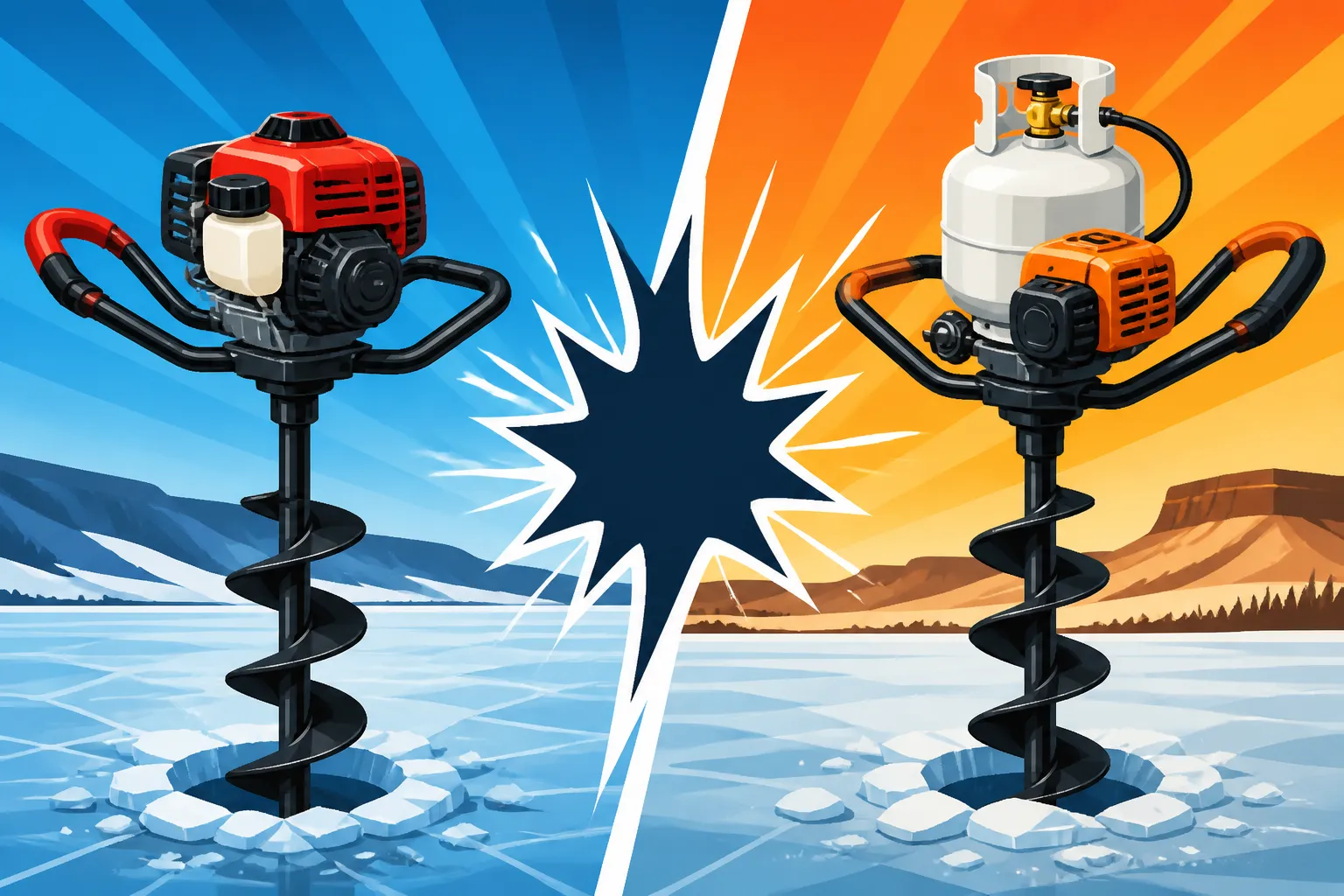
Gas vs Propane Ice Auger Comparison
There's nothing quite like the crisp air and anticipation of drilling that first hole on a frozen North Dakota lake. But before you even get to the first bite, you're faced with a crucial decision: what kind of power will get you through that thick ice? The debate between gas and propane ice augers is a familiar one, and it’s a choice that can truly make or break your day on the ice, especially when those temperatures really plunge. This guide is here to break down the ins and outs of both options, helping you decide which will be your trusty companion for those epic North Dakota ice fishing adventures.
The Classic Powerhouses: Gas Ice Augers in North Dakota
For decades, the roar of a gas-powered ice auger has been the quintessential sound on frozen lakes across North Dakota, from the vast expanses of Lake Sakakawea to the smaller, popular spots like Devils Lake. Anglers have relied on these machines for their sheer power and ability to punch through even the gnarly, multi-foot ice we often encounter during our long winters. There’s a certain rugged appeal to them, a feeling that you’re bringing serious muscle to the ice.
Understanding the Appeal and Raw Power
The primary draw of a gas ice auger is its brute strength. These machines are engineered to tackle thick ice, cutting through layers that might slow down lesser tools. When you’re staring down two or three feet of ice on a cold January morning, the thought of a powerful engine making quick work of it is incredibly reassuring. For those who drill dozens of holes in a day, moving from one structure to the next, the consistent, high-torque performance of a gas auger is often unmatched.
Beyond raw power, gas augers have a long-standing reputation for reliability, assuming they're properly maintained. Many seasoned anglers grew up with these machines and trust their proven design. While modern alternatives exist, the familiarity and widespread availability of parts and service for gas engines give many a sense of security, especially when you’re out on a remote stretch of ice where a breakdown could mean a long, cold walk back. They're often seen as the workhorses of the ice fishing world.
Furthermore, fuel for gas augers—regular gasoline, often mixed with a specific oil—is readily available almost anywhere. You can fill up a gas can on your way to the lake, ensuring you have enough fuel for a full day or even a weekend of serious drilling. This can be a significant advantage in areas where specialized propane cylinders might be harder to find, giving you peace of mind that you won't run out of juice mid-fishing trip. It's a common, convenient fuel source that most people already handle for their other outdoor equipment.
The Downsides: What Anglers Grumble About
Despite their power, gas augers come with a few well-known frustrations that can grate on even the most patient angler. Perhaps the biggest complaint is the noise. These engines can be quite loud, making conversation difficult and sometimes startling nearby wildlife or fellow anglers. If you're trying to enjoy the tranquility of a winter morning or hunt for skittish perch, the constant roar can really detract from the experience, especially in a quiet bay on Lake Audubon.
Then there are the fumes. The exhaust from a two-stroke gas engine is unmistakable, and it can linger in the air, especially on still days or if you're drilling within a portable ice fishing shelter. Nobody wants to breathe in those fumes while trying to enjoy their fishing, and the smell can permeate your clothing, gear, and even the fish you catch. This is a significant point of contention for many, especially those fishing with kids or who are sensitive to strong odors.
Finally, the maintenance and cold-starting woes are real. Gas engines often require a specific fuel-to-oil mix, which can be messy to prepare. Carburetor issues are common, especially when the auger has sat for a while or if non-stabilized fuel was left in it. Trying to pull-start a stubborn gas auger in sub-zero temperatures with gloved hands can be an incredibly frustrating experience, leading to sore arms and lost fishing time. Many anglers find themselves constantly troubleshooting or performing off-season maintenance to avoid these issues, which adds another layer of complexity to their winter routine.
The Modern Contender: Propane Ice Augers for Simpler Drilling
In recent years, propane ice augers have emerged as a strong alternative, addressing many of the traditional complaints about their gas-powered counterparts. These machines offer a different kind of experience, leaning heavily into convenience and cleanliness without sacrificing too much in the way of performance. For many North Dakota anglers, especially those looking for a more hassle-free day on the ice, propane has become a compelling choice.
Why Propane is Gaining Popularity
One of the biggest selling points of propane augers is the elimination of messy fuel mixing. There's no need to carry separate oil bottles or worry about getting the ratio just right; you simply twist on a standard 1-pound propane cylinder, and you're ready to go. This simplicity is a huge relief for many anglers, cutting down on prep time and cleaning up spilled fuel, making for a much smoother start to the fishing day, whether you're heading to Jamestown Reservoir or Lake Metigoshe.
Another significant advantage is the lack of fumes. Propane burns much cleaner than gasoline, meaning no noxious exhaust odors filling the air around your holes or inside your shelter. This makes for a much more pleasant breathing experience, which is particularly appreciated by families or those who are sensitive to the strong smell of gas. The clean burn also means less residue on the auger itself, leading to a generally cleaner piece of equipment to transport and store.
Propane augers are also renowned for their consistent starting, even in cold weather. Because they don't rely on a carburetor that can gum up or get fussy with temperature changes, they tend to fire up reliably with just a few pulls, or even with an electric start button on some models. This reliability is a huge comfort when it’s 10 below zero and you just want to get your lines in the water. The frustration of endless pulls and priming is largely eliminated, allowing you to focus on the fishing rather than the mechanics.
The Realities of Propane on the Ice
While propane augers offer undeniable benefits, they do come with their own set of considerations that North Dakota anglers need to be aware of. One common concern is the cost and availability of the 1-pound propane cylinders. While convenient, these small tanks can add up in cost over a long season, especially if you're drilling a lot of holes. Stocking up can be a good idea, but it's another item to remember on your Essential Gear Checklist for North Dakota Fishing.
The performance of propane in extreme cold is another point of discussion. While they start reliably, propane's vaporization can be affected by very low temperatures. In truly frigid North Dakota conditions, like those often experienced on Lake Sakakawea, the pressure in the tank can drop, potentially leading to a slight decrease in power or requiring you to warm the tank to maintain optimal performance. While rarely a deal-breaker for average use, it's something to consider for those venturing out in the harshest conditions.
Finally, while propane augers are powerful, some anglers perceive them to have slightly less raw drilling power than the most robust gas models, particularly when cutting through incredibly thick or slushy ice. While most modern propane augers are more than capable of handling typical North Dakota ice thickness, those who demand the absolute fastest hole-punching speed or deal with consistently extreme ice might notice a marginal difference. For general angling, this difference is often negligible, but it's a factor for those who push their equipment to the limit.
Head-to-Head: Gas vs. Propane for North Dakota Ice Fishing Scenarios
Choosing an ice auger isn't just about reading specs; it's about imagining how it will perform in real-world situations on a frozen North Dakota lake. From the bone-chilling cold to the logistics of fueling up, each type of auger presents its own unique set of advantages and challenges that anglers need to weigh carefully before making a purchase.
Performance in North Dakota's Extreme Cold
North Dakota winters are legendary for their brutal cold, and your auger needs to be up to the task. Gas augers, while powerful, can be notoriously difficult to start when the mercury plummets well below zero. Anyone who has spent countless minutes yanking a pull cord, only for the engine to sputter and die, knows this frustration all too well. Sometimes, a shot of starting fluid is needed just to get them going, adding another step to your frigid morning routine. However, once running, they generally maintain consistent power through sustained use, generating enough heat to keep their systems relatively warm.
Propane augers, on the other hand, typically start much more easily in the cold due thanks to their enclosed fuel system and consistent fuel delivery. There's no priming or choking in the same way. However, as mentioned, the physics of propane mean that in extreme cold, the pressure within the small cylinders can drop, which can lead to a reduction in performance. Anglers sometimes find themselves needing to warm their propane tanks, perhaps by tucking them into a coat pocket for a few minutes, to ensure optimal pressure for drilling. It’s a trade-off: easier starting versus potential performance dips in the most extreme conditions.
Fueling Up and Maintenance Considerations
The logistical aspects of fuel are a major differentiator. With a gas auger, you're dealing with a mixed fuel that contains gasoline and a specific two-stroke oil. This requires careful mixing and storing in a separate gas can. If left in the auger for extended periods, especially over the off-season, this fuel can go stale and gum up the carburetor, leading to those frustrating starting issues. Regular maintenance, like spark plug changes and carburetor cleaning, is a necessary part of ownership. For tips on keeping your gear in top shape, check out How to Winterize Fishing Gear After the Season.
Propane augers simplify this greatly. You just swap out an empty 1-pound propane cylinder for a full one. There's no messy mixing, no fuel stabilizers, and no worries about stale gas. The empty cylinders can be recycled or properly disposed of, and the full ones are clean and easy to transport. This ease of fueling and significantly reduced engine maintenance makes propane a very attractive option for those who prefer to spend their time fishing rather than tinkering. You might find yourself spending less time worrying about your auger and more time planning your next trip to Best Ice Fishing Lakes in North Dakota.
Noise, Fumes, and the "Social" Aspect
The impact of your auger on the environment and your fellow anglers is a real consideration. Gas augers are undoubtedly louder and produce noticeable exhaust fumes. If you’re fishing in a group, especially within the confines of an ice fishing shelter, the noise can make conversation difficult, and the fumes can become quite unpleasant, even unsafe, in an unventilated space. It’s a common complaint, and something to consider if you enjoy a quiet, social fishing experience.
Propane augers are significantly quieter and produce almost no fumes. This makes for a much more enjoyable atmosphere on the ice, allowing for easy conversation and a more peaceful interaction with nature. Inside a shelter, the lack of fumes is a huge health and comfort benefit, letting you breathe easier and focus on the fishing. If you value a serene environment or fish frequently with others, the reduced noise and clean burn of a propane auger are compelling advantages.
| Feature | Gas Ice Augers | Propane Ice Augers |
|---|---|---|
| Fuel Type | Gasoline/Oil Mix | Propane Cylinder |
| Starting in Cold | Can be finicky, may require starting fluid | Generally easier, more consistent; may need tank warming in extreme cold |
| Fumes/Smell | Strong exhaust fumes, distinct gas smell | Virtually no fumes, cleaner operation |
| Noise Level | Generally louder, can disrupt tranquility | Generally quieter, more pleasant |
| Maintenance | Carburetor cleaning, fuel stabilizers, spark plugs | Less engine maintenance, simpler fuel system |
| Weight | Can be heavier, especially with full fuel tank | Comparable or slightly lighter (depending on model) |
| Power Output | Often perceived as having more raw drilling power | Consistent power, very efficient, ample for most needs |
| Fuel Storage | Requires separate mixed gas can, can go stale | Convenient small cylinders, easy swap; cylinders can add up in cost |
| Best For | High-volume drilling, very thick ice, remote trips | Convenience, clean operation, casual/family use, enclosed shelters |
Making Your Choice: What's Right for Your North Dakota Adventures?
Ultimately, the best ice auger for you boils down to your personal fishing style, priorities, and tolerance for certain inconveniences. There’s no single "right" answer, only the one that best fits your North Dakota ice fishing needs. Consider what your typical day on the ice looks like and what kind of fishing experiences you value most.
For the Die-Hard, Big-Hole Angler
If you're the kind of angler who spends all day moving across a vast lake like Sakakawea, punching dozens of holes, or targeting fish through particularly thick, stubborn ice, a gas auger might still be your preferred choice. Their raw, unyielding power is ideal for those who prioritize speed and sheer cutting capability. You're less concerned with a little noise or the smell of exhaust because you need a workhorse that won't quit, especially when How Thick Ice Needs to Be for Ice Fishing becomes a serious consideration.
These are the machines that get the job done quickly and consistently in challenging conditions. You’re likely already accustomed to the maintenance and fuel mixing, viewing it as a small price to pay for superior performance when you’re chasing walleye or northern pike. Many long-time North Dakota anglers swear by their gas augers, appreciating the robust build and the powerful torque that chews through anything Mother Nature throws their way. They're built for endurance and high-demand situations.
For the Convenience-Seeking, Family-Focused Angler
If you value a clean, quiet, and hassle-free experience above all else, especially when fishing with family or friends, a propane auger is likely a fantastic fit. The easy starting, lack of fumes, and simplified fueling process make for a much more enjoyable day on the ice. You want to spend your time fishing for perch on Devils Lake or enjoying the company, not wrestling with a finicky engine or breathing exhaust. Learn more about making the most of these trips in North Dakota Fishing Rules for Kids and Families.
Propane augers are perfect for those who might drill a respectable number of holes but don't need to churn through hundreds in a day. The convenience of simply twisting on a new propane tank and firing it up is a major advantage for casual anglers, weekend warriors, or anyone looking to streamline their setup. They’re often lighter and easier to transport, making them a great option for those who use a sled or snowmobile to get to their spots without unnecessary bulk.
Where to Look for Your Next Auger
Once you've weighed the pros and cons and have a better idea of which type of auger aligns with your ice fishing style, it's time to start looking at models. Many North Dakota anglers like to head to local sporting goods stores or bigger retailers like Bass Pro Shops to see the models in person and talk to staff. Getting a feel for the weight and handling can be a big factor in your decision.
Of course, the convenience of browsing a vast selection on Amazon and having it shipped right to your door is also a huge draw. Online reviews from fellow ice anglers can provide valuable insights into real-world performance, especially concerning cold starts and battery life. Regardless of where you choose to purchase, doing a little research and comparing different brands and features will ensure you find the perfect companion for your North Dakota ice fishing adventures. Remember, the goal is to enhance your time on the ice, not complicate it.
Disclaimer
This article is for general informational purposes only and does not constitute professional advice. Laws, prices and regulations vary by location and change over time. Consult a qualified professional for guidance on your specific situation.