Best Rope Length for Ice Safety Gear
It's a chilling thought for any ice angler, isn't it? One minute you're enjoying the quiet solitude or lively camaraderie on the hard water, and the next, the ice gives way, plunging you into the frigid depths. That sudden, shocking cold can steal your breath and your composure, making quick action nearly impossible. This guide is all about equipping you with one of the most crucial pieces of ice safety gear: the safety rope. We'll delve into how to choose the best rope length to ensure you or a fishing buddy can always be reached, helping you feel more confident and prepared for those unpredictable North Dakota winters.
The Absolute Necessity of an Ice Safety Rope
Let's face it, nobody wants to think about falling through the ice. It's a scary scenario, and many of us push it to the back of our minds, hoping it never happens. But being prepared isn't about inviting disaster; it's about being responsible and ensuring you come home safely. An ice safety rope isn't just a piece of gear; it's a lifeline, literally. It allows for a safe rescue from a distance, preventing others from putting themselves at risk by getting too close to unstable ice. Think of it as your primary tool for retrieving a fallen angler or for being pulled out yourself.
The vastness of North Dakota's frozen lakes, from the massive expanses of Lake Sakakawea to the famed perch grounds of Devils Lake, means you're often far from shore and help. Relying on someone else to have the right gear, or hoping for a quick emergency response, isn't a strategy; it's a gamble. Every angler, especially those venturing out alone or in small groups, should have a dedicated safety rope, ready for immediate deployment. It's a small investment for immense peace of mind.
Factors Influencing Ideal Rope Length for Ice Safety
Determining the "best" rope length isn't a simple one-size-fits-all answer, and anyone telling you otherwise might not fully grasp the variables involved in ice fishing safety. The truth is, several factors come into play, and your ideal length will depend heavily on your specific fishing habits and the conditions you often encounter. It's about having enough rope to cover the distance safely, but not so much that it becomes cumbersome and difficult to manage in an emergency.
Water Depth and Distance to Solid Ice
One of the primary considerations for rope length is the water depth where you typically fish. While the rope isn't meant to fish you out of the water from the bottom, understanding the depth helps you visualize the scale of a potential rescue. More importantly, consider the distance you might need to span between a person in the water and truly stable, thick ice. When someone goes through, the ice around them often weakens, meaning a rescuer needs to stay a safe distance back.
Imagine you're fishing on a smaller lake with consistent 10-foot depths, relatively close to shore. A shorter rope might suffice. But if you're out on Lake Sakakawea Fishing Guide for North Dakota Anglers where depths can drop dramatically and you might be hundreds of yards from the nearest solid landmass or known safe ice edge, you'll need significantly more reach. A good rule of thumb is to have enough rope to reach the victim from a safe standing point, plus enough slack for them to grasp and be pulled. This often means considering the distance from the point of immersion back to a solid, stable ice edge where a rescuer can safely stand.
Number of Anglers in Your Group
The size of your fishing party also plays a crucial role in rope length. If you're a solo angler, you're primarily thinking about self-rescue or a passerby assisting you. In this case, a rope that can be easily deployed and potentially knotted for self-extraction, or thrown by someone quickly, is key. However, if you're often fishing with a group of friends or family, especially kids, your safety strategy changes.
With multiple people, you might have one person in the water, and others on varying degrees of stable ice. A longer rope allows for a "human chain" approach, where several people can spread out, distributing their weight, and pulling from a greater, safer distance. For a group of four or more fishing out of a larger portable or permanent ice house, a longer rope is almost always the smarter choice. It grants flexibility and reduces the immediate risk to multiple rescuers trying to get too close.
Type of Ice Fishing Shelter and Setup
Your ice fishing setup, whether it's a simple bucket and auger or a large, insulated portable shelter, affects your rope needs. If you're constantly moving, hole-hopping with minimal gear, a compact, easily deployable rope is ideal. It needs to be stored in an accessible pocket or small bag. However, for those who set up a substantial ice house for the day, or even overnight, the shelter itself can become a crucial anchor point for a rescue rope.
Picture a situation where someone falls through near your Ice Fishing Shelter Rules on North Dakota Lakes. The weight of a large shelter can act as a counterbalance, and the shelter itself provides a stable platform for a rescuer. In such cases, a longer rope ensures that even if the victim drifts a bit or the initial fall is further from the shelter, you still have the reach to help. You'd want enough rope to reach the furthest possible point an angler might be from your shelter, plus enough for the rescuer to handle from a secure position inside or near the shelter.
Recommended Rope Lengths for Various Scenarios
While there's no magic number that fits every single angler in North Dakota, we can certainly provide some solid guidelines based on common ice fishing scenarios. Remember, it's almost always better to have a little too much rope than not enough. Cutting a rope shorter is easy; magically extending it in a crisis is impossible.
Solo Anglers and Small Groups (2-3 People)
For the lone wolf or those heading out with just one or two buddies, portability and quick deployment are paramount. You want a rope that's easy to carry and won't snag.
A rope length of 50 to 75 feet (15 to 23 meters) is a very common and practical starting point for solo anglers or small groups.
- Why 50-75 feet? This length is usually sufficient to reach someone who's gone through relatively close to you. If you fall in, and someone is within 20-30 feet, they can safely approach from solid ice, throw the rope, and still have plenty of length to pull you in without putting themselves at undue risk. It's manageable enough to throw accurately and doesn't create excessive tangles. For self-rescue, if you have ice picks, you can often use a portion of this rope as a tether to secure yourself to something stable (like an auger stuck in the ice) while you work to pull yourself out. Brands like Bass Pro Shops often carry pre-packaged rescue ropes in this range, usually brightly colored for high visibility.
Medium to Large Groups (4+ People) and Mobile Shelters
When you've got a crew, or you're using a bigger portable ice house that you move around, you need more flexibility and reach. More people mean potentially more spread-out activity and a greater need for a long-distance assist.
For these situations, a rope length of 75 to 100 feet (23 to 30 meters) or even slightly longer is highly recommended.
- Why 75-100+ feet? This increased length provides a critical safety buffer. If an angler goes through 40-50 feet away, and rescuers need to stay another 20 feet back on truly stable ice, a 75-foot rope gives you that range. It allows for a more spread-out rescue team, distributing weight over a larger area of ice, which is safer. If your portable shelter is involved, you can secure one end of the rope to the shelter and use it as a more stable anchor. This length also accounts for potential currents under the ice or situations where the victim might drift slightly from the point of entry. It's the kind of rope you might find in bulk on Amazon or specialized outdoor retailers, allowing you to cut and customize.
Fishing with Permanent Ice Houses or Far Offshore
If your fishing style involves a permanent ice house that stays out for extended periods, or if you regularly venture far from shore into deep, expansive waters, you need to think big when it comes to safety.
In these extreme scenarios, consider a rope length of 100 feet (30 meters) or more, up to 150 feet (45 meters).
- Why 100-150 feet? When you're miles from shore, or your permanent house is situated over very deep water, the consequences of a fall are magnified. A longer rope gives you the absolute maximum range for a rescue, which is essential if you're dealing with vast stretches of questionable ice or if the wind creates a significant distance between the victim and your stable location. This length also offers versatility for more complex rescue scenarios, allowing multiple attachment points or for securing equipment during recovery. Think about those areas on Lake Sakakawea Chinook Salmon Fishing spots where the water drops off fast – having that extra length could be the difference.
Here's a quick comparison table to help visualize these recommendations:
| Scenario | Recommended Rope Length (Feet) | Recommended Rope Length (Meters) | Key Considerations |
|---|---|---|---|
| Solo Angler / Small Group (2-3) | 50-75 | 15-23 | Portability, quick deployment, close-range rescue |
| Medium-Large Group (4+) | 75-100 | 23-30 | Group spread, stable anchor points, greater reach |
| Permanent Shelter / Far Offshore | 100-150+ | 30-45+ | Extreme distances, deep water, complex rescue needs |
Understanding Rope Materials and Features for Ice Safety
It's not just about length; the type of rope you choose is equally critical. Not all ropes are created equal, especially when it comes to freezing water, slick ice, and high-stress rescue situations. You need a rope that performs reliably when lives are on the line.
Material Matters: Polypropylene vs. Nylon
The most common and recommended materials for ice safety ropes are polypropylene and, to a lesser extent, nylon. Each has its pros and cons in the context of ice fishing.
- Polypropylene: This is often the top choice for ice safety ropes, and for good reason. The most important characteristic of polypropylene rope is that it floats. This is an absolute game-changer in a rescue scenario. When you throw a rope to someone who has fallen through, you want them to be able to see it easily and grab it quickly. A rope that sinks becomes incredibly difficult to locate and retrieve, especially for someone in shock and immersed in cold water. Polypropylene is also relatively lightweight, strong, and resistant to rot and mildew, which is great for repeated exposure to wet, cold conditions. Many dedicated ice rescue bags sold at places like Bass Pro Shops are packed with floating polypropylene rope.
- Nylon: While nylon rope is incredibly strong and durable, it has a significant drawback for ice safety: it sinks. This makes it much less ideal for directly reaching someone in the water. However, a strong nylon rope might be useful as a secondary tether, or if you're securing gear, but for the actual "throwing" portion of a rescue, opt for something that floats. It can also absorb water and freeze, becoming stiff and difficult to handle.
Essential Features: Bright Color, Knots, and Throw Bags
Beyond the material, there are other features that make an ice safety rope truly effective. These aren't just nice-to-haves; they can directly impact the success of a rescue.
- Bright, Visible Color: In the stark white and grey landscape of winter, a dull-colored rope is practically invisible. Opt for ropes in vibrant, high-contrast colors like bright yellow, orange, or even neon green. This makes it much easier for the victim to spot in murky water or against the ice, especially if their vision is impaired by cold and panic.
- Pre-tied Knots or Loops: Some safety ropes come with a loop or knot already tied at one end. This can be incredibly useful for the person in the water to grab onto, or for a rescuer to attach it to a secure point. You might even consider adding a few simple overhand knots every few feet along the last 10-20 feet of the rope. These provide extra grip points for someone struggling to hold on with numb, gloved hands.
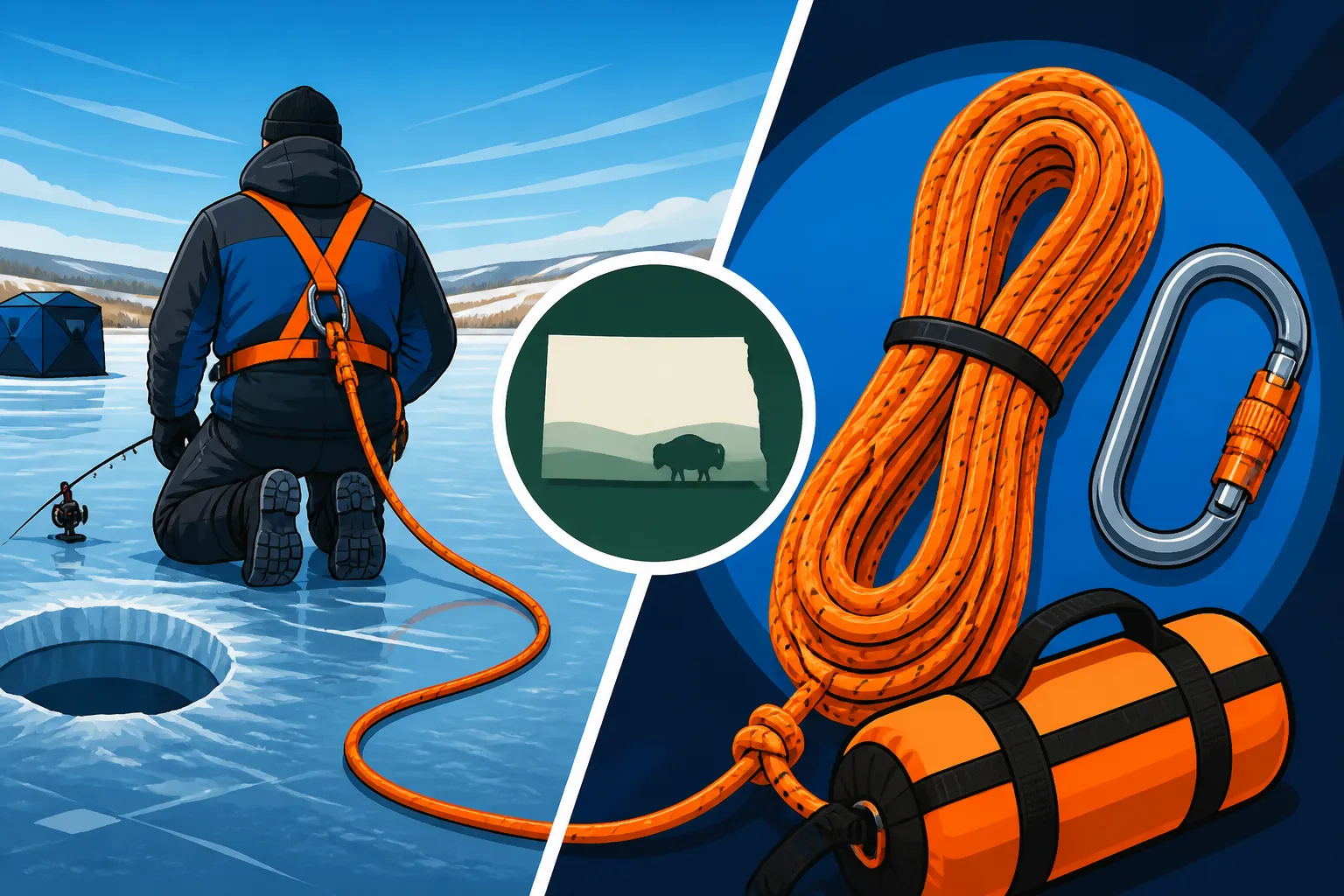
- Throw Bags: This is where the magic happens for efficient deployment. A throw bag is a compact, easily handled bag that contains your coiled safety rope. When needed, you simply grab the bag, aim, and throw. The rope uncoils as the bag flies through the air, delivering the line accurately to the victim. This prevents tangles and allows for a much quicker, more precise deployment than trying to uncoil a loose rope. Many anglers keep their throw bags in a readily accessible pocket of their ice suit or clipped to their sled. You can find excellent throw bags on Amazon or at any good outdoor outfitter.
Proper Storage and Deployment of Your Safety Rope
Having the right rope length and type is only half the battle. If it's buried under a pile of gear in your sled or tangled in a mess, it's useless in an emergency. Quick access and proper deployment are key to a successful rescue.
Storing Your Rope for Immediate Access
The cardinal rule of ice safety gear is: if you can't get to it instantly, it's not truly safety gear. Your rope needs to be stored in a way that allows for lightning-fast retrieval and deployment.
- In a Throw Bag: As mentioned, a throw bag is the gold standard for storage. The rope is pre-coiled, preventing tangles, and the bag itself provides weight for accurate throwing. Keep this bag in an exterior pocket of your ice fishing suit, easily clipped to your belt or sled, or in a prominent, designated spot in your ice shelter. Don't bury it under tackle boxes, minnow buckets, or extra layers of clothing.
- Accessibility is Key: Regardless of whether it's in a throw bag or simply neatly coiled, think about where you'll keep it. If you fish with a bucket, can you clip it to the handle? If you use a sled, can it be in a front compartment or bungee-corded to the top? The moment you realize someone has gone through the ice, every second counts. You don't want to be fumbling around searching for your lifeline. This also applies to other critical gear like Should You Carry Ice Picks While Ice Fishing?.
Practicing Your Throw and Retrieval Techniques
Knowing how to throw a rope isn't innate for most of us. It requires a bit of practice, and trust me, you don't want the first time you try to throw a rescue rope to be during a real emergency.
- Simulate the Scenario: Take your rope, preferably in its throw bag, to an open field or even your backyard. Practice throwing it to a target. Get a feel for the weight of the bag, how the rope uncoils, and how accurate you can be under pressure. Try different throwing techniques – overhand, underhand, sidearm – to see what works best for you.
- Role-Play with a Buddy: Even better, practice with a fishing buddy. One person can pretend to be the victim (standing safely on solid ground, of course!) while the other practices throwing the rope. Then, switch roles. This helps you understand the victim's perspective and how crucial an accurate throw is. Practice reeling the rope back in, too, as this will simulate pulling someone through icy water. Knowing What to Do If You Fall Through the Ice is crucial for both the victim and the rescuer.
- Drill Regularity: Make it a habit to practice at least once a year before the ice fishing season truly kicks off. This ensures that the muscle memory is there, and you're confident in your ability to perform under stress. It also allows you to check your rope for any wear and tear or damage, ensuring it's in top condition.
Remember, an ice safety rope is just one component of a comprehensive safety plan. Always adhere to local regulations and ice conditions, and never take unnecessary risks.
Disclaimer
This article is for general informational purposes only and does not constitute professional advice. Laws, prices and regulations vary by location and change over time. Consult a qualified professional for guidance on your specific situation.