Best Dry Bag for Kayak Fishing
Kayak fishing in North Dakota is an absolutely incredible experience, offering anglers access to quiet bays, expansive lakes, and winding rivers that might be harder to reach in a larger boat. But let's be real, it also means you're sitting pretty close to the water, and sometimes, the water gets a little too close to your precious gear. Whether it's an unexpected splash from a rogue wave on Lake Sakakawea, a sudden rain shower on the Missouri River, or, heaven forbid, an accidental capsize, wet gear can ruin a trip faster than a tangled line. This guide is all about helping you understand why a good dry bag is non-negotiable for kayak fishing and what to look for so you can keep your essentials safe and dry, no matter what North Dakota throws at you.
Why a Dry Bag Isn't Just a "Nice-to-Have" for Kayak Fishing in North Dakota
When you're out on the water in your kayak, the lines between you and the environment blur in the best way possible. You're connected, you're close, and you're vulnerable to the elements. I've seen countless folks come back from a great day of fishing, only to realize their sandwich is soggy, their phone is refusing to turn on, or their car keys are now corroded. A dry bag isn't just an accessory; it's a vital piece of insurance for your most important possessions.
The Unpredictable Nature of North Dakota Waters
North Dakota's weather and water conditions can change in a heartbeat. One minute, you're paddling on glass-smooth water under a blue sky, and the next, a stiff breeze whips up, turning that glass into a choppy mess. I remember a particularly blustery afternoon on Devils Lake, where calm waters quickly transformed into whitecaps. A buddy of mine, confident in his open kayak, found his tackle box and a spare jacket thoroughly soaked by the time he made it back to shore. He thought he was safe tucked behind a point, but the wind had other ideas.
Or consider fishing the fast-moving currents of the Red River. While exhilarating, a misjudged paddle stroke or an unseen obstacle could easily send you for an unexpected swim. Without a proper dry bag, anything not tethered down and waterproofed is as good as lost or ruined. It's not about being overly cautious; it's about being prepared for the realities of being on the water in a small craft. Even a gentle rain can saturate an open bag in minutes, turning wallets and electronic devices into expensive paperweights.
Protecting Your Essentials from the Elements
What exactly are we talking about protecting? Think about the items you absolutely cannot afford to get wet. Your smartphone, for starters, which is often your connection to the outside world, your camera for those trophy fish photos, and sometimes even your GPS or fish finder's backup battery. Then there are the practical necessities: your car keys, wallet, North Dakota fishing license, and any permits you might need. Imagine driving an hour to a prime fishing spot, only to realize your license is illegible due to water damage. That's a headache no angler wants.
Beyond electronics and documents, consider things like a dry change of clothes, a towel, or even just your lunch. Nobody enjoys a waterlogged sandwich, especially after a long morning of casting. For many of us, fishing is a chance to escape, but that doesn't mean we want to abandon all modern conveniences or risk losing our ability to drive home. Investing in a reliable dry bag means you can focus on the fish, the scenery, and the pure enjoyment of your time on the water, rather than constantly worrying about your gear.
Key Features to Look for in a Kayak Fishing Dry Bag
Choosing a dry bag might seem straightforward, but there's a surprising amount of variety out there, and some features are far more critical than others, especially when you're counting on it to protect your valuables from North Dakota's elements. You don't want to learn the hard way that a cheap bag with flimsy construction is no match for a proper dunking.
Material and Construction: The Backbone of Waterproofing
The material your dry bag is made from is the first line of defense. Most quality dry bags for kayak fishing are made from either PVC (polyvinyl chloride) or TPU (thermoplastic polyurethane). PVC bags are generally more common, often a bit more affordable, and offer excellent waterproofing. They tend to be robust and abrasion-resistant, which is great for tossing them into the kayak or dragging them across the occasional rough surface. However, they can be a bit stiffer, especially in colder North Dakota temperatures, and some folks prefer more eco-friendly options.
TPU bags, on the other hand, are often lighter, more flexible, and can be more durable in the long run against UV exposure and extreme temperatures. They're also usually considered a more environmentally friendly option than PVC. They might come with a higher price tag, but for serious kayak anglers who spend a lot of time on the water, the added investment can be worth it for the improved flexibility and longevity.
Beyond the base material, pay close attention to the seams. Truly waterproof dry bags will have welded seams, which means the material is fused together, creating a seamless, impenetrable barrier. Cheaper bags might have stitched seams that are then taped. While taped seams can work, they introduce potential points of failure over time, especially with repeated flexing and exposure to moisture. You want a bag where the water has absolutely nowhere to sneak in.
Finally, the closure system is paramount. The vast majority of effective dry bags use a roll-top closure. This design requires you to roll the top edge down multiple times (typically three to four times is recommended) and then clip the buckles together. This creates a watertight seal that's incredibly effective. Make sure the material around the opening feels substantial and doesn't crinkle or crack easily, as this is where the seal is formed.
Size, Capacity, and Organization for Your Gear
One size definitely does not fit all when it comes to dry bags. Think about what you need to keep dry. A small 5-liter bag might be perfect for your phone, keys, and wallet, tucking neatly into a small hatch or under a bungee cord. If you're planning a longer day or need to stash a change of clothes, a lunch, and maybe a compact camera, you're probably looking at a 10 to 20-liter bag. For multi-day trips or if you're carrying substantial camping gear in your kayak, you might even consider 30 liters or more. A good rule of thumb is to lay out everything you want to protect and then size up slightly to give yourself a little extra room for sealing.
While traditional dry bags are essentially just big waterproof sacks, many newer designs, especially dry backpacks and duffels, now incorporate internal pockets, sleeves, and compartments. This is a game-changer for organization. Instead of rummaging through a single compartment for your car keys, you can have them in a dedicated zippered pocket. Some bags even feature external mesh pockets (not waterproof, of course, but handy for wet items you want to air out) or bungee systems. When browsing options on places like Bass Pro Shops or Amazon, pay close attention to the product descriptions and customer reviews regarding internal organization. It makes a huge difference in convenience when you're trying to quickly grab something without exposing the rest of your dry contents.
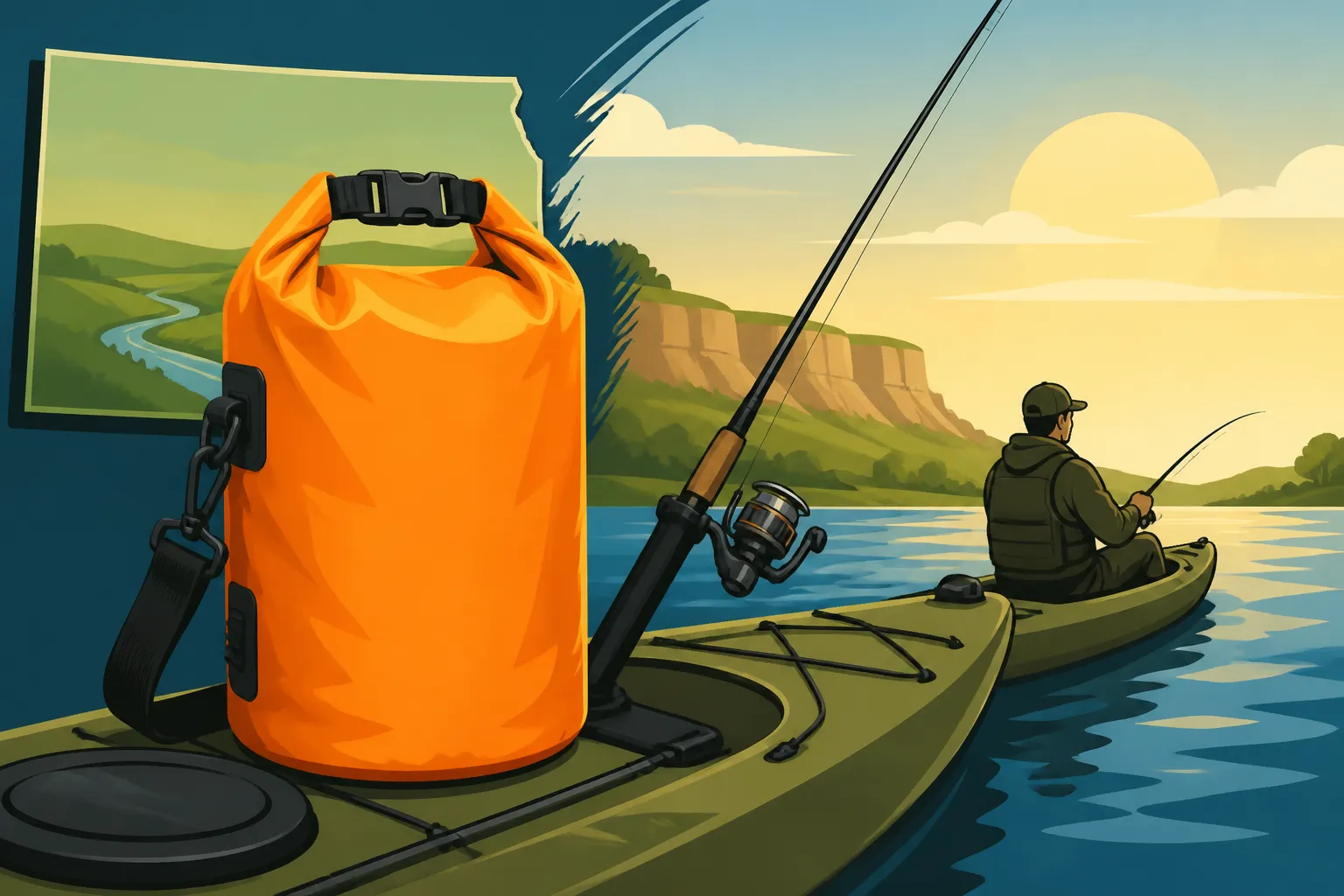
External attachment points, like D-rings or webbing loops, are also incredibly useful. These allow you to easily secure your dry bag to your kayak using bungee cords, carabiners, or straps, preventing it from floating away if you happen to capsize or if it gets bumped overboard. Losing a floating dry bag that isn't secured can be just as frustrating as having wet gear. Best Kayak Anchors for River Current aren't just for holding your boat, they help you appreciate securing everything in current.
Durability and Puncture Resistance
Kayak fishing often involves navigating tight spaces, launching from rocky shores, and dealing with sharp fishing hooks. The last thing you want is a dry bag that easily punctures or tears. Look for bags made from thicker, more robust materials. The "denier" rating of the fabric is a good indicator of its thickness and durability; higher denier numbers (e.g., 500D or 1000D) indicate a tougher, more tear-resistant fabric.
Consider the typical conditions you fish in. If you're frequently on clear, calm lakes and rarely encounter sharp objects, you might get away with a lighter-weight bag. But if you're fishing rivers with rocky banks or in areas with submerged timber, or if you're prone to tossing your gear around, invest in a bag that can withstand some abuse. After all, what's the point of a waterproof bag if it can't hold water because of a hole? Many manufacturers use reinforced bottoms or specific abrasion-resistant panels in high-wear areas, which are excellent features to look for. Think about the types of Best Fishing Tackle for North Dakota Lakes you carry—many of those lures have very sharp hooks that can easily damage a thin bag.
Different Types of Dry Bags for Specific Kayak Fishing Needs
Just like there are different types of kayaks for different fishing styles, there's a dry bag out there for nearly every specific need an angler might have. Knowing the distinctions can help you narrow down your choices and find the perfect fit for your North Dakota adventures.
Traditional Roll-Top Dry Sacks
These are the quintessential dry bags. They are essentially a simple, cylindrical sack with a roll-top closure at one end. Their strength lies in their simplicity and reliability. You roll the top down several times, clip the buckles, and you've got a waterproof seal. They come in a vast range of sizes, from tiny 2-liter pouches perfect for a phone and keys to massive 50-liter sacks for extended trips.
Pros:
- Highly reliable: The roll-top system is a proven method for waterproofing.
- Affordable: Often the most budget-friendly option, making them accessible to all anglers.
- Lightweight and compact: Easy to store when not in use.
- Versatile: Can be used for almost anything you need to keep dry.
Cons:
- Limited organization: Most are a single compartment, meaning smaller items can get lost at the bottom.
- Access can be cumbersome: To get something out, you have to unroll the top, expose the contents, retrieve your item, and then re-roll and seal it. This isn't ideal for frequently accessed items.
Best for: General storage of items you won't need constantly throughout the day, like spare clothing, towels, emergency supplies, or bulky items. They're excellent for stashing in a kayak hatch or securing behind the seat. If you're just starting out in a new Best Kayaks for North Dakota Fishing, a basic roll-top dry sack is a great first dry bag.
Dry Backpacks and Duffels
Taking the basic dry sack concept and adding a layer of convenience, dry backpacks and duffels offer enhanced portability and organization. These are designed to be carried like traditional backpacks or duffels but feature the same robust waterproof materials and roll-top (or sometimes zipper) closures.
Pros:
- Easy to carry: Padded shoulder straps make transporting your gear from the vehicle to the launch much easier, especially if you have a bit of a hike.
- Improved organization: Many models include external pockets (though these are not always waterproof), internal sleeves, and compartments, helping you keep your gear sorted.
- Larger capacities: Often available in bigger sizes, suitable for longer day trips or even overnight kayak camping.
Cons:
- Bulkier: Even when empty, they can take up more space in a kayak than a simple dry sack.
- More expensive: The added features and construction typically mean a higher price point.
Best for: Anglers who need to carry a significant amount of gear, those who have a longer walk to the water, or anyone who values easy transport and better organization. A dry backpack can be a lifesaver when you're hauling your Essential Gear Checklist for North Dakota Fishing to a less accessible launch spot. You can find a wide array of options for these on Amazon, often with user reviews highlighting their practicality for fishing.
Specialty Dry Bags: Deck Bags and Electronics Cases
Beyond the general-purpose dry bags, there are specialized options tailored for specific needs or items.
-
Deck Bags: These are designed to sit directly on the deck of your kayak, usually in front of the cockpit, and attach securely with bungee cords or clips. They often have a semi-rigid structure to maintain shape and are built for quick access. Many feature a waterproof zipper (which can be prone to failure over time if not maintained) or a smaller roll-top opening. They're great for items you might need frequently, like a small tackle box, a camera you want to grab quickly for a photo, or snacks.
-
Waterproof Phone Cases: While many dry bags can hold your phone, a dedicated waterproof phone case (often a small pouch with a zip-lock style seal and a roll-top) allows for even quicker access and sometimes even touchscreen functionality through the case. These are perfect for keeping your phone handy for navigation, checking the time, or snapping a picture without exposing it to the elements. Some even come with neck lanyards so you can keep your phone on your person.
-
Hard Cases: For truly sensitive electronics like expensive cameras, GPS units, or delicate fish finders, a hard-shell waterproof case (like those made by brands such as Pelican or similar outdoor gear companies) offers the ultimate protection against impact and water. They are heavier and bulkier but provide peace of mind in extreme conditions. While a full hard case isn't always practical inside a kayak, smaller versions are perfect for specific gadgets.
These specialized bags address specific pain points, ensuring that critical items are not only dry but also accessible when needed. When considering how to protect your sensitive Best Trolling Motors for North Dakota Lakes battery, or any other electronic device, always consider what level of protection you need.
Tips for Using and Maintaining Your Dry Bag
A dry bag is only as good as its user and how well it's cared for. Even the most expensive, bomb-proof dry bag can fail if not used correctly or if neglected. Following a few simple guidelines will ensure your dry bag keeps your gear safe and lasts for many seasons of North Dakota fishing.
Proper Sealing Techniques
This is arguably the most critical step. The roll-top closure system is fantastic, but it requires a specific technique to work effectively.
- Don't Overpack: Resist the urge to cram your dry bag full to the brim. You need enough extra material at the top to make at least three, and ideally four, tight rolls. If you can't get at least three rolls, your bag is too full, and the seal will be compromised.
- Expel Air (for most uses): Before you start rolling, gently squeeze the bag to push out as much excess air as possible. This makes the bag more compact and, in the event of a capsize, helps prevent it from acting like a giant balloon that could be hard to manage. However, for items that need a little cushioning or if you want some buoyancy, leaving a small amount of air can be beneficial.
- Roll Tightly and Evenly: Start at the top opening and fold the plastic edge over, pressing out any remaining air. Roll it down smoothly, at least three to four times. The rolls should be tight and consistent, without any wrinkles or creases that could create channels for water to enter.
- Secure the Buckles: Once rolled, bring the two ends of the buckle together and clip them securely. For bags with a side release buckle, make sure it's fully engaged. This holds the rolls in place and completes the seal.
Practice this a few times at home with a non-essential item inside before taking it on your first fishing trip. You'll quickly get the hang of it!
Securing Your Dry Bag in the Kayak
A waterproof bag is great, but if it floats away in a flip, it's still lost. Always secure your dry bag to your kayak.
- Use D-Rings and Bungees: Most fishing kayaks come with bungee cord rigging or D-rings on the deck or in the storage wells. Many dry bags also have D-rings or loops. Use these points to secure your dry bag with carabiners, small straps, or extra bungee cords.
- Inside Hatches: If your kayak has dry storage hatches, place your dry bag inside them. This offers an extra layer of protection and keeps it out of the way. Just remember that even "dry" hatches can sometimes get a little damp, so a dry bag within a hatch is the safest bet for critical items.
- Behind the Seat: For sit-on-top kayaks, placing your dry bag directly behind your seat can keep it somewhat out of the splash zone and make it easy to reach if needed, as long as it's securely tethered.
The key is to prevent your bag from becoming separated from your kayak. This is especially true on large, windy bodies of water like Lake Sakakawea, where retrieving a free-floating item can be a challenge. Consider the Best Coolers and Storage for North Dakota Anglers you might also have on board; everything needs to be secure.
Cleaning and Storage for Longevity
Proper care extends the life of your dry bag significantly.
- Rinse After Use: After each trip, especially if your bag has been exposed to saltwater (not common in North Dakota, but good practice for any angler) or muddy water, rinse it thoroughly with fresh water. This removes dirt, grit, and any fish slime that could degrade the material over time.
- Air Dry Completely: This is crucial. Before storing, open the dry bag completely and allow it to air dry, both inside and out. Hanging it upside down or propping it open in a well-ventilated area works best. Storing a damp dry bag is an invitation for mildew, which can damage the material and create unpleasant odors.
- Avoid Harsh Chemicals: Do not use strong detergents, solvents, or bleach to clean your dry bag. Mild soap and water are usually sufficient. Harsh chemicals can break down the waterproof coatings and materials.
- Store Loosely: When not in use, avoid rolling or folding your dry bag tightly for extended periods. This can create permanent creases that weaken the material and compromise the seal. Instead, store it loosely rolled, laid flat, or gently crumpled in a cool, dry place away from direct sunlight. Storing it unrolled with the top open is often best to ensure air circulation and prevent any moisture traps.
- Inspect Regularly: Before each season, or even each trip, take a moment to inspect your dry bag for any signs of wear and tear, such as small punctures, frayed seams, or cracks in the material. A small tear can sometimes be repaired with a patch kit specifically designed for waterproof materials, potentially saving you from having to buy a new bag. Many outdoor gear retailers, including Bass Pro Shops, offer these types of repair kits.
By following these simple tips, your dry bag will serve you faithfully, keeping your gear dry and allowing you to enjoy your North Dakota kayak fishing adventures with peace of mind.
| Dry Bag Type | Primary Use Case | Pros | Cons | Best For |
|---|---|---|---|---|
| Traditional Roll-Top Sack | General waterproof storage | Lightweight, affordable, highly reliable | Limited organization, slower access | Bulk items, emergency gear, inside hatches |
| Dry Backpack/Duffel | Transporting gear, larger capacity | Comfortable to carry, better organization | Bulkier, more expensive | Longer trips, carrying gear to remote launches |
| Waterproof Phone Pouch | Protecting and accessing smartphone | Quick access, often touchscreen compatible | Only fits small items, minimal protection | Phone, keys, small valuables |
| Kayak Deck Bag | Quick access to frequently used items | Sits on deck, easy reach, often rigid | Zippers can fail, can be splash-prone | Tackle, snacks, camera, GPS |
| Hard Case (Pelican-style) | Ultimate protection for sensitive electronics | Impact-proof, extremely waterproof | Heavy, bulky, expensive | Cameras, fragile electronics, extreme conditions |
Disclaimer
This article is for general informational purposes only and does not constitute professional advice. Laws, prices and regulations vary by location and change over time. Consult a qualified professional for guidance on your specific situation.