North Dakota Reciprocal License Agreements With Other States
It can be incredibly confusing when you’re out on the water, having a grand time, and suddenly wonder, "Do I need a different license to fish this side of the river?" Many anglers in North Dakota face this exact dilemma, especially when fishing our famous border waters. This comprehensive guide will clear up all that uncertainty, detailing North Dakota’s reciprocal fishing license agreements with neighboring states so you can fish confidently and legally.
Understanding Reciprocal Fishing Agreements
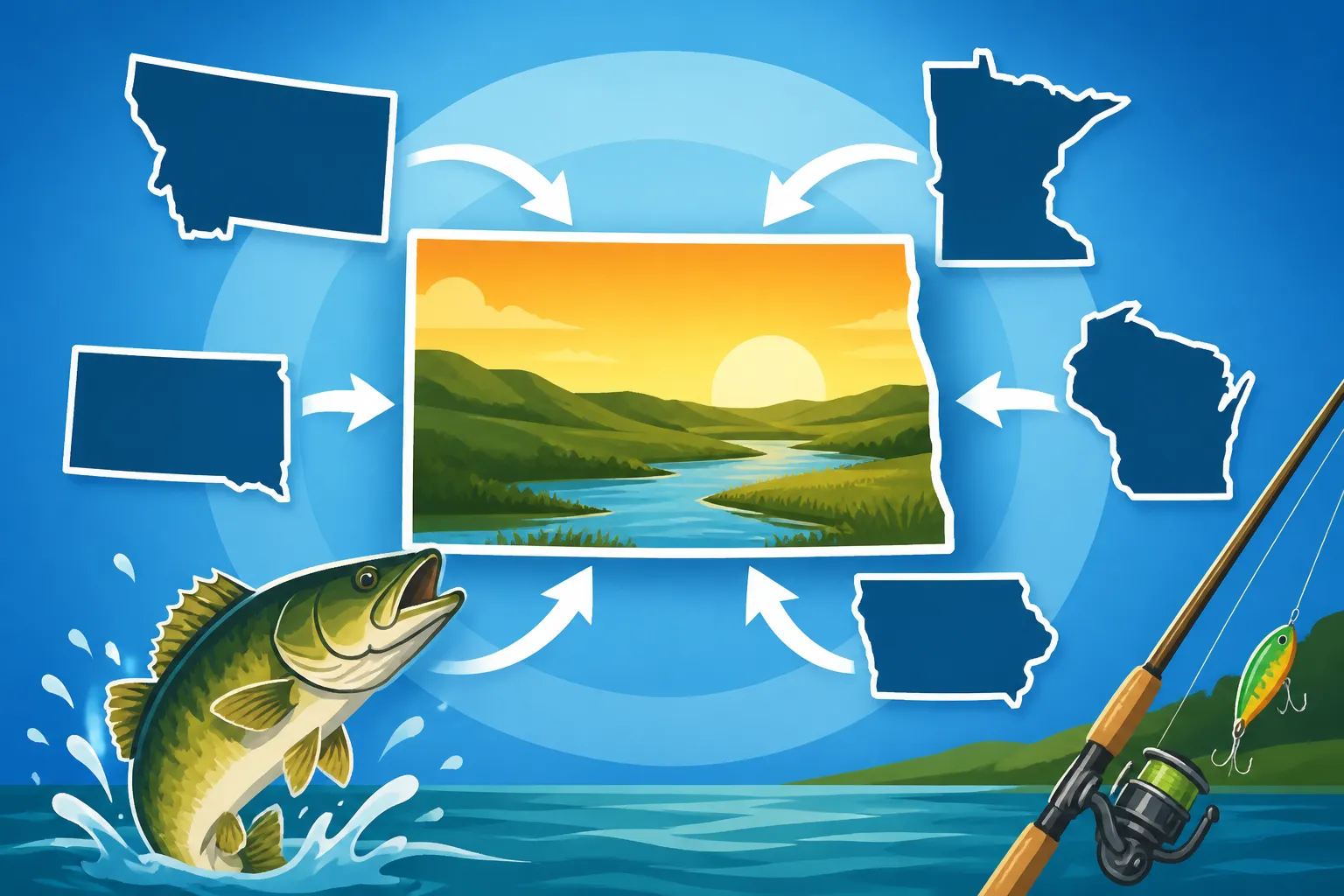
Fishing isn't just about bait and hooks; it's also about understanding the rules, especially when those rules involve state lines. Reciprocal fishing agreements are essentially handshake deals between states that share bodies of water, allowing anglers with a valid license from either state to fish in certain designated border waters. These agreements are a real lifesaver, preventing the hassle and expense of buying multiple licenses just to cast a line a few yards further.
What Reciprocal Agreements Mean for Anglers
For you, the angler, a reciprocal agreement means more freedom and less red tape. Imagine standing on the North Dakota side of the Red River, seeing a prime fishing spot just a stone's throw away on the Minnesota bank. Without reciprocity, you’d need both a North Dakota and a Minnesota fishing license to legally fish that spot, even if you’re still technically in the same river system. With a reciprocal agreement, as long as you possess a valid license from one of the participating states, you can typically fish the agreed-upon boundary waters without worrying about crossing an invisible line. This applies whether you're fishing from a boat, from shore, or through the ice. It’s designed to make your fishing experience smoother and more enjoyable, rather than a bureaucratic nightmare. However, it's absolutely vital to remember that while your license might be valid from either state, you are still bound by the fishing regulations of the state in which you are physically fishing, or sometimes, the most restrictive regulations of the two states, especially when it comes to things like daily limits and size restrictions. Always check the current North Dakota Fishing Regulations Explained to be absolutely sure.
Why These Agreements Exist
Reciprocal agreements don’t just happen by accident; they’re the result of careful negotiation and common sense. States recognize the shared natural resources their border waters represent and the inconvenience it causes anglers to navigate complex, overlapping regulations. These agreements foster good neighborly relations, encourage tourism, and simplify enforcement for game wardens who would otherwise spend their days policing invisible lines in the water. From a conservation standpoint, it also helps manage fish populations more holistically, as fish certainly don't recognize state borders. By working together, states can implement consistent management strategies for shared fisheries, ensuring healthy populations for future generations of anglers. These agreements often evolve, so understanding the specifics is key, much like understanding North Dakota Fishing Season Dates and Limits.
North Dakota's Key Border Water Agreements
North Dakota shares significant water boundaries with a few of its neighbors, and understanding the specific reciprocal agreements for each is crucial. The primary areas where these agreements come into play are with Minnesota to the east and, to a lesser extent, with South Dakota along parts of the Missouri River and Lake Oahe.
Fishing the Red River: Minnesota and North Dakota
The Red River of the North, flowing northward and forming the entire eastern border between North Dakota and Minnesota, is perhaps the most well-known and utilized reciprocal water. This river is a fantastic fishery, particularly for channel catfish, walleye, and northern pike. For anglers, the agreement here is quite generous: a valid fishing license from either North Dakota or Minnesota allows you to legally fish the entire mainstem of the Red River. This means if you’re a North Dakota resident with a valid license, you can fish right up to the Minnesota bank, and vice-versa for Minnesota residents.
However, there's a crucial caveat: you must abide by the regulations of the state whose license you hold, or, in some cases, the more restrictive rules of the two states. For example, if you have a North Dakota license, you follow North Dakota's daily limits and size restrictions for species like walleye and northern pike, even if you're technically casting towards the Minnesota side. If you are fishing from shore, you must possess the license for the state from which you are casting. If you're in a boat on the main channel, either license is typically valid. Always make sure to check the specific regulations for the Red River, as they can sometimes differ from inland lake rules, like those for North Dakota Northern Pike Daily Limit on the Red River. These rules are often outlined in both states' annual fishing proclamations. It’s wise to carry both states' regulation booklets if you fish this area frequently or can access them digitally on your phone.
Missouri River and Lake Oahe: South Dakota Considerations
The situation along the Missouri River and Lake Oahe, where North Dakota borders South Dakota, is quite different from the Red River. There is no full reciprocal fishing license agreement between North Dakota and South Dakota for the entire shared portion of the Missouri River or Lake Oahe. This is a common point of confusion and one that can lead to significant penalties if misunderstood.
What this means for anglers is that you generally need a license for the state whose waters you are fishing in. If you launch your boat in North Dakota and plan to fish only on the North Dakota side of Lake Oahe or the Missouri River, a North Dakota fishing license is sufficient. However, if you cross into South Dakota waters, even just for a moment to fish a promising spot, you must possess a valid South Dakota fishing license. This often means buying two separate non-resident licenses if you intend to fish both sides of the border. Always be mindful of navigational boundaries, especially around areas like the Oahe Dam or specific river bends. It’s imperative to consult a detailed map or GPS to know precisely which state’s waters you are in, especially when targeting popular species like walleye or catfish. For detailed info, check out the North Dakota Walleye Size Limit Rules and compare them with South Dakota's. This is why many anglers opt to focus their efforts entirely within one state's boundaries when fishing these specific areas.
Bois de Sioux River: Another Minnesota Connection
Beyond the famous Red River, North Dakota also shares another reciprocal agreement with Minnesota along the Bois de Sioux River. This river forms a smaller section of the eastern border, essentially feeding into the Red River system. The rules here mirror those for the Red River: a valid fishing license from either North Dakota or Minnesota is acceptable for fishing the mainstem of the Bois de Sioux River.
Just like its larger counterpart, while either state's license grants you access to the water, you are expected to follow the regulations (bag limits, size limits, season dates) of the state from which your license was issued, or the more restrictive of the two. This is particularly important for species that might have slightly different limits, such as certain panfish or even northern pike. If you’re a resident angler looking at North Dakota Resident Fishing License Options, you’ll be covered on the Bois de Sioux. This agreement highlights the cooperative spirit between the two states in managing their shared aquatic resources and ensuring anglers have uninterrupted access to these excellent fisheries without undue burden. It's a prime example of how reciprocal agreements benefit the recreational fishing community.
Navigating the Specifics of Reciprocity
Understanding the general idea of reciprocal agreements is one thing, but getting into the nitty-gritty of how they actually work on the water is where the real knowledge lies. It’s not just about having a license; it’s about knowing which rules apply, where.
License Requirements for Each State
When fishing reciprocal waters, the most fundamental requirement is, of course, a valid fishing license. For North Dakota residents, this means securing a North Dakota Fishing License Cost Guide or one of the specialized resident options. Non-residents planning to fish North Dakota's reciprocal waters will need a North Dakota Nonresident Fishing License Guide. The beauty of reciprocity is that if you hold, say, a Minnesota fishing license, you don't also need a North Dakota one to fish the Red River.
However, the key distinction often comes down to where you are fishing from. If you are bank fishing, you generally need the license for the state on whose soil you are standing. If you're in a boat on the main channel of a reciprocal river like the Red River, either state's license is usually fine. But don't assume this applies to all border waters, especially those without formal agreements. Always carry your physical license or digital proof of license with you, as game wardens frequently patrol these areas. It’s your responsibility to present it when asked. Sometimes, people consider purchasing a Nonresident 3-Day Fishing License in North Dakota if they're just passing through and want to experience the border waters.
Species-Specific Regulations Across Borders
This is often where anglers get tripped up even on reciprocal waters. While your license might be valid in the main body of a border river, the specific regulations for catching certain fish might differ between the states, and you are generally expected to follow the rules of the state whose license you hold, or the more restrictive rule. For instance, the daily creel limit for walleye might be five in North Dakota but six in Minnesota on the Red River. If you hold a North Dakota license, you must adhere to the five-walleye limit, even if you’re fishing closer to the Minnesota bank.
These differences can apply to length limits, daily possession limits, and even the open seasons for certain species. For highly sought-after fish like walleye, northern pike, or catfish, it's crucial to consult both states' fishing proclamations or regulations pamphlets before heading out. This is especially true for specific species like North Dakota Catfish Limit Rules which could vary. Don't rely on hearsay or what a buddy told you last year; regulations can and do change. Checking the official state game and fish department websites (North Dakota Game and Fish Department and Minnesota Department of Natural Resources) for the most current information is always the safest bet. You can sometimes find printed copies or digital versions on platforms like Amazon for easy reference in the field.
What to Do if There's No Reciprocal Agreement
For border waters where no reciprocal agreement exists, like much of the North Dakota/South Dakota stretch of the Missouri River and Lake Oahe, the rule is simple but critical: you must possess a valid fishing license for the state whose water you are fishing in. This means if you launch in North Dakota and drift into South Dakota waters, you need a South Dakota license. If you only have a North Dakota license, you must fish exclusively within North Dakota's boundaries.
This necessitates careful navigation and awareness of your exact location, often requiring a GPS unit with detailed mapping that shows state boundaries on the water. Many modern fish finders and chartplotters offer this functionality, making it easier to stay on the right side of the line. If you plan to fish both sides, the only legal solution is to purchase a non-resident license from each state. While it might seem like an added expense, it’s far less costly than the fines and potential equipment confiscation that can result from fishing without a proper license. Being prepared means knowing your boundaries and respecting them, ensuring your fishing trip remains enjoyable and lawful. Always remember that understanding these nuances is as important as knowing How to Get a North Dakota Fishing License in the first place.
Common Misconceptions and Legal Pitfalls
Even with the best intentions, it's easy to fall prey to common misunderstandings surrounding reciprocal agreements. These pitfalls can lead to frustrating encounters with law enforcement and unnecessary penalties.
The "Invisible Line" Delusion
One of the most persistent misconceptions is the idea of an "invisible line" that, once crossed, automatically switches the applicable regulations. While it’s true that state boundaries exist on the water, reciprocal agreements simplify these lines, they don’t eliminate the need for awareness. The problem arises when anglers assume that because they have a license, they're entirely covered everywhere. As discussed, even on reciprocal waters like the Red River, while either state's license is valid, you're usually bound by the regulations of the state whose license you carry, or sometimes the stricter of the two.
The "invisible line" delusion is even more dangerous on non-reciprocal waters, such as parts of the Missouri River where North Dakota meets South Dakota. Here, that line is very real, and crossing it without the proper license for that specific state's waters immediately puts you in violation. It's not about being a few feet over; it's about being in waters you are not licensed to fish. A game warden isn't going to accept "I didn't know" as an excuse, especially with readily available GPS technology and maps. Always consult detailed maps or your fish finder's GPS to confirm your location, particularly if you’re venturing near a state boundary. Ignorance of the law is never a valid defense, and understanding the specific rules for Fishing License Age Requirements in North Dakota won't save you if you're in the wrong state's waters without a license.
Penalties for Non-Compliance
Fishing without the correct license, or failing to adhere to the regulations of the state you are fishing in (even with a reciprocal agreement), carries significant consequences. In North Dakota, as in other states, game wardens are fully authorized to enforce these laws. The penalties for fishing without a license can range from substantial monetary fines to the confiscation of your fishing gear, and even your boat in some egregious cases. It's a costly mistake that nobody wants to make.
For example, getting caught fishing on the South Dakota side of Lake Oahe with only a North Dakota license could result in a fine, court appearance, and potentially losing your fishing equipment. These legal repercussions are far more expensive and time-consuming than simply purchasing the appropriate non-resident license beforehand. Additionally, a violation can result in points on your fishing record, potentially impacting your ability to get future licenses. Remember that wardens regularly check for compliance, particularly on popular border waters, so the chances of being caught if you're not properly licensed are quite high. Taking the time to understand North Dakota Fishing Regulations Explained will save you a lot of headache and money.
Staying Updated on Regulation Changes
Fishing regulations are not static; they are dynamic and can change from year to year, or even mid-season, based on biological assessments, population management goals, and public input. Relying on outdated information, or what someone told you years ago, is a recipe for disaster. Both North Dakota and its neighboring states publish annual fishing proclamations or regulation booklets, typically available online through their respective game and fish departments, or at license vendors.
It is your personal responsibility as an angler to stay informed. Before each fishing season, or even before a trip to a new or border water, take a few minutes to review the current regulations. Check for updates on daily limits, length restrictions, bait restrictions, or any new reciprocal agreements. Subscribing to email newsletters from the North Dakota Game and Fish Department or checking their official website regularly can help you stay current. For example, knowing North Dakota walleye daily limit is essential every year, as it can be adjusted. These agencies work hard to provide clear and accessible information, so take advantage of it. It’s a small investment of your time that protects your fishing privileges and ensures a legal and enjoyable day on the water.
| Border Water | Shared States | Reciprocal Agreement? | License Requirements | Key Considerations |
|---|---|---|---|---|
| Red River of the North | North Dakota & Minnesota | Yes | Valid ND or MN license covers mainstem. | Follow regs of license held (or more restrictive). Shore anglers need license for state they're standing in. |
| Bois de Sioux River | North Dakota & Minnesota | Yes | Valid ND or MN license covers mainstem. | Similar to Red River; follow regs of license held (or more restrictive). |
| Missouri River / Lake Oahe | North Dakota & South Dakota | No full reciprocity | Need license for the specific state's waters you are actively fishing. | Crucial to know exact state boundaries. Consider buying both non-resident licenses if fishing both sides. |
| Other Small Border Rivers | (Varies) | Rarely (check local) | Typically requires license for the state whose water you are fishing in. | Always assume no reciprocity unless explicitly stated by both state's game & fish departments. |
Disclaimer
This guide is intended for informational purposes only and does not constitute legal advice. Fishing regulations are subject to change, and it is always the angler's responsibility to consult the most current official North Dakota Game and Fish Department proclamations and those of any neighboring states before fishing.