How to Rig a Tip-Up for Northern Pike
There’s nothing quite like the thrill of seeing that flag fly on a cold North Dakota winter day, signaling a potential monster Northern Pike on the line. But let's be honest, getting your tip-up set up correctly can feel more complicated than it needs to be, especially when battling numb fingers or trying to remember all the details from last season. This guide is here to cut through the confusion and walk you through every step of rigging your tip-up specifically for those toothy pike, ensuring you're ready for action and maximize your chances for success.
Understanding Your Tip-Up: The Basics Before You Rig
Before we dive into the nitty-gritty of knots and hardware, it’s worth taking a moment to understand the anatomy of your tip-up and why each part matters for Northern Pike. You’ve probably seen a few different styles out there – some are simple wooden crosses, others are sleek plastic models, and some even have built-in insulated covers. While the aesthetics might differ, the core components and their functions remain the same. Knowing these will make the rigging process much clearer and help you troubleshoot if something goes awry.
Different Tip-Up Styles and Their Advantages
When you're out on the ice in North Dakota, you'll spot a variety of tip-ups, each with its own fan club. The most common are the classic cross-style, the sturdy "rail" or "beaver dam" style, and the increasingly popular insulated models. Each has particular advantages for chasing Northern Pike.
The traditional cross-style tip-up, often made of wood or plastic, is simple, effective, and usually quite affordable. It's a workhorse that many anglers trust. It sets up easily over the hole, and the spool sits below the surface, protected from freezing somewhat by the water itself. However, in bitter North Dakota winds, the line on the spool can still freeze up, causing frustrating snags when a pike hits. Then there are the "rail" or "beaver dam" styles, which often have wider bases and can be more stable in gusty conditions, keeping your setup from blowing across the ice if you're not careful. For windy days on wide-open expanses like Lake Sakakawea, this added stability is a real bonus.
But if you really want to combat the brutal cold, especially when targeting pike on a frigid morning on Devils Lake, insulated tip-ups are a game-changer. These models, like those offered by Frabill or Clam, often have a round or square base that completely covers the ice hole. This design not only keeps your hole from freezing solid for a much longer time but also protects your line and spool from icing up. A frozen hole or spool means a lost fish, and nobody wants that. While they might cost a bit more, the reduced hassle and increased fishing time are often worth the investment, especially when the mercury drops far below zero. You can find a wide variety of these specialized tip-ups and their accessories easily on platforms like Amazon, making it convenient to gear up for any condition North Dakota throws your way.
Essential Components of a Tip-Up System
Regardless of the style, every tip-up relies on a few core parts working in harmony. First, you have the base, which sits over the hole and supports the rest of the mechanism. This prevents the tip-up from falling in and helps stabilize it. Next, there's the spool, which holds your main fishing line and sits below the ice surface. This is arguably the most critical component, as it needs to turn freely when a fish takes the bait. Many anglers often overlook spool maintenance, but a sticky spool can mean a missed fish.
Above the ice, you'll find the flag mechanism. This typically consists of a trigger or trip wire that holds the flag down, and a spring-loaded flag that "pops" up when a fish pulls line from the spool, alerting you to a bite. The sensitivity of this trigger can often be adjusted, which is crucial for distinguishing between a light nibble and a full-on pike strike. Too sensitive, and every little baitfish might trip it; too stiff, and a cautious pike might drop the bait before setting off the alarm. Finally, there's the depth marker or a simple line clip on the spool itself. This helps you set your bait at a consistent depth, which is vital when you find a productive zone. Being able to quickly reset your depth after checking bait or landing a fish saves valuable time and keeps your presentation consistent.
Step-by-Step Guide to Rigging Your Northern Pike Tip-Up
Now that we're all on the same page about the parts, let's get down to actually rigging your tip-up for those hungry Northern Pike. The goal here is to create a robust, reliable setup that can handle a powerful strike and the sharp teeth of a big pike, minimizing tangles and maximizing your chances of landing that trophy fish. This isn't just about throwing some line on a spool; it's about thoughtful preparation.
Spooling Your Main Line Correctly
The main line on your tip-up spool is your first connection to the fish, so it needs to be strong and resistant to freezing. While monofilament can be an option, many experienced North Dakota anglers prefer braided Dacron or tip-up specific nylon line for pike. These lines typically absorb less water, which means less freezing inside the spool and smoother running when a fish makes a run. When considering your options, check out different types of line and learn about the best fishing line for North Dakota lakes to make an informed choice.
To spool your line:
- Attach the Line to the Spool: Start by tying one end of your chosen line to the tip-up spool. A simple arbor knot or a double-uni knot works perfectly here. Make sure it's snug and secure.
- Wind On the Line: Begin winding the line onto the spool. You want to fill the spool adequately, but not so full that it creates friction against the tip-up frame. A good rule of thumb is to leave about 1/4 to 1/2 inch of space from the outer edge of the spool. For pike, you'll want to have plenty of line, typically 50-100 feet, depending on the depths you plan to fish and the size of the pike you're expecting. Keep the line tight and even as you spool it to prevent tangles later on.
- Secure the End: Once you have enough line, secure the loose end with a small piece of electrical tape or a line clip if your tip-up has one. This prevents the line from unraveling during transport.
- Test the Spool: Before you head out, always test the spool. It should turn smoothly with minimal resistance. If it feels stiff, check for any line tangles or debris. A few drops of tip-up lubricant designed for cold weather can work wonders for sticky spools.
Attaching Your Leader and Terminal Tackle
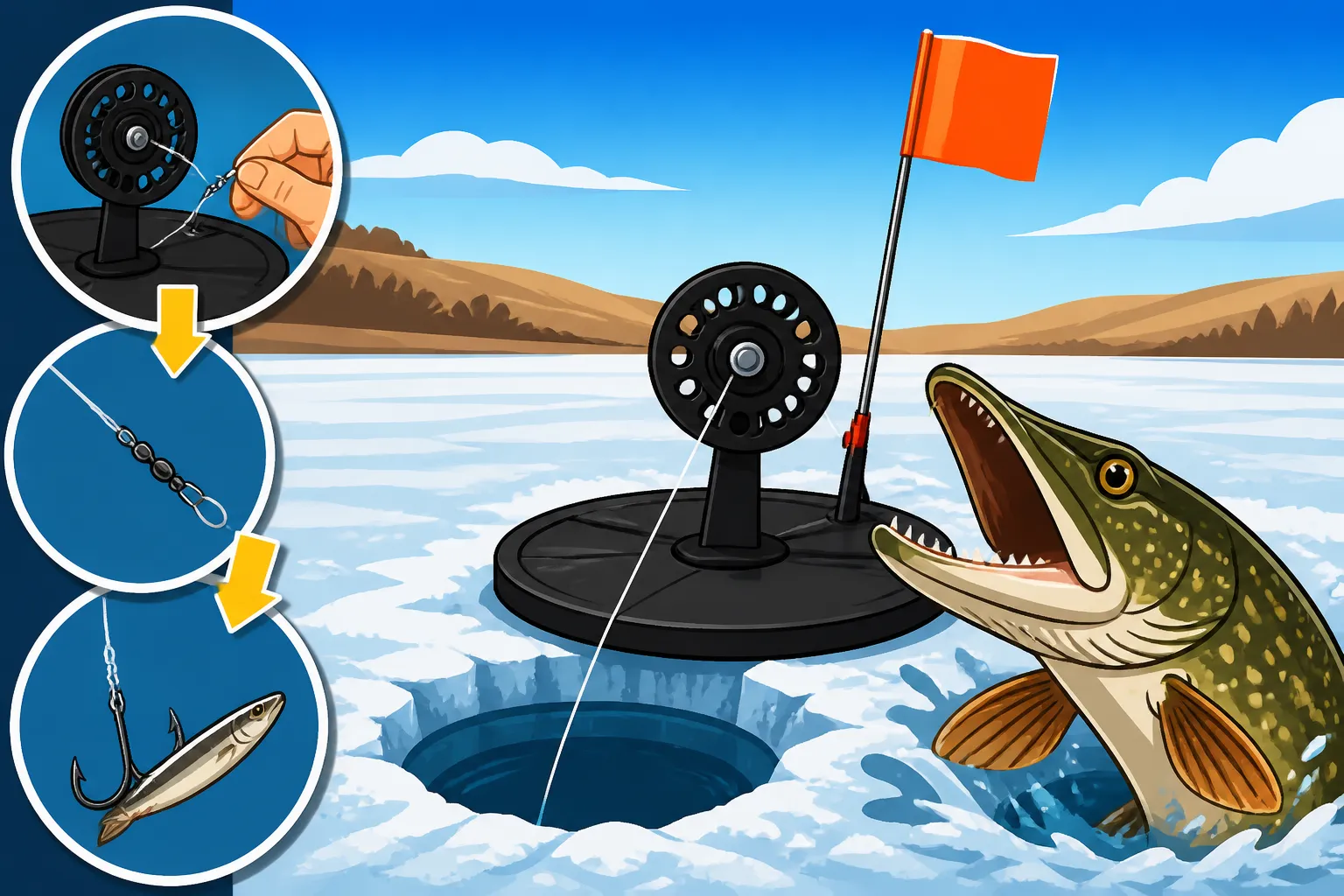
This is where the pike-specific rigging really comes into play. Northern Pike have notoriously sharp teeth that can easily shred standard monofilament or fluorocarbon line. A steel or heavy fluorocarbon leader is absolutely non-negotiable if you want to land these fish. Ignoring this step is a sure way to donate your expensive bait and hook to a hungry pike.
Here's the breakdown for your leader and terminal tackle:
-
The Leader:
- Material: You have two main choices for pike leaders: steel or heavy fluorocarbon. Steel leaders (wire leaders) are the most common and safest bet against bite-offs. They come in various strengths and lengths. Look for pre-made leaders that are 10-18 inches long and rated for 20-50 pounds. Options made from coated wire or even titanium are excellent. Alternatively, you can tie your own leaders using strong, heavy-duty fluorocarbon (80-100 lb test). While not as bulletproof as steel, heavy fluorocarbon is less visible in the water, which can sometimes be an advantage for finicky pike. Many anglers looking for the North Dakota Northern Pike Fishing Guide will tell you that a solid leader is a key component to success.
- Attachment to Main Line: Use a strong swivel to connect your leader to your main line. A high-quality barrel swivel or ball-bearing swivel will prevent line twist, which is a common frustration when fishing with larger live baits. Tie your main line to one end of the swivel using a Palomar knot, improved clinch knot, or uni knot – choose one you're confident in tying correctly.
- Attachment to Terminal Tackle: The other end of your leader should have a sturdy snap swivel or a directly tied hook. A snap swivel allows you to quickly change hooks if needed.
-
The Hook:
- Type: For live bait, which is often the preferred method for tip-up pike fishing, you'll want a strong, sharp treble hook or a large single hook. Treble hooks (sizes 2 to 4/0) are excellent for holding bait and ensuring a good hookset. However, some anglers prefer a single circle hook (sizes 3/0 to 6/0) for easier removal and less harm to the fish, especially if practicing catch and release.
- Placement: When fishing with live minnows or suckers, hook them gently. For a treble hook, you can hook the minnow just behind the dorsal fin, being careful not to hit its spine. This allows the minnow to swim naturally and attract pike. For a single hook, hooking through the lips or just under the dorsal fin also works well.
- Split Shot (Optional): If your bait is too lively or you need to get it down deeper quickly, a small split shot weight can be added about 6-12 inches above the hook. Don't go too heavy, as you still want your bait to have some natural movement.
Here’s a quick table to help visualize leader choices:
| Leader Type | Pros | Cons | Best Use Case |
|---|---|---|---|
| Steel Leader | Maximum bite-proof protection, very durable | More visible, can kink, may deter finicky fish | Aggressive pike, murky water, high bite-off risk |
| Heavy Fluorocarbon | Less visible, more flexible, no kinking | Less bite-proof than steel, still vulnerable to big pike | Clear water, cautious pike, when stealth is prioritized |
Remember, the goal is to have confidence in your knots and your gear. Nothing is more heartbreaking than losing a big pike due to a preventable gear failure.
Setting Your Depth and Positioning the Bait
Once your line, leader, and hook are ready, the next crucial step is to set your bait at the right depth. Northern Pike are ambush predators, often cruising along weed edges, drop-offs, or suspended in the water column looking for prey. Knowing where to present your bait is critical. This is where your understanding of fish behavior and lake contours comes into play, as detailed in many North Dakota Northern Pike Fishing Guide resources.
- Find Your Depth: Slowly lower your bait down the hole until you feel it hit the bottom. Many tip-ups have a small depth marker clip or a simple piece of string you can tie to your main line to mark your depth.
- Raise the Bait: Once you've found the bottom, reel up your line about 1-3 feet. This positions your bait slightly above the bottom, making it more visible to cruising pike. If you’re fishing over heavy weeds, you might want to raise it even more, perhaps 3-5 feet above the weeds, to prevent constant snags. For suspended pike in open water, you might set your bait halfway between the bottom and the ice, or target specific depths identified with your fish finder.
- Set the Flag Mechanism: Carefully set your flag mechanism so the flag is in the "down" position. Ensure the trigger is just sensitive enough to trip when a fish pulls the line, but not so sensitive that wind or a small baitfish swimming away will falsely trigger it. Many tip-ups have adjustable tension screws for this purpose.
- Spread Out Your Tip-Ups: If local regulations allow multiple lines, spread your tip-ups out to cover a wider area. Target different depths or different structural elements (weed lines, points, flats) to see what the pike are keying into that day. Remember to always be aware of the North Dakota Fishing Regulations Explained to ensure you're compliant with the number of lines allowed.
Choosing the Right Bait and Presentation for Pike
The best rigging in the world won't do you much good if you don't have enticing bait. Northern Pike are aggressive eaters, but they can also be selective. Understanding their preferences and how to present your bait effectively will significantly increase your flag count.
Live Bait Options for Hungry Pike
Live bait is, hands down, the most popular and often most effective option for tip-up fishing for Northern Pike. The natural movement and scent of a live minnow or sucker are incredibly difficult for a pike to resist. When trying to decide on the best bait for Northern Pike through the ice, there are a few local favorites:
- Golden Shiners: These are a perennial favorite across North Dakota. They're active, tough, and just the right size to attract a good pike.
- Suckers (Redtail or White): Larger suckers, especially in the 6-10 inch range, are prime big-pike bait. They put off a lot of vibration and scent and can withstand multiple pike investigations before getting eaten. You'll often find anglers using these on Lake Sakakawea for larger pike.
- Smelt: While not always available fresh, frozen smelt can also be very effective. If using frozen bait, make sure it’s thawed properly but still firm enough to stay on the hook.
- Chubs: Another hardy baitfish that can stand up to aggressive pike.
When hooking live bait, remember to do so in a way that allows them to swim naturally and stay alive as long as possible. As mentioned, behind the dorsal fin or through the lips are common methods. Keep your bait fresh and lively by using a good bait bucket with an aerator, especially on longer fishing trips. You can find excellent options for keeping your live bait healthy on Amazon, which offers various aerators and insulated bait buckets.
Cut Bait and Artificial Options
While live bait often steals the show, there are times when cut bait or even artificial lures can be surprisingly effective for pike on tip-ups. These alternatives can be particularly useful if live bait is scarce or if you want to experiment.
- Cut Bait: Large chunks of oily fish, such as smelt, herring, or even the belly flap of a previously caught fish, can be potent. The strong scent trail they create can draw in pike from a distance. Cut bait is generally fished directly on the bottom or suspended just above it. The key with cut bait is to ensure it's securely hooked, as pike can be notorious for mouthing and dropping baits.
- Dead Bait: Sometimes, a dead minnow lying still on the bottom can mimic a dying or injured prey fish, which can be an easy meal for a pike. This "dead stick" method can be surprisingly effective on slower days when pike aren't actively chasing.
- Artificial Lures: While less common for tip-ups, some anglers will rig large soft plastic swimbaits or deadbait rigs (like the Quick Strike Rigs) designed to hold a whole dead baitfish. These are often used when regulations restrict live bait or when targeting very aggressive fish. The advantage here is not having to deal with keeping live bait, but they lack the natural movement that often triggers pike strikes. However, for those looking for a slightly different approach to targeting pike, these can offer a unique presentation.
Setting Your Tip-Up for Success and Safety on the Ice
Getting your tip-ups rigged correctly is only half the battle. How you deploy them, monitor them, and ensure safety on the ice is equally important for a successful and enjoyable day chasing Northern Pike. Remember that ice fishing for Northern Pike with tip-ups can be an active pursuit, as you'll be constantly checking flags and holes.
Strategic Placement and Monitoring
Where you place your tip-ups significantly impacts your success. Pike are often found near structure.
- Structure is Key: Look for weed lines, rock piles, submerged timber, points, and drop-offs. These are prime ambush points for pike. On large lakes like Lake Oahe, identifying these structures using a reliable GPS and sonar unit is invaluable.
- Covering Water: Don't just cluster all your tip-ups in one spot. Spread them out to cover different depths and structural elements. For example, if you're fishing a point, place one tip-up on the shallow flat, one on the breakline, and one in deeper water adjacent to it.
- Visibility and Accessibility: Position your tip-ups so they are easily visible from your ice fishing shelter or observation point. This means no obstructions between you and the flags. Also, ensure you can get to them quickly when a flag goes up. A pike won't wait for you to leisurely stroll over!
- Hole Maintenance: Especially on bitterly cold days, your ice holes can freeze over quickly. Regularly check your holes and clear them of slush and skim ice. An insulated tip-up base helps immensely here, but even with those, you'll need to stay on top of it. A small scoop or skimmer is an essential tool for this task.
Essential Gear and Ice Safety Considerations
Ice fishing, especially in North Dakota's challenging winter conditions, always requires a focus on safety. Beyond your tip-up, there’s other gear you absolutely need.
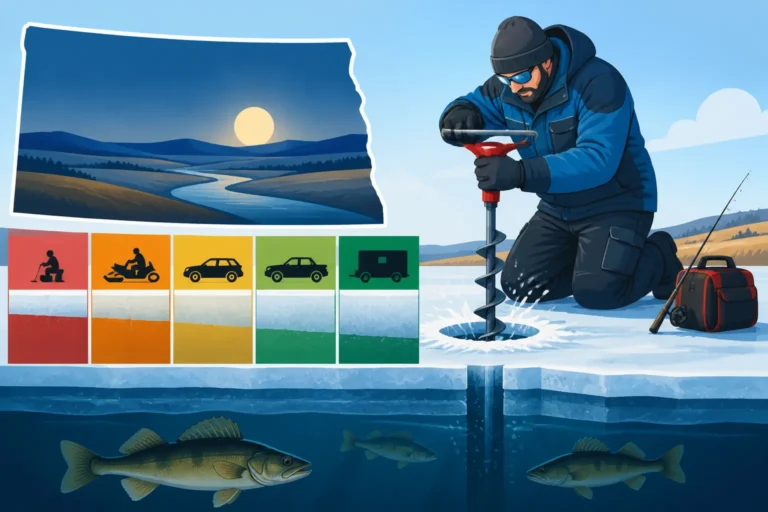
- Ice Safety Gear: Never, ever go on the ice without proper safety gear. This includes ice picks around your neck, a spud bar or ice auger to check ice thickness as you go, and a throw rope. Understanding how thick ice needs to be for ice fishing is paramount to a safe day on the water. Early and late ice periods are especially dangerous.
- Warm Clothing: Dress in layers. North Dakota winters are no joke, and staying warm is critical. Insulated boots, bibs, a warm jacket, hat, and gloves are non-negotiable. Being cold will not only make you miserable but can also impair your judgment. Learn what to wear ice fishing in North Dakota to ensure you're adequately prepared.
- Landing Net and Pliers: Once you have a pike on the line, especially a larger one, a good landing net will make it much easier to bring it onto the ice safely. Pike have a lot of fight, and slippery ice makes handling them tricky. Long-nosed pliers or a hook remover are essential for safely unhooking pike, protecting both your fingers from their razor-sharp teeth and the fish if you plan to release it.
- Rod and Reel: While tip-ups are passive, it's always a good idea to have an active fishing rod rigged and ready. Many anglers will jig for walleye or perch nearby, or even use a second rod to jig for pike if the tip-up bite slows down. This adds another dimension to your fishing day and allows you to "work" an area while waiting for a flag. Consider reviewing options for the best ice fishing rods for Northern Pike to complement your tip-up setup.
Rigging a tip-up for Northern Pike isn't just a technical exercise; it's a strategic part of a successful ice fishing outing. By paying attention to line choice, leader strength, bait presentation, and essential safety, you'll be well-prepared for that exciting moment when the flag flies. Good luck out there, and may your flags be flying high!
Disclaimer
This guide provides general information and recommendations for rigging a tip-up for Northern Pike in North Dakota. Fishing conditions, regulations, and best practices can change. Always consult the latest North Dakota Game and Fish Department regulations before heading out on the ice to ensure compliance with all current rules and bag limits. Prioritize ice safety at all times.