Yellow Perch Identification and State Record
There's nothing quite like the thrill of feeling that distinct perch bite, but sometimes, especially for newer anglers, it can be tricky to tell exactly what you've got on the end of your line. Panfish can look similar, and juvenile game fish can really throw you for a loop! This guide is here to clear up any confusion, helping you confidently identify a yellow perch and even understand what it takes to land a state-record-breaker in North Dakota.
The Allure of the North Dakota Yellow Perch
If you've spent any time fishing in North Dakota, you've likely encountered the humble, yet incredibly popular, yellow perch. They're a staple for a reason, offering consistent action and a delicious reward. For many, catching perch is where their fishing journey truly begins.
A Favorite for Anglers of All Ages
Yellow perch are, hands down, one of the most beloved species for anglers of all skill levels, from seasoned veterans to excited youngsters. They're typically quite aggressive feeders, which means you don't always need super refined techniques or specialized gear to get a bite. This accessibility makes them perfect for family fishing trips, creating those cherished memories of reeling in a feisty fish. Just imagine a sunny afternoon on Devils Lake, a bobber dips, and a kid (or adult, let's be honest!) beams as they pull in a beautifully striped perch. That's the magic of these fish.
They might not be the biggest fish in the lake, but for their size, yellow perch put up a surprisingly good fight. Their spirited tugs and runs are enough to keep things exciting, especially on lighter tackle. Plus, when it comes to table fare, it's hard to beat a fresh perch fillet. Many anglers consider them one of the tastiest fish North Dakota waters have to offer, making them a dual-purpose catch: fun to catch and even better to eat.
A Staple of North Dakota's Fisheries
Yellow perch aren't just fun; they play a crucial role in North Dakota's aquatic ecosystems. They are a significant forage species for larger predators like walleye and northern pike, helping to maintain a healthy food web. Their abundance, particularly in renowned lakes like Devils Lake, sustains a vibrant fishery that attracts anglers from all over.
This prevalence means that a healthy perch population directly contributes to the overall health and appeal of our fishing destinations. When perch are thriving, it's often a good indicator of a balanced and productive lake environment. Understanding and respecting their role is part of being a responsible angler in North Dakota, ensuring that these wonderful fish continue to provide sport and sustenance for generations to come. They truly are an integral part of the North Dakota fishing experience.
Identifying the Yellow Perch: Key Characteristics
So, you've got a fish in your hand, and you suspect it might be a yellow perch. How can you be absolutely sure? There are a few distinct characteristics that, once you know them, make identification a breeze. Let's break down the visual cues that set them apart.
Visual Cues: Coloration and Body Shape
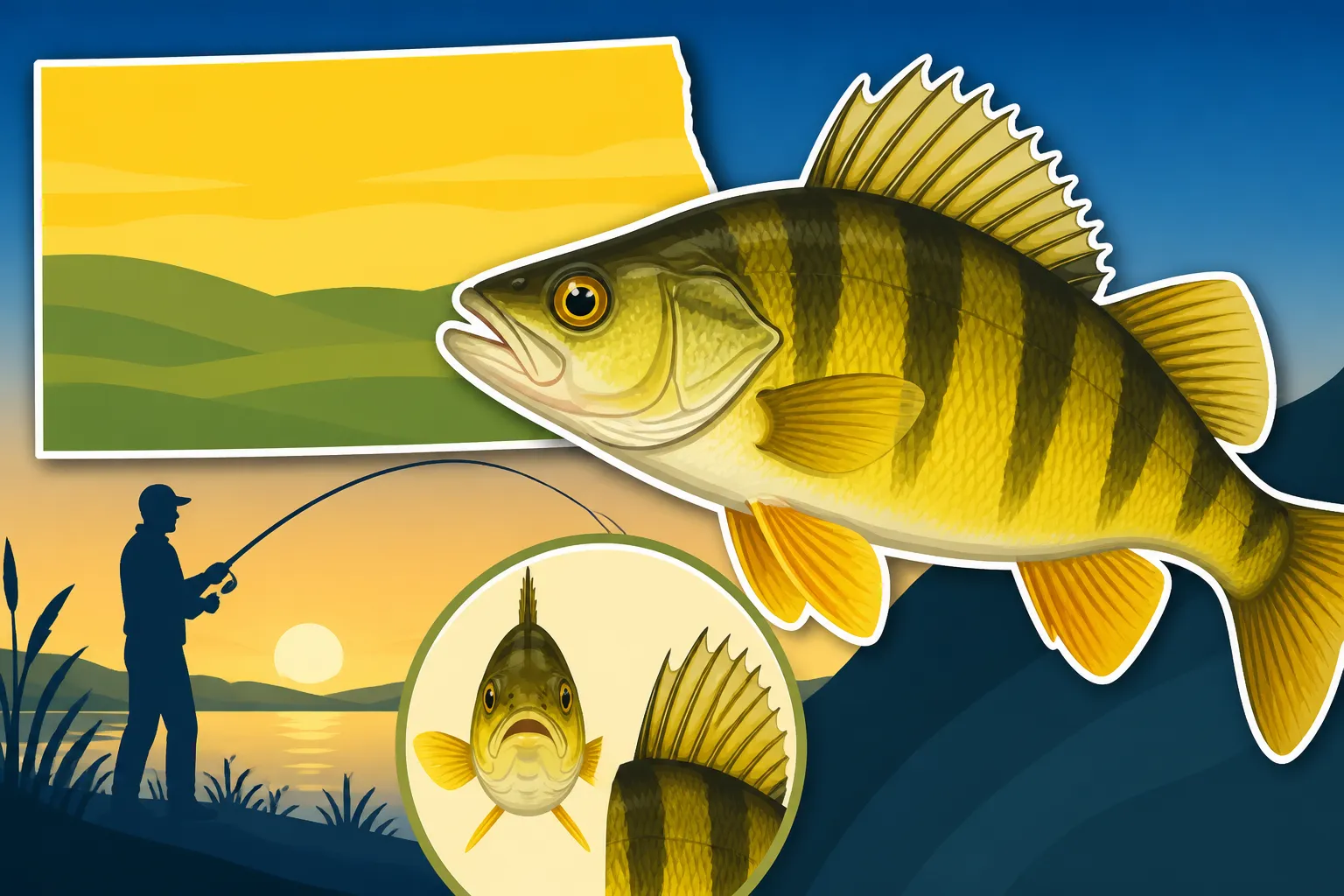
The most striking feature of a yellow perch is, well, its yellow coloration! Their bodies typically boast a vibrant golden-yellow to a brassy, olive-green hue, often fading to a pearly white on their belly. This distinct base color immediately gives them away. Overlaid on this background are six to eight prominent dark, vertical bars that extend from their back down towards their sides. These bars are usually quite clear and evenly spaced, almost like stripes painted on their body.
In terms of body shape, yellow perch are generally deep-bodied and somewhat compressed from side to side, giving them a slightly "humped" appearance, especially behind their head. While they're not as streamlined as a walleye or pike, they still have a respectable, torpedo-like profile compared to rounder panfish like bluegill. They rarely grow to immense sizes, with most catches falling into the panfish category, but even a decent-sized perch has a satisfying weight and girth.
Fin and Scale Details
Look closely at the fins, as they offer additional key identifiers. Yellow perch typically have two dorsal fins on their back. The first dorsal fin is spiny and usually quite prominent, standing upright with sharp rays. The second dorsal fin is soft-rayed and positioned slightly behind the first. This two-part dorsal fin structure is a common trait among the perch family. The pectoral, pelvic, and anal fins (those on the underside and sides of the fish) often display a striking orange or reddish color, which can be particularly vivid in males, especially during the spawning season. This splash of color is another tell-tale sign that you're holding a yellow perch.
Their bodies are covered in ctenoid scales, which feel rough to the touch if you run your finger from tail to head. If you gently open their mouth, you'll notice that yellow perch don't possess the large, intimidating canine teeth that a walleye does. Instead, they have smaller, sandpaper-like teeth that are more suited for grasping smaller prey. This lack of prominent canine teeth is a quick way to rule out a juvenile walleye or sauger, which we'll discuss more in the next section.
Habitat and Behavior Clues
While identification is primarily visual, understanding the typical habitat and behavior of yellow perch can also give you strong clues. These fish are gregarious creatures, meaning they almost always travel and feed in schools. If you catch one perch, chances are there are more in the immediate vicinity. They tend to prefer cooler, clear to moderately turbid waters, often found near structures like submerged weed beds, fallen timber, rock piles, or sudden drop-offs.
Their feeding activity is usually highest during crepuscular hours – early morning and late afternoon/evening – though they can be caught throughout the day, especially in low light or cloudy conditions. When you're fishing a spot known for perch and you start catching fish that exhibit these visual characteristics and schooling behavior, you've likely found yourself a school of yellow perch. Their consistent presence in diverse North Dakota waters, from the vast expanses of Lake Sakakawea to the marshy bays of Devils Lake, makes them a common and welcome sight for many anglers. If you're looking for Yellow Perch Habitat on Devils Lake, you'll often find them congregating in those productive areas.
Differentiating Yellow Perch from Look-Alikes
It's a common scenario: you pull up a fish, and it looks kind of like a perch, but something feels off. North Dakota waters are home to several species that can be mistaken for yellow perch, especially when they're young. Knowing the subtle differences can save you from misidentification, which is crucial for both accurate record-keeping and adhering to regulations.
Yellow Perch vs. Walleye/Sauger Juveniles
This is arguably the most common mix-up in North Dakota: telling a yellow perch from a young walleye or sauger. All three belong to the perch family, Percidae, so they share some similarities, but key distinctions exist. The biggest giveaways for walleye and sauger, even in their juvenile stages, are their mouths and teeth. Walleye and sauger have much larger mouths that extend back past the middle of the eye, and they possess prominent canine teeth that are immediately noticeable. Yellow perch, as mentioned, have smaller mouths and fine, sandpaper-like teeth.
Another critical differentiator is the dorsal fin. While yellow perch have two distinct dorsal fins, the walleye has a white tip on the lower lobe of its caudal (tail) fin, which is absent on a perch. Sauger, on the other hand, typically have distinct dark spots or blotches on both their spiny and soft dorsal fins, which yellow perch lack (their dorsal fins are usually clear or yellowish). The body shape also varies; walleye and sauger are generally more elongated and slender, lacking the pronounced "hump" behind the head that is characteristic of a yellow perch. Knowing these differences is vital, as North Dakota Walleye Size Limit Rules and daily limits are often different than for perch.
Yellow Perch vs. Other Panfish
Beyond walleye and sauger, other panfish species might cause a moment of confusion, though they are generally easier to distinguish from yellow perch.
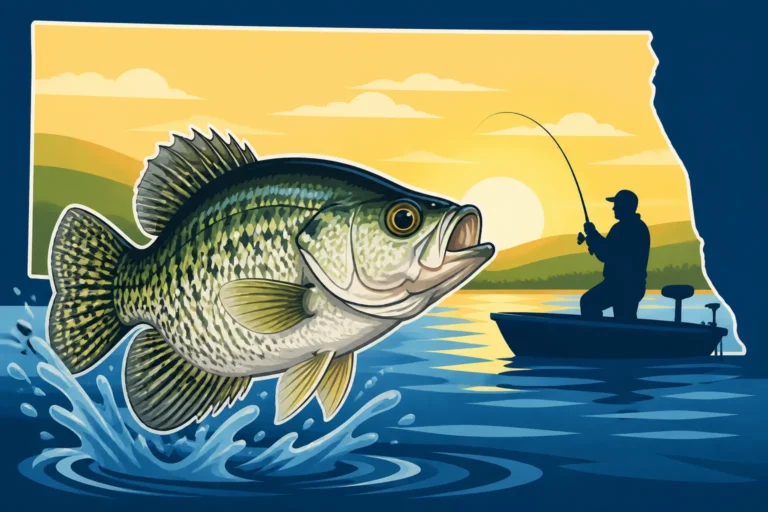
Crappie, both black and white, are a good example. While they are also panfish, crappie have deeply compressed, disc-shaped bodies that are much taller than they are wide, giving them a "dinner plate" profile. Their coloration is typically silvery-grey with dark mottling or vertical bars, but not the distinct golden-yellow base and bold, unbroken vertical stripes of a perch. Crappie also have completely different fin structures, with a single, long dorsal fin that runs almost continuously, rather than the two distinct dorsal fins of a perch.
Bluegill and other sunfish are another common panfish. These fish are usually much rounder and even more compressed than crappie, almost perfectly circular in profile. They often display darker, more iridescent colors, and a key identifier for bluegill is the small, dark "ear flap" on the gill cover. Their mouths are also very small, and their dorsal fins are joined. If you see a fish that's perfectly round with a small mouth and a distinct black spot on its gill plate, it's definitely not a yellow perch. Understanding these distinct features for each species will help you correctly identify your catch every time.
Here's a quick comparison table to help solidify those key identification points:
| Feature | Yellow Perch | Juvenile Walleye | Juvenile Sauger |
|---|---|---|---|
| Coloration | Golden-yellow to olive-green, white belly | Olive to brown, often mottled | Brown to gray, distinct blotches |
| Vertical Bars | 6-8 distinct, dark vertical bars | Fainter, more blotchy bars or saddles | Fainter, more blotchy bars or saddles |
| Body Shape | Deep-bodied, slightly humped back | More elongated, slender | More elongated, slender |
| Mouth/Teeth | Smaller mouth, sandpaper-like teeth | Large mouth, prominent canine teeth | Large mouth, prominent canine teeth |
| Dorsal Fins | Two separate, clear fins | Two separate fins, no distinct spots | Two separate fins, distinct dark spots |
| Tail Fin | No white tip | White tip on lower lobe of caudal fin | No white tip, often banded |
| Fins Color | Often reddish/orange on lower fins | Typically plain or mottled | Typically plain or mottled |
North Dakota's State Record Yellow Perch
Catching a yellow perch is always fun, but landing a true monster, one that might challenge the state record, is the dream of many anglers. North Dakota is known for producing some seriously impressive perch, especially from its legendary waters.
The Quest for a Trophy Perch
The pursuit of a trophy yellow perch is a passionate endeavor for many North Dakota anglers. While most perch you'll encounter are pan-sized, those rare giants are out there, lurking in the depths. The excitement isn't just about the size; it's about the challenge, the anticipation, and the knowledge that you've outsmarted a truly exceptional fish. For many, a monster perch represents the pinnacle of ice fishing success, though they can certainly be caught during open water seasons too.
Lakes like Devils Lake are almost synonymous with trophy perch fishing. Anglers from across the region flock to these waters specifically hoping to hook into a true behemoth. Stories circulate about massive perch pulled from certain areas, fueling the dreams of those willing to brave the cold or spend long hours on the water. It’s a testament to the health and richness of North Dakota's fisheries that such remarkable specimens continue to be caught. You can find more specific information on Yellow Perch Record Catch on Devils Lake if you're curious about past achievements.
Characteristics of a Record-Breaking Perch
What makes a yellow perch a "record-breaker"? It's not just about a little extra length. We're talking about fish that have lived long, found an abundance of food, and grown to exceptional proportions. These fish are usually much thicker, with considerable girth, indicating years of healthy feeding. They often have a darker, more intense coloration, and their fins might appear larger and more robust.
These exceptional fish are typically found in environments with plentiful forage and optimal conditions for growth, often deeper waters or specific structures where they can feed without as much competition. Landing one of these giants is often a combination of skill, persistence, and a little bit of luck. The sheer joy of holding such a magnificent creature, feeling its weight and seeing its impressive size, is a moment an angler never forgets. It’s a truly awe-inspiring catch that speaks to the incredible potential of North Dakota's waters.
Documenting Your Potential Record Catch
If you're fortunate enough to land a perch that you suspect might be state-record material, proper documentation is absolutely critical. It’s not enough to just catch it; you have to prove it! The first step is to keep the fish in the best possible condition, ideally on ice, as soon as it's landed. Time is of the essence.
Next, you'll need accurate measurements and high-quality photographs. Make sure to get clear photos from multiple angles, especially showing the fish's full length and girth. It's helpful to have a reliable measuring tape and a certified scale. Many anglers invest in quality digital scales and measuring tapes, often found on reputable sites like Amazon, to ensure accuracy in the field. When it comes to weights, you'll want to use a scale that has been certified as accurate by a state or local agency if you're serious about the record. Immediately contact the North Dakota Game and Fish Department (NDGFD) to report your catch. They will guide you through the official process, which usually involves verifying the species, weight, and sometimes even the location of the catch. Rushing this step or missing details could mean your record-breaking catch goes unrecognized, which would be a real shame after such an amazing achievement!
Why Identification Matters for Anglers
You might think, "What's the big deal if I mistake a perch for a small walleye?" The truth is, accurate fish identification goes beyond simply knowing what you caught. It's fundamental to responsible angling, conservation, and maximizing your enjoyment on the water.
Adhering to Regulations and Limits
This is perhaps the most critical reason for accurate identification. North Dakota, like every other state, has specific fishing regulations designed to protect its fisheries and ensure sustainable populations. These regulations, which you can read all about in the North Dakota Fishing Regulations Explained guide, often include different daily limits, possession limits, and sometimes even size restrictions for various species.
For example, while yellow perch often have generous daily limits, a walleye might have a much stricter limit, possibly with slot limits or minimum length requirements. If you misidentify a juvenile walleye as a perch and keep more than the walleye limit, you could inadvertently be breaking the law. This can lead to fines, confiscation of your catch, and even loss of your fishing privileges. No one wants to end a great day on the water with a penalty, so taking the time to correctly identify your catch is a simple yet vital step to avoid any legal troubles. This is also why understanding Yellow Perch and Panfish Daily Limits Explained is so important.
Contributing to Fishery Management
Beyond personal compliance, accurate fish identification plays a larger role in the health of North Dakota's fisheries. When anglers correctly identify and report their catches (even informally, through conversations or online fishing forums), they contribute valuable data that helps fishery biologists understand fish populations. This information, gathered over time, assists wildlife agencies in making informed decisions about stocking, harvest limits, and habitat management.
For instance, if biologists consistently see reports of misidentified walleye being harvested as perch, it could indicate a need for clearer educational materials or adjustments to regulations. Every accurate identification, every fish correctly logged, helps paint a more precise picture of what's thriving and what might need a little extra help in our lakes and rivers. This collective knowledge is essential for ensuring that future generations can enjoy the same incredible fishing opportunities we have today.
Enhancing Your Fishing Experience
Finally, knowing exactly what you've caught simply makes your fishing experience better! When you can confidently identify a yellow perch, you gain a deeper understanding of its behavior, preferred habitat, and how best to target it. This knowledge empowers you to refine your techniques, choose the right Best Bait for North Dakota Fishing, and increase your chances of success. Are you looking to improve your Perch Jigging Techniques for Devils Lake? Knowing you're after perch specifically allows you to tailor your approach.
It builds confidence and fosters a stronger connection to the natural world. Instead of just "a fish," you're holding a "beautiful yellow perch," appreciating its distinct features and role in the ecosystem. This also allows for proper handling and release if you choose to practice catch-and-release, ensuring the fish has the best chance of survival. Whether you're aiming for a personal best, hoping for a delicious meal, or simply enjoying the outdoors, accurate identification is a foundational skill that enriches every moment of your North Dakota fishing adventure. Don't forget that a valid North Dakota Fishing License Guide is your first step to any successful fishing trip.
Disclaimer
This article is for general informational purposes only and does not constitute professional advice. Laws, prices and regulations vary by location and change over time. Consult a qualified professional for guidance on your specific situation.