White Crappie vs Black Crappie in North Dakota
It's incredibly common for North Dakota anglers to reel in a beautiful crappie and then pause, scratching their head, wondering if it's a black crappie or a white crappie. These two popular panfish often get lumped together, but they have distinct differences in appearance, habitat preferences, and even how they behave in our waters. This comprehensive guide will help you understand those nuances, making you a more informed and successful crappie angler across North Dakota's diverse lakes and rivers.
The Crappie Craze in North Dakota: An Overview
Crappie fishing in North Dakota is more than just a pastime; it's a genuine passion for many, from seasoned veterans to families introducing their kids to the joys of angling. These panfish, known for their delicious fillets and feisty fights on light tackle, provide year-round opportunities, whether you're enjoying a crisp fall day on the lake or bundled up in an ice house during the depths of winter. The allure of crappie lies in their schooling behavior and the fast action they can provide when you find them, making for memorable outings.
Why Crappie Are So Popular
The appeal of crappie goes beyond just their table fare. They are accessible fish, often found in relatively shallow waters, especially during spawning periods, making them prime targets for both boat and shore anglers. For many, chasing crappie is a fantastic way to escape the daily grind and immerse themselves in nature. There's a certain thrill in deciphering their patterns, experimenting with different baits, and finally hitting that honey hole where the bites are constant. Plus, introducing new anglers, especially children, to fishing often starts with the excitement of reeling in one crappie after another, building confidence and a lifelong love for the sport. They're not always easy to locate, but when you do, it's a fishing frenzy.
General Crappie Behavior in North Dakota Waters
Both black and white crappie are schooling fish, meaning they tend to stick together in groups. This behavior is a double-edged sword: it can be frustrating if you're fishing an empty spot, but incredibly rewarding when you finally pinpoint a school. They are typically structure-oriented, meaning they'll relate to submerged timber, weed lines, brush piles, rock formations, and even man-made structures like dock pilings or bridge abutments. Their diet primarily consists of smaller fish, insect larvae, and zooplankton. Understanding these general behaviors is the first step in unlocking successful crappie fishing, regardless of the specific species you're targeting. Keep an eye on your fish finder for those tell-tale arches clustered around structure; that's usually where the crappie are hiding. Knowing these basics will set you up for success across many of North Dakota's fantastic crappie fisheries, like those on Devils Lake or Lake Sakakawea.
Black Crappie: The Speckled Beauty
Black crappie, often just called "specks" by anglers, are truly beautiful fish with their dark, mottled patterns. They're a favorite target for many in North Dakota, particularly in lakes with clearer water and abundant vegetation. Their reputation for spirited fights on light tackle is well-earned, making every hook-up an exciting experience.
Identifying Features of Black Crappie
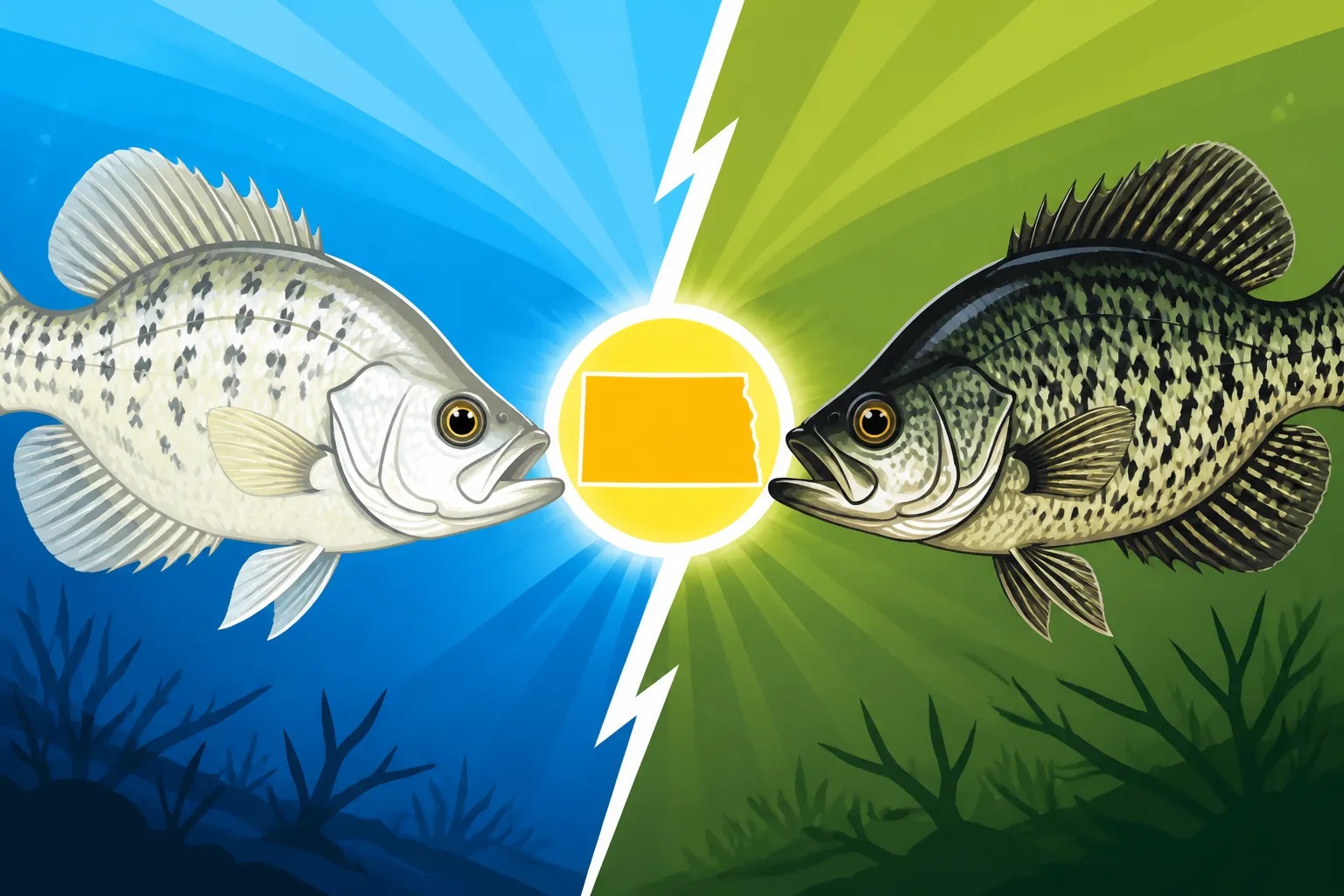
When you pull a black crappie from the water, the first thing you'll likely notice is its distinctive color pattern. They have an irregular scattering of dark spots or speckles over a silvery-gray or even olive-green body, giving them a dappled appearance. Unlike their white crappie cousins, these spots don't usually form distinct vertical bars. Another key identifier is the dorsal fin: black crappie typically have 7 or 8 dorsal fin spines, which is generally more than white crappie. Their body shape tends to be a bit more rounded or "discoid" compared to the white crappie's more elongated form. Checking the dorsal fin spines is often the most reliable way to tell them apart on the spot, especially when color patterns can vary slightly depending on water clarity and diet.
Imagine you've just landed a decent crappie from a clear, rocky lake like Lake Audubon. You admire its dark, almost marble-like pattern across its sides. If you count the hard, pointed rays on its dorsal fin and consistently find seven or eight, you've almost certainly got a black crappie. These extra spines give their dorsal fin a slightly larger, more robust appearance than that of a white crappie. Even though both species can vary in color, that spine count is your best friend for a definitive ID right there on the ice or in the boat.
Black Crappie Habitat and Behavior
Black crappie tend to prefer clearer, cooler water with more submerged vegetation and woody cover. You'll often find them lurking around brush piles, fallen trees, weed lines, and rock beds in lakes and reservoirs. They thrive in environments where there's plenty of natural cover to ambush their prey and hide from larger predators. During the spring spawn, they'll move into shallower areas, often nesting in firm bottom areas near protective cover. In the summer, they might retreat to deeper, cooler waters, suspending over structure or even in open water if there's an abundant baitfish school.
Consider fishing a North Dakota lake known for its clear water. You've located a submerged tree limb on your fish finder, perhaps one you scouted out on Google Maps before heading out, showing distinct arches around it. These are classic black crappie hangouts. They're not just hiding; they're actively using that cover as a hunting ground, darting out to grab a passing minnow or a jig. When you're Ice Fishing Techniques for Crappie, you might find them tight to thick weed edges or over deep brush piles, where they can suspend just above the structure, waiting for an easy meal to swim by. They're masters of ambush from cover, making these hidden spots incredibly productive.
White Crappie: The Barred Fighter
White crappie are another beloved species in North Dakota, particularly prevalent in murkier, warmer waters, and large river systems. While they might share a family name with their black-spotted cousins, they offer a slightly different angling experience, often found in different types of environments.
Identifying Features of White Crappie
The primary way to distinguish a white crappie from a black crappie is by its distinct pattern of vertical bars. Instead of scattered speckles, white crappie typically have 5 to 7 dark, often somewhat faded, vertical bands running down their silvery-white to yellowish sides. These bars can be more pronounced or fainter depending on the fish's mood, water conditions, and even its diet. Crucially, their dorsal fin typically has 5 or 6 spines, which is fewer than the black crappie. Their body is generally more elongated and slender compared to the black crappie's rounder profile. If you're struggling with the visual, that spine count is your ultimate tie-breaker. You can find more details on Black Crappie vs White Crappie Identification if you want to really drill down on the nuances.
Imagine you're on a large reservoir, perhaps a bay on Lake Sakakawea, and you pull in a crappie. It's a shiny, silvery fish, but you notice faint, distinct vertical stripes running down its sides. Upon closer inspection, you count the dorsal fin spines and find a consistent number of six. This combination of vertical bars and fewer dorsal fin spines points strongly to a white crappie. These distinct vertical bands serve as camouflage in the turbid waters they often inhabit, helping them blend in with the reeds or submerged timber that characterize their preferred habitat.
White Crappie Habitat and Behavior
White crappie generally prefer larger, more turbid (murky) bodies of water, including large reservoirs, slow-moving rivers, and oxbow lakes. They are more tolerant of warmer, less clear water compared to black crappie. You'll often find them in areas with less distinct vegetation, but still associating with some kind of cover, whether it's submerged timber, bridge pilings, rip-rap shorelines, or even open water areas near channels where schools of baitfish congregate. During the spawn, they'll also move shallow, often seeking out sandy or silty bottoms near cover, but they're not quite as tied to dense vegetation as black crappie might be.
Think about fishing the lower stretches of the Missouri River or some of the larger, less vegetated reservoirs in North Dakota. White crappie will often be found near deeper channels, along current breaks, or around man-made structures that offer some protection and attract baitfish. If you're out there with your boat's electronics, you might see schools of white crappie suspended just off a channel drop-off or hugging the pilings of a bridge, using the current break to conserve energy while waiting for an easy meal. They are often more pelagic, meaning they might suspend in open water more readily than black crappie if the baitfish are there, making them a challenge to locate but a blast to catch when you do.
Key Differences: How to Tell Them Apart
Distinguishing between white and black crappie can feel like a game of "spot the difference," but with a few key features in mind, you'll become a pro in no time. It's not just about bragging rights; knowing which species you're catching can inform your fishing strategy, as their preferred habitats and behaviors vary.
Visual Cues: Spots vs. Bars
This is often the quickest and most obvious indicator. Black crappie are characterized by their random, irregular black speckles or spots scattered across their body. Think of a starry night sky or a camouflage pattern. White crappie, on the other hand, typically display distinct vertical bars or stripes along their sides, usually 5 to 7 of them. These bars might be faint, but they are generally present and more organized than the black crappie's spots.
It's common for anglers to land a fish and immediately hold it up to the light, trying to discern the pattern. If you see a fish that looks like someone flicked a paintbrush at it, with tiny dots all over, you're looking at a black crappie. If it looks like it's wearing stripes, even subtle ones, then it's likely a white crappie. Remember, water conditions can sometimes influence the vibrancy of these patterns. A black crappie from very clear water might have more defined speckles, while one from stained water might be duller. Similarly for white crappie, the bars can be more pronounced in certain conditions.
Fin Spines and Body Shape
Beyond the color patterns, the most reliable biological distinction lies in the dorsal fin spines. Black crappie generally have 7 or 8 dorsal fin spines, giving their dorsal fin a longer base and a more pronounced, almost spiny appearance. White crappie, conversely, usually have 5 or 6 dorsal fin spines, making their dorsal fin look a little shorter and less spiky at the front. Counting these spines can be a bit tricky, but with a gentle touch, you can usually feel and count them accurately.
In terms of body shape, black crappie tend to be more "stubby" or rounded from top to bottom, with a deeper body profile, giving them a more circular outline. White crappie are often more elongated and slender, sometimes described as having a slightly "football" shape, particularly as they get larger. While this can be subjective, especially with smaller fish, it's another good piece of the puzzle. When you're comparing two fish side-by-side, these differences become much clearer.
Environmental Preferences
While not a direct physical feature of the fish itself, understanding their preferred environments can often give you a strong clue as to which species you're most likely to encounter. This is particularly useful in North Dakota, where we have a mix of clear, vegetated lakes and murkier, riverine systems.
| Feature | Black Crappie | White Crappie |
|---|---|---|
| Color Pattern | Irregular dark speckles/spots | 5-7 distinct vertical dark bars |
| Dorsal Fin Spines | 7 or 8 (more spines) | 5 or 6 (fewer spines) |
| Body Shape | More rounded, deeper body | More elongated, slender body |
| Preferred Water Clarity | Clearer water | More turbid/murky water |
| Preferred Habitat | Dense submerged vegetation, brush piles, rocks | Open water near channels, submerged timber, bridge pilings |
| Typical Behavior | More cover-oriented, ambush predator | Can be more pelagic, tolerant of current |
If you're fishing a relatively clear, shallow lake like those you might find in the Turtle Mountains, especially if it's got good weed beds and submerged timber, you're probably pulling in black crappie. Conversely, if you're on a big reservoir with stained water or fishing a slow-moving river channel with little visible vegetation, the odds are higher you're encountering white crappie. For more localized information, check out a resource like Where to Find Crappie in North Dakota Lakes. Of course, there are always exceptions, and you might find both species in certain transitional areas or larger bodies of water, but these preferences are strong indicators.
Fishing Techniques for Both Species
While there are distinct differences between black and white crappie, many of the core fishing techniques that work for one will often work for the other. The key is to adapt your approach based on the specific habitat and time of year, whether you're dangling a minnow or jigging plastics.
Lure and Bait Selection
Both species are suckers for small, subtle presentations. Live bait like small minnows, shiners, or even waxworms and maggots are incredibly effective, especially when fished under a bobber or on a lightweight jighead. Artificials, particularly small jigs (1/32 to 1/16 ounce is a common sweet spot), plastic tubes, grubs, or small curly-tail plastics, also produce fantastic results. Color can be crucial, with chartreuse, white, pink, and motor oil being perennial favorites. Don't be afraid to experiment, as crappie can be picky on any given day. You can find a good selection of specialized crappie jigs and soft plastics on Amazon, making it easy to stock up before your next trip.
When targeting black crappie in clear water and dense cover, a slower, more methodical presentation often works best. Think about vertical jigging a tiny plastic grub into a brush pile, or slowly retrieving a minnow suspended under a slip bobber along a weed line. For white crappie in murkier water or open areas, a slightly more aggressive retrieve might be needed to draw attention, or sometimes, just a simple jig and minnow combo pitched near structure can be deadly. Many anglers swear by a "one-two punch" of a jigging rod and a deadstick rod when Ice Fishing Techniques for Crappie, one actively jigging and the other holding a minnow perfectly still.
Seasonal Strategies
Crappie fishing in North Dakota is a year-round affair, with each season offering unique opportunities.
- Spring: As the ice melts and water temperatures rise, crappie move shallow for their spawn. This is prime time for catching them near shore in bays, coves, and backwaters. Look for them around emerging weeds, submerged wood, and even under docks. A small jig with a soft plastic or a minnow under a bobber fished in 2-6 feet of water can be incredibly productive. For specific advice on early season crappie, check out How to Find Crappie in Spring.
- Summer: After the spawn, crappie often move to deeper, cooler water. They'll typically relate to offshore structures like humps, points, bridge pilings, or deep weed lines. Trolling small crankbaits or spider-rigging (slowly drifting multiple lines with jigs and minnows) are effective ways to cover water and find suspended schools. Don't overlook low-light periods, as crappie can be very active at dawn, dusk, and even at night, especially white crappie.
- Fall: As water temperatures drop, crappie begin to school up tightly and feed aggressively in preparation for winter. They'll often be found near deeper structure, sometimes suspending in open water over baitfish schools. This can be one of the best times to find large concentrations of fish, making for excellent limits. Your fish finder is your best friend during this time, helping you locate those tight schools.
- Winter (Ice Fishing): Ice fishing for crappie is immensely popular in North Dakota. They are often found in deep basins, suspended over structure, or along deep weed edges. Small jigs tipped with a grub or a minnow, fished with sensitive ice rods, are the ticket. Electronics like flashers are invaluable for identifying depths and seeing how fish react to your presentation.
For any season, knowing a lake's general fish patterns, and keeping an eye on local fishing reports can really dial you into the bite. Many anglers turn to Amazon for specialized ice fishing gear, from tiny jigs to portable heaters, to make those cold days more comfortable and successful.
Conservation and Management
As North Dakota anglers, we share a responsibility to protect our precious natural resources, including our crappie populations. Understanding the regulations and practicing good conservation habits ensures that future generations can enjoy the thrill of catching these fantastic panfish just as much as we do today.
North Dakota Crappie Regulations
The North Dakota Game and Fish Department (NDGFD) sets specific regulations to manage crappie populations, including daily limits and possession limits. These regulations are designed to prevent overfishing and maintain healthy, sustainable populations across the state's diverse waters. While crappie generally have quite liberal limits compared to some other species, it's absolutely crucial to familiarize yourself with the current fishing proclamation before heading out. Regulations can change, and what applies to one lake might not apply to another. Always check the official North Dakota fishing regulations for the most up-to-date information. Ignoring these rules can lead to significant penalties, including fines and license revocation, which no one wants.
For instance, while crappie are often targeted for their numbers, there's always the dream of a trophy. You might wonder about the North Dakota Crappie State Record, and knowing those details adds to the thrill, but always within legal limits. NDGFD biologists continually monitor crappie populations through surveys and studies, using this data to make informed decisions about bag limits and other management strategies. Your adherence to these rules directly contributes to the long-term health of the crappie fishery for everyone.
Practicing Catch and Release for Larger Fish
While crappie are excellent eating fish, practicing selective harvest and catch-and-release, especially for the larger "slab" crappie, can significantly benefit the fishery. Larger crappie are often the prime spawners, contributing the most to the next generation. By releasing a few of those bigger fish, you help ensure strong year classes and genetic diversity.
This doesn't mean you can't keep a mess of crappie for a delicious fish fry! It simply encourages thoughtful decision-making. Perhaps you keep a limit of smaller to medium-sized fish (what many call "eaters") and gently release any particularly large or unusually colored specimens. Learning proper fish handling techniques – like minimizing air exposure, handling fish with wet hands, and using de-hookers – can greatly increase the survival rate of released fish. This approach, widely adopted by many ethical anglers, helps maintain a robust crappie population that can sustain both recreational fishing and the natural ecosystem. The goal is to balance the joy of harvesting with the responsibility of stewardship.
Disclaimer
This article is for general informational purposes only and does not constitute professional advice. Laws, prices and regulations vary by location and change over time. Consult a qualified professional for guidance on your specific situation.