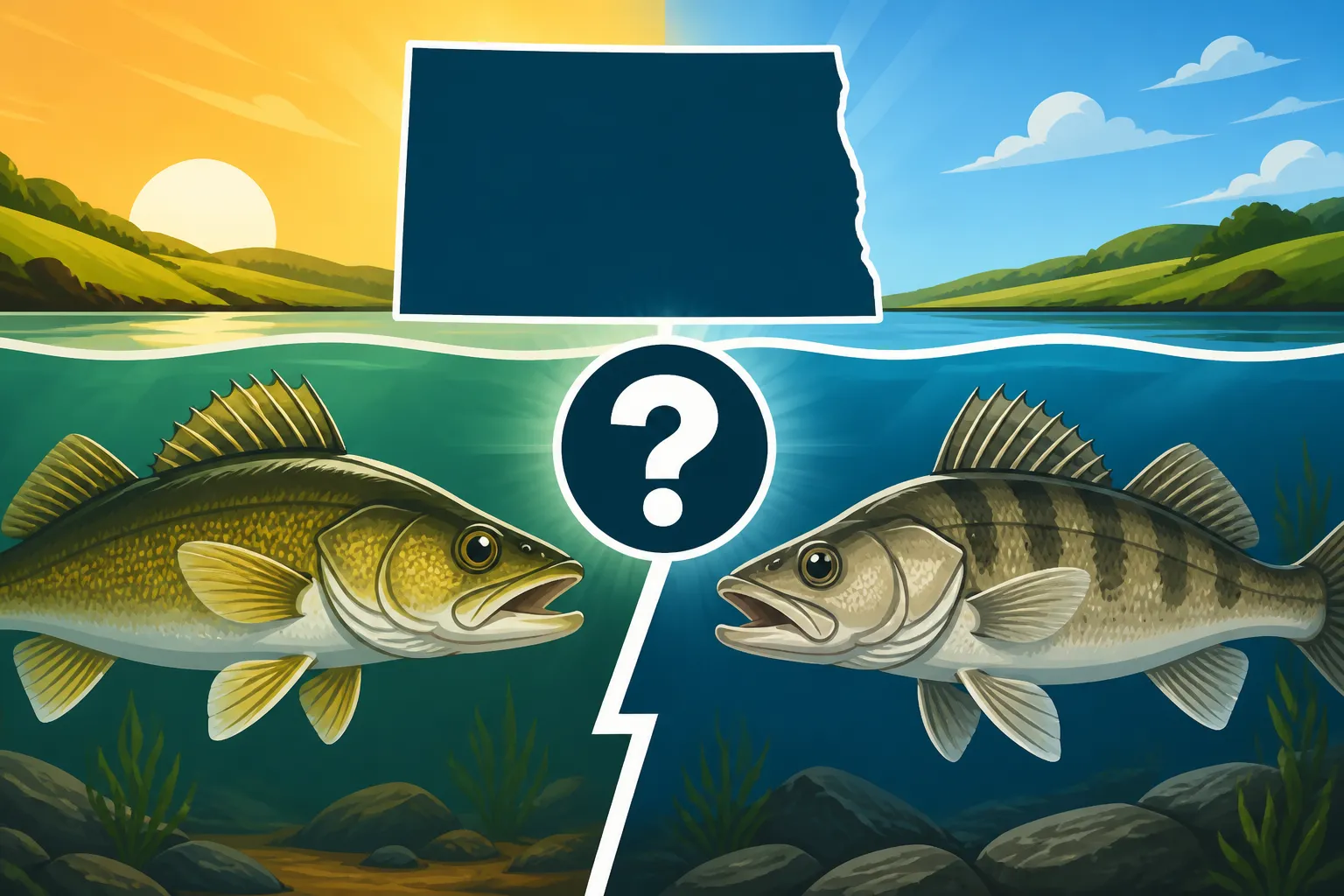
Can You Keep Sauger and Walleye Together in North Dakota?
There's often a bit of a head-scratcher moment for anglers out on the beautiful waters of North Dakota: "Is this a walleye or a sauger?" And perhaps even more importantly, "Can I keep both of them together?" It's a common and totally understandable confusion, given their similarities and the often murky waters where they reside. This guide is here to untangle those questions, help you confidently identify your catch, and navigate the North Dakota fishing regulations so you can enjoy your time on the water without any unnecessary worries.
Understanding the Species: Walleye vs. Sauger
Before we dive into the regulations, let's get down to basics. Walleye and sauger are cousins, both belonging to the Sander genus, which is why they share so many characteristics. But once you know what to look for, distinguishing between them becomes a lot easier, and trust me, it’s a skill worth having when you’re out on Lake Sakakawea or the Missouri River.
Key Distinguishing Features
The quickest way to tell a walleye from a sauger is to look at a few specific details. It's not about guessing; it's about checking the tell-tale signs!
First, check the dorsal fin – that's the spiny fin on top of their back, closest to the head. A sauger will almost always have distinct, dark spots scattered across the spiny dorsal fin. Think of it like a Dalmatian pattern. Walleye, on the other hand, typically have a much more uniform, often clear or somewhat mottled spiny dorsal fin, but critically, they lack those defined spots. This is usually the most reliable differentiator.
Next, glance at their tail fin. A walleye will have a distinct white tip on the lower lobe of its tail fin. It's a pretty clear, bright white band. Sauger? They don't have that white tip. Their tail fin will be mottled or brownish, but no clean white edge.
Finally, consider their overall body appearance and coloration. Walleye tend to be more golden or olive-green with brassy, wavy markings, and they generally have a sleeker, more torpedo-like body shape. Sauger often have a more mottled, darker brown or bronze body color, with distinct dark blotches or saddle-like markings along their sides. They also tend to have a rougher skin texture compared to the walleye's smoother scales. Their overall shape might appear a bit more robust or chunky, especially in larger specimens. If you find yourself frequently wondering, you might consider picking up a waterproof fish identification card or book, many of which are available on Amazon, to keep handy in your tackle box.
Habitat and Behavior Differences
While both species are often found in similar North Dakota waters, they do have some preferred hangouts. Understanding these preferences can give you a clue about what you've hooked before you even see it.
Walleye generally prefer clearer, cooler waters with rocky bottoms or gravel. They're often found in slightly shallower areas, especially during low light conditions or at night when they feed. Think of the main lake basins of Lake Sakakawea or the expansive flats of Devils Lake. They are highly sought after by anglers, and there's a good reason why many guides focus on North Dakota Walleye Fishing Techniques.
Sauger, in contrast, tend to thrive in murkier, more turbid waters, often with a stronger current. They prefer deeper pools, eddies, and areas with rock or rip-rap that provide cover from the flow. The Missouri River below the Garrison Dam, or certain sections of Lake Oahe with significant current, are classic sauger spots. Their eyes are incredibly well-adapted for low-light conditions and turbid water, giving them an advantage in these environments. While you might catch both in the same general area, like a river bend that opens into a large lake, knowing their typical preferences can help you target one over the other if you wish. You'll find many resources on Amazon for specialized sauger lures and presentations that cater to these conditions.
North Dakota's Fishing Regulations on Walleye and Sauger
Now for the big question: can you keep them together? The short answer for North Dakota is generally "yes," but there's a critical nuance you need to understand: the combined daily and possession limits. This is where many anglers get tripped up, and it's essential to get it right to stay on the right side of the law.
Combined Daily and Possession Limits
The North Dakota Game and Fish Department (NDGFD) typically regulates walleye and sauger under a combined daily creel limit and a combined possession limit. What does this mean in practical terms? It means that regardless of whether you catch a walleye or a sauger, it counts toward the same overall limit for that particular species group.
For example, if the regulation states a "combined daily limit of 5 walleye/sauger" (note: this is a hypothetical example, always check the current proclamation for actual numbers!), you could keep:
- 5 walleye and 0 sauger
- 0 walleye and 5 sauger
- 3 walleye and 2 sauger
- Any other combination that totals no more than 5 fish.
You cannot, however, keep 5 walleye and 5 sauger, because that would exceed the combined limit. The possession limit, which refers to the maximum number of fish you can have in your possession at any given time (including at home, in your vehicle, or at a cabin), is usually twice the daily limit. So, if the daily limit is 5 combined, the possession limit would typically be 10 combined. This combined limit simplifies things for anglers and for enforcement, recognizing the visual similarities and overlapping habitats of these two popular game fish. To truly understand all the rules, it's always best to consult the North Dakota Fishing Regulations Explained guide.
Why the Distinction Matters Even with Combined Limits
Even though North Dakota groups walleye and sauger together for creel limits, the distinction between the two species still matters.
First, knowing what you've caught helps contribute to better fisheries management. When the NDGFD conducts surveys or when anglers report their catches, accurate species identification helps them track populations, understand reproductive success, and identify potential issues for each species individually. This data is crucial for setting future regulations and ensuring sustainable fishing for everyone.
Second, while the general statewide rule might be a combined limit, there can be specific water bodies where special regulations apply. Sometimes, a particular lake or river segment might have a length limit specific to walleye, or perhaps a different combined limit altogether due to unique population dynamics. For instance, regulations on the Missouri River Fishing Below Garrison Dam in North Dakota might have nuances worth noting. By knowing how to identify both species, you're better prepared to interpret and follow any localized regulations that might differ from the broader state rules. Always double-check the current North Dakota Fishing Proclamation for the specific waters you plan to fish, as regulations can vary and change.
| Feature | Walleye | Sauger |
|---|---|---|
| Spiny Dorsal Fin | No distinct spots; usually clear/mottled | Distinct dark spots in rows |
| Tail Fin | Distinct white tip on lower lobe | No white tip; mottled/dark |
| Body Coloration | Golden, olive-green, brassy; wavy markings | Darker brown, bronze; distinct dark blotches/saddles |
| Body Shape | Generally sleeker, more torpedo-like | Often more robust/chunky, rougher texture |
| Cheek Scales | Fully scaled cheeks | Partially scaled cheeks (often rougher) |
| Eyes | Large, prominent, reflective (walleye = "glass eye") | Large, reflective, similar to walleye |
| Typical Habitat | Clearer, cooler water; rocky bottoms; shallower at times | Murkier, turbid water; deeper current areas; eddies |
Practical Tips for Anglers: Avoiding Confusion on the Water
Even seasoned anglers can have a moment of doubt when trying to distinguish between a walleye and a sauger, especially in poor light or when the fish are jumping around. But with a few practical tips, you can become a pro at telling them apart in no time.
Visual Cues for Quick Identification
The key is to train your eye on those consistent differences. When you reel in a fish, before you even think about putting it in the livewell, take a moment to look.
- Dorsal Fin First: Seriously, this is your number one go-to. Hold the fish gently, spread that spiny dorsal fin, and look for those distinct rows of black spots. If they're there, it's a sauger. If it's more uniformly clear or just generally mottled without clear spots, it's a walleye.
- Check the Tail: Next, quickly check the lower lobe of the tail fin. Is there a crisp white tip? Walleye. No white tip? Sauger.
- Body Patterns: While less definitive due to individual variations, the overall body pattern can be a secondary confirmation. Walleye often have more subtle, tiger-like stripes, while sauger frequently sport prominent, dark, almost leopard-like blotches.
It’s a good idea to practice identifying these features. If you're fishing with someone, make a game out of it. "Walleye or sauger?" can become a fun way to hone your skills. There are many excellent fish identification posters and apps available, and even small, waterproof guides that can be purchased from retailers like Amazon, perfect for a quick reference while you’re fishing.
Best Practices for Handling and Counting Your Catch
Beyond identification, proper catch management is crucial. You want to make sure you're always within your combined daily and possession limits.
- Identify Immediately: As soon as you land a fish and decide to keep it, identify it. Don't just toss it in the livewell thinking you'll figure it out later. This prevents accidental over-limits and ensures you're correctly counting towards your combined total.
- Keep a Running Tally: Especially if you're having a banner day, keep a mental or even a written tally of how many walleye and sauger you've kept. It's easy to lose track when the action is hot. For example, if the combined limit is five, and you've already kept three walleye, you know you only have two spots left for either species.
- Respect the Limits: If you've reached your combined daily limit for walleye and sauger, it's time to switch tactics, target a different species, or practice catch and release for any additional walleye or sauger you hook. Remember, the possession limit also applies; don't stack up fish over several days that exceed this total. Many anglers find quality coolers, readily available on Amazon, essential for properly storing their catch, especially if they're out for multiple days. For more on managing your catch, you might find Best Coolers and Storage for North Dakota Anglers helpful.
Conservation and Sustainable Fishing in North Dakota
Fishing in North Dakota is more than just catching fish; it's about being a steward of these incredible natural resources. Every angler plays a role in ensuring that future generations can enjoy the same opportunities we do.
The Importance of Knowing Your Catch
Accurate identification of walleye and sauger is a small but significant part of this larger conservation picture. When anglers correctly identify their catch, whether kept or released, it contributes to better data for the NDGFD. This data helps biologists understand population trends, monitor health, and make informed decisions about stocking programs, habitat improvements, and, critically, future regulations. If anglers consistently misidentify species, the data becomes less reliable, potentially leading to less effective management strategies.
Think of it as citizen science. Your accurate reporting, even just in your own mind when you respect the limits, contributes to the overall health of the fishery. Understanding the subtle differences between these species is a testament to an angler's commitment to the sport and its future. For further reading on this, check out Fish Species Found in North Dakota Lakes and Rivers.
Beyond the Limits: Practicing Catch and Release
Even when you're well within your combined walleye/sauger limits, practicing responsible catch and release is a cornerstone of sustainable fishing.
- When to Release: Consider releasing fish that are undersized (if a length limit applies), or simply fish you don't need for the dinner table. If you've already got enough for a meal, letting a few go ensures there are more for others and for future breeding. For trophy-sized fish, consider a quick photo and release, allowing that genetic potential to stay in the water.
- Proper Techniques: Always handle fish gently with wet hands to protect their slime coat. Minimize their time out of the water, especially in warm weather. Use appropriate tools, like needle-nose pliers or a hook remover (many great options are available on Amazon), to quickly remove hooks. If a fish is deeply hooked, sometimes cutting the line as close to the hook as possible is better than trying to wrench it out, which can cause fatal internal damage. Releasing fish properly increases their chances of survival and contributes to a robust fishery for years to come. Understanding North Dakota Walleye Size Limit Rules and other specific species limits will guide your release decisions.
Disclaimer
This article is for general informational purposes only and does not constitute professional advice. Laws, prices and regulations vary by location and change over time. Consult a qualified professional for guidance on your specific situation.