North Dakota Sauger State Record
It's incredibly exciting to think about North Dakota's sauger fishery, especially when you start dreaming about that elusive state record. Many anglers feel the unique pull of chasing a trophy sauger, but often get confused about what actually constitutes a sauger versus a walleye, or how to even go about getting a potential record certified. This guide will walk you through everything you need to know about the North Dakota sauger state record, how to identify these fantastic fish, where to find them, and the steps you'd take if you ever caught a true giant.
The North Dakota Sauger State Record: What it Means to Anglers
For many of us who love to fish in North Dakota, the state record book is almost like a legendary tale, full of epic catches and the names of anglers who achieved something truly special. The North Dakota sauger state record represents the biggest sauger ever officially caught and recognized in our state's waters. It's not just about the weight; it's a testament to the health of our fisheries and the skill and dedication of the angler who landed it. While I can't give you the exact current weight and date, because those details are always changing and need to be verified with the official sources, what matters is understanding that this record is a benchmark. It’s what every serious sauger angler hopes to one day surpass.
Chasing a state record isn't just about luck; it often involves years of experience, meticulous planning, and a deep understanding of the species you're targeting. Anglers who consistently catch large fish often spend countless hours studying fishing reports, water conditions, and fish behavior. They invest in quality gear, like precise digital scales found on platforms like Amazon, and accurate measuring tapes to ensure any potential record is properly documented from the moment it's caught.
The pursuit of a state record also contributes to our collective knowledge about the fish species themselves. When a new record is established, it often brings attention to particular fishing spots, effective techniques, and even changes in fish populations. It encourages others to get out there, learn more, and push their own limits, strengthening the overall fishing community in North Dakota.
Understanding Sauger: More Than Just a Smaller Walleye
One of the biggest hurdles many anglers face when thinking about sauger, especially a potential record-breaker, is telling them apart from their more famous cousin, the walleye. While they are both members of the perch family and share many similarities, sauger are distinct fish with their own unique characteristics and habitats. They tend to be smaller on average than walleye, but don't let that fool you—they pack a feisty punch and are incredibly fun to catch.
Sauger are often found in turbid, flowing waters, much preferring rivers and large reservoirs with current rather than stagnant lakes. This preference for current is a key difference from walleye, which can thrive in a wider variety of environments. They also tend to hang deeper in the water column and are more light-sensitive, which means they might be more active during cloudy days or in deeper, darker conditions. Knowing these behavioral patterns can be crucial when you're specifically targeting sauger.
Their diet is similar to walleye, consisting mostly of small fish, crayfish, and insects. However, their physical adaptations, which we'll delve into next, make them particularly adept at hunting in those murky, moving waters they call home. When you understand the subtle differences, you start to appreciate sauger not as just a "walleye-lite," but as a magnificent game fish in their own right. If you want to dive deeper into distinguishing these two, check out our guide on Difference Between Walleye and Sauger.
Distinctive Physical Features
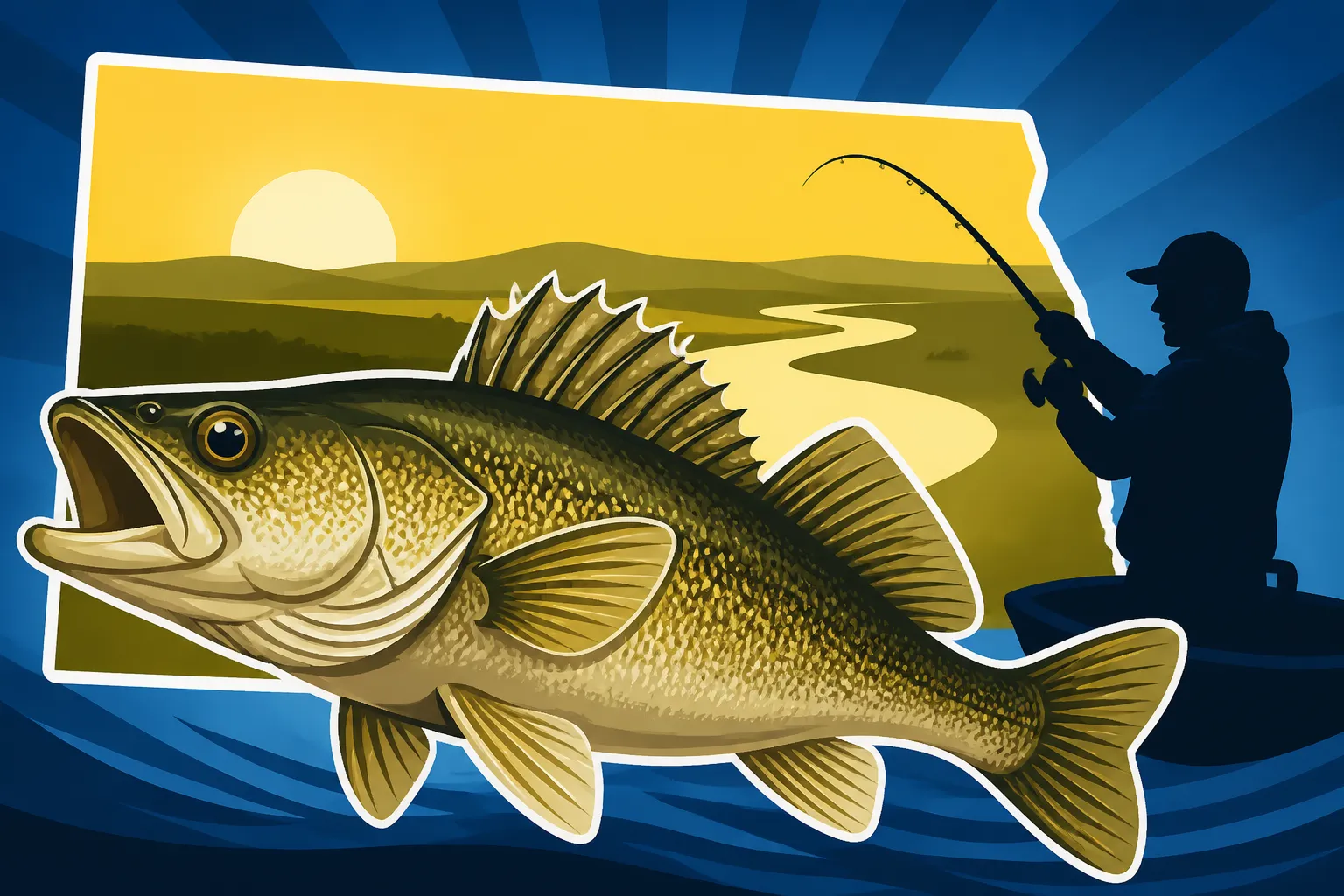
The key to identifying a sauger lies in a few distinctive physical features that set them apart from walleye. Pay close attention to these details, especially if you think you've caught a potential record. The first thing you’ll notice are the prominent dark spots on their dorsal fin. Unlike the walleye, which typically has one large, dark spot at the base of its first dorsal fin and then clear or subtly barred fins, the sauger's dorsal fins are distinctly spotted and often marbled or barred with darker pigmentation. This is perhaps the easiest way to tell them apart quickly.
Another important characteristic is their scales. Sauger typically have scales on their cheek and operculum (gill cover), whereas walleye usually have smooth, scaleless cheeks. You might need to feel this difference, but it's a reliable indicator. Furthermore, the sauger's body tends to be more slender and cylindrical, often with a slightly more pointed snout compared to the walleye's more robust and sometimes higher-backed profile.
Finally, look at the tail fin. While both have slightly forked tails, the walleye often has a distinct white tip on the lower lobe of its caudal (tail) fin, which is almost always absent in sauger. These details become second nature once you’ve seen a few of each, but for a critical measurement like a state record, it's vital to be absolutely certain. If you're really serious about identification, consider a good field guide or even a waterproof fish ID card you can take with you, many of which are available on Amazon.
Sauger Habitat and Behavior
Sauger are creatures of current and turbidity. They absolutely love water that is constantly moving, whether it's a bustling river system or a large reservoir with significant flow-through. This is why you'll often find them concentrated around dams, river bends, deep scour holes, and submerged structures where the current breaks or creates eddies. They use these spots as ambush points, letting the current bring food to them while they conserve energy. You can learn more about their preferred haunts in Sauger Habitat Below Garrison Dam.
Unlike walleye, which can be found in clear lakes, sauger thrive in cloudier, murkier water. Their large, sensitive eyes are well-adapted to low-light conditions, giving them an advantage when hunting in stained water or deeper sections. This means that while walleye might be more active at dawn and dusk, sauger can often be caught throughout the day in their preferred turbid environments, as long as they are at the right depth. They are also known to school up, especially in winter, making them a prime target for ice anglers once you find the congregation.
Understanding this behavior is key to successfully targeting sauger. You won't typically find them hugging shallow weed beds in clear water. Instead, focus your efforts on breaks, humps, and current seams in larger, often deeper, riverine environments. This makes them a fantastic challenge for anglers who enjoy dissecting a body of water and figuring out the fish's patterns.
Where North Dakota's Record Sauger are Caught
When it comes to landing a trophy sauger in North Dakota, certain bodies of water consistently produce larger specimens. These are typically the sprawling river systems and large reservoirs that mimic a riverine environment, offering the current, depth, and forage that sauger thrive on. Think big water, big current, and plenty of baitfish.
The Missouri River system, particularly the sections below the Garrison Dam and extending into Lake Oahe, is hands down the premier destination for sauger in North Dakota. The constant flow from the dam, coupled with rich forage and varied bottom structure, creates ideal conditions. Anglers frequently pull out impressive sauger from these waters, sometimes even inadvertently catching them while targeting walleye. It's a vast system, so knowing specific access points and river characteristics is crucial. You can find more targeted information in our Missouri River Fishing Below Garrison Dam in North Dakota guide.
While the Missouri River is the undisputed champion for sauger, other large reservoirs that feed into or are part of the Missouri system can also hold impressive fish. These areas provide the expansive habitat and nutrient flow necessary for sauger to grow to trophy sizes. It's all about finding those specific current breaks, deep channels, and rocky points where these fish can ambush their prey and feel secure.
Key Sauger Hotspots
Within these larger systems, certain "hotspots" have a reputation for producing big sauger. These are often areas with pronounced underwater features that create ideal feeding and resting zones. Below the Garrison Dam on the Missouri River, for instance, the tailrace area is a perennial favorite. The churning water provides a highly oxygenated, food-rich environment that sauger absolutely stack into. Anglers use heavy jigs, three-way rigs, and crankbaits to probe the depths here, often finding success even when the bite is slow elsewhere.
Further downstream, moving into Lake Oahe, the old river channel and deep bends become prime targets. Sauger will relate to these channel edges, especially where there are sharp drops, submerged humps, or even standing timber that provides cover. Winter fishing on these large reservoirs can be particularly productive as sauger school up in deep holes and on structural elements. Being able to read your sonar and understand contours is paramount to finding these schools.
It’s important to remember that conditions change with water levels, current, and season. What’s a hot spot one month might be less productive the next. Staying adaptable, paying attention to local reports (if you can get them), and even studying historical maps of the riverbed can give you a significant advantage in locating these elusive, record-breaking sauger. For more general information about fish species in North Dakota, refer to our Fish Species Found in North Dakota Lakes and Rivers article.
Optimal Conditions for Targeting Trophy Sauger
Catching a trophy sauger, let alone a state record, often comes down to timing and understanding the optimal conditions. As highly light-sensitive fish, sauger tend to be more active and less wary during periods of low light or increased water turbidity. This means cloudy days, or even periods of light rain that stir up the water, can be excellent times to target them. Many experienced sauger anglers also find success fishing deeper during sunny conditions, where the fish can escape the intense light.
Current is another massive factor. Sauger relate very strongly to current, so identifying current seams, eddies behind submerged structures, and areas where the current slows but is still present are crucial. High flows can sometimes scatter fish or make it difficult to present baits effectively, while too little current can make them lethargic. Finding that "just right" current flow is often the key to a productive day.
Seasonally, sauger fishing can be excellent year-round in North Dakota. During spring and fall, they are often more concentrated as they move to and from spawning grounds or aggressively feed before winter. Winter ice fishing for sauger can be phenomenal, as they school tightly in deep holes. Even summer can produce great fish, especially if you focus on deeper, cooler water with good current. Adapt your techniques and locations to match the prevailing conditions, and you’ll dramatically increase your odds of a memorable catch. Our North Dakota Sauger Fishing Guide has more in-depth techniques.
Chasing Your Own Sauger Record: Tips and Techniques
If you're seriously considering chasing a North Dakota sauger state record, you're not just going fishing; you're embarking on a focused quest. This requires a specific approach, from the gear you use to the techniques you employ. It's about precision, patience, and persistence, all aimed at enticing that one truly enormous fish.
First and foremost, you need to arm yourself with the right knowledge. Understand the life cycle of sauger, their feeding habits, and their seasonal movements. This foundational understanding will inform every decision you make on the water. Research specific areas known for large sauger, not just numbers of fish. Sometimes the biggest fish are solitary or inhabit slightly different zones than the average-sized fish.
Your equipment also plays a critical role. You'll want a rod and reel combo that offers a good balance of sensitivity for detecting subtle bites in current and backbone for handling a powerful fish. High-quality braided line, which offers superior sensitivity and strength, is a popular choice among serious anglers. And, of course, a reliable boat with a good fish finder and GPS unit is invaluable for navigating large river systems and pinpointing those crucial underwater structures.
Essential Gear for Trophy Sauger
When you’re specifically targeting trophy sauger, your gear choices become paramount. You need reliability and effectiveness. For rods, a medium-heavy power spinning or baitcasting rod, around 6'6" to 7'6" in length, with a fast action tip, is ideal. This combination gives you the sensitivity to feel light bites and the power to set the hook and fight a heavy fish in current. Match it with a quality reel, size 2500-3000 for spinning or a low-profile baitcaster, spooled with 10-20 lb braided line for minimal stretch and maximum feel. You can often find great deals on these types of specialized fishing gear on Amazon.
Lures and baits will vary, but some standbys are hard to beat. Heavy jigs (1/2 oz to 1 oz or more, depending on current) tipped with live minnows or plastic paddle tails are incredibly effective for probing deep holes and current breaks. Three-way rigs with a bell sinker and a short leader to a minnow or piece of cut bait can also be deadly when fished vertically in strong current. For trolling, deep-diving crankbaits that can reach the depths where sauger reside are essential. Think about colors that stand out in turbid water, like chartreuse, orange, or firetiger.
Don't forget the ancillary gear: a large, sturdy landing net with a deep basket is crucial for safely landing a big fish. A camera for photos, and most importantly, a certified scale and measuring tape for official documentation, should always be on board. You'll also need to be mindful of North Dakota's fishing regulations, which are detailed in our North Dakota Fishing Regulations Explained guide.
Effective Sauger Fishing Techniques
Targeting sauger requires specific techniques that account for their habitat and behavior. One of the most common and effective methods is vertical jigging. Whether from a boat or through the ice, presenting a jig directly below you allows for precise depth control, which is vital when sauger are hugging the bottom in specific current lanes. Use a snap-jigging motion, lifting and dropping your bait to mimic a wounded baitfish, and always be prepared for the strike on the fall. For more on specific techniques, check out How to Fish for Sauger Below Garrison Dam.
Trolling with crankbaits is another highly productive technique, especially on larger reservoirs like Lake Oahe. Use a bottom-bouncer or lead-core line to get your crankbaits down to the desired depth, often in the 20-40 foot range or deeper. Pay close attention to your fish finder to identify schools of baitfish or sauger relating to structure. Vary your speed and lure color until you find what triggers the bites. Trolling allows you to cover a lot of water and find active fish.
For river fishing, anchoring strategically on current breaks or drifting through productive stretches can yield excellent results. When drifting, use a three-way rig or a heavy jig to maintain bottom contact, letting your bait tumble naturally with the current. Remember, patience is key, as sauger bites can sometimes be subtle, feeling like a slight tap or just added weight on your line. Setting the hook immediately is crucial!
The Process of Certifying a State Record Fish
So, you've done it. You've battled, landed, and measured a true behemoth of a sauger, and you think it might just be the new North Dakota state record. That initial rush of adrenaline is incredible, but now comes the equally important, and sometimes stressful, process of getting it officially certified. This isn't just about showing off your catch; it's about adhering to a strict protocol set by the North Dakota Game and Fish Department to ensure the integrity of all state records.
The first and most critical step is to keep the fish alive, if possible, or at least in prime condition. While some records are caught and immediately kept, for a potential record, keeping it alive for official verification is often preferred, allowing for a live release if it doesn't quite make the cut or if you prefer to release it after documentation. If you must keep it, ensure it's kept on ice to prevent weight loss and deterioration.
Next, you need to locate an official weigh station or a Game and Fish Department employee as quickly as possible. This is not something you can do at home. The fish must be weighed on a certified scale, like those found at official weigh-in events, many bait shops, or directly by Game and Fish personnel. This ensures the weight is accurate and verifiable. Alongside the weight, exact measurements of length and girth will also be taken.
Official Weighing and Documentation
Once you've got your potential record sauger, the clock starts ticking. You need to get it to an official weigh station or a Game and Fish representative with a certified scale as soon as humanly possible. This isn't just a suggestion; it's a requirement to ensure the fish hasn't lost weight due to dehydration or deterioration. Many local bait and tackle shops might have certified scales, or you can contact the North Dakota Game and Fish Department directly for guidance.
At the weigh station, a trained individual will weigh your fish on a scale that has been certified for accuracy. They'll also take precise measurements of the fish's length and girth. These measurements are crucial for scientific data and for confirming the species, which is especially important for sauger given their similarity to walleye. Photographic evidence is almost always required, so having clear, well-lit photos of the fish, both whole and with the identifying features visible, is essential.
You'll also be required to fill out an official application form, providing details about when and where the fish was caught, the tackle used, and a clear description of the circumstances. This information helps build a complete picture of the catch and ensures all regulations were followed. Remember, all anglers need a valid North Dakota Fishing License Guide to legally fish these waters.
Species Verification and Application Submission
After the weighing and measuring, the most critical step for a potential sauger record is definitive species verification. Because sauger and walleye are so similar, a Game and Fish Department biologist or another qualified expert will need to positively identify your catch as a sauger. They will look for those specific characteristics we discussed earlier, such as the spotted dorsal fins, scaled cheeks, and the lack of a white tip on the lower caudal fin. This step is non-negotiable, as an incorrect identification would invalidate the record.
Once the species is confirmed, and all required information is gathered, you'll submit your official application to the North Dakota Game and Fish Department. This typically includes the completed form, photographs, and any necessary witness statements. The department will review all the documentation, verify the details, and make a final determination.
The entire process is designed to be thorough and fair, ensuring that only legitimate record-breaking fish are entered into the state's official records. It can take some time, so patience is a virtue during this waiting period. But imagine the pride and satisfaction of knowing you've etched your name into North Dakota's fishing history. That's a feeling few experiences can match!
| Feature | Sauger | Walleye |
|---|---|---|
| Dorsal Fin | Distinct dark spots or bars | One prominent dark spot at base of front fin |
| Cheeks | Covered in scales | Largely scaleless |
| Body Shape | More slender, cylindrical | More robust, slightly higher-backed |
| Tail Fin | Lacks white tip on lower lobe | Often has distinct white tip on lower lobe |
| Preferred Water | Turbid, flowing rivers/reservoirs | Can be found in clear lakes, rivers |
| Average Size | Generally smaller (1-3 lbs) | Generally larger (2-5 lbs, often more) |
| Light Tolerance | More tolerant of low light, deeper | More sensitive to light, often shallower |
Disclaimer
This article is for general informational purposes only and does not constitute professional advice. Laws, prices and regulations vary by location and change over time. Consult a qualified professional for guidance on your specific situation.