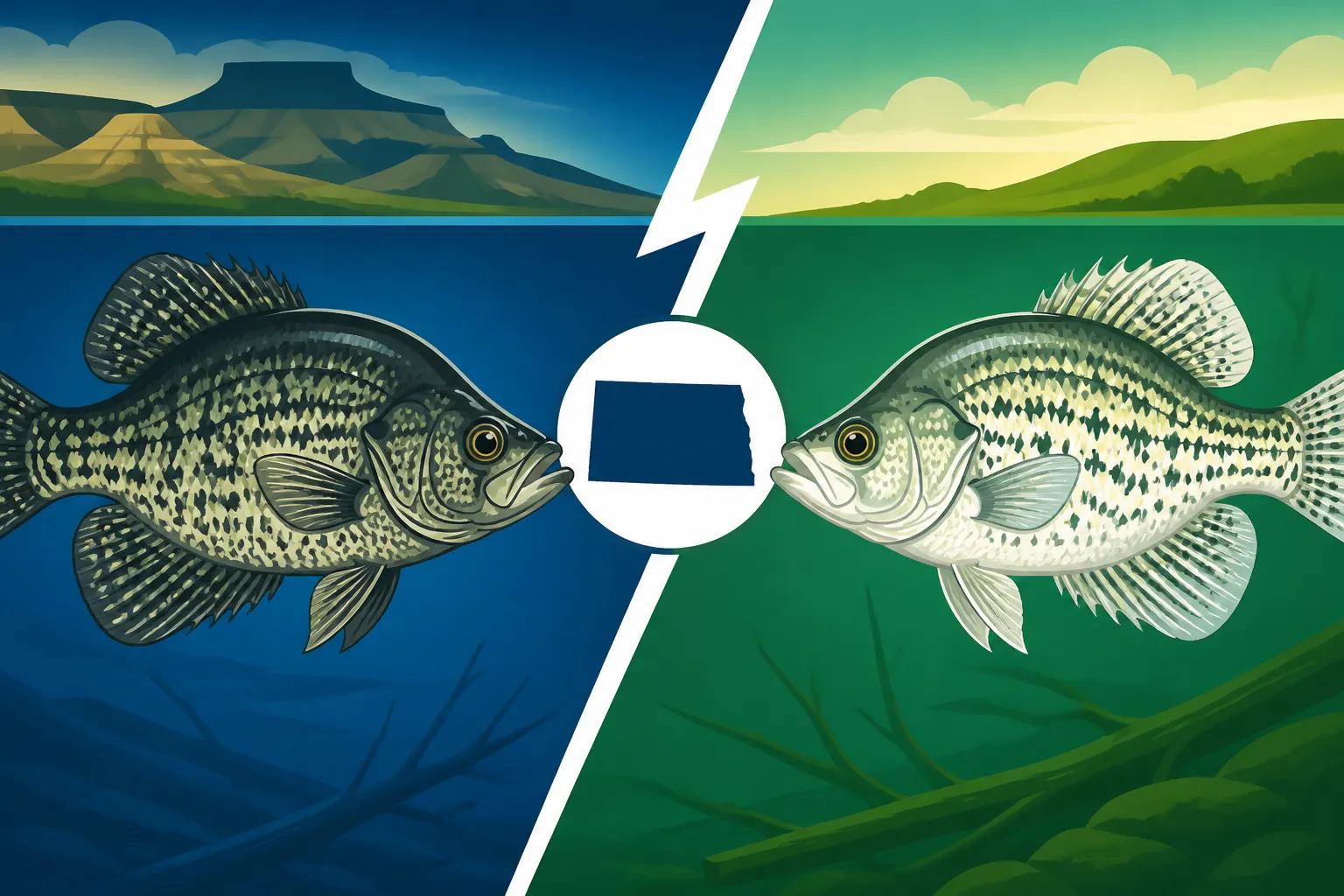
Black Crappie vs White Crappie Identification
Anglers in North Dakota often find themselves looking at a panfish and wondering, "Is that a black crappie or a white crappie?" It’s a common dilemma, and one that can sometimes feel more confusing than it should be, especially when you're trying to keep track of regulations or just learning about the fish you’re catching. This comprehensive guide is here to clear up that confusion, offering clear, actionable tips to confidently identify the subtle yet important distinctions between these two popular species found in our state's diverse waters.
Why Accurate Crappie Identification Matters to North Dakota Anglers
It might seem like a small detail to some, but correctly identifying the fish you've caught goes beyond simply knowing what's on your line. For crappie anglers in North Dakota, understanding the difference between black and white crappie is actually quite important for a few key reasons, touching on everything from following the rules to improving your success on the water. It’s not just about bragging rights; it's about being a responsible and effective angler.
Respecting Bag Limits and Regulations
Here in North Dakota, our fishing regulations are designed to protect fish populations and ensure healthy fisheries for generations to come. While often crappie species are grouped together under a general daily limit, there are always exceptions or nuances that can pop up. Imagine a scenario where a specific lake or reservoir might have a special management plan in place, perhaps a different slot limit or reduced daily possession for one species over another. If you can't tell them apart, you could inadvertently exceed a limit or keep a fish that's out of the legal length range, leading to an uncomfortable conversation with a game warden.
We want to make sure everyone enjoys their time outdoors without unnecessary stress. Knowing precisely what you've landed is part of responsible angling. It ensures you're always adhering to the North Dakota Game and Fish Department's guidelines, which you can always double-check in the North Dakota Fishing Regulations Explained or by glancing at the North Dakota Fishing Season Calendar. It's about being a good steward of our natural resources and showing respect for the rules that keep our lakes and rivers thriving.
Understanding Fish Behavior and Habitat
Beyond the legalities, accurate identification helps you become a much better angler. Black and white crappie, while similar, often exhibit subtle differences in their preferred habitats and feeding behaviors. If you know which species you're targeting or which one you're consistently catching in a particular spot, you can fine-tune your techniques and improve your catch rate dramatically. For instance, knowing that one species prefers clearer water with heavy cover, while the other might tolerate more turbid conditions, can completely change your approach to a new lake or river system.
This ecological understanding is a powerful tool in your fishing arsenal. For example, if you're consistently catching white crappie, you might focus on larger, more open submerged structures or areas with a bit more current. If it's black crappie, you might dial in on dense weed beds, thick brush piles, or flooded timber. These preferences dictate where fish congregate, what they're eating, and how aggressively they might bite. Learning about Fish Species Found in North Dakota Lakes and Rivers can provide a broader context, but zeroing in on crappie-specific traits will really sharpen your skills.
Deciphering the Black Crappie: Key Identification Marks
Black crappie, known scientifically as Pomoxis nigromaculatus, are a beloved panfish across North Dakota. They're a favorite target for many anglers, especially during the ice fishing season or when they gather around structure in the spring. While their general appearance is similar to white crappie, there are several key features that, once you know them, make identification much simpler and more confident.
The Distinctive Coloration and Pattern
When you pull a black crappie out of the water, the first thing you'll likely notice is its coloration. Black crappie typically have a silvery to golden-green body with a heavily mottled, almost "peppered" appearance. Instead of distinct lines, you'll see irregular dark spots scattered haphazardly across their sides. It often looks like someone took a paintbrush and dabbed dark pigment all over them. The overall impression is usually darker than a white crappie, especially if they've been living in clear, vegetated waters where their speckled camouflage helps them blend into the shadows of weeds and sunken timber.
This mottled pattern can vary in intensity depending on the specific water body, water clarity, and even the fish's diet, but the lack of organized vertical bars is a significant giveaway. If you're fishing a clear, pristine lake with lots of submerged growth, you might find black crappie with incredibly dark, almost black, spots. Conversely, in slightly stained water, their spots might appear lighter against a paler background, but they will still be irregular rather than forming neat stripes.
Counting Dorsal Fin Spines
This is arguably the most reliable and foolproof method for telling black and white crappie apart. If you want a scientific, undeniable answer, look no further than the dorsal fin—that prominent fin on the fish's back. Black crappie almost invariably have 7 or 8 distinct, stiff spines in their dorsal fin. These aren't the softer rays; these are the hard, bony, pointed elements at the front of the fin that give it structure.
To count them accurately, gently spread the dorsal fin. You'll need to be careful, as those spines can be sharp! With a steady hand, count each individual spine. Sometimes, a small ruler or a clear view (perhaps enhanced by a good pair of polarized sunglasses, which you can easily find on Amazon) can help. This anatomical trait is a biological constant, meaning it's highly consistent across individuals of the species. So, if you're ever on the fence about whether you have a black or white crappie, a quick spine count will give you the definitive answer every single time.
Body Shape and Mouth
Beyond the patterns and spines, black crappie also tend to have a slightly different body morphology. They are generally described as having a deeper, more "discus-like" or compressed body profile. Imagine a fish that's a bit taller from its back to its belly relative to its length—more rounded and robust. They often look more stout and less elongated than their white crappie counterparts.
Their mouth structure also offers a subtle clue. A black crappie's mouth is typically smaller, and when closed, the upper jaw usually extends only to before the middle of the eye. This might be a harder feature for beginners to spot reliably, but once you've seen enough of both species, it becomes a noticeable difference. This smaller mouth is often adapted for feeding on smaller prey items, such as insect larvae and small minnows, which they might ambush from dense cover.
Spotting the White Crappie: Unique Traits
White crappie, or Pomoxis annularis, are another highly sought-after species in North Dakota, particularly favored for their aggressive bites and tendency to school in large numbers. Like their black crappie cousins, they provide fantastic angling opportunities, but they have their own set of unique characteristics that allow for clear identification. Once you learn what to look for, you'll be able to pick them out of a lineup almost instantly.
The Tell-Tale Vertical Bars
The most immediate visual cue for a white crappie is their distinctive pattern: dark, often uniform, vertical bars or stripes running down their silvery-white to silvery-green sides. Unlike the chaotic mottling of the black crappie, these bars are much more organized, typically ranging from 6 to 9 bars that create a neat, striped appearance. These bars are thought to provide camouflage in more open, often turbid, water environments, allowing them to blend into the shadows of submerged timber or brush piles where they frequently school.
The intensity of these bars can vary; sometimes they might be quite faint, especially on fish from very clear water, or they can be very pronounced in fish from darker, stained water. However, the pattern of vertical bars, rather than irregular spots, is the key. If you catch a crappie and see clear, vertical lines down its side, you're almost certainly looking at a white crappie.
Dorsal Fin Spines: The Crucial Count
Just as with the black crappie, counting the spines in the dorsal fin is your most reliable method for confirming a white crappie. The rule here is simple and consistent: white crappie typically have 6 stiff spines in their dorsal fin. This is the definitive characteristic that separates them from the 7 or 8 spines found in black crappie.
This spine count is a biological anchor, a consistent trait that rarely deviates. To get an accurate count, gently extend the dorsal fin and count the rigid, pointed spines at its leading edge. It might take a little practice to differentiate between spines and soft rays, but with a bit of care, you'll quickly master this identification technique. This particular feature eliminates all guesswork, providing a conclusive answer when other visual indicators might seem ambiguous or overlap.
Body Shape and Mouth Structure
White crappie tend to have a more elongated, slender body profile compared to the black crappie. If you hold them side by side, the white crappie often looks "longer" for its depth, presenting a more streamlined or torpedo-like appearance. They're generally not as deep-bodied or rounded as the black crappie. This subtle difference in body shape can be a helpful secondary indicator, especially when you're looking at smaller fish.
Their mouth structure also differs. White crappie generally possess a larger mouth, with the upper jaw extending noticeably further back, often reaching past the middle of the eye, sometimes even to the back edge. This larger gape allows them to consume slightly larger prey items, which can include small minnows and baitfish. This can also sometimes influence the size of lures or baits they prefer, so it's a useful detail to note if you're trying to figure out the Best Bait for Crappie in North Dakota.
Beyond the Looks: Habitat, Behavior, and Practical Tips
While the visual cues of spots, bars, and dorsal fin spines are primary for crappie identification, understanding their preferred habitats and typical behaviors in North Dakota's diverse waterways can also offer strong clues and help confirm your suspicions. Plus, having the right gear on hand always makes the identification process easier and more enjoyable.
Preferred Habitats in North Dakota Waters
Both crappie species are found throughout North Dakota, but they do tend to show preferences for slightly different types of environments. This isn't a hard-and-fast rule, as there's plenty of overlap, but it can certainly tip you off to what you might expect to catch in a given spot.
Black crappie, for instance, often favor clearer, cooler waters with an abundance of heavy submerged vegetation, brush piles, fallen trees, and rock structures. They are ambush predators who love to hide in cover, making them a common catch in many of our state's lakes with good water quality. Think about fishing weed lines or timbered areas in places like Lake Ashtabula, or the clearer bays of Lake Sakakawea. If you're targeting Black Crappie Habitat in North Dakota, you'll typically be looking for denser cover.
White crappie, on the other hand, are generally more tolerant of turbid (murky or silty) water and are frequently found in larger river systems, their backwaters, and reservoirs with more open water and less dense vegetation. They thrive in areas where the water might be a bit stained, and they often relate to larger, more sparse submerged structures or even open water schools. The Red River of the North, with its often-murky flow, is a prime example where white crappie are frequently caught. Parts of the Missouri River system can also hold good numbers of white crappie, particularly in slower-moving sections. Knowing these general preferences can help you narrow down your search when exploring Best Places to Fish in North Dakota.
Behavioral Differences and Angling Implications
Subtle behavioral differences between the two crappie species can also impact your fishing strategy. White crappie are often described as schooling more tightly and aggressively than black crappie, especially when they're feeding in open water or around isolated structures. This means that if you catch one white crappie, there's a very good chance you've found a whole school, and you should thoroughly work that area. They can be quite competitive, leading to fast and furious action when you hit a hot spot.
Black crappie tend to be a bit more solitary or form looser schools, preferring to stick closer to heavy cover and ambush their prey. While you can certainly find groups of black crappie, they might not be as tightly packed as white crappie schools. This means your presentation for black crappie often needs to be more precise, targeting specific pieces of cover. Seasonal movements also play a role; understanding How to Find Crappie in Spring or mastering Ice Fishing Techniques for Crappie often requires adjusting for these species-specific tendencies. For a deeper dive into techniques for catching these popular panfish, check out a broader North Dakota Crappie Fishing Guide.
Essential Gear for Confident Identification
Having a few key items in your tackle box or boat can make the crappie identification process much smoother and more accurate. You don't need a whole lab setup, but these tools can be invaluable:
- A good camera or smartphone: Snapping a clear picture of your catch allows you to review its features later, compare it to images online, or even share it with more experienced anglers for confirmation. This is especially helpful if you're unsure about the spine count or subtle body shape differences.
- A small, portable ruler or field guide: While you might not carry a ruler just for spine counting, a good quality fishing field guide (many excellent ones are available on Amazon) often includes clear illustrations and descriptions of various fish species, including crappie. Some even have rulers printed on them for quick measurements. This provides a handy reference right on the water.
- Polarized sunglasses: These are an angler's best friend! Not only do they help you see into the water to spot structure and fish, but they also reduce glare, allowing for a much clearer view of your catch's fins and body patterns when you bring it alongside the boat or onto the ice.
By combining visual identification with an understanding of habitat and behavior, you'll not only be able to confidently tell your black crappie from your white crappie but also become a more knowledgeable and successful angler on North Dakota's beautiful waters.
Crappie Identification Cheat Sheet
To help solidify your understanding, here's a quick comparison table summarizing the key differences between black and white crappie:
| Feature | Black Crappie | White Crappie |
|---|---|---|
| Dorsal Fin Spines | 7 to 8 | 6 |
| Body Pattern | Irregular dark spots, mottled or "peppered" | Distinct dark vertical bars or stripes |
| Body Shape | More rounded, deeper, "discus-like" | More elongated, slender |
| Mouth Size | Smaller, upper jaw extends to before eye | Larger, upper jaw extends to past middle of eye |
| Preferred Habitat | Clearer water, dense vegetation, brush piles | Turbid/silty water, open water, less dense cover |
Disclaimer
This article is for general informational purposes only and does not constitute professional advice. Laws, prices and regulations vary by location and change over time. Consult a qualified professional for guidance on your specific situation.