Best Ice Rod Length for Perch
Choosing the perfect ice rod for perch can feel like a riddle sometimes. You're standing there in the tackle shop, faced with a wall of options, wondering if that 20-inch stick is too short or if the 36-inch monster is overkill for a panfish. This guide is here to untangle that confusion, helping you understand how different rod lengths impact your perch fishing experience in North Dakota and empowering you to pick the rod that feels just right for you and the fish you're after.
Understanding Perch Behavior Under the Ice
Before we even dive into rod specifics, let's chat about the star of the show: the yellow perch. Knowing how these feisty little fish behave when the lakes are locked up under ice is key to understanding why certain rod lengths and setups make more sense than others. Perch aren't just swimming aimlessly; they have patterns, preferences, and peculiarities that directly influence how we should approach catching them.
How Perch Relate to Structure and Depth in Winter
When winter settles over North Dakota, yellow perch tend to gather in predictable areas. They're often found hugging bottom transitions, feeding along weed lines (especially early ice), or schooling up near subtle structure like old creek beds, submerged points, or even the flooded timber you find in places like Devils Lake. Their preference for these deeper, more stable environments means your presentation needs to be precise and often vertical. They’re not usually chasing bait at warp speed across open water; instead, they’re pecking at small morsels close to where they feel safe and where food is readily available.
Think about it: when you're dropping a tiny jig down 20 or 30 feet, the connection between your hand and that lure needs to be as direct and sensitive as possible. Perch bites can be incredibly subtle—sometimes just a slight "mush" feel or a tiny twitch in the line. A rod that's too long or too unwieldy can dampen that feel, causing you to miss those delicate takes. Conversely, a rod that's too short might not give you the leverage you need if a bigger fish decides to show up, or if you need to maneuver your line around a tight hole or a portable heater. Understanding their subtle feeding habits and preferred depths in the winter will guide many of your gear choices, including the length of your ice rod.
The Impact of Perch Size on Your Rod Choice
Not all perch are created equal, especially in North Dakota. You might encounter those dime-sized panfish that are fun for kids but don't put up much of a fight, or you could stumble into a school of jumbo perch—those chunky, plate-sized beauties that truly test your gear. The size of the perch you're targeting plays a significant role in determining your ideal rod length.
For smaller perch, where the goal is often high-volume catching, a very sensitive, lighter power rod of almost any reasonable length can work. The fight is minimal, and the emphasis is on quick drops and fast retrieves. But when those big Devils Lake perch start hammering your tungsten jig, you'll appreciate a rod with a bit more backbone and perhaps a length that allows you to absorb their head shakes and runs without fear of snapping your line or pulling the hook. A longer rod can offer a bit more forgiveness and leverage for fighting those larger fish, preventing them from burying themselves back into the weeds or wrapping around the edge of your ice hole. It's a delicate balance: enough sensitivity to detect the light bite, but enough power and length to handle a surprise trophy.
Decoding Ice Rod Lengths: What Do the Numbers Mean?
Okay, let's get down to the brass tacks of rod length itself. Unlike open-water fishing, where rods can easily stretch to 7 or 8 feet, ice rods are typically much shorter, ranging from under 20 inches to around 40 inches. Each length category offers distinct advantages and disadvantages depending on your fishing style, the conditions, and where you're set up on the ice. Understanding these nuances is crucial for making an informed choice.
Short Rods (Under 24 inches) for Finesse and Tight Spaces
When you're crammed inside a small, one-person portable ice shelter, battling the wind and trying to stay warm, a short ice rod, typically under 24 inches, can be your best friend. These rods offer fantastic maneuverability in tight quarters. You won't be bumping your rod tip on the ceiling of your shelter or struggling to lift a fish out of the hole without hitting the sides. This compact size also lends itself well to ultra-finesse presentations.
Think about it: with less rod length to absorb subtle movements, the feedback from your lure is immediate and direct. This can be a huge advantage when perch are being finicky and just barely mouthing your bait. The downside? Their short stature means less leverage when fighting larger fish. A jumbo perch can put a serious bend in a short rod, making it feel like you're trying to land a whale with a toothpick. Plus, if you're standing on open ice, these shorter rods can feel a bit awkward, forcing you to bend over more to see your line or manage your lure. They excel in confined spaces and for super-sensitive bite detection, making them perfect for anglers who prioritize stealth and precision in smaller setups.
Medium Rods (24-30 inches) for Versatility and Control
If there's a "jack-of-all-trades" in the ice rod world, it's the medium-length rod, generally falling between 24 and 30 inches. This category hits a sweet spot for many North Dakota perch anglers because it offers a fantastic balance of control, sensitivity, and enough backbone to handle a good-sized fish. You get enough length to keep your hands further away from the freezing water and the ice hole, which is a blessing on those brutally cold days.
These rods are versatile enough for both portable shelters and larger permanent shacks, or even when fishing out in the open. They provide a good amount of leverage for fighting those aggressive perch without feeling overly cumbersome. When you're jigging, the extra length compared to shorter rods allows for a wider, more natural jigging motion, which can be critical for enticing hesitant fish. It’s also long enough to get a comfortable hookset without feeling like you're over-extending yourself. For most situations, whether you're chasing perch on Lake Sakakawea or through the ice on Lake Audubon, a rod in this range will serve you well, offering a blend of utility that makes it a popular choice for many. You might even find some great options for these versatile rods through online retailers like Amazon, often with reviews from other ice anglers.
Longer Rods (Over 30 inches) for Reach and Fighting Power
Now, if you're thinking about targeting those truly monstrous perch, or if you spend most of your time fishing in a spacious ice house or outside in the open, a longer rod—anything over 30 inches, sometimes stretching to 40 inches—might be exactly what you need. These rods provide maximum reach and incredible fighting power, which can be a game-changer when you hook into a true North Dakota trophy.
The added length acts as a shock absorber, distributing the force of a powerful fish's run across more of the rod blank, protecting your lighter line from snapping. This is particularly beneficial when those powerful yellow perch from Devils Lake decide they're not coming up without a fight. The extra length also gives you a wider range of motion for jigging, allowing you to impart more aggressive or sweeping actions to your lure. However, the trade-off is maneuverability. If you're in a smaller, cramped shelter, these rods can quickly become a nuisance, constantly bumping walls or ceilings. They are best suited for situations where space isn't an issue and fighting strength is a priority. For specialized longer rods, browsing a dedicated fishing outfitter like Bass Pro Shops can offer a hands-on experience to feel the balance and action before committing.
Matching Rod Length to Your North Dakota Perch Fishing Style
The "best" rod length isn't just about the fish; it's also about you—your fishing setup, your preferred techniques, and even how much space you typically have around you on the ice. What works for one angler might be a nightmare for another, so let's break down how your personal fishing style and environment should influence your ice rod length decision for perch in North Dakota.
Fishing in a Portable Shelter vs. Open Ice
One of the biggest factors influencing your ideal rod length is whether you'll be fishing primarily inside a portable ice shelter or out on the open ice. This might seem obvious, but many anglers overlook how drastically it impacts comfort and efficiency.
If you're a fan of those cozy, often compact portable flip-over or pop-up shelters, where warmth and mobility are key, a shorter rod (under 24 inches, maybe even 20-22 inches) is usually the way to go. Inside these shelters, space is at a premium. A long rod will constantly snag on the fabric, hit the roof when you set the hook, or make it awkward to land a fish and get it back in the water quickly. You need something that allows for quick, controlled movements within your limited area. For maximum comfort and minimal frustration, especially in smaller one or two-person shelters, keep it compact.
On the other hand, if you prefer fishing in a larger, more spacious permanent ice house, or if you're bundled up and brave enough to fish in the open air (perhaps on one of North Dakota's Best Ice Fishing Lakes in North Dakota), then a longer rod, perhaps 28-36 inches, becomes much more appealing. The added length gives you better posture, keeps your hands further from the cold ice and water, and provides superior leverage for fighting fish without bumping anything. It also allows for wider, more sweeping jigging motions, which can sometimes be more effective for aggressive perch. Consider your typical fishing environment; it's a huge piece of the puzzle.
The Art of Sight Fishing and Rod Length
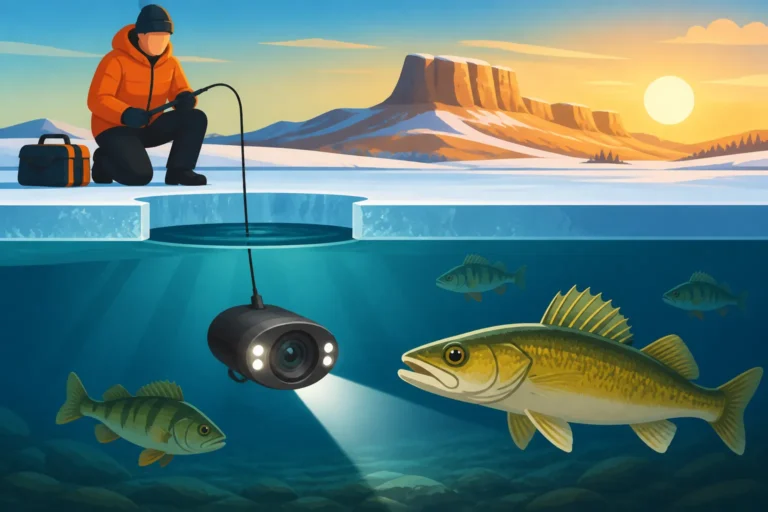
Sight fishing for perch is an exhilarating experience, especially on clear North Dakota lakes like some of the smaller, stocked impoundments where visibility is excellent. There's nothing quite like watching a school of perch come in, picking out the biggest one, and seeing it inhale your jig. When you're sight fishing, you're often kneeling or sitting close to the hole, peering directly into the water.
For this highly visual technique, a shorter to medium-length rod (say, 20-26 inches) is generally preferred. The main reason is control and proximity. When you're looking down the hole, a shorter rod allows you to keep your hands closer to the water, giving you immediate feedback on the fish's movements and enabling incredibly precise jigging actions. You can make tiny, subtle twitches with your wrist that a longer, more flexible rod might not transmit as effectively. It also minimizes the chances of your rod tip creating shadows or movements above the hole that might spook wary fish. However, for those quick, explosive hooksets when a perch finally commits, you still need enough tip responsiveness to drive that hook home instantly. Perch Jigging Techniques for Devils Lake can be especially effective when you can see the fish reacting to your lure.
Balancing Sensitivity and Backbone for Jumbo Perch
Catching jumbo perch is a dream for many North Dakota ice anglers, but these larger fish demand a different approach than their smaller cousins. You need a rod that’s sensitive enough to detect their notoriously light bites, but with enough backbone (or power) to handle their surprising strength and head shakes. This is where the balance between rod length and power becomes critical.
For jumbo perch, many experienced anglers gravitate towards rods in the 26-32 inch range. This length provides the necessary leverage to fight a strong fish, keeping its head up and away from the bottom or the edge of the ice hole. The moderate length also allows for a good, solid hookset, ensuring that the hook penetrates fully into the perch's tough mouth. While ultra-short rods are super sensitive, they can feel underpowered when a 12-inch perch starts doing gymnastics under the ice. Conversely, an overly long rod might feel sluggish and dampen those subtle bites. The ideal rod for jumbo perch offers a blend of a responsive tip (for sensitivity) and a strong mid-section (for lifting power), and a medium length often delivers this best. When paired with the right line—like a sensitive monofilament or fluorocarbon, or even a braided line with a fluorocarbon leader—you'll be able to feel every bump and tick, and still have the confidence to put the screws to a big one.
Beyond Length: Other Key Rod Features for Perch
While rod length is our main focus today, it's really just one piece of the puzzle. An ice rod is a system, and other characteristics work in tandem with length to define its overall performance. Ignoring these can lead to frustration, even if you nail the length. Let's dig into a few other crucial factors that play a big role in your perch fishing success.
Rod Action (Fast, Moderate, Slow)
Rod action refers to where on the rod blank it bends when pressure is applied. This directly impacts sensitivity, hooksetting power, and how a rod feels when fighting a fish.
- Fast Action: A fast-action rod bends mostly in the top third of the blank. This makes for an incredibly sensitive tip, perfect for detecting the lightest perch bites. The stiff mid-section provides quick, powerful hooksets, which is essential when targeting larger perch with jigs or spoons. However, they can be less forgiving if a big fish makes a sudden run, potentially leading to pulled hooks or snapped lines if your drag isn't set perfectly. Many anglers prefer fast action for jigging because of the direct feel it provides.
- Moderate Action: These rods bend closer to the middle of the blank. They offer a good balance of sensitivity and forgiveness. The tip is still responsive enough for bite detection, but the more parabolic bend allows for a smoother fight, absorbing head shakes and sudden surges from a fish, making it harder for them to throw the hook. This action is very versatile and often a great choice for a multi-purpose perch rod, especially if you're using live bait or finesse presentations like small soft plastics.
- Slow Action: A slow-action rod bends almost down to the handle. They are often called "noodle rods." While less common for aggressive perch jigging, they can be excellent for incredibly light presentations or when using extremely light line, as their full bend protects delicate lines beautifully. They offer amazing forgiveness but have a slower, less powerful hookset. For most perch situations in North Dakota, fast or moderate action will be your go-to.
Rod Power (Ultra-Light, Light)
Rod power, sometimes called "rod weight," describes how much force it takes to bend the rod. It dictates the range of lure weights and line sizes a rod is designed to handle effectively. For perch, you'll almost exclusively be looking at ultra-light or light power rods.
- Ultra-Light (UL): These rods are designed for the smallest jigs, tiny spoons, and lightest lines. They offer maximum sensitivity for feeling those subtle perch takes and provide an incredible fight from even small fish. If you're using tungsten jigs as small as 1/32 or 1/64 ounce, an UL rod is ideal. The trade-off is limited lifting power; landing a large fish can be a long, nerve-wracking process, and you need to be careful not to overpower the rod.
- Light (L): Light power rods are a step up from ultra-light, offering a bit more backbone while still maintaining good sensitivity. They handle slightly heavier jigs and spoons (e.g., 1/16 to 1/8 ounce) and can manage slightly heavier lines. This power is often a favorite for targeting jumbo perch, as it gives you that extra muscle to control a larger fish without feeling overly stiff. It’s a versatile choice that covers a broader range of perch sizes and lure types without sacrificing too much feel. You’ll often see these paired with Best Ice Fishing Rods for Perch recommendations.
Handle Design and Reel Seat
Don't underestimate the importance of comfort and balance in an ice rod. You'll be holding this rod for hours, often in freezing temperatures, so the handle and reel seat design matter more than you might think.
- Handle Material: Cork and EVA foam are the most common materials. Cork is classic, offers good grip, and a decent feel, but can get waterlogged and degrade over time. EVA foam is durable, lightweight, often warmer to the touch in extreme cold, and provides excellent grip even when wet. Choose what feels best in your hand, especially when wearing gloves.
- Handle Length: Shorter handles are common on ice rods, keeping the overall package compact. However, some anglers prefer a slightly longer handle for better two-handed leverage on bigger fish or for resting against their forearm. For perch, shorter, ergonomic handles are generally preferred.
- Reel Seat: Many ice rods come with a simple band or tape to secure the reel directly to the handle, which maximizes feel. Others have traditional spinning reel seats. Those with open reel seats (where you can touch the blank) often provide the most direct vibration transfer from the line, enhancing sensitivity. Make sure whatever design you choose holds your reel securely and comfortably, especially for extended periods in the cold. A good, ergonomic handle can make a long day of ice fishing much more enjoyable, particularly when you're focusing on finesse tactics for finicky perch.
Practical Recommendations and Where to Find Your Ideal Rod
Alright, we've talked about perch behavior, dissected rod lengths, and explored other critical features. Now, let's bring it all together with some practical advice to help you select the best ice rod length for your next North Dakota perch adventure. Remember, there's no single "perfect" rod for everyone, but there are definitely ideal choices for different scenarios.
Recommended Lengths for Different Perch Scenarios
To help you narrow down your options, here’s a quick guide based on common North Dakota perch fishing situations:
- For Finesse in Small Portable Shelters: If you're usually tucked into a one-man flip-over on a windy day, focusing on ultra-light tungsten jigs for subtle bites, a rod in the 20-24 inch range with a fast or extra-fast action and ultra-light power will be your champion. It maximizes sensitivity and maneuverability in tight spaces. You'll feel every single twitch, which is critical for finicky perch.
- For Versatile All-Around Perch Fishing: If you're looking for a go-to rod that handles most situations—from a spacious permanent house to a two-person portable, and for a mix of small and jumbo perch—a 26-30 inch rod with a fast or moderate-fast action and light power is often the best choice. This is the sweet spot that provides a great balance of sensitivity, hook-setting power, and comfort for various presentations. This length allows for effective jigging and live bait presentations.
- For Jumbo Perch or Open Ice Fishing: When you’re specifically targeting those aggressive, larger perch, perhaps on one of the deeper points in Lake Sakakawea Fishing Guide for North Dakota Anglers, or if you primarily fish outside or in a very large shack where space isn't an issue, a 30-36 inch rod with a light to medium-light power and moderate-fast action can be excellent. The added length provides superior leverage for fighting big fish, absorbing their runs, and protecting lighter lines. It also offers more comfortable posture when standing.
Here’s a handy table to summarize these recommendations:
| Scenario | Recommended Rod Length (inches) | Action | Power | Key Benefit |
|---|---|---|---|---|
| Small Portable Shelter / Finesse | 20-24 | Fast/Extra-Fast | Ultra-Light | Max Sensitivity, Maneuverability |
| All-Around / Versatile | 26-30 | Fast/Mod-Fast | Light | Balanced Feel, Control, Fish Fighting |
| Jumbo Perch / Open Ice / Big Shack | 30-36 | Mod-Fast | Light/Med-Light | Leverage for Big Fish, Reach, Line Protection |
Shopping for Your Next Perch Rod
Once you've got a good idea of the length, action, and power you're looking for, it's time to hit the stores—or the internet! You have several excellent avenues for finding your next favorite perch rod.
Local bait and tackle shops are always a great starting point. They often carry brands popular in North Dakota and the staff usually has firsthand experience with local conditions and target species. Being able to hold a rod, feel its balance, and inspect its components before buying is a huge advantage. They can also offer specific advice on what works well on Devils Lake Perch Fishing Spots or other nearby areas.
Larger sporting goods retailers like Bass Pro Shops will have a massive selection, allowing you to compare many different brands and models side-by-side. Their extensive inventory means you’re more likely to find a specific length or action you've decided on. Don’t be afraid to ask their fishing specialists for recommendations; they often have a wealth of knowledge.
Of course, online retailers like Amazon offer unparalleled convenience and selection. You can often find detailed product descriptions, customer reviews, and competitive pricing. This is a fantastic resource if you know exactly what you're looking for or want to explore niche brands. Just remember, you won't be able to "feel" the rod until it arrives, so pay close attention to specifications and other anglers' feedback. No matter where you shop, investing in a quality ice rod designed for perch fishing will undoubtedly enhance your time on North Dakota's frozen waters.
Disclaimer
This article is for general informational purposes only and does not constitute professional advice. Laws, prices and regulations vary by location and change over time. Consult a qualified professional for guidance on your specific situation.