Best Line for Trolling Deep Crankbaits
There's nothing quite like the thrill of chasing a big walleye in North Dakota's vast waters, especially when they're holding deep. But let's be honest, trying to get your crankbait down to that sweet spot, only to have it ride high or not get the right action, can be incredibly frustrating. This guide is all about cutting through the confusion of fishing lines, helping you choose the absolute best options to get those deep-diving crankbaits exactly where they need to be to entice those elusive fish.
The Challenge of Deep Crankbait Trolling in North Dakota
Trolling deep-diving crankbaits in North Dakota's expansive lakes like Sakakawea or Devils Lake presents a unique set of challenges that can make or break your fishing day. It's not just about picking a lure and throwing it over; there's a delicate balance of factors that determine whether your crankbait hits its advertised depth and performs as intended. Many anglers struggle to consistently reach the deeper fish, often feeling like their lures are just skimming the surface or getting hung up too frequently.
Understanding Water Resistance and Depth
Every type of fishing line, no matter how thin, creates drag in the water. This drag is what prevents your crankbait from reaching its maximum potential depth. Think about it like trying to swim with loose, baggy clothing versus a sleek swimsuit – the swimsuit will allow you to glide through the water with far less resistance. Similarly, a thicker fishing line will create more resistance, making your deep-diving crankbait run shallower than it's designed to. This effect is compounded the longer your line is out, meaning that the more line you let out to gain depth, the more water resistance acts against it, forming a subtle curve in your line that reduces the bait's effective diving depth. Understanding this fundamental principle is crucial for maximizing your crankbait's performance, especially when targeting fish holding close to the bottom in deeper sections of the lake.
Moreover, currents, even subtle ones, can dramatically impact how your line behaves underwater. A strong undertow or even a light surface current pushing against your line can lift your crankbait, making it run even shallower. This is a common frustration, especially when fishing large bodies of water like Lake Sakakawea, where conditions can change rapidly. You might think your crankbait is ticking bottom, but in reality, it's several feet higher, missing those crucial strikes. The key is selecting a line that minimizes this resistance while maintaining the strength needed for those hard-fighting North Dakota fish. It’s a constant battle against the elements, and your line choice is your first defense.
The Frustration of Incorrect Line Choice
We've all been there: you've got your favorite deep-diving crankbait tied on, you’re trolling over a promising contour, and you're just not getting bites. You start wondering if the fish aren't there, or if your lure isn't quite right. Often, the silent culprit is the fishing line itself. Using the wrong type or pound test can lead to a host of problems beyond just depth issues. Imagine trying to set the hook on a massive walleye when your line stretches like a rubber band – you lose power, sensitivity, and often, the fish.
Another common headache is line twist and memory. Some lines, particularly older monofilaments, can develop severe memory, coiling off the reel like a spring. This not only makes casting or letting out line a nightmare, but it also imparts an unnatural action to your crankbait and significantly reduces its diving ability. Nobody wants to spend precious fishing time untangling knots or battling unruly line when they should be focused on the bite. It’s a huge source of frustration, especially after investing in quality crankbaits and a good trolling setup. A poor line choice can render even the most expensive lures ineffective, leading to wasted time and missed opportunities on the water. This is why paying close attention to your line selection is paramount for consistent success.
Top Fishing Line Types for Deep Crankbaits
When it comes to getting your crankbaits down deep, not all fishing lines are created equal. Each type has its own distinct characteristics that will impact how your lure dives, feels, and performs. Understanding these differences is key to choosing the right tool for the job. Let's break down the three main contenders you'll consider for deep trolling in North Dakota.
Monofilament: The Classic Choice
Monofilament line, often just called "mono," has been a staple in fishing for decades, and for good reason. It's affordable, easy to tie knots with, and offers a good amount of stretch, which can be forgiving when a fish surges suddenly. For deep crankbait trolling, monofilament still has a place, particularly if you're not trying to achieve extreme depths or are fishing in areas where abrasion isn't a huge concern. Its inherent stretch acts like a shock absorber, which can prevent hooks from tearing out of a fish's mouth, especially when trolling with long lines.
However, mono's biggest drawback for deep trolling is its diameter relative to its strength. A 10-pound test monofilament will have a noticeably thicker diameter than a 10-pound test braided line. This increased diameter creates more water resistance, significantly hindering your crankbait's ability to dive to its maximum potential. Furthermore, monofilament tends to absorb water over time, which can weaken it and increase its visibility. If you choose monofilament for deep trolling, opt for the lowest pound test you can reasonably get away with, usually in the 8-12 pound range, to minimize its impact on depth. Regular checking for nicks and abrasions is also critical, as it can degrade over time.
Fluorocarbon: The Low-Visibility Advantage
Fluorocarbon line has gained immense popularity, and it's a fantastic option for deep crankbait trolling, often used as a leader or even as a main line in specific scenarios. Its primary advantage is its near-invisibility underwater due to its refractive index being very close to that of water. This means fish are much less likely to see your line, which can make a huge difference in clear waters or when fishing pressured spots where fish are line-shy. In addition to its stealth, fluorocarbon is denser than monofilament, causing it to sink rather than float. While this might seem like a small detail, it actually helps your crankbait get down faster and stay deeper, especially on long trolling passes.
Another major benefit of fluorocarbon for deep trolling is its low stretch, much less than monofilament. This provides excellent sensitivity, allowing you to feel subtle bites or when your crankbait bumps bottom or encounters weeds. The reduced stretch also delivers more powerful hooksets, which is crucial when fishing with long lines where line stretch can absorb much of your setting power. However, fluorocarbon can be more expensive than monofilament and can be a bit stiffer, making knot tying a little trickier, though modern fluorocarbon lines from brands available on Amazon have improved significantly in pliability. It's often employed as a leader material for braided main lines, combining the best of both worlds, but some dedicated deep trollers swear by it as a main line for its density and low visibility.
Braided Line: Power and Precision
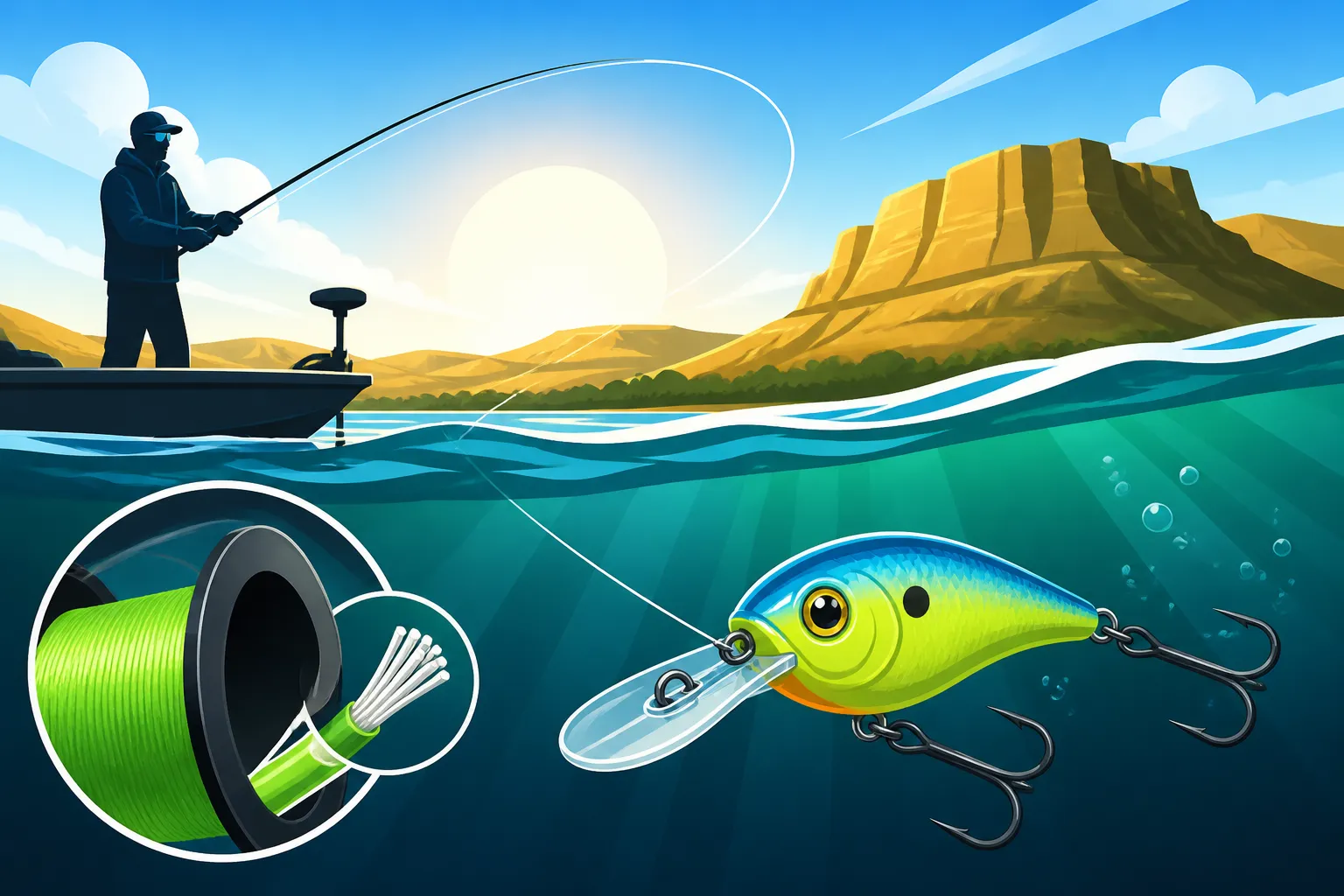
For many serious deep crankbait trollers in North Dakota, braided line is the undisputed champion. Its number one advantage is its incredibly thin diameter for a given pound test, offering almost no stretch. A 10-pound test braided line can have the same diameter as a 4-pound test monofilament! This super-thin profile means minimal water resistance, allowing your crankbaits to dive deeper and more efficiently than with any other line type. When you combine this with a strong, low-stretch property, you get unparalleled sensitivity. You'll feel every bump, every tick of the bottom, and even the most tentative of bites, which is absolutely invaluable when you're dragging crankbaits 50, 70, or even 100 feet behind the boat.
The zero-stretch nature of braid also means instant, rock-solid hooksets, even on long leads. You don't have to "take up the slack" created by line stretch before the hook truly sets. This direct connection to your lure and the fish is a game-changer. Brands like Berkley and PowerPro, commonly found at Bass Pro Shops, offer excellent braided lines designed for these applications. The main downsides? Braided line is typically more visible underwater (though often less of an issue when used with a fluorocarbon leader), and its lack of stretch can sometimes lead to hooks tearing free if your drag isn't set properly or if you fight a fish too aggressively. It's also more prone to cutting into itself on a reel if not spooled tightly, so care is needed during setup. Despite these minor drawbacks, the depth and sensitivity benefits often make braid the top choice for serious deep trolling.
Factors to Consider When Choosing Your Line
Choosing the right fishing line for trolling deep crankbaits isn't a one-size-fits-all decision. There are several critical factors that need to be weighed against each other to ensure you're maximizing your lure's performance and your chances of success on the water. Ignoring these details can mean the difference between a limit of walleye and an empty livewell.
Line Diameter and Dive Curve
The relationship between line diameter and your crankbait's dive curve is perhaps the most crucial aspect of deep trolling. Simply put, thinner lines allow your crankbait to dive deeper. Manufacturers publish dive curves for their crankbaits, but these charts are almost always based on using a specific line – typically 10-pound test monofilament. If you switch to a thicker line, say 12-pound mono, your lure will run shallower. Conversely, if you use a much thinner line, like 10-pound braided line, your crankbait will actually run deeper than its advertised maximum depth. This is a huge advantage for anglers looking to squeeze every possible foot of depth out of their lures.
Understanding this principle allows you to manipulate your crankbait's depth without changing the lure itself. For instance, if you're trying to hit fish holding consistently at 25 feet, and your favorite crankbait is rated for 20 feet on 10-pound mono, switching to a 10-pound braid can easily get you those extra 5 feet. It’s an art form, really, figuring out the perfect line type and pound test to match your target depth and lure. Many experienced anglers keep a variety of spool sizes and line types specifically for different trolling scenarios, ensuring they're always equipped to hit the strike zone. You can find detailed information on how different lines affect lure depth in guides like Best Crankbait Diving Depth for Trolling.
Stretch, Sensitivity, and Hooksets
The amount of stretch in your fishing line directly impacts your sensitivity and the effectiveness of your hooksets. Monofilament, with its significant stretch, acts like a spring. When a fish bites at the end of a long trolling pass, that stretch absorbs a lot of the initial "thump." It can be harder to feel subtle bites, and when you finally swing to set the hook, a good portion of your force is used up just stretching the line before it transfers to the hook. This can lead to missed fish or poor hook penetration.
Fluorocarbon offers low to moderate stretch, providing a much better balance. You'll feel more, and your hooksets will be more direct. But it's braided line, with its near-zero stretch, that provides the ultimate in sensitivity and hooksetting power. Imagine trolling a crankbait 100 feet back; with braid, you'll feel every weed, every rock, and every delicate bite as if the fish were right at the boat. This direct feedback is invaluable for knowing exactly what your lure is doing and reacting quickly. However, the lack of stretch also means you need to be mindful of your drag settings, especially when dealing with powerful fish like trophy northern pike or large walleye. A too-tight drag combined with no line stretch can easily rip hooks out or break your line at the knot. It’s a trade-off that requires some finesse, but the advantages for deep trolling are undeniable. This sensitivity is a key component of effective North Dakota Walleye Fishing Techniques.
Abrasion Resistance and Durability
Trolling deep crankbaits, especially in North Dakota's rocky or woody reservoirs, means your line is going to encounter plenty of abrasive structures. Whether it's dragging over a submerged rock pile, bumping against sunken timber, or rubbing against sharp zebra mussels, your line needs to be tough. A line that frays easily or succumbs to nicks and cuts will quickly lead to lost lures and, more importantly, lost fish. Think about those sharp teeth of a walleye or pike – a weak line won't stand a chance.
| Line Type | Diameter (relative) | Stretch (relative) | Visibility (relative) | Abrasion Resistance | Ideal Use for Deep Trolling |
|---|---|---|---|---|---|
| Monofilament | Thick | High | High | Moderate | Budget, shock absorption |
| Fluorocarbon | Medium | Low | Very Low | High | Leaders, clear water |
| Braided | Thin | None | High | Very High | Main line, max depth/sens. |
Fluorocarbon generally boasts excellent abrasion resistance, making it a great choice for leaders where the line is most likely to encounter teeth and structure. Braided line, while incredibly strong, can sometimes fray if it rubs repeatedly against very sharp edges, but its overall tensile strength is much higher than mono. Monofilament's abrasion resistance varies widely by brand, but it tends to be more susceptible to nicks and cuts that can significantly weaken it. When selecting your line, consider the type of structure you'll be fishing around. If you're consistently dragging lures over hard bottom or through dense cover, investing in a high-quality, abrasion-resistant line is paramount. This can save you countless dollars in lost tackle and prevent the heartbreak of a snapped line when you hook into a monster. Regular inspection of your line for any signs of wear and tear is always recommended, especially after a day of aggressive trolling.
Rigging and Maintenance Tips for Deep Trolling Success
Even with the best fishing line, your deep crankbait trolling success hinges on proper rigging and diligent maintenance. Skipping these crucial steps can negate the benefits of a top-tier line choice and leave you frustrated on the water. Think of it as tuning your race car – you wouldn't just put good tires on it and expect to win without proper alignment and engine care.
Leader Material for Enhanced Performance
While braided line is fantastic for getting depth and sensitivity, its visibility can sometimes be a deterrent, especially in clearer North Dakota waters or on high-pressure lakes where fish are warier. This is where a fluorocarbon leader truly shines. Tying a 6-10 foot section of fluorocarbon leader to your braided main line provides the best of both worlds: the low visibility and abrasion resistance of fluorocarbon where it matters most, combined with the low-stretch, thin-diameter benefits of braid for the main line. This setup allows your crankbait to dive deeply and naturally, while the virtually invisible leader tricks even the wariest walleyes.
When selecting your leader material, match its pound test closely to your main line or go slightly lower. For example, if you're using 10-pound braid, a 10- or 8-pound fluorocarbon leader is a good choice. You can go up a few pounds on the leader if you're specifically targeting toothy northern pike and need extra abrasion resistance. Use a strong, reliable knot to connect the leader to the main line, such as a FG knot or an Albright knot, both of which pass smoothly through rod guides. Changing your leader frequently, especially after catching several fish or dragging over rough bottom, is a simple maintenance step that can prevent heart-breaking break-offs. Don't let a nicked leader ruin your day; a fresh leader can make all the difference, enhancing your overall North Dakota Fishing Regulations Explained.
Line Monitoring and Replacement
Fishing line isn't indestructible, and neglecting its condition is a recipe for disaster. Constant monitoring of your line, especially the first 20-30 feet closest to your lure, is absolutely essential for deep crankbait trolling. After every fish, or if you feel your crankbait dragging excessively on the bottom, take a moment to inspect your line for any nicks, frays, or abrasions. Run your fingers along the line; even a small rough spot can be a weak point waiting to fail. If you find any damage, don't hesitate – cut back a few feet of line and re-tie your leader or lure. It’s a small price to pay to avoid losing that trophy fish you've been chasing all day.
Beyond daily checks, your entire spool of line needs regular replacement. Even if it doesn't look visibly damaged, fishing line degrades over time due to UV exposure, stress from fighting fish, and contact with water and chemicals. For frequently used trolling setups, many anglers will respool their reels with fresh line at least once a season, if not more often, especially if they fish heavily. You can find bulk spools of quality line from suppliers like Bass Pro Shops or Amazon to make this an economical practice. If you notice your line constantly coiling, losing its strength, or breaking easily, it’s a clear sign it's time for new line. Fresh line ensures maximum performance, sensitivity, and confidence, letting you focus on the fish rather than worrying about your tackle. Remember, your line is the only connection between you and the fish – don't let it be the weak link. Keeping up with this maintenance is as important as knowing How to Troll Crankbaits Without Snagging Bottom.
Disclaimer
This article is for general informational purposes only and does not constitute professional advice. Laws, prices and regulations vary by location and change over time. Consult a qualified professional for guidance on your specific situation.