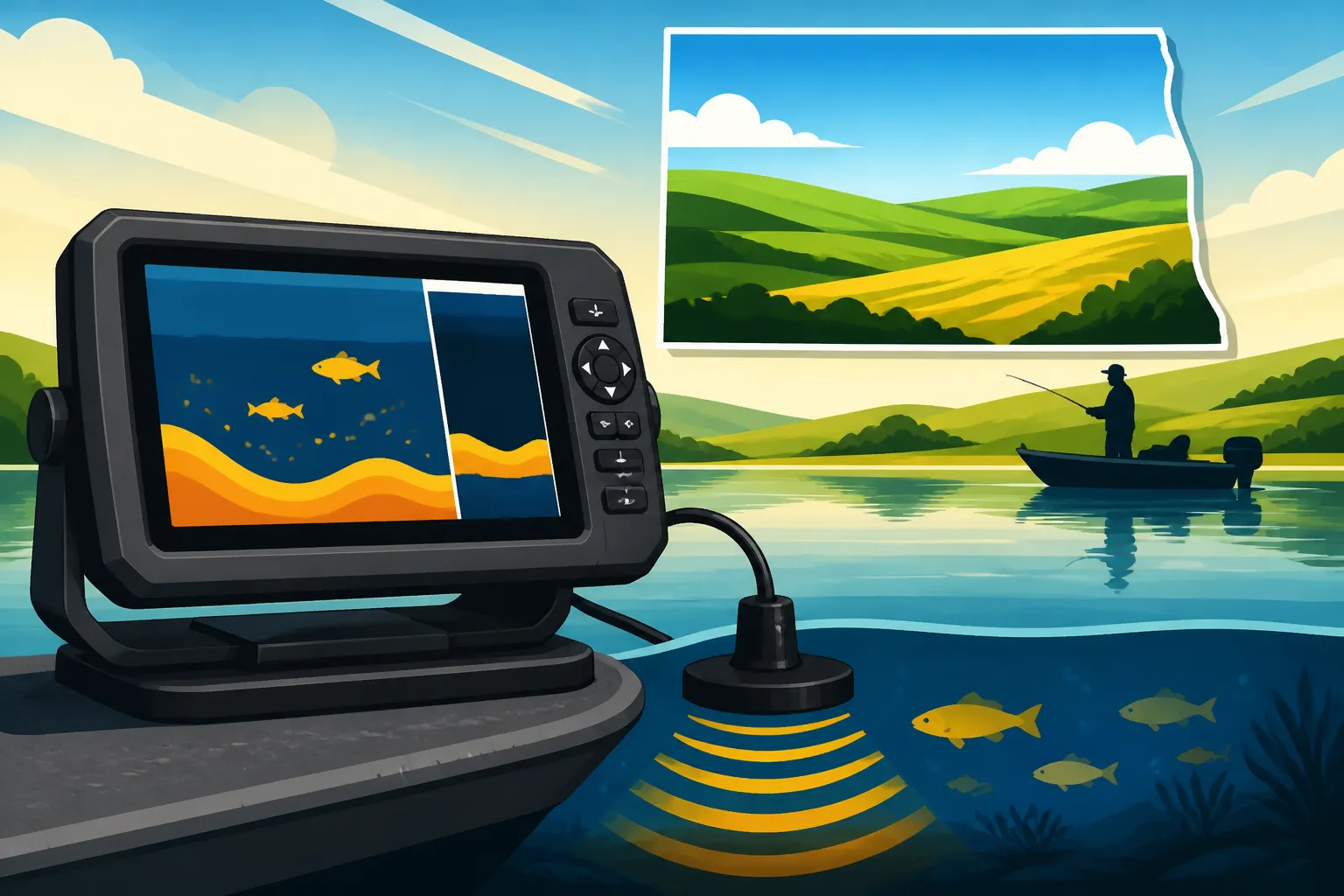
Best Fish Finder Under $300 for North Dakota Lakes
There's nothing quite as frustrating as heading out onto your favorite North Dakota lake, whether it's the sprawling waters of Sakakawea or the legendary Devils Lake, and feeling like you're fishing blind. You know the fish are down there, but trying to pinpoint them without a solid understanding of the underwater world can feel like a guessing game. This guide is all about cutting through that mystery, showing you how to pick the best fish finder for North Dakota lakes that won't break the bank, ensuring you can "see" what's below without spending a fortune.
Why a Budget-Friendly Fish Finder is a Game Changer for North Dakota Anglers
The quest for fish in North Dakota, especially for highly sought-after species like walleye, northern pike, or even elusive perch, often leads us to vast, complex bodies of water. These aren't small ponds where you can easily spot structure or cover. We're talking about expansive lakes with varying depths, hidden humps, submerged timber, and subtle breaks that hold fish. Without a way to peek beneath the surface, you're relying heavily on luck, intuition, and perhaps a lot of wasted time.
The Frustration of Fishing Blind
Imagine yourself out on Lake Sakakawea, a true inland sea, on a calm morning. You're trying to locate a school of walleye, but the water beneath your boat feels like an enigma. Are they suspended? Are they hugging a deep break? Is there even baitfish in this area? Without a fish finder, you're casting into the unknown, dragging lures or jigging blind, hoping for a bite that might never come. This isn't just inefficient; it can be incredibly disheartening. You want to make the most of your time on the water, especially when gas prices and bait costs add up. The feeling of missing out on a hot bite because you couldn't locate the fish is something every angler wants to avoid. That's where a reliable fish finder, even an entry-level one, becomes your secret weapon, turning those frustrating guesses into informed decisions. It helps you quickly identify structure, depth changes, and, most importantly, the presence of fish and baitfish, giving you a massive advantage.
Dispelling the Myth: You Don't Need to Break the Bank
For a long time, many anglers believed that truly effective fish finders were reserved for those with deep pockets and professional-grade boats. It was common to hear that anything under $500, or even $1,000, was just a toy. Thankfully, technology has advanced dramatically, making powerful and feature-rich fish finders accessible to the everyday angler, even on a modest budget. You absolutely do not need to mortgage your house to get a piece of equipment that will significantly improve your fishing experience. Many of today's models under $300 pack an incredible punch, offering clear sonar images, basic GPS, and user-friendly interfaces that were once only found on much more expensive units. These budget-friendly options are perfect for smaller boats, kayaks, shore anglers looking for portable solutions, or even those just starting to explore the benefits of sonar. They allow you to invest in better tackle or more trips, rather than just the electronics themselves.
Key Features to Look for in a Fish Finder Under $300
When you're looking for a fish finder in the under-$300 category, it's all about maximizing value. You might not get every single bells and whistles feature of a top-tier unit, but you can certainly get a highly effective tool. Knowing what to prioritize will help you make the best choice for your North Dakota fishing adventures.
Sonar Technology: What Really Matters
The core function of any fish finder is sonar, and even budget models today offer impressive capabilities. The most important thing to look for is CHIRP (Compressed High-Intensity Radiated Pulse) 2D sonar. Unlike traditional fixed-frequency sonar, CHIRP sends a range of frequencies, providing much clearer target separation and less clutter on your screen. This means you can more easily distinguish between individual fish, baitballs, and bottom structure.
While SideScan and highly detailed 360-degree sonar are generally out of this price range, many sub-$300 units do offer Down Imaging or DownScan. This technology gives you a picture-like view directly beneath your boat, making it incredibly easy to identify submerged trees, rock piles, or weed lines that might be holding fish. For chasing walleye on a deep reservoir like Lake Sakakawea or finding perch in the flooded timber of Devils Lake, a clear Down Imaging view can be invaluable. Don't underestimate the power of a good 2D CHIRP sonar combined with Down Imaging; it will show you plenty to put more fish in the boat.
Screen Size and Display Clarity
You might think a bigger screen is always better, and while that's generally true, for under $300, you'll need to find a balance. What's more crucial than sheer size is clarity and resolution. Look for a screen that offers good pixel density, making fish arches and structure details sharp and easy to read. A bright, color display is pretty standard now, even in this price range, and it's far superior to monochrome for distinguishing different returns and colors.
Consider the conditions you'll be fishing in. North Dakota sun can be intense, so a screen with good backlight control and anti-glare properties is a huge plus. Smaller screens (think 3.5 to 5 inches) are common in this budget, and while they might seem small, a high-resolution, bright color display on a 5-inch screen is perfectly adequate for most fishing situations, whether you're anchored or slowly trolling. After all, if you can't clearly interpret what's on the screen, even the most advanced sonar technology is useless.
GPS and Mapping Capabilities or Lack Thereof
Navigational features are where you'll often see the biggest difference between budget and high-end units. For under $300, you should expect basic GPS functionality. This means the unit can show your current position on a blank map, mark waypoints for hotspots, and perhaps record tracks. This is extremely useful for returning to a productive rock pile, a successful ice fishing hole, or a specific drop-off you discovered. Knowing where you've been and where you want to go is a huge advantage on vast lakes.
What you'll likely not get in this price range are highly detailed, pre-loaded lake maps with contour lines and navigation aids. Some units might offer very basic mapping, or the ability to load simple maps if you purchase them separately, but don't expect a full-fledged chartplotter. However, for many anglers, being able to mark your own waypoints and navigate back to them is more than enough. You can combine this with paper maps or smartphone apps for broader navigation, using your fish finder primarily for marking those crucial fishing spots. Remember, the primary goal here is finding fish, and basic GPS helps you get back to where you found them.
Portability and Power Needs
How you plan to use your fish finder will heavily influence what you should look for in terms of portability and power. If you're primarily fishing from a small boat, a kayak, or even from shore, a compact and easy-to-mount unit is essential. Many budget fish finders are designed with portability in mind, often coming with transom-mount transducers that are relatively simple to install.
For ice fishing, which is a massive part of North Dakota's angling culture, some of these entry-level units can be converted into portable ice fishing setups with a separate ice transducer and a carrying case (sometimes sold as a bundle, sometimes requiring separate purchases). Features like a "flasher mode" which provides a real-time, circular display perfect for vertical jigging through the ice, are a huge bonus for anyone looking to get serious about How to Ice Fish in North Dakota.
As for power, most of these units run on 12-volt batteries. Consider the battery life and if it will last you through a full day of fishing. Many anglers opt for small, rechargeable marine batteries that can easily be swapped out or charged overnight. Being able to easily detach and transport your fish finder also helps deter theft and makes it simpler to update software or check settings at home.
Top Contenders: Best Fish Finders Under $300 for North Dakota Waters
When you're sifting through the options for a fish finder that performs well in North Dakota's diverse waters without emptying your wallet, you'll find a few consistent performers. These brands have done a fantastic job of bringing advanced features down to an accessible price point, making them perfect for targeting walleye in the Missouri River or perch on Devils Lake.
Entry-Level CHIRP Units
Brands like Garmin, Lowrance, and Humminbird are the titans of fishing electronics, and they all offer excellent entry-level CHIRP units that fit comfortably under the $300 mark.
-
Garmin Striker Series: The Garmin Striker Vivid series is a fantastic option. You'll often find models with 4- or 5-inch color displays that boast crystal-clear CHIRP sonar and often include ClearVü (Garmin's version of Down Imaging). Many of these units also come with basic GPS, allowing you to mark waypoints for productive humps, submerged points, or even your favorite boat launch on Lake Sakakawea. The interface is usually very user-friendly, which is great for new users. These are robust units, perfect for the varying conditions North Dakota throws at us, from calm summer mornings to choppy afternoons. You can often find great deals on these units at places like Bass Pro Shops, or with competitive pricing on Amazon.
-
Lowrance Hook Reveal Series: Lowrance also offers excellent value in their Hook Reveal series, particularly the 5-inch models. These units typically feature both CHIRP sonar and DownScan Imaging, providing highly detailed views of structure and fish directly below your boat. What's often a standout feature for the Hook Reveal is its "FishReveal" technology, which overlays CHIRP sonar fish arches onto DownScan images, making fish identification much easier. This is a huge advantage when you're trying to distinguish fish from structure. They also come with basic GPS for marking those key locations. Anglers chasing North Dakota Walleye Fishing Guide will appreciate the clarity these units offer.
-
Humminbird HELIX 5 Series: The Humminbird HELIX 5 series (especially the DI – Down Imaging – models) is another strong contender. Known for their powerful sonar capabilities, even the basic HELIX 5 units often provide excellent 2D CHIRP sonar and Down Imaging. Humminbird's reputation for ruggedness holds true for these smaller units, making them ideal for the sometimes harsh North Dakota environment. While some higher-end HELIX models have detailed mapping, the budget-friendly versions usually offer basic GPS for waypoint marking. These are solid performers that will serve you well, whether you're navigating the sprawling Lake Sakakawea Fishing Guide for North Dakota Anglers or exploring smaller bodies of water.
Here's a quick comparison of what you might expect from these entry-level units:
| Feature | Garmin Striker Vivid 5cv (Example) | Lowrance Hook Reveal 5 (Example) | Humminbird HELIX 5 DI (Example) |
|---|---|---|---|
| Price Point | Usually under $300 | Usually under $300 | Usually under $300 |
| Display Size | 5 inches (color) | 5 inches (color) | 5 inches (color) |
| Sonar Type | CHIRP Traditional, ClearVü | CHIRP Traditional, DownScan | CHIRP Traditional, Down Imaging |
| Key Advantage | User-friendly, good GPS | FishReveal, detailed DownScan | Strong 2D sonar, reliable |
| GPS | Basic GPS for waypoints | Basic GPS for waypoints | Basic GPS for waypoints |
| Mapping | Quickdraw Contours (user-created) | No preloaded, basic plotting | No preloaded, basic plotting |
| Portability | Good, often comes with transom mt. | Good, often comes with transom mt. | Good, often comes with transom mt. |
Note: Specific features and exact model names may vary, always check the current offerings from retailers like Bass Pro Shops or Amazon for the most up-to-date information within your budget.
Portable and Ice Fishing Options
Many of the units mentioned above, especially from Garmin and Lowrance, have companion portable kits or are available as ice fishing bundles. This is fantastic for North Dakota anglers because it means your open-water fish finder can often pull double duty.
A portable kit usually includes a carrying case, a small 12V battery, and a suction-cup or weighted transducer for easy deployment from shore, a rental boat, or even through an ice hole. When you're fishing a place like Devils Lake during the hardwater season, having a unit that can switch to a flasher mode is invaluable. A flasher provides a real-time, circular display that shows your lure and fish interactions instantly, which is crucial for successful vertical jigging for perch or walleye through the ice. The ability to use one unit for both open water and ice fishing is a significant cost-saver and adds immense versatility to your angling arsenal. Looking for units that are compatible with these kits or come in an "ice bundle" format can extend your fishing season and greatly enhance your success. Best Ice Fishing Lakes in North Dakota become much more productive when you can actually see what's happening under your hole!
Getting the Most Out Of Your Budget Fish Finder
Having a fish finder is one thing; truly understanding and utilizing it to its full potential is another. Even a sub-$300 unit can drastically improve your success rates if you take the time to learn its nuances and integrate it into your overall fishing strategy for North Dakota.
Understanding Your Display
The first step to success is knowing what you're actually looking at on that screen. Don't just stare blankly at the colorful squiggles!
- Arches: These are typically fish. The shape and thickness of the arch can tell you about the size of the fish and whether it's moving. A strong, well-defined arch often indicates a larger fish, while smaller, broken arches could be baitfish or smaller game fish like perch. On CHIRP sonar, these arches will be much clearer and more distinct than on older, less powerful units.
- Bottom Hardness: Pay attention to the thickness and color intensity of the bottom return. A thick, vibrant band usually means a hard bottom (rock, gravel), which walleye often prefer. A thinner, less intense band suggests a softer bottom (mud, silt). This can be crucial information for identifying prime feeding areas.
- Structure: Your Down Imaging (ClearVü/DownScan) will really shine here, showing you detailed images of submerged timber, rock piles, weed beds, and contours. Learn to differentiate these features, as they are key holding spots for fish. Look for "breaks" – areas where the depth changes abruptly – as these are classic ambush points.
- Baitfish: Often appearing as cloudy masses or small, dense clusters of dots, baitfish are crucial. Where there's bait, there are usually predators. If you're seeing big schools of bait, stick around; walleye, pike, and salmon are likely nearby.
Don't be afraid to adjust your sensitivity and range settings. Higher sensitivity can show you more detail, but too high and you'll get a lot of clutter. Play with these settings in different depths and conditions to get the clearest possible picture. The more time you spend experimenting, the faster you'll become proficient at interpreting what your fish finder is telling you. A great resource for visual learners is often found in online videos or even in the owner's manual for How to Read a Fish Finder for Ice Fishing or open water.
Installation and Setup Tips
Proper installation is critical for optimal performance. A poorly mounted transducer can lead to inaccurate readings, signal loss, and general frustration.
- Transducer Placement (Boat/Kayak): For boats, a transom-mount transducer needs to be in clean, undisturbed water, free from prop wash or hull interference. It should be mounted as low as possible without being damaged during trailering or shallow water maneuvers. For kayaks, through-hull or scupper mounts are popular, ensuring the transducer is always in the water. Take your time with this step; it makes all the difference.
- Power: Ensure your battery is fully charged before each trip. Consider having a spare small 12V battery, especially for longer outings or for ice fishing when cold temperatures can drain batteries faster. Always use the correct gauge wiring and inline fuses to protect your unit.
- Firmware Updates: Occasionally, manufacturers release firmware updates that can improve performance, add features, or fix bugs. Check the manufacturer's website periodically for your specific model. These updates are usually easy to download and install via an SD card.
Combining Technology with Traditional Skills
While a fish finder is a powerful tool, it's not a magic wand that guarantees fish every time you hit the water. It’s an enhancement to your traditional angling skills, not a replacement.
- Read the Water: Even with a fish finder, pay attention to visible clues: weed lines, points, current seams, bird activity, or even ripples on the surface that might indicate schooling fish. North Dakota Open Water Fishing Season offers plenty of these visual cues. The fish finder confirms what your eyes suspect.
- Understand Seasonal Patterns: Fish behavior changes dramatically with the seasons. Walleye, for example, will be in different depths and areas during the spring spawn, summer patterns, and fall feeding frenzies. Use your fish finder to confirm locations, but let your knowledge of Seasonal Fish Movement Patterns in North Dakota Lakes guide your initial search.
- Experiment with Lures and Techniques: Even if you find fish on your screen, they might not be biting on what you're throwing. Be willing to change baits, colors, depths, and retrieval speeds. Your fish finder tells you where they are; your angling skill and experience dictate how to catch them. This tool gives you the confidence to stay on fish, knowing they're there, allowing you to focus on presentation.
- Safety First: Always prioritize safety. Know your limits, watch the weather, and make sure your boat (if applicable) is in good working order. Your fish finder is a valuable tool for navigation and finding fish, but it doesn't replace common sense and proper safety gear.
By combining the "eyes" of your new budget-friendly fish finder with your knowledge and experience as a North Dakota angler, you'll be well on your way to more successful and enjoyable days on the water.
Disclaimer
This article is for general informational purposes only and does not constitute professional advice. Laws, prices and regulations vary by location and change over time. Consult a qualified professional for guidance on your specific situation.